Hiroshima and Miyajima are less than an hour apart, and fitting both into the same itinerary is not only possible but highly recommended. Most travelers do the trip as a day trip from Kyoto or Osaka, but spending one night in Hiroshima completely changes the pace—and lets you see Miyajima’s torii at both high and low tide.
To visit Hiroshima and Miyajima on the same itinerary, the most practical route is to arrive by shinkansen (1h40 from Kyoto, covered by the JR Pass), dedicate the morning to the Peace Memorial Park and the Atomic Bomb Museum, then head to Miyajima island in the afternoon via the JR Sanyo Line (25 min) plus the JR ferry (10 min, included in the JR Pass). With a full day, you can cover the highlights of both destinations without rushing.
How to get to Hiroshima and Miyajima
From Kyoto or Osaka, the Nozomi shinkansen takes about 1h40 to Hiroshima Station—but note: the Nozomi is not covered by the Japan Rail Pass. If you have the JR Pass, use the Hikari or Sakura, which cover the same route in about 2 hours. A one-way Kyoto–Hiroshima ticket costs ¥11,210 (July 2026), which alone justifies the pass if your trip includes more than two long legs.
From Hiroshima to Miyajima, take the JR Sanyo Line from Hiroshima Station to Miyajimaguchi (25 min, ¥420). From the station, it’s a 5-minute walk to the ferry terminal. The JR West Miyajima Ferry costs ¥200 per leg and is included in the JR Pass—and it takes a special route that passes closer to the floating torii. The alternative is the Matsudai Kisen ferry, same price, but without the torii route and not covered by the JR Pass.
Best time to visit and how long to stay
Hiroshima and Miyajima work year-round, but two windows stand out: spring (late March to mid-April), when cherry blossoms bloom in Peace Park and on the island; and autumn (mid-November), when the momiji (Japanese maples) turn Miyajima red. Summer (July–August) is hot and humid, with temperatures above 30°C—doable, but tiring for walking.
At day-trip pace, a full day is enough for the highlights. But spending one night in Hiroshima lets you see Miyajima at a relaxed pace, catch the torii at low tide (when you can walk right up to its base) and at high tide (when it “floats”). Two full days cover everything without rushing, including Hiroshima Castle and trails on Miyajima like Mount Misen.
What to see in Hiroshima and Miyajima
Hiroshima: Peace Memorial Park
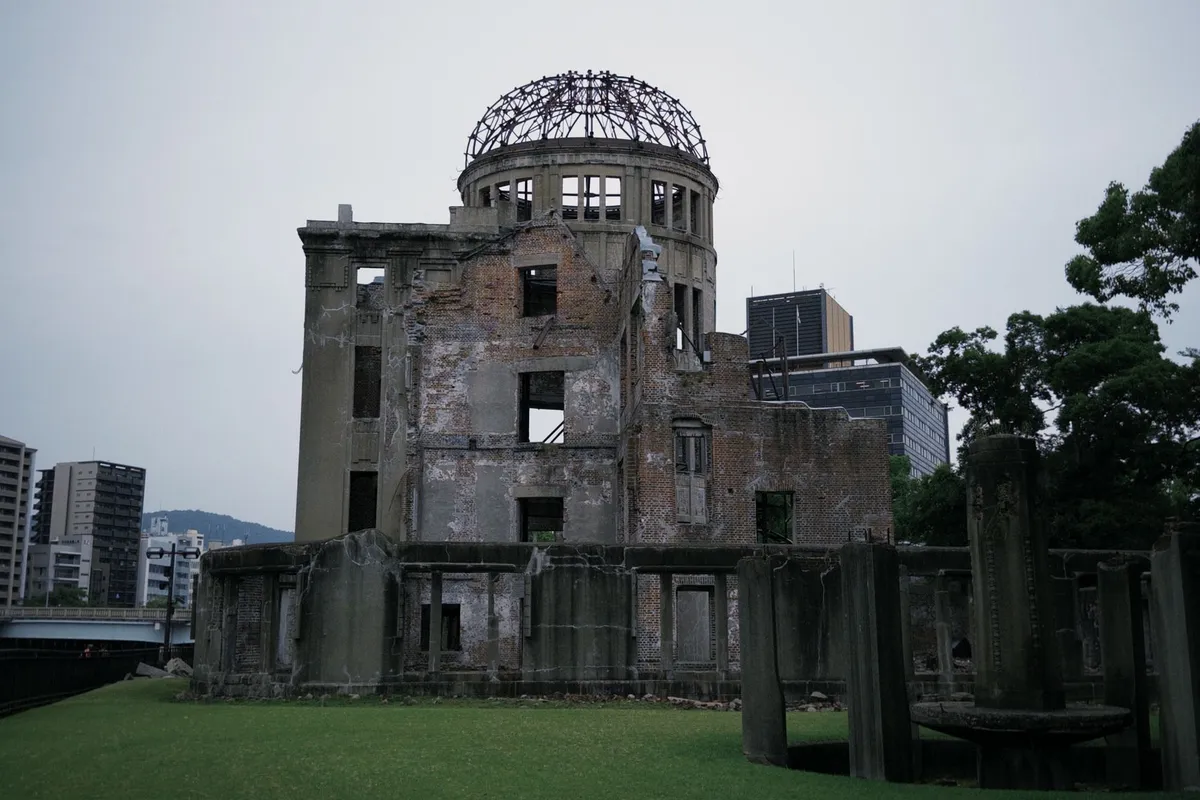
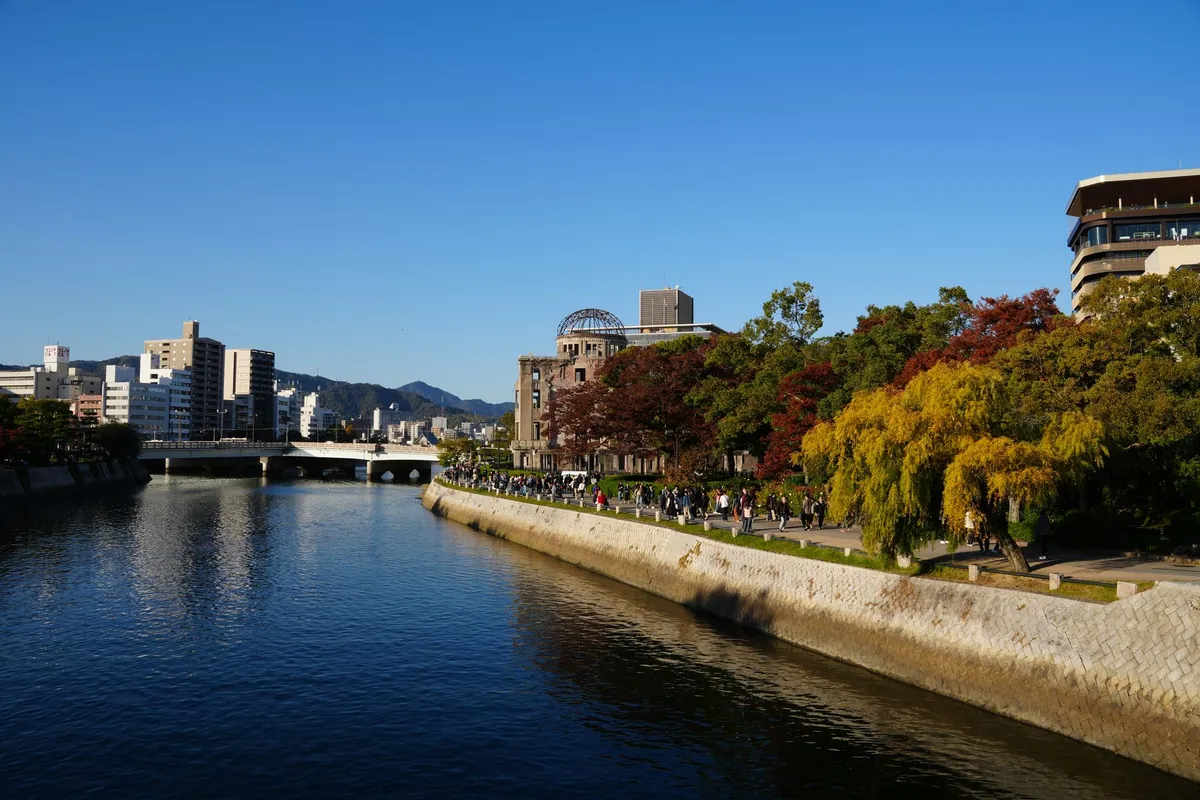
Peace Memorial Park sits at the epicenter of the August 6, 1945 explosion and brings together the Peace Museum (entry ¥200, July 2026), the Cenotaph, the Peace Flame, and the Atomic Bomb Dome (Genbaku Dome), a UNESCO World Heritage Site. Set aside at least 2 hours for the museum—the exhibition was renovated in 2019 and is one of the most impactful in Japan. Arrive before 9 a.m. to beat the school excursion groups, which pack the museum from 10 a.m. onward.
Miyajima: the floating torii and Itsukushima Shrine
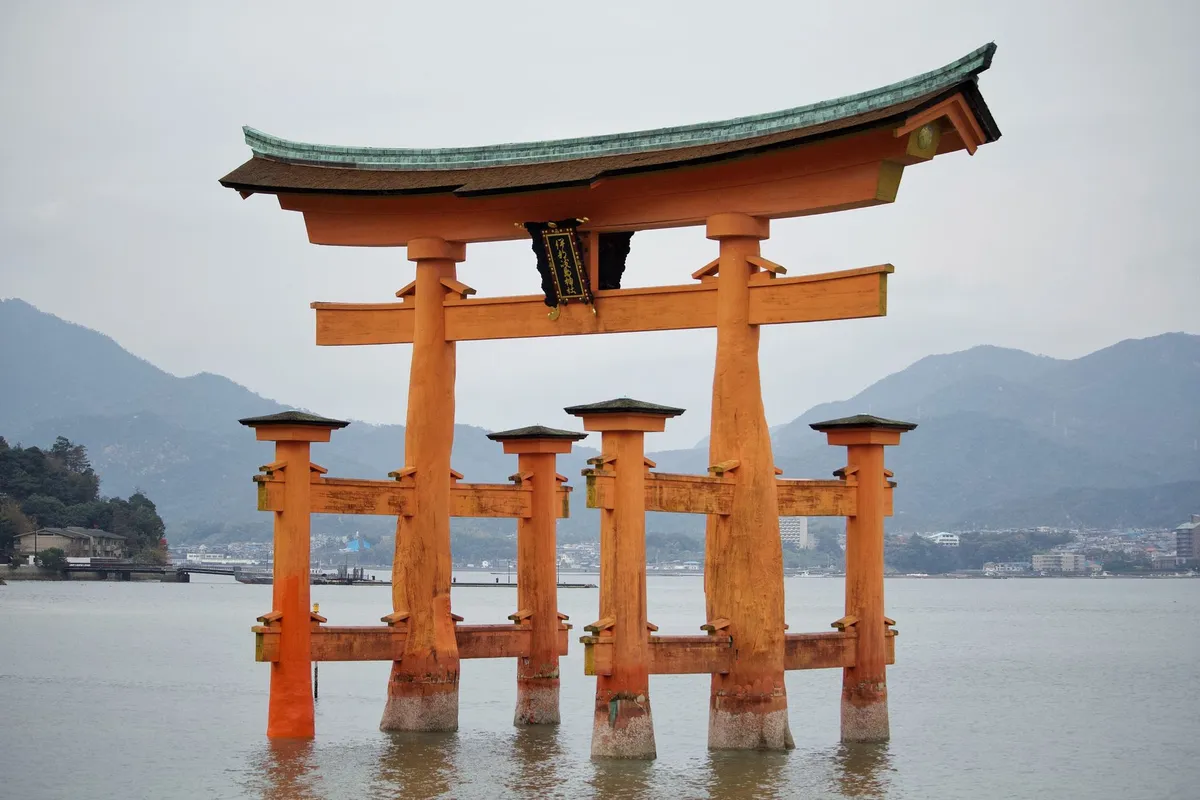
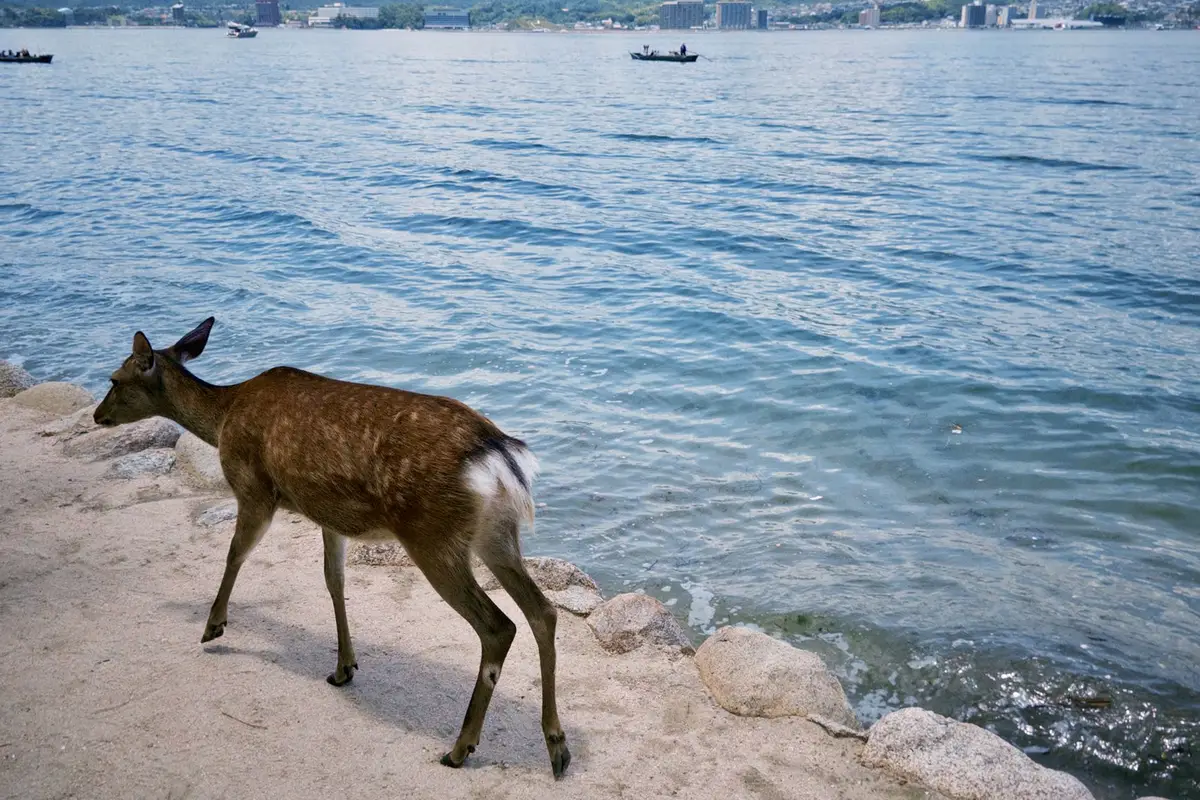
Miyajima island (official name: Itsukushima) is famous for its 16-meter red torii that seems to float on the water at high tide. The Itsukushima Shrine, also a UNESCO World Heritage Site, charges ¥300 to enter the structure on stilts (July 2026). The whole island is walkable, and sika deer roam freely through the streets—they’re tame, but guard your food.
Beyond the torii, it’s worth climbing Mount Misen (535 m) via the Miyajima Ropeway (¥1,840 round trip, July 2026)—the top offers views over the Seto Inland Sea and, on clear days, even the Shimanami Kaido bridges. The hike up via the Momijidani trail takes about 1h30 and passes through a spectacular maple forest in autumn.
What to combine in your itinerary
Hiroshima and Miyajima fit naturally into a larger Japan itinerary. The most classic combo is Kyoto + Hiroshima/Miyajima + Osaka, all connected by shinkansen. From Hiroshima, you can do a day trip to Onomichi (a coastal town with hillside temples, 1h20 by train) or head down to Iwakuni to see the Kintaikyo Bridge (40 min by train).
If your trip includes Tokyo, the 7-day JR Pass covers the entire Tokyo–Kyoto–Hiroshima route and back. For first-timers to Japan, a 12-to-15-day itinerary with Tokyo, Hakone or Kawaguchiko, Kyoto, Nara, and Hiroshima/Miyajima covers the big classics without rushing.
Where to eat in Hiroshima
Hiroshima has its own food identity, and the dish that defines the city is Hiroshima-style okonomiyaki—unlike Osaka’s, which mixes everything into the batter, Hiroshima’s layers the ingredients separately: thin batter, cabbage, bean sprouts, yakisoba noodles, meat or seafood, and egg, all stacked on the griddle. The most famous place to try it is Okonomimura, a building with 24 okonomiyaki restaurants near Peace Park.
On Miyajima, the specialty is momiji manju—a maple-leaf-shaped cake filled with red bean paste (anko), custard, or chocolate. Also try the grilled oysters (kaki) on the main Omotesando street, harvested from the sea around the island. An okonomiyaki in Hiroshima costs between ¥900 and ¥1,500 (July 2026), and momiji manju go for ¥100–150 each.
Where to stay in Hiroshima
For those doing a day trip, the usual base is Kyoto or Osaka. But if you choose to sleep in Hiroshima, the best location is between Hiroshima Station and the Peace Park — it’s about a 20-minute walk, and the streetcar connects the two in 15 minutes for ¥220. Japanese-style business hotels (Toyoko Inn, Dormy Inn) run between ¥6,000 and ¥10,000 per night (July/2026) and usually include a rooftop onsen.
On Miyajima, there are also ryokans (traditional inns) for those who want the experience of sleeping on the island — but they’re pricier (from ¥15,000 per person with dinner). The upside is seeing the island nearly empty at dusk and early morning, once the day-trippers have gone.
Practical Tips
Before heading to Miyajima, check the tide table on the island’s official website — the difference between high and low tide completely changes the scenery around the torii. The ideal is to arrive at low tide, walk out to the base of the torii, and stay until the tide rises to see the “floating” effect.
Your IC card (Suica, Pasmo, or Icoca) works on Hiroshima’s streetcars and vending machines, but NOT on the JR ferry to Miyajima — there, it’s JR Pass or a single ticket at the counter. Bring cash yen for Miyajima: many small shops and food stalls don’t accept cards. And one detail that saves time: the Peace Museum sells timed-entry tickets online, which lets you skip the box office line, especially during peak season.
If you’d like a local guide in Portuguese, the guided tour of Hiroshima from Civitatis covers the Peace Park with detailed historical context.
Frequently Asked Questions
Can you visit Hiroshima and Miyajima in the same day?
Yes, you can visit Hiroshima and Miyajima in the same day. The trip between the two takes about 35 minutes (train + ferry). Most travelers spend the morning at the Peace Memorial Park and the Atomic Bomb Museum in Hiroshima, then head to Miyajima in the afternoon to see the floating torii and Itsukushima Shrine.
Does the JR Pass cover the ferry to Miyajima?
The JR Pass covers the JR West ferry to Miyajima, which costs ¥200 per leg for those without the pass. The Matsudai Kisen ferry, which operates on the same route, is not covered by the JR Pass. The JR ferry has the advantage of taking a route that passes closer to the floating torii.
What’s the best order to visit Hiroshima and Miyajima?
The best order to visit Hiroshima and Miyajima depends on the tide table. If low tide falls in the morning, start with Miyajima to walk out to the base of the torii and leave Hiroshima for the afternoon. If low tide is in the afternoon, do Hiroshima in the morning and Miyajima after. Checking the tide table before planning your route avoids frustration.
Do you need a JR Pass to go to Hiroshima?
You don’t strictly need a JR Pass to go to Hiroshima, but it’s worth the money if your trip includes more than two long shinkansen legs. A single Kyoto–Hiroshima ticket costs ¥11,210 per leg (July/2026), so a round trip already exceeds the value of the 7-day JR Pass for those combining Tokyo, Kyoto, and Hiroshima.
What’s something to eat in Hiroshima that you can’t find elsewhere in Japan?
The most iconic dish in Hiroshima is Hiroshima-style okonomiyaki, which differs from Osaka’s by layering the ingredients separately instead of mixing them into the batter — it includes yakisoba noodles, cabbage, bean sprouts, and egg stacked on the griddle. Okonomimura, a building with 24 specialty restaurants near the Peace Park, is the most popular spot to try it.
Conclusion
Hiroshima and Miyajima complement each other in a rare way: the heavy memory of the Peace Park and the serene beauty of the torii over the water create a contrast that stays with you. With the JR Pass, the journey is practically free, and a well-planned day (or two, if you can) covers both destinations with room to spare. For more Japan itineraries, explore the Voyage Voyage guides.