 Marcelo Oliveira
It shows up in history books, on lists of world wonders, and in almost every Mexico travel itinerary — but nothing compares to the moment you see the Pyramid of Kukulkán emerge at the end of the trail, surrounded by jungle and hushed tourists. Chichén Itzá is the most visited Mayan archaeological site in the country, located on the Yucatán Peninsula, and it brings together temples, an astronomical observatory, and a sacred cenote all in one complex.
Hotels in Cancúnfree cancellation options onlySee hotels ›Booking.com partner (advertising): we may earn a commission at no extra cost to you.
Tickets to Chichén Itzá cost 676 Mexican pesos for foreign adults (July 2026), the park is open from 8 a.m. to 5 p.m., with last entry at 4:30 p.m., and a full visit takes 2 to 3 hours. It sits about 200 km from Cancún (a 3h15 bus ride) and 120 km from Mérida (1h50 by bus), with the latter being the most practical base if you want to arrive early and beat the mass tour groups.
How to get to Chichén Itzá
“Can you go without booking a tour?” Yes, and for many people it’s the cheapest and most flexible option. The Mexican company ADO runs first-class buses that go directly from the bus stations in Cancún, Playa del Carmen, and Mérida to the entrance of the archaeological site.
From Cancún, the bus ride takes about 3h15 to cover the 200 km — a guided tour with transportation included might be worth considering if you don’t want to wake up at the crack of dawn. From Mérida, the nearest capital, it’s just 120 km and 1h50 on the road, with five daily departures (6:30 a.m., 7:15 a.m., 8:15 a.m., 9:15 a.m., and 10:30 a.m., according to ADO’s schedule). If you’re staying in Valladolid, a colonial town 40 minutes from the site, you’ll have the shortest trip of all. To decide where to sleep and how to combine cenotes and Uxmal, also check out our complete Mérida, Mexico guide.
If you’d rather not drive or take public buses, you can book a tour from Cancún with a cenote stop, which includes door-to-door transportation and a guide in Portuguese or Spanish — handy if you only have one day to spare.
Best time to visit and how long to stay
The Yucatán Peninsula is hot year-round, but the difference between December and August is something you feel on your skin. The mildest months to visit Chichén Itzá run from November to February, when temperatures hover between 24°C and 28°C; from May to September, the heat tops 35°C and summer rains are frequent in the afternoon.
Set aside 2 to 3 hours to explore the site at a relaxed pace, plus another 30 to 40 minutes if you want to visit the on-site museum at the entrance. Arriving at 7:45 a.m., before the official 8 a.m. opening, is the tip most repeated by those who’ve been: the ticket booths open right on time, and the first visitors manage to photograph the pyramid without anyone in the frame — after 10 a.m., the tour buses from Cancún roll in and the main plaza gets packed.
What to see: the main attractions
“Is the pyramid alone worth the trip?” It’s the highlight, but Chichén Itzá has five or six other structures that deserve a stop — the common mistake is snapping a photo of El Castillo and leaving without looking at the rest of the complex.
A bit of history
Chichén Itzá was founded around the 6th century AD and reached its peak between 900 and 1200, when it became one of the largest political and religious centers of the Mayan civilization on the Yucatán Peninsula, blending Mayan and Toltec influences in its architecture. The site was abandoned before the arrival of the Spanish in the 16th century and remained swallowed by the jungle until the first serious archaeological excavations in the early 20th century. Today it has been a UNESCO World Heritage Site since 1988.
Temple of Kukulkán (El Castillo)
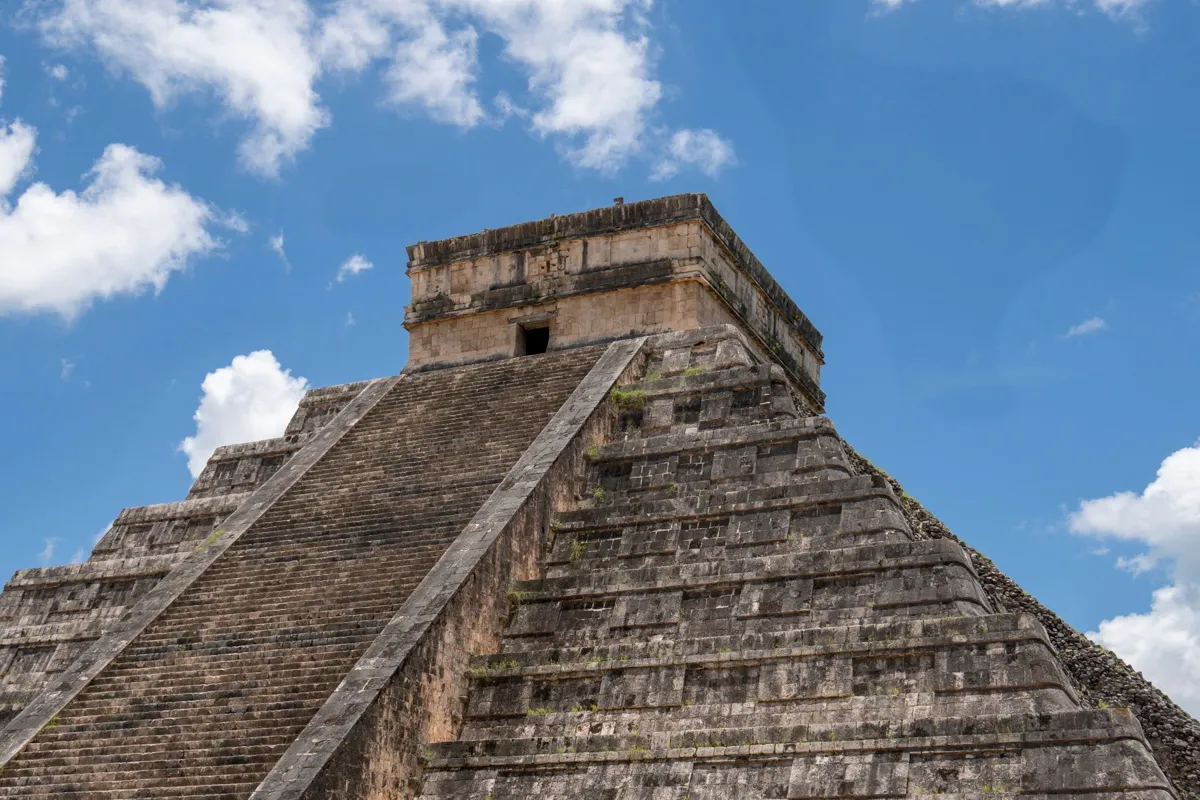
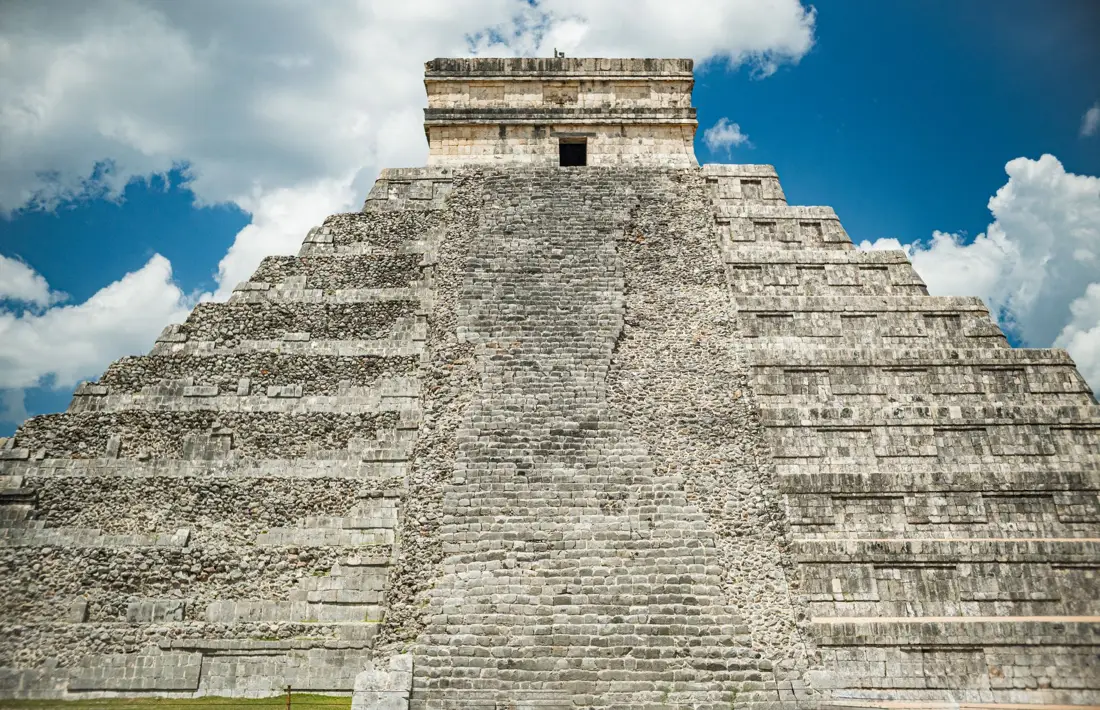
The nine-tiered pyramid, standing 24 meters tall, is dedicated to the feathered serpent Kukulkán. During the March and September equinoxes, the shadow cast on the north staircase forms the shape of a serpent slithering down — a phenomenon that draws thousands of visitors on those two specific dates. Climbing has been banned since 2006, for safety and preservation reasons.
Great Ball Court
The largest Mesoamerican ball court ever found, with walls that produce an echo dozens of meters away — test it yourself by clapping in the center of the field. The carved reliefs on the sides depict scenes of the ritual game, including what is interpreted as the sacrifice of the losing team.
El Caracol Observatory
A circular structure used by the Maya for astronomical observations, with openings aligned to events like the rising of Venus. It’s one of the few examples of curved architecture found at Mayan sites, most of which are rectangular.
Temple of the Warriors and the Group of a Thousand Columns
Next to the main pyramid, hundreds of stone columns in rows mark what would have been a market or covered hall. At the top of the temple sits the reclining statue of Chac Mool, a figure associated with offerings — another detail that often goes unnoticed by those visiting in a hurry.
Sacred Cenote
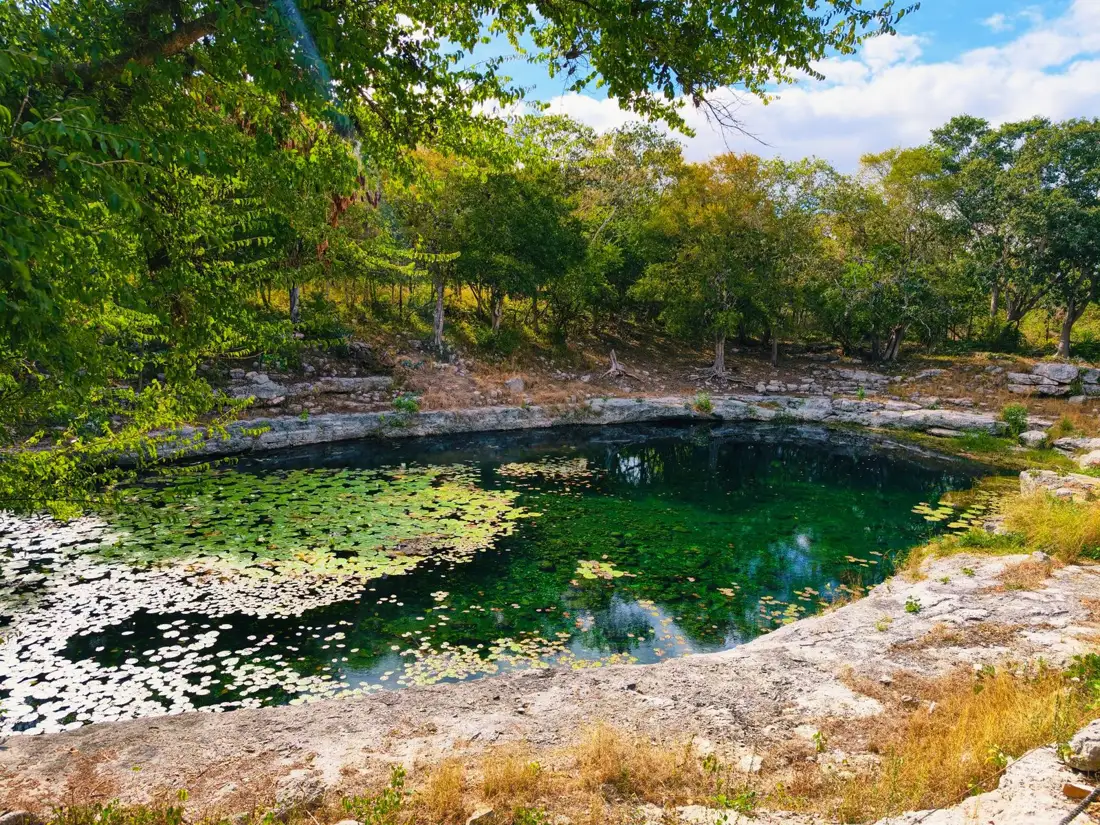
A 300-meter trail from the main plaza leads to this natural sinkhole, 60 meters in diameter, used by the Maya for offerings and — according to archaeological excavations — ritual sacrifices. Swimming is not allowed, but the observation platform is worth the walk.
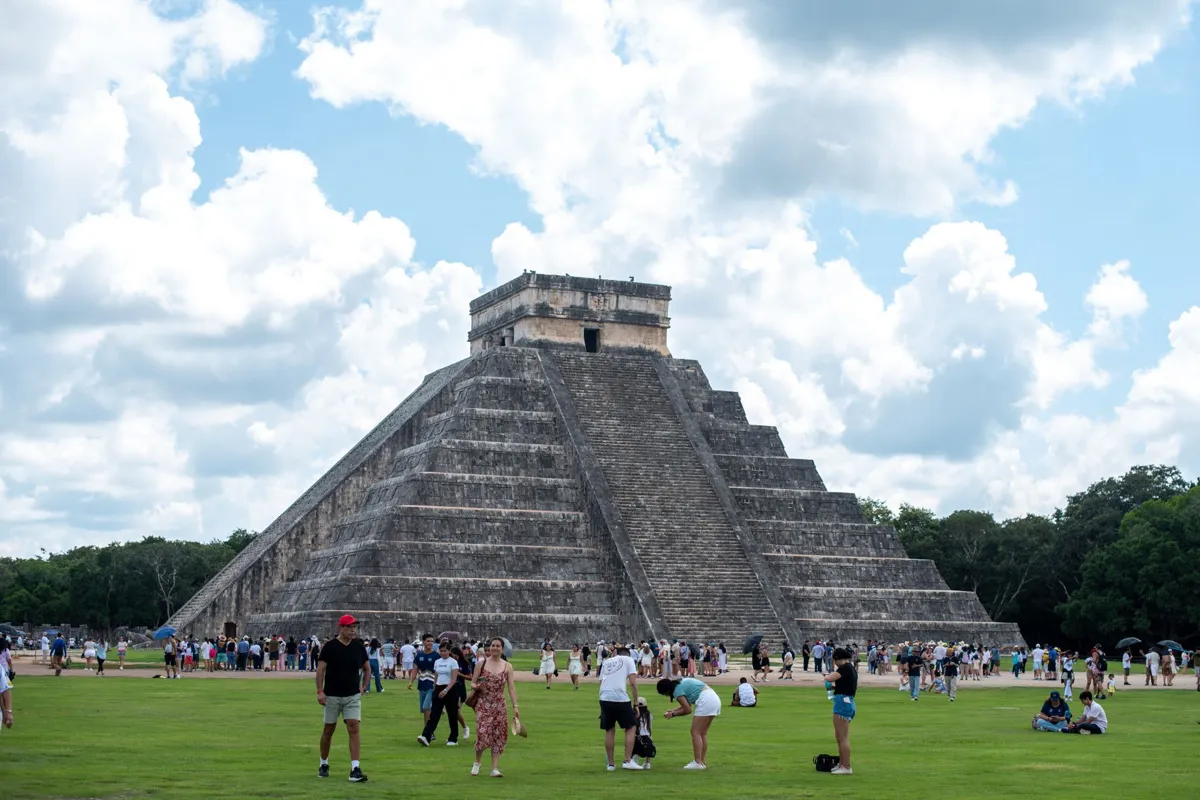
Chichén Itzá has been on the New 7 Wonders of the World list since 2007, alongside monuments like the Taj Mahal, Christ the Redeemer, Machu Picchu, and the Great Wall of China. If you’re into ancient sites, you can also compare it to the Pyramids of Giza in Egypt — another monumental construction that has stood the test of over a thousand years of history.
What to combine: cenotes and nearby towns
The region around Chichén Itzá is dotted with cenotes — natural freshwater pools formed by the collapse of limestone caves. Cenote Ik Kil, 3 km from the archaeological site, is the most visited and has a diving platform and changing rooms. Valladolid, a colonial town 40 minutes away by car, features colorful houses, the Cenote Zaci right in the middle of town, and a food scene that’s more laid-back than Cancún’s.
If you have a full day to spare, you can combine Chichén Itzá with a tour that continues on to the coastal ruins of Tulum, right by the sea — a packed itinerary, but one that delivers two different Mayan attractions in a single trip from Cancún.
 Partner · Civitatissee all activities in Cancún ›
Tulum & Akumal Day Trip + Snorkelling in a Maya Cenote
Rating 9.2 · 66 reviews on Civitatis
- Speedboat Tour on Nichupté LagoonRating 8.5 · 17 reviews on Civitatisfrom€40.13per personSee ›
- Chichén Itzá & Chichikan Cenote Day TripRating 9.1 · 2,088 reviews on Civitatisfrom€50.36per personSee ›
- Catamaran Cruise to Isla MujeresRating 8.3 · 1,314 reviews on Civitatisfrom€38.64per personSee ›
- Xcaret Park Day TripRating 9 · 273 reviews on Civitatisfrom€162.49per personSee ›
Civitatis prices on 28/09/2026, from, per person. They may change. Want to compare? Activities in Cancún on GetYourGuide ›
Where to Eat
Inside the complex, there’s only one touristy buffet restaurant, with above-average prices and mediocre food — it works more for convenience than for the experience. The recommendation from frequent visitors is to bring water and a light snack (heavy food isn’t allowed in) and save the real meal for Valladolid or Pisté, the town right at the site’s exit, where local restaurants serve cochinita pibil and panuchos for a third of the tourist price.
Where to Stay
Three bases make sense, depending on your itinerary. Pisté, right next to the site’s entrance, has simple inns and lets you walk over by 7:45 AM without relying on transportation — ideal if beating the crowds is your top priority. Valladolid, 40 minutes to the east, offers more lodging and dining options plus its own cenotes, making it the most balanced choice. And if you’re just passing through Cancún or Playa del Carmen, you can keep your base on the coast and do Chichén Itzá as a day trip, accepting the 3-hour drive each way.
Where to stay in Cancún
| Hotel | Rating | |
|---|---|---|
| Aloft by Marriott CancunHotel Zone · In the Hotel Zone entertainment area | 8,1809 reviews | See prices |
| Beachscape Kin Ha Villas & SuitesHotel Zone · Standard room in a beachfront hotel | 8,42.963 reviews | See prices |
| Renaissance Cancun Resort & MarinaPuerto Cancún · At the Puerto Cancún marina | 8,7638 reviews | See prices |
| Ibis Cancun CentroCancún city centre · Double room; smaller budget and a commute to the seafront | 8,21.707 reviews | See prices |
| Fairfield by Marriott Inn & Suites Cancun DowntownCancún city centre · Room with breakfast in the offer checked | 8,6710 reviews | See prices |
| Adhara Hacienda CancunCancún city centre · Standard room with breakfast in the offer checked | 8,54.210 reviews | See prices |
| Krystal Urban Cancun & Beach ClubCancún city centre · Rate mentions beach club access; check hours and transport | 8,42.831 reviews | See prices |
| Garza Blanca Resort & Spa CancunCosta Mujeres · Beachfront resort outside the Hotel Zone | 8,3108 reviews | See prices |
Booking.com rating on 30/09/2026
Practical Tips
Arrive at 7:45 AM, wear sunscreen and a hat (there’s very little shade on the site), bring water and cash in Mexican pesos — not every craft stall accepts cards. The limestone ground is uneven, so closed, comfortable shoes make a big difference. Certified guides offer tours at the entrance for an extra fee on top of the ticket; negotiate the price before you commit.
On Sundays, entry is free for Mexican citizens and foreigners with residency in Mexico upon showing ID — Brazilian tourists on a tourist visa still pay the full price. The nighttime light-and-sound show runs Tuesday through Sunday at 7 PM, with a separate ticket (708 Mexican pesos), sold on-site starting at 3 PM.
 HotelAs soon as you have datesCompare neighbourhoods and guest ratings.See hotels ↑
- ActivitiesBefore you travelBook ahead the ones with limited spots.Civitatis ›
 More activitiesTo compareTickets, day trips and tours with flexible cancellation.GetYourGuide ›
Frequently Asked Questions
How much does it cost to enter Chichén Itzá?
As of July 2026, the ticket for foreign adults costs 676 Mexican pesos. Children up to 12 enter for free, and Mexican citizens pay a reduced rate of 303 pesos.
How long does a visit to Chichén Itzá take?
Two to three hours are enough to see the main structures at a relaxed pace, including the walk to the Sacred Cenote.
Can you climb the Pyramid of Kukulkán?
No. Access to the stairway has been prohibited since 2006 for safety and preservation reasons.
What’s the best time of year to visit Chichén Itzá?
The months from November to February bring milder temperatures (24°C to 28°C) and less rain than the May-to-September period.
Is it better to go from Cancún or Mérida?
Mérida is more practical: it’s 120 km away (1h50 by bus) versus the 200 km (3h15) from Cancún. If you’re staying on the coast, the longer distance usually pays off when you book a tour with transportation included.
Conclusion
Chichén Itzá rewards those who plan ahead: getting there early, staying hydrated, and setting aside a full half-day make all the difference between a rushed visit and a true morning inside Mayan history. For more travel itineraries like this one, keep exploring voyagevoyage.com.br.