Leaving Cancún early in the morning and returning by late afternoon with one of the New Seven Wonders already checked off, your feet wet in a cenote, and a photo of the Kukulkán pyramid with no fifty strangers in the background. That’s the itinerary your agency doesn’t advertise well, and when timed right, it fits into a single day.
Chichén Itzá from Cancún is a 200 km (about 2h40 by road) round trip. The archaeological site is open from 8 am to 5 pm, with last entry at 4 pm, and the ticket for foreigners costs 676 Mexican pesos in July 2026 (~R$ 203). Arriving before 10 am lets you photograph the pyramid practically empty — after that, the buses roll in.
Why going via Cancún is worth it
Cancún is home base for 90% of Brazilians visiting the Riviera Maya, but it’s the least obvious base for Chichén Itzá — the site lies in the opposite direction from the beaches, in the neighboring state of Yucatán. The good news is that the same road leads to a couple of turquoise cenotes (Saamal, Ik Kil, Chichikan) that, combined with the ruins, turn into one of Mexico’s most complete day trips.
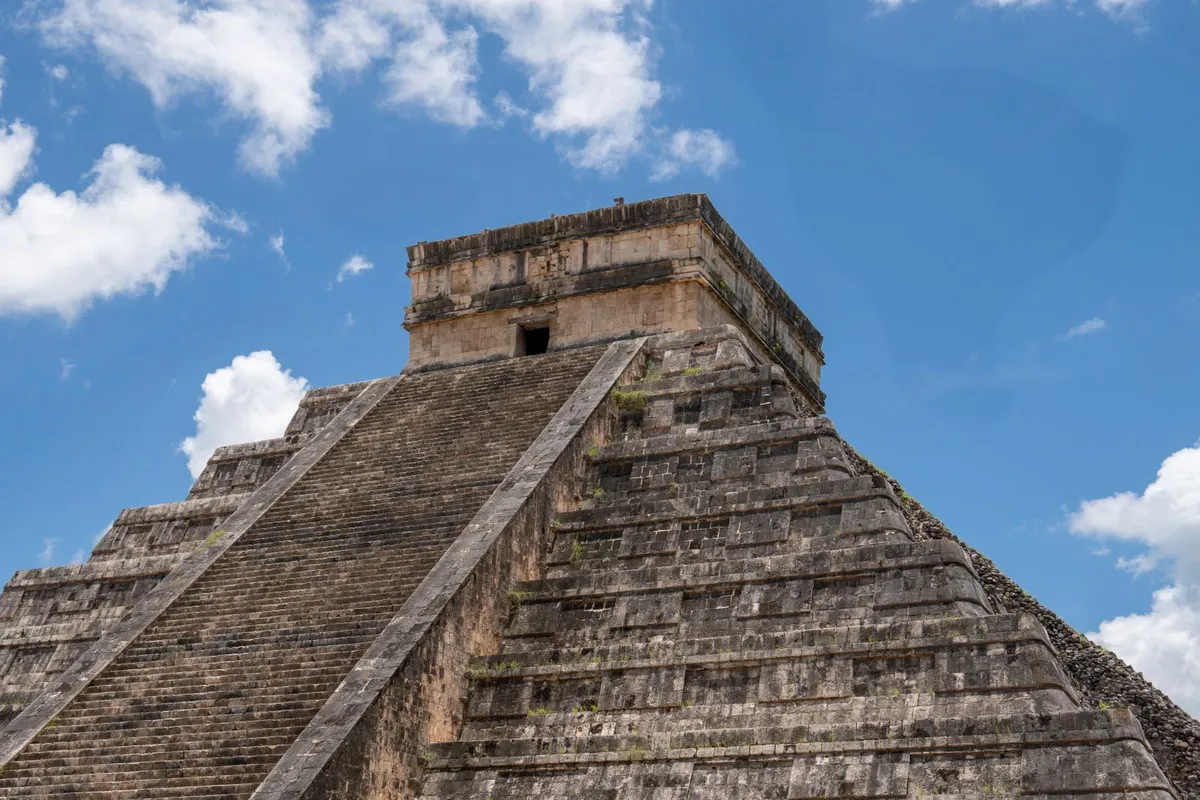
Consider Mérida as an alternative base: it’s 1h15 from the site and lets you arrive at 8 am without an early wake-up. If Cancún is already your base, think of the trip as the same effort as a short domestic flight — just on the ground. Along the way, it’s also worth checking out the complete Chichén Itzá guide to dive deeper into Maya architecture before you go.
Tickets, prices, and hours in 2026
Admission has two combined fees: the federal (INAH) and the state (Yucatán). For foreign tourists, the total comes to around 676 MXN in July 2026 — about R$ 203 at the month’s exchange rate. Children up to 12 enter free. The site is open daily from 8 am to 5 pm, but last entry is at 4 pm, and areas like the Sacred Cenote and the Nunnery Group close at that same time.
If you want to guarantee entry without waiting in the ticket office line — which, in high season, can stretch to 40 minutes around noon — book a skip-the-line ticket for Chichén Itzá with QR Code validation right at the turnstile.
At night, the site reopens for the “Noches de Kukulkán” light-and-sound show, Tuesday through Sunday at 7 pm, with a separate ticket costing 700 to 770 MXN. Book at least 48 hours in advance — capacity is small and sells out fast during peak dates.
Getting there from Cancún: the 3 real options
There are three possible routes, and the choice changes your whole day:
Organized tour with transfer, guide, and cenote. Leaves around 6 am from your hotel and returns at 8 pm. You don’t get to decide when you arrive (it’s almost always the bad time, between 10 am and noon), but the price covers everything — including the cenote swim. It’s the lowest-friction option. A good pick is the Chichén Itzá tour with Saamal cenote from Cancún, which combines the day’s two highlights with a buffet lunch included.
Rental car. The 180D highway (Kantunil) is excellent, with a toll of about 550 MXN one way — which almost cancels out the savings versus a tour for two people. The real advantage: you arrive right at 8 am, skip the lines, and can still stop in Valladolid on the way back. Parking at the site costs 80 MXN.
ADO bus from Playa del Carmen or Tulum. The direct bus route from Cancún is limited and slow. If you’re already passing through Playa or Tulum beforehand, the ADO has useful departures. From Cancún proper, it’s not worth it unless you’re staying overnight in Valladolid.
What to see inside the complex
The Kukulkán pyramid (El Castillo) is the postcard shot, but the complex has more than Instagram shows. Set aside at least two hours inside the site, recognized as a UNESCO World Heritage Site since 1988.
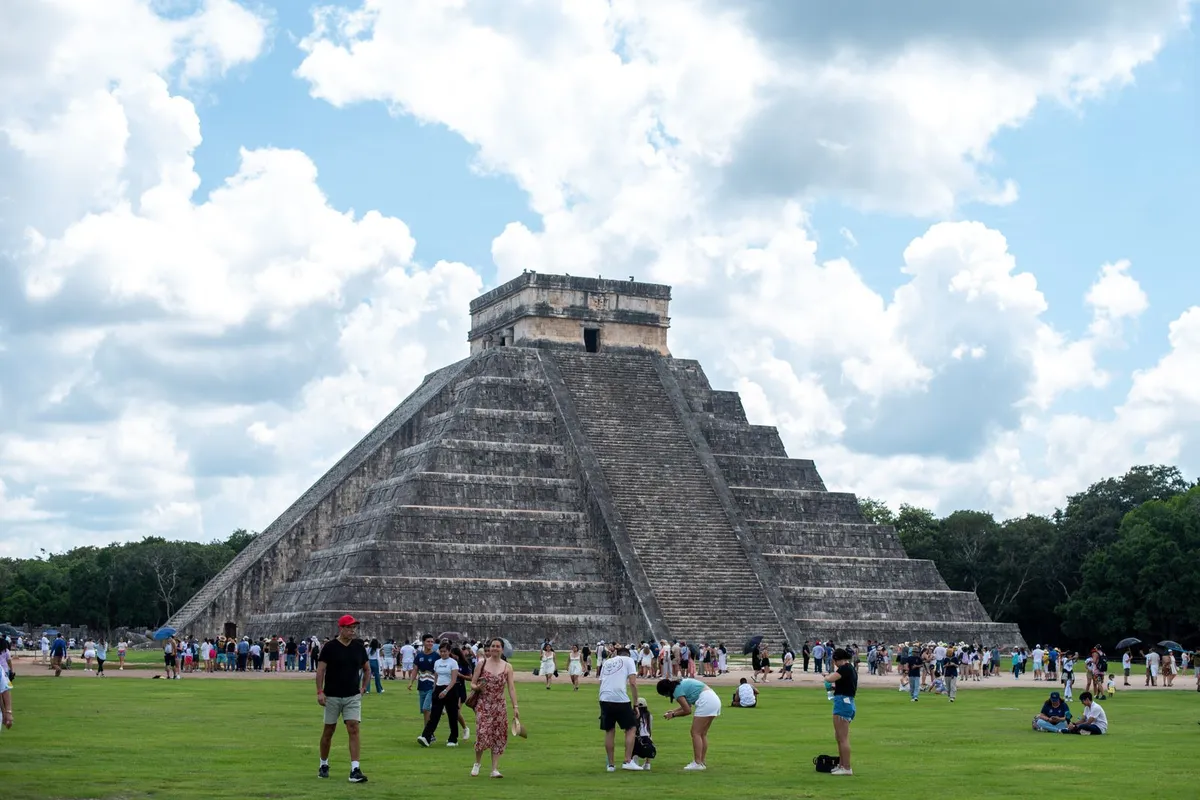
Great Ball Court
One of the largest in the Maya world, at 168 meters long. If two friends stand at opposite ends and speak in a normal tone, they can hear each other — the echo isn’t an accident, it’s acoustic engineering from a thousand years ago.
Sacred Cenote
You can’t swim here, but this is the natural sinkhole where the Maya tossed offerings of jade, gold, and human victims in rituals dedicated to the rain god Chaac.
Observatory (El Caracol)
The round building has slits aligned with the movements of Venus and the sun during equinoxes — which is why the Maya had a more accurate calendar than Europeans at the same time.
Best time to go: beating the lines and the heat
The ideal window is between 8 am and 10 am. Before 10 am, the buses from Cancún haven’t arrived yet, and you can walk the site with room to breathe and take photos. After that, visitor numbers triple in 40 minutes.
The second issue is the heat. Yucatán is dry and arid, and the interior of the complex has almost no shade. By noon, the heat off the stone floor approaches 40°C. Bringing 1.5 L of water per person, a wide-brimmed hat, and sunscreen isn’t brochure advice — it’s what separates an unforgettable morning from an afternoon with a headache on the bus.
If your only option is arriving after 10 am, consider the night show. You enter at 7 pm with mild weather, see the pyramid illuminated with projection mapping, and skip the daytime tours entirely.
Is it worth going on your own?
It depends on two factors: whether you have a valid driver’s license for Mexico and whether you’re okay skipping the cenote on the way back. Going by car yields the best photos and the most relaxed day, but it demands planning (cash for tolls, offline GPS, watching out for topes after Valladolid). Going on a tour simplifies everything, costs about the same for two people, and still throws the cenote into the package.
For a Brazilian traveler on a first trip to Mexico, based in Cancún, and not renting a car, the tour ends up cheaper than the sum of bus + ticket + cenote separately. For those with 3 or 4 days in the region who want to stop in Valladolid, Izamal, or Ek Balam, the car is unbeatable.
Frequently Asked Questions
How long does the tour from Cancún take?
Between 12 and 14 hours door to door. Tours leave around 6 a.m. and return around 8 p.m., with stops at a cenote and lunch. If you drive yourself, you can get back earlier — around 5 p.m. — if you skip the cenote.
Do Brazilians need a visa to visit Mexico?
Brazilians don’t need a visa for tourism stays of up to 180 days, but you must present the Multiple Migratory Form (FMM), filled out online or upon arrival. Check the updated rules in the official consulate guidelines before you board.
Can you climb the Kukulkán pyramid?
No. Since 2006, climbing El Castillo has been banned for preservation reasons and after a fatal accident. You can walk around it and get right up to the base, but the stairs and the top are off-limits.
Is it worth combining Chichén Itzá with Tulum on the same day?
Not a good idea. The two sites are in different states, and the drive between them is about 2.5 hours. You’ll end up spending 8 hours in the car for a rushed 3 hours of sightseeing. Do them on two separate days, or pair Chichén Itzá with a cenote on day one, and Tulum with Coba on day two.
Conclusion
Chichén Itzá rewards travelers who plan their timing better than the average visitor. If you wake up early, buy your ticket before the line forms, and pair it with a cenote, the day trip from Cancún becomes one of the strongest memories of your trip. If you roll in at 11 a.m. unprepared, it’ll be a sweaty afternoon of photos with strangers in the frame. The difference between those two versions comes down to your alarm clock — and the links in this guide. Safe travels with Voyage Voyage.