Mexico’s cenotes draw millions of visitors to the Yucatán Peninsula every year, but not everyone stops to think about the real risks before jumping in. Depths that exceed 40 meters right at the edge, invisible underground currents, and an ecosystem so fragile that a layer of sunscreen can contaminate it — choosing the wrong cenote or ignoring the rules can turn your outing into a problem.
To visit Mexico’s cenotes safely, opt for open cenotes with tourist infrastructure, wear a life jacket (mandatory in the state of Yucatán), apply only biodegradable sunscreen, and never enter underwater caves without cave diving certification.
How to get to Mexico’s cenotes
Most tourist-friendly cenotes are located on the Yucatán Peninsula, between Cancún, Playa del Carmen, Tulum, Valladolid, and Mérida. Cancún International Airport (CUN) receives direct flights from the US and is the most common entry point. From there, the most visited cenotes are a 1.5–3 hour drive away via Highway 307 (Riviera Maya) or Highway 180 (inland, towards Valladolid and Mérida).
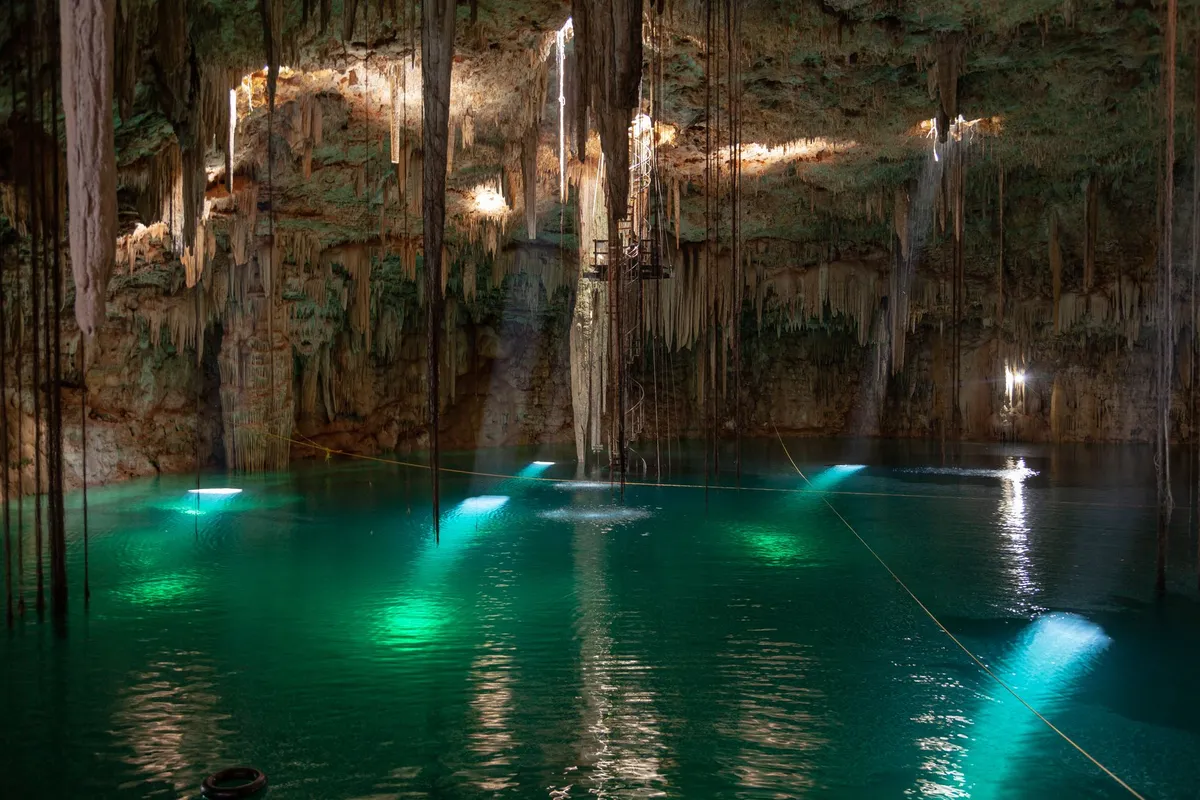
Renting a car is the most practical way to visit several cenotes in a single day, as many are located on secondary roads with no public transport. If you’d rather not drive, you can book tours departing from Playa del Carmen or Cancún — most include a cenote, lunch, and a stop at the ruins. The Tulum tour with cenote snorkeling is one of the most popular options and already includes equipment and a guide.
Best time to go and how much time to set aside
Cenotes can be visited year-round — the water temperature stays between 75 °F and 79 °F regardless of the season. The difference lies on the surface: from November to April, the climate is drier and less hot, ideal for combining cenotes with ruins without melting under the sun. From May to October, there’s more rain (especially in the afternoon), but cenotes are less crowded and accommodation prices drop.
For a cenote-focused itinerary, 3 to 5 days is enough: 1 day in the Tulum area (Cenote Dos Ojos, Gran Cenote), 1 day between Playa del Carmen and Puerto Aventuras (Cenote Azul, Jardín del Edén), and 1 day in Valladolid (Cenote Suytun, Samulá). If your plans include ruins and beaches, stretch it to 7 days — check out the comparison between Cancún, Playa del Carmen, or Tulum to decide on your base.
Types of cenotes and the risk level of each
There are three main types of cenotes, and the risk varies drastically between them. Understanding this difference before you choose is the first step to a safe visit.
Open cenotes (a cielo abierto): these look like natural outdoor pools, with accessible edges and full visibility. They are the safest for families and beginners. Examples: Cenote Azul, Cenote Cristalino, Kaan Luum. Even so, the depth can exceed 20 meters — the life jacket is not an exaggeration.
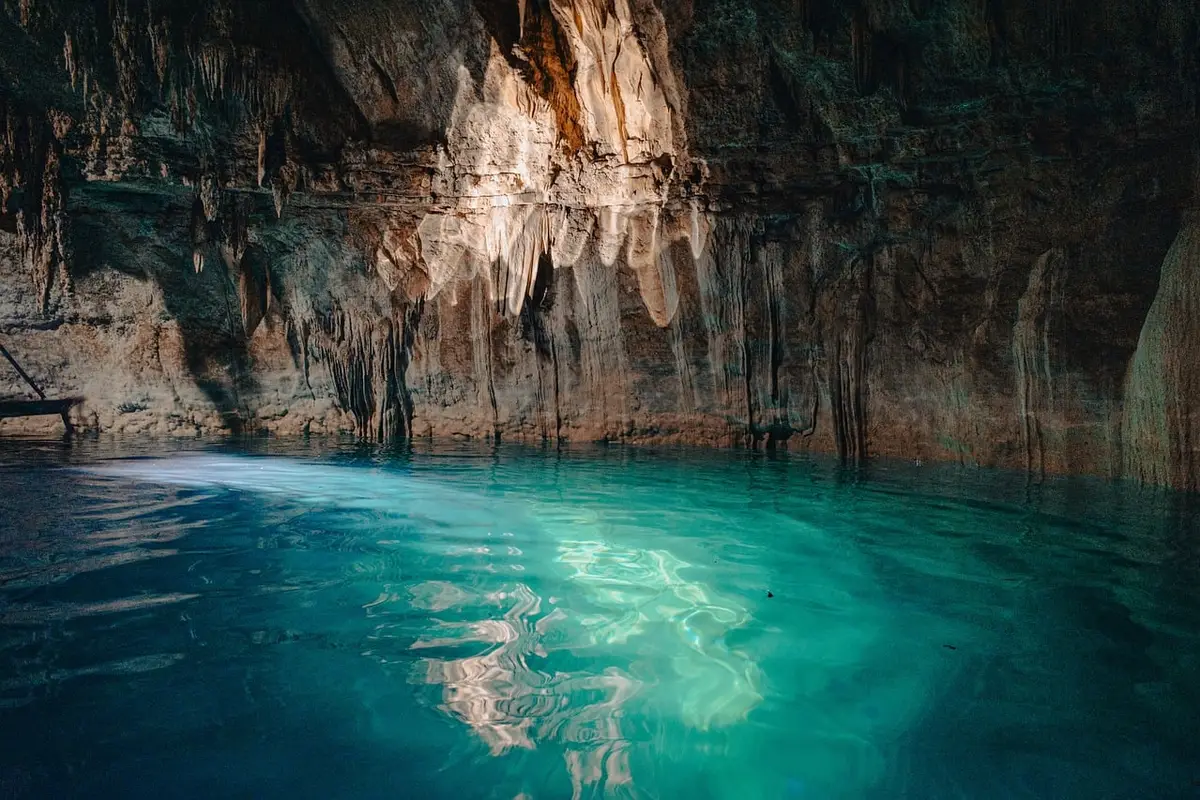
Semi-open cenotes: these have part of the ceiling collapsed, creating a mix of cave and open sky. Lighting is partial, and there may be deeper sections in the darker zone. Examples: Gran Cenote, Cenote Ik Kil. Safe for swimming with a life jacket, but they require attention to avoid drifting away from the lit area.
Cave cenotes (closed): completely underground, accessible via staircases or platforms. Natural light is minimal or nonexistent. Examples: Cenote Dos Ojos, Cenote Aktun-Ha. Swimming in the open area is safe with a life jacket and a guide, but diving beyond the daylight zone requires cave certification — most deaths in cenotes happen when divers without this certification pass the light markers.
How to choose the right cenote for your profile
The choice starts with what you want to do and your level of experience in the water. Use this quick reference:
Families with children: open cenotes with infrastructure (restrooms, life jackets, lifeguards on site). Cenote Azul and Jardín del Edén have shallow areas and easy-access platforms. Avoid cave cenotes with steep staircases.
Non-swimmers: in the state of Yucatán, life jackets are mandatory by law at tourist cenotes, regardless of the visitor’s ability. Choose cenotes with floating platforms and shallow areas. Cenote Suytun, near Valladolid, has a walkway to the center and accessible depth at the edge.
Certified divers (Open Water): semi-open cenotes and the lit zone of cave cenotes. Gran Cenote and Cenote Dos Ojos offer cavern diving (up to the light zone) with local guides. Never pass the markers without cave certification.
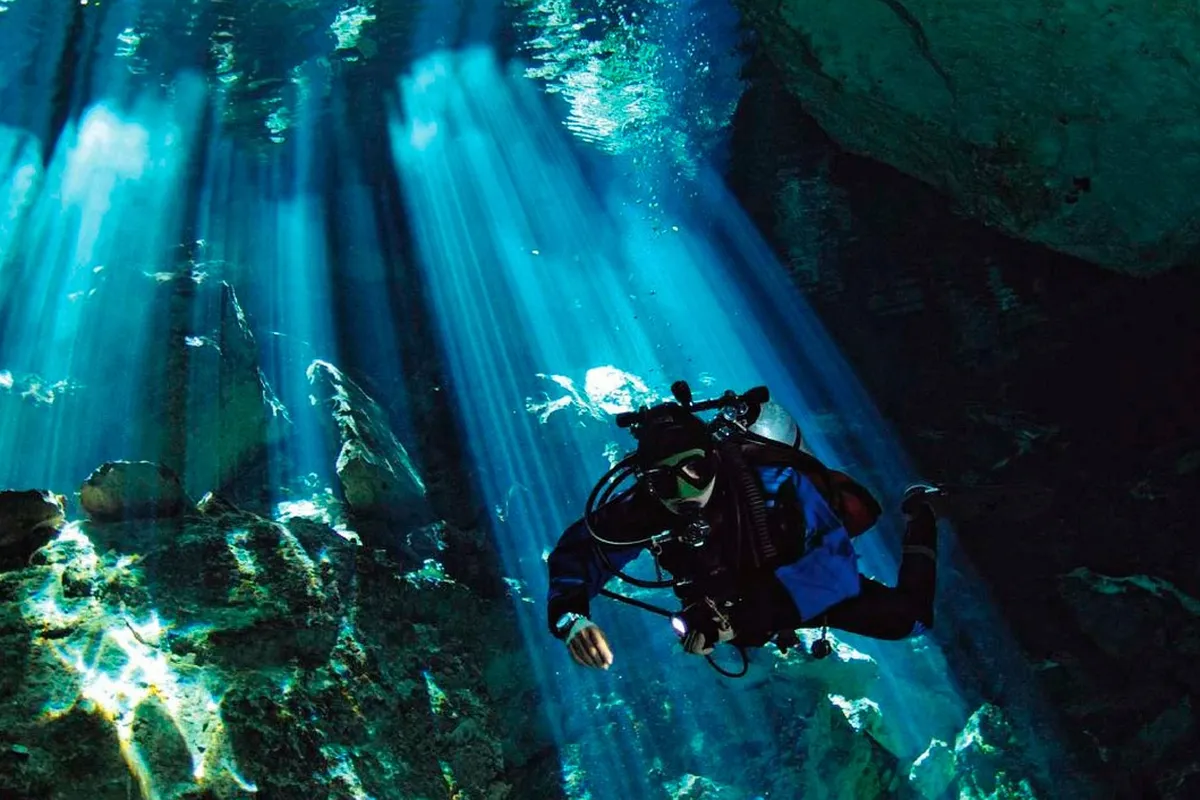
Snorkeling: practically any open or semi-open cenote works. Equipment is rented on-site for 50 to 100 Mexican pesos (Jul/2026, confirm at the ticket booth). The Sepultura Beach and the cenotes are complementary experiences — if you’re also heading to the Mexican Caribbean, book at least 2 cenotes for snorkeling.
Preservation rules you need to follow
Cenotes are the primary source of fresh water on the Yucatán Peninsula — they are limestone sinkholes that connect directly to the water table. When a visitor contaminates the water of a cenote, they contaminate the aquifer that supplies entire Mayan communities — many of which lack water treatment. Following the rules isn’t bureaucracy; it’s direct responsibility.
Sunscreen: regular sunscreens containing oxybenzone and octinoxate are banned at most cenotes. Use biodegradable sunscreen and apply it at least 30 minutes before getting in the water, while still at your hotel. Upon arrival, take a shower (most tourist cenotes have one) to remove traces of cosmetics, bug spray, and sweat.
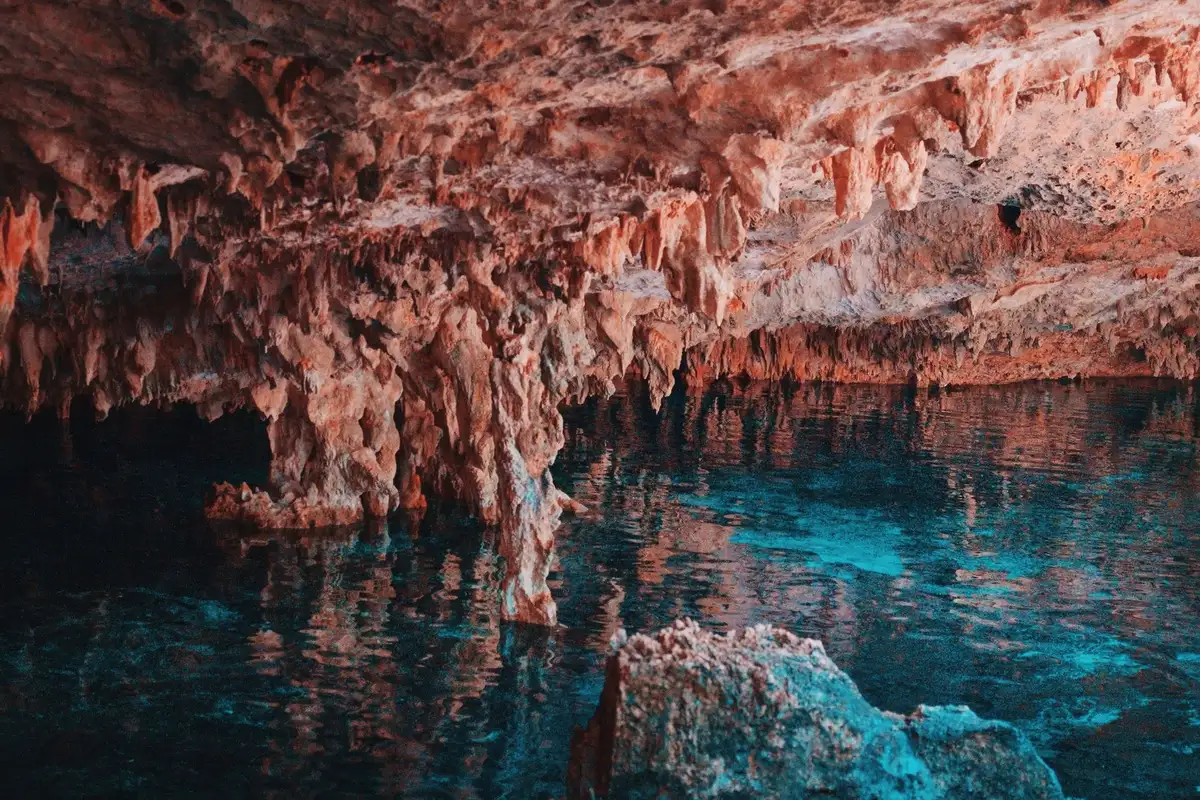
Don’t touch the formations: the stalactites and stalagmites inside cave cenotes took thousands of years to form. The oils on human skin halt mineral growth. Look, snap photos, but keep your hands off.
Prefer cenotes run by Mayan cooperatives over big commercial parks — the money stays in the local community and the experience is usually more authentic and less crowded.
Where to eat near the cenotes
Most cenotes are in rural areas, so dining options are simple but tasty. At the cenotes near Valladolid, the town center (10–15 minutes away) has Yucatecan restaurants — cochinita pibil, papadzules, and sopa de lima — for 80 to 150 pesos (Jul 2026). Near Tulum, restaurants in the hotel zone are pricey; eat in town (Tulum Pueblo) for half the price.
At cenotes run by Mayan communities, there’s usually an area serving homemade food — fresh tortillas, chicken, and rice. Prices rarely exceed 100 pesos per meal. If you’re putting together a bigger itinerary for the region, our guide to Mérida covers Yucatecan cuisine in detail.
Practical safety tips
Wear a life jacket: even if you’re a strong swimmer. Cenote depths are deceiving — many drop past 30 meters just a few steps from the edge. In the state of Yucatán, wearing one is legally required at tourist cenotes.
Never enter remote cenotes alone: cenotes without tourist infrastructure (no ladder, no lifeguard) number in the thousands across the peninsula. Some are used by locals, but visitors unfamiliar with the terrain face a real risk of falls or drowning.
Water shoes: access stairways are often slippery, and the bottom of some cenotes has sharp rocks. Flip-flops won’t stay on your feet; non-slip water shoes do the trick.
Visa for Brazilians: Brazilian citizens don’t need a visa for Mexico for stays of up to 180 days (Jul 2026, check the Instituto Nacional de Migración website for updates).
Frequently asked questions
Are Mexico’s cenotes dangerous?
Mexico’s cenotes are safe when visited with the right precautions. Open cenotes with tourist infrastructure (stairs, life jackets, lifeguards) pose a low risk. The real danger lies in cave diving without proper certification and in remote cenotes with no infrastructure — most fatal accidents happen when uncertified cave divers pass the light markers in underground cenotes.
Can you use sunscreen in cenotes?
Regular sunscreen is banned at most cenotes in Mexico because it contaminates the water and the water table of the Yucatán Peninsula. Use only biodegradable sunscreen, applied at least 30 minutes before entering the water. When you arrive at the cenote, take a shower to remove traces of cosmetics and bug spray.
Do you need to know how to swim to visit a cenote?
You don’t need to know how to swim to visit cenotes in Mexico. In the state of Yucatán, wearing a life jacket is legally required at tourist cenotes, regardless of the visitor’s ability. Cenotes like Suytun have walkways and shallow areas accessible to non-swimmers.
What’s the safest cenote for beginners?
For beginners, open cenotes with infrastructure are the safest. Cenote Azul (near Playa del Carmen) has shallow areas and platforms, Jardín del Edén offers easy access, and Cenote Suytun (Valladolid) has a walkway to the center. All have life jackets available and, generally, lifeguards on site.
How much does it cost to enter a cenote in Mexico?
Entry to cenotes in Mexico ranges from 100 to 500 Mexican pesos (roughly R$ 30 to R$ 150 in Jul 2026, check the current exchange rate). Cenotes run by Mayan communities typically charge between 100 and 200 pesos and include a life jacket. Large parks like Cenote Ik Kil charge more but offer more infrastructure.
Conclusion
Visiting Mexico’s cenotes is an experience that justifies the trip to the Yucatán Peninsula, but it requires conscious choices and respect for the rules. Start with the open ones if it’s your first time, wear a life jacket, skip the regular sunscreen, and give preference to Mayan cooperatives — you’ll protect the water that supplies entire communities and still pay less. If you’re planning a broader itinerary, combine cenotes with beaches and ruins and keep planning on VoyageVoyage.