 Marcelo Oliveira
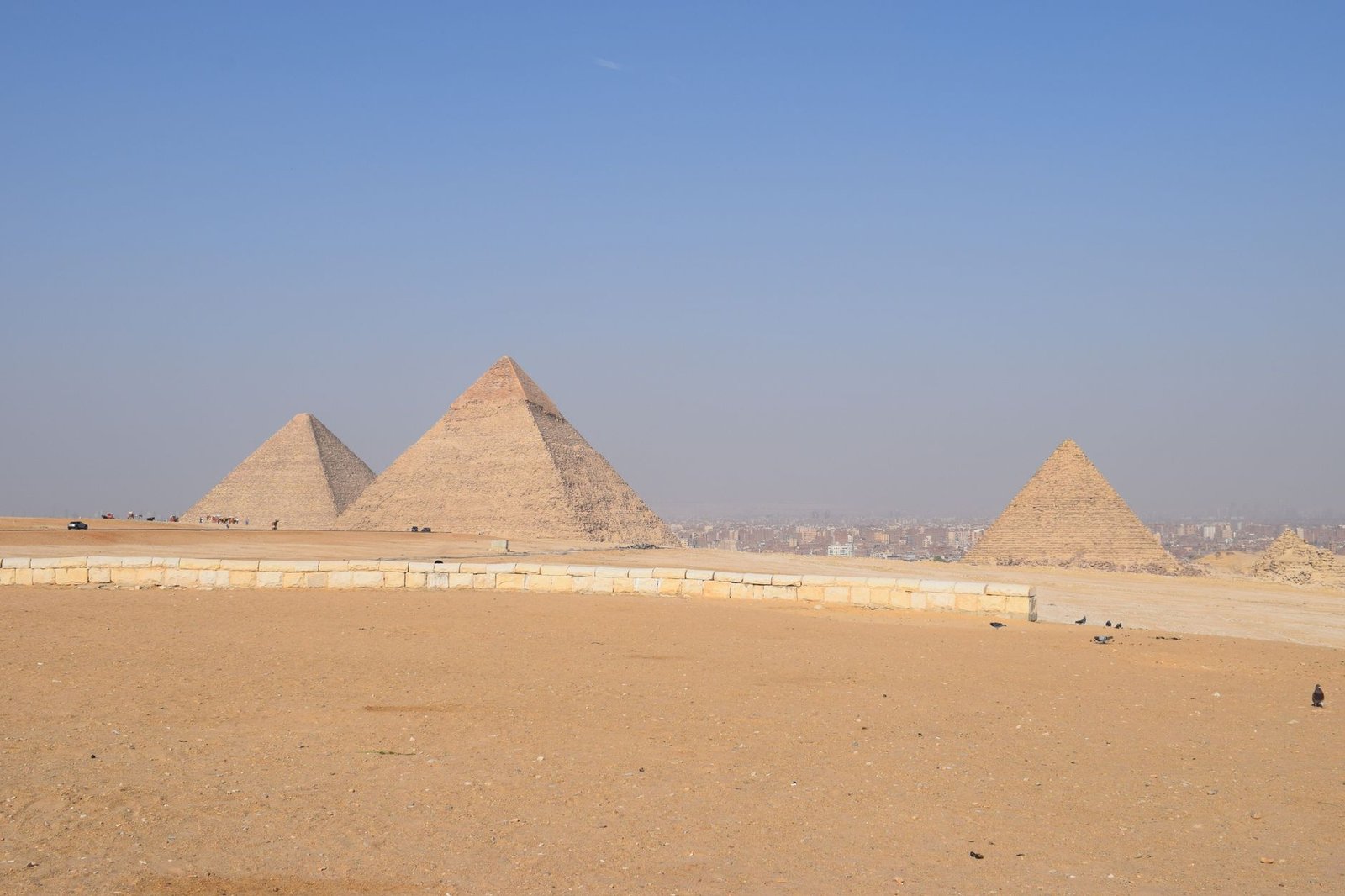
The Pyramids of Giza sit on the outskirts of Cairo, Egypt, and form the only monument from the Seven Wonders of the Ancient World still standing. The necropolis brings together three great pyramids, the Sphinx, and a cluster of smaller tombs, all built more than 4,500 years ago to house pharaohs of the 4th dynasty. First-time visitors are often surprised by one detail: the desert literally begins where the city ends, and you can see Cairo’s buildings in the same photo as the pyramids.
Hotels in Cairofree cancellation options onlySee hotels ›Booking.com partner (advertising): we may earn a commission at no extra cost to you.
How to get there
There are no direct flights from Brazil to Cairo. The most common routes depart from São Paulo or Rio with a connection in Lisbon, Istanbul, Doha, or Dubai, totaling between 16 and 22 hours of travel depending on the layover. Upon arriving at Cairo International Airport, the drive to Giza takes anywhere from 40 minutes to 1 hour by car, depending on traffic.
From within Cairo, the simplest way to reach the pyramids is by Uber or taxi, with a ride from downtown taking about 30 minutes. There’s also a metro line to the Giza station, but from there you still have a few kilometers to the complex entrance, usually covered by taxi or tuk-tuk. If you’re staying near the Giza area, many hotels offer views of the pyramids right from your window or rooftop.
Best time to visit and how long to stay
“What’s the best month to go?” The short answer is: between October and April, when daytime temperatures are milder. During the Egyptian summer (June to August), the heat on the plateau exceeds 40°C (104°F) and there’s no shade at all—it’s literally open desert.
Arrive at opening time, 7 a.m., to beat the peak heat and the large tourist groups that crowd the photo spots starting around 10 a.m. Set aside 3 to 4 hours to explore the complex at a relaxed pace, including time to walk to the Sphinx, which sits a bit away from the pyramids.
What to see: the pyramids and the Sphinx
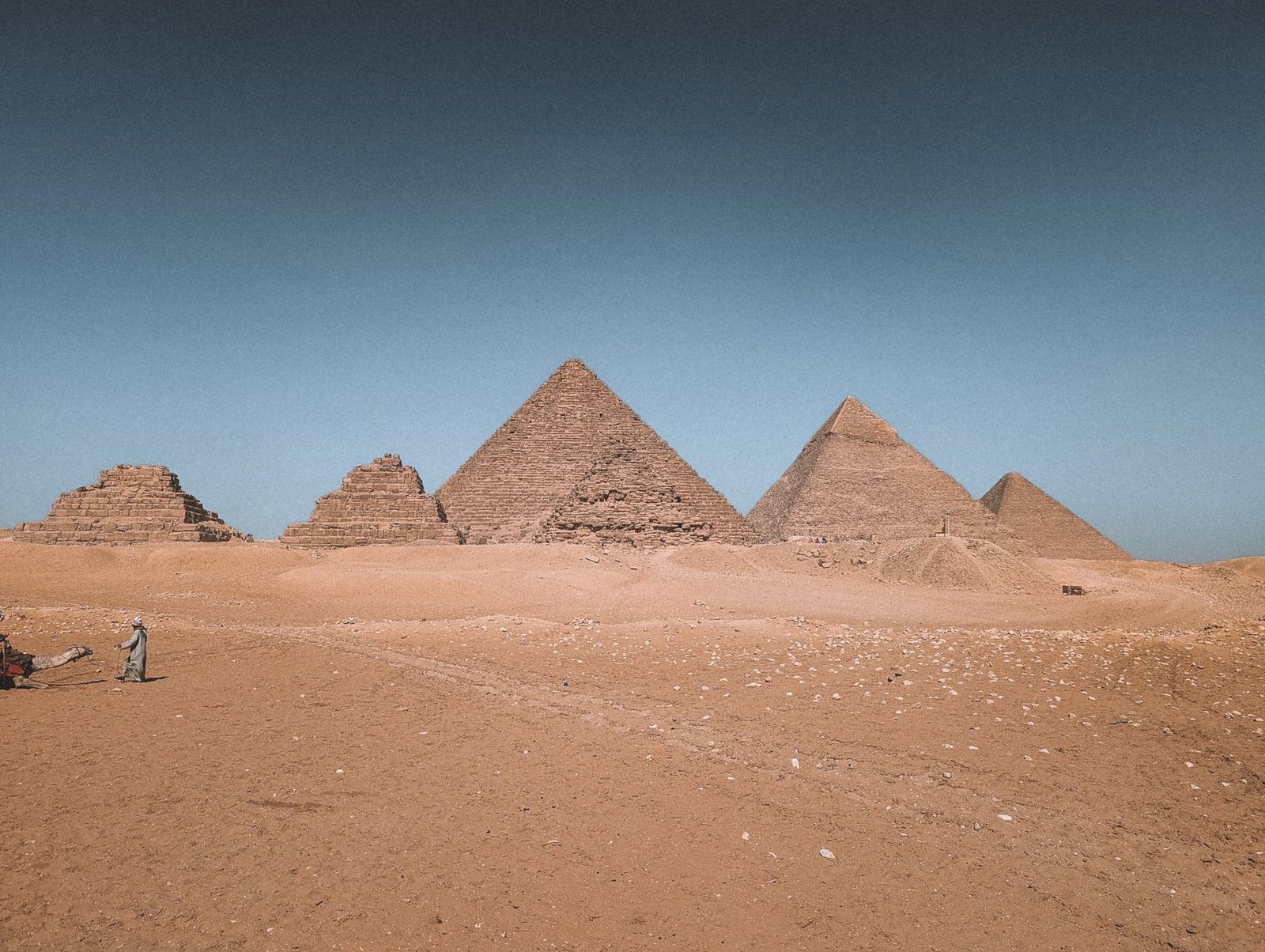
The complex brings together three main pyramids, each built for a different pharaoh, plus the Sphinx and smaller pyramids dedicated to queens.
Pyramid of Khufu (the Great Pyramid)
It’s the largest of the three and the oldest of the Seven Wonders of the Ancient World, built around 2560 B.C. for Pharaoh Khufu. Standing 138 meters tall today (originally over 146 meters before losing its outer casing), it’s considered the largest pyramid in the world by stone volume, with about 2.3 million blocks. You can enter the inner chamber with a separate ticket, but the space is cramped, hot, and there’s not much to see inside beyond the structure itself—it’s more for bragging rights than the visual experience.
Pyramid of Khafre
Slightly smaller than Khufu’s, but it looks taller from a distance because it was built on higher ground. It still retains part of its original limestone casing at the top, which helps you imagine how the pyramids gleamed millennia ago, before losing their outer finish.
Pyramid of Menkaure
The smallest of the three great pyramids, at about 65 meters tall. It sits further away and usually has far fewer people around—a great spot for crowd-free photos.
The Great Sphinx of Giza
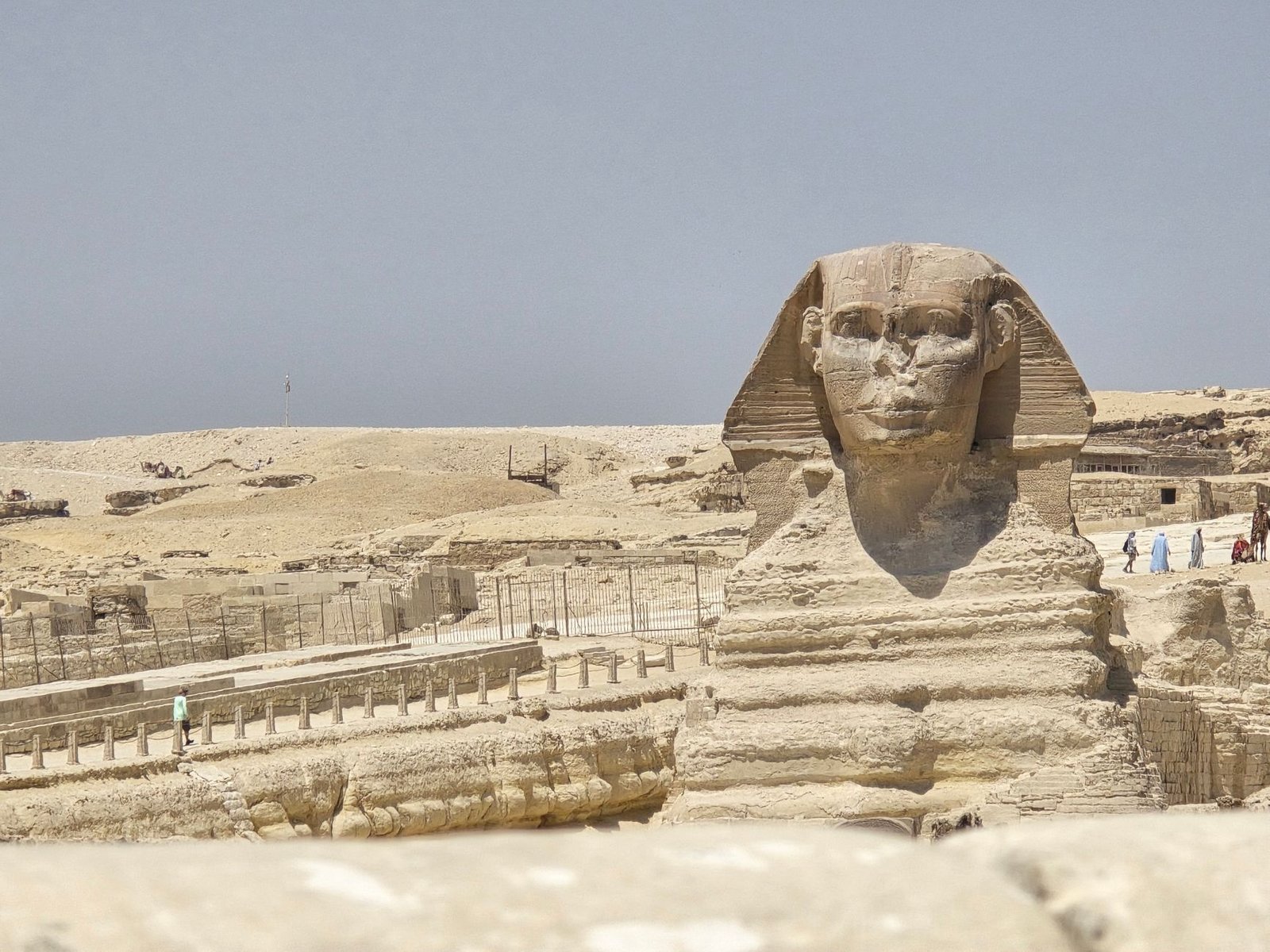
A limestone sculpture with a lion’s body and a human head, measuring 73 meters long and 20 meters tall, carved directly from the plateau’s bedrock. It’s believed to represent Pharaoh Khafre and was erected around the same time as the pyramids, serving as guardian of the necropolis. The damaged nose is one of the monument’s greatest visual mysteries—there’s no definitive record of when or how it was broken, though the popular myth (with no historical backing) claims Napoleon’s soldiers shot it off.
Below the pyramids, archaeologists have uncovered over the centuries funerary chambers, disassembled solar boats (like the Khufu Ship, preserved nearly intact), and access tunnels to the inner chambers. Recent excavations in the area continue to reveal new tombs of nobles and workers who took part in the construction, which helped debunk the old idea that the pyramids were built by slaves—today, most Egyptologists argue the builders were paid workers fed by the Egyptian state. You can find more details about the region’s archaeological discoveries on the Giza Necropolis Wikipedia page.
One detail that surprises those unfamiliar with the area: the Bible makes no direct mention of the pyramids, even though it recounts the Hebrews’ passage through Egypt. The most widely accepted explanation among historians is chronological—the biblical events tied to Egypt, like the Exodus, are placed by scholars well after the 4th dynasty, when the Giza pyramids had already stood for centuries, so they simply didn’t factor into that particular period’s narrative.
What to pair with your visit
You can combine the pyramids with other Cairo sights on the same day or the next. The Egyptian Museum, in the city center, houses Tutankhamun’s collection and is a near-must stop for anyone wanting historical context before or after seeing the necropolis up close. Another common option is fitting in a boat ride on the Nile at sunset, or visiting Khan el-Khalili, Cairo’s historic bazaar, for shopping and street food.
Travelers with more time often continue on to Luxor, about a 1-hour flight from Cairo, where the Valley of the Kings is located—but that’s part of a longer Egypt itinerary, not a day trip.
Where to eat
Near the Giza complex, there’s a large number of tourist-oriented restaurants with higher prices and pyramid views—great for a postcard-photo lunch, but not where the food tends to be most authentic. To try everyday Egyptian dishes like koshari (a mix of pasta, rice, lentils, and tomato sauce), ful medames (fava bean mash), or kebabs, it’s worth moving a few blocks from the main entrance and seeking out simpler spots frequented by locals. In downtown Cairo, the variety is even greater, including street-food specialists near the Khan el-Khalili bazaar.
Where to stay
There are basically two accommodation profiles for those visiting the pyramids: staying in the Giza district, just minutes on foot or by car from the complex, or staying in downtown Cairo, closer to museums, restaurants, and nightlife. Giza is the right choice for those who want to wake up with pyramid views and arrive early without dealing with traffic. Downtown Cairo (the Downtown or Zamalek area), on the other hand, tends to be more practical for those exploring the city as a whole, with more transport options and a livelier urban scene at night.
Where to stay in Cairo
| Hotel | Rating | |
|---|---|---|
| Triple garden view hotelGarden City · 3 Ibrahim Naguib, Garden City | 9,11.207 reviews | See prices |
| Spire West HotelGiza · Abou Bakr El-Sedeek, Al Haram | 9,01.247 reviews | See prices |
| Pyramids sunrise innGiza · 1 El Mansorya Street | 9,11.043 reviews | See prices |
| Garden City Plaza HotelGarden City · El Saraya Al Kobra, Garden City | 9,21.268 reviews | See prices |
| Pyramids Gate HotelGiza · El-Salam 1 | 9,21.662 reviews | See prices |
| Triumph Luxury HotelNew Cairo · Opposite Katameya Heights, New Cairo | 9,01.395 reviews | See prices |
| Steigenberger Hotel El Tahrir CairoDowntown Cairo · Kasr El Nile | 9,311.305 reviews | See prices |
| JAZ Pyramids ResortGiza · 3 minutes from the Grand Egyptian Museum | 9,02.276 reviews | See prices |
Booking.com rating on 30/09/2026
Practical tips
Go with light, breathable clothing, sunscreen, and a hat — there’s no shade across most of the plateau. Bring cash (Egyptian pounds) for tips and small purchases, since not every local vendor accepts cards. The basic complex ticket usually runs between 200 and 300 Egyptian pounds per person, and entry to the inner chamber of the Pyramid of Khufu is sold separately, around €55 — double-check current prices on the official ticket website before you travel, since prices change often and vary by season.
Visa: Brazilian travelers typically need a visa to enter Egypt, usually issued on arrival or electronically before the trip — since these rules change, always confirm with Egypt’s official immigration information before booking your flight.
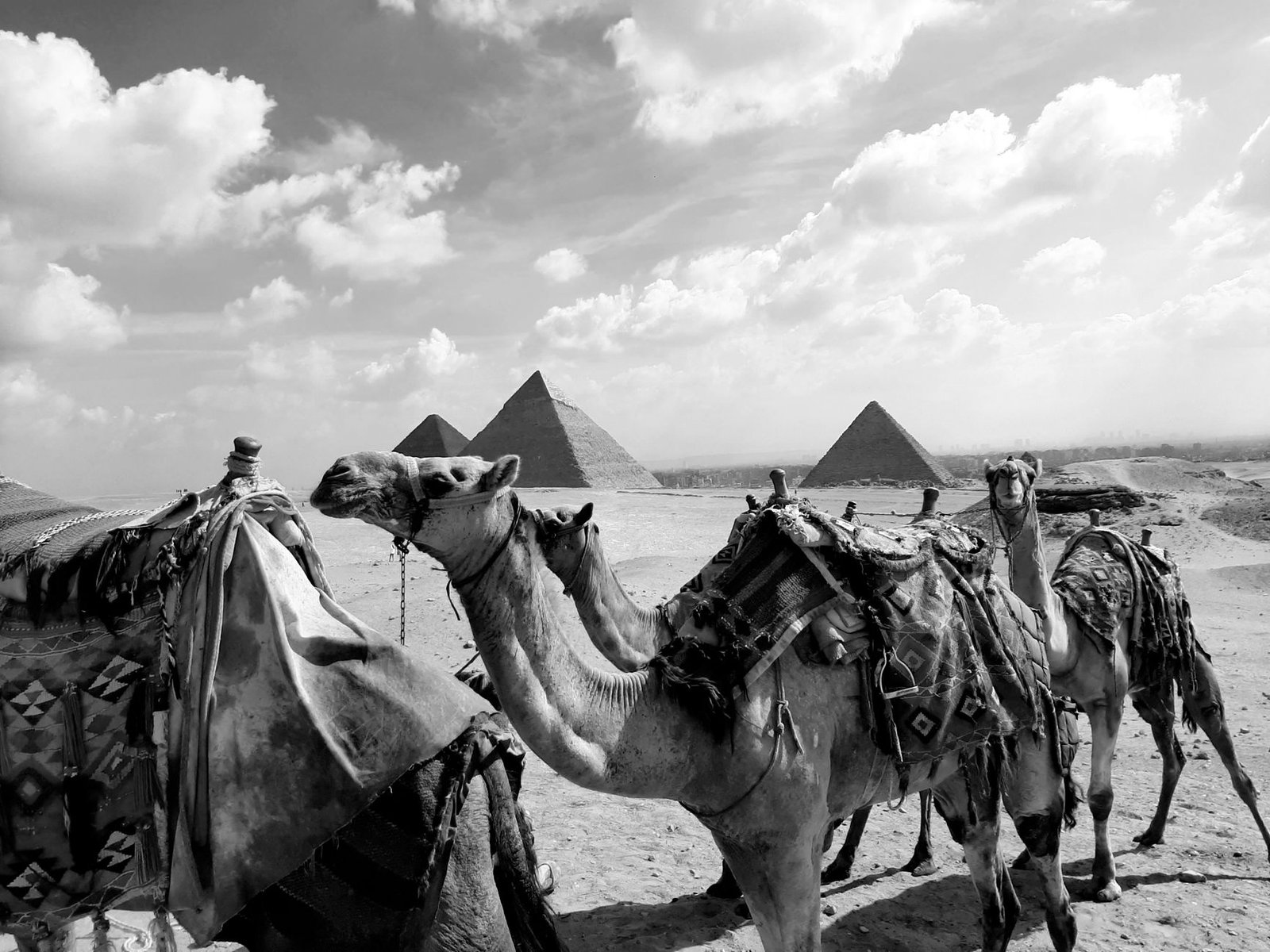
Expect to be approached by informal guides and vendors offering camel rides or “exclusive” photos. Agree on any price before accepting the service, and be wary of anyone who pushes a camel on you without explaining the cost first. If you prefer to keep it simple, you can explore the entire complex on foot without hiring anyone.
 HotelAs soon as you have datesCompare neighbourhoods and guest ratings.See hotels ↑
 ActivitiesBefore you travelBook ahead the ones with limited spots.Civitatis ›
 More activitiesTo compareTickets, day trips and tours with flexible cancellation.GetYourGuide ›
Frequently Asked Questions
What is the history of the Pyramids of Giza?
They were built more than 4,500 years ago, during Egypt’s 4th dynasty, as monumental tombs for the pharaohs Khufu, Khafre, and Menkaure. The construction of the Great Pyramid, the oldest of the three, dates to around 2560 BC, and the complex is the only surviving wonder of the Seven Wonders of the Ancient World.
What are the 3 most famous pyramids in Egypt?
The three pyramids of Giza: the Pyramid of Khufu (the largest), the Pyramid of Khafre, and the Pyramid of Menkaure. Together with the Sphinx, they form Egypt’s most visited and photographed complex.
How much does a ticket to the Pyramids of Giza cost?
The basic complex ticket usually runs between 200 and 300 Egyptian pounds per person. Entering the inner chamber of the Pyramid of Khufu costs extra, around €55. Prices change frequently, so check current rates on the official website before you buy.
What was found beneath Egypt’s pyramids?
Archaeologists have uncovered burial chambers, access tunnels, disassembled solar boats (like the Khufu Boat), and tombs of workers and nobles involved in the construction. Excavations in the area continue to reveal new structures to this day.
What is the Great Sphinx of Giza?
It’s a monumental sculpture with a lion’s body and a human head, carved from the bedrock of the Giza Plateau, measuring 73 meters in length. It’s believed to represent Pharaoh Khafre and was built around the same time as the pyramids, serving as guardian of the necropolis.
To turn your visit into a full trip, also check out our 10-day Egypt itinerary, covering Cairo, Luxor, Aswan, costs, and safety.
Conclusion
The Pyramids of Giza have stood for more than 4,500 years and still impress for one simple reason: no photo prepares you for the sheer scale of the stones up close. It’s worth setting aside a full day in Cairo just for this visit, without rushing. Explore our other destination guides here on Voyage Voyage.