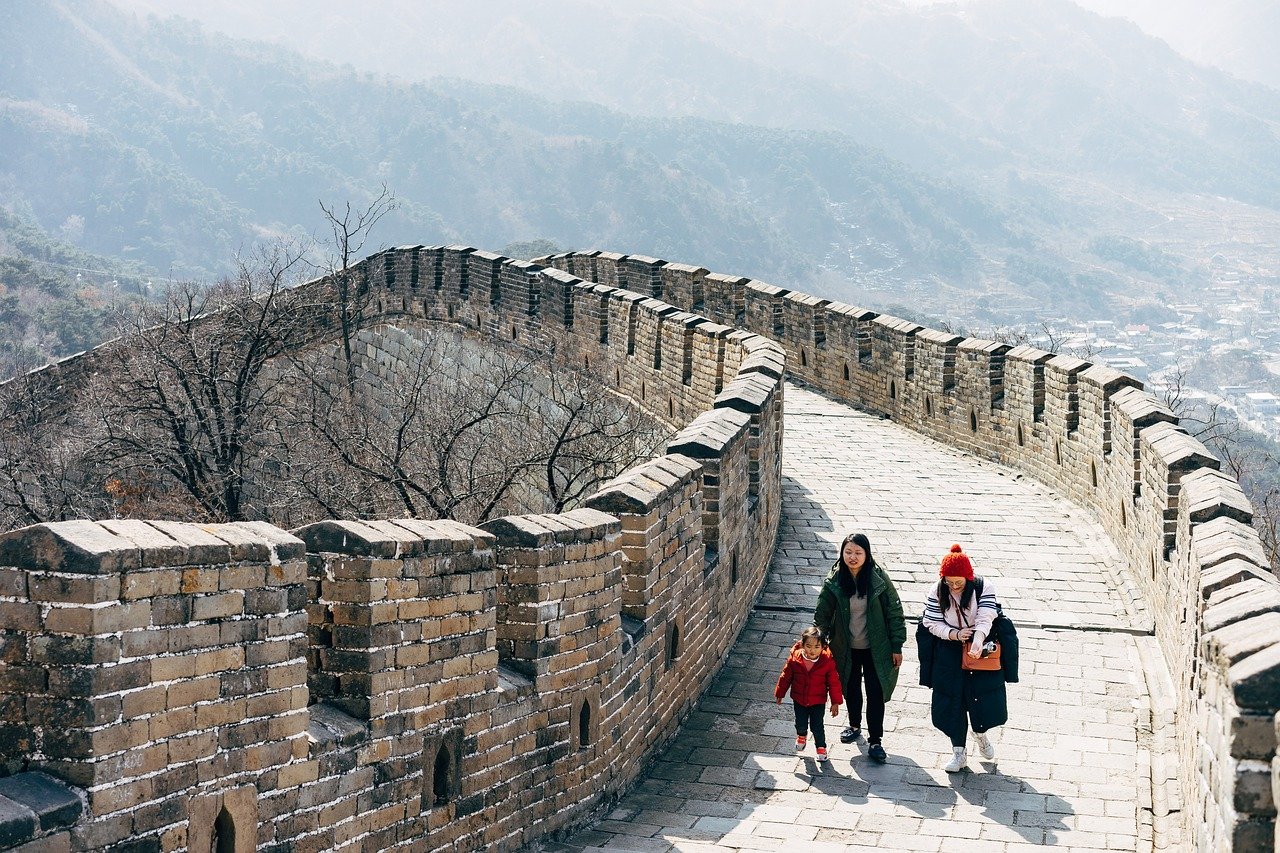
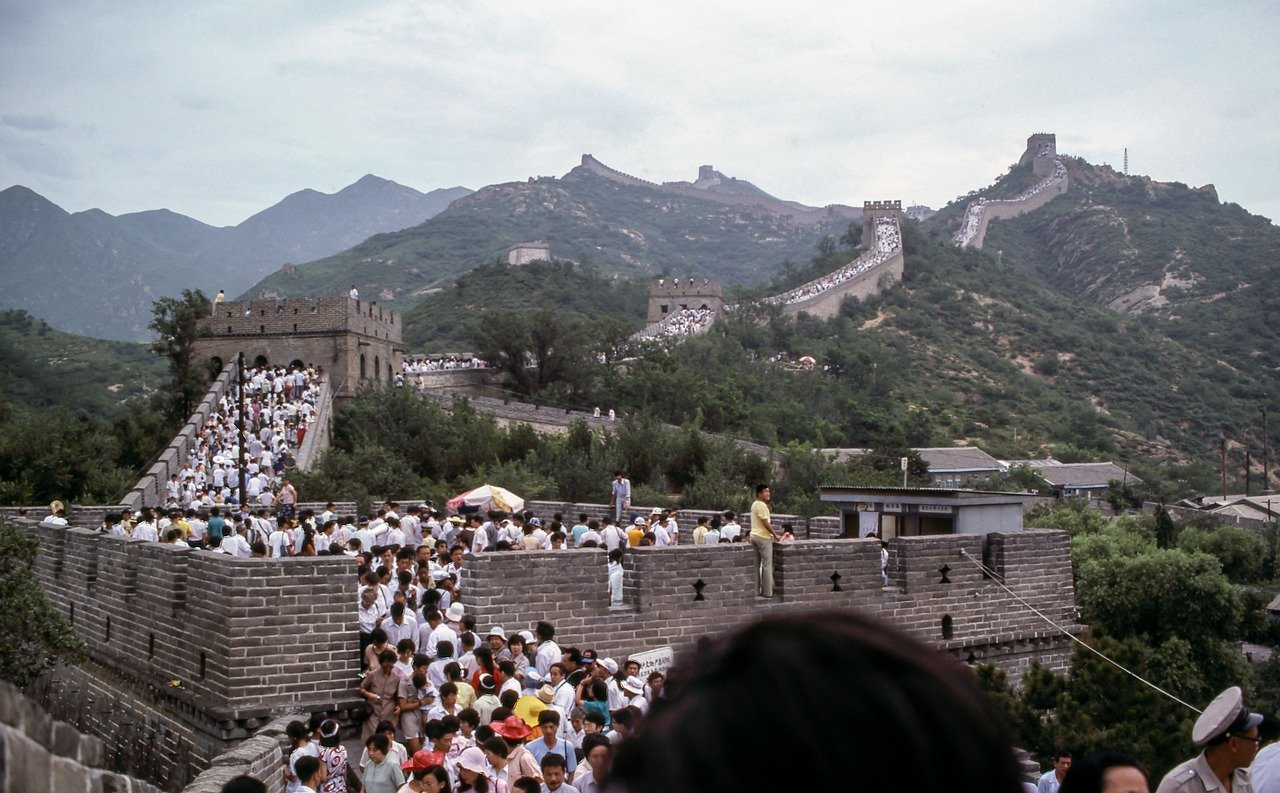
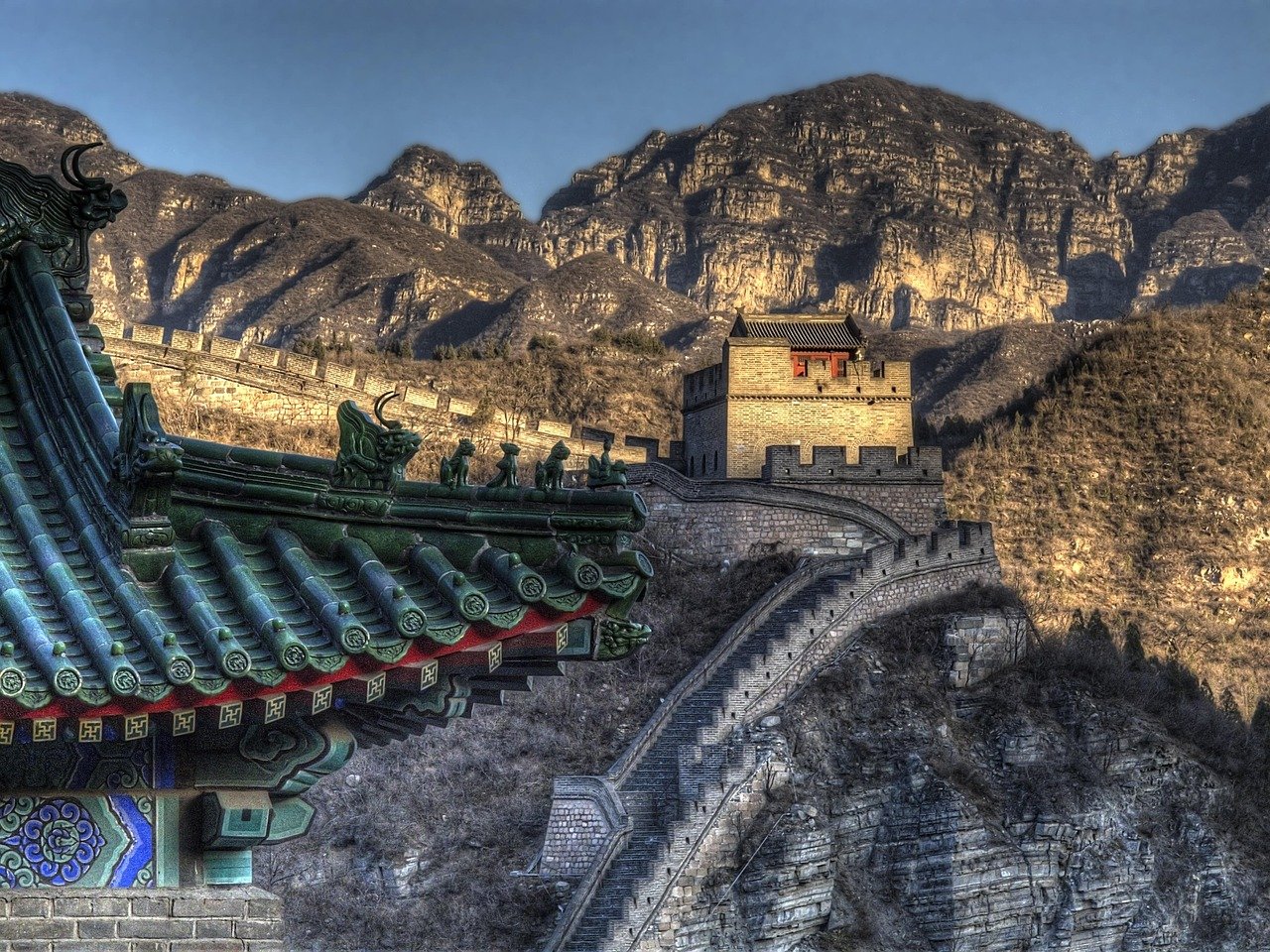
The Great Wall of China is one of the greatest man-made wonders on Earth and the most visited tourist attraction in Asia. Built over centuries, it snakes across more than 13,000 miles of mountainous terrain in northern China, with the most accessible sections located less than 56 miles from Beijing. Tickets cost between 40 and 65 yuan (approximately $6 to $9 USD), depending on the section you choose. This guide covers everything you need to know—how to get there, which section to visit, what to pay, and what to do nearby to make the most of your experience.
About the Great Wall of China
Construction of the Great Wall of China began around the 7th century BC, but it was during the Ming Dynasty (1368–1644) that the best-preserved and most-visited sections we see today were built. The original purpose was to protect Chinese territory from invasions from the north, especially from the Mongols. Over the centuries, different emperors expanded, rebuilt, and connected regional walls until they formed the structure we know today.
In 1987, the Great Wall of China was inscribed on the UNESCO World Heritage List. In 2007, it was voted one of the New Seven Wonders of the Modern World. Today, it welcomes more than 10 million visitors a year just at the sections near Beijing. Each stretch has its own distinct personality: Badaling is the most restored and crowded; Mutianyu offers lush scenery and fewer crowds; Jinshanling and Simatai provide wilder experiences with largely original structure intact.
Children under 18 and seniors over 60 get free entry at Badaling. The online ticketing system at Badaling is exclusively in Chinese, so the easiest option is to buy your ticket through travel agencies or international platforms like Klook and GetYourGuide. At Mutianyu, tickets can be purchased in English directly on the official website.
How to Get to the Great Wall of China from Beijing
Most visitors start from central Beijing. Your options vary in cost, comfort, and travel time:
To Badaling: Take the subway (Line 2) to Jishuitan station, then catch bus 877 or tourist bus 919 direct to Badaling. Another option is the S2 train line, which departs from Huangtudian station. The journey takes 1 to 1.5 hours.
To Mutianyu: Take the subway to Dongzhimen station (Lines 2 and 13) and catch bus 916, which runs every 15 minutes. Get off at Huairou and take a shared van to the Wall entrance. The total trip takes about 1.5 to 2 hours. Bus 867 also departs from Dongzhimen with a direct route, but has more limited schedules.
Ride-hailing apps like Didi (China’s Uber equivalent) work well and are a practical option for groups. By taxi or private car, the trip from Beijing to Badaling takes about an hour without traffic.
If you’re heading to the Great Wall, it’s worth setting aside at least two days in Beijing to combine your visit with other historic sites in the city. Two tours that pair perfectly with your itinerary:
The organized Great Wall tour from Beijing is a great option for those who want convenience, with an English-speaking guide and transportation included—it takes care of all the bus and van logistics for you.
The guided tour of the Forbidden City (Imperial Palace) lets you understand the history of the Ming Dynasty that built much of the Wall, completing a fascinating historical circle within the same itinerary.
For visiting the Wall, the ideal base is central Beijing, where all public transportation access points depart. The Dongcheng and Xicheng districts are close to the subway stations that connect to the Wall and are home to many of the city’s mid-range and upscale hotels. Wangfujing is a central area with easy access to Line 1 of the subway and a wide range of accommodations for different budgets. If you prefer something quieter, the hutongs around Houhai Lake have charming boutique guesthouses in great locations.
How much does a ticket to the Great Wall of China cost?
Tickets vary by section: Badaling costs 40 yuan (about $6 USD), Mutianyu costs 60 yuan (about $8 USD), and Jinshanling costs 65 yuan (about $9 USD). The cable car and toboggan at Mutianyu have additional fees. Children under 18 and seniors over 60 get free entry at Badaling.
Which section of the Great Wall of China is best to visit?
It depends on what you’re looking for. Badaling is the most accessible and well-preserved, but also the busiest. Mutianyu has more beautiful scenery, fewer tourists, and good infrastructure. For a more authentic experience with a nearly intact wall, Jinshanling and Simatai are the best options, though they require more travel time.
How do I get to the Great Wall of China on my own?
From Beijing, for Badaling take the subway to Jishuitan and then bus 877 or the S2 train from Huangtudian. For Mutianyu, take the subway to Dongzhimen and catch bus 916 to Huairou, then a van to the entrance. The journey takes between 1 and 2 hours depending on the section.
What are the opening hours of the Great Wall of China?
At Badaling, hours are 6:30 AM to 7:00 PM during peak season and 7:30 AM to 6:00 PM during low season. Mutianyu is open from 8:00 AM to 5:30 PM. Hours may vary on holidays, so be sure to check the official website before you go.
Do I need to book tickets in advance?
At Badaling, online purchase is mandatory, and the system is only available in Chinese. It’s recommended to buy through travel agencies or platforms like Klook. At Mutianyu, tickets can be purchased on the official English-language website. During peak season, booking ahead helps you skip the lines and avoid sell-outs.
How many days do I need to visit the Great Wall of China?
Visiting the Wall itself takes a full day. Ideally, pair it with at least one or two more days in Beijing to explore the Forbidden City, Tiananmen Square, and the Temple of Heaven. A three-to-four-day itinerary in Beijing is enough to cover the main historical highlights.
St. Peter’s Basilica is the largest church in the world and the spiritual heart of Catholicism—and it sits inside the smallest country on the planet, Vatican City, an independent state nestled within Rome. Entry to the basilica is free, making it one of the most accessible experiences in all of Italy. From the U.S., you can reach Rome with a single layover, and the total flight time runs between 14 and 17 hours; the Vatican is about 2.5 miles from Rome’s historic center, reachable in 20 minutes by metro. The best time to visit is from March to May or September to November—outside the peak summer season, when lines can stretch past two hours. But what surprises most visitors isn’t the sheer size of the place—it’s the sheer number of secrets the Vatican holds about its own popes.
How to get to the Vatican
The Vatican isn’t technically part of Rome, but for all practical purposes, you arrive in the city via Fiumicino Airport (FCO)—the same airport you’d use for any trip to the Italian capital. From the airport to central Rome, the Leonardo Express train reaches Termini Station in 32 minutes (€14; confirm the current price before you travel). From there, Metro Line A takes you to Ottaviano Station in 15 minutes, just a stone’s throw from the Vatican.
Prefer to walk? From Ottaviano Station to St. Peter’s Square is less than a 10-minute stroll. Another popular option is bus 40 or 64, which runs directly from Termini to the Lungotevere, near Castel Sant’Angelo—from there, it’s another 10-minute walk down Via della Conciliazione, the avenue that leads to the square. A taxi from Fiumicino to the Vatican has a fixed fare of around €50 to €60.
The Vatican has been an independent state since the Lateran Treaty was signed in 1929. What separates Rome from the Vatican is, in practice, an invisible border marked by the Leonine Walls, built in the 9th century by Pope Leo IV—you’ll see them as you walk around the state’s perimeter. There’s no passport control to enter; you just pass through a metal detector.
Best time to visit and how long to stay
St. Peter’s Basilica is open every day, and entry is free. As of June 2026, the opening hours are from 7:00 AM to 8:00 PM, with last entry at 7:15 PM—check the official Vatican website before your visit, as hours can change. Outside of July and August—the absolute peak tourist season—the visit flows much more comfortably.
For the basilica alone, set aside 1.5 to 2 hours. If you’re climbing the dome, add another 45 minutes. The Vatican Museums and the Sistine Chapel, which are in the same complex but have a separate entrance and ticket, deserve at least 3 additional hours—it’s better to split them over two days, or you can tackle the whole thing in one day if you’ve got the stamina.
The quietest times are right at opening (before 9:00 AM) and late afternoon, after 4:00 PM. At noon, when tour groups arrive en masse, the basilica gets packed, and the marble acoustics amplify the noise in an uncomfortable way.
The history of St. Peter’s Basilica
The basilica you see today isn’t the original. The first St. Peter’s Church was built in the 4th century by Emperor Constantine on the spot where Christian tradition says the apostle Peter was crucified and buried—on Vatican Hill, then a Roman cemetery on the right bank of the Tiber River. This link between Rome and Christianity is direct: Peter was the first bishop of Rome (what the Church calls the first pope), and his presence in the city marked Rome as the center of Christian faith in the West. Paul, the other great apostle, was also martyred in Rome, and the city became for Catholicism what Jerusalem is for the three Abrahamic religions.
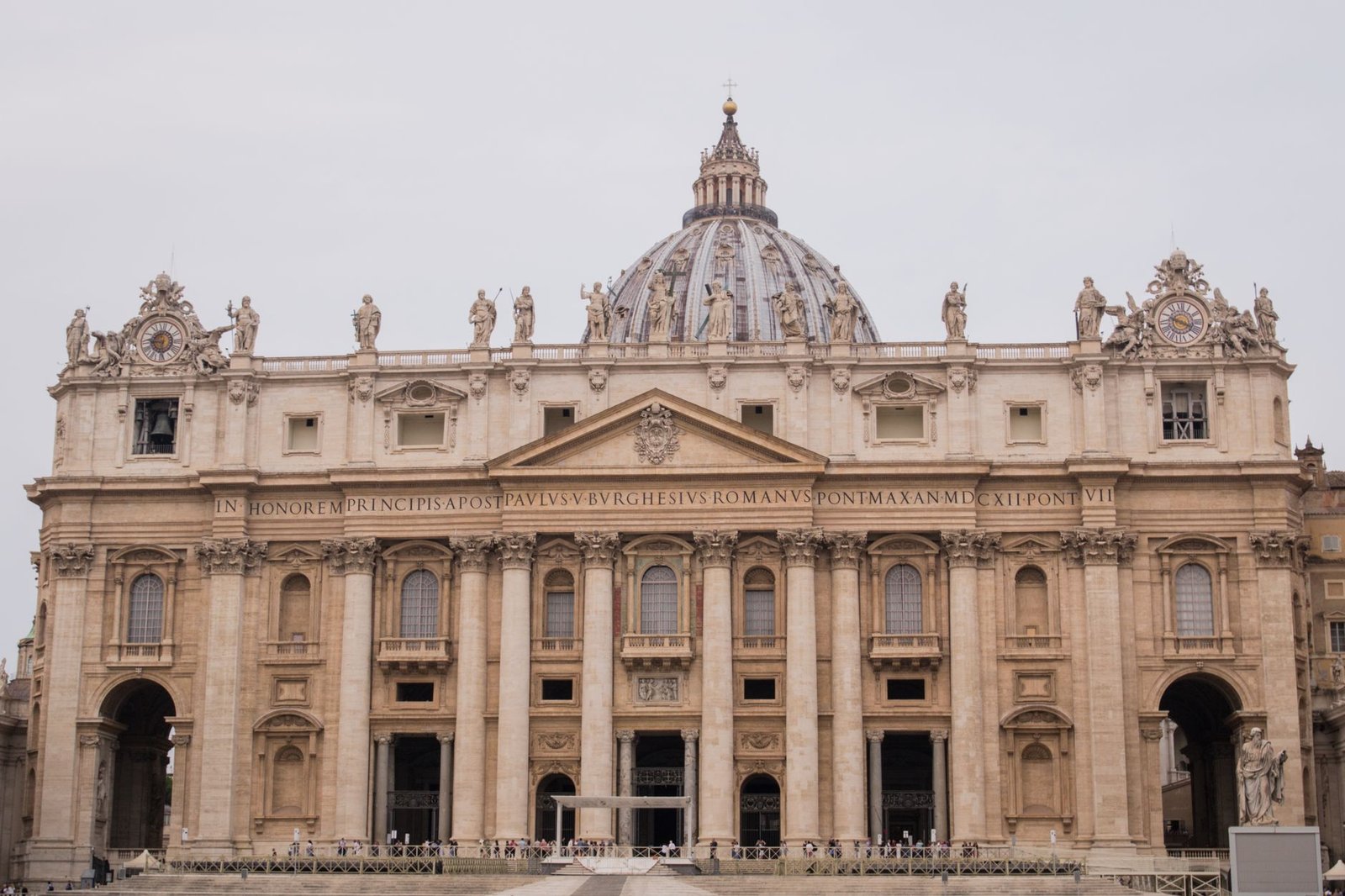
The current basilica was born from a radical decision by Pope Julius II in 1506: to demolish the old Constantinian church and build something unprecedented. The project went through decades of disputes between architects, starting with Donato Bramante, continuing with Raphael Sanzio, and reaching a turning point in 1546 when Michelangelo—who was 71 years old and fundamentally a sculptor—took over the work. It was Michelangelo who designed the iconic dome that defines the Vatican’s skyline. He died in 1564 without seeing it completed; Giacomo della Porta finished the dome in 1590. The final façade, designed by Carlo Maderno, was completed in 1612. The official consecration took place on November 18, 1626—120 years after the first stone was laid.
About Michelangelo and the Sistine Chapel: the story is more complicated than it seems. Michelangelo resisted the commission to paint the Sistine Chapel ceiling, given by the same Pope Julius II—he considered himself a sculptor, not a painter, and feared the project was a public failure planned by rivals to destroy his reputation. He spent four years lying on scaffolding, painting almost entirely alone, and created one of the most studied works in art history. The ban on photography in the Sistine Chapel, in turn, has an economic origin: in the 1980s, the Japanese TV network Nippon Television paid $4.2 million to fund the restoration of the frescoes and received, in return, the exclusive image rights to the restored works. The ban protects that commercial agreement—not the frescoes themselves.
What to see in the Basilica and Vatican
As you enter through the central door of the basilica, the first thing that stops you in your tracks is the scale. The marble floor gleams under a diffuse light coming from the side windows, and the central nave is 187 meters long—the equivalent of two football fields end to end. Marks on the floor show the size of other great cathedrals of the world, all smaller than St. Peter’s.
The façade of St. Peter’s Basilica, designed by Carlo Maderno and completed in 1612. | Photo: Maria Marselle / Pexels
Michelangelo’s Pietà
To the right as you enter, protected by glass since 1972 (when a disturbed man attacked it with a hammer), is the Pietà—the sculpture of Mary holding the dead body of Jesus, made by Michelangelo between 1498 and 1499, when he was just 24 years old. It’s the only work he ever signed: his name is carved on the sash crossing Mary’s chest. The softness of the marble in the robes contrasts with the hardness of Christ’s ribs in a way that still leaves sculptors speechless today.
Bernini’s Baldachin and the Tomb of St. Peter
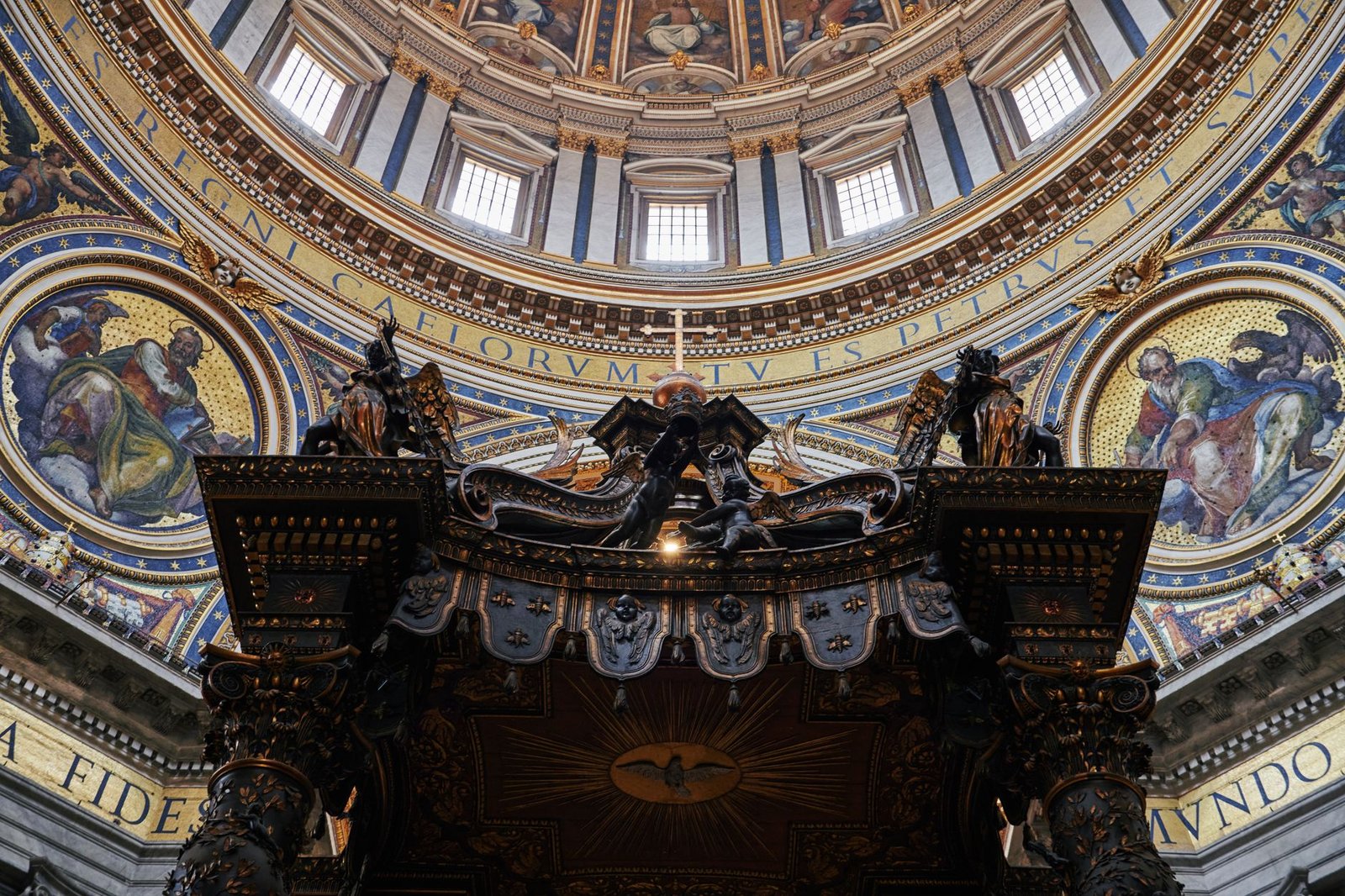
In the center of the basilica, under Michelangelo’s dome, rises Gian Lorenzo Bernini’s bronze baldachin—a 29-meter canopy with twisted columns that marks the exact spot where tradition says St. Peter is buried. Below, in the Confessio—the niche lit by 99 perpetually burning lamps—is a golden grate protecting the underground chamber where the apostle’s remains lie.
Bernini’s bronze baldachin, 29 meters high, marks the exact spot where St. Peter’s remains are located. | Photo: Yevhenii Deshko / Pexels
The Popes Buried in the Basilica
Who is buried in St. Peter’s Basilica? More than 90 popes over the centuries. The Vatican necropolises, accessible by pre-booked guided tour, show the chambers where they rest, from St. Leo I to John Paul II, whose simple white marble tomb draws constant lines of devotees. Pope Benedict XVI is also buried there. Pope Francis broke a tradition of more than 120 years by choosing to be buried at Santa Maria Maggiore in Rome, not in the Vatican—a decision motivated by his devotion to the Salus Populi Romani icon housed in that basilica.
The Dome—and How to Climb It
Climbing Michelangelo’s dome offers a 360° view of Rome that’s hard to beat. The ticket costs €10 for the stairs (551 steps) or €15 with a stretch of elevator up to the drum and the rest on foot—bought inside the basilica itself, or €17/€22 online (2026 prices; confirm on the official website). The most curious part: from an internal gallery at the top of the dome, before you step out onto the terrace, you look down and see the faithful in the nave from a completely different angle—from there, you can read the gigantic mosaic letters that circle the drum, which from the ground look small but are actually 1.4 meters tall each.
What to combine and nearby attractions
The Vatican Museums and the Sistine Chapel are within the Vatican walls, but they have a separate entrance and ticket office from the basilica. The entrance is on Via dei Musei, on the north side of the complex. Book your tickets weeks in advance on the official Vatican Museum website—timed-entry tickets let you skip lines that can reach 3 hours in high season. The difference between the basilica and the Sistine Chapel: they are two distinct complexes, with different entrances and separate routes. You enter the basilica for free from St. Peter’s Square; the Sistine Chapel is accessed through the museums, with a paid ticket. Those taking the museum tour reach the Sistine Chapel at the end of the route.
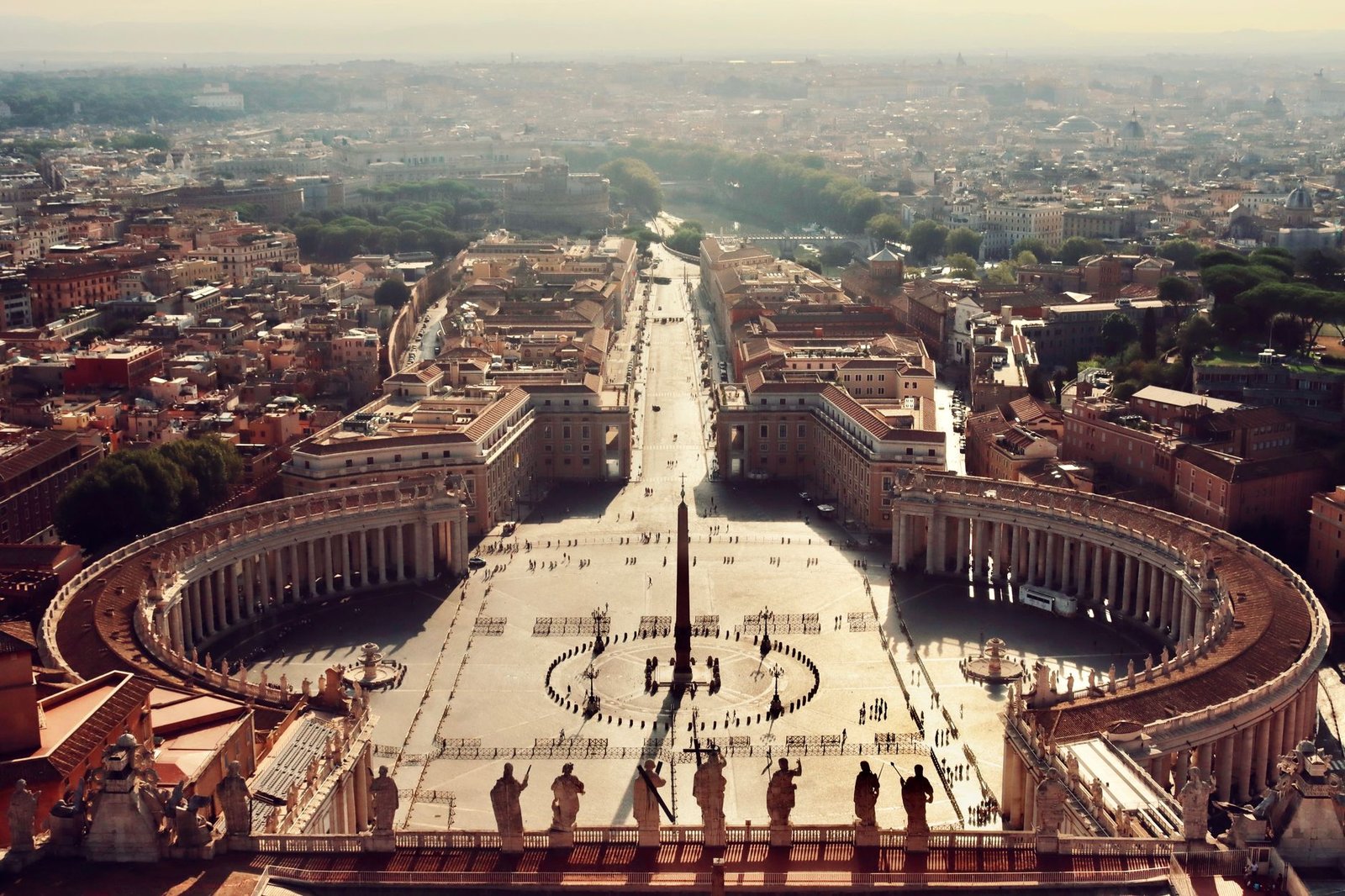
St. Peter’s Square from above: Bernini’s two rows of columns embrace visitors like open arms. | Photo: Efrem Efre / Pexels
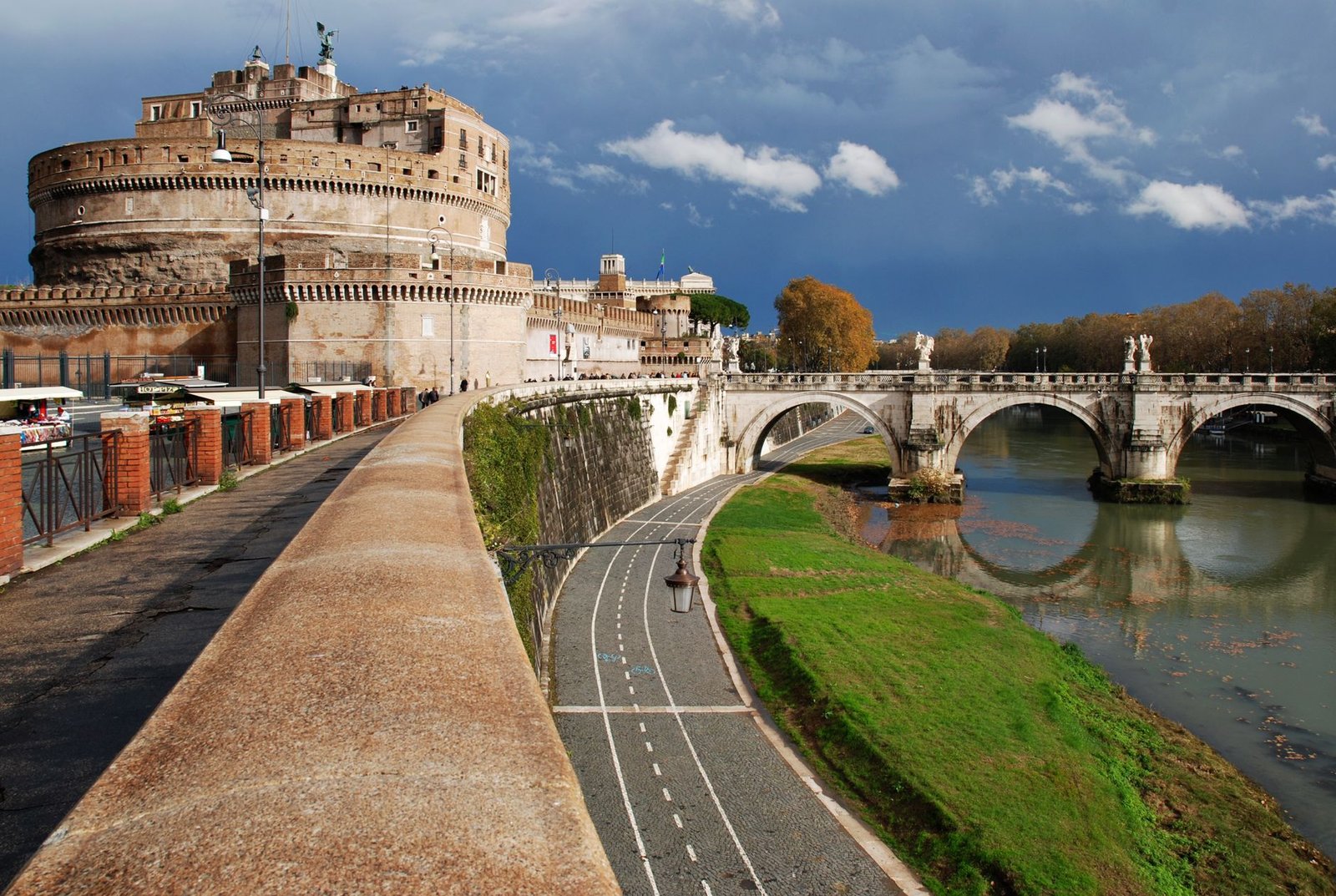
Castel Sant’Angelo is less than a 10-minute walk from St. Peter’s Square, along the Lungotevere. The ancient mausoleum of Emperor Hadrian, later turned into a papal fortress, has one of the best views of Rome from its terrace—and a history of intrigue and escapes that’s worth a book. There’s a secret corridor, the Passetto di Borgo, that connected the castle to the Vatican and was used by popes fleeing during invasions.
To put together a complete Rome itinerary—neighborhoods, transportation, other monuments, and where to eat—the guide Rome: The Complete Guide to Planning Your Trip has everything you need. And if the Colosseum isn’t on your plan yet, the Complete Guide to the Colosseum is the right read before you book your tickets.
Where to eat near the Vatican
The Prati neighborhood, immediately north of the Vatican, is where real Romans eat when they’re in this area. Via Cola di Rienzo is packed with bakeries, neighborhood bars, and trattorias without the markup of the immediate tourist zone. A standing espresso at the counter costs €1.20 to €1.50; sitting down and ordering at a table doubles the price—it’s an unwritten rule in every Italian bar.
For lunch, a plate of pasta all’amatriciana or cacio e pepe at a neighborhood trattoria runs €12 to €16. Avoid trattorias with laminated menus and photos in the window—they’re the ones geared toward passing tourists. A sign of a good place is a menu written by hand on a board that changes with the season.
Good gelato around the Vatican exists, but it takes a little searching: covered containers and natural colors are the right signs. The average is €2 to €3 per scoop at an honest place.
Where to stay in Rome
The Prati neighborhood is the most straightforward choice for anyone who wants to wake up near the Vatican: quiet, residential, with a metro (Lepanto or Ottaviano) and a good selection of 3- and 4-star hotels. It’s a 15-minute walk from St. Peter’s Square and has easy access to the rest of the city.
The Centro Storico—the neighborhoods of Navona, Campo de’ Fiori, and the Pantheon—is more expensive and lively, but it puts you in the historic heart of Rome. For those who want the Vatican as a central point and the rest of the city as a complement, Prati makes more sense. For those in Rome for a week who want to explore everything, the Centro Storico is generally more convenient.
The Trastevere neighborhood, south of the Vatican on the other side of the Tiber, offers the most characteristic atmosphere of ancient Rome, with narrow streets and local nightlife. It’s a 20-minute walk from the Vatican—a pleasant stroll along the Tiber’s edge.
Practical tips
Mandatory dress code: shoulders and knees must be covered to enter the basilica. This applies to both men and women. Lockers with disposable shawls are available at the entrance, but it’s more practical to come prepared. Anyone arriving in shorts or a tank top will be turned away at the door—no exceptions.
Audioguides and Masses: the basilica holds daily Masses and is an active liturgical space. During celebrations, part of the nave is closed to visitors. Check the Mass schedule on the Vatican website before planning your visit time. Audioguides are available in English at the entrance for a modest fee.
Why no pope has taken the name Peter: since the first pope—St. Peter himself—no other pontiff has chosen this name. Oral tradition and a prophecy attributed to the medieval monk St. Malachy say that the last pope in history will be called “Petrus Romanus” (Peter the Roman). Adopting the name would be too heavy a symbolic statement—like announcing the end of the Church. It’s not canon law, but the tradition has held unbroken for 2,000 years.
About the three coffins: centuries-old tradition dictated that popes be buried in three nested coffins—one of cypress (symbolizing humility), one of lead (protection), and one of oak or elm (durability). Pope Francis, during his lifetime, approved a reform of papal funeral rites, making burials simpler: he was buried in a single wooden coffin, without the traditional three coffins, reflecting his personal choice for austerity.
Visa: U.S. citizens can enter Italy (and the Vatican) without a visa for stays of up to 90 days. Check the rules for the ETIAS system, expected to come into effect, on the official European Union website before you travel.
Castel Sant’Angelo on the Tiber River—less than a 10-minute walk from St. Peter’s Square. | Photo: Tom D Arby / Pexels
Frequently asked questions
Are the Sistine Chapel and St. Peter’s Basilica the same thing?
No. They are two distinct buildings within the Vatican, with separate entrances. St. Peter’s Basilica is the large church with Michelangelo’s dome, accessible for free from St. Peter’s Square. The Sistine Chapel is inside the Vatican Museums complex, with a paid entrance and access through a different door (Via dei Musei). At the end of the museum route, you reach the Sistine Chapel—but they are completely separate locations.
Which pope built St. Peter’s Basilica?
The construction of the current basilica was ordered by Pope Julius II in 1506 and lasted 120 years, passing through several popes. The main architects were Donato Bramante (original design), Raphael Sanzio, Michelangelo (who designed the dome), Giacomo della Porta, and Carlo Maderno (façade). The final consecration took place in 1626, under Pope Urban VIII. No single pope built it—it was a collective work spanning more than a century.
Why can’t you take photos in the Sistine Chapel?
In the 1980s, the Vatican made a deal with the Japanese broadcaster Nippon Television, which paid $4.2 million to fund the restoration of Michelangelo’s frescoes. In exchange, Nippon TV received exclusive rights to images of the restored frescoes. The ban on photography protects this commercial contract. Cameras and cell phones are prohibited inside the Sistine Chapel; guards patrol continuously.
Why was Pope Francis buried outside the Vatican?
Pope Francis, who died in April 2025, was buried in the Basilica of Santa Maria Maggiore in Rome—the first time in more than 120 years that a pope was not interred in the Vatican. The choice was personal: Francis had a deep devotion to the Salus Populi Romani icon housed in that basilica and visited the site regularly. During his lifetime, he himself approved the plans for his burial there.
Why has no pope taken the name Peter?
Tradition and symbolic weight. Since St. Peter, the first pope, no successor has chosen the same name. The medieval prophecy of St. Malachy predicts that the last pope in history will be called “Petrus Romanus.” Taking the name Peter would associate a papacy with the end of times—a burden no pope has wanted to carry. There is no canon law forbidding it, but the tradition has held unbroken for two millennia.
Conclusion
St. Peter’s Basilica condenses 2,000 years of history, art, and faith into a single space. Entry is free, but what you carry in your head when you leave is priceless: the overwhelming scale of the nave, the perfect coolness of the Pietà’s marble, the vertigo of looking down from the top of the dome. Arrive early, cover your shoulders and knees, and set aside at least a full day for the Vatican complex. Rome has much more beyond it—and Voyage Voyage has guides for every piece of that puzzle.
Explore the other destination guides here at Voyage Voyage and plan your next adventure with more confidence.
Vatican City is the smallest country in the world—44 acres nestled inside Rome—and, at the same time, one of the most visited destinations on the planet. Technically, you don’t “travel to the Vatican”: you pass through Rome and, after a short walk of a few blocks, cross invisibly into another sovereign state, with its own currency, army, radio station, and passport. Entry to St. Peter’s Square and Basilica is free; the Vatican Museums and the Sistine Chapel require a paid ticket. From the US, you can reach Rome with a single layover, and the Vatican is less than 2.5 miles from the historic center. What few tourists realize is that 2025 was a Holy Year—the Jubilee that happens every 25 years—and visitors who went during that period experienced something completely different from any other visit.
How to get to the Vatican
The Vatican doesn’t have its own airport—you land in Rome, at Fiumicino International Airport (FCO). The Leonardo Express connects Fiumicino to Termini station in 32 minutes for €14 (check the current fare before you travel). From Termini, Metro Line A goes to Ottaviano station in about 15 minutes; it’s another 8 to 10 minutes on foot to St. Peter’s Square. Alternatively, buses 40 and 64 depart from Termini and arrive at Lungotevere, a 10-minute walk from the Vatican.
If you’re already in Rome, the Vatican is easily accessible on foot or by metro from any point in the historic center. From the Trevi Fountain to the Vatican is about a 30-minute walk, a pleasant stroll along the right bank of the Tiber. From the Colosseum, the metro is more practical: Colosseo to Termini, switch to Line A, get off at Ottaviano—about 20 minutes total.
Best time to visit and how long to stay
The golden rule is to avoid July and August: intense heat, lines that can reach 3 hours at the Vatican Museums, and sky-high hotel prices. The most balanced window is from March to May and from September to November. The last Sunday of every month is free at the Vatican Museums—open from 9 AM to 2 PM, with last entry at 12:30 PM. It’s a good option to save money, but be prepared for even longer lines than usual.
If your visit falls during a Holy Year—the next one will be in 2050—the Vatican is especially busy. The 2025 Jubilee attracted tens of millions of additional pilgrims to the city of Rome throughout the entire year, with ceremonies, openings of holy doors, and events that transform the liturgical calendar into a global spectacle.
To cover the essentials—St. Peter’s Square, the Basilica, and the Museums including the Sistine Chapel—you need at least one full day, split into two parts: the Museums in the morning (the earlier the better) and the Basilica in the afternoon, when the lines at the museums have already thinned out. Anyone wanting to see the gardens, the necropolis underground, and other reserved-access areas needs a second day.
What to see and do in the Vatican
The Vatican concentrates more works of art per square meter than anywhere else in the world. According to the most cited data, the Vatican Museums house about 70,000 works—of which only a fraction is on permanent display. But what’s really worth seeing?
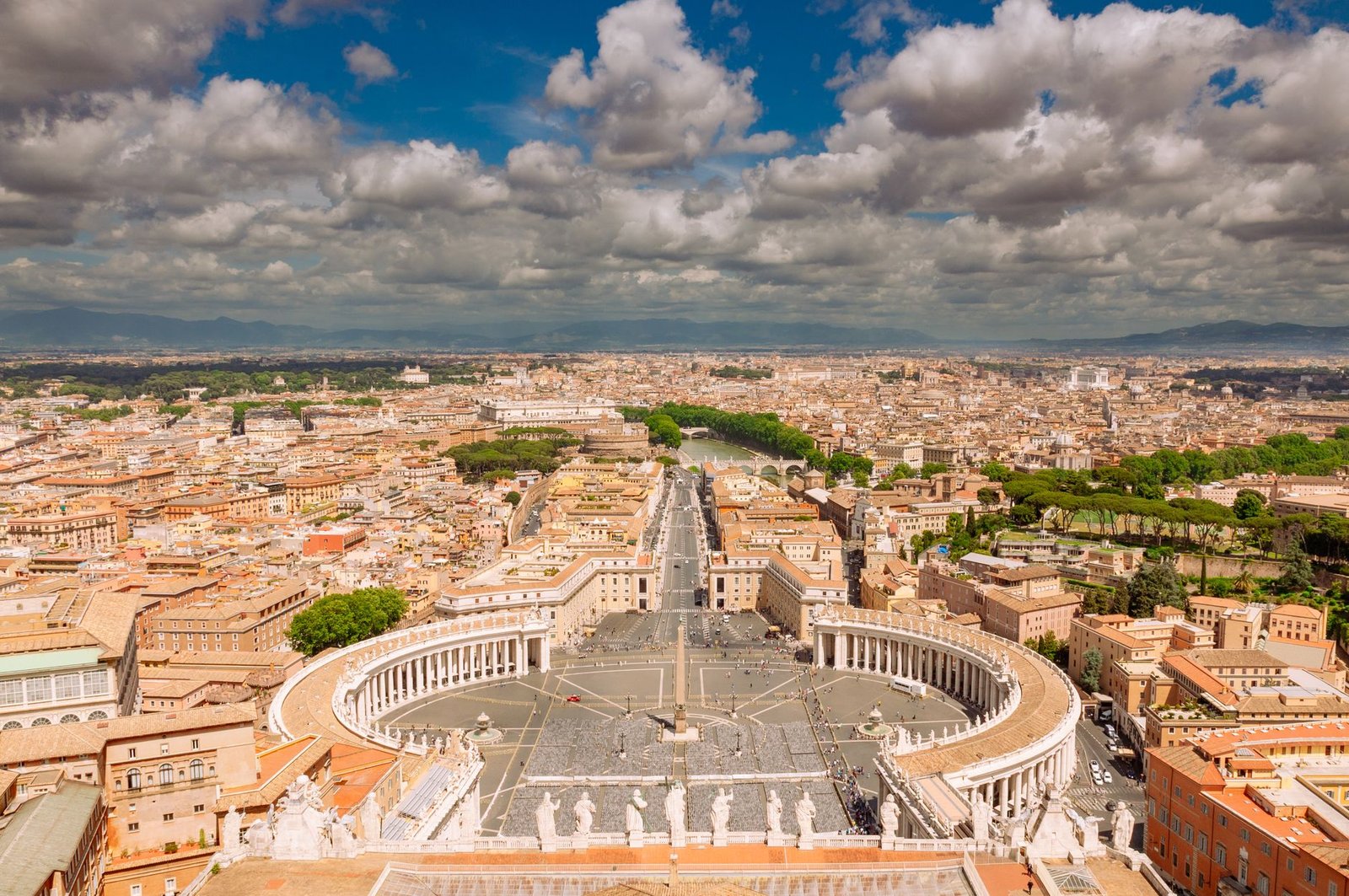
St. Peter’s Square seen from above—the entire Vatican fits within this image. | Photo: Drew Dempsey / Pexels
The Vatican Museums and the Gallery of Maps
The entrance to the Vatican Museums is on Via dei Musei, on the north side of the complex. The standard ticket costs €20 at the box office (in person) or €25 online including the booking fee—2026 prices, check the official Vatican Museums website before purchasing. Book weeks in advance during high season—time slots sell out regularly.
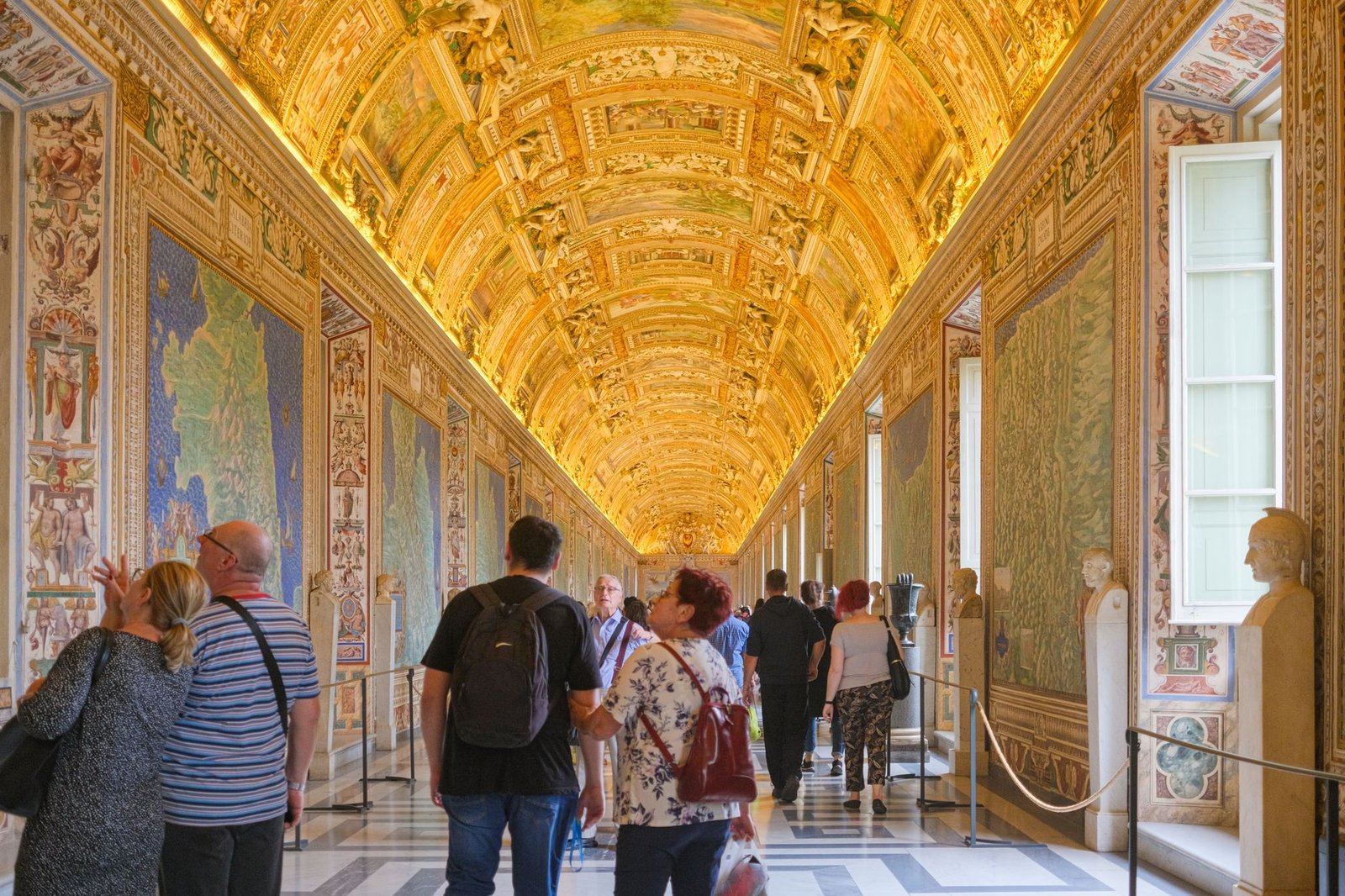
The route through the museums takes you through a sequence of rooms that requires at least 3 hours to enjoy at a relaxed pace. The highlight before the Sistine Chapel is the Gallery of Maps: a 120-meter corridor with a completely frescoed ceiling and 40 cartographic panels of the Italian regions painted in the 16th century. It looks like a geographical archive transformed into a work of art.
The Gallery of Maps in the Vatican Museums: 120 meters of frescoed ceiling and 40 maps of 16th-century Italian regions. | Photo: imren tutuncu / Pexels
The Sistine Chapel
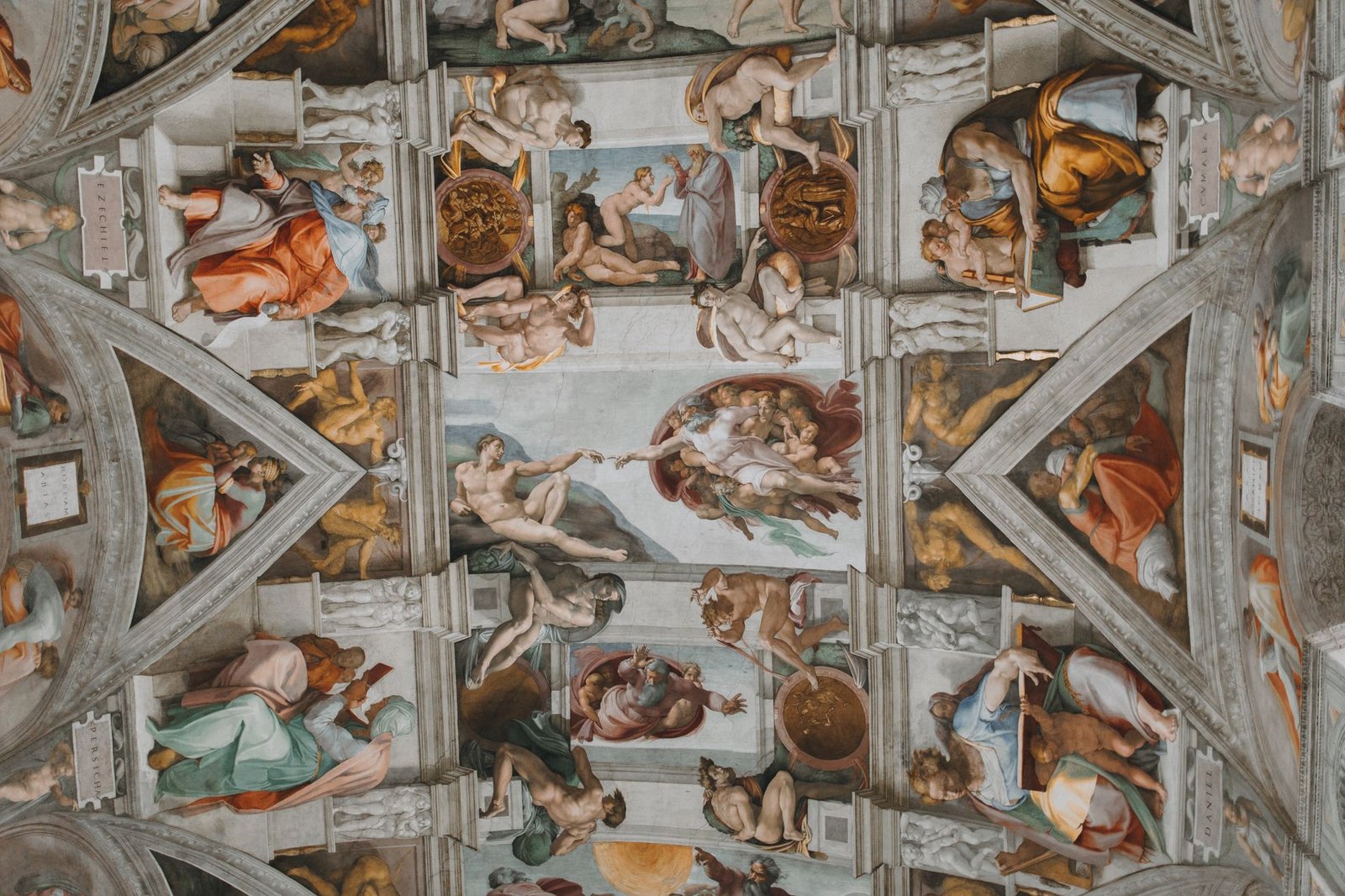
At the end of the museum route, you enter the Sistine Chapel. It’s a rectangular room smaller than most people imagine—and when you look up, Michelangelo’s ceiling painting fills your entire field of vision. He painted the ceiling between 1508 and 1512, reluctantly: he was hired by Pope Julius II at a time when he considered himself a sculptor, not a painter. The result is over 500 figures spread across scenes from Genesis, with the famous “Creation of Adam” right in the center. Photos are prohibited due to an exclusive rights agreement with a Japanese broadcaster that funded the restoration in the 1980s—guards patrol constantly.
The ceiling of the Sistine Chapel painted by Michelangelo between 1508 and 1512—works the artist never wanted to do. | Photo: Alina Rossoshanska / Pexels
St. Peter’s Basilica and the Square
Entry to St. Peter’s Basilica is free from the Square, with a security check. The square itself, designed by Bernini with its two curved colonnades, is one of the most well-resolved public spaces in the history of Western architecture. For everything inside the basilica—Michelangelo’s Pietà, Bernini’s baldachin, the papal tombs, and the climb to the dome—we have a complete guide to St. Peter’s Basilica with all the details and practical tips.
The Vatican as a country: how it works
Why is the Vatican a country? The answer has a date: February 11, 1929, when Benito Mussolini and Pope Pius XI signed the Lateran Treaty. Until then, the question of the Catholic Church’s independence from the Italian state had been in dispute since the unification of Italy in 1870. The agreement recognized the Vatican as a sovereign state—independent, neutral, and inviolable—in exchange for the Vatican’s recognition of the Italian state. Its full official name is the Vatican City State.
The Vatican has about 885 residents, according to 2025 data—the smallest population of any country in the world. Living in the Vatican is possible, but exclusive: residency is granted only to those who work there—members of the clergy, administrative staff, members of the Swiss Guard, and their families. Vatican citizenship is functional, not hereditary: when you stop working at the Vatican, you lose the right of residence and revert to your original nationality.
The official languages are Latin—used in formal ecclesiastical documents and as the Church’s liturgical language—and Italian, the language of daily life, staff, and interactions with Rome. The Pope usually speaks in Italian, but the Holy See’s official documents are issued in Latin.
The Vatican is governed by the Pope, who combines the role of head of state of the Vatican with the spiritual leadership of the Catholic Church. It is an absolute theocratic monarchy—the power is elected (by the College of Cardinals in Conclave) but is for life and not subject to democratic review. The Vatican Secretary of State functions as a kind of prime minister, coordinating the Roman Curia, the Church’s bureaucratic apparatus.
Is the Vatican rich? It depends on how you measure it. The state itself has a relatively modest budget—around €400 million annually, mainly from donations from the faithful (Peter’s Pence) and museum revenues. The Holy See, a distinct legal entity that administers the Catholic Church’s assets worldwide, controls real estate, works of art, and investments of incalculable value. The Vatican is not the country with the highest GDP per capita in the world—that title varies between Monaco and Luxembourg—but it is certainly one of the entities with the highest concentration of historical and artistic wealth on the planet.
The Swiss Guard and the oldest active army
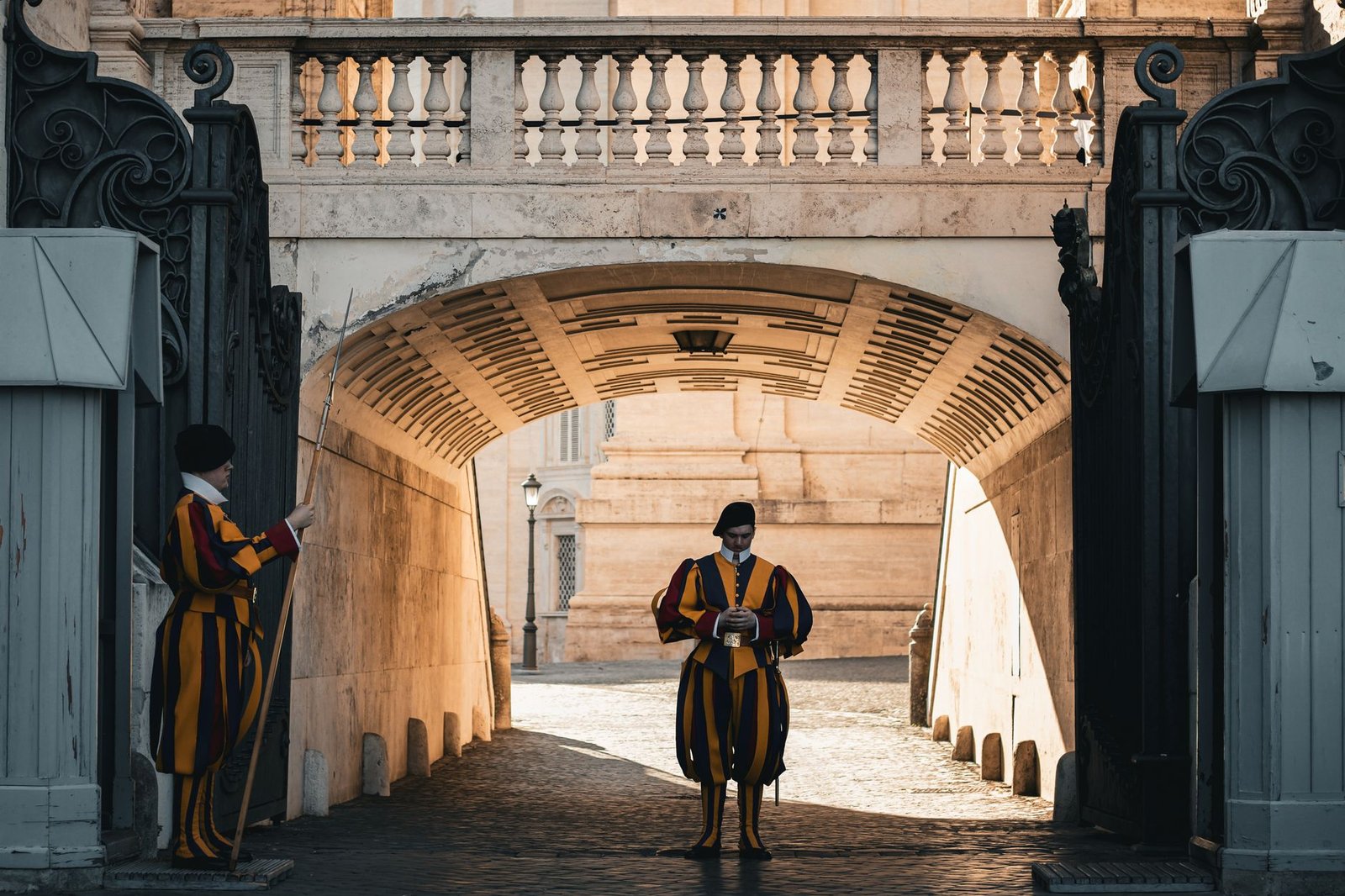
The Pontifical Swiss Guard was founded in 1506 by Pope Julius II—the same pope who commissioned the Basilica and forced Michelangelo to paint the Sistine Chapel. The colorful uniforms you see at the entrances were designed (according to tradition, though historically disputed) based on sketches by Michelangelo. The guards are required to be Swiss citizens, male, practicing Catholics, with military training and a minimum height of 1.74m (5’8″). There are about 135 guards on duty—and they are, at the same time, one of the most photographed sights in the Vatican and one of the most effective security forces in the world.
The Pontifical Swiss Guard, founded in 1506—the oldest private army in the world in continuous service. | Photo: Ömer Gülen / Pexels
What happens in the Vatican every 25 years
Every 25 years, the Pope proclaims a Jubilee—the Holy Year. The last one was in 2025, the previous one in 2000 (with John Paul II). During the Jubilee, the Pope opens the Holy Door of St. Peter’s Basilica, which remains closed in other years, and pilgrims who pass through it, having confessed and fulfilled specific conditions, receive a plenary indulgence—total remission of the temporal punishment for sins. The Holy Year has roots in the Jewish Old Testament and was adopted by Catholicism in 1300 by Pope Boniface VIII. For non-Catholics, the Jubilee is a fascinating observation: Rome doubles or triples its visitor flow, and the Vatican becomes the epicenter of one of the largest religious events on the global calendar.
What to combine and nearby areas
Castel Sant’Angelo, a 10-minute walk from St. Peter’s Square, was Emperor Hadrian’s mausoleum and later a papal emergency fortress. A secret corridor—the Passetto di Borgo—connected the castle directly to the Vatican for escape in case of attacks. The terrace offers one of the best panoramic views of Rome.
The Trastevere neighborhood is a 15-minute walk from the Vatican, on the other side of the Tiber. It’s the most atmospheric district of the old city, with medieval churches, narrow alleys, and the neighborhood life that the historic center has lost. The Basilica of Santa Maria in Trastevere has 12th-century mosaics that rival anything in the museums.
For those wanting to explore Rome beyond the Vatican, the Complete Guide to Rome here on Voyage Voyage covers neighborhoods, transportation, food, and the city’s other monuments—including the Colosseum, which is on the opposite end of the city but equally accessible by metro.
Where to eat near the Vatican
Eating in the immediate vicinity of St. Peter’s Square is, generally, a terrible culinary idea: tourist-oriented establishments charge double for half the quality. The Prati neighborhood—just a block north of the Vatican—offers a much better alternative, with bakeries, bars, and trattorias where Vatican employees have lunch.
On Via Cola di Rienzo, Prati’s main artery, you’ll find cafes where a standing espresso costs €1.20 to €1.50 and pastry shops with a morning cornetto for €1 or €2. For lunch, a plate of the daily pasta at a restaurant without a plastic menu runs €12 to €16. Roman cuisine has its own logic: the further you are from the tourist attractions, the better and cheaper it gets.
Quality gelaterias in Prati usually have covered containers and seasonal ingredients on the menu. Look for ones that aren’t right in front of the main attractions—a scoop at a good place costs between €2 and €3.
Where to stay in Rome
Prati is the logical choice for anyone wanting the Vatican as their central point: quiet, residential, with a good selection of hotels at reasonable prices (by Rome’s standards) and the metro a 10-minute walk away. The only downside is access to the rest of the city—you’ll need the metro for the Colosseum and the Centro Storico.
The Centro Storico—neighborhoods like Navona, Campo de’ Fiori, and the Pantheon—is more expensive, but puts you in the middle of everything. It’s the right choice for anyone staying more than 4 days and wanting to explore Rome at a leisurely pace. For short visits focused on the Vatican, Prati is more practical and economical.
The Borgo neighborhood, immediately in front of the Vatican (between St. Peter’s Square and Castel Sant’Angelo), has hotels in an unbeatable location, but the prices reflect that. An interesting option for anyone wanting to wake up 5 minutes from the basilica without thinking about transportation.
Practical tips
Dress code throughout the Vatican area: shoulders and knees must be covered to enter the Basilica. The same rule applies to the Museums. Anyone arriving in shorts or a tank top may be turned away—no exceptions and no negotiation.
Currency: the Vatican issues its own euro coins, highly sought after by collectors, but uses the Italian euro as its practical circulating currency. Vatican coins sometimes appear in change at shops and cafes—keep one if you come across it.
About the Pope’s salary: the Pope does not receive a salary. All living costs, residence, travel, and healthcare are covered institutionally by the Vatican. The Pope may receive personal donations, but there is no papal paycheck. It’s one of the most powerful jobs in the world without formal compensation.
Visa: US citizens enter the Vatican—and all of Italy—without a visa for stays of up to 90 days. Check the rules for the ETIAS system (electronic authorization planned for the Schengen Zone) on the official website before traveling, as requirements may change.
What the Vatican has of its own: besides the army (Swiss Guard), the state has its own postal service (with stamps collected worldwide), a bank (Institute for the Works of Religion, known as the IOR), a pharmacy (famous in Rome for having hard-to-find imported medications), a radio station (Vatican News), a newspaper (L’Osservatore Romano), a small railway, and a private supermarket with tax-free prices—accessible only to employees.
Frequently asked questions
Why is the Vatican a country?
The Vatican became an independent state through the Lateran Treaty, signed on February 11, 1929, between Benito Mussolini (for the Italian government) and Pope Pius XI. The agreement resolved the “Roman Question”—the conflict between the Church and the Italian state that had lasted since the unification of Italy in 1870. With the treaty, the Catholic Church recognized the Italian state, and Italy recognized Vatican sovereignty over the 44-acre enclave in Rome.
How many people live in the Vatican, and is it possible to live there?
The Vatican had about 885 residents in 2025, according to official data—the smallest population of any recognized country. It is possible to live there, but only if you are a Vatican citizen, and citizenship is functional: it is granted to those who hold a position in the state (clergy, staff, Swiss Guard, and their immediate families). When you stop working at the Vatican, you lose your citizenship and revert to your original nationality. Vatican citizenship is not inherited.
What happens in the Vatican every 25 years?
Every 25 years, the Vatican proclaims a Holy Year (Jubilee). The Pope opens the Holy Door of St. Peter’s Basilica, and pilgrims who pass through it in a state of grace receive a plenary indulgence. The last Jubilee was in 2025; the previous one was in 2000. The tradition of regular Jubilees was established in 1470 by Pope Paul II, who set the 25-year interval. There are also extraordinary Jubilees, called outside the regular cycle for special occasions.
Is the Vatican the richest country in the world?
It depends on the criteria. The Vatican City State has an annual budget of about €400 million—modest for a state. But the Holy See, the legal entity that administers the Catholic Church’s assets worldwide, controls real estate, works of art, and investments of immense and practically incalculable value. By conventional GDP per capita, countries like Monaco, Liechtenstein, and Luxembourg rank higher. The Vatican is extraordinarily rich in terms of historical and symbolic assets—not necessarily in current income.
What is the official language of the Vatican, and who governs it?
The official languages are Latin (for formal ecclesiastical documents) and Italian (the language of daily life). The Vatican is governed by the Pope, who combines the roles of head of state of the Vatican and spiritual leader of the Catholic Church. It is an absolute theocratic monarchy: the Pope is elected by the cardinals in Conclave, governs for life, and is not answerable to any democratic body. The Vatican Secretary of State coordinates the daily administration of the Roman Curia.
Conclusion
Visiting the Vatican means crossing, in less than an hour from Rome, into the world’s smallest country—and one of the greatest artistic collections in human history. St. Peter’s Square is free to enter; the museums require an advance reservation and a few hours of planning. The rest is letting the scale of it all sink in: the Sistine Chapel ceiling is bigger than any reproduction suggests, and the Swiss Guard is more real than any souvenir from a shop.
Explore the other destination guides here on Voyage Voyage and plan your next adventure with more confidence.
Machu Picchu is the best-preserved Inca citadel in the world—and probably the most photographed in South America. It sits in Peru, at 2,430 meters (7,970 feet) above sea level in the Andes, perched on a narrow ridge between two peaks that seems absurdly impractical for an entire city. From the US, the standard route goes through Lima and then Cusco: it’s about an 8-hour flight from major hubs like Miami or New York to Lima, plus a 1-hour 20-minute domestic flight to Cusco, from where you reach Machu Picchu by train and bus in under 3 hours. The best time to go is between May and October, the dry season in the Andes—but budget ahead of time, because tickets sell out weeks in advance. What surprises most people when they get there is realizing the classic photos don’t show half the scale of the place.
How to get there
The most common route from the US to Machu Picchu starts with a flight to Lima (LIM), Peru’s capital. From Miami (MIA), direct flights are frequent with LATAM and other airlines, lasting about 6 hours. From New York (JFK), expect around 8 hours. Round-trip tickets usually start around $400 in the low season but can climb to $800 or more between June and August. About visas: US citizens do not need a visa for tourist visits to Peru—but always check the current rules on the official Peruvian embassy website before traveling, as they can change.
From Lima, you take a domestic flight to Alejandro Velasco Astete Airport in Cusco (CUZ), lasting 1 hour 15 minutes to 1 hour 20 minutes. Airlines like LATAM Peru and Sky Peru operate this route several times a day; prices range from $40 to $150 depending on how far in advance you book. Heads up: Cusco sits at 3,400 meters (11,150 feet) above sea level—when you arrive, walk slowly, drink plenty of water, and allow at least one day for acclimatization before heading up to Machu Picchu.
From Cusco, most visitors first go to Ollantaytambo (1.5 to 2 hours by car or bus), then take the train to Aguas Calientes—the town at the foot of Machu Picchu mountain—and from there take a bus or hike up to the citadel entrance. The train ride from Ollantaytambo to Aguas Calientes takes about 1 hour 40 minutes and is operated by PeruRail and Inca Rail; book at least 3 weeks in advance during high season, as schedules sell out. From Aguas Calientes, the official bus to the Machu Picchu entrance takes 20 minutes and starts running at 5:30 AM; hiking up takes about 1 hour.
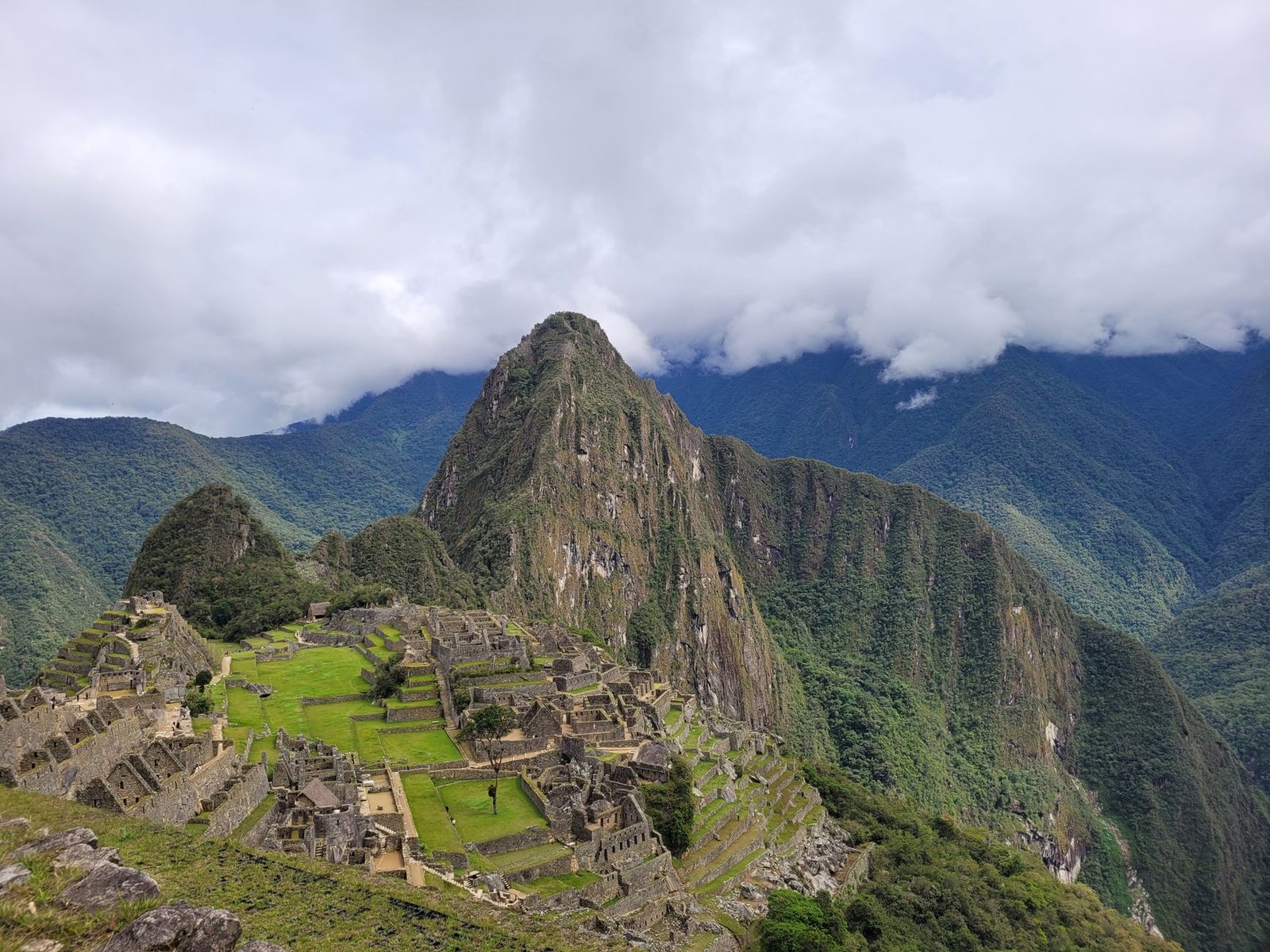
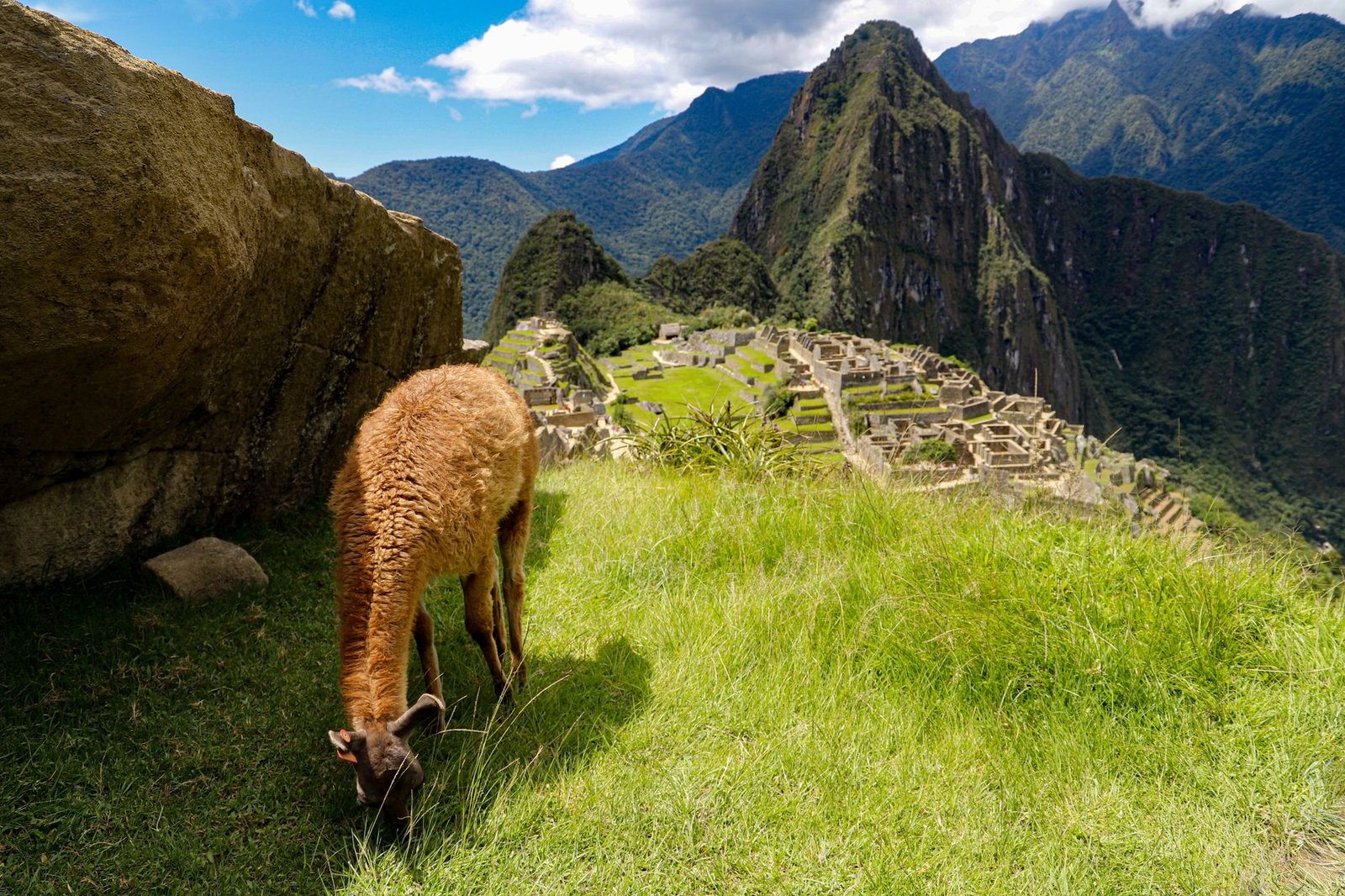
The ruins of Machu Picchu emerge between the mountains at 2,430 meters (7,970 feet) above sea level—a construction that impresses with its scale and location. | Photo: Laura Rudi / Pexels
Best time to visit and how long to stay
Peru has two well-defined seasons in the Andes: dry (May to October) and rainy (November to April). The dry season is the tourist favorite—blue skies, dry trails, and full visibility of the mountains. June, July, and August are the busiest months; if you go during this time, buy your tickets 6 to 8 weeks in advance, as the daily visitor limit is 5,600 people and it sells out fast.
For those who prefer fewer crowds and lower prices, April, May, October, and November offer a sweet spot: good weather most of the time, greener fields from recent rains, and tickets available with less lead time. January and February are the rainiest months—frequent fog covers the ruins in the morning, but this creates a unique look for anyone into dramatic photography.
For the visit itself, 1 full day is the minimum to explore the citadel at a relaxed pace. If you include the classic Inca Trail (4 days and 3 nights of trekking), set aside at least a full week including Cusco. Most US visitors spend between 8 and 12 days in Peru, combining Lima, Cusco, the Sacred Valley, and Machu Picchu.
What to see and do at Machu Picchu
The Inca Citadel
“Is it worth it without a guide?” It is—but with a guide, it’s a whole different experience. The citadel has ten numbered circuits, each with specific allowed points. You buy a ticket linked to a circuit and an entry time on the official website of Peru’s Ministry of Culture. Prices in 2025: tickets for Circuit 1 (basic access) start at S/. 152 soles (about $40 USD, exchange rate varies) for adults. Arrive early—the first entries at 6 AM let you see the fog lifting over the terraces, a spectacle you won’t get later in the day.
The main highlights inside the citadel include the Temple of the Sun, the Room of the Three Windows, the Intihuatana (stone solar clock), and the agricultural terraces cascading down the slope. Set aside at least 2 to 3 hours to walk through the archaeological area at a leisurely pace.
Llamas roam freely through the ruins—and they don’t really care about the tourists. | Photo: Daniel Rojas Luzquiños / Pexels
The Inca Trail
The classic Inca Trail is 26 miles (43 km) long and takes 4 days hiking through the Andes, arriving at Machu Picchu through the Sun Gate (Intipunku) at dawn on the fourth day. It’s a moderate to high-difficulty trek, with sections above 4,200 meters (13,780 feet) in altitude. The number of permits for the Inca Trail is limited to 500 people per day (including guides and porters) and sells out months in advance, especially between June and August—book your spot up to 5 months ahead if you’re going during this time. Those who prefer something less demanding can opt for the Salkantay Trail (5 days) or the Lares Trail (3-4 days), both of which end in Aguas Calientes.
Additional mountains: Waynapicchu and Montana
Two peaks can be climbed with an additional ticket: Waynapicchu (that pointy hill in the background of classic photos) and Montana Machu Picchu (the summit above the citadel). Both require a separate ticket with limited availability, purchased along with your main entry. Waynapicchu has a steep climb with stone stairs and no handrails—not recommended if you have a fear of heights. Montana is more accessible and offers a complete aerial view of the ruins.
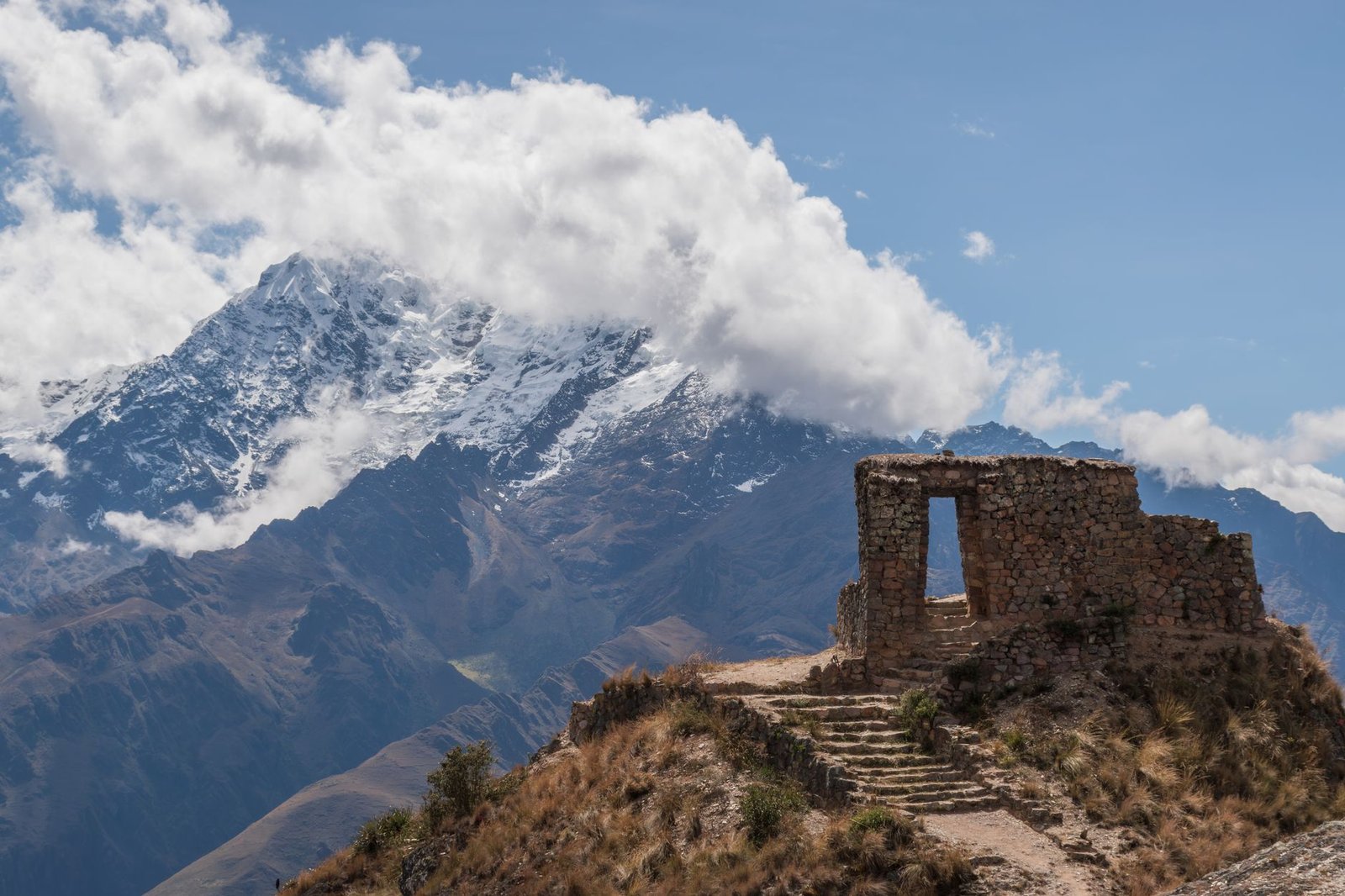
The Intipunku Gate (Sun Gate) offers the first view of Machu Picchu for those hiking the Inca Trail. | Photo: Jose Luis QE / Pexels
What to combine / surrounding area
Machu Picchu doesn’t exist in a vacuum—the Peru around it is just as rich. The base for almost every trip is Cusco, the ancient capital of the Inca Empire at 3,400 meters (11,150 feet) above sea level. The city has colonial streets built on Inca foundations, the impressive Plaza de Armas, the Cathedral, and Coricancha (the Inca Temple of the Sun). Set aside at least 2 days there. To learn more about the region’s historical heritage, the official Peru tourism portal and the Wikipedia page on Machu Picchu are good supplementary references.
The Sacred Valley of the Incas, between Cusco and Ollantaytambo, deserves a full-day excursion: it includes the fortress of Ollantaytambo (still inhabited), the Maras salt flats, and the circular terraces of Moray. You can do it by rental car or with a local agency for S/. 70 to 120 soles per person.
For those wanting to extend their South American trip, Lima, the Peruvian capital, is a must-stop on the way in or out—the Miraflores neighborhood has one of the most recognized food scenes on the continent. And if you’re already in the hemisphere, combining Peru with a getaway to Argentina might make sense: check out the complete Buenos Aires guide on Voyage Voyage to plan the extension.
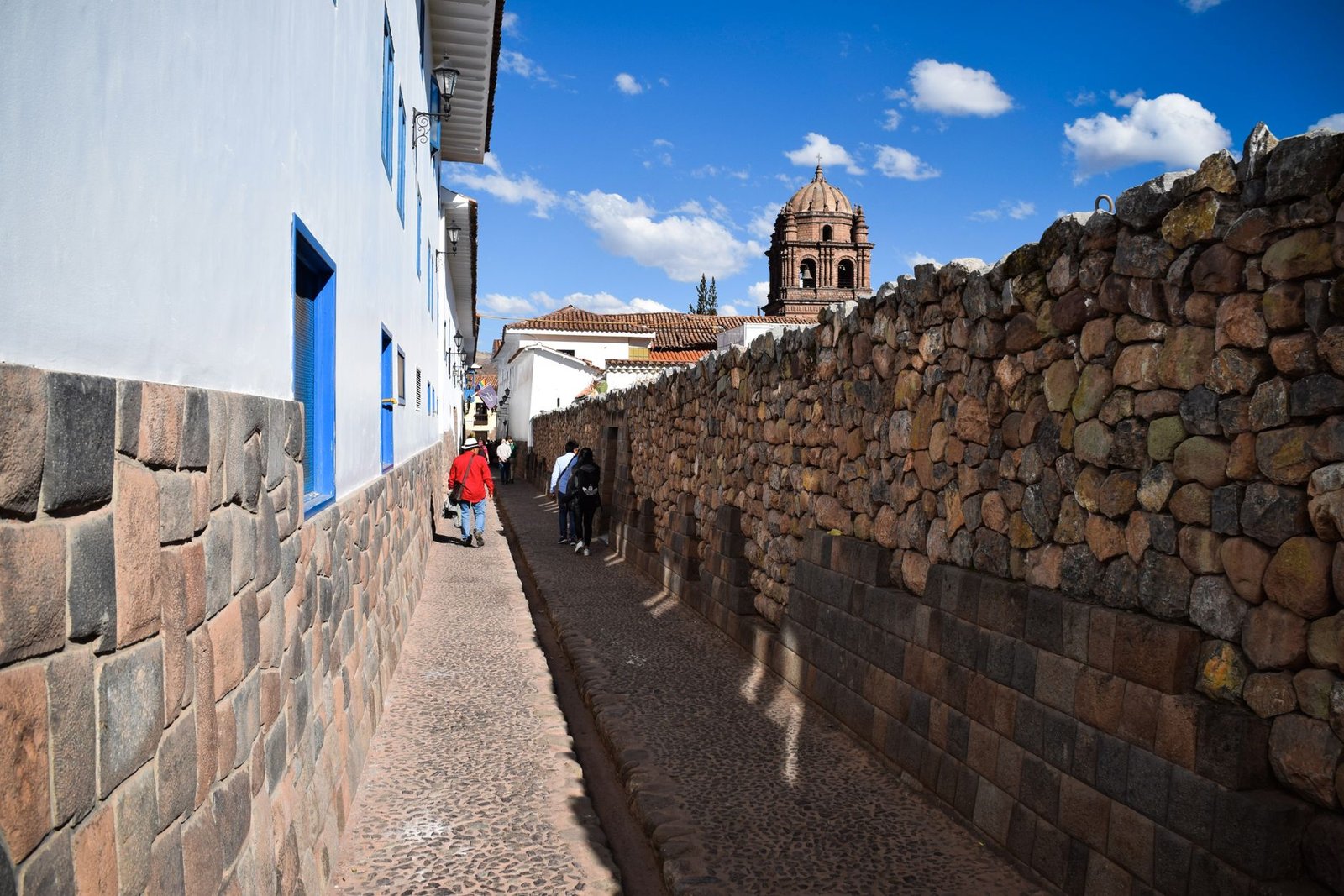
The narrow streets of Cusco hold centuries of Inca history blended with Spanish colonial influence. | Photo: Maria Pinto / Pexels
Where to eat
There are no restaurants inside the citadel—when you enter, bring water and a light snack in your backpack (packaged food is allowed; full meals and glass containers are not). After the visit, most people head down to Aguas Calientes, where there are dozens of restaurants along Avenida Imperio de los Incas.
In Aguas Calientes, the most popular dish is lomo saltado—strips of beef sautéed with onion, tomato, and french fries, served with rice. It’s also worth ordering quinoa soup or chupe de camarones (creamy shrimp soup). Restaurants along the riverfront charge between S/. 25 and 50 soles ($7 to $14 USD) per main course. Avoid places with menus only in English and prices in dollars right at the entrance of town—they usually have lower quality for double the price.
In Cusco, the food scene is much more diverse. The San Blas neighborhood has restaurants that blend Andean cuisine with contemporary techniques. Ceviche, cuy (roasted guinea pig, a Peruvian specialty), and causa limeña (a layered yellow potato cake) appear on menus at all price points.
Where to stay
For those who want to wake up closer to Machu Picchu, the option is to stay in Aguas Calientes (officially Machu Picchu Pueblo). Hotels and inns range from $25 to $400 USD per night. Staying there lets you get in for the first 6 AM entry without rushing and avoids the morning train rush from Cusco. The downside: the town has little to do besides the ruins visit.
Most travelers prefer to use Cusco as a base, doing Machu Picchu as a 1- or 2-day excursion. Cusco has many more accommodation options across all price ranges: hostels with dorms from $12 USD a night, boutique hotels in the historic center between $60 and $150, and luxury hotels above that. The Miraflores neighborhood (in Lima) also works well as a starting point for those spending days in the capital before heading to Cusco.
Practical tips
It’s worth it for: anyone who loves history and archaeology and wants to understand how a people built an entire city on top of a hill without modern technology; also for those seeking a real trek (Inca Trail) or simply wanting to see one of the New Seven Wonders of the World with their own eyes.
Common mistake: going straight from Lima to Machu Picchu without stopping in Cusco for acclimatization. The altitude in Cusco (3,400 m / 11,150 ft) and Machu Picchu (2,430 m / 7,970 ft) can cause altitude sickness—headaches, dizziness, and fatigue. Set aside at least 1 day in Cusco with no intense activities before heading up to Machu Picchu; drink coca leaf tea, avoid alcohol, and rest.
What not to bring to Machu Picchu: camera tripods and monopods are prohibited inside the citadel. Food in non-packaged containers, drones, and plastic bags are also not allowed. Large suitcases can be left at the luggage storage in Aguas Calientes.
Currency: Peruvian sol (PEN). In June 2026, 1 US dollar equals about S/. 3.75 (check the current exchange rate before you go). Credit cards are accepted at larger hotels and restaurants; have soles in cash for local transport, markets, and bus tickets.
Shopping: alpaca textile crafts are the most characteristic souvenir from Peru. In Cusco, the San Pedro Market sells blankets, hats, and scarves at better prices than the tourist shops on Plaza de Armas. Bargain moderately—local artisans work on thin margins.
Frequently asked questions
What city is Machu Picchu in?
Machu Picchu is located in the Machu Picchu district, in the Cusco region of Peru. The nearest town is Aguas Calientes (Machu Picchu Pueblo), at the foot of the mountain. The city of Cusco, the logistical base for most trips, is about 3 hours away by train and bus.
How many days is ideal to stay at Machu Picchu?
For just the citadel visit, 1 full day is enough. If you want to include the climb up Waynapicchu or Montana Machu Picchu, plan for 1.5 days. Those doing the Inca Trail need 4 days of hiking plus time in Cusco for acclimatization, totaling at least 7 to 10 days of travel in Peru.
What is the altitude of Machu Picchu?
The Machu Picchu citadel sits at 2,430 meters (7,970 feet) above sea level. The city of Cusco, the starting point for most trips, is at 3,400 meters (11,150 feet). Waynapicchu peak, that hill in the background of classic photos, reaches 2,693 meters (8,835 feet).
Do US citizens need a visa to visit Machu Picchu?
No. US citizens do not need a visa to enter Peru for tourist visits of up to 90 days—a valid passport is sufficient. However, immigration rules can change: always check the Peruvian embassy website or the official Peruvian government portal before you travel.
Why was Machu Picchu abandoned?
The most accepted theory among historians is that Machu Picchu was abandoned by the Incas in the 16th century, shortly after the arrival of Spanish colonizers, possibly due to smallpox epidemics brought by Europeans and the collapse of the Inca Empire. The site was only “rediscovered” by the Western world in 1911, when American explorer Hiram Bingham arrived guided by local residents who already knew of the place’s existence.
Conclusion
Machu Picchu isn’t the kind of place you visit and forget. It stays with you—the scale, the precision of the stonework, the way the mist rolls in and out over the terraces. Whether you’re a history buff, a trekking enthusiast, or just someone ticking off a bucket-list wonder, the journey there is as memorable as the destination itself. Plan ahead, respect the altitude, and give yourself time to soak it all in. You’ll understand why it’s one of the most iconic places on the planet.
The Sagrada Família is Antoni Gaudí’s unfinished basilica in Barcelona, and since 2005 it’s been a UNESCO World Heritage Site—even without being 100% complete. It sits in the Eixample neighborhood, about 15 minutes by metro from the historic center, and you can easily fit it into a 4 to 7-day trip to Barcelona, with flights from the US usually connecting through Europe. Basic tickets start at €33.80 (June 2026), and the best time to visit without the crowds is early in the morning. What few people know is that Gaudí is buried inside the basilica itself—and that changes how you should experience it.
How to get there
“Can you fly straight from the US to Barcelona?” These days, yes—there are direct flights from a few major hubs like New York and Miami, but most of the time you’ll land in Madrid, Lisbon, or another European gateway before heading to Barcelona-El Prat Airport (BCN). Count on 7 to 9 hours of flying time to Europe, plus your connection.
From the airport to the Sagrada Família, the most common route is to take the L9 Sud metro line directly from the terminal (both T1 and T2 have their own stations), get off at Collblanc, and switch to the blue line (L5) toward Sagrada Família. The whole trip takes about 50 minutes and costs the same as a regular city metro ticket, so there’s no need to buy a separate airport fare. If you prefer to stay above ground, you can take the Aerobus to Plaça Catalunya and then hop on the purple metro line L2 to the Sagrada Família station—easier if you’re lugging big suitcases.
Once you’re in the city, Barcelona is easy to get around by metro and on foot. The basilica even has its own metro station, on lines L2 and L5, so there’s no question about how to get there from the center.
Best time to visit & how long to stay
“Which month should I pick?” April, May, September, and October offer a sweet spot of mild weather and smaller crowds compared to the peak of July and August, when Barcelona is packed with tourists and temperatures climb past 86°F. Winter (December to February) brings lower hotel prices and shorter lines, but also shorter, colder days—the basilica, however, works well in any season since it’s mostly an indoor visit.
Set aside 2 to 3 hours for the full visit, including the towers if you buy that access. In 2026, the centenary of Gaudí’s death (he died in 1926) has driven up demand for the basilica, so tickets sell out more often than in previous years.
What to see at the Sagrada Família
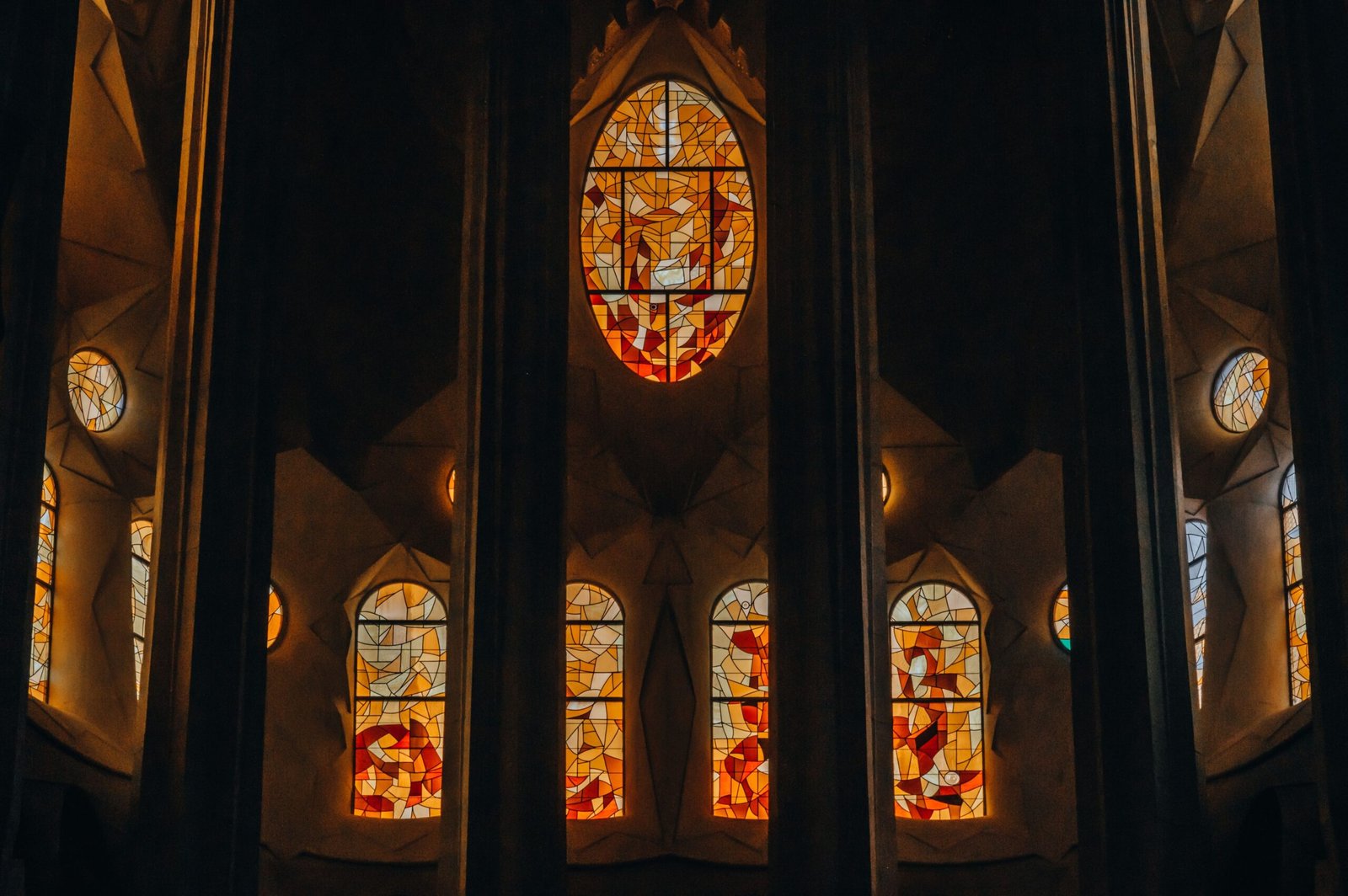
“So what’s actually inside the Sagrada Família?” Way more than your average church. Gaudí’s design, detailed on the official Sagrada Família website, blends Gothic architecture, Art Nouveau, and forms inspired by nature—columns that branch out like trees, ceilings that resemble leaves, and light that shifts color as the sun hits the stained glass throughout the day.
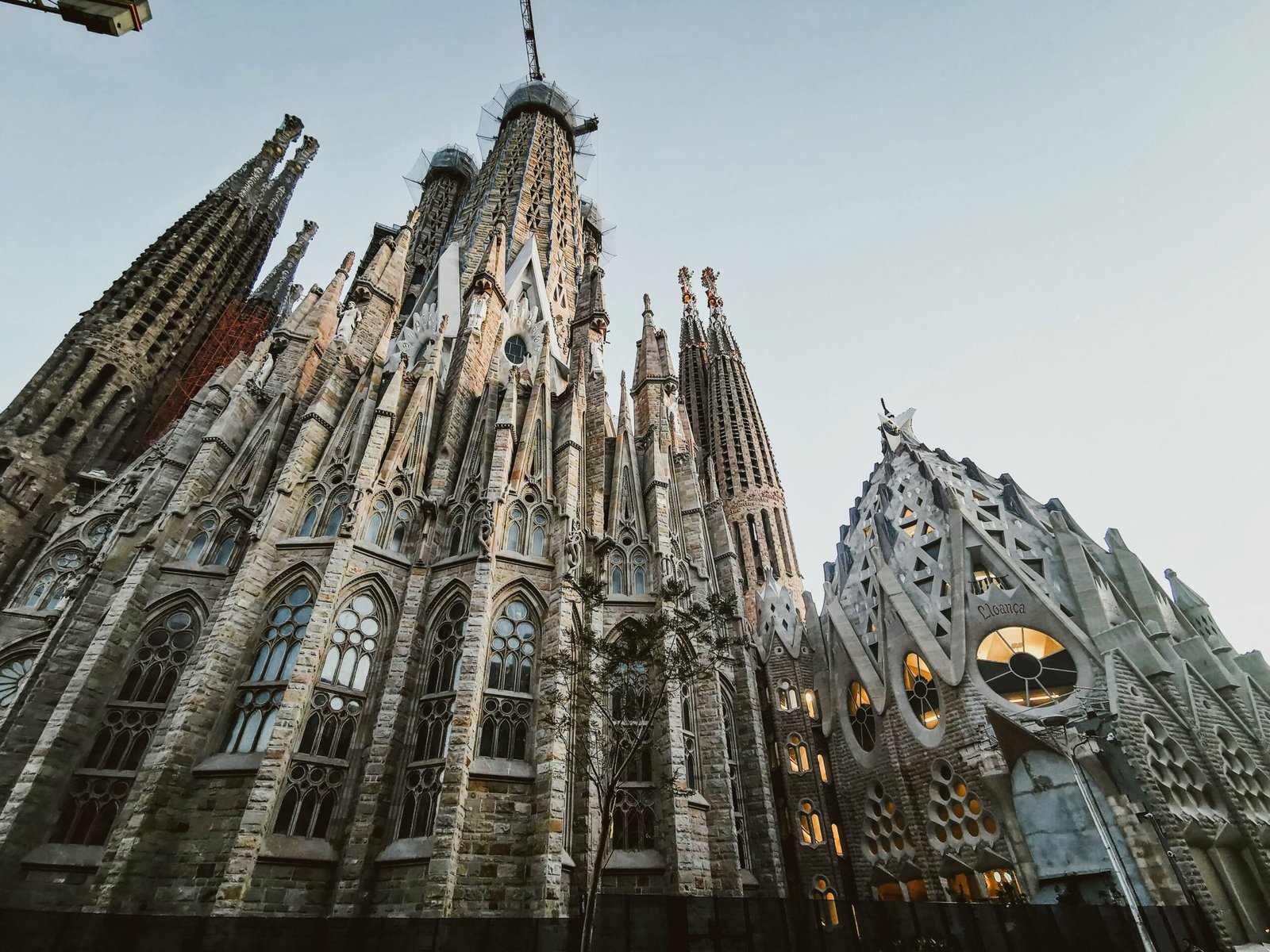
The Nativity façade is the oldest part, built while Gaudí was still directly supervising the work. | Photo: Mehmet Turgut Kirkgoz / Pexels
The façades
There are three thematic façades: the Nativity, facing east, packed with organic details and richly carved biblical figures; the Passion, with sharp, dramatic lines depicting the crucifixion; and the Glory, the newest and still being finished, which will become the main entrance once completed.
The interior and stained glass
Stepping into the central nave for the first time is a jaw-dropper: the leaning columns open up like a stone forest holding up the ceiling more than 130 feet high. In the afternoon, light streaming through the west-side stained glass paints the floor and columns in shades of orange and red; in the morning, the east side bathes the space in blue and green—so it’s worth planning your visit time around this effect.
The stained glass changes tone depending on the sun’s position throughout the day. | Photo: Zekai Zhu / Pexels
The crypt and Gaudí’s tomb
In the crypt, below the main altar, lies the tomb of Antoni Gaudí, who died in 1926 after being hit by a tram nearby and was buried in the project he’d devoted his final years to. The crypt is visible through a grate but isn’t part of the general public tour.
The towers
If you buy a ticket with tower access (Nativity or Passion), you ride an elevator up and then walk down a narrow spiral staircase, with views of the city and the pinnacles decorated with mosaic fruit. This is the part that sells out fastest online.
What to combine with your visit
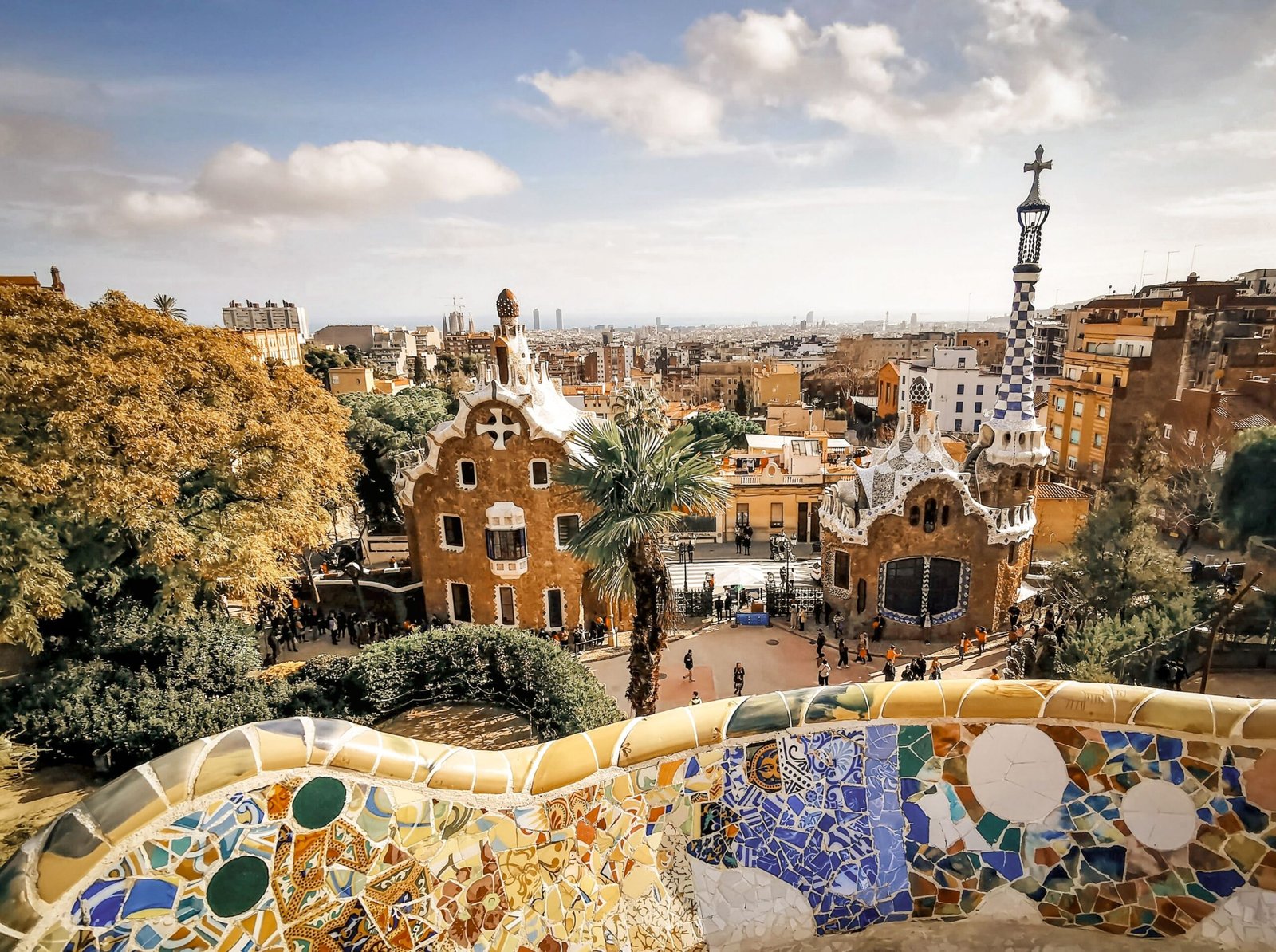
“Can I see more Gaudí sights on the same day?” Absolutely, and it makes a lot of sense. Park Güell is about 30 minutes away by metro and bus from the Sagrada Família and features the famous mosaic benches and a panoramic view over the city—just be sure to book a timed entry, because it also has a daily visitor limit.
Park Güell is another Gaudí masterpiece and rounds out a themed itinerary through the city. | Photo: Mehmet Turgut Kirkgoz / Pexels
The other two Gaudí houses open to visitors are Casa Batlló and Casa Milà (La Pedrera), both on Passeig de Gràcia, just a few minutes by metro from the Sagrada Família. Together with Park Güell, they form what’s often called the “Gaudí route” through the city. If you’re planning your days in Barcelona, our complete guide to Barcelona 2026 breaks down how to fit these sights in without wasting time between them.
Where to eat near the Sagrada Família
“Is it worth eating right next door?” You can eat well, but it’s better to venture a little beyond the streets surrounding the basilica, where prices are jacked up by the tourist traffic. In the Eixample neighborhood, there are solid tapas spots and menu del día (fixed-price lunch, usually between €13 and €18 in June 2026) on streets just 5-10 minutes on foot from the square in front of the church.
Be sure to try pa amb tomàquet (bread rubbed with tomato and olive oil), paella, or fideuà (similar to paella but with thin noodles instead of rice), and of course classic tapas like patatas bravas and croquetas. If you’re craving a soda at a touristy café, don’t be surprised to pay between €3.50 and €4.50 for a Coke—that’s normal for central Barcelona.
Where to stay in Barcelona
“Which neighborhood should I stay in?” It depends on your travel style. If you want to be within walking distance of the Sagrada Família and don’t mind a more residential vibe, look for accommodation in Eixample itself, near the basilica—great if this attraction is your top priority and you want to avoid long commutes.
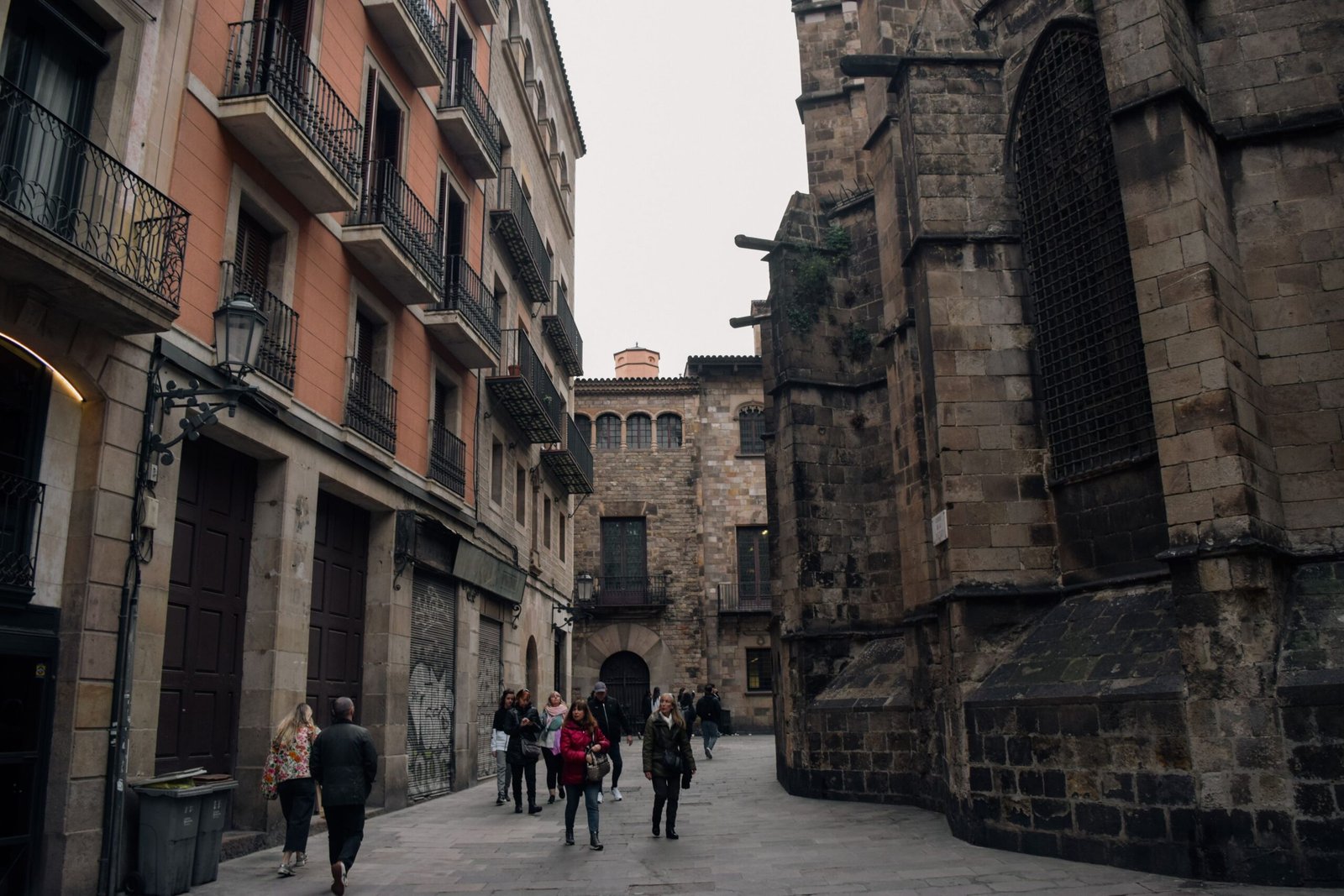
For nightlife and beach proximity, El Born and Barceloneta are livelier, though pricier in high season. If you prefer a quieter atmosphere with narrow streets and historic buildings, the Gothic Quarter delivers—always buzzing but with quieter corners away from Las Ramblas.
The Gothic Quarter is a more historic option for those seeking central accommodation. | Photo: Evans Joel / Pexels
Practical tips
The Sagrada Família is worth visiting even on a short trip to Barcelona, especially if you’re into architecture or Gaudí’s work. The most common mistake visitors make: showing up without a pre-booked ticket, thinking they can buy one on the spot. There are no more physical ticket booths on-site—all tickets are sold exclusively through the official website, and during high-demand periods (like this year, the Gaudí centenary), they sell out days in advance.
The currency is the euro (€), and international credit and debit cards are accepted at most places, but it’s a good idea to carry some cash for street markets and small shops. For internet, a local SIM or eSIM is a better deal than international roaming if you’re spending several days in Spain.
On safety: Barcelona has a reputation for pickpocketing in busy tourist areas, so keep your bags in front of you on crowded metros and stay alert near the Sagrada Família itself and Las Ramblas. US citizens don’t need a visa for short tourist stays in Spain, but always double-check the latest official rules before you travel, as they can change.
Frequently asked questions
What is the Sagrada Família in Barcelona?
It’s a Catholic basilica designed by Antoni Gaudí, under construction since 1882 and still unfinished, recognized as a UNESCO World Heritage Site since 2005.
Who is buried in the Sagrada Família?
Antoni Gaudí is interred in the basilica’s crypt, where he worked in his final years until his death in 1926.
How much does it cost to enter the Sagrada Família?
A basic adult ticket starts at around €33.80 (as of June 2026); tower access costs a bit more. Check the official website for the latest price before you buy, since rates are adjusted periodically.
What are the 3 Gaudí houses in Barcelona?
The most visited are Casa Batlló, Casa Milà (La Pedrera), and Park Güell—these three, along with the Sagrada Família, make up the city’s Gaudí itinerary.
Are the Barcelona Cathedral and the Sagrada Família the same thing?
No. The Barcelona Cathedral is the city’s main Catholic seat, located in the Gothic Quarter and built in a traditional Gothic style. The Sagrada Família is a separate basilica designed by Gaudí, in the Eixample neighborhood.
Conclusion
The Sagrada Família sums up why Barcelona is a must-stop on any European itinerary: an unfinished work over 140 years in the making that’s still considered one of the most original buildings in the world. Book your ticket in advance, time your visit around the stained-glass light, and leave room in your schedule for the rest of Gaudí’s route through the city. Explore more destination guides right here on Voyage Voyage.
Buckingham Palace is the official seat of the British monarchy in London, but it doesn’t operate as a year-round tourist attraction—most visitors only see the facade and the Changing of the Guard for free, and it’s only during a few weeks in the summer that you can step inside the State Rooms. Located in the Westminster district, it’s just a few minutes by tube from Green Park, Victoria, and St James’s Park stations, and it fits easily into a one-day London itinerary. In 2026, the palace made headlines again: King Charles III confirmed he won’t live there after the £369 million renovation that’s been underway since 2017. Here’s how to plan your visit and what you need to know before you go.
How to get there
“How do I get to Buckingham Palace from within London?” By tube, it’s straightforward. The closest stations are Green Park (Jubilee, Victoria, and Piccadilly lines), St James’s Park (District and Circle), and Victoria (District, Circle, and Victoria), all a 5-10 minute walk from the palace. If you’re flying in from the US, most flights land at Heathrow Airport (LHR), often with a connection in Europe; from there, the Elizabeth line or the traditional tube (Piccadilly line) takes you straight to the center in about 50 to 60 minutes.
If you prefer to walk, you can tackle the route on foot from Trafalgar Square along The Mall, the tree-lined avenue that ends right at the palace gates—about a 15-minute stroll, with the Victoria Memorial serving as your arrival point.
Best time to see the Changing of the Guard and visit inside
“What days is the Changing of the Guard on?” In 2026, the ceremony usually takes place on Mondays, Wednesdays, and Fridays at 11 a.m., but confirmation only comes about six weeks in advance and can be canceled at the last minute due to bad weather or official commitments—so check the official Household Division calendar close to your trip. The ceremony is free, no ticket needed, but if you want a spot at the railings, you’ll need to arrive 45 to 60 minutes early.
For visiting the interior, the window is much narrower: the State Rooms only open to the public between July and September, while the king is away at other residences during the summer. In 2026, the opening runs from July 9 to September 27, with extended hours until August 31 and then reduced to Thursday through Monday. Book ahead on the official Royal Collection Trust website: entry times sell out fast during peak season weeks.
What to see at Buckingham Palace
“What can you see even without going inside the palace?” Quite a lot, because the most sought-after experience—the Changing of the Guard—happens outside, for free, for any visitor.
The Changing of the Guard features a military band and the British Army’s Foot Guards in front of the gates. | Photo: Emiliano LG / Pexels
The facade and the gates
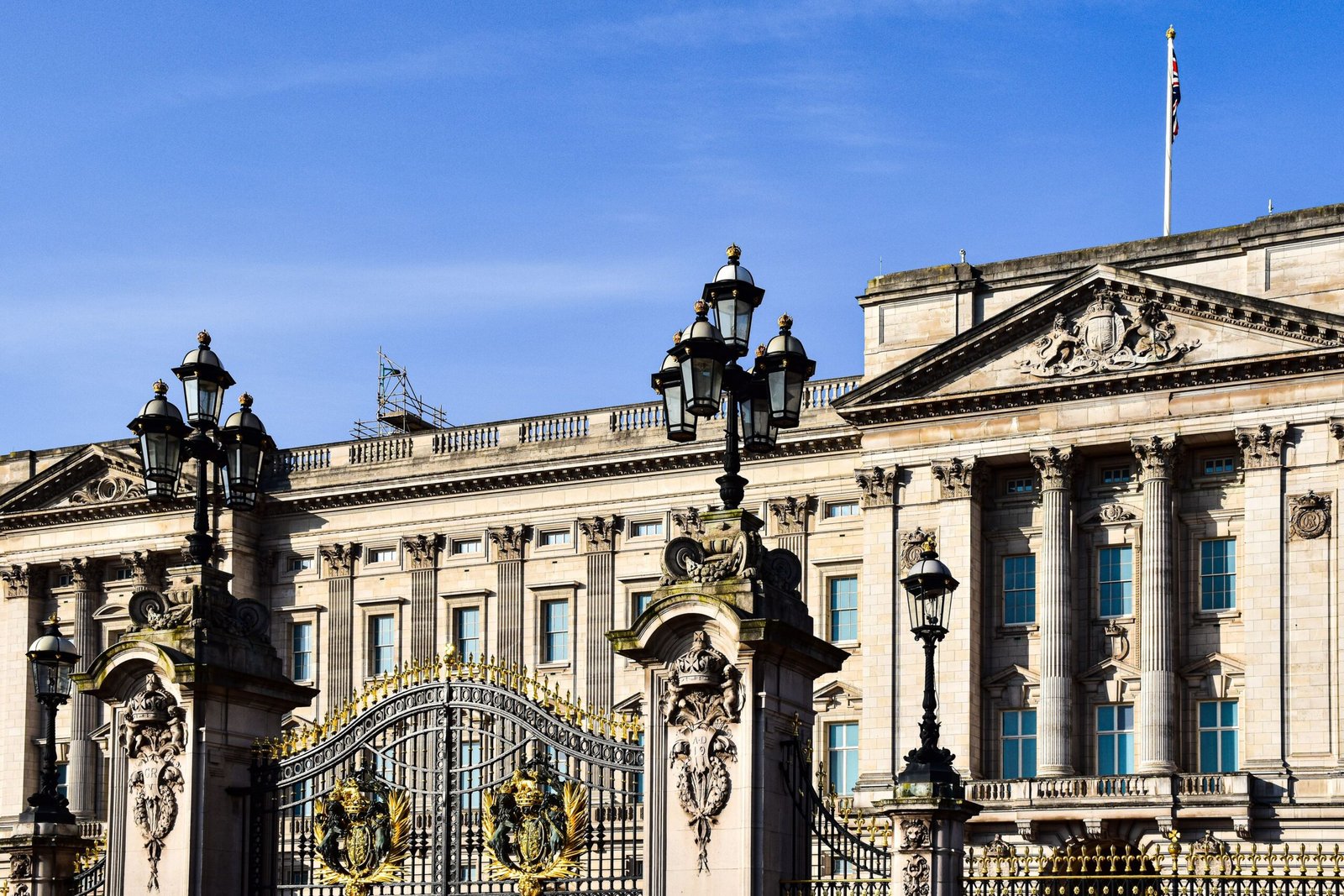
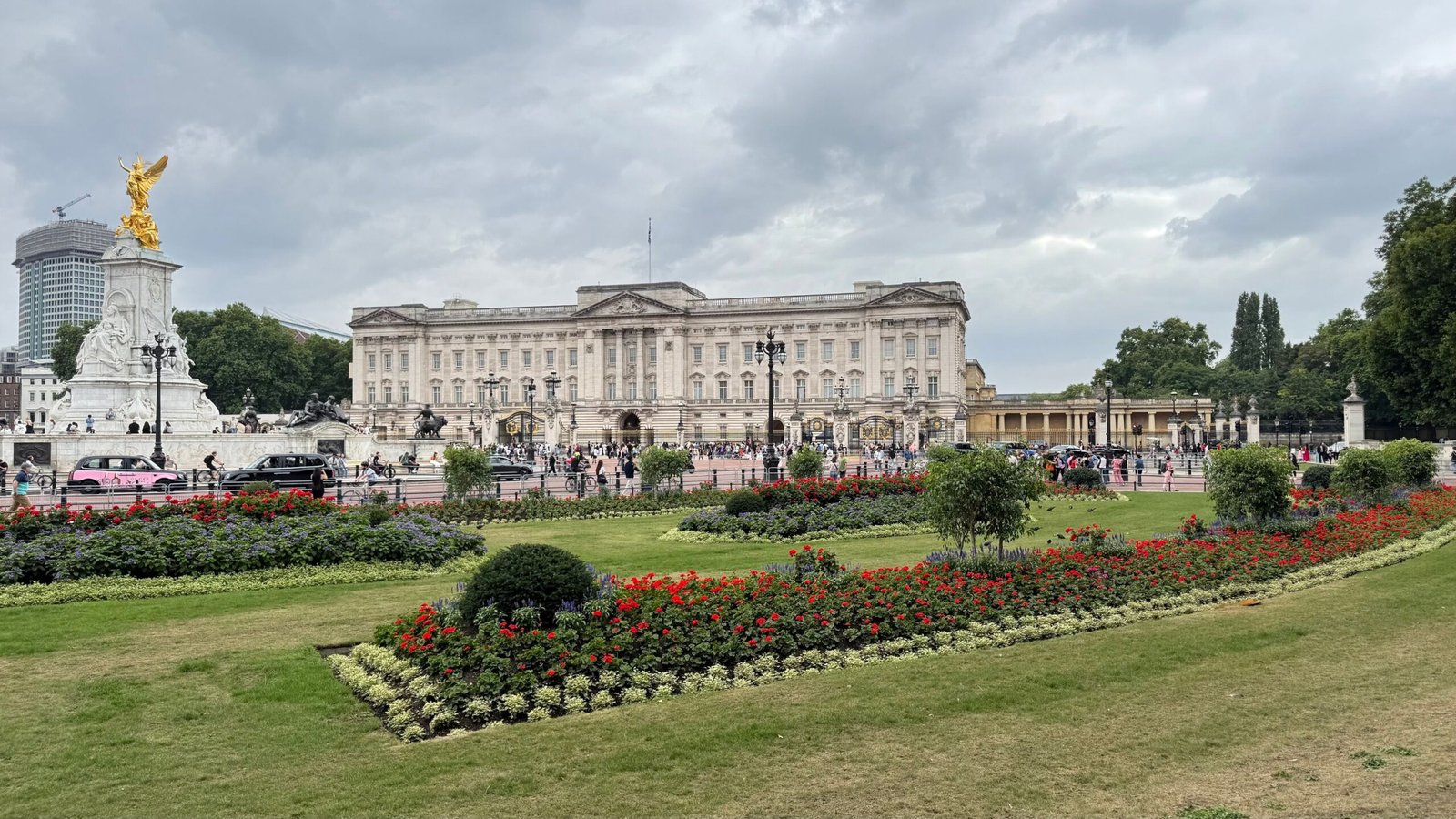
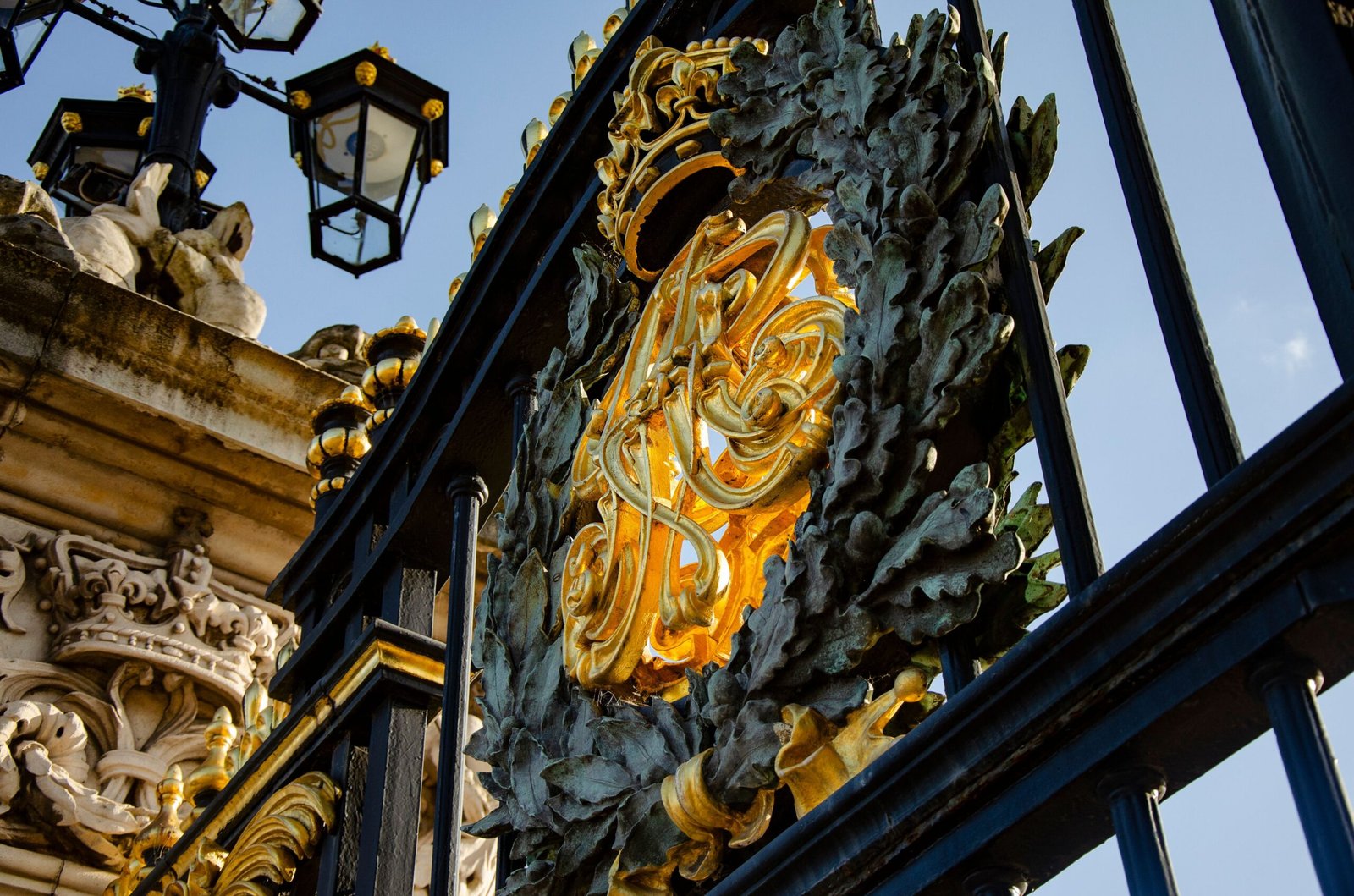
The main facade, facing the Victoria Memorial and The Mall, is the work of architect Aston Webb from 1913—newer than it looks, since it replaced an earlier facade by John Nash. The golden gates and the royal coat of arms on the railings already make for great photos without needing to go inside.
The current facade, from 1913, was designed by architect Aston Webb. | Photo: AXP Photography / Pexels
The State Rooms (summer only)
Visitors between July and September tour the rooms used for state banquets and official receptions: the Throne Room, the Picture Gallery with works by Rembrandt and Rubens, and the Music Room, where royal princes have been baptized. Access also includes the palace garden, which spans 16 hectares.
The Royal Mews and the Queen’s Gallery
Next to the palace, the Royal Mews houses the ceremonial carriages and horses used in royal events, with separate visiting hours for much of the year. The Queen’s Gallery displays pieces from the royal collection in temporary exhibitions, also with a separate ticket and more extended opening hours than the State Rooms.
What to combine with your visit
“Can you see more things nearby?” Absolutely, and the palace is a short walk from other central London spots. St James’s Park, right in front, is a good place to sit after the Changing of the Guard. Following The Mall, you’ll reach Trafalgar Square and Westminster Abbey in 15-20 minutes on foot, and Big Ben is just a bit further.
The Victoria Memorial, in front of the palace, is a landmark and a great spot for photos of the facade. | Photo: Stephan Leuzinger / Pexels
If you’re organizing the other days of your trip, our complete London guide shows how to fit in the palace, Big Ben, and other top sights without overdoing it in a single day.
Where to eat near the palace
“Are there good food options right nearby?” The immediate area around the palace is more residential and diplomatic than culinary, so it’s worth walking to Victoria or St James’s, 10-15 minutes away, where you’ll find traditional pubs and cafes at more reasonable prices than in touristy areas like Covent Garden. A simple pub lunch runs around £12 to £18 (June 2026), and a fish and chips to go is close to £10.
If you’re looking for something more budget-friendly, you’ll find sandwich shops and coffee chains on the commercial streets near Victoria station—a good option for a quick bite before or after the Changing of the Guard.
Where to stay in London
“Which area should I stay in to visit the palace?” Victoria is the most practical option, with hotels across various price ranges a 10-minute walk from the palace and good train connections to Gatwick Airport. St James’s and Mayfair are even closer, but with much higher nightly rates, aimed at those prioritizing comfort and proximity over savings.
For those who value cost-effectiveness and don’t mind taking the tube every day, neighborhoods like Paddington or South Kensington offer more affordable accommodation, with a direct tube link to Green Park or Victoria in 15-20 minutes.
Practical tips
It’s worth checking out the palace even if you don’t go inside the State Rooms: the facade, the gates, and the Changing of the Guard already give you a good sense of the place’s ceremonial role, and they’re free. The most common mistake is traveling outside the July-to-September window expecting to visit the interior—outside that period, the State Rooms are closed to the public.
The wrought-iron and gold details on the gates are part of the royal coat of arms. | Photo: Piotrek Wilk / Pexels
The currency used is the British pound (£), and international cards are accepted almost everywhere in London. US citizens don’t need a visa to enter the UK as tourists for short stays, but always check the latest official rules before traveling, as they change frequently. As for safety: the palace area is heavily policed, but it’s always wise to keep an eye on your belongings in the crowd during the Changing of the Guard.
Frequently asked questions
What is the history of Buckingham Palace?
The site originally housed Buckingham House, built in 1703 for the Duke of Buckingham. George III bought it in 1761 as a private residence for the queen, and George IV commissioned its transformation into a palace by architect John Nash. It became the official residence of the British monarchy in London in 1837, when Queen Victoria ascended the throne—more details on the Wikipedia page for the palace.
Who currently lives at Buckingham Palace?
No one from the royal family lives there at the moment: the building has been under renovation since 2017, with completion expected in 2027. In June 2026, King Charles III confirmed he will continue living at Clarence House even after the work is finished—Buckingham will remain the administrative headquarters and venue for official royal events.
What is the ticket price for Buckingham Palace?
Access to the State Rooms, available only in summer, starts at £33 for adults 25 and over, £21.50 for adults 18 to 24, and £16.50 for children over 5 (2026 prices). Children under 5 enter for free. Confirm current prices on the official website before purchasing.
Who was the man who broke into Buckingham Palace?
The most famous case is Michael Fagan, who in July 1982 scaled the palace wall and entered Queen Elizabeth II’s bedroom, chatting with her for about ten minutes before the alarm was raised. The incident led to a major overhaul of palace security.
What does Buckingham mean?
The name comes from the original owner of the land, John Sheffield, 1st Duke of Buckingham and Normanby, who built Buckingham House there in the early 18th century—the palace’s name is a direct legacy from him, with no connection to the town of Buckingham.
How much does a royal guard at Buckingham Palace earn?
The guards are soldiers in the British Army, and pay varies by rank: recruits in training start at around £18,700 per year, with salaries rising to the £23,000 to £28,000 range after basic training, and potentially exceeding £40,000 with more experience and rank.
Can you visit Buckingham Palace?
Yes, but only inside during the summer opening (in 2026, from July 9 to September 27), with tickets purchased in advance. The facade, gates, and Changing of the Guard can be seen for free year-round.
Where does King Charles live?
Currently, King Charles III and Queen Consort Camilla live at Clarence House, a residence neighboring Buckingham Palace, and they are expected to stay there even after the palace renovation is complete.
Conclusion
Buckingham Palace functions less as a museum and more as a living symbol of the British monarchy—which explains why most of the experience happens outside the gates, at the Changing of the Guard. If your trip falls between July and September, it’s worth booking State Rooms tickets in advance; outside that period, the facade, the Victoria Memorial, and the free ceremony already tell a big part of the story. Explore more destination guides here on Voyage Voyage.
Big Ben is the nickname of the 13.5-ton bell that rings inside the Elizabeth Tower, the clock tower attached to the Palace of Westminster—home to the British Parliament—on the banks of the River Thames in London. You’ll fly into Heathrow, Gatwick, or another London airport, then hop on the Tube to Westminster station in Zone 1. The best time to visit is spring or early fall, when the weather makes it easier to enjoy the gardens and outdoor queues, and a weekend is plenty of time to explore this area. But why did this particular bell become more famous than the tower itself, and can you actually go inside? That’s what you’ll find out below.
How to get there
“Can you fly direct from Brazil to London?” Yes, in some cases. São Paulo (GRU) has direct flights to London with airlines like British Airways and LATAM, taking about 11 hours. From other Brazilian cities, the most common route goes through GRU, Lisbon, or another European city before heading to London, usually landing at Heathrow (LHR), the city’s biggest airport, though connecting flights also arrive at Gatwick (LGW).
From Heathrow to the center, the fastest option is the Heathrow Express, a train that takes about 15 minutes to Paddington Station; from there, just hop on the Tube (the famous Underground) to Westminster, changing lines once. The more budget-friendly option is the Elizabeth Line, which connects Heathrow to the center for much less than the Heathrow Express, though the trip is a bit longer. From Gatwick, the Gatwick Express takes about 30 minutes to Victoria Station, where you can connect to the Tube.
To get to Big Ben itself, get off at Westminster station, served by the Circle, District, and Jubilee lines. When you exit the Tube, the tower is right in front of you—it’s literally the most cinematic exit in London’s transport system.
Best time to visit and how long to stay
“What’s the best month to go?” Between April and June or between September and early October, when temperatures are milder (around 54°F to 68°F) and days are longer, giving you better light for photos at Parliament Square and Westminster Bridge. July and August have the warmest weather but also the biggest crowds, with longer lines at any nearby attraction.
Set aside half a day to explore the area around Big Ben, Westminster Abbey, and the London Eye without rushing. If you snag a ticket for the guided tour inside the Elizabeth Tower, add another 90 minutes to your itinerary—and plan your visit a few months in advance, since spots tend to sell out fast.
What to see at Big Ben and Parliament
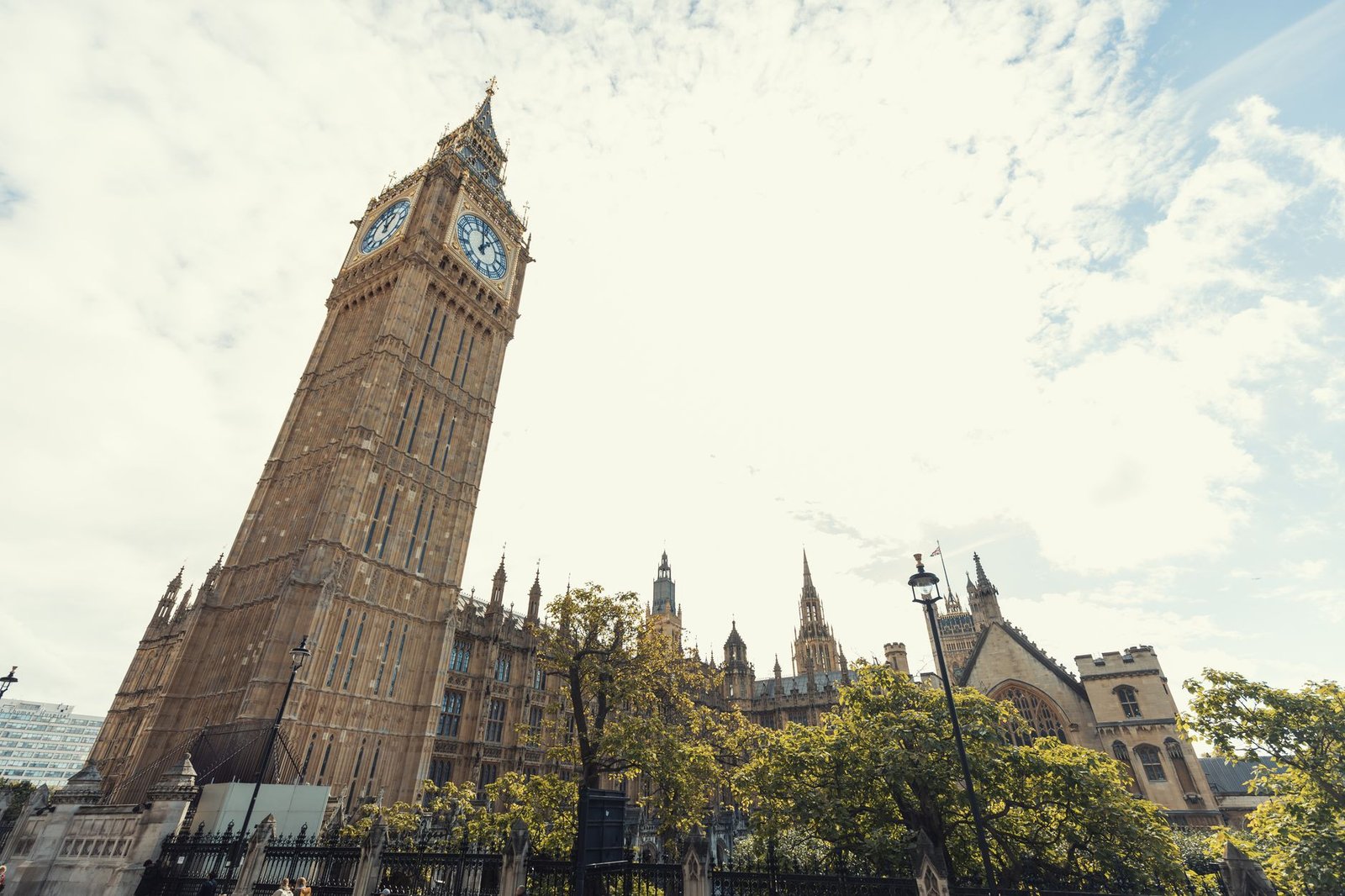
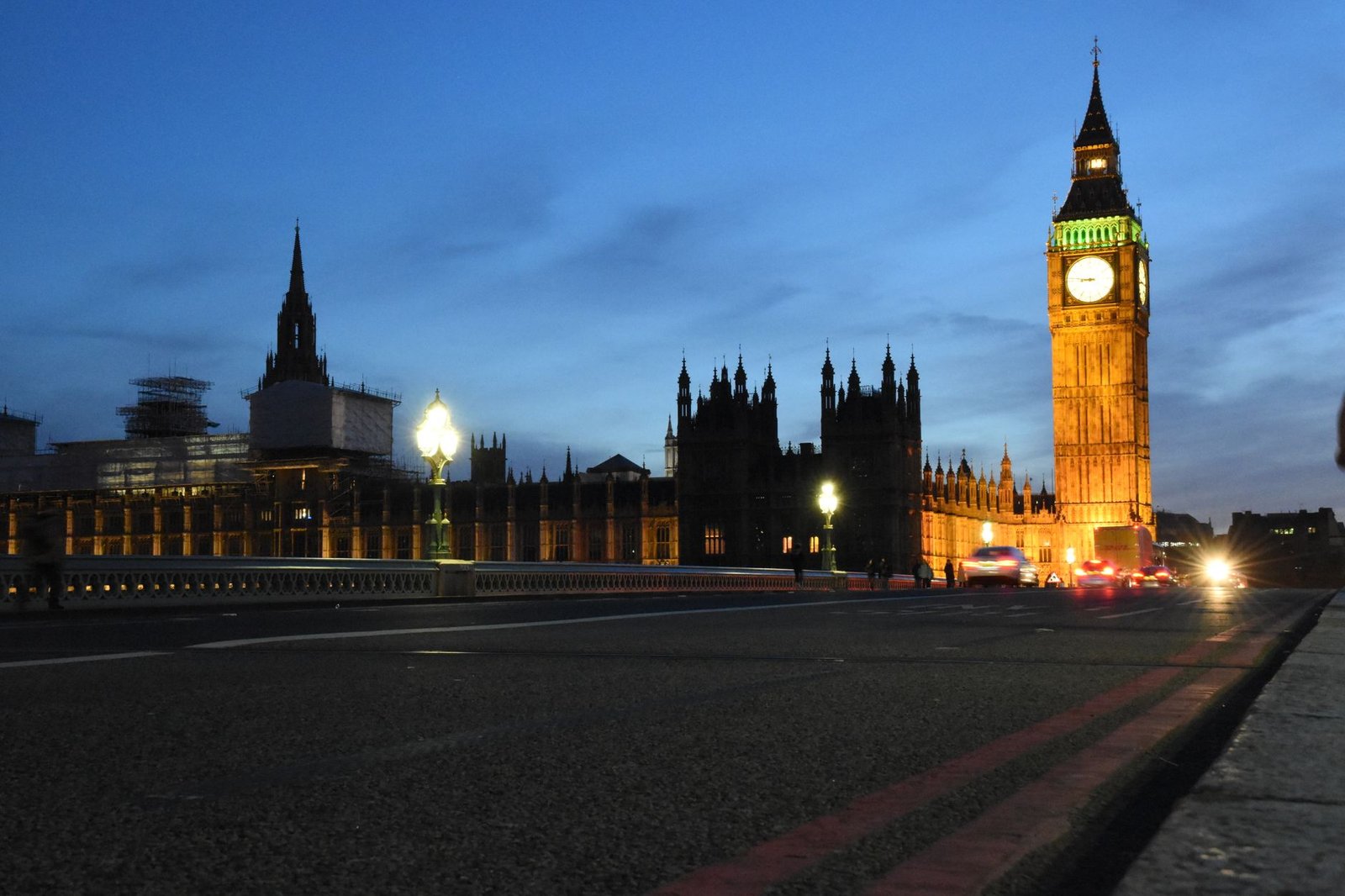
“So, what’s actually inside Big Ben?” The Elizabeth Tower stands 96 meters (315 feet) tall and houses, besides the Big Ben bell, the UK’s most famous clock, with four dials each 6.9 meters (23 feet) in diameter. The name “Big Ben” officially refers only to the main bell, cast in 1858 by the Whitechapel Bell Foundry and named, according to the most accepted story, after Sir Benjamin Hall, who oversaw its installation at the time. More details on the tower’s construction and history are gathered on the Wikipedia page for Big Ben. Over time, the nickname has also been used for the tower and the clock as a whole, even if it’s not technically correct.
The Elizabeth Tower and the Palace of Westminster, seen from Parliament Square. | Photo: Matheus Bertelli / Pexels
The tour inside the tower
“Can you go up Big Ben?” Yes, but only with the official guided tour, sold exclusively through the UK Parliament website (parliament.uk). The tour lasts about 90 minutes, climbs 334 steps up a spiral staircase, and lets you see the clock mechanism up close and hear the bell ring if the timing lines up. Photography isn’t allowed inside, and children must be at least 11 years old. Tickets usually go on sale online a few months in advance—check current prices and availability directly on the official UK Parliament website before planning your trip, as they change often.
Even if you can’t get a tour spot, you’ll still have a great time just admiring the tower from the outside: the view from Westminster Bridge, facing the clock with the River Thames in the background, is one of the most iconic postcard shots in the world, and it’s completely free.
Houses of Parliament
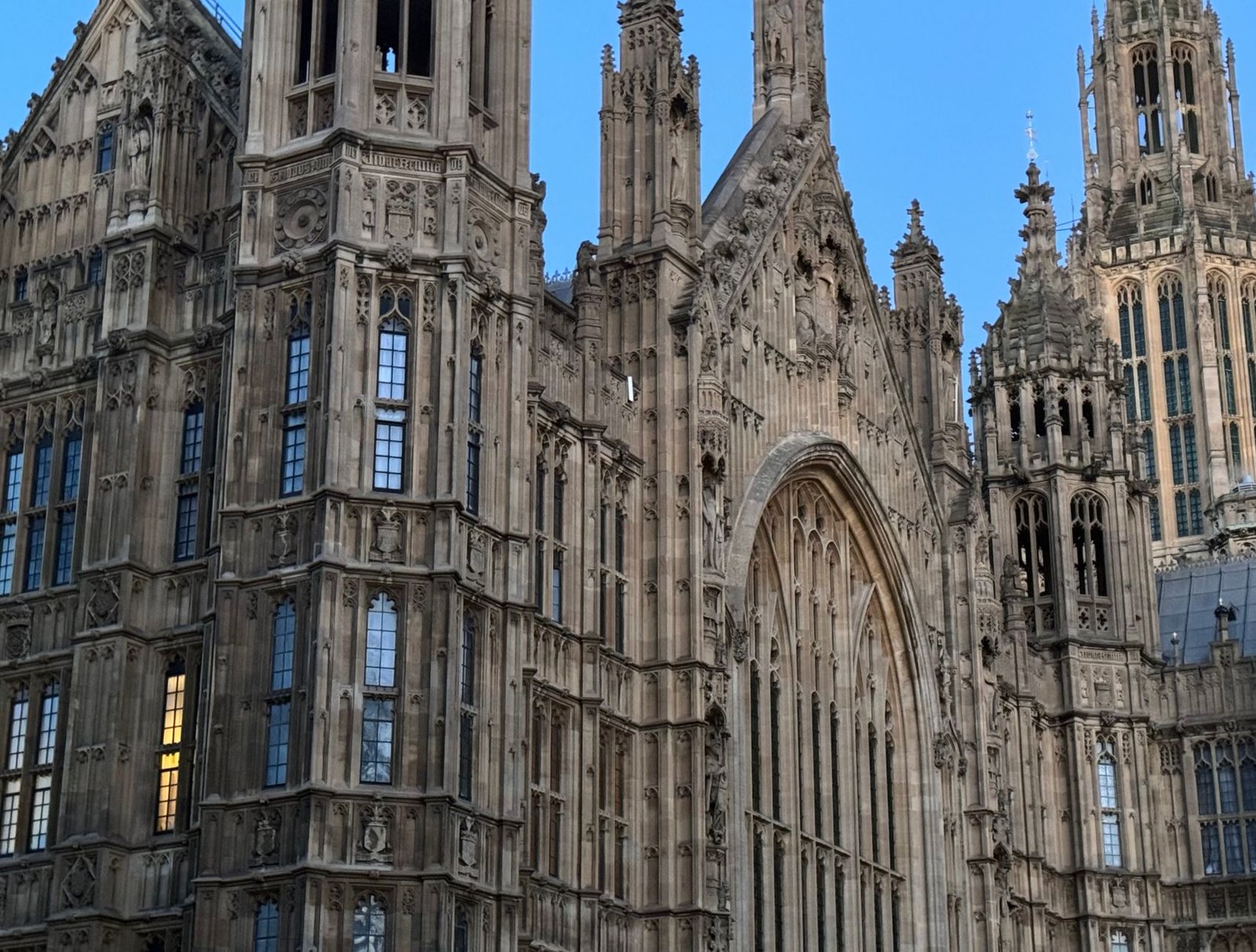
The Palace of Westminster, home to the House of Commons and the House of Lords, sits on the same grounds and offers its own guided tours during certain times of the year, usually when Parliament is in recess. You can also attend public debates for free, just by queuing up and going through security—a totally different experience from your typical “tourist tour.”
The neo-Gothic facade of the Palace of Westminster, designed by Charles Barry and Augustus Pugin. | Photo: Polina Chistyakova / Pexels
Nearby: what to pair with your visit
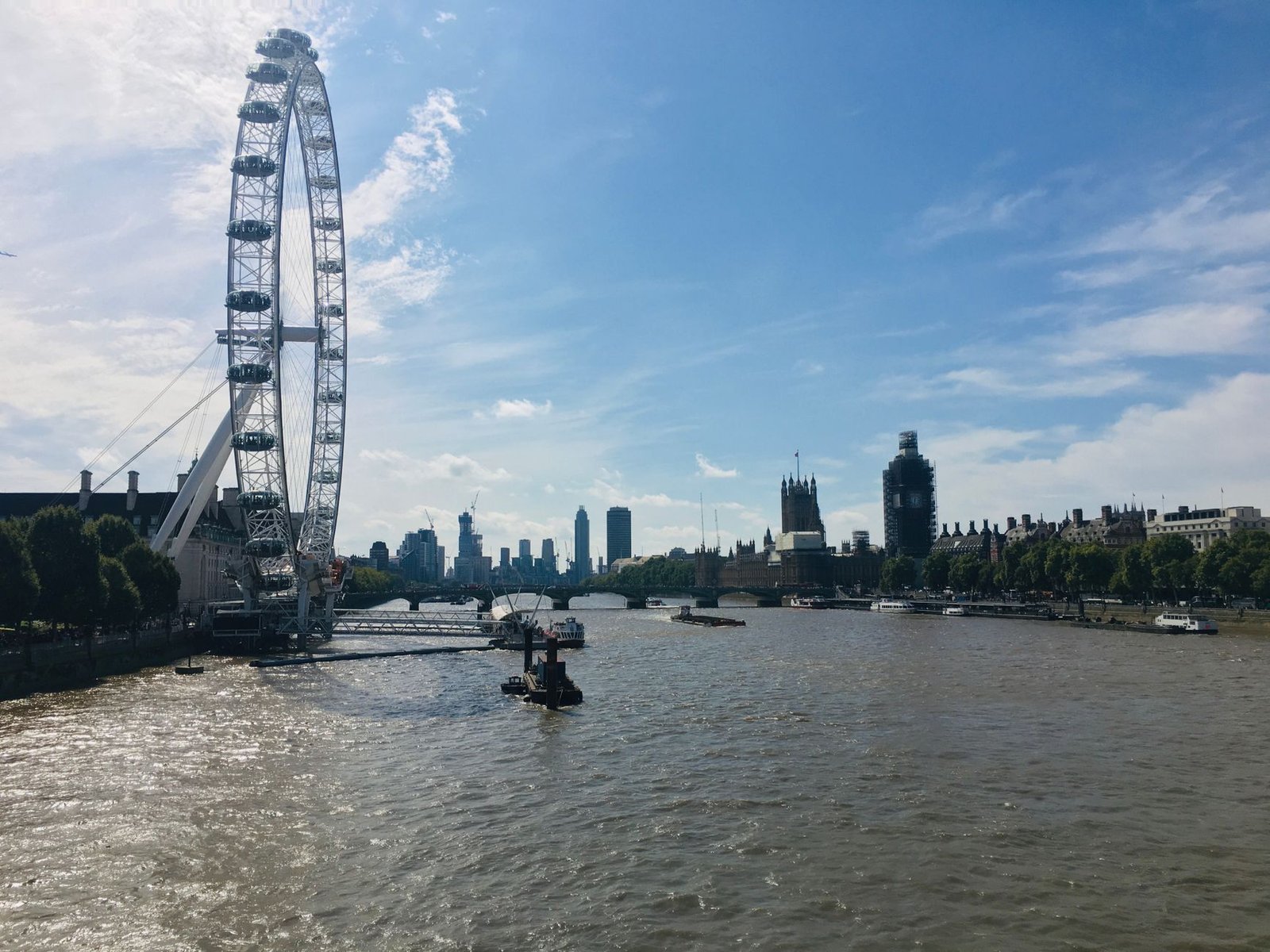
“What else can you see near Big Ben without spending the whole day?” Plenty, because this is London’s most touristy area. Westminster Abbey is just a few steps away and holds the tombs of kings, queens, and figures like Isaac Newton and Charles Darwin. Across the river, the London Eye, a 135-meter (443-foot) Ferris wheel, offers panoramic views of the entire central area—the walk across Westminster Bridge to get there is already part of the experience.
The London Eye, on the banks of the Thames, just a few minutes’ walk from Big Ben. | Photo: Olli / Pexels
Walking through St James’s Park, one of the city’s most beautiful royal parks, you’ll reach Buckingham Palace, the official residence of the British royal family and the stage for the Changing of the Guard. It’s a perfectly walkable circuit in a morning or afternoon, with no extra transport needed.
Where to eat near Big Ben
“Can you eat well without spending a fortune nearby?” Yes, but you need to know where to look, because the immediate area around Parliament has a lot of touristy restaurants with inflated prices. Traditional pubs on the streets around Westminster and Victoria serve classics like fish and chips and pies at more reasonable prices than the trendy spots along the Thames. For a quick meal, the covered markets around Victoria Station offer sandwiches, salads, and hot dishes at better prices than the tourist-focused cafes.
If you want a fuller experience, walk to Covent Garden, about 20 minutes away on foot or a quick Tube ride, where the food scene is bigger and more varied, from street food to sit-down restaurants.
Where to stay
“Which neighborhood should I stay in to be near Big Ben?” It depends on your budget and travel style. For convenience and if you’re willing to pay more, staying in Westminster or Victoria puts you just minutes from the main attractions, but with higher nightly rates typical of the city’s most central and expensive area.
A middle-ground option is South Kensington or Pimlico, quiet residential neighborhoods well-connected by the Tube, with more affordable rates and still just a few stops from Westminster. For those prioritizing savings, neighborhoods like Earl’s Court or slightly more outlying zones are popular, but always check for a nearby Tube station before booking.
Practical tips
The Elizabeth Tower tour is worth booking if you’re really into history, mechanics, and want a less obvious experience—if you just want the classic photo, the outside view gives you the postcard shot for free. The most common mistake is showing up without a ticket hoping to buy one on the spot: the tour inside the tower doesn’t sell tickets at the door, only online and in advance.
As for currency, the UK uses the pound sterling (GBP), not the euro, so check the current exchange rate before you travel and bring an international card with no fees to avoid surprises on conversions. For connectivity, a local SIM or an international eSIM works well, since public Wi-Fi isn’t always reliable in the busiest tourist areas.
At night, with the tower lit up, Big Ben’s look changes completely. | Photo: David Dibert / Pexels
Brazilian travelers need an electronic travel authorization to enter the UK for tourism—always check the current rules on the official UK government website before you travel, as these requirements change often. As for safety, the Parliament area has a strong police presence and is considered one of the safest parts of London to walk around, even at night, but basic caution with your belongings applies at any crowded tourist spot.
Frequently asked questions
What is Big Ben in London?
Big Ben is the nickname of the large 13.5-ton bell installed in the Elizabeth Tower, the clock tower of the Palace of Westminster. Through popular use, the name has also come to refer to the tower and the clock as a whole, even though technically it only refers to the bell.
What is inside Big Ben in London?
Inside the Elizabeth Tower, you’ll find the clock mechanism, the four giant clock dials, and the Big Ben bell itself, plus the 334-step spiral staircase that visitors on the official tour climb to see the structure from the inside.
What is the legend of Big Ben?
The most widely accepted story says the bell was named after Sir Benjamin Hall, who was in charge of public works at the time of its installation in 1858. Some also associate the name with Benjamin Caunt, a famous heavyweight boxer of the era, but that’s considered an alternative theory without definitive confirmation.
What are 3 fun facts about Big Ben?
The bell weighs about 13.5 tons and was cast by the Whitechapel Bell Foundry; the tower is 96 meters (315 feet) tall with 334 steps to the top; and technically, “Big Ben” is the name of the bell, not the clock or the tower, even though popular usage has mixed all three up.
Why is it called Big Ben?
The name is a tribute to Sir Benjamin Hall, who oversaw the bell’s installation as the head of public works at the time—though there’s also the alternative theory linking it to boxer Benjamin Caunt.
Does Big Ben still exist? Is it a church?
Yes, Big Ben still exists and can be visited today. It’s not a church: it’s the bell of a clock tower attached to the British Parliament, a government building, with no religious function.
What is the most touristy neighborhood in London?
Westminster, where Big Ben is located, is often called the most touristy neighborhood in the city, as it brings together Parliament, Westminster Abbey, the London Eye, and Buckingham Palace all within walking distance.
Conclusion
Big Ben sums up what makes London such an easy city to visit: concentrated history, efficient public transport, and attractions just a short walk from each other. You can see it all for free from the street, or go deeper with the guided tour inside the tower—either option is worth the trip to Westminster. Explore more destination guides here on Voyage Voyage.
The Notre-Dame Cathedral in Paris is France’s most famous Gothic church, rising from the Île de la Cité in the heart of the Seine River. It reopened to the public in December 2024 after five years of restoration following the 2019 fire. It sits right in Paris’s historic center, just a short walk from landmarks like the Louvre and the Latin Quarter, and entry to the interior is free. The best time to visit is outside the peak summer season, when the lines to get in are much shorter. Behind the facade everyone recognizes, the story of Notre-Dame holds details that even seasoned Paris visitors might miss.
How to get there
“Can you visit Notre-Dame without getting lost in the middle of Paris?” You can, and the cathedral is one of the easiest landmarks to find in the city, sitting on an island in the Seine, visible from afar by its towers. From the US, there are no direct flights to Paris from most cities—common connections leave from New York, Miami, or Chicago with a layover in Lisbon, Madrid, or another European hub, totaling between 11 and 14 hours of travel including the stop. Direct flights mainly depart from New York or Los Angeles to Charles de Gaulle Airport (CDG), taking about 8 to 11 hours.
From CDG to central Paris, the RER B train takes between 35 and 45 minutes to stations like Châtelet-Les Halles, where you can catch the metro (lines 1 or 4) to the Île de la Cité. Another option is the Roissybus, slower but direct to the Opéra. Once in Paris, the closest metro stations to the cathedral are Cité (line 4) and Saint-Michel Notre-Dame (lines 4 and RER B and C), both less than a 5-minute walk from the main entrance. A single metro ticket costs about €2.15 (June 2026), but if you plan to use public transport a lot, it’s worth buying a carnet of 10 tickets or a Navigo travel pass.
Best time to visit and how long to stay
“What’s the best month to visit Paris and Notre-Dame?” May, June, and September usually bring mild weather and long days without the peak tourist crowds of July and August, when lines to enter the cathedral can stretch over an hour during busy times. Winter has fewer tourists and lower airfare, but the days are short, with the sun setting around 5 PM.
For the cathedral visit itself, set aside between 45 minutes and 1.5 hours, depending on how much time you want to spend admiring the stained glass, the new altar decor, and the details of the reconstruction. If you want to climb the towers—a separate attraction with views over the Paris rooftops—add another hour, including the line, since access is usually limited by timed entry groups.
As for “how much does 7 days in Paris cost”: considering mid-range accommodation, meals, public transport, and a few paid attractions, a realistic budget for a week runs between €900 and €1,600 per person, varying a lot depending on the neighborhood you choose and the time of year. Paris is one of the most expensive cities in Europe for lodging, so booking ahead helps save money.
The western facade of Notre-Dame, with its two towers, at dusk. | Photo: Leonardo Delsabio / Pexels
History and what to see at Notre-Dame Cathedral
“What is the history of Notre-Dame Cathedral?” Construction began in 1163, under the order of Bishop Maurice de Sully, and took nearly two centuries to complete, with the main structure finished around 1260 and the final touches only in 1345. The name “Notre-Dame” means “Our Lady” in French, referring to Mary, mother of Jesus, to whom the cathedral is dedicated. It’s one of the most complete examples of French Gothic architecture, with its flying buttresses (the external supports holding up the high walls), the rose stained-glass windows, and the two front towers that never got spires, contrary to what many people imagine.
“What happened to Notre-Dame Cathedral?” On April 15, 2019, a fire destroyed the wooden roof and toppled the central spire—the pointed tower that stood over the church’s crossing, rebuilt in the 19th century by architect Viollet-le-Duc. Official investigations found no evidence of arson: the most likely cause pointed to an electrical fault or a poorly extinguished cigarette during ongoing restoration work at the time, and no one was formally held responsible for starting the fire. The reconstruction took five years, and the cathedral reopened to the public on December 7 and 8, 2024, with ceremonies attended by French President Emmanuel Macron and heads of state from several countries (full account of the fire on the Wikipedia page about the fire).
About relics: Notre-Dame houses the Crown of Thorns, a relic associated with Christ’s Passion, which was rescued from the 2019 fire by a human chain of firefighters and went back on public display after the reopening, usually on specific dates like Fridays during Lent. As for the “oldest cathedral in the world,” that’s not Notre-Dame—that title usually goes to much older structures, like the Basilica of Saint John Lateran in Rome, from the 4th century, or other cathedrals in the Middle East and the Caucasus. Notre-Dame, at over 850 years old, is ancient by European standards, but it’s far from the oldest on the planet.
“What is the legend of Notre-Dame Cathedral?” The most famous one isn’t really an old folk tale but a literary one: the novel “The Hunchback of Notre-Dame,” published by Victor Hugo in 1831, which features Quasimodo, the fictional hunchback bell-ringer who lives hidden in the cathedral’s tower. The character never actually existed, but he helped popularize the church in the 19th century and even motivated part of the restoration campaign at the time, since the book drew attention to the building’s state of neglect before Viollet-le-Duc’s renovation (more about the novel on Wikipedia).
What to combine nearby
“Is it worth visiting Notre-Dame even if you’re not religious?” Yes, because the historical and architectural value of the cathedral goes far beyond the religious aspect—it’s a landmark of Gothic engineering and of Paris’s own history. The Île de la Cité, where it sits, also houses the Sainte-Chapelle, with even denser and more colorful stained glass, and the Conciergerie, a former prison from the French Revolution, both less than a 10-minute walk away.
Crossing the bridge to the Latin Quarter, you can explore historic bookstores like Shakespeare and Company and the Sorbonne area. For those looking to expand their itinerary with other Paris landmarks, check out the complete Paris guide with tips on the Eiffel Tower, the Louvre, and other city highlights.
The restored interior of Notre-Dame, reopened to the public in December 2024. | Photo: alex ohan / Pexels
Where to eat nearby
The area around the cathedral is quite touristy, so it’s worth moving one or two blocks away from the Seine’s banks to find better prices. In the Latin Quarter, traditional bistros serve dishes like croque-monsieur or quiche for between €12 and €18, and street bakeries offer filled baguette sandwiches for €6 to €9, a great option for a quick lunch sitting by the river.
For a more complete meal, restaurants on the Île Saint-Louis, the neighboring island connected by a small pedestrian bridge, have a calmer vibe than the immediate area around the cathedral, with main courses between €18 and €30. The Berthillon ice cream shop, also on the Île Saint-Louis, is a nearly mandatory stop for anyone in the area.
Where to stay
To stay near Notre-Dame and the Île de la Cité, look for lodging in the Latin Quarter or the Marais—central, charming neighborhoods well-served by transport, though with daily rates generally higher than the city average. Those looking to save money tend to stay near metro stations on the outer lines, like Gambetta or Nation, farther to walk but with good access to the center in a few minutes by metro.
For a balance between cost and location, consider neighborhoods like Bastille or Canal Saint-Martin, more residential at night and still a reasonable metro ride from the historic center.
Practical tips
“How much does it cost to enter Notre-Dame Cathedral?” Entry to visit the cathedral’s interior is free, no exceptions—a decision maintained even after a proposal to charge an admission fee was discussed and dismissed by the French government in 2024. Still, it’s recommended to reserve a free entry time slot on the official website to avoid long lines, especially on weekends and holidays. Extra access, like climbing the towers, may have a separate reservation system and limited capacity—always check the latest conditions on the official Notre-Dame de Paris website.
A common mistake for first-time Paris visitors is not booking a time slot in advance even though it’s free—without a reservation, the line can be much longer, especially in the first months after the reopening when demand is high. US citizens don’t need a visa for short-term tourism in France, but it’s always worth checking the latest entry rules, like electronic travel authorization requirements, directly from official sources before buying your ticket, since these rules change.
About safety: the cathedral area is well-policed and busy, but as with any crowded tourist spot, it’s worth paying extra attention to your personal belongings in the crowd, especially near the entrances.
The gargoyles and chimeras decorating the cathedral’s exterior. | Photo: ARNAUD VIGNE / Pexels
Frequently asked questions
What Jesus-related relic is at Notre-Dame?
The cathedral houses the Crown of Thorns, a relic associated with Christ’s Passion, rescued during the 2019 fire and again displayed to the public on specific dates after the reopening, such as Fridays during Lent.
Who set fire to Notre-Dame?
No one, according to official investigations: there was no evidence of arson. The most likely cause pointed to an electrical fault or a poorly extinguished cigarette during ongoing restoration work on the roof at the time.
What is the name of the person who lives in Notre-Dame Cathedral?
No one actually lives in the cathedral today. The most famous reference is Quasimodo, the fictional hunchback bell-ringer from Victor Hugo’s novel “The Hunchback of Notre-Dame” (1831)—a literary character, not a real figure.
How long does it take to visit Notre-Dame Cathedral?
On average, 45 minutes to 1.5 hours for the cathedral’s interior. Those who want to climb the towers should set aside at least another hour, considering the line and timed entry control.
What does the word Notre-Dame mean?
It means “Our Lady” in French, referring to Mary, mother of Jesus, the patron saint to whom the cathedral is dedicated.
The Seine River, which surrounds the Île de la Cité where Notre-Dame sits. | Photo: Evans Joel / Pexels
Conclusion
Notre-Dame works as a natural starting point for exploring the Île de la Cité and historic central Paris on foot—the free entry, proximity to Sainte-Chapelle and the Latin Quarter make it easy to fit the visit into any itinerary, even a tight one. Check out the other destination guides here on Voyage Voyage.
The Statue of Liberty is New York’s most recognizable monument, standing tall on Liberty Island, a small island in New York Harbor facing Manhattan. It’s officially part of New York State, even though it’s geographically closer to the New Jersey coast—a detail that trips up even seasoned U.S. visitors. Getting to the island requires a ferry, with tickets starting around $25.50 per adult (2026 prices), and the best times to visit are spring or fall, when New York’s summer heat and humidity take a break. Behind the iconic postcard image, the story of how this statue got here has more twists and turns than you might expect.
How to get there
“Can you visit the Statue of Liberty in just one day without wasting time on travel?” Yes, but it requires planning because the only way to reach the island is by ferry. From Brazil, there are direct flights to New York from São Paulo, landing at JFK or Newark airports, with a flight time of about 9 to 10 hours. Rio de Janeiro also has direct routes to JFK during certain times of the year; otherwise, most connections go through Miami or another U.S. hub.
From JFK to downtown Manhattan, the AirTrain connected to the subway (E line) takes about 50 minutes to 1 hour to reach central stations. From Newark, the AirTrain connected to NJ Transit takes around 30 to 40 minutes to Penn Station. Once in the city, ferries to Liberty Island depart from two points: Battery Park at the southern tip of Manhattan, or Liberty State Park in Jersey City, on the New Jersey side. Ferries run every 20 to 30 minutes starting at 9 a.m., and the same ticket includes round-trip travel plus a stop at Ellis Island. You can always check updated schedules and prices on the official National Park Service website, which manages the monument.
Best time to visit and how long to stay
“What’s the best month to visit New York and the Statue of Liberty?” April, May, September, and October bring mild temperatures and less humidity than the peak of summer (July and August), when New York’s heat can get pretty uncomfortable on days spent waiting in outdoor lines. Winter has fewer tourists and some lower fares, but the intense cold and short days require more layers and cut down on the time you can comfortably spend outdoors.
Set aside at least a full half-day for the complete experience: the ferry ride over, a visit to Liberty Island, a stop at Ellis Island (with its immigration museum), and the ferry back easily add up to 4 to 5 hours. If you manage to snag a ticket to go up to the crown—which sells out months in advance—you’ll need to add more time for the security line and screening before access.
The Statue of Liberty on Liberty Island, with Manhattan in the background. | Photo: Federico Abis / Pexels
History and what to see at the Statue of Liberty
“What’s the real story behind the Statue of Liberty?” It was a gift from the French people to the American people, designed by French sculptor Frédéric Auguste Bartholdi, with the internal iron framework engineered by Gustave Eiffel—the same engineer behind the tower that bears his name in Paris. “Who gave the Statue of Liberty to New York?” It was France, officially delivered in 1886, but the monument took about ten years to go from concept to reality, as funds were raised through public donations on both sides of the Atlantic—the French paid for the statue, the Americans for the pedestal.
“Why did France donate the Statue of Liberty to the United States?” The idea came about during the celebrations of the American centennial of independence (1776-1876) and also as a symbol of friendship between the two countries, dating back to French support during the American Revolution. For the French at the time, it was also an indirect way to celebrate republican values and liberty during a delicate period in France’s internal politics. The statue was officially inaugurated on October 28, 1886, after being disassembled into over 350 pieces in France and reassembled piece by piece in New York (more details on the Statue of Liberty Wikipedia page).
“Who is the woman who inspired the Statue of Liberty?” There’s no definitive documented consensus on a single real woman. The most widespread theory suggests Bartholdi was inspired by his mother, Charlotte Bartholdi, for the statue’s face, though the sculptor himself never publicly confirmed this conclusively. The figure depicted is formally Libertas, the Roman goddess of liberty, not a specific person—the seven-pointed crown symbolizes the seven continents and seven seas, reinforcing the universal nature of the symbol.
“Is it true the Statue of Liberty was originally brown?” It’s true. The statue is made of hammered copper sheets and, in its early years, had a polished copper color, somewhere between reddish-brown and bronze. Over about two decades of exposure to the air and sea moisture, the copper naturally oxidized and formed the greenish layer (patina) we recognize today, completing the transformation around 1906.
What to combine nearby
“Where are the 3 Statues of Liberty located?” The original and most famous one is in New York, but there are well-known replicas in other cities—a slightly smaller version sits on the Seine River in Paris, on the Île aux Cygnes, symbolically facing the mother statue across the Atlantic; another replica, of tourist proportions, decorates the facade of the New York-New York Hotel in Las Vegas. There are dozens of smaller copies scattered around the world, but these three are usually the most cited when the topic comes up.
Visitors to Liberty Island usually combine the trip with Ellis Island, included on the same ferry ticket, which housed the main U.S. immigration processing center from 1892 to 1954—now a museum dedicated to the history of American immigration, with more info available on the official New York City tourism guide. Back in Manhattan, it’s worth taking advantage of the proximity to the complete New York guide to fit other city highlights into the same itinerary, like the 9/11 Memorial, which is a short walk from the ferry departure point at Battery Park.
The historic Ellis Island building, a stop on the same ferry ticket. | Photo: Quang Vuong / Pexels
Where to eat nearby
On Liberty Island and Ellis Island, food options are limited to simple snack bars, with sandwiches and salads going for between $10 and $18—it’s worth bringing water and an extra snack, as prices there tend to be higher than in the city. The bulk of good food is concentrated around Battery Park and the Financial District on the Manhattan side, with options ranging from food trucks at $8 to $12 to more upscale restaurants in the Stone Street area, with main courses between $20 and $40.
If you’re departing from the Jersey City side, you’ll find more casual options near Liberty State Park, with prices generally a bit lower than in Manhattan.
Where to stay
To be close to the ferry departure point, consider staying in the Financial District or Battery Park City, central neighborhoods with good subway access, though daily rates are generally high. Those looking to save money tend to stay in Brooklyn neighborhoods like Williamsburg or Downtown Brooklyn, which are well-connected by subway to downtown Manhattan in 15 to 25 minutes.
If you prefer to stay on the New Jersey side, near Liberty State Park, you’ll find accommodation options in Jersey City with prices often lower than in Manhattan, plus quick PATH train access to downtown.
Practical tips
“Is the Statue of Liberty in New York or New Jersey?” Officially, Liberty Island belongs to New York State—a historic dispute between the two states was settled by the U.S. Supreme Court in 1998, which confirmed New York’s sovereignty over the original island, even though parts of the landfill later belonged to New Jersey. In practice, you can access the island by ferry from both the Manhattan side (New York) and the Jersey City side (New Jersey), which often confuses people planning their itinerary.
“What’s the difference between New York and New Jersey?” They are two distinct U.S. states, separated by the Hudson River—New York is home to Manhattan Island and the central boroughs of the country’s most famous city, while New Jersey is the neighboring state, more residential and industrial in large part, though it has cities like Jersey City and Hoboken with direct views of the Manhattan skyline.
Brazilians traveling to the United States for tourism need a visa (B1/B2) or an Esta authorization, depending on their situation—always check the latest rules directly from official sources before buying your ticket, as these requirements can change. A common mistake for Statue of Liberty visitors is not booking the crown ticket in advance: the quota is small and often sells out months ahead during peak season.
The seven-pointed crown, representing the seven continents and seas. | Photo: Magda Ehlers / Pexels
Frequently asked questions
Who is the woman depicted on the Statue of Liberty in the United States?
Formally, the statue represents Libertas, the Roman goddess of liberty—there is no officially confirmed real person as a model, though the most common theory points to a resemblance to sculptor Bartholdi’s mother.
Who gave the Statue of Liberty to New York?
It was a gift from the French people to the American people, sculpted by Frédéric Auguste Bartholdi with an internal structure designed by Gustave Eiffel, officially inaugurated on October 28, 1886.
Is the Statue of Liberty in New York or New Jersey?
It is officially located in New York State territory, on Liberty Island, according to a 1998 U.S. Supreme Court decision, although it is accessible by ferry from the New Jersey side as well.
Is it true the Statue of Liberty was originally brown?
It’s true. The copper sheets originally had a reddish-brown tone and only gained their characteristic green color after about twenty years of natural oxidation in the open air.
Where are the 3 Statues of Liberty located?
The original is in New York; a smaller replica is on the Seine River in Paris; and another decorates the facade of the New York-New York Hotel in Las Vegas, among other smaller copies around the world.
The Manhattan skyline seen from the harbor, on the ferry route to Liberty Island. | Photo: Mark Direen / Pexels
Conclusion
The Statue of Liberty is best enjoyed as a half-day trip, combining the ferry, Liberty Island, and Ellis Island in one itinerary—the ticket already includes both stops, and booking in advance helps you avoid most of the lines. Explore other destination guides here on Voyage Voyage.
The Empire State Building is New York’s most famous skyscraper, with 102 floors and an observatory offering the most complete view of Manhattan. It’s located on 5th Avenue at West 34th Street, right in the heart of Midtown, just a few minutes’ walk from Times Square and Bryant Park. For travelers from Brazil, the journey involves a direct 10- to 11-hour flight to JFK, followed by a subway or taxi ride into the city center; the budget to go up ranges from US$42 to over US$100, depending on the floor and ticket type. What few guides mention is why this specific building became a symbol of the entire city—and the answer has to do with a race against time in the 1930s.
How to get there
From São Paulo, LATAM and American Airlines operate direct flights to JFK, lasting about 10h30. From Rio, the trip is similar, around 10 hours. Flights with layovers—usually in Bogotá, Lima, or Miami—tend to be cheaper but add 3 to 5 more hours of travel time. Brazilian citizens do not need a visa for short-term tourism in the US, only the ESTA electronic authorization—always check the current rules on the official website before buying your ticket, as they can change.
From JFK to the Empire State Building, the cheapest option is the AirTrain to Jamaica Station, followed by the E subway line to 34th Street–Penn Station, from where it’s a 5-minute walk—the whole trip takes about 1 hour and costs around US$10.50. A taxi or rideshare will run you US$50 to US$70, depending on traffic. Within the city, subway lines B, D, F, M, N, Q, R, and W all stop just a few blocks from the main entrance on 5th Avenue.
Best time to visit and how long to stay
“Can you go up and down quickly, or should you set aside a whole morning?” With a timed-entry ticket, a visit to the 86th-floor observatory takes about 1h30 to 2 hours, including the security line and elevator ride. If you’re also heading to the 102nd floor, add another 30 to 40 minutes. The best time to see Manhattan without haze is fall and winter, when the air is drier—rainy or humid summer days often hurt visibility. For sunset photos with the city lighting up, book a late afternoon slot, but expect a longer line during that period.
What to see at the Empire State Building
The building stands 443 meters tall to the tip of its antenna, opened on May 1, 1931, and held the title of the world’s tallest building for nearly 40 years, until the World Trade Center was completed in 1970. Construction took just 410 days, a record that still impresses architects—the steel frame rose about 4 floors per week.
The Empire State Building remains the most recognizable landmark on the Manhattan skyline. | Photo: Loïc Alejandro / Pexels
86th Floor Observatory
This is the classic observation deck, with an open-air outdoor space and 360-degree views of Manhattan, Brooklyn, Queens, and on clear days, even New Jersey. It sits 320 meters high and is where most visitors hang out, snapping photos between the protective railings.
102nd Floor Observatory
The 102nd floor sits 373 meters high, is enclosed with floor-to-ceiling glass, and costs significantly more—around US$77 compared to US$42 for the 86th floor (reference prices; always check the official Empire State Building website before buying). The ascent uses different elevators, so you need to buy a combined ticket for both floors in advance.
The 360-degree view from the 86th-floor observatory covers much of New York’s five boroughs. | Photo: Ramon Perucho / Pexels
Ground Floor Exhibition
Before heading up, the route passes through a small museum on the building’s history, featuring models, original construction photos, and a section dedicated to the 1945 accident, when a US Air Force B-25 bomber, lost in the fog, crashed into the 79th floor. The impact killed 14 people—3 crew members and 11 employees working on the affected floor—but the building’s structure held, and it reopened to the public just days later (more details on the accident can be found on the Wikipedia page for the incident).
Nighttime Lighting
Since 1976, the top of the building has changed colors to mark holidays, commemorative dates, and social causes—red and green for Christmas, pink in October for breast cancer awareness, among other combinations throughout the year. The color schedule is available on the building’s official lighting page.
The illuminated top changes color according to the calendar of events and holidays. | Photo: Andres Figueroa / Pexels
What to combine / nearby attractions
Its prime Midtown location makes it easy to tack on other spots on the same day. Heading up 5th Avenue, it’s about a 20-minute walk (or two subway stops) to Times Square, with its LED billboards and Broadway theaters. Bryant Park and the New York Public Library are a 10-minute walk away on 42nd Street. For those looking to build a more complete city itinerary, combining this skyscraper with other Manhattan landmarks, check out the complete New York guide from Voyage Voyage.
The building’s entrance is on 5th Avenue, between 33rd and 34th Streets, just minutes from other Midtown spots. | Photo: Diogo Miranda / Pexels
Where to eat
The area around the Empire State Building is commercial and has fewer charming options than other neighborhoods, but it’s packed with practical alternatives. Korea Town, just a few blocks away on 32nd Street, is packed with dozens of Korean restaurants with dishes between US$15 and US$25—a great option for a quick lunch before or after your visit. Classic delis around Herald Square sell sandwiches for US$10 to US$15. For something more budget-friendly, food trucks on Broadway charge between US$6 and US$12 for a simple meal.
Where to stay
Staying in Midtown itself, near Herald Square or Penn Station, puts you just a few minutes’ walk from the Empire State Building and close to several subway lines—it’s the most practical option, though hotel prices are pushed up due to the central location. Chelsea, a bit further south, has boutique hotels and is a comfortable 15- to 20-minute walk away. For those prioritizing budget, neighborhoods like Long Island City in Queens are just a few subway stops away and often have lower nightly rates than Manhattan.
Practical tips
It’s worth booking a timed-entry ticket at least a few days in advance—buying on the spot usually means a line of over an hour just to get your ticket. The most common mistake is going up in the middle of the afternoon on a cloudy day, when the view is compromised; the time right after opening or near sunset usually yields better photos and fewer people. Bring a jacket even on warm days—the wind on the open 86th-floor deck is much stronger than at street level. As for safety, the area around the building is busy and well-policed at all hours; the main thing to watch out for is unofficial ticket sellers on the street, who often charge more for packages that aren’t worth the price.
Frequently asked questions
Why is the Empire State Building so famous?
Because it was the world’s tallest building for nearly 40 years, built in record time during the Great Depression, and became a symbol of American architectural ambition. It also appears in movies like King Kong and Sleepless in Seattle, which cemented its cultural status.
Is it possible to live in the Empire State Building?
No. The building is commercial, occupied by offices and the tourist observatory—there are no residential apartments in it.
Who built the Empire State Building and why?
It was built between 1930 and 1931 by the company Starrett Brothers and Eken, designed by the firm Shreve, Lamb & Harmon, and financed by a group led by John Jacob Raskob and Pierre S. du Pont. The stated goal was to erect the world’s tallest building, in a symbolic race against other skyscrapers being built in New York at the same time.
Did Donald Trump own the Empire State Building?
No. Trump was never the owner of the building. In 1994, he signed a lease agreement in partnership with Hong Kong investors, but lost a legal dispute years later over a conflict of interest. The building is now owned by the Empire State Realty Trust, a publicly traded company controlled by the Malkin family.
How many people died in the 1945 Empire State Building accident?
Fourteen people died when a B-25 bomber crashed into the 79th floor on July 28, 1945, in thick fog: three crew members and eleven employees working on the affected floor. The fire caused by the impact was brought under control in about 40 minutes, and the building’s structure was not compromised.
Conclusion
The Empire State Building makes for a well-spent morning or late afternoon within a larger Manhattan itinerary. Explore the other destination guides here on Voyage Voyage.