 Marcelo Oliveira
The Statue of Liberty is New York’s most recognizable monument, standing tall on Liberty Island, a small island in New York Harbor facing Manhattan. It’s officially part of New York State, even though it’s geographically closer to the New Jersey coast—a detail that trips up even seasoned U.S. visitors. Getting to the island requires a ferry, with tickets starting around $25.50 per adult (2026 prices), and the best times to visit are spring or fall, when New York’s summer heat and humidity take a break. Behind the iconic postcard image, the story of how this statue got here has more twists and turns than you might expect.
Hotels in New Yorkfree cancellation options onlySee hotels ›Booking.com partner (advertising): we may earn a commission at no extra cost to you.
How to get there
“Can you visit the Statue of Liberty in just one day without wasting time on travel?” Yes, but it requires planning because the only way to reach the island is by ferry. From Brazil, there are direct flights to New York from São Paulo, landing at JFK or Newark airports, with a flight time of about 9 to 10 hours. Rio de Janeiro also has direct routes to JFK during certain times of the year; otherwise, most connections go through Miami or another U.S. hub.
From JFK to downtown Manhattan, the AirTrain connected to the subway (E line) takes about 50 minutes to 1 hour to reach central stations. From Newark, the AirTrain connected to NJ Transit takes around 30 to 40 minutes to Penn Station. Once in the city, ferries to Liberty Island depart from two points: Battery Park at the southern tip of Manhattan, or Liberty State Park in Jersey City, on the New Jersey side. Ferries run every 20 to 30 minutes starting at 9 a.m., and the same ticket includes round-trip travel plus a stop at Ellis Island. You can always check updated schedules and prices on the official National Park Service website, which manages the monument.
Best time to visit and how long to stay
“What’s the best month to visit New York and the Statue of Liberty?” April, May, September, and October bring mild temperatures and less humidity than the peak of summer (July and August), when New York’s heat can get pretty uncomfortable on days spent waiting in outdoor lines. Winter has fewer tourists and some lower fares, but the intense cold and short days require more layers and cut down on the time you can comfortably spend outdoors.
Set aside at least a full half-day for the complete experience: the ferry ride over, a visit to Liberty Island, a stop at Ellis Island (with its immigration museum), and the ferry back easily add up to 4 to 5 hours. If you manage to snag a ticket to go up to the crown—which sells out months in advance—you’ll need to add more time for the security line and screening before access.
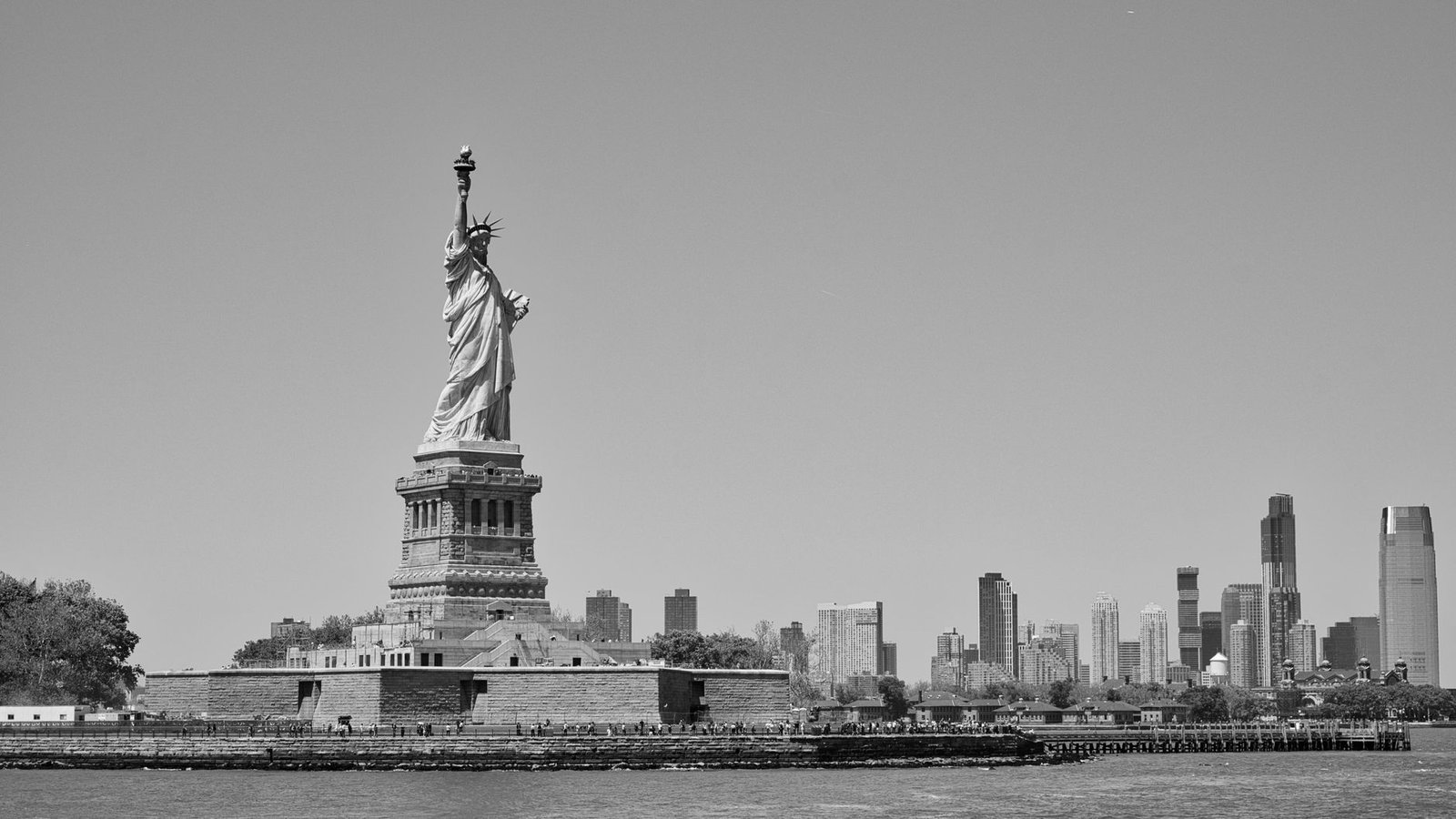
History and what to see at the Statue of Liberty
“What’s the real story behind the Statue of Liberty?” It was a gift from the French people to the American people, designed by French sculptor Frédéric Auguste Bartholdi, with the internal iron framework engineered by Gustave Eiffel—the same engineer behind the tower that bears his name in Paris. “Who gave the Statue of Liberty to New York?” It was France, officially delivered in 1886, but the monument took about ten years to go from concept to reality, as funds were raised through public donations on both sides of the Atlantic—the French paid for the statue, the Americans for the pedestal.
“Why did France donate the Statue of Liberty to the United States?” The idea came about during the celebrations of the American centennial of independence (1776-1876) and also as a symbol of friendship between the two countries, dating back to French support during the American Revolution. For the French at the time, it was also an indirect way to celebrate republican values and liberty during a delicate period in France’s internal politics. The statue was officially inaugurated on October 28, 1886, after being disassembled into over 350 pieces in France and reassembled piece by piece in New York (more details on the Statue of Liberty Wikipedia page).
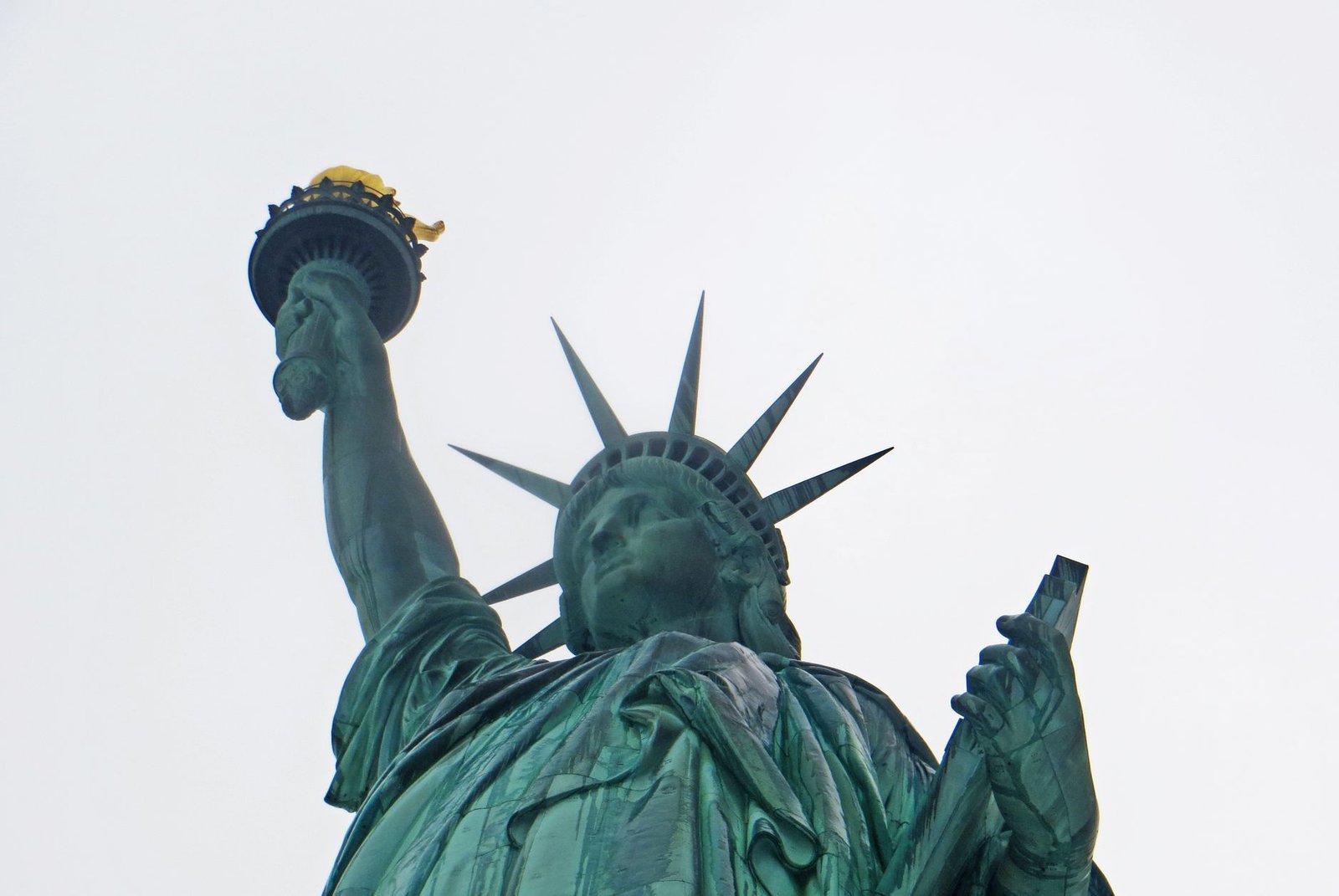
“Who is the woman who inspired the Statue of Liberty?” There’s no definitive documented consensus on a single real woman. The most widespread theory suggests Bartholdi was inspired by his mother, Charlotte Bartholdi, for the statue’s face, though the sculptor himself never publicly confirmed this conclusively. The figure depicted is formally Libertas, the Roman goddess of liberty, not a specific person—the seven-pointed crown symbolizes the seven continents and seven seas, reinforcing the universal nature of the symbol.
“Is it true the Statue of Liberty was originally brown?” It’s true. The statue is made of hammered copper sheets and, in its early years, had a polished copper color, somewhere between reddish-brown and bronze. Over about two decades of exposure to the air and sea moisture, the copper naturally oxidized and formed the greenish layer (patina) we recognize today, completing the transformation around 1906.
What to combine nearby
“Where are the 3 Statues of Liberty located?” The original and most famous one is in New York, but there are well-known replicas in other cities—a slightly smaller version sits on the Seine River in Paris, on the Île aux Cygnes, symbolically facing the mother statue across the Atlantic; another replica, of tourist proportions, decorates the facade of the New York-New York Hotel in Las Vegas. There are dozens of smaller copies scattered around the world, but these three are usually the most cited when the topic comes up.
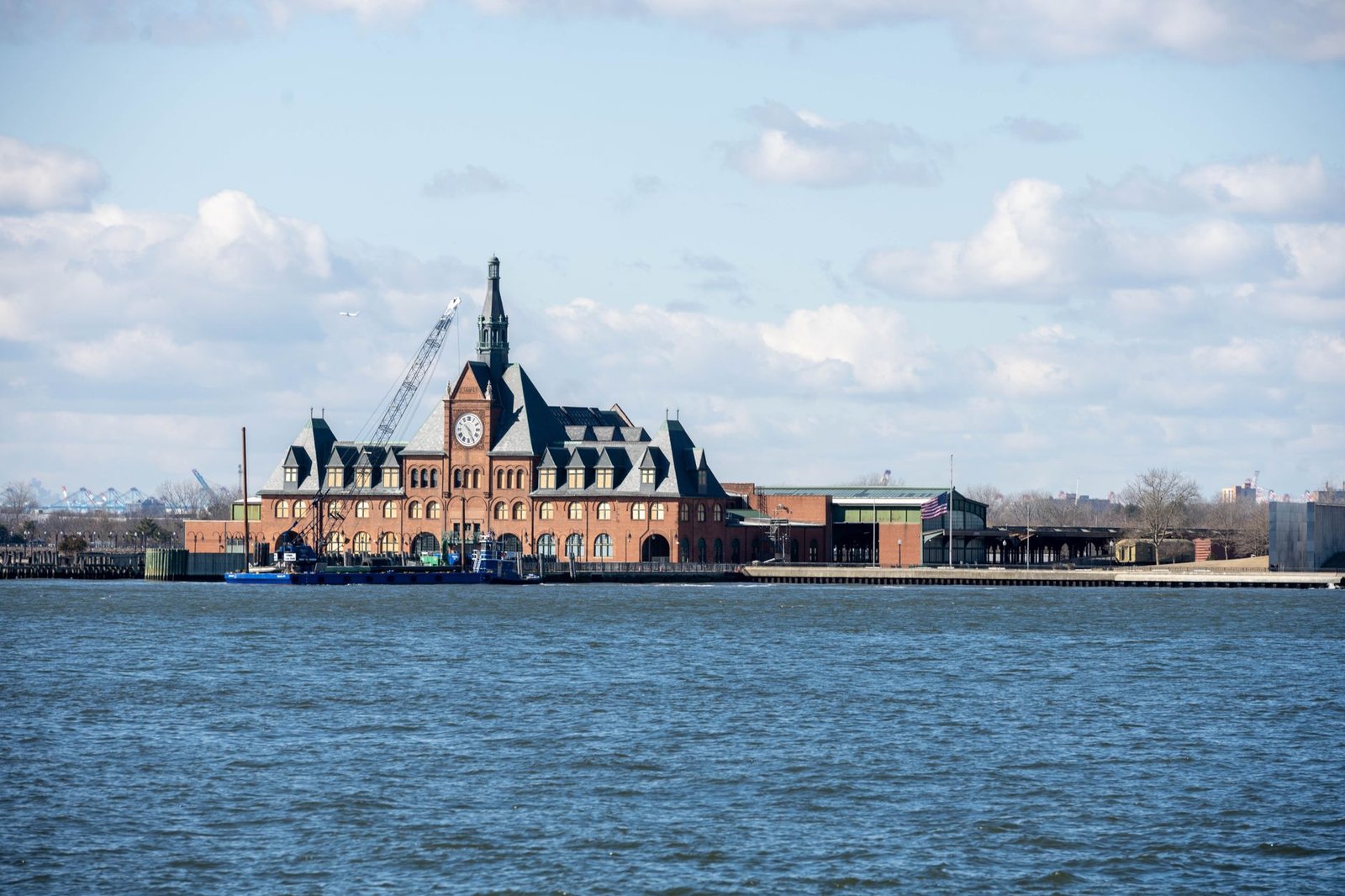
Visitors to Liberty Island usually combine the trip with Ellis Island, included on the same ferry ticket, which housed the main U.S. immigration processing center from 1892 to 1954—now a museum dedicated to the history of American immigration, with more info available on the official New York City tourism guide. Back in Manhattan, it’s worth taking advantage of the proximity to the complete New York guide to fit other city highlights into the same itinerary, like the 9/11 Memorial, which is a short walk from the ferry departure point at Battery Park.
Where to stay in New York
| Hotel | Rating | |
|---|---|---|
| Club Quarters Hotel Times Square - MidtownTimes Square and Midtown · Times Square and Midtown | 8,52.439 reviews | See prices |
| Hampton Inn Times Square CentralTimes Square and Midtown · Times Square and Midtown | 8,62.572 reviews | See prices |
| Hard Rock Hotel New YorkTimes Square and Midtown · Times Square and Midtown | 8,71.851 reviews | See prices |
| Club Quarters Hotel Grand CentralBryant Park and Grand Central · Bryant Park and Grand Central | 8,74.580 reviews | See prices |
| Archer Hotel New YorkBryant Park and Grand Central · Bryant Park and Grand Central | 8,91.087 reviews | See prices |
| Park Terrace HotelBryant Park and Grand Central · Bryant Park and Grand Central | 8,92.232 reviews | See prices |
| Romer Hell's KitchenHell's Kitchen · Hell's Kitchen | 8,65.518 reviews | See prices |
| Element by Marriott Times Square WestHell's Kitchen · Hell's Kitchen | 8,17.062 reviews | See prices |
| Courtyard by Marriott Times Square WestHell's Kitchen · Hell's Kitchen | 8,62.705 reviews | See prices |
| Carnegie HotelCentral Park · Central Park | 8,81.513 reviews | See prices |
| Hotel Belleclaire Central ParkCentral Park · Central Park | 8,54.520 reviews | See prices |
| Ace Hotel BrooklynDowntown Brooklyn · Downtown Brooklyn | 8,71.739 reviews | See prices |
| Hampton Inn Brooklyn DowntownDowntown Brooklyn · Downtown Brooklyn | 8,61.600 reviews | See prices |
| Aloft by Marriott New York BrooklynDowntown Brooklyn · Downtown Brooklyn | 8,11.320 reviews | See prices |
| Boro HotelLong Island City · Long Island City | 8,5911 reviews | See prices |
| TownePlace Suites Long Island CityLong Island City · Long Island City | 8,5918 reviews | See prices |
| Wingate by Wyndham Long Island CityLong Island City · Long Island City | 8,42.816 reviews | See prices |
Booking.com rating on 30/09/2026
Where to eat nearby
On Liberty Island and Ellis Island, food options are limited to simple snack bars, with sandwiches and salads going for between $10 and $18—it’s worth bringing water and an extra snack, as prices there tend to be higher than in the city. The bulk of good food is concentrated around Battery Park and the Financial District on the Manhattan side, with options ranging from food trucks at $8 to $12 to more upscale restaurants in the Stone Street area, with main courses between $20 and $40.
If you’re departing from the Jersey City side, you’ll find more casual options near Liberty State Park, with prices generally a bit lower than in Manhattan.
Where to stay
To be close to the ferry departure point, consider staying in the Financial District or Battery Park City, central neighborhoods with good subway access, though daily rates are generally high. Those looking to save money tend to stay in Brooklyn neighborhoods like Williamsburg or Downtown Brooklyn, which are well-connected by subway to downtown Manhattan in 15 to 25 minutes.
If you prefer to stay on the New Jersey side, near Liberty State Park, you’ll find accommodation options in Jersey City with prices often lower than in Manhattan, plus quick PATH train access to downtown.
Practical tips
“Is the Statue of Liberty in New York or New Jersey?” Officially, Liberty Island belongs to New York State—a historic dispute between the two states was settled by the U.S. Supreme Court in 1998, which confirmed New York’s sovereignty over the original island, even though parts of the landfill later belonged to New Jersey. In practice, you can access the island by ferry from both the Manhattan side (New York) and the Jersey City side (New Jersey), which often confuses people planning their itinerary.
“What’s the difference between New York and New Jersey?” They are two distinct U.S. states, separated by the Hudson River—New York is home to Manhattan Island and the central boroughs of the country’s most famous city, while New Jersey is the neighboring state, more residential and industrial in large part, though it has cities like Jersey City and Hoboken with direct views of the Manhattan skyline.
Brazilians traveling to the United States for tourism need a visa (B1/B2) or an Esta authorization, depending on their situation—always check the latest rules directly from official sources before buying your ticket, as these requirements can change. A common mistake for Statue of Liberty visitors is not booking the crown ticket in advance: the quota is small and often sells out months ahead during peak season.
 HotelAs soon as you have datesCompare neighbourhoods and guest ratings.See hotels ↑
 More activitiesTo compareTickets, day trips and tours with flexible cancellation.GetYourGuide ›
Frequently asked questions
Who is the woman depicted on the Statue of Liberty in the United States?
Formally, the statue represents Libertas, the Roman goddess of liberty—there is no officially confirmed real person as a model, though the most common theory points to a resemblance to sculptor Bartholdi’s mother.
Who gave the Statue of Liberty to New York?
It was a gift from the French people to the American people, sculpted by Frédéric Auguste Bartholdi with an internal structure designed by Gustave Eiffel, officially inaugurated on October 28, 1886.
Is the Statue of Liberty in New York or New Jersey?
It is officially located in New York State territory, on Liberty Island, according to a 1998 U.S. Supreme Court decision, although it is accessible by ferry from the New Jersey side as well.
Is it true the Statue of Liberty was originally brown?
It’s true. The copper sheets originally had a reddish-brown tone and only gained their characteristic green color after about twenty years of natural oxidation in the open air.
Where are the 3 Statues of Liberty located?
The original is in New York; a smaller replica is on the Seine River in Paris; and another decorates the facade of the New York-New York Hotel in Las Vegas, among other smaller copies around the world.

Conclusion
The Statue of Liberty is best enjoyed as a half-day trip, combining the ferry, Liberty Island, and Ellis Island in one itinerary—the ticket already includes both stops, and booking in advance helps you avoid most of the lines. Explore other destination guides here on Voyage Voyage.