 Marcelo Oliveira
The Empire State Building is New York’s most famous skyscraper, with 102 floors and an observatory offering the most complete view of Manhattan. It’s located on 5th Avenue at West 34th Street, right in the heart of Midtown, just a few minutes’ walk from Times Square and Bryant Park. For travelers from Brazil, the journey involves a direct 10- to 11-hour flight to JFK, followed by a subway or taxi ride into the city center; the budget to go up ranges from US$42 to over US$100, depending on the floor and ticket type. What few guides mention is why this specific building became a symbol of the entire city—and the answer has to do with a race against time in the 1930s.
Hotels in New Yorkfree cancellation options onlySee hotels ›Booking.com partner (advertising): we may earn a commission at no extra cost to you.
How to get there
From São Paulo, LATAM and American Airlines operate direct flights to JFK, lasting about 10h30. From Rio, the trip is similar, around 10 hours. Flights with layovers—usually in Bogotá, Lima, or Miami—tend to be cheaper but add 3 to 5 more hours of travel time. Brazilian citizens do not need a visa for short-term tourism in the US, only the ESTA electronic authorization—always check the current rules on the official website before buying your ticket, as they can change.
From JFK to the Empire State Building, the cheapest option is the AirTrain to Jamaica Station, followed by the E subway line to 34th Street–Penn Station, from where it’s a 5-minute walk—the whole trip takes about 1 hour and costs around US$10.50. A taxi or rideshare will run you US$50 to US$70, depending on traffic. Within the city, subway lines B, D, F, M, N, Q, R, and W all stop just a few blocks from the main entrance on 5th Avenue.
Best time to visit and how long to stay
“Can you go up and down quickly, or should you set aside a whole morning?” With a timed-entry ticket, a visit to the 86th-floor observatory takes about 1h30 to 2 hours, including the security line and elevator ride. If you’re also heading to the 102nd floor, add another 30 to 40 minutes. The best time to see Manhattan without haze is fall and winter, when the air is drier—rainy or humid summer days often hurt visibility. For sunset photos with the city lighting up, book a late afternoon slot, but expect a longer line during that period.
What to see at the Empire State Building
The building stands 443 meters tall to the tip of its antenna, opened on May 1, 1931, and held the title of the world’s tallest building for nearly 40 years, until the World Trade Center was completed in 1970. Construction took just 410 days, a record that still impresses architects—the steel frame rose about 4 floors per week.
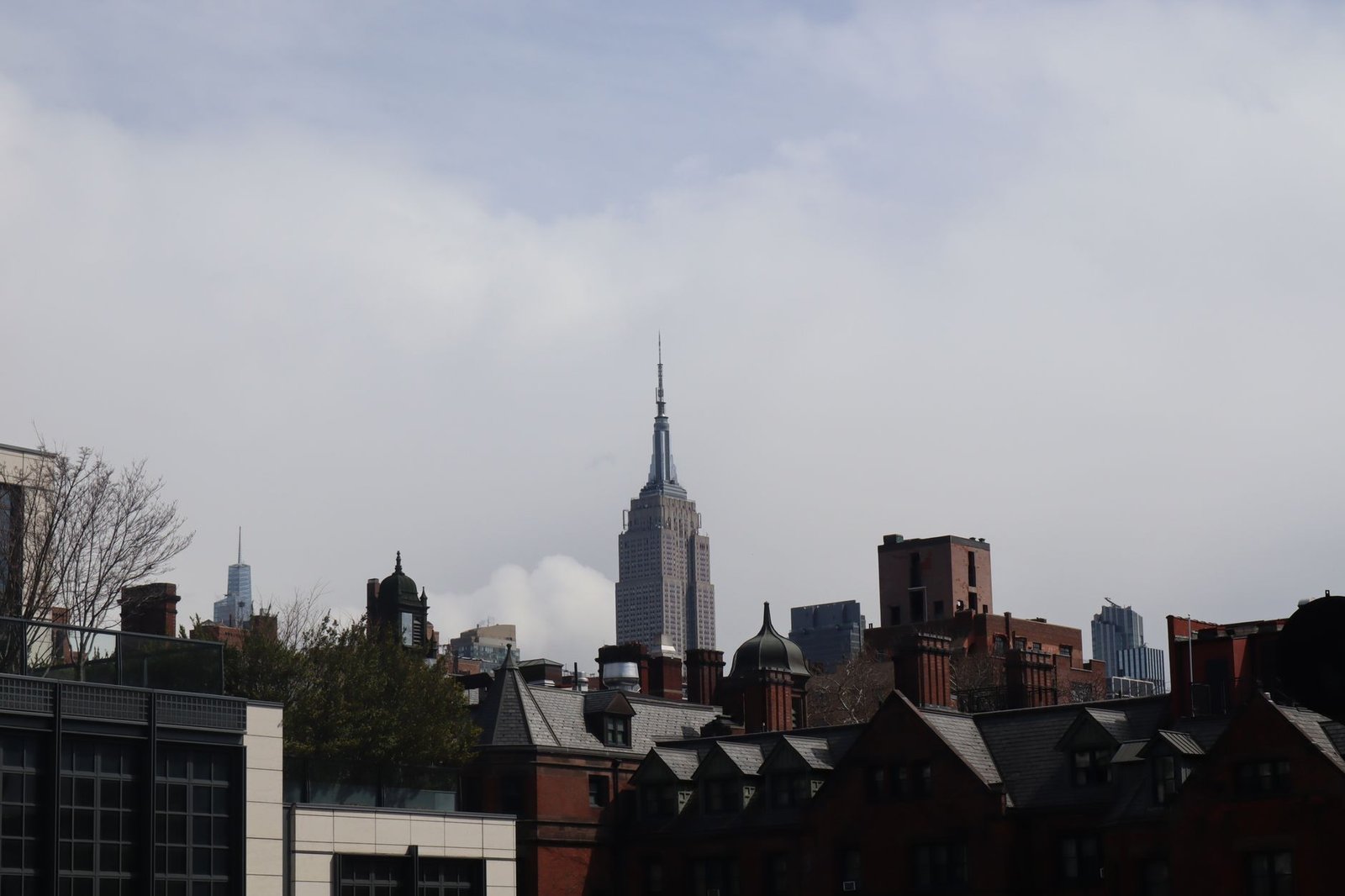
86th Floor Observatory
This is the classic observation deck, with an open-air outdoor space and 360-degree views of Manhattan, Brooklyn, Queens, and on clear days, even New Jersey. It sits 320 meters high and is where most visitors hang out, snapping photos between the protective railings.
102nd Floor Observatory
The 102nd floor sits 373 meters high, is enclosed with floor-to-ceiling glass, and costs significantly more—around US$77 compared to US$42 for the 86th floor (reference prices; always check the official Empire State Building website before buying). The ascent uses different elevators, so you need to buy a combined ticket for both floors in advance.
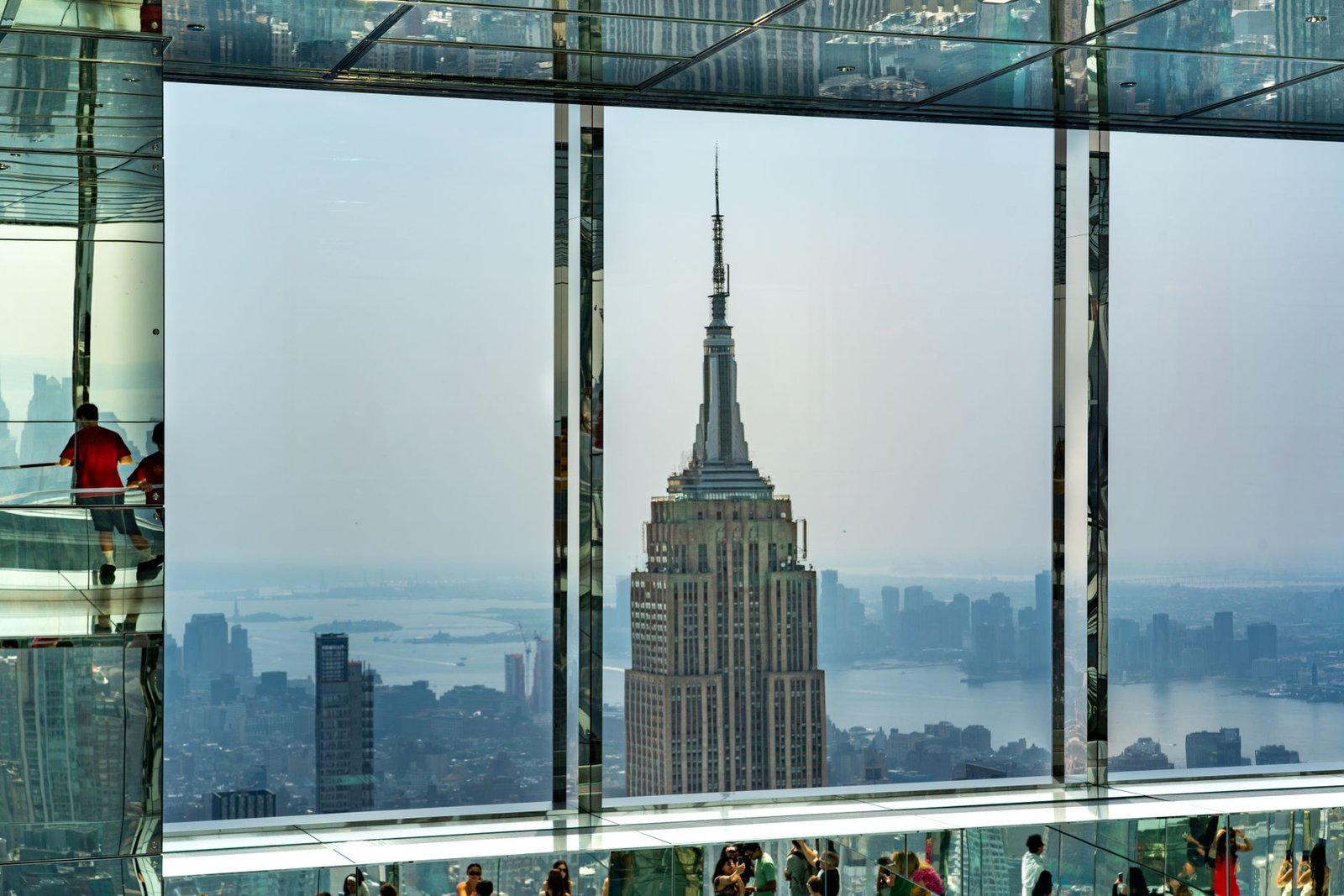
Ground Floor Exhibition
Before heading up, the route passes through a small museum on the building’s history, featuring models, original construction photos, and a section dedicated to the 1945 accident, when a US Air Force B-25 bomber, lost in the fog, crashed into the 79th floor. The impact killed 14 people—3 crew members and 11 employees working on the affected floor—but the building’s structure held, and it reopened to the public just days later (more details on the accident can be found on the Wikipedia page for the incident).
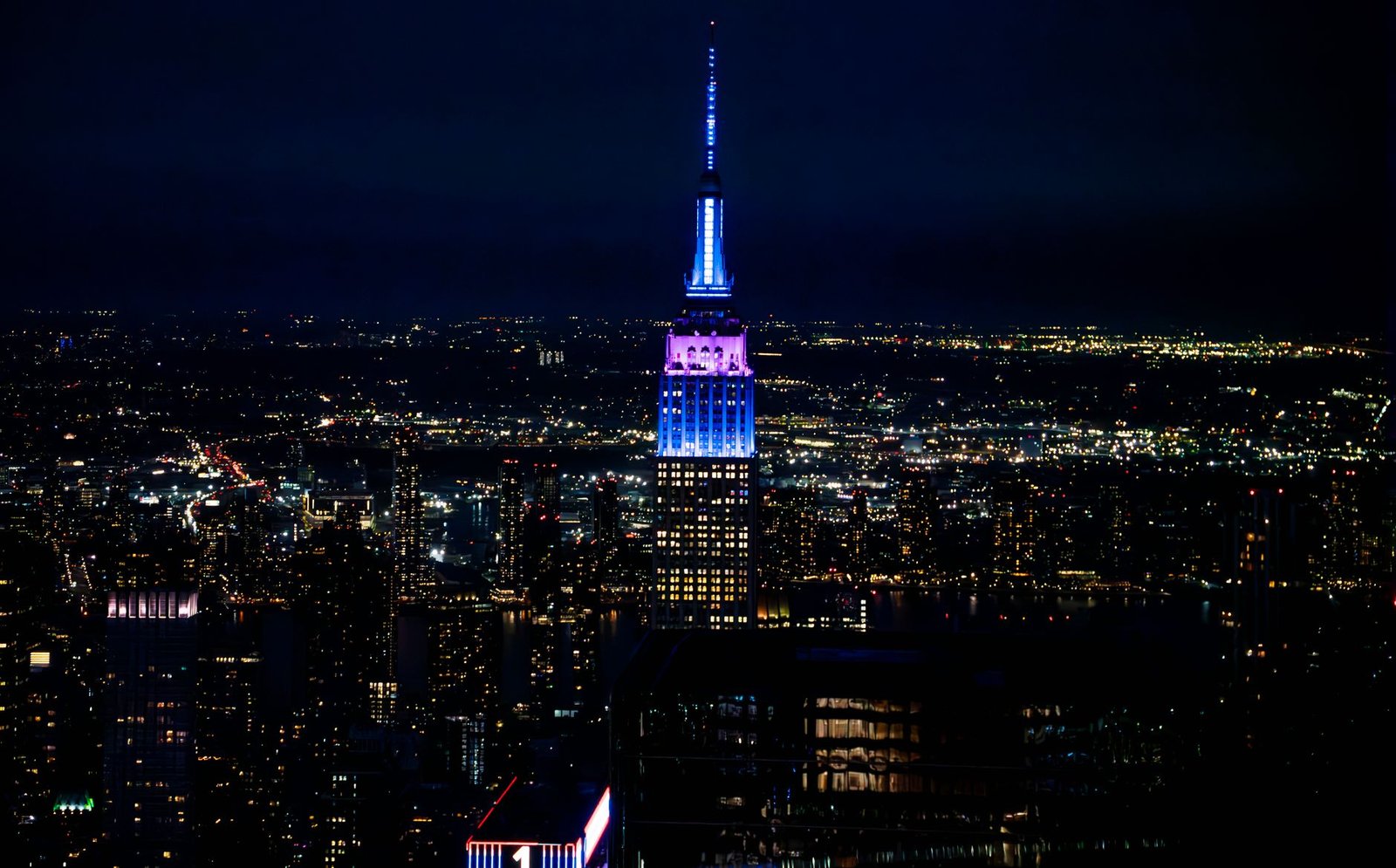
Nighttime Lighting
Since 1976, the top of the building has changed colors to mark holidays, commemorative dates, and social causes—red and green for Christmas, pink in October for breast cancer awareness, among other combinations throughout the year. The color schedule is available on the building’s official lighting page.
What to combine / nearby attractions
Its prime Midtown location makes it easy to tack on other spots on the same day. Heading up 5th Avenue, it’s about a 20-minute walk (or two subway stops) to Times Square, with its LED billboards and Broadway theaters. Bryant Park and the New York Public Library are a 10-minute walk away on 42nd Street. For those looking to build a more complete city itinerary, combining this skyscraper with other Manhattan landmarks, check out the complete New York guide from Voyage Voyage.
Where to eat
The area around the Empire State Building is commercial and has fewer charming options than other neighborhoods, but it’s packed with practical alternatives. Korea Town, just a few blocks away on 32nd Street, is packed with dozens of Korean restaurants with dishes between US$15 and US$25—a great option for a quick lunch before or after your visit. Classic delis around Herald Square sell sandwiches for US$10 to US$15. For something more budget-friendly, food trucks on Broadway charge between US$6 and US$12 for a simple meal.
Where to stay
Staying in Midtown itself, near Herald Square or Penn Station, puts you just a few minutes’ walk from the Empire State Building and close to several subway lines—it’s the most practical option, though hotel prices are pushed up due to the central location. Chelsea, a bit further south, has boutique hotels and is a comfortable 15- to 20-minute walk away. For those prioritizing budget, neighborhoods like Long Island City in Queens are just a few subway stops away and often have lower nightly rates than Manhattan.
Where to stay in New York
| Hotel | Rating | |
|---|---|---|
| Club Quarters Hotel Times Square - MidtownTimes Square and Midtown · Times Square and Midtown | 8,52.439 reviews | See prices |
| Hampton Inn Times Square CentralTimes Square and Midtown · Times Square and Midtown | 8,62.572 reviews | See prices |
| Hard Rock Hotel New YorkTimes Square and Midtown · Times Square and Midtown | 8,71.851 reviews | See prices |
| Club Quarters Hotel Grand CentralBryant Park and Grand Central · Bryant Park and Grand Central | 8,74.580 reviews | See prices |
| Archer Hotel New YorkBryant Park and Grand Central · Bryant Park and Grand Central | 8,91.087 reviews | See prices |
| Park Terrace HotelBryant Park and Grand Central · Bryant Park and Grand Central | 8,92.232 reviews | See prices |
| Romer Hell's KitchenHell's Kitchen · Hell's Kitchen | 8,65.518 reviews | See prices |
| Element by Marriott Times Square WestHell's Kitchen · Hell's Kitchen | 8,17.062 reviews | See prices |
| Courtyard by Marriott Times Square WestHell's Kitchen · Hell's Kitchen | 8,62.705 reviews | See prices |
| Carnegie HotelCentral Park · Central Park | 8,81.513 reviews | See prices |
| Hotel Belleclaire Central ParkCentral Park · Central Park | 8,54.520 reviews | See prices |
| Ace Hotel BrooklynDowntown Brooklyn · Downtown Brooklyn | 8,71.739 reviews | See prices |
| Hampton Inn Brooklyn DowntownDowntown Brooklyn · Downtown Brooklyn | 8,61.600 reviews | See prices |
| Aloft by Marriott New York BrooklynDowntown Brooklyn · Downtown Brooklyn | 8,11.320 reviews | See prices |
| Boro HotelLong Island City · Long Island City | 8,5911 reviews | See prices |
| TownePlace Suites Long Island CityLong Island City · Long Island City | 8,5918 reviews | See prices |
| Wingate by Wyndham Long Island CityLong Island City · Long Island City | 8,42.816 reviews | See prices |
Booking.com rating on 30/09/2026
Practical tips
It’s worth booking a timed-entry ticket at least a few days in advance—buying on the spot usually means a line of over an hour just to get your ticket. The most common mistake is going up in the middle of the afternoon on a cloudy day, when the view is compromised; the time right after opening or near sunset usually yields better photos and fewer people. Bring a jacket even on warm days—the wind on the open 86th-floor deck is much stronger than at street level. As for safety, the area around the building is busy and well-policed at all hours; the main thing to watch out for is unofficial ticket sellers on the street, who often charge more for packages that aren’t worth the price.
 HotelAs soon as you have datesCompare neighbourhoods and guest ratings.See hotels ↑
 More activitiesTo compareTickets, day trips and tours with flexible cancellation.GetYourGuide ›
Frequently asked questions
Why is the Empire State Building so famous?
Because it was the world’s tallest building for nearly 40 years, built in record time during the Great Depression, and became a symbol of American architectural ambition. It also appears in movies like King Kong and Sleepless in Seattle, which cemented its cultural status.
Is it possible to live in the Empire State Building?
No. The building is commercial, occupied by offices and the tourist observatory—there are no residential apartments in it.
Who built the Empire State Building and why?
It was built between 1930 and 1931 by the company Starrett Brothers and Eken, designed by the firm Shreve, Lamb & Harmon, and financed by a group led by John Jacob Raskob and Pierre S. du Pont. The stated goal was to erect the world’s tallest building, in a symbolic race against other skyscrapers being built in New York at the same time.
Did Donald Trump own the Empire State Building?
No. Trump was never the owner of the building. In 1994, he signed a lease agreement in partnership with Hong Kong investors, but lost a legal dispute years later over a conflict of interest. The building is now owned by the Empire State Realty Trust, a publicly traded company controlled by the Malkin family.
How many people died in the 1945 Empire State Building accident?
Fourteen people died when a B-25 bomber crashed into the 79th floor on July 28, 1945, in thick fog: three crew members and eleven employees working on the affected floor. The fire caused by the impact was brought under control in about 40 minutes, and the building’s structure was not compromised.
Conclusion
The Empire State Building makes for a well-spent morning or late afternoon within a larger Manhattan itinerary. Explore the other destination guides here on Voyage Voyage.