Category: Culture & History

  • Milan: What to Do Without the Rush on Your First Trip

    Milan: What to Do Without the Rush on Your First Trip

    🇧🇷 POR | 🇫🇷 FR | 🇺🇸 EN | 🇪🇸 ES

    If you’re wondering what to do in Milan on your first trip, here’s some good news: the city works better than it looks on the map. The historic center is compact, the metro handles getting around well, and the major attractions are close enough to each other that you can put together a walking itinerary without spending your whole day in line.

    On a first visit, the secret is mixing the grandeur of the Duomo with the elegant side of the Galleria Vittorio Emanuele II, the musical tradition of Teatro alla Scala, and the most refined pause at the Pinacoteca di Brera. Milan doesn’t ask for haste; it asks for a smart edit, especially if you want to see the essentials and still have a great dinner, stroll around safely at night, and skip the tourist-trap activities.

    That’s the shift that makes the city surprise you: after just a few hours, you realize Milan is less of a “list of monuments” and more about urban rhythm, art, aperitivo, and architectural details that reveal themselves block by block.

    Milan is worth the trip, especially if you want to see the more urban and sophisticated side of Italy without missing out on history, art, and good logistics. In two or three days, you can visit the Duomo, walk through the Galleria Vittorio Emanuele II, step into the world of La Scala, explore Brera, and still fit in a classic day trip, like Lake Como, without feeling rushed.

    How to get to Milan

    Milan has two airports most frequently used by travelers: Malpensa, which handles a large share of international flights, and Linate, which is closer to the center and often used for connections within Italy and Europe. If you land at Malpensa, the express train is usually the most predictable option to get to the central area; from Linate, the metro shortens the trip considerably. For those arriving by train, Milano Centrale works well as a gateway and connects the city to destinations like historic Rome, Venice, and Florence.
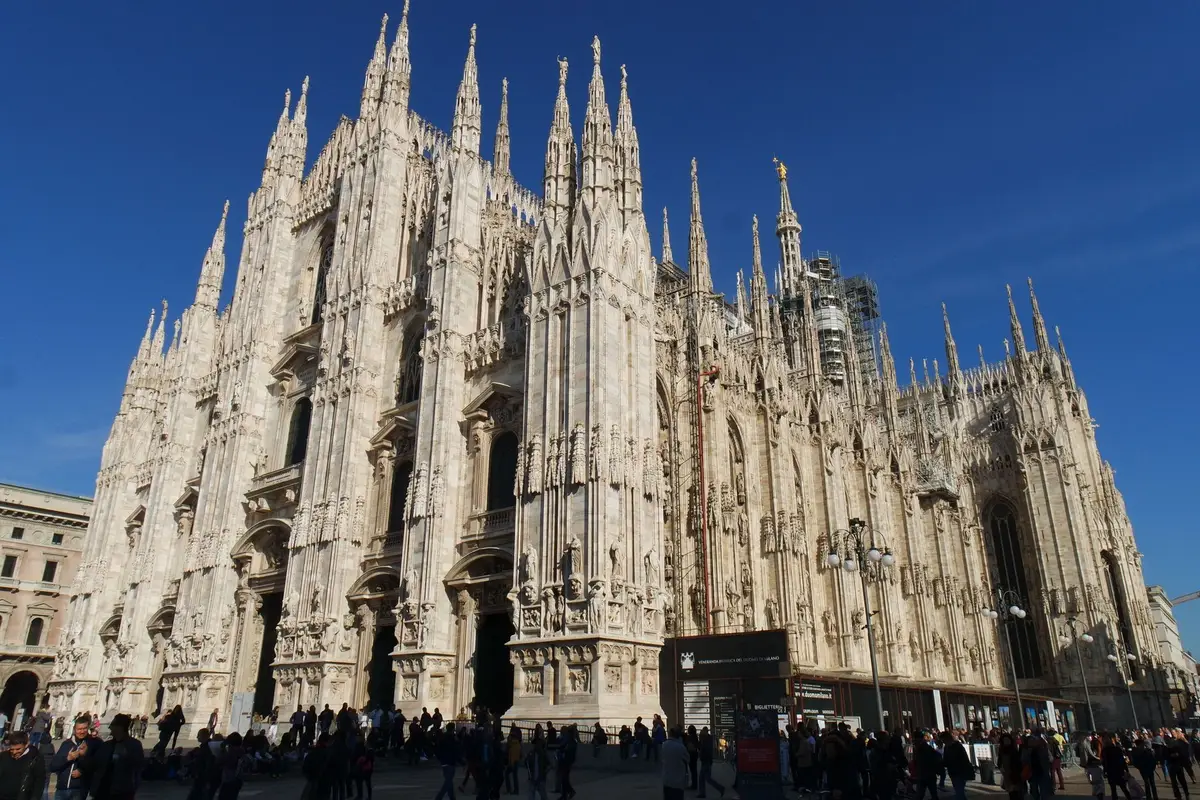
    Facade of the Duomo di Milano seen from the square
    Facade of the Duomo di Milano at Piazza del Duomo. | Photo: Lauren Cuddy / Pexels

    Within the city, the tourist center revolves around Piazza del Duomo, which is why it’s worth choosing accommodation with easy access to metro lines M1 and M3. If the goal is to save time, staying near the Duomo, Brera, or Centrale usually pays off more than saving a few euros in remote neighborhoods. Taxis and ride-hailing apps work, but traffic is heavy during peak hours, and there’s no reason to rely on a car for a short itinerary.

    Best time to visit and how long to stay

    The best time to visit Milan is usually between April and June, and then again between September and October, when the weather is great for walking and the days are still pleasant. Summer can be hotter and more humid than many people expect, while winter tends to bring damp cold and a less inviting landscape for long walks. It’s not a city for beaches or immediate nature, so the climate affects urban comfort more than the type of activities.

    For a first trip, two full days comfortably cover the basics: Duomo, Galleria, La Scala, Brera, and a nice late afternoon among cafés and aperitivo. With three days, Milan becomes much more interesting because you can slow down, visit museums at a relaxed pace, and even fit in a day trip. If your base is northern Italy, the city pairs beautifully with an itinerary through the Dolomites or with extensions to Venice and Florence.

    What to do in Milan’s historic center

    Milan’s historic center works best when you explore it in sequence, starting with the Duomo. The cathedral dominates the square and sets the tone for the city: grand, detailed, and meant to be admired without rushing. If you want to go inside, it’s worth checking ticket combinations in advance on the official Duomo di Milano website, especially if you plan to include the terraces. The complex includes the main nave, archaeological areas, and access to the rooftop, which is one of the most rewarding experiences in the center.

    Leaving the square, the natural walk leads to the Galleria Vittorio Emanuele II, that covered passage many people know from photos, but which truly impresses when you see the glass ceiling up close and notice the refinement of the facades, cafés, and historic storefronts. It’s the kind of place that works both as a connection between attractions and as a destination in itself. Even if you don’t spend anything at the shops, walk through slowly and look up: the gallery’s charm lies more in its architecture than in its shopping.
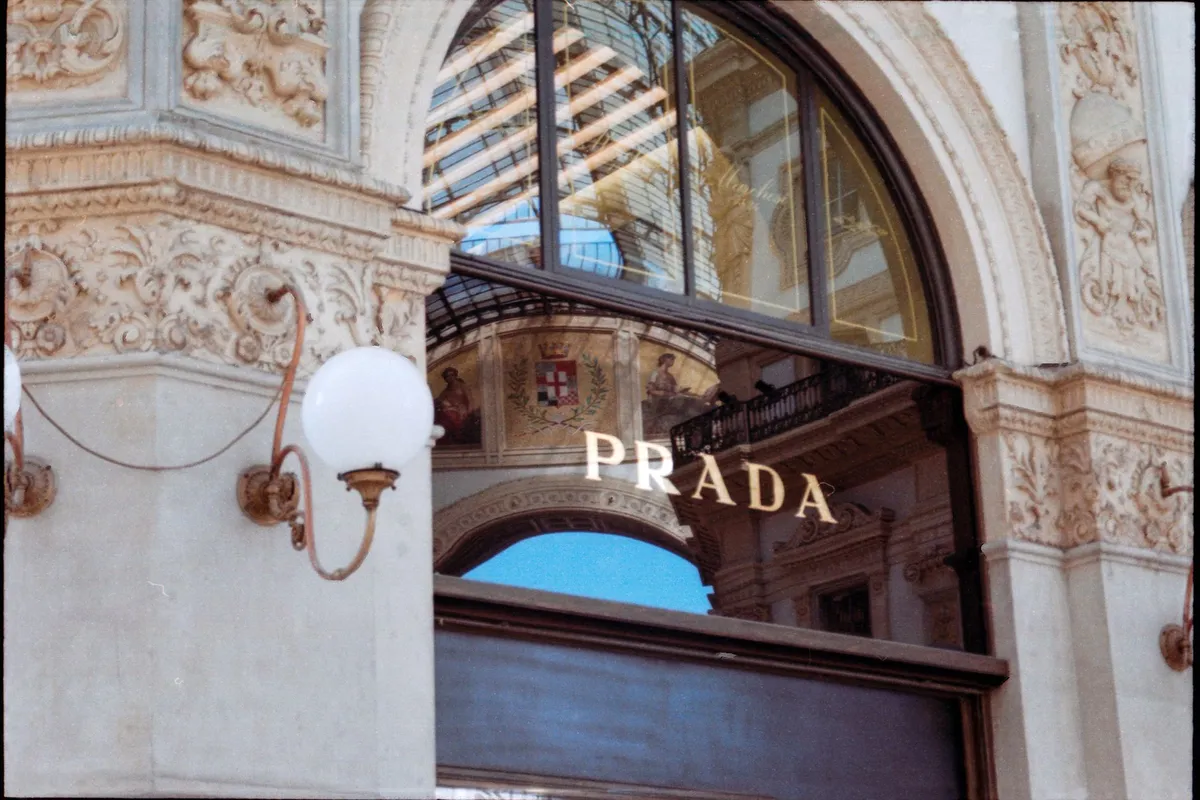
    Interior of the Galleria Vittorio Emanuele II in Milan
    Dome and storefronts of the Galleria Vittorio Emanuele II. | Photo: Fleur van Deijck / Pexels

    Next up is Teatro alla Scala, a visit that’s worth it even for those who don’t follow opera. The building is one of Italy’s cultural symbols and becomes even more meaningful when the experience includes the museum, which helps you understand the historic weight of the venue. The starting point is the Museo Teatrale alla Scala, where it’s a good idea to check opening hours and any visit restrictions on rehearsal or performance days. The surrounding square also makes for a pleasant break, especially in the late afternoon.
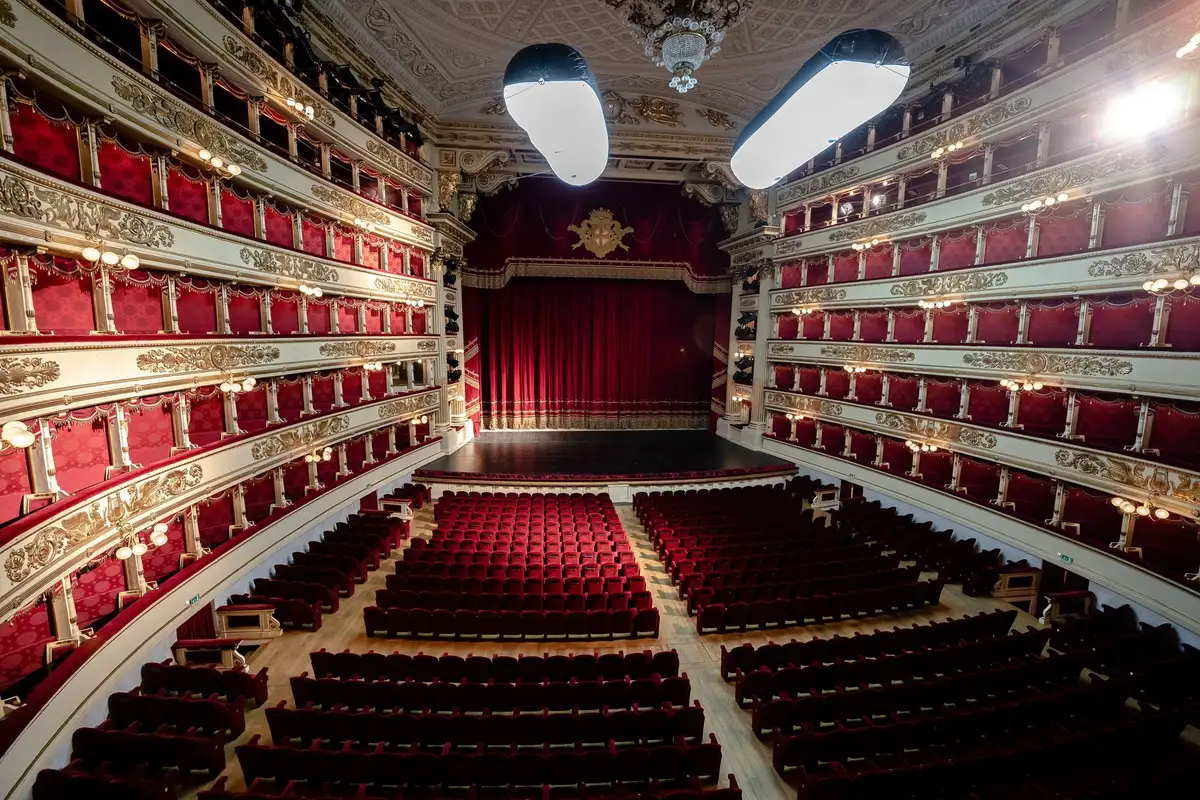
    Facade of Teatro alla Scala in Milan
    Facade of Teatro alla Scala at Piazza della Scala. | Photo: Alexandro DElia / Pexels

    Wrap up this classic core in Brera, one of the city’s most charming neighborhoods. The Pinacoteca di Brera is the ideal visit to slow down and trade crowds for contemplation. The museum houses some of the most important works of Italian painting, and the official Pinacoteca di Brera website is the best place to confirm hours and tickets before your visit. Even if you don’t go into the museum, just walking through Brera is worth it for the more charming atmosphere, the narrow streets, and the cafés with a neighborhood feel.

    What to combine in your itinerary

    Milan is better when you pair the historic center with something that broadens the experience. A longer lunch in Brera, a late-afternoon aperitivo in the Navigli, or a day trip to Lake Como changes the pace and keeps you from feeling like the city is just the area around the Duomo. For those who like mixing city and landscape, this contrast often becomes the highlight of the trip.

    Among the most popular day trips, Lake Como is the most obvious and easiest fit. If you’d rather skip the logistics of trains, boats, and connections all in one day, you can book the Lake Como day trip from Milan, which handles the transportation and usually works better for short itineraries. For a more complete outing, you can also compare the Como and Bellagio tour with a boat ride, great for those who want to leave the city and return the same day without any improvisation.

    If Milan is your only base in northern Italy, it’s worth saving the third day for this contrast between urban capital and lakeside scenery. It’s the kind of combination that makes the trip feel more diverse without requiring a hotel change.

    Where to Eat in Milan

    Milan is a great city for eating well without turning every meal into a major production. In the center, the trick is to skip the tables right next to Piazza del Duomo and walk a few blocks over to Brera or quieter side streets with less tourist appeal. You can grab a solid lunch of focaccia, pasta, and Lombard dishes without paying the premium that comes with the city’s main showcase.

    In the evening, aperitivo is a big part of the local experience. Instead of treating it like a quick snack, think of it as the plan: you order a drink and get access to appetizers or small portions, depending on the spot. If you want a more reliable dinner, Brera is still the most practical area for combining a nice stroll, beautiful surroundings, and consistent options. Another move is heading over to the Navigli in the late afternoon, when the neighborhood really comes alive.

    Milan is also a great destination for coffee, pastries, and short breaks between sights. That helps a lot if you’re planning to spend the day around the Duomo, Galleria, and La Scala axis, because you can break up your itinerary without wasting time on long commutes.

    Where to Stay in Milan

    On a first trip, the best criterion for choosing accommodation is access, not romanticizing a neighborhood. The Duomo area is the most practical if you want to do a lot on foot, but it usually costs more. Brera offers a more charming atmosphere with elegant streets and a great restaurant scene, while the Centrale area can work better if you’re arriving early or taking trains to other cities.
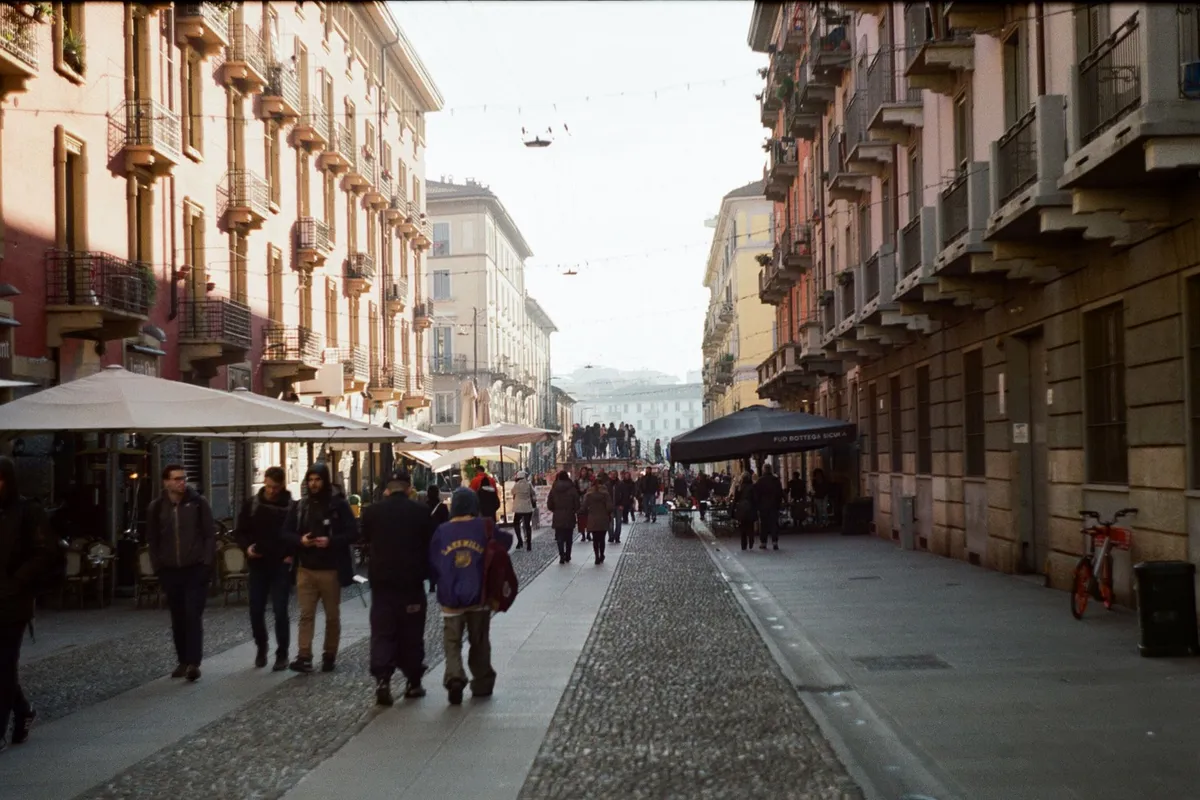
    Busy street in the Brera neighborhood of Milan
    A Brera street with cafés and pedestrians in central Milan. | Photo: Nastya Korenkova / Pexels

    If cost is the concern, it’s worth setting expectations: living in and visiting Milan tends to be pricier than in many mid-sized Italian cities, because the city is packed with business, fashion, events, and high demand. Still, you can trim the budget by choosing hotels near the metro just outside the micro-center. Staying a bit off the Duomo axis only pays off if the station is genuinely close; otherwise, the savings disappear in lost time.

    Practical Tips for Your First Trip

    Milan is known as Italy’s capital of fashion and business, but that label doesn’t sum up the city. What you actually experience as a traveler is an organized metropolis with a strong cultural scene and a historic center that works well for anyone who likes to walk. The local language is Italian, though English shows up fairly easily in the more touristy areas, hotels, and restaurants. If you want to break the ice, a simple “ciao” handles the hello, and “va bene” or “ok” pop up all the time in daily life.

    On safety, the most honest answer is: Milan is relatively safe for walking around at night in busy central areas, but that doesn’t mean you can let your guard down with your wallet, phone, or around stations. Duomo, Brera, and the Navigli stay lively until later, so the idea is to keep the same urban awareness you’d have in any other big European city. Avoid deserted streets far from the main flow, and pay extra attention on public transport and in spots packed with tourists.

    It’s also worth adjusting your expectations about “the most beautiful place in Italy.” Milan rarely enters that contest for natural scenery or classic postcard looks, but it wins on sophistication, practicality, and cultural depth. For many Brazilians, interacting with Italians in Milan tends to be correct and direct: less warm than in small towns, but usually cordial when you show up with good manners and a bit of patience with the local pace.

    Frequently Asked Questions

    What should you not miss in Milan?

    On a first trip, don’t miss the Duomo, walking through the Galleria Vittorio Emanuele II, visiting the La Scala area, and strolling around Brera. If you have a third day, a day trip to Lago di Como (Lake Como) is usually the most well-rounded addition.

    What is Milan known for?

    Milan is known as Italy’s capital of fashion and business, but for travelers it also stands out for its cultural life, museums, and strategic location in northern Italy.

    Is it safe to walk around Milan at night?

    In busy central areas like Duomo, Brera, and parts of the Navigli, it’s usually safe to walk at night with the normal big-city awareness. The biggest concern should be pickpocketing and distractions in crowded spots and at stations.

    What language is spoken in Milan?

    The official language is Italian. In hotels, museums, and tourist restaurants, English usually helps, but learning basic phrases like “ciao” and “grazie” makes interactions much easier.

    What’s the weather like in Milan?

    Milan has pleasant spring and fall for walking, hot summers, and cold, damp winters. For urban tourism, April through June and September through October are usually the most comfortable periods.

    Conclusion

    Milan works best when you swap the anxiety of “seeing everything” for a more focused itinerary, with time to observe the city between one attraction and the next. If your trip calls for art, architecture, great food, and simple logistics in northern Italy, this is a strong base and far more interesting than the shopping cliché makes it seem. At Voyage Voyage, it easily makes the list of cities that surprise you precisely because so many people arrive expecting less.
  • Seoul in One Day: Palace, Hanoks, Shopping, and a View

    Seoul in One Day: Palace, Hanoks, Shopping, and a View

    🇧🇷 POR | 🇫🇷 FR | 🇺🇸 EN | 🇪🇸 ES

    Seoul works best when you stop trying to see the entire city and focus on what naturally fits along the same route. This itinerary—linking Gyeongbokgung Palace, Bukchon Hanok Village, Myeongdong, and the N Seoul Tower—pulls it off in a single day: you move from dynastic Korea to neon storefronts without wasting time crisscrossing the city.

    If you want to see Seoul for the first time without burning hours on the subway, start with Gyeongbokgung and Bukchon in the morning, save Myeongdong for late afternoon, and head up to the N Seoul Tower at dusk. This sequence cuts down on travel time, catches the best light at each stop, and helps you skip the worst crowds.

    Why this itinerary works so well

    The real question for first-time visitors to Seoul is usually simple: can you mix a palace, hanoks, shopping, and an observation deck into a single day without turning the trip into a marathon? Yes—as long as you stick to the historic center and leave Gangnam, Hongdae, and day trips for other days. The payoff here is in the sequence: a cooler morning at the palace, Bukchon’s streets still photogenic, shopping in Myeongdong when the stores are buzzing, and the tower with a view right as the city lights up.

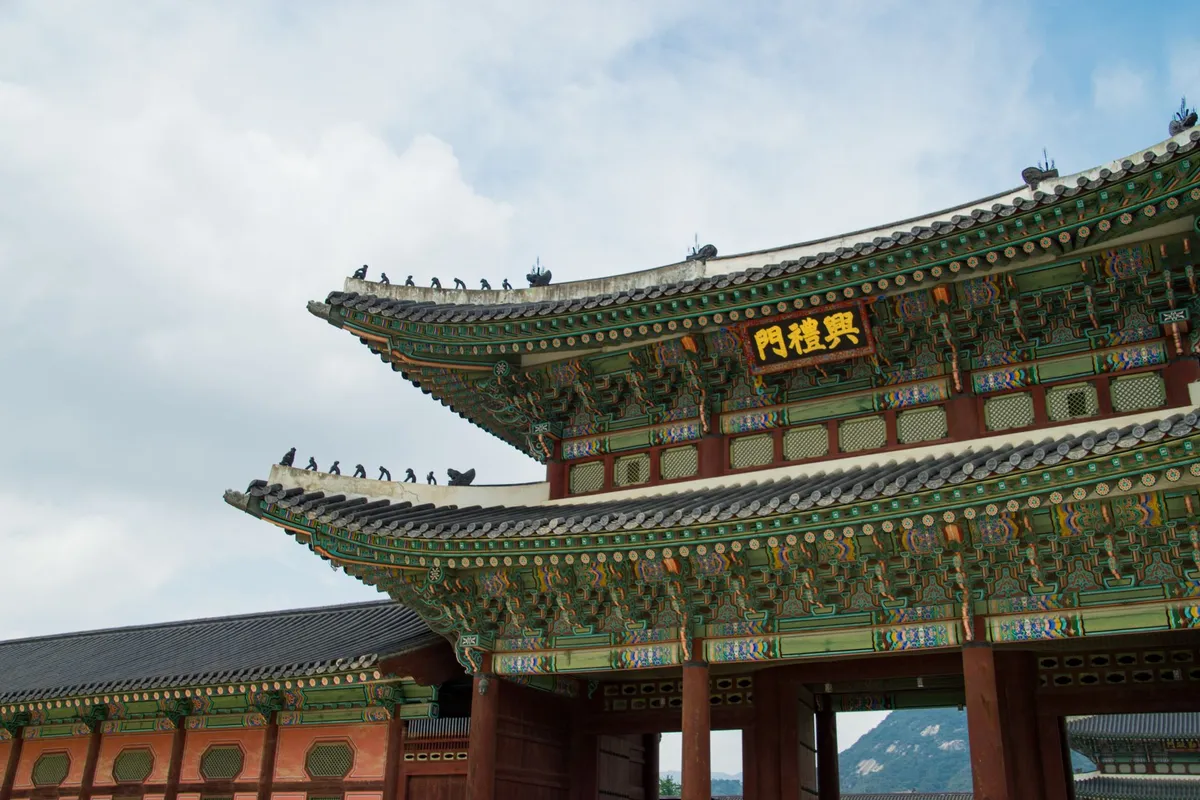
    Main gate of Gyeongbokgung Palace in Seoul
    The main gate of Gyeongbokgung Palace, the starting point of Seoul’s historic center. | Photo: Saksham Vikram / Pexels

    It’s also a great slice of the city if you want to feel the contrast between eras without repeating what’s already covered in the complete Seoul guide on Voyage Voyage. Instead of trying to sum up the whole city, this route follows a very clear thread: Joseon dynasty monarchy, preserved residential alleys, a shopping district, and the capital’s most classic viewpoint. If you enjoy that kind of urban reading, the article Seoul Between Two Eras also helps you understand how the city changes its skin throughout the day.

    Gyeongbokgung and Bukchon without the rush

    Start at Gyeongbokgung Palace as soon as the area opens, because this is the part of the itinerary where timing really matters. The complex is the main palace of the Joseon dynasty and, beyond the architecture, it offers space to walk without the human-corridor feeling that shows up later. The official Korean heritage website is the best place to confirm opening hours and ticket prices for the month you’re traveling; if there’s a seasonal night visit, treat it as a bonus, not the foundation of your plan.

    The detail that changes the experience most here isn’t historical—it’s practical: if you arrive early, you can do the palace and Bukchon on foot before tour groups fill the alleys and photos turn into a waiting game. Lots of people rent hanbok in the area because the look fits the palace and the neighborhood is packed with rental shops; if that’s your plan, an easy option to book ahead is hanbok rental in Seoul, which saves you from hunting around at the last minute.

    Leaving Gyeongbokgung, the transition to Bukchon Hanok Village makes sense precisely because it’s short. Bukchon isn’t a theme park—it’s a residential neighborhood. That changes the tone of the visit. Starting in 2025, tourists not staying in the area can only enter between 10am and 5pm, according to information gathered by Visit Seoul and local sources, in response to overtourism. In other words, this isn’t the kind of place to talk loudly, block an alley with a tripod, or treat a resident’s front door as a backdrop.

    Bukchon works best as a short, mindful walk, not a place to spend the whole morning. Keep an eye out for the quiet-zone signs, keep your group small, and treat the neighborhood more as a sensory bridge between the palace and the rest of the day. If you like comparing Asian capitals that balance tradition and contemporary life in different layers, it’s worth jumping over to the Tokyo itinerary between technology, temples, and food afterward.

    Myeongdong at the right time

    Going to Myeongdong too early is usually a mistake: the streets haven’t yet delivered what the neighborhood does best, which is the clash of neon signs, cosmetics shops, street food, and foot traffic. From mid-afternoon into early evening, the area finally shows its true colors. It’s the perfect time to fit in K-beauty shopping, affordable fashion stores, street snacks, and a break to recharge before heading up Namsan.

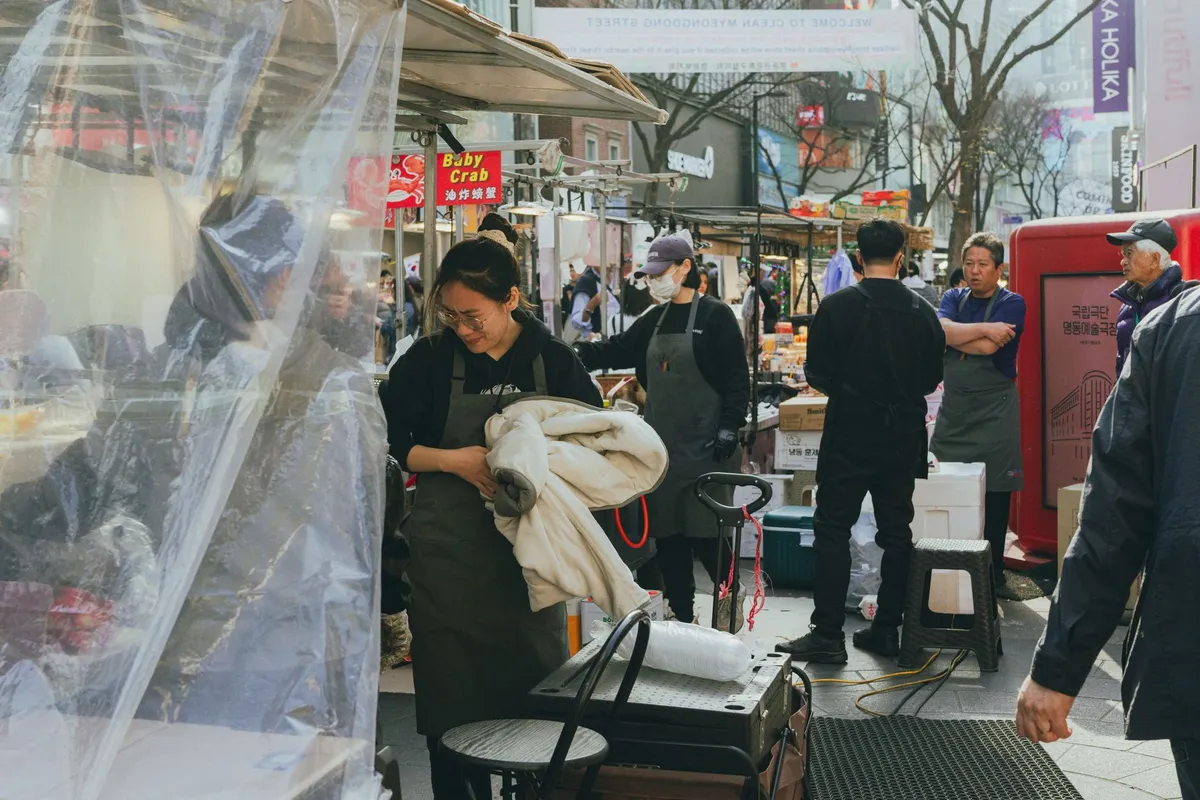
    Busy Myeongdong street with shops and signs in Seoul
    Myeongdong blends shopping, street food, and neon lights in the late afternoon. | Photo: Theodore Nguyen / Pexels

    Myeongdong isn’t the best neighborhood in Seoul to buy everything, but it’s one of the easiest to shop well on your first day. Within a few blocks, you can knock out souvenirs, face masks, snacks, and a café break without breaking the rhythm of the itinerary. If street food is your priority, show up hungry and avoid a heavy dinner before the tower, because the neighborhood invites you to graze on lots of small bites, not sit down for a long meal.

    Another practical perk: from Myeongdong, you’re close to the Namsan cable car access, or you can continue by bus/on foot depending on your energy. That saves you from crossing the whole city at the end of the day. The neighborhood is also a good spot to decide on the fly whether you want a romantic finale at the tower or if you’re tired enough to save the viewpoint for another day.

    N Seoul Tower to close out the day

    The N Seoul Tower pays off more at the end of the day than in the mid-afternoon. First, because the climb fits better as the itinerary’s finale. Second, because the city changes dramatically when the lights come on. The tower’s base already delivers atmosphere, and the observatory becomes a bonus when visibility cooperates. If you want to avoid winging it, the Seoul Tower ticket is a simple reservation to show up with everything sorted.

    It’s not always worth pushing for the observatory if the day is overcast. On foggy or polluted days, the view loses its impact, and the best part of the visit becomes Namsan Mountain itself, the walkways, and the visual shift from the commercial district to the city seen from above. The N Seoul Tower remains iconic, but the wow factor depends on the weather more than most people expect.

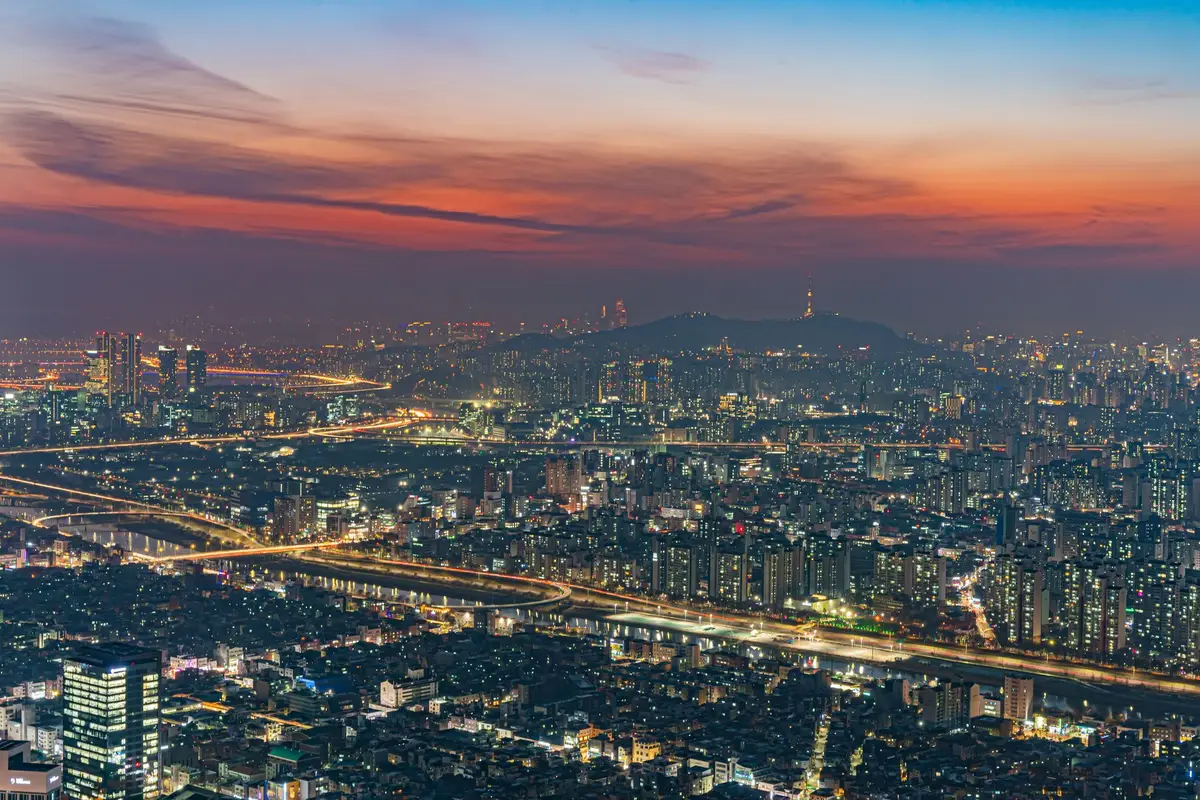
    Urban view of Seoul at dusk from Namsan
    Dusk on Namsan is when the N Seoul Tower makes the most sense on this itinerary. | Photo: Ethan Brooke / Pexels

    If your day is really tight, here’s a useful call: cut time from shopping, not from the travel time between Myeongdong and Namsan. That’s the part of the itinerary where rushing hurts the most. The tower works best when you arrive without that race-against-the-clock feeling, with room to watch the light fade and the city come alive.

    How to Tie It All Together in One Day

    A practical order goes like this: Gyeongbokgung first thing in the morning, Bukchon late morning, a light lunch on the way, Myeongdong from mid-afternoon onward, and N Seoul Tower at dusk. From Incheon Airport to downtown, the AREX Express takes about 43 minutes to Seoul Station; if your flight lands late or you’d rather not start off exhausted, save this itinerary for the next day.

    For Brazilian travelers, it’s also worth checking the latest immigration rules before your trip, since electronic authorization requirements can change. The official hours for Gyeongbokgung, the visiting guidelines for Bukchon Hanok Village, and the info from N Seoul Tower are the three external links most worth checking in the month of your trip.

    Frequently Asked Questions

    Can you do Gyeongbokgung, Bukchon, Myeongdong, and N Seoul Tower in one day?

    Yes, as long as you start early at the palace and don’t try to squeeze in other neighborhoods along the way. The secret is keeping the route focused on the historic center and Namsan, without crossing the city unnecessarily.

    What’s the best order to visit these attractions in Seoul?

    The most efficient order is Gyeongbokgung, Bukchon, Myeongdong, and N Seoul Tower. It lines up best with opening hours, the light, and the natural rhythm of each area.

    Can Bukchon Hanok Village be visited at any time?

    No. Since 2025, tourists not staying in the area can only enter between 10 a.m. and 5 p.m., with rules about silence and respect for residents. Double-check on Visit Seoul before you go, because local policies can change.

    Is Myeongdong worth it for someone who doesn’t want to shop?

    Yes, mainly for the street energy, the food, and the practical location before heading up to Namsan. Just don’t expect a quiet, contemplative neighborhood—the whole point there is the buzz.

    Conclusion

    Seoul makes so much more sense when you organize your first day by atmosphere, not by an endless checklist of spots. Palace, hanoks, shopping, and a view work together because they tell the same city in different registers. To keep building your trip, explore the other itineraries on Voyage Voyage and use this central spine as your smoothest debut in the Korean capital.

  • Trevi Fountain: Best Time to Visit, Fee, and Insider Tips

    Trevi Fountain: Best Time to Visit, Fee, and Insider Tips

    🇧🇷 POR | 🇫🇷 FR | 🇺🇸 EN | 🇪🇸 ES

    The Trevi Fountain remains one of Rome’s most popular stops, but the visit has changed quite a bit since February 2026. These days, you don’t just need to figure out where it is; you need to understand when the area by the water charges a fee, which metro stop to use, when to arrive to catch the fountain at its emptiest, and what to pair nearby so you’re not zig-zagging across the historic center. The good news is that this is all solved with some simple planning.

    To visit the Trevi Fountain without the squeeze, go before 9 a.m. or after 10 p.m., get off at the Barberini station, and set aside 30 to 40 minutes. The square itself remains free, but since February 2, 2026, Rome has charged €2 to access the area right by the water during controlled times.

    How to get there

    The most practical way to reach the Trevi Fountain is by metro Line A, getting off at Barberini – Fontana di Trevi. From the station exit to the fountain, the walk takes about 8 to 10 minutes through narrow, almost always crowded streets. If you’re coming from the Colosseum area, the route also works well on foot, but count on about 25 minutes and uneven pavement.

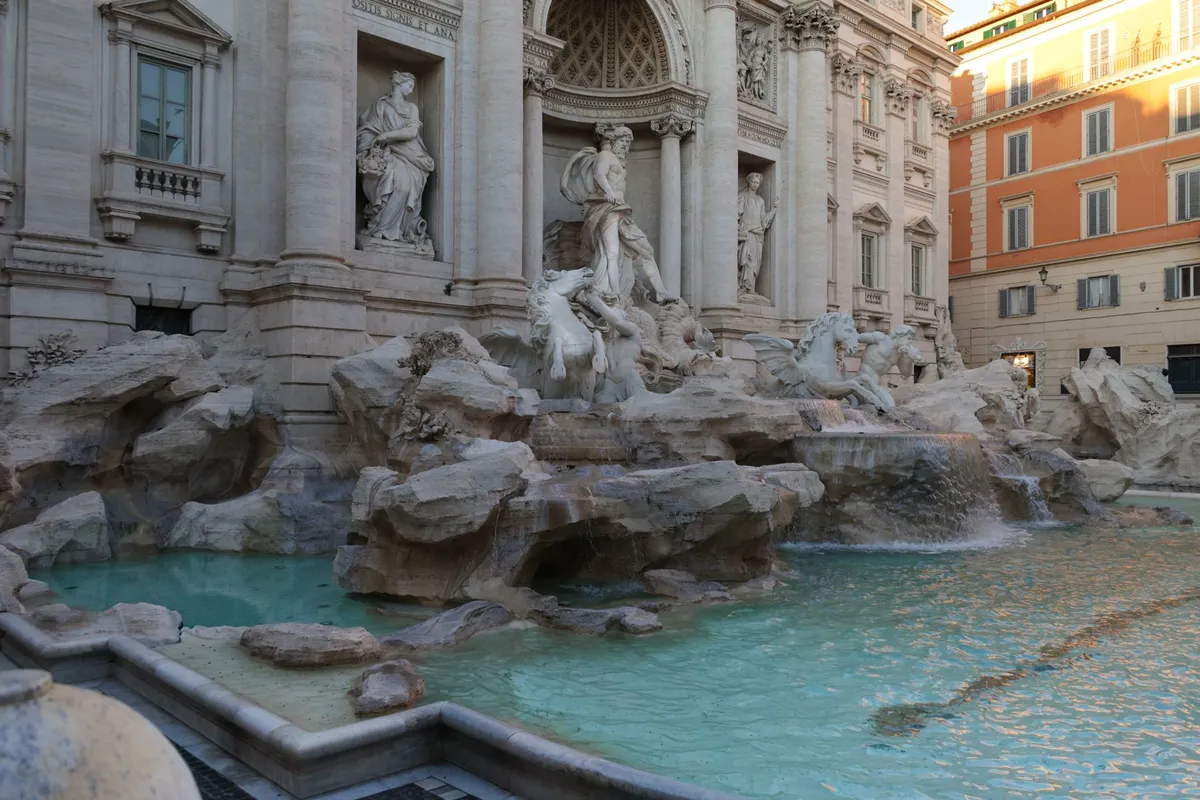
    Front view of the Trevi Fountain in Rome during the day
    Your first glimpse of the Trevi Fountain is usually that clash between monumental scale and narrow alleyways. | Photo: Magda Ehlers / Pexels

    Taxis or ride-hailing apps only help up to a point. The problem isn’t the drop-off; it’s the final stretch: the area around the Piazza di Trevi has heavy pedestrian traffic and tight streets. If you’re planning a full day in the historic center, it’s better to use public transport and chain your itinerary together with our complete Rome guide, avoiding unnecessary back-and-forth.

    Leaving from Termini, you can take Line A to Barberini or walk for about 20 to 25 minutes if you want to link up with Piazza della Repubblica, Via del Tritone, and the area around the Spanish Steps. For those staying near the Pantheon, Piazza Navona, or Via del Corso, the Trevi Fountain easily fits into a walking tour, because Rome’s tourist core is made to be explored in short hops.

    Best time to visit and how long to stay

    The fountain works as an open-air spot with no closed season, so the big difference isn’t in the calendar but in the crowds. Between April and June and between September and October, Rome usually delivers more pleasant walking weather, but it also concentrates a lot of tourism. July and August bring long days, beautiful skies for photos, and intense heat radiating from the stone pavement, which makes the experience more tiring in the middle of the afternoon.

    If you want to see the Trevi Fountain with some breathing room, the best window is early, before 9 a.m. The second best is after 10 p.m., when the lighting highlights the reliefs and access becomes lighter. Since February 2, 2026, Rome has charged €2 to access the area right by the fountain during controlled times; outside those hours, getting up close is free again. This change reduced some of the jostling but didn’t eliminate the lines at peak times.

    In practice, set aside 30 to 40 minutes if the plan is to arrive, take photos, observe the sculptures, and toss a coin. If you intend to linger in the area or fit in a coffee break, budget 1 hour. As a standalone attraction, the Trevi Fountain doesn’t require a whole morning; its best use is as an anchor for a tour that includes the historic center.

    On days with light rain, the area tends to empty out a bit and can yield better photos than under a completely clear sky. In high season, arriving without a flexible schedule is the kind of mistake that leaves you racing against the crowd. It’s worth treating the fountain as either the first stop of the day or the last postcard of the night.

    What to see at the Trevi Fountain

    The Trevi Fountain doesn’t just impress with its size. What really captures your eye is how the work seems to emerge from the Palazzo Poli and spill onto the square. The Baroque ensemble was started in 1732 by Nicola Salvi and completed in 1762 by Giuseppe Pannini. At the center, Oceanus dominates the composition; around him, tritons, seahorses, and reliefs tell the story of the water that reached Rome via the Acqua Vergine.

    If you want to go beyond the classic photo, look closely at the side details. The horses weren’t sculpted to look alike: one is more agitated, the other more serene, reinforcing the idea that the sea changes moods. In the niches, the allegories of Abundance and Salubrity help explain why water was a symbol of power, order, and well-being in the city. And behind all of this is the palace facade, which gives the fountain its theatrical scale.

    Another point that often goes unnoticed is that the fountain became even more regulated after the renovations and the access control implemented to curb overcrowding. This changed the visit for those who want to toss a coin the traditional way, with your back to the water and your right hand over your left shoulder. The coins still go to Caritas, a charity linked to the city, so the ritual has also gained a very concrete effect beyond the legend.

    Don’t treat the Trevi Fountain as just another quick photo spot: a few minutes looking at the reliefs and the staging of the facade completely change the experience. If you enjoy historical context, it’s worth reading the official Turismo Roma page on the Palazzo Poli and the Trevi Fountain beforehand, because it helps you recognize the elements when you’re there.

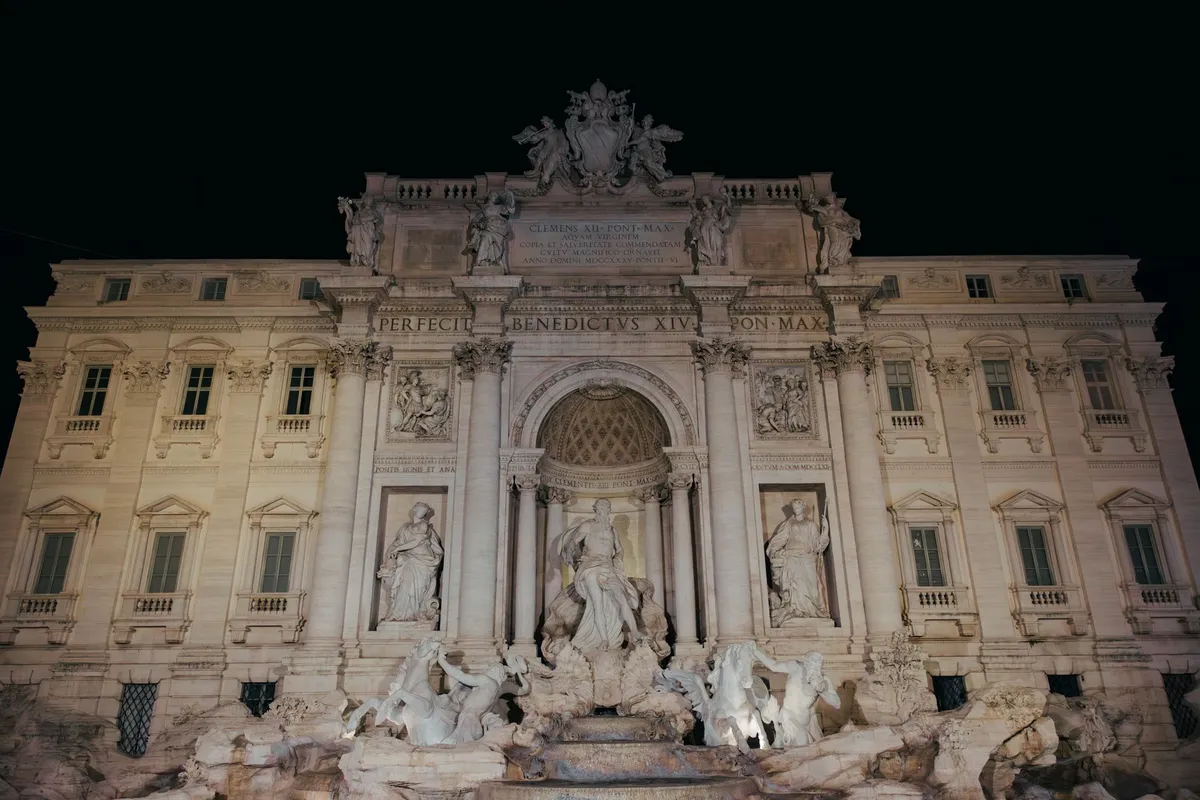
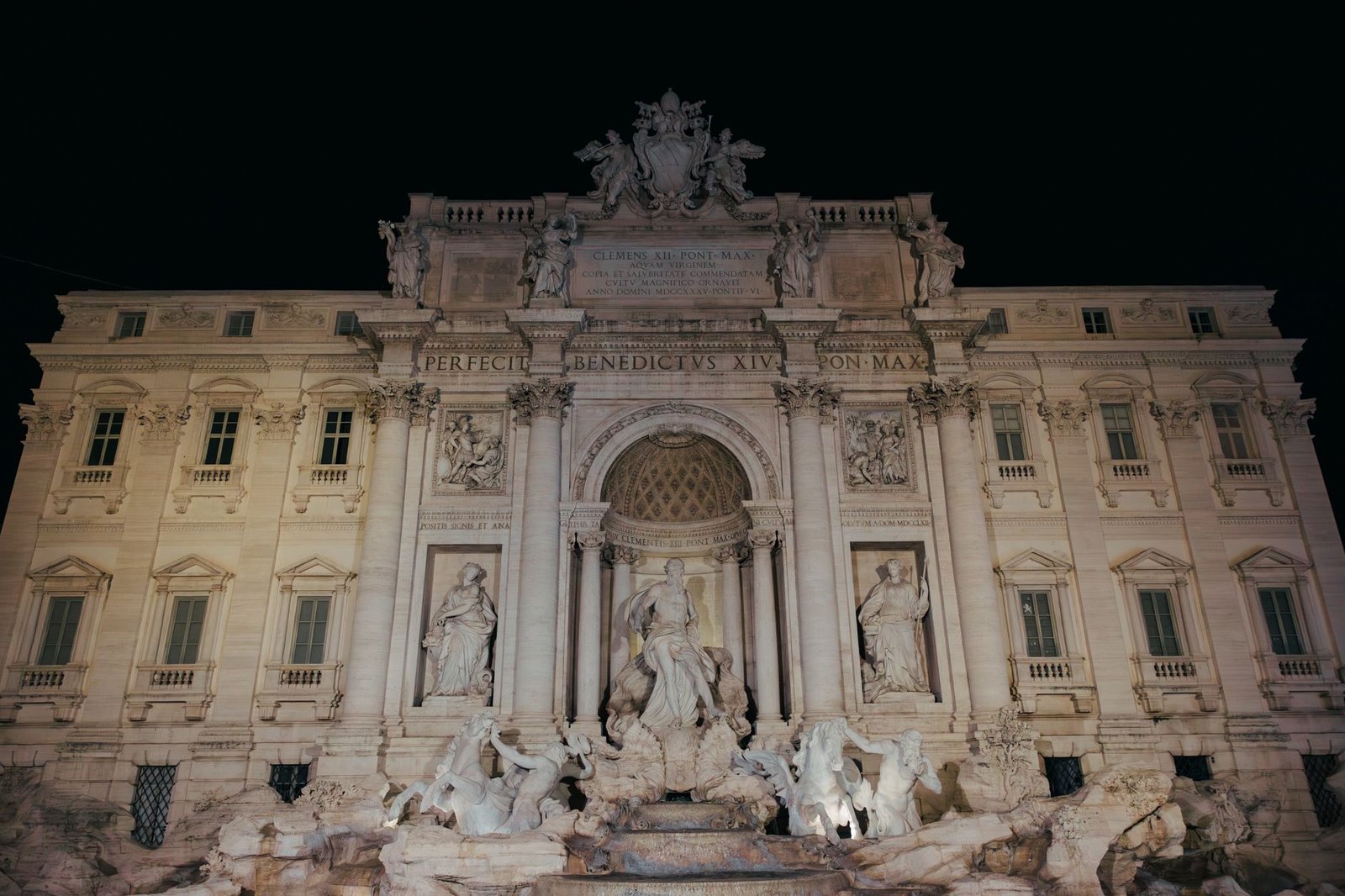
    Trevi Fountain illuminated at night in Rome
    At night, the lighting highlights the reliefs and usually delivers the most beautiful visit of the day. | Photo: Ludovic Delot / Pexels

    What to pair on the same outing

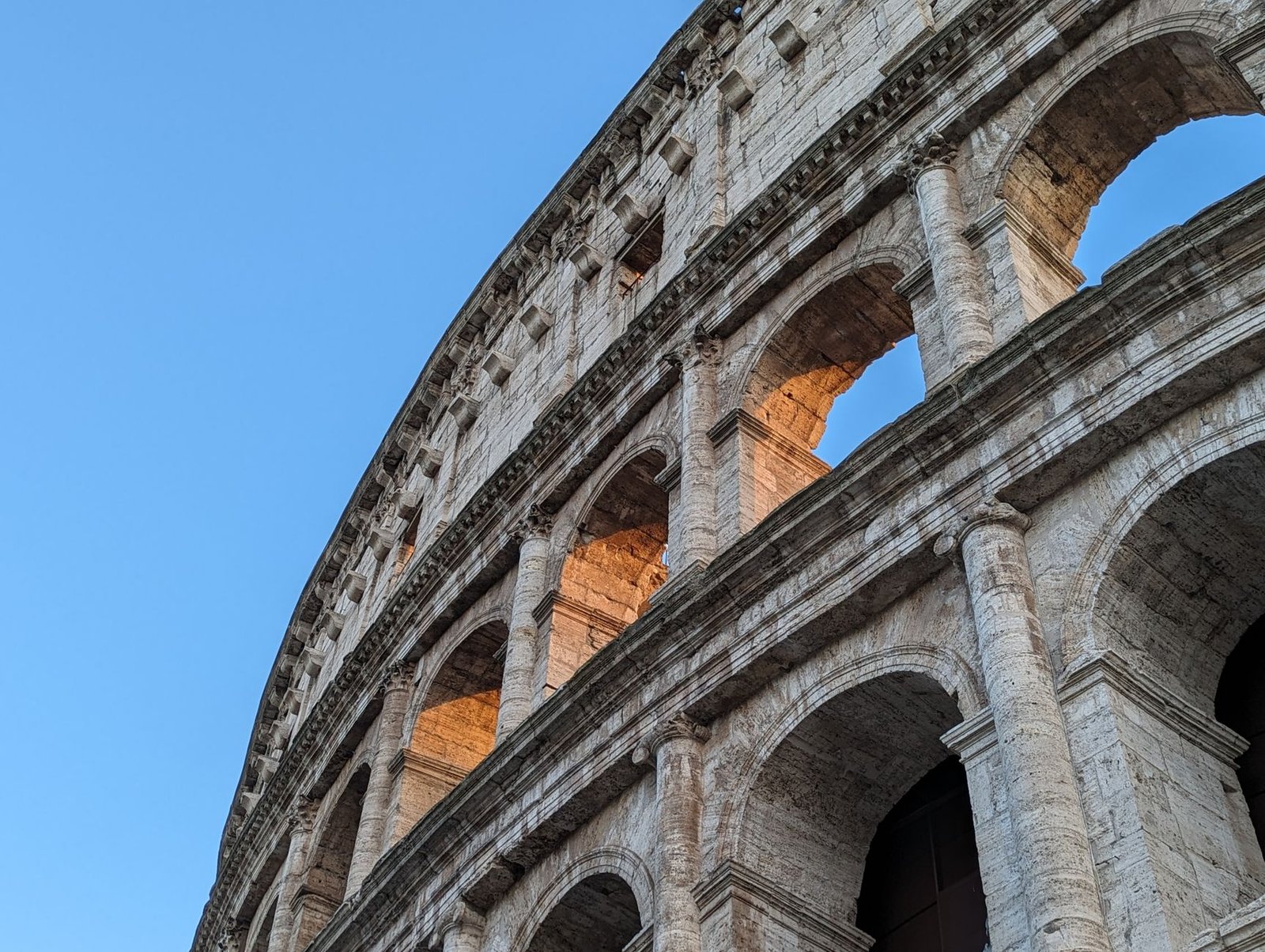
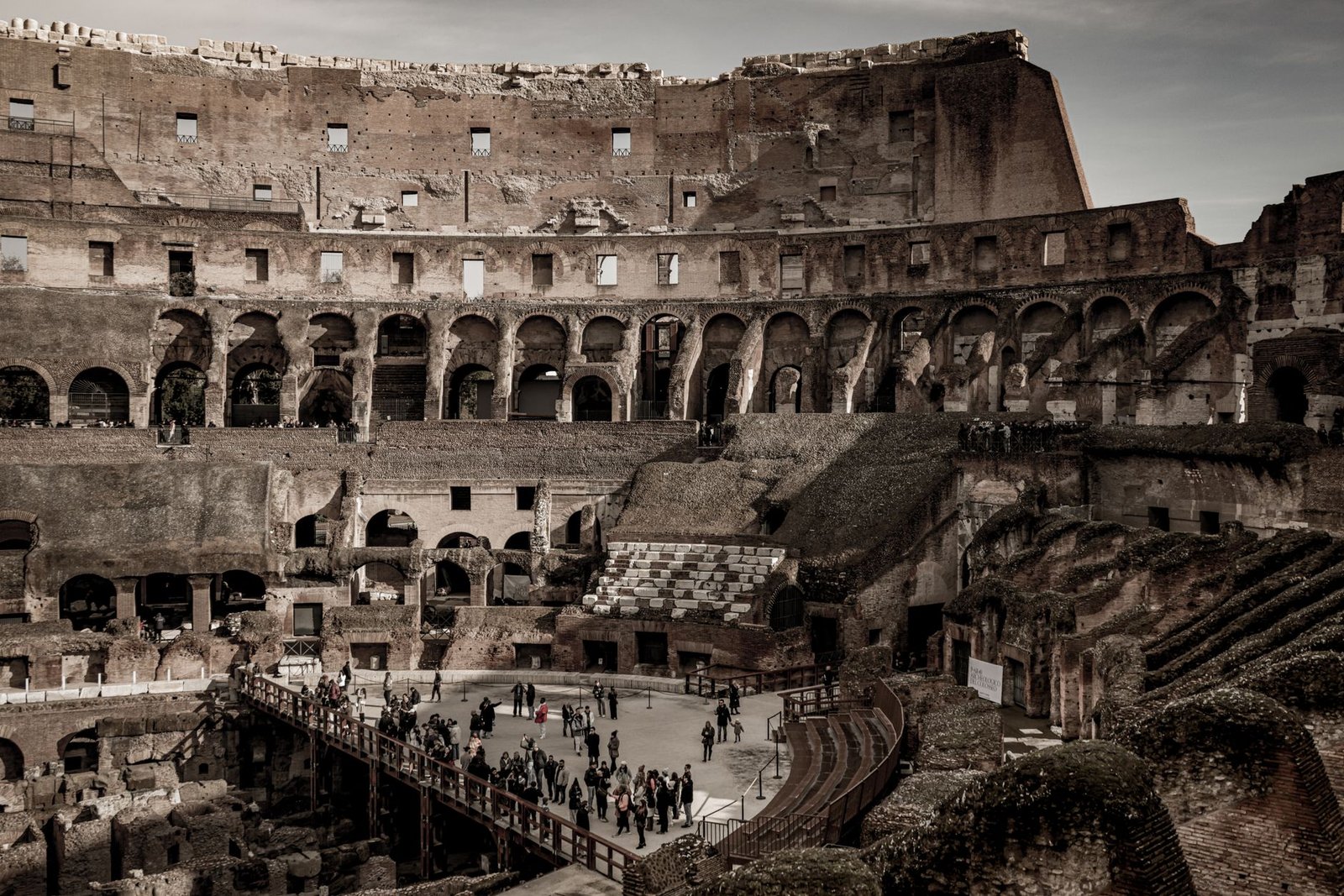
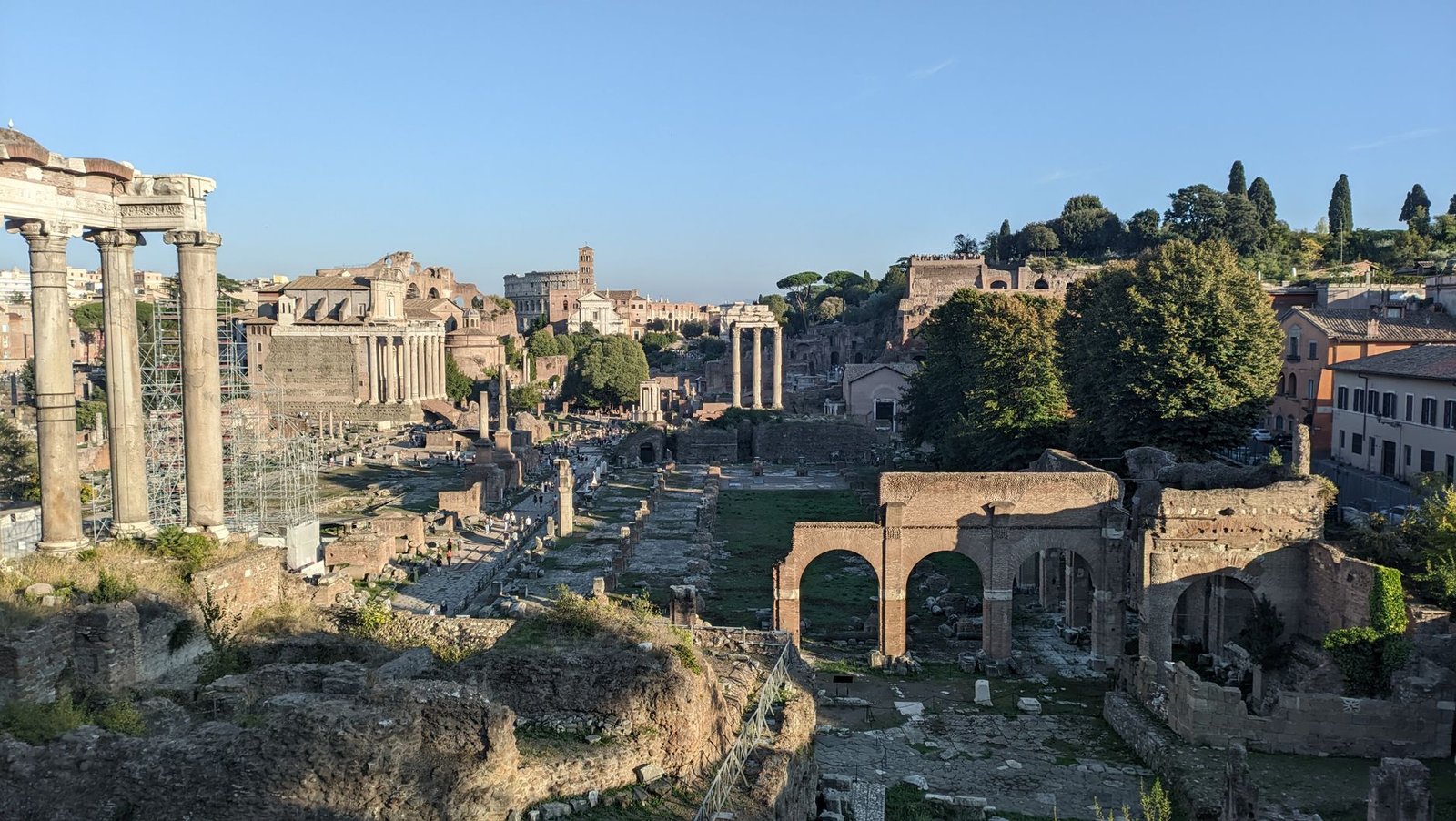
    The Trevi Fountain’s biggest advantage is its location. It sits in the middle of a stretch of Rome that lets you fit in a lot without getting overly tired. The most natural combo includes Piazza di Spagna and the Spanish Steps on one side, the Pantheon on the other, and, if you have the energy, Piazza Venezia or Piazza Navona. If you want a more archaeological focus, you can leave the fountain for the end of a day that passed through the Colosseum in Rome and the Forum.

    If your profile is more historical and religious, the visit works very well with the Vatican axis. In that case, it’s also worth saving our guides to St. Peter’s Basilica and Vatican City, because they help balance your travel days and avoid piling up heavy lines in the same period.

    A smart strategy is to turn the Fontana di Trevi into a mid-itinerary break. Arrive early, head to the Pantheon and Piazza Navona, grab lunch nearby, and save Piazza di Spagna for the way back. Another option works better in the evening: start at the Spanish Steps, wander down the shop windows of Via Condotti, pass the fountain as the lights come on, and continue on to dinner in the center. In Rome, a smart route beats trying to collect points on a map.

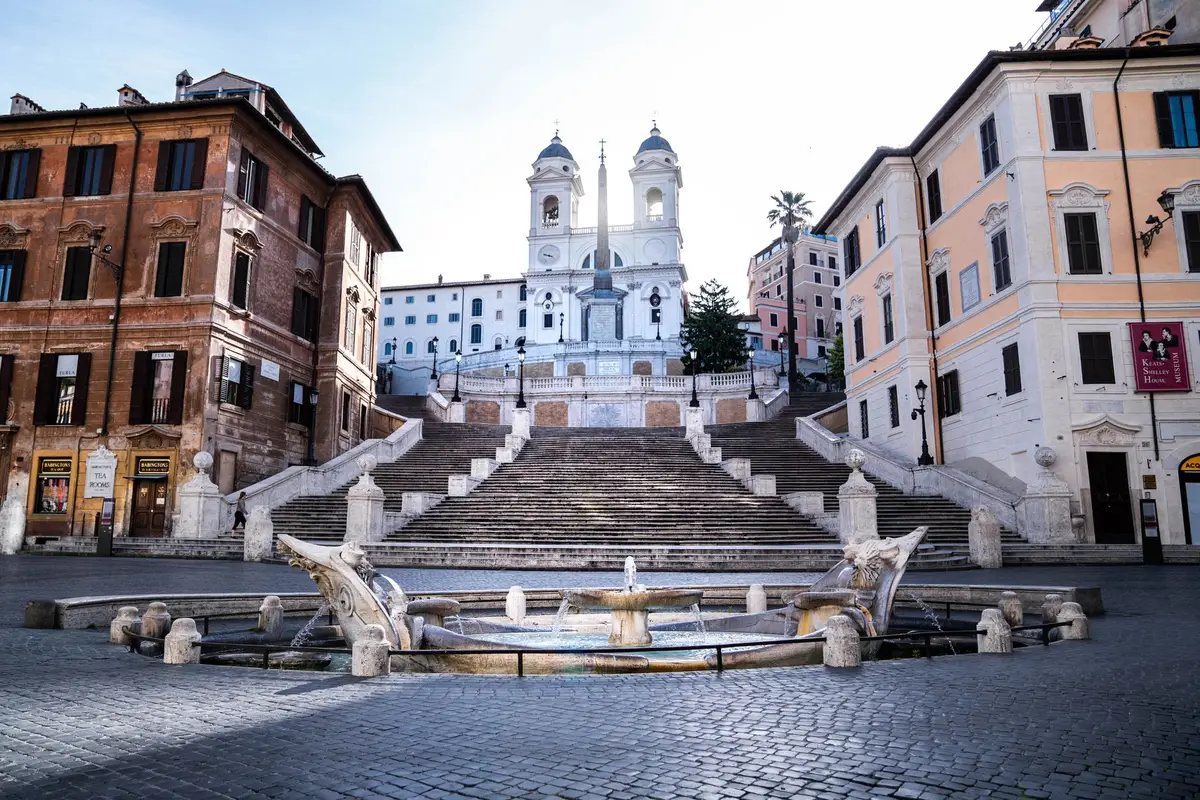
    Spanish Steps with visitors moving through in Rome
    The Spanish Steps fit easily into the same walk as the Fontana di Trevi. | Photo: Pits Riccardo / Pexels

    If you prefer a guided tour of the historic center, a great way to tie these stops together is booking the free walking tour of Rome. It usually works well in the first few days of your trip, when you’re still getting a feel for the city and want historical context without getting lost in the connections between piazza, church, ruin, and palace.

    Where to Eat Nearby

    The area around the Fontana di Trevi is convenient, but it takes some filtering. Restaurants right on the piazza charge a premium for the location and, in many cases, serve a decent but unremarkable meal. If you can walk 5 to 10 minutes, your chances of eating better go way up. The safest rule is to avoid laminated menus in five languages at the door and look for side streets with a local crowd at lunch or dinner time.

    For a quick bite, this stretch of the center is great for an espresso at the counter, maritozzo, cornetto, or gelato between stops. If you want to sit down, look for trattorias and wine bars on the streets connecting Trevi to the Pantheon or heading toward Campo Marzio. It’s also worth treating the fountain as a sweet stop, not the main meal: photo, coin toss, short walk, then a more relaxed table on another street.

    If you’re doing a longer day in the center, eating dinner after 8:30 PM helps you catch less rushed dining rooms. In Rome, that makes a difference in both service and noise. And since almost everyone ends up exhausted after miles of cobblestones, the best restaurant of the day is usually the one that fits into your route without a pointless detour.

    Where to Stay to Do Everything on Foot

    If the Fontana di Trevi is a priority for your trip, the most practical areas to stay are Trevi, Campo Marzio, Pantheon, and the stretches between Barberini and Piazza di Spagna. They cost more, but they give you back time: you head out early, come back to drop off shopping, change clothes, and still fit in a nighttime visit without relying on transit. For a first trip to Rome, that convenience is well worth it.

    If you want to balance cost and location, also consider Monti and the better-reviewed areas around Termini. Monti has a great vibe, good bars, and lets you walk to the historic center. Termini works better if you’re catching an early or late train, though the urban experience varies a lot from street to street. In those cases, weigh the money saved against the time spent commuting every day.

    For couples and short trips, staying near the Trevi–Spagna–Pantheon axis usually gives you the most scenic and least logistical version of Rome. For families or trips packed with day trips, it might be smarter to prioritize a hotel with easy metro access. If you’re still figuring out which neighborhoods to book, our article on historic Rome helps you understand which areas pair best with a more cultural itinerary.

    Historic street in central Rome with old buildings
    Staying in the historic center shortens commutes and makes a nighttime visit much easier. | Photo: Levent Eldem / Pexels

    Practical Tips

    The most useful tip of all is simple: arrive with adjusted expectations. The Fontana di Trevi is beautiful, but it will almost never be quiet or empty. The mistake is imagining a long, contemplative moment during peak hours. The smart move is knowing the stop works best in short windows, early or late, and always tucked into a bigger route through the center.

    Bring water, comfortable shoes, and keep your hands light. The crowded area calls for extra attention to your bag, phone, and wallet, especially when everyone stops at the same time to take photos. If the heat gets to you, find shade on the side streets and come back later. Rome rewards those who push less and move smarter.

    For a tour already put together with a reservation, another practical option is checking available tours in Rome on Civitatis. That helps you pair the Fontana di Trevi with the Vatican, the Colosseum, or a guided center tour without wasting time on last-minute logistics.

    Before leaving your hotel, it’s worth checking the ATAC website if you’re relying on the metro, plus Rome’s official tourism portal for any operational changes in the area. At overcrowded attractions, small changes in flow make a real difference. The kind of preparation that feels like overkill at home becomes comfort when you’re in the center of Rome, dealing with heat, crowds, and a tight schedule.

    Frequently Asked Questions

    Is the Fontana di Trevi free?

    Viewing the fountain from the piazza is still free, but since February 2, 2026, Rome has charged 2 euros to access the area closest to the water during controlled hours. Outside those hours, close access is free again.

    What’s the best time to visit the Fontana di Trevi?

    The best time is usually before 9 AM or after 10 PM. During those windows, the crowds thin out, the photos get better, and the experience feels less rushed.

    Which metro station is closest to the Fontana di Trevi?

    The most convenient station is Barberini – Fontana di Trevi, on Rome’s Line A. From there, it’s about an 8 to 10 minute walk to the fountain.

    How long does a visit take?

    For most travelers, 30 to 40 minutes is enough. If you want to add a coffee, take your time with photos, and stroll the surrounding area, budget about an hour.

    Is tossing a coin into the Fontana di Trevi still allowed?

    Yes, the tradition continues, but access to the water’s edge may depend on the current hours and crowd control. Collected coins still go to charity through Caritas.

    Conclusion

    The Fontana di Trevi is worth the visit, but it pays off much more when it fits into the right time and the right route. Instead of treating the fountain like a race for a photo, use the stop to stitch the historic center together more intelligently, whether on a walking tour or between the Vatican, Pantheon, Piazza di Spagna, and the Colosseum. At Voyage Voyage, that’s exactly the kind of adjustment that makes Rome feel less exhausting and far more memorable.

  • Pomerode SC: 4 Parks and the Route That Makes You Forget the Beach

    Pomerode SC: 4 Parks and the Route That Makes You Forget the Beach

    🇧🇷 POR | 🇫🇷 FR | 🇺🇸 EN | 🇪🇸 ES

    If you picture Brazil as nothing but beaches and caipirinhas, Pomerode will throw you for a loop: half-timbered houses, streets with German names, and an accent that blends Portuguese with Pomeranian. Tucked into Santa Catarina’s Vale Europeu (European Valley), this town is the most German in the country—and you can feel it just a few blocks from the center.

    Pomerode sits about 1h30 from Blumenau and 2h30 from Florianópolis, and you’ll want at least two days here: one for the museums and the Rota do Enxaimel (Half-Timbered Route), another for the theme parks and the Zoo, which is home to over a thousand animals from 225 species. The town is small enough to walk between most attractions, yet packed with enough options that you won’t have a single idle moment.

    How to get to Pomerode

    The most common way in is by car on the BR-470, coming from Blumenau (about 30 km) or from Balneário Camboriú/Florianópolis via the BR-101 until it meets the BR-470. If you’re flying, most travelers land at Navegantes Airport (NVT), roughly 50 minutes away by car, or at Florianópolis Airport, about 2h30 out.

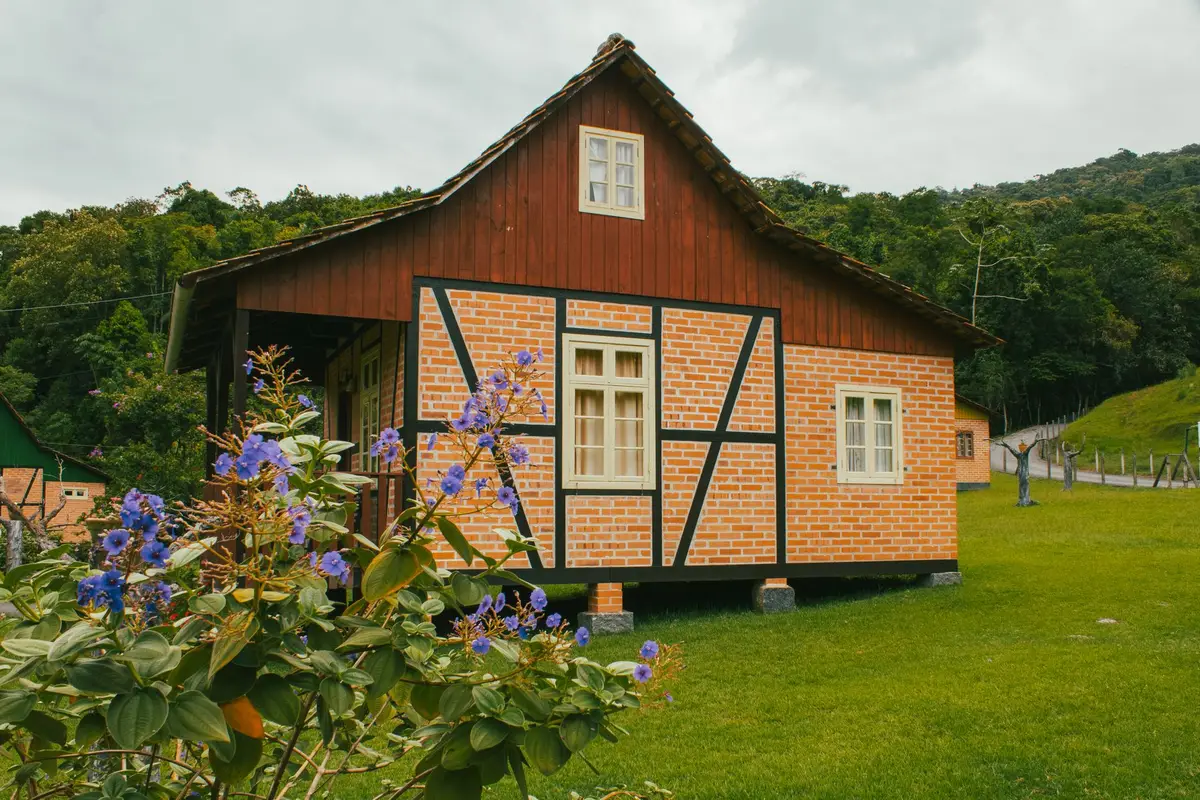
    Half-timbered house in Pomerode, Santa Catarina
    The half-timbered houses downtown are protected by IPHAN. | Photo: Leandro Rossi / Pexels

    There’s no regular direct bus line from every capital, so most visitors rent a car in Navegantes or Blumenau. If you’d rather not drive, you’ll find vans and tourist transfers leaving from Balneário Camboriú, especially during the Festa Pomerana and the Gastronomic Festival—it’s common to combine both towns in one itinerary given how close they are. Book your car well in advance for those dates, since rental demand climbs right along with hotel occupancy in the region.

    Best time to visit and how long to stay

    The mildest weather, with temperatures between 15°C and 25°C, happens from March to May and September to November—perfect for strolling the Rota do Enxaimel and visiting museums at a relaxed pace. July brings the Pomerode Gastronomic Festival (July 2–19, 2026, its 20th edition, themed “Dishes That Made History”), and October hosts the wildly popular Festa Pomerana—during those times, book lodging ahead because the town fills up fast.

    Two full days cover the essentials: one for the Historic Center, museums, and the Rota do Enxaimel, another for the theme parks and the Zoo. If you’ve only got one day, you’ll have to pick between culture or parks—trying to do both is a mad rush.

    What to see in Pomerode

    The town splits between the Historic Center, with its museums and German architecture, and the theme parks, which lean more toward family fun and leisure.

    Rota do Enxaimel and Museu Pomerano

    The Rota do Enxaimel brings together the town’s oldest houses, built with the German technique of interlocking timbers held by wooden pegs, with no nails—part of the collection is protected by IPHAN (the National Historical and Artistic Heritage Institute). The route is short and walkable from the center, passing homes still lived in by descendants of the founding families.

    Along the way you’ll find the Museu Pomerano (Rua Hermann Weege, 111), which tells the story of Pomeranian immigration since the 19th century through objects, photographs, and documents from the families who settled the region. It’s open Tuesday to Friday from 10am to 11:30am and 1pm to 5pm; Saturdays, Sundays, and holidays from 10am to 4pm. Double-check the admission fee on-site before you go, since sources differ between free entry and a symbolic charge.

    Zoo Pomerode

    Founded in 1932, Zoo Pomerode shelters more than a thousand animals from 225 species, including birds, reptiles, mammals, and fish. It’s open every day of the year from 9am to 5pm, with ticket sales until 4pm—set aside at least two hours for the visit.

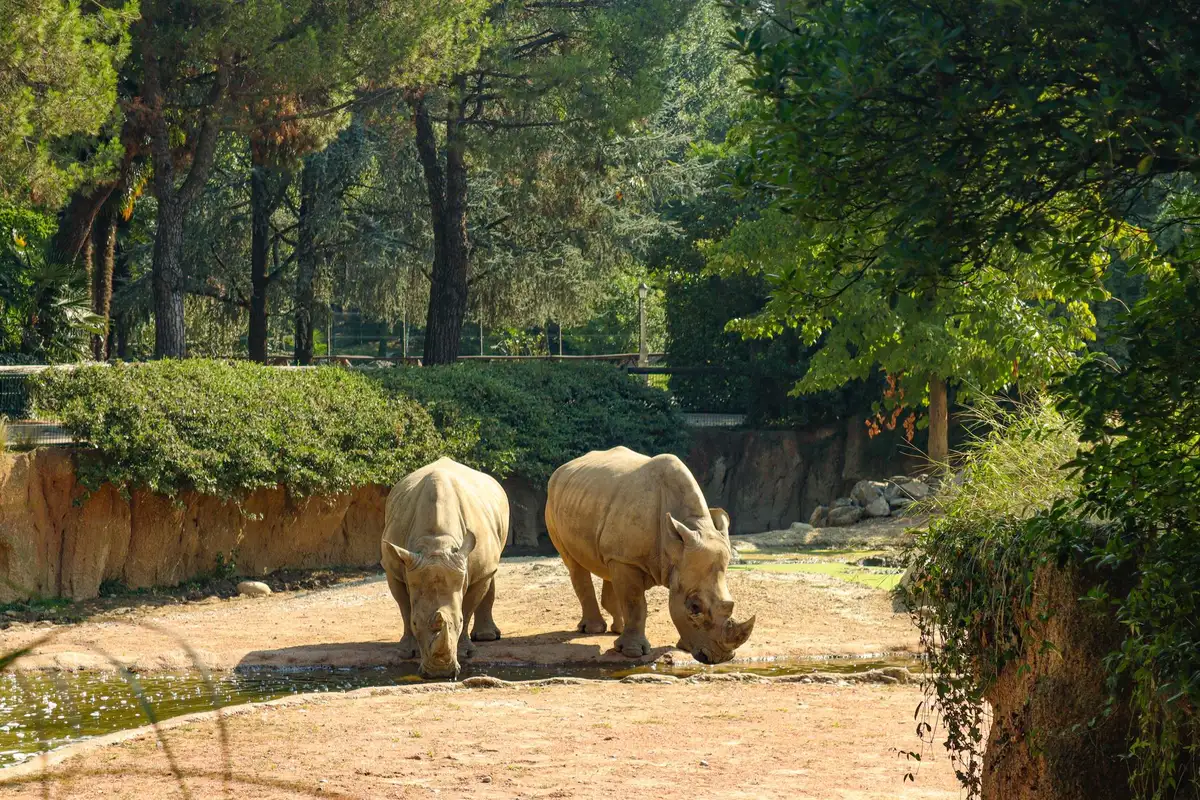
    Animals in an outdoor zoo enclosure
    Zoo Pomerode is one of the oldest zoos in Brazil still in operation. | Photo: Lorenza Magnaghi / Pexels

    Theme parks: Alles Park, Spitz Pomer, and Vila Encantada

    There are three parks, each with a different vibe. Alles Park, opened in 2022, recreates a German village with attractions for all ages. Spitz Pomer focuses on adventure and suspended treetop trails. Vila Encantada, meanwhile, is a dinosaur-themed park, open 9am to 6pm Tuesday through Sunday (in January, July, and October, it’s open daily), with ticket sales until one hour before closing.

    To skip the hassle of comparing prices one by one, many visitors choose to book their Spitz Pomer park ticket in advance, which already includes the park’s main adventure attractions:

    What to pair with your visit

    Beyond the parks and museums, make time for Guenther Velas Especiais, which showcases the artisanal candle-making process, and the Nugali Chocolates factory, which offers a guided tour with tastings—book ahead, since spots fill up fast during peak hours.

    Pomerode is about 30 km from Blumenau, and many visitors to both towns ask what to do in Blumenau outside Oktoberfest season—the neighboring German-flavored city also keeps its Vila Germânica, craft breweries, and museums open year-round, no festival calendar required.

    Artisanal chocolate-making process in a factory
    Factory tours are among the most sought-after experiences for visitors to Pomerode. | Photo: Lina Kivaka / Pexels

    Where to eat in Pomerode

    German cuisine rules the local menu: eisbein, pork knuckle, sauerkraut, and craft beers anchor the main downtown restaurants. But the options run deeper than you’d expect—there’s Italian and Romanian cooking, pizzerias, burger joints, and more upscale spots for an evening drink.

    In July, during the Gastronomic Festival, dozens of establishments join in with themed dishes, which is a great way to sample lots of places in a short time without planning every meal in advance. Outside festival season, book a table at the most popular downtown restaurants on weekends, since the steady stream of passing tourists tends to fill up lunch and dinner slots quickly.

    Where to stay

    Most of the inns and hotels are located near the Historic Center or along the banks of the Bugre River, with options ranging from family-run guesthouses to resort-style hotels. During the Festa Pomerana and the Gastronomic Festival, occupancy rates climb significantly and prices follow suit—booking 2 to 3 months in advance for these dates will save you from any surprises.

    Typical half-timbered architecture of the European Valley
    The Germanic aesthetic of the European Valley extends to the inns and the city’s signage. | Photo: Thomas Caspari / Pexels

    Practical Tips

    Bring cash for small shops and street stalls, since not all of them accept cards. Distances between attractions aren’t huge, but having a car makes things much easier—especially for reaching the theme parks, which sit a bit farther from the center. On event weekends, get to the parking lots of the most popular parks early.

    The museums and the Half-Timbered Route are best visited in the morning, when the light is better for photos and the midday heat hasn’t kicked in yet. Theme parks, on the other hand, tend to have shorter lines right at opening time or late in the afternoon—avoid the window between 11 a.m. and 2 p.m., when most tour buses roll in. For those traveling with young kids, the Zoo and Vila Encantada require less walking than the Half-Timbered Route, which is best enjoyed by those who love history and architecture.

    If you want to check out other tour and ticket options in the region before finalizing your itinerary, you can browse the activities available in Pomerode:

    Frequently Asked Questions

    How many days are ideal for exploring Pomerode?

    Two days cover the essentials: one for the Historic Center and museums, another for the theme parks and the Zoo. If you also want to take your time visiting the chocolate and candle factories, you can stretch it to three days.

    What’s the best time of year to visit Pomerode?

    Between March and May or September and November, when the weather is milder. July draws visitors who want to experience the Gastronomic Festival, and October is when Festa Pomerana takes place—both require booking your stay well in advance.

    Is Pomerode far from Blumenau and Florianópolis?

    Blumenau is about 30 km away (30–40 minutes by car). Florianópolis is roughly 2h30 away, and Navegantes Airport, the closest one, is about 50 minutes from town.

    Is the Pomerode Zoo worth visiting?

    Yes—it’s one of the oldest zoos in Brazil still in operation, home to over a thousand animals from 225 species, and it tends to please both families with kids and travelers without children.

    Conclusion

    Pomerode delivers a rare experience in Brazil: preserved Germanic architecture, top-notch theme parks, and a food scene that goes beyond the usual Santa Catarina coastline. For more tips on destinations in Santa Catarina and itineraries through the European Valley, keep exploring voyagevoyage.

  • What to Do in The Hague: A Complete Guide

    What to Do in The Hague: A Complete Guide

    🇧🇷 POR | 🇫🇷 FR | 🇺🇸 EN | 🇪🇸 ES

    The Hague is the kind of city that surprises you because it packs three trips into one: the political heart of the Netherlands, a seriously strong museum scene, and a quick escape to the North Sea at Scheveningen. If you usually associate Holland only with Amsterdam, The Hague offers a more elegant, less obvious, and far more varied counterpoint than it might seem at first glance.

    What to do in The Hague means combining the Binnenhof, Mauritshuis, Peace Palace, museums, charming neighborhoods, and the beach at Scheveningen into one itinerary. The city is practical, works well by train and tram, and can take you from the center to the sea in just a few minutes.

    How to get to The Hague

    Getting to The Hague is simple if you’re already traveling through the Netherlands. The most common route is by train from Amsterdam, Schiphol, Rotterdam, or Delft, with short and frequent trips. In practice, many people use Schiphol as their entry point and head straight to the city by train, which saves you from switching hotels in Amsterdam on your very first day.

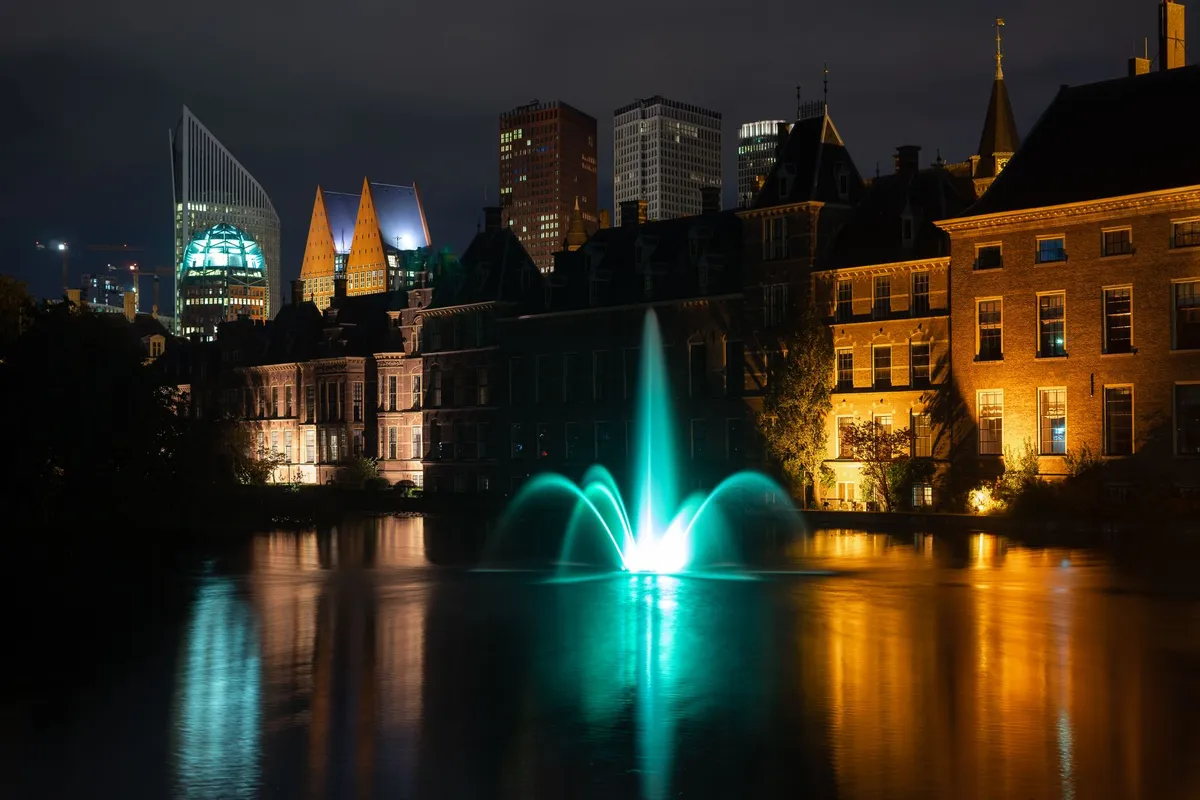
    Hofvijver and historic Binnenhof buildings in The Hague
    The Hofvijver helps you understand the more elegant side of The Hague’s center. | Photo: Kevin Demeyer / Pexels

    According to DenHaag.com, one of the destination’s biggest strengths is precisely the combination of city and sea: the center is about 15 minutes from the beach, which completely changes the logic of your itinerary. If you’re planning a bigger trip around the country, it makes sense to connect The Hague with Amsterdam and Rotterdam, because the travel times are short and each city offers a completely different vibe.

    Best time to visit and how long to stay

    The Hague works year-round, but the city really comes into its own between April and September. That’s when you can best enjoy walks through the center, the parks, unhurried museum visits, and especially Scheveningen with a better chance of clear skies. The official tourism site highlights that The Hague has 11 km of coastline, wide beaches, and expansive green areas, so the weather plays a big role in your experience.

    For most travelers, two or three days is plenty. Still, if you like to alternate between museums, neighborhoods, the beach, and day trips without rushing, it’s worth setting aside at least three days for The Hague. You can fit it into a single day, but you’d miss out on the very contrast that makes this destination work so well.

    What to do in The Hague

    Start in the center: Binnenhof, Hofvijver, and the government streets

    The Hague has a different energy from other Dutch cities because its heart revolves around politics and institutions. The most symbolic highlight is the Binnenhof, described by DenHaag.com as the heart of Dutch democracy. Even with the complex under renovation, the surrounding area is still worth the walk because of the Hofvijver lake, the historic facades, and the atmosphere that’s both official and elegant, dominating the center.

    This is a good place to adjust your expectations: The Hague doesn’t rely on a single monumental postcard. It works best as a city of atmosphere, of urban vignettes, and of short, sequential strolls. That’s why it’s worth linking the old center, the Plein area, and the Lange Voorhout in the same block.

    Visit the Mauritshuis and pick at least one more standout museum

    If you love art, The Hague deserves special attention. The Mauritshuis is the most obvious name and remains one of the easiest visits to justify on a first trip, especially for bringing together works by Vermeer, Rembrandt, and other Dutch masters in a compact palace. Meanwhile, the Kunstmuseum Den Haag, according to its official site, houses more than 160,000 works and usually works better for those looking to expand their itinerary beyond the “must-see basics.”

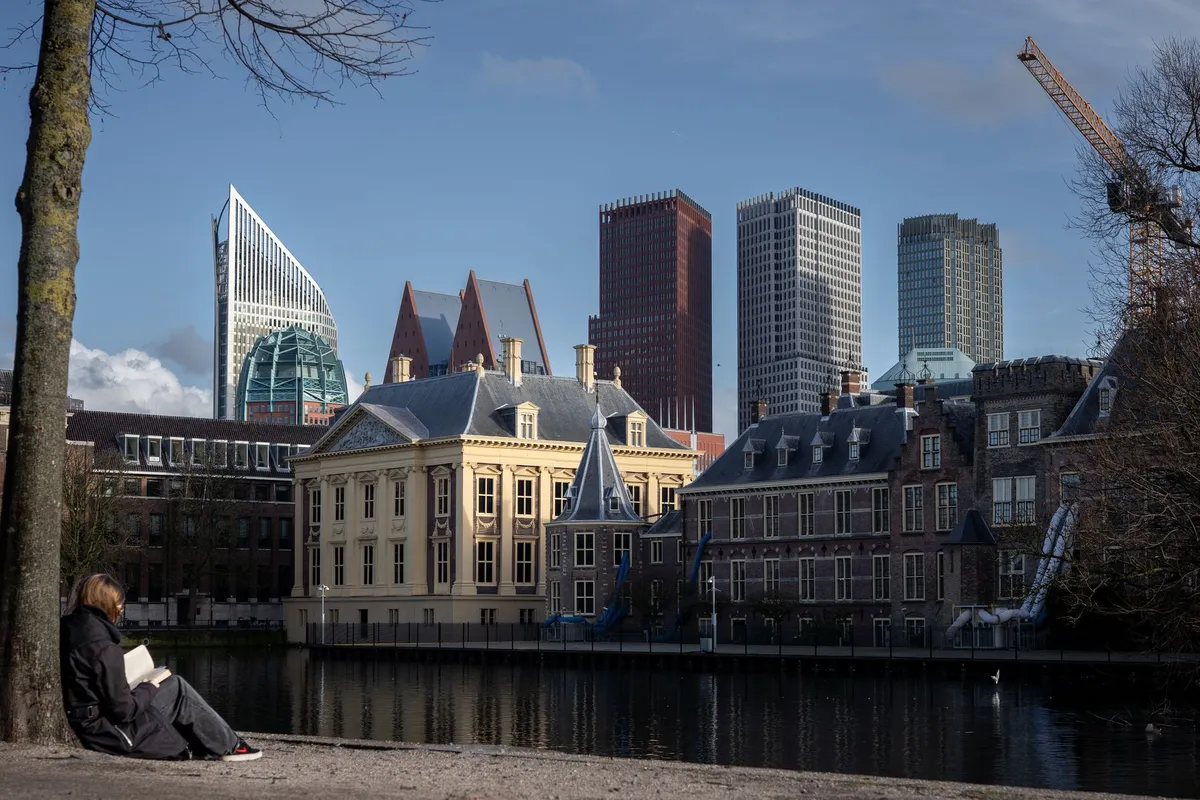
    View of The Hague's center with historic buildings near the Mauritshuis
    The center of The Hague blends museums, official buildings, and elegant architecture. | Photo: Martijn Stoof / Pexels

    To turn your visit into a deeper read of the city, a great idea is to book a guided tour of The Hague. It usually helps a lot because the city has many important landmarks that go unnoticed without context.

    Stop by the Peace Palace and the city’s diplomatic side

    Another point that helps you understand The Hague is the Peace Palace. The building appears on the official site as one of the symbols of the city of peace and justice, and that’s no exaggeration. Even when you’re just standing outside, the place reinforces an important trait of this destination: The Hague isn’t just about museums or the beach, but also about a diplomatic imaginary that almost no other European city offers in quite the same way.

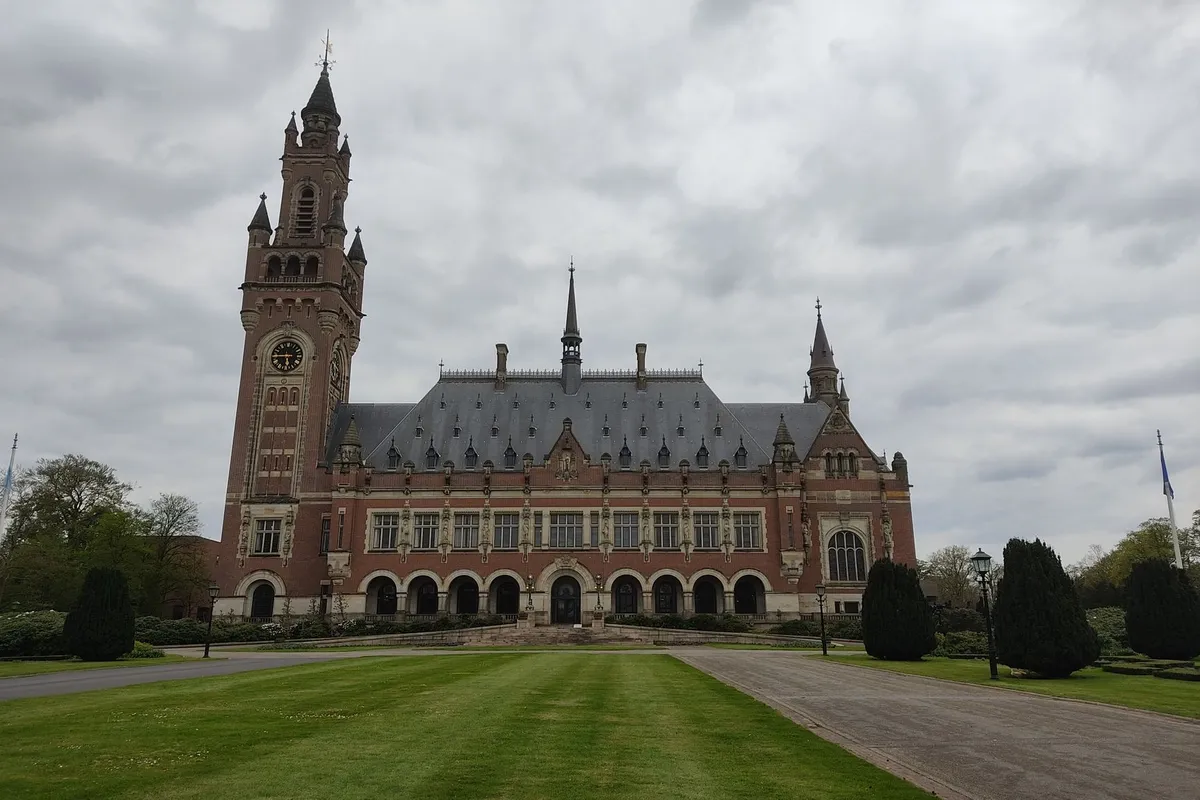
    Peace Palace, one of the most symbolic buildings in The Hague
    The Peace Palace reinforces The Hague’s reputation as the city of peace and justice. | Photo: Patrick Jaksic / Pexels

    If you want a more original itinerary through the Netherlands, it’s precisely this axis of power, art, and diplomacy that makes The Hague stand out. Many generic lists mention the city only as a day-trip base, when the real payoff comes from treating it as a destination in its own right.

    Set aside a whole block of time for Scheveningen

    Scheveningen isn’t just a detail in your itinerary: it’s one of the reasons to visit The Hague. The official site sums up this advantage well by highlighting that you can get from the center to the beach in about 15 minutes. The area offers a stroll along the boardwalk, a break at a café, beach time when the weather cooperates, and a visit to the Pier, which DenHaag.com calls a unique spot on the Dutch coast.

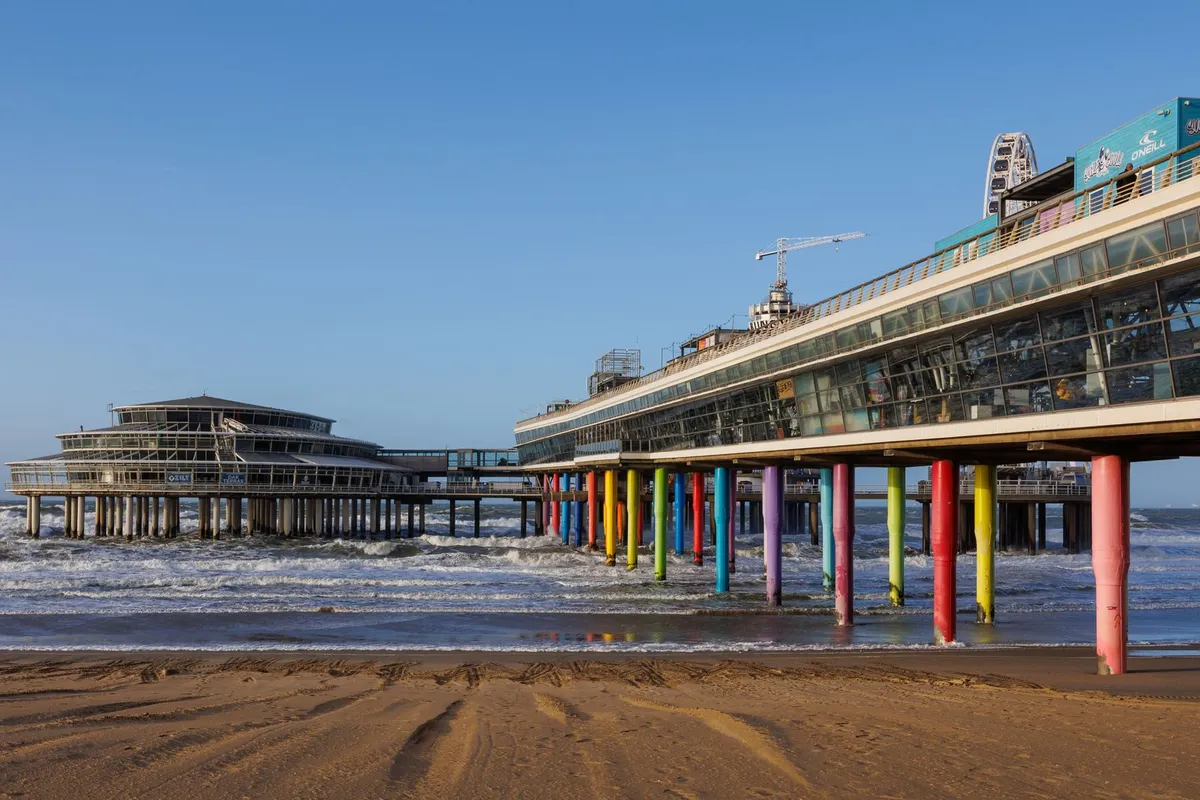
    Scheveningen Pier with the North Sea in The Hague
    Scheveningen is the part of The Hague that changes the pace of your trip and takes you to the North Sea. | Photo: Igor Passchier / Pexels

    If you’re traveling with kids, the area also makes it easy to fit in Madurodam. If you’re after a more relaxed day, just combine the beach, the pier, and a smaller museum along the way. This flexibility is one of the ways The Hague often beats cities with more rigid itineraries.

    Explore neighborhoods, shop windows, and the more local side

    Once you’ve hit the main sights, it’s worth wandering through neighborhoods like Zeeheldenkwartier or the Noordeinde area. That’s where The Hague feels less institutional and more enjoyable to use: pretty streets, independent shops, cafés, and a rhythm that invites you to slow down. For those coming from busier capitals, this balance is usually a pleasant surprise.

    What to pair with The Hague

    The Hague pairs beautifully with Delft, Rotterdam, and Amsterdam. Delft works as a charming, compact day trip; Rotterdam brings the more contemporary side with bolder architecture; Amsterdam rounds out the trio with classic canals and museums. If you’re coming from Belgium, you can also slot the city between Bruges and the rest of the Netherlands, like in this what to do in Bruges in 1 day itinerary.

    The best scenario is to use The Hague not as a quick stopover, but as a base city for two or three nights. That way, you get the most out of the center, the beach, and still have room for a short day trip if you want.

    Where to eat in The Hague

    The Hague is less “picture-perfect” than Amsterdam, and that’s exactly why meals here tend to be more relaxed. The historic center works well for lunch between museums; the Noordeinde area and its surroundings are great for dinner; Scheveningen is good for a break with a sea view, especially on clear-sky days.

    The trick here is not to stick only to the attraction zone. In The Hague, many of the best breaks happen when you wander two or three streets away from the most touristy circuit. That applies to both coffee and dinner.

    Where to stay in The Hague

    For a first visit, the best bet is to sleep between Den Haag Centraal, Hofvijver, and the historic center. You’ll be close to the museums, do plenty of walking, and still have easy access to the trams to Scheveningen. If you prefer a more laid-back vibe, consider staying near the beach, but then you trade museum convenience for a seaside resort atmosphere.

    If you’re planning to travel around the Netherlands by train, staying near the central station is usually the most functional choice. You simplify arrivals, departures, and day trips without sacrificing access to what matters in the city.

    Practical tips

    The Hague is a city best handled with trains, trams, and walking. There’s no point relying on a car if your focus is the center, museums, and beach. The smartest combo is usually exploring the historic core on foot and leaving Scheveningen for a short public transport ride. For those who want context from the start, another practical way is to book a free tour of The Hague and use the rest of the day to dive deeper into whatever caught your attention.

    It’s also worth adjusting your expectations about the Binnenhof: since the area is undergoing renovation, part of the experience today is external and about the surroundings, not the classic interior visit. That doesn’t ruin the itinerary, but it does change how you structure your day. For Brazilians, the general rule for short tourism trips to the Netherlands usually doesn’t require a Schengen visa, but always double-check the official requirements before traveling.

    Frequently asked questions

    Is The Hague worth visiting?

    Yes, especially if you like cities with strong museums, an elegant center, and the chance to include a beach in the same itinerary. The Hague works really well as a destination in its own right, not just as a day trip.

    How many days should you spend in The Hague?

    The ideal is to set aside two or three days. In one day you can see the essentials, but you miss the chance to combine the center, museums, and Scheveningen at a more relaxed pace.

    What to do in The Hague and Scheveningen on the same itinerary?

    You can dedicate the morning to the center with the Binnenhof and Mauritshuis, and leave the afternoon for Scheveningen, with the beach, boardwalk, and the Pier. With two days, the combination gets even more comfortable.

    Which Dutch cities pair well with The Hague?

    The Hague pairs really well with Delft, Rotterdam, and Amsterdam. The distances are short, and each city offers a different slice of the country.

    Where to stay in The Hague on a first visit?

    The most practical option is to sleep near the historic center or Den Haag Centraal. That way, you have easy access to museums, restaurants, and transport to Scheveningen.

    Conclusion

    The Hague works best when you accept that it doesn’t need to compete with Amsterdam to be memorable. The charm lies in the balance between politics, art, elegant neighborhoods, and the beach. At Voyage Voyage, I’d put The Hague without hesitation in the group of cities that most reward those who go beyond the automatic Netherlands itinerary.

  • What to Do in Rotterdam: A 5-Day Itinerary

    What to Do in Rotterdam: A 5-Day Itinerary

    🇧🇷 POR | 🇫🇷 FR | 🇺🇸 EN | 🇪🇸 ES

    Rotterdam is the Dutch city for travelers who prefer bold architecture, indoor markets, museums with a contemporary edge, and easy connections by train, metro, and boat. In five days, you can combine the city’s iconic postcard spots with riverside neighborhoods, a climb up the Euromast, and a rewarding round trip to Kinderdijk. And the best part: no frantic “attraction checklist” pace.

    For a 5-day Rotterdam itinerary, it’s worth splitting your time between the architectural center, the museums and neighborhoods along the Maas River, the food scene at the Markthal, and a day trip to Kinderdijk. The city works great for those arriving by train, and public transport handles almost everything without needing a car.

    How to get to Rotterdam

    Getting to Rotterdam is simple, especially if you’re already planning a trip through the Netherlands or the Paris-Brussels-Amsterdam corridor. According to Visit Rotterdam, the train is one of the fastest and most practical ways to reach the city: the journey takes about 40 minutes from Amsterdam, 25 minutes from Schiphol, and 1h10 from Brussels on the Eurostar. If you’d rather fly in close, Rotterdam The Hague Airport is just a 10 to 15-minute drive from the center, or about 20 to 25 minutes by RET bus.

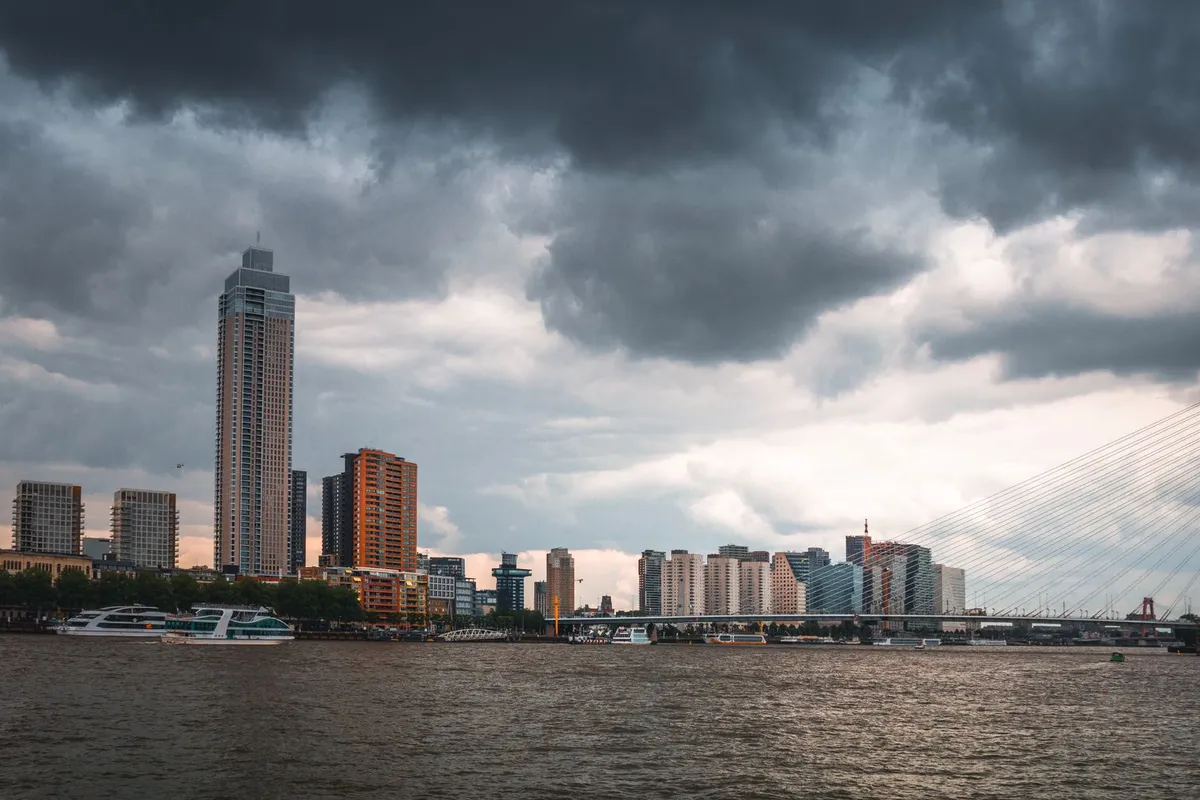
    Rotterdam skyline with the Erasmusbrug at dusk
    Rotterdam skyline seen from the Erasmusbrug. | Photo: Ahmet AZAKLI / Pexels

    If you love hassle-free travel, Rotterdam makes a great base between cities. Rotterdam Centraal station is efficient, has solid domestic and international connections, and makes the “arrive, drop your bags, and start exploring” style super easy. To get your bearings from the start, our article on Amsterdam: a complete guide to visiting the capital of the Netherlands helps you fit Rotterdam into a larger Netherlands itinerary.

    Best time to visit and how long to stay

    Rotterdam works year-round, but the experience changes a lot with the weather. Between April and September, long days make the city more inviting for walking around the port, crossing the Erasmusbrug on foot, and fitting in boat tours. In the fall and winter, the upside is finding museums, markets, and cafés with a more intimate atmosphere, though the wind by the river calls for a heavier coat.

    For most trips, five days in Rotterdam is an excellent amount of time because it lets you explore the city at a relaxed pace while still saving a full day for Kinderdijk. In two days, you’ll see the highlights; in three, you can add museums and food; in five, the city stops being a “day trip from Amsterdam” and becomes a destination in its own right.

    What to do in Rotterdam in 5 days

    Day 1: Markthal, Kubuswoningen, and the architectural center

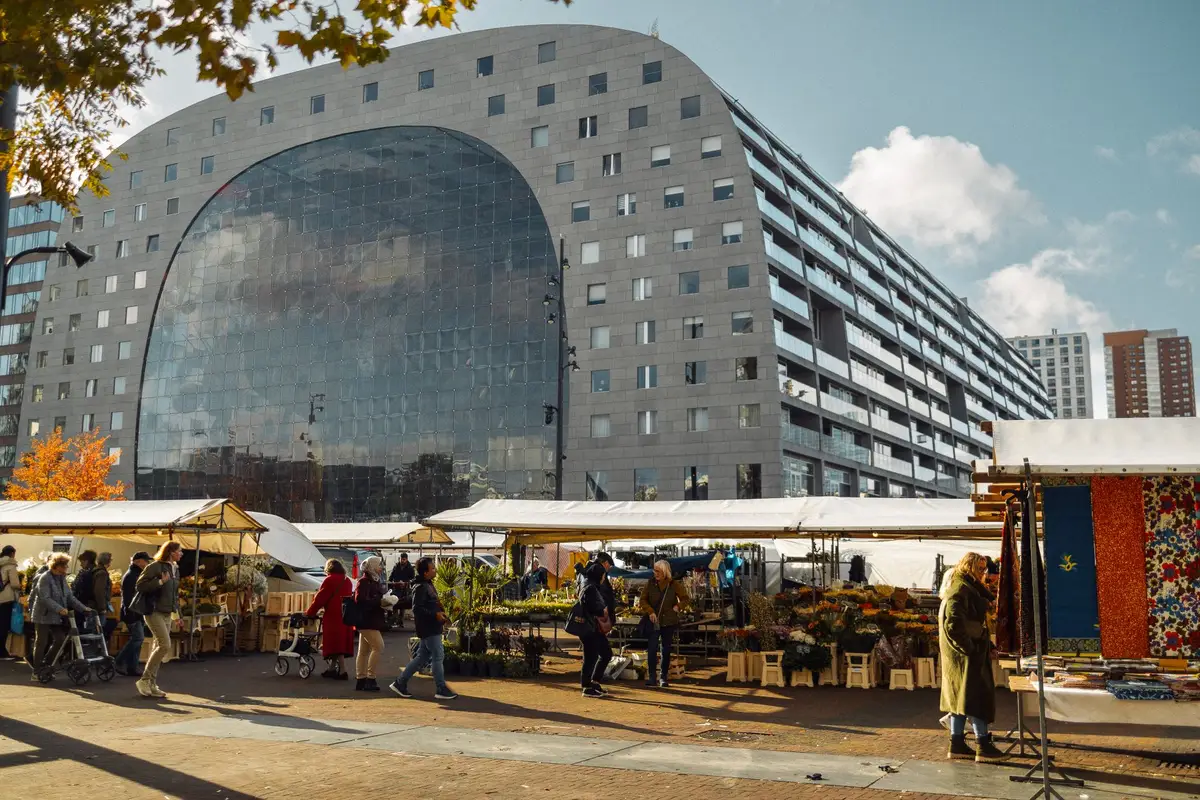
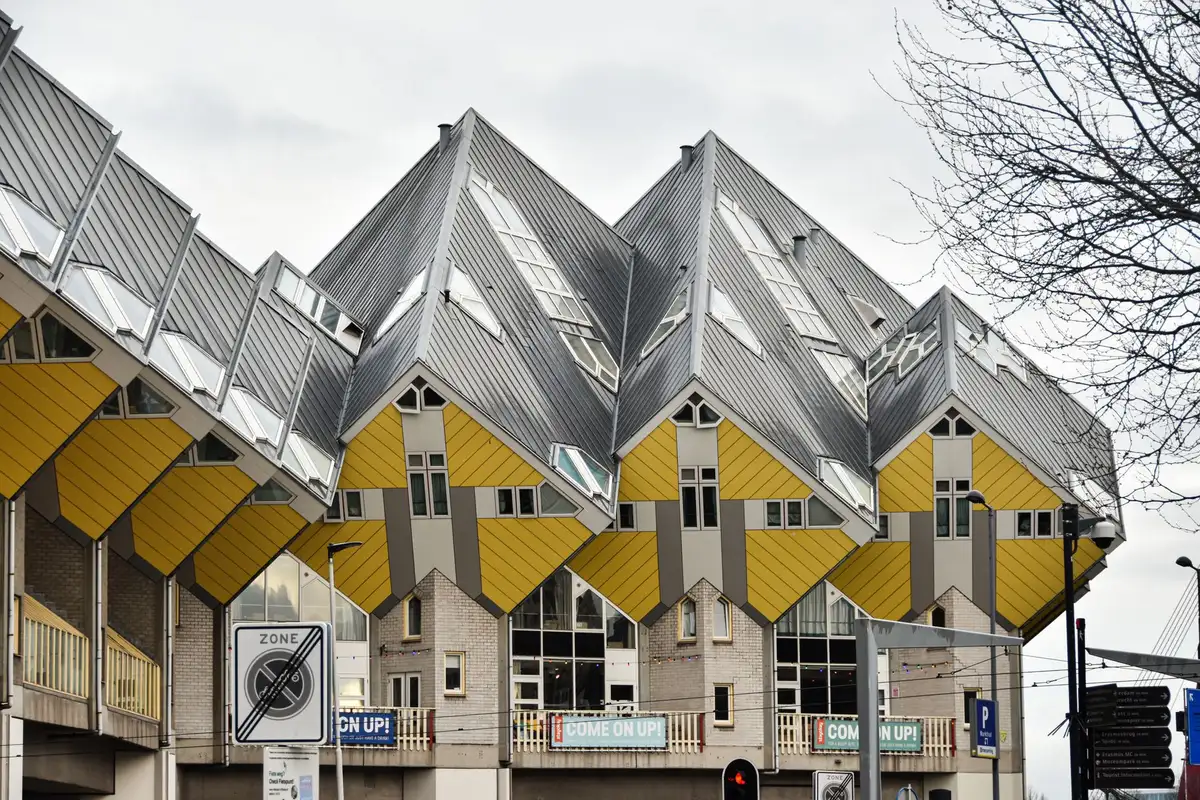
    Start in Rotterdam’s most photogenic heart: the Blaak area. Visit the Markthal early, when the stalls are still crowd-free and the colorful ceiling draws more attention than the bustle. According to the Markthal’s official website, the market is open Monday to Thursday from 10 am to 8 pm, Friday until 9 pm, Saturday until 8 pm, and Sunday from 12 pm to 6 pm. Just steps away are the Kubuswoningen, the famous cube houses, which perfectly explain why Rotterdam is so associated with experimental architecture.

    Inside the Markthal with food stalls in Rotterdam
    Inside the Markthal, one of Rotterdam’s most famous food spots. | Photo: Anton Massalov / Pexels

    Then, walk over to Oude Haven, the historic marina lined with bars, and continue to Laurenskerk, one of the few medieval buildings in the center that survived the WWII bombings. This contrast between modern reconstruction and urban memory is one of the insights that generic lists about the city often miss.

    Day 2: Erasmusbrug, Kop van Zuid, and Euromast

    Save your second day for the banks of the Maas River. Cross the Erasmusbrug on foot, watching the scale shift between the center and the Kop van Zuid area, where old port warehouses have been replaced by towers, hotels, and waterfront promenades. If you’d like a guided tour that already organizes this reading of the city, a natural option is to book the Rotterdam art and architecture tour, which helps you better understand the city’s urban transformations.

    Late in the afternoon, head up the Euromast. The tower is a classic because it delivers the view that finally makes Rotterdam’s urban puzzle click into place. If you want to secure your visit in advance, especially on weekends and holidays, it’s worth checking out the Euromast tower ticket in Rotterdam. Try to arrive late in the afternoon to catch the changing light over the river and the downtown buildings.

    Day 3: museums, art, and a more cultural side

    On day three, dive into the cultural scene. The most talked-about highlight today is the Depot Boijmans Van Beuningen, which Visit Rotterdam calls the world’s first publicly accessible art storage facility. Even if you’re not a museum marathoner, this is a great place to see how the city loves to reinvent formats.

    If you prefer a more urban vibe over a classic one, also add Witte de Withstraat to your list, a street that’s great for galleries, coffee, long lunches, and people-watching. It’s a useful pause between the big attractions and keeps your itinerary from becoming a monument-to-monument sprint.

    Kubuswoningen, Rotterdam's famous cube houses
    The Kubuswoningen showcase Rotterdam’s most experimental side of architecture. | Photo: Ira / Pexels

    Day 4: Day trip to Kinderdijk

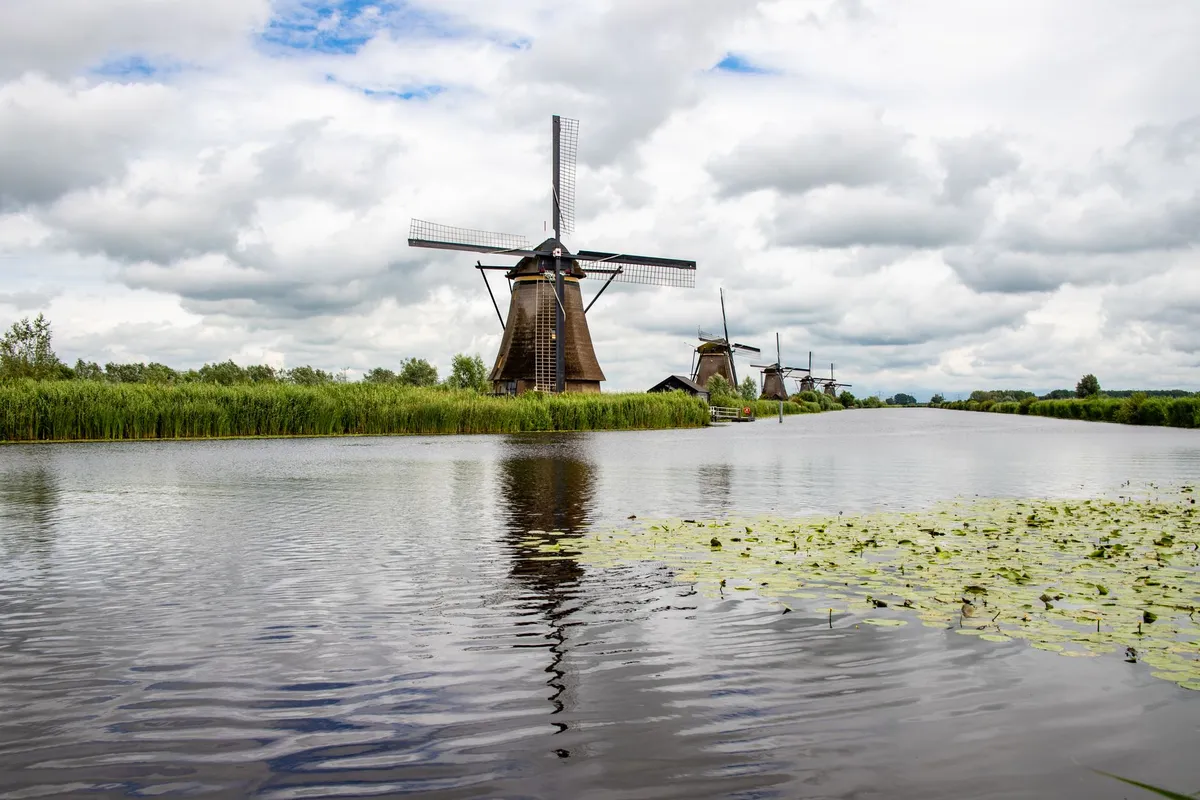
    This is the day to leave the futuristic skyline behind and find the Netherlands of windmills. Kinderdijk is just a stone’s throw from Rotterdam and makes an excellent contrast to the city. The most charming route is by water: the official Kinderdijk website notes that the WaterShuttle takes about 30 minutes and even lets you bring your bike on board. If you prefer public transport, buses and connections from Rotterdam also run year-round.

    Kinderdijk windmills along the canal
    The Kinderdijk windmills make for one of the most classic day trips from Rotterdam. | Photo: Dick Scholten / Pexels

    An adult ticket to visit the visitor areas costs €21 on the official website, with a 10% discount when you buy online — price checked in July 2026. The ticket includes museums, a boat tour, the Wisboom pumping station, a film, and an exhibition. If you’re torn between fitting in The Hague, Delft, or Kinderdijk, Kinderdijk is usually the best pick for anyone who wants a more visually striking experience that’s easy to pull off in a single day.

    If your trip also takes you through Belgium, this day helps create contrast with more compact historic cities, like in the what to do in Bruges in 1 day itinerary, which pairs well with anyone who loves old town centers and canals.

    Day 5: neighborhoods, shopping, and a relaxed farewell

    Use the last day to revisit what you loved most and fill in whatever you missed. Kop van Zuid, Oude Noorden, and Rotterdam West show up among the neighborhoods suggested by Visit Rotterdam to explore. If you’re into streets with personality, unique storefronts, and independent coffee shops, this is the moment to step off the more obvious path.

    Another great idea is to wrap up the trip with a water taxi ride or a free walking tour of Rotterdam to stitch together historical and urban context. It’s a smart way to turn the city into something more than just “pretty architecture for photos.”

    What to pair with Rotterdam

    Rotterdam fits really well with Amsterdam, Delft, The Hague, and Kinderdijk. The rail connections help, and travel times within the Netherlands tend to be short. If you want a more balanced itinerary, the best combo is to save Amsterdam for classic museums and canals, and Rotterdam for architecture, food, and a more contemporary urban vibe.

    It’s also worth using the city as a stop between Belgium and the Netherlands. The train from Antwerp is fast, which makes Rotterdam a logical stop before heading on to Amsterdam. For travelers who enjoy urban trips with more than one historic center on the same route, the contrast works beautifully.

    Where to eat in Rotterdam

    The Markthal is the most practical place to start, especially on day one. There you’ll find quick options, stalls for sampling specialties, and a more laid-back vibe. But Rotterdam goes way beyond that: the city shows up on Visit Rotterdam as a strong destination for food experiences ranging from casual to Michelin-starred.

    In practice, follow this logic: a light lunch in the center, dinner in Kop van Zuid or on Witte de Withstraat, and a coffee break in less touristy neighborhoods on the last day. Rotterdam rewards travelers who set aside time to eat without rushing, because part of the city’s charm lies precisely in how it blends port, immigration, and international cuisine.

    Where to stay in Rotterdam

    If it’s your first time, look for accommodation between Rotterdam Centraal, Blaak, and the area near Witte de Withstraat. You’ll be close to transit, can cover several stretches on foot, and cut down on time spent getting around. Kop van Zuid is a solid alternative for those who want more modern hotels with river views.

    If you’re planning day trips, prioritize proximity to the station. It’s the kind of choice that simplifies logistics a lot, especially if you’re arriving from Schiphol or moving on to other Dutch cities.

    Practical tips

    Within the city, the RET network of metro, tram, and bus is excellent. Visit Rotterdam highlights five metro lines, from A to E, with Beurs station as the main connection point, plus the Rotterdam City Card, which includes unlimited transit for 1, 2, or 3 days and discounts on attractions and restaurants. For a five-day trip, it usually pays off most in the first few days, when you’re packing in more travel.

    Another important tip: Rotterdam gets quite windy along the river, even in pleasant months. Bring an extra layer and don’t underestimate the chill at dusk. For those arriving from outside the Netherlands, Brazilians typically don’t need a visa for short-term tourism in the Schengen Area, but it’s always wise to double-check the official rules before you fly.

    Frequently asked questions

    Is it worth spending 5 days in Rotterdam?

    Yes, it is. Five days let you see the architectural side, visit museums, explore neighborhoods at a relaxed pace, and still fit in a day trip to Kinderdijk without feeling rushed.

    How many days are ideal for getting to know Rotterdam?

    For the essentials, two or three days are enough. But the ideal amount for a more complete trip is four to five days, especially if you want to include cultural attractions and excursions outside the center.

    What’s the best way to get around Rotterdam?

    The most practical way is to use RET public transit, which connects the center and neighborhoods well via metro, tram, and bus. In central areas, walking also works great.

    Is it better to do a day trip to Kinderdijk or stay overnight there?

    For most travelers, the day trip from Rotterdam is the best choice. Access is simple, the outing fits into one day, and you’re back in the city without needing to switch hotels.

    Does Rotterdam pair well with Amsterdam on the same itinerary?

    It pairs wonderfully. Amsterdam delivers the more classic Netherlands of canals and traditional museums, while Rotterdam steps in as the modern counterpart, with contemporary architecture and a more urban atmosphere.

    Conclusion

    If your goal is to discover a less obvious side of the Netherlands, Rotterdam delivers big time. In five days, you can put together a comfortable itinerary that’s visually striking and varied enough to never feel repetitive. At Voyage Voyage, I’d bet on this mix of architecture, water, food, and a day trip to the windmills without hesitation to show why the city deserves way more than a quick stop.

  • Istanbul Between Two Continents: Mosques, Bazaars, and the Bosphorus Crossing

    Istanbul Between Two Continents: Mosques, Bazaars, and the Bosphorus Crossing

    🇧🇷 POR | 🇫🇷 FR | 🇺🇸 EN | 🇪🇸 ES

    Istanbul is so much more than the Hagia Sophia and the Blue Mosque. This city, breathing on both sides of the Bosphorus, hides lesser-photographed mosques, markets that open before sunrise, and a ferry crossing that takes you from one continent to another in 25 minutes—without your passport ever leaving your backpack. Getting to these corners is easy: trams, metro, and ferries cover almost everything, and the daily budget is moderate, considering street food and boat trips. Stick with us to the end to understand why this crossing between Europe and Asia is, for many, the most memorable moment of the trip.

    Mosques beyond the famous ones

    “Is the Blue Mosque and Hagia Sophia all there is to see?” No. Istanbul has over 3,000 mosques, and some of the most interesting ones are just a few minutes’ walk from the obvious routes, almost always empty of tourists compared to the two monuments that show up in every profile picture.

    Suleymaniye Mosque in Istanbul seen from afar
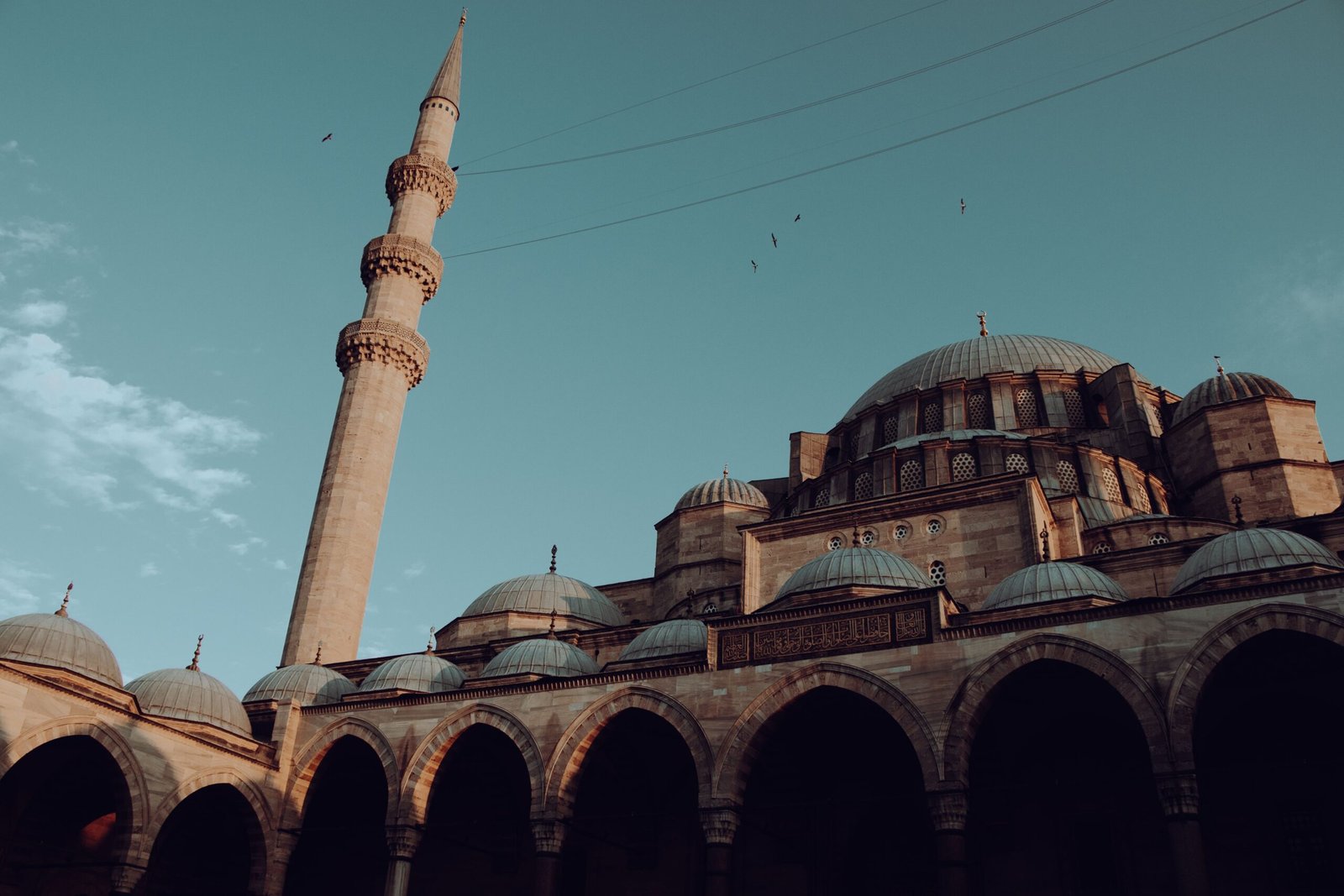
    Suleymaniye Mosque, designed by architect Mimar Sinan in the 16th century. | Photo: Burak Başgöze / Pexels

    Suleymaniye Mosque

    Commissioned by Sultan Suleiman the Magnificent and built in the neighborhood that bears its name, the Suleymaniye is the work of architect Mimar Sinan, considered the greatest name in Ottoman architecture. Entry is free, as it is in most working mosques in the city, and the outer courtyard offers one of the most complete views of the Golden Horn, the arm of the sea that cuts through the European side of the city. Visiting hours follow the breaks for the five daily prayers, so avoid arriving right at the time of the azan (call to prayer) if you want to enter without rushing. Take off your shoes at the entrance, bring a scarf to cover your head if you’re a woman, and set aside about 40 minutes to walk through the adjoining cemetery, where the tombs of Suleiman and his wife, Hurrem Sultan, are located.

    New Mosque (Yeni Cami)

    It’s literally right next to the Spice Bazaar in Eminönü, making it one of the rare spots in the city where faith and commerce share the same sidewalk. It took over 60 years to complete, spanning the reigns of several sultanas-mother, which is why it carries the informal nickname of “the mosque of the harem women.” The central dome and white marble courtyards contrast with the colorful chaos of the market next door—one of the city’s most interesting contrasts for photography lovers.

    Rüstem Pasha Mosque

    Small, discreet, and hidden above a handful of shops in the Eminönü neighborhood, this mosque often goes unnoticed by those walking too fast. It’s worth the effort of climbing the narrow staircase: the interior is covered in original 16th-century İznik tiles, with the same floral patterns that decorate parts of Topkapi Palace, only here without any lines.

    Eyüp Sultan Mosque

    Located at the far end of the Golden Horn, off the walking circuit of the historic center, it’s sought out more by Turkish pilgrims than foreign tourists. The site holds the tomb of Eyüp Ansari, a companion of the Prophet Muhammad, making the complex one of the most important pilgrimage sites in Sunni Islam outside Saudi Arabia. To get there, take the cable car (Eyüp-Piyer Loti) that goes up to the Piyer Loti café, atop the hill, where the view covers the entire length of the Golden Horn to the modern buildings on the more distant European side.

    Markets and bazaars: where Istanbul haggles

    “Besides the Grand Bazaar, is there anything else?” There is, and for many travelers, the smaller markets end up being the highlight of the trip, precisely because they stray from the beaten path.

    Busy corridor of the Grand Bazaar in Istanbul with Turkish flags
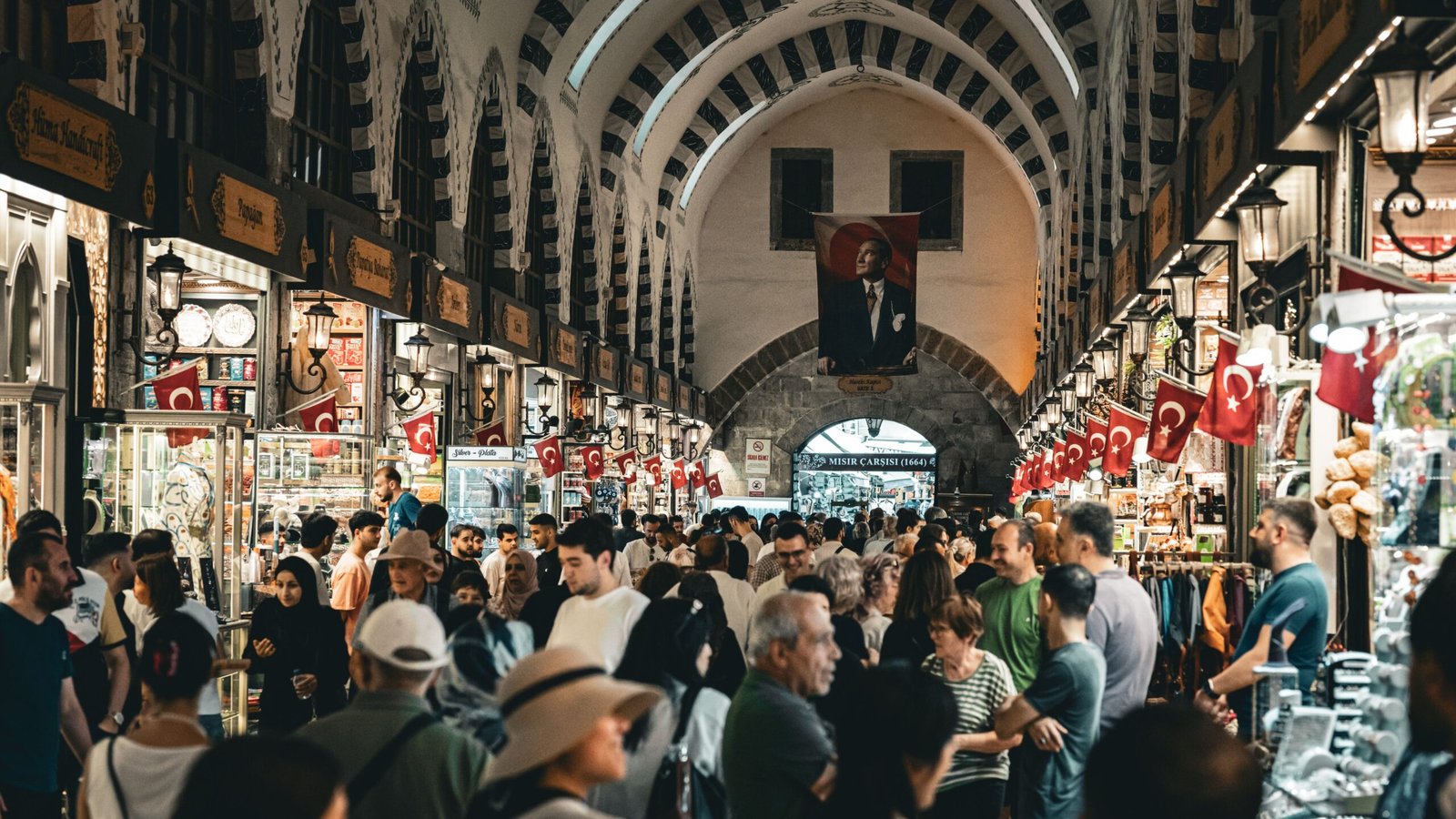
    One of the covered corridors of the Grand Bazaar, with thousands of shops spread across 61 streets. | Photo: Tolga deniz Aran / Pexels

    Grand Bazaar without falling for tourist traps

    The Grand Bazaar (Kapalıçarşı) has around 4,000 shops spread across covered corridors, and rule number one is: the first price quoted is never the final price. Haggling is expected and even seen as part of the experience—start by offering much less than the initial asking price and work your way up slowly. The quieter entrances, with less jostling, are usually the ones near the Beyazıt Mosque, while the gates facing Sirkeci see the heaviest flow of tour groups.

    Mısır Çarşısı, the Spice Bazaar

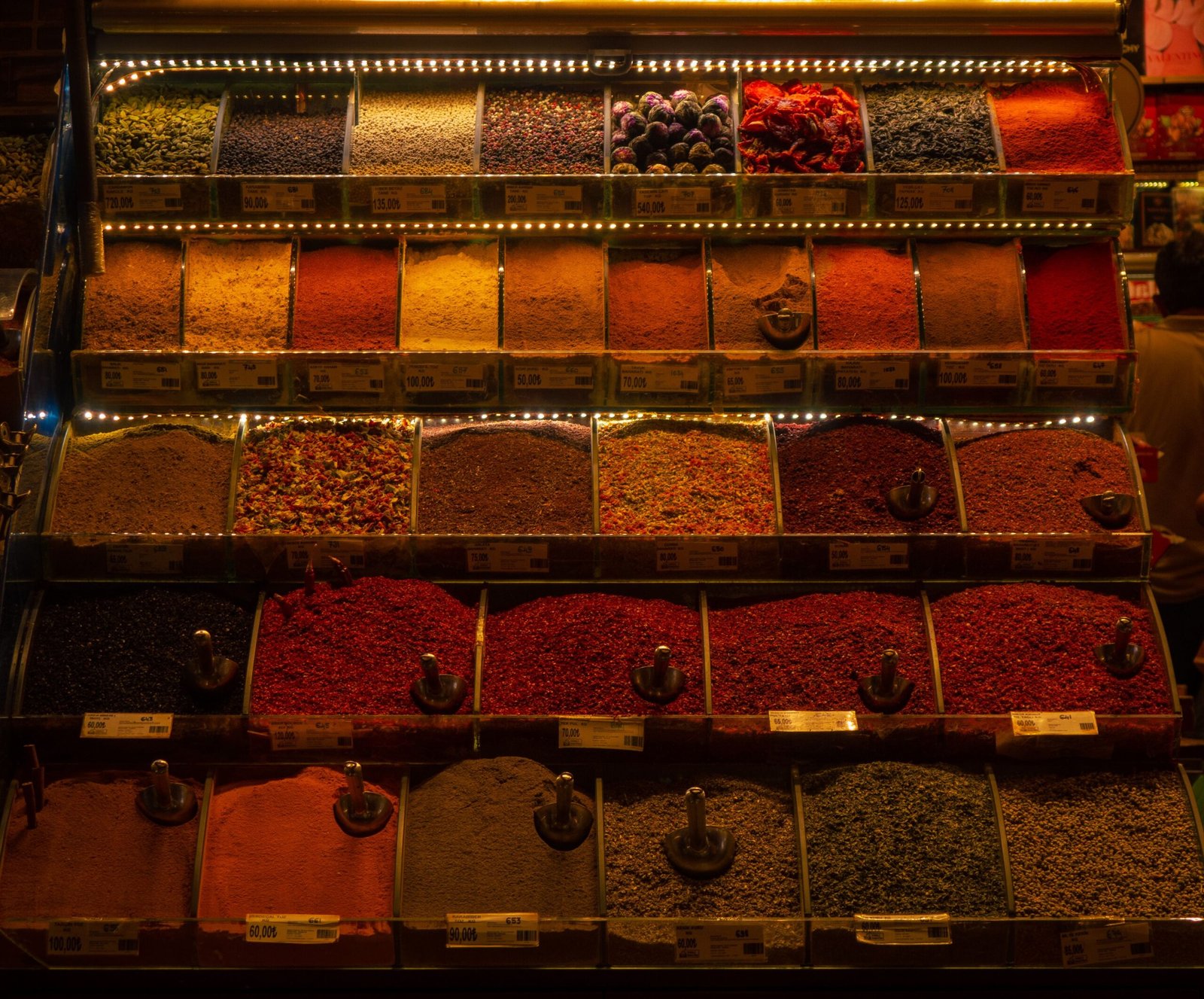
    Next to the New Mosque, the Egyptian Market is smaller, easier to explore in an hour, and is packed with piles of spices, dried fruits, teas, and the classic lokum (the Turkish delight sometimes called “Turkish delight” in Portuguese). The name refers to the spice trade coming from Egypt during the Ottoman period, when this was one of the entry points for Middle Eastern goods into Europe.

    Colorful spices on display at the Egyptian Market in Istanbul
    Spice stalls at the Mısır Çarşısı, next to the New Mosque in Eminönü. | Photo: Enes Bayraktar / Pexels

    Neighborhood markets on the Asian side

    In Kadıköy, on the Asian side, the Tuesday Market (Salı Pazarı)—as the name suggests, it runs on Tuesdays—brings together local producers selling cheeses, olives, and vegetables at prices well below those on the touristy European side. It’s the closest you’ll get to what it’s like to shop like an Istanbul local, with no tourist staging.

    The Bosphorus crossing: two continents in one day

    “Can you cross continents without booking a tour?” You can, and it’s cheaper than it seems. The urban ferries of the public company Şehir Hatları make this trip every day, all year round, as part of the city’s regular public transport—the same one locals use to get to work.

    Ferry crossing the Bosphorus in Istanbul between Europe and Asia
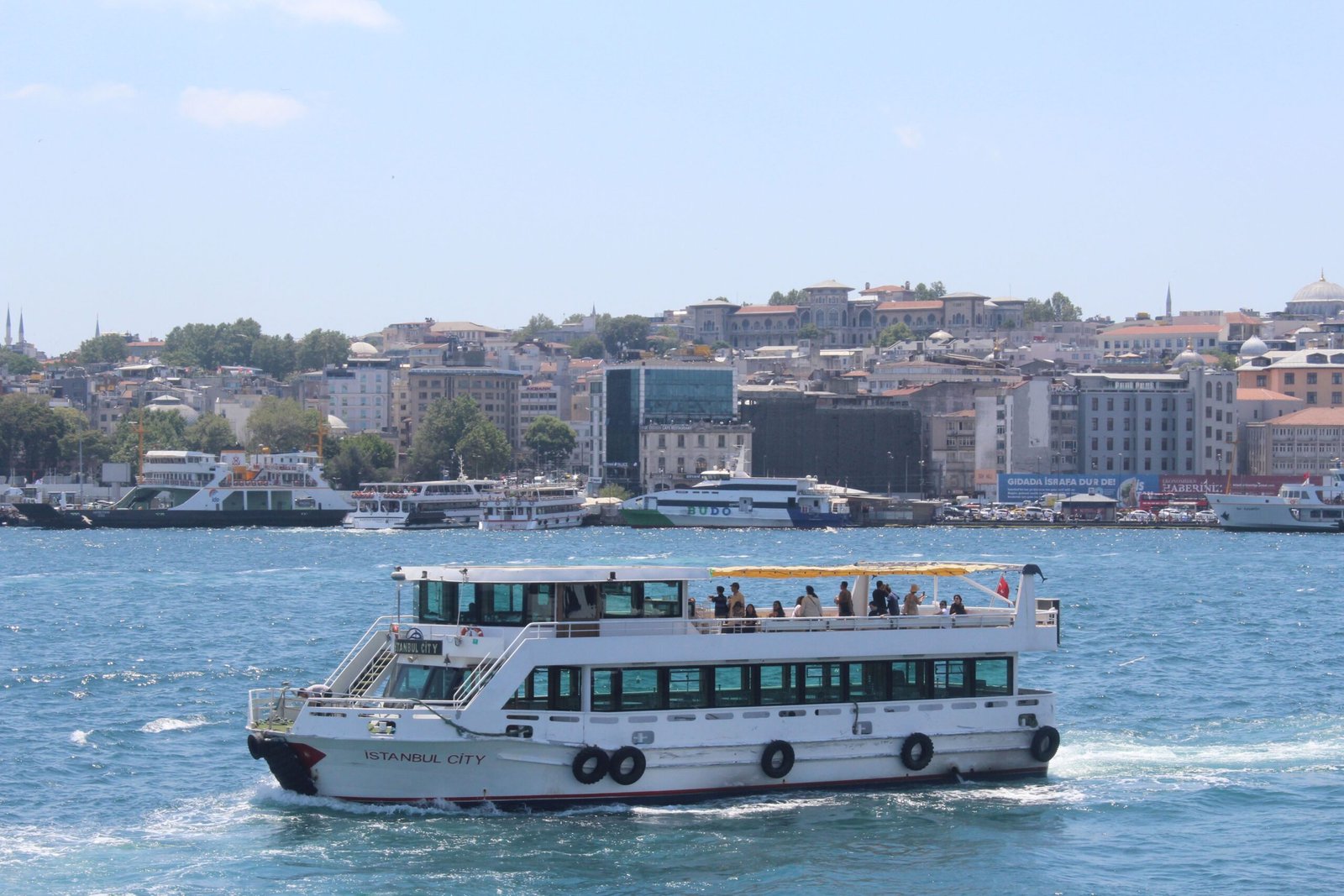
    A Şehir Hatları ferry crossing the Bosphorus, connecting the European and Asian sides of the city. | Photo: betül aymergen / Pexels

    Which ferry to take

    The shortest route connects Eminönü, on the European side, to Üsküdar, on the Asian side, in about 20 to 25 minutes, with a fare of around 53 Turkish liras in 2026 (check updated prices on the Şehir Hatları website before you travel, as adjustments are frequent). Another option is the route to Kadıköy, a younger neighborhood full of bars and bookstores, with a fare close to 59 liras and a longer view of the city’s skyline along the way. Payment is made with the Istanbulkart card, the same one used on the metro and buses, available from machines at the terminals.

    What to see during the crossing

    From the deck, you can spot the minarets of the Blue Mosque, the Galata Tower on the European side, and the residential hills of Üsküdar on the Asian side all at once. Seagulls often follow the boat for much of the journey, and it’s common to see vendors selling simit—the ring-shaped bread covered in sesame seeds—right at the terminal entrance, a scene as iconic as any mosque on the itinerary.

    Is the tourist Bosphorus cruise worth it?

    There’s also the longer tourist cruise, which goes up the strait towards the Black Sea and back, usually with a guide and a photo stop at the Ottoman fortresses on the water’s edge. It’s a different experience from the urban ferry: more expensive, longer (between 1.5 and 2 hours), and aimed at those who want to leisurely see the summer mansions (yalıs) along the Bosphorus. For those who just want to feel the crossing between two continents, the regular ferry does the job—and costs a fraction of the price.

    Where to eat on this itinerary

    “After all that walking, where do you stop to eat without falling into a tourist trap?” Around the Suleymaniye, look for the kuru fasulye houses (white beans stewed and served with rice and pickles), a simple dish that the neighborhood’s own residents eat for lunch, usually for a much lower price than the tourist-oriented restaurants in the Sultanahmet area.

    Near the Spice Bazaar, the balık ekmek counters (grilled fish sandwich, traditionally sold from boats anchored in the Golden Horn) remain a quick, cheap option for eating standing up while watching the dock’s bustle. On the Kadıköy side, after the ferry crossing, it’s worth setting aside time to stroll along Moda Caddesi and sample assorted meze at the neighborhood taverns, with prices more affordable than the trendy restaurants of Beyoğlu.

    One detail that goes unnoticed: many street vendors in these more local neighborhoods don’t speak fluent English, so bring the name of the dish written down or a photo on your phone to make ordering easier.

    Practical Tips

    It’s worth setting aside a full half-day just for the itinerary of smaller mosques and markets, without trying to fit it into the same day as the Hagia Sophia — for the complete Istanbul itinerary, see our general guide, which covers the most famous sights, viewpoints, and neighborhoods to stay in.

    Istanbul also works as a natural stopover for those continuing on to the Middle East: a good portion of the flight connections to Tehran pass right through here, so it’s worth considering adding a few days to the city before or after the Iranian leg — the Iran guide covers visas, travel advisories, and the complete itinerary through Isfahan, Shiraz, and Persepolis.

    The local currency is the Turkish lira (TRY), and international credit cards work in most formal markets, but bring cash to haggle at the Grand Bazaar and to buy from street stalls, where not every vendor accepts cards. A local SIM card or e-SIM helps a lot for using maps while crossing between neighborhoods, since public Wi-Fi is unreliable at the ferry terminals.

    A common mistake is trying to visit the Suleymaniye and the New Mosque during Friday noon prayers, when the flow of worshippers is heavier and parts of the interior are closed to visitors. If your goal is to photograph the interior at a relaxed pace, prefer mid-morning on weekdays.

    Brazilians don’t need a visa for tourist stays of up to 90 days in Turkey, but the rules change frequently — always double-check the official visa rules before buying your ticket.

    Frequently Asked Questions

    Do I need to pay to enter Istanbul’s smaller mosques?

    No. Entry is free at the Suleymaniye, the New Mosque, and most working mosques in the city. A symbolic donation in the box near the door is appreciated, but it’s not required.

    What’s the difference between the Grand Bazaar and the Spice Bazaar?

    The Grand Bazaar is larger, with thousands of shops selling carpets, jewelry, ceramics, and clothing, while the Spice Bazaar (Mısır Çarşısı) is much smaller and focused on spices, teas, dried fruits, and sweets, making it quicker to browse.

    How much does the ferry between Istanbul’s European and Asian sides cost?

    In 2026, the fare for the urban ferry between Eminönü and Üsküdar is around 53 Turkish liras, and between Eminönü and Kadıköy, about 59 liras, paid with the Istanbulkart card. Check updated prices before your trip, since adjustments are common.

    Is the commuter ferry or the Bosphorus sightseeing cruise more worth it?

    It depends on how much time you have. The commuter ferry is fast, cheap, and already gives you the feeling of crossing continents. The sightseeing cruise is longer, pricier, and better for those who want to take in the historic mansions along the waterfront at a leisurely pace.

    Can I visit the smaller mosques and the markets on the same day?

    Yes, especially if the itinerary starts in Eminönü, where the New Mosque and the Spice Bazaar sit side by side, then continues on foot to the Suleymaniye, wrapping up with the ferry crossing to Üsküdar or Kadıköy in the late afternoon.

    Conclusion

    Istanbul between two continents is less about checking sights off a map and more about understanding how faith, commerce, and geography intersect in a single afternoon: a nearly empty mosque, a noisy spice market, and a ferry that swaps continents in half an hour. Explore the other destination guides here on Voyage Voyage.

  • Gramado’s Natal Luz 2026: Dates, Tickets, and Tips

    Gramado’s Natal Luz 2026: Dates, Tickets, and Tips

    🇧🇷 POR | 🇫🇷 FR | 🇺🇸 EN | 🇪🇸 ES

    “Is it worth braving the cold and the crowds to see Gramado’s Natal Luz?” If you love the real Christmas spirit, yes. Every year, between October and January, this town in the Serra Gaúcha region of southern Brazil swaps its regular streetlights for thousands of bulbs, sets up stages for shows, and turns entire squares into Christmas scenes. It’s not a single event—it’s a whole season, with paid and free attractions spread across town. Before you book your trip, it’s worth understanding the dates, prices, and what’s actually worth seeing.

    What is Natal Luz and why it’s worth the trip

    Gramado’s Natal Luz is the town’s official Christmas season, created in the 1980s and now one of the biggest Christmas events in Brazil. For nearly three months, the entire town becomes a decoration: facades, trees, squares, and streets light up, and the program ranges from major paid shows like the Grande Desfile de Natal (Grand Christmas Parade) and Nativitaten to free concerts and themed villages. It’s this mix—European charm, real cold weather, and activities for all ages—that has people from all over Brazil planning their trips months in advance.

    Igreja Matriz São Pedro illuminated in Gramado during Natal Luz
    Gramado’s Igreja Matriz gets special lighting during Natal Luz. | Photo: Douglas Santos / Pexels

    When is Gramado’s Natal Luz 2026

    “Can I go any month during the season?” You can, but the vibe changes a lot depending on the date. The 2026 edition of Gramado’s Natal Luz runs from October 22, 2026, to January 17, 2027, covering spring, Christmas, and New Year’s Eve in a single event calendar. October and November have a calmer schedule and lower hotel rates; the last week of December and New Year’s Eve are the peak for crowds and prices, with the town practically packed every day.

    Tickets, prices, and what’s free

    Not everything at Natal Luz costs money. The big shows, like the Grande Desfile de Natal—which now features bigger floats and an interactive LED-light section for the audience—and the Nativitaten musical, require tickets, with first-batch prices starting at R$ 150. Meanwhile, Rua Coberta, the town’s busiest walkway, hosts free concerts and choir performances from Tuesday to Sunday starting at 7 PM. Always double-check current prices and dates on the official Natal Luz de Gramado website before buying, since batches and prices change throughout the season.

    Main attractions

    With so much happening at once, it’s worth prioritizing what fits your itinerary.

    Aldeia do Papai Noel (Santa’s Village)

    It’s now located in the town center on Av. Borges de Medeiros. Besides meeting Santa Claus, there are attractions like the Natalímetro, which measures your “Christmas spirit,” and a cable car with panoramic views over the village.

    Vila de Natal (Christmas Village)

    Set up in Praça das Etnias, it works like a miniature European village, with artisan shops, cultural performances, and Santa’s House. It’s free, open every day, and usually hosts the Christmas market from 9 AM to 9 PM.

    Rua Coberta

    This is where the town gathers at night: a stage at the end of the street hosts musicians and choirs daily from 7 PM, with free entry from Tuesday to Sunday.

    Christmas market at Vila de Natal in Gramado with lights and Christmas decorations
    The Vila de Natal brings together a Christmas market, crafts, and classic European decor. | Photo: Murillo Molissani / Pexels

    How to get there and get around

    The most common route is flying into Porto Alegre (Salgado Filho Airport) and then driving or taking a bus for about 1.5 hours to Gramado. Within town, most Natal Luz attractions are near the center and walkable, but on peak days it’s worth leaving earlier: traffic and crowded sidewalks get heavy from late afternoon on.

    Practical tips

    Bring a real coat—nighttime temperatures often drop well below what most Brazilians are used to, even outside winter. Book your stay well in advance: hotels in Gramado and nearby Canela fill up fast for December and New Year’s Eve, and prices climb along with demand. Buy tickets for the paid shows weeks ahead through the official program website—they sell out on high-season weekends.

    Frequently asked questions

    When is Gramado’s Natal Luz 2026?

    The 2026 season runs from October 22, 2026, to January 17, 2027.

    How much do Natal Luz de Gramado tickets cost?

    Paid shows like the Grande Desfile de Natal and Nativitaten start at R$ 150 in the first batch. Check current prices on the official website before buying.

    What’s free at Gramado’s Natal Luz?

    Rua Coberta has free shows from Tuesday to Sunday starting at 7 PM, and the Vila de Natal in Praça das Etnias is open and free every day.

    What’s the best time to visit Natal Luz?

    November and the first half of December usually have smaller crowds and more affordable lodging than the last week of December and New Year’s Eve.

    Do I need to buy tickets in advance?

    Yes. The main shows sell out on weekends and during the holiday period, so it’s worth securing your tickets weeks ahead through the event’s official website.

    Conclusion

    Gramado’s Natal Luz is worth the trip whether you’re planning a quick weekend getaway or a longer stay combining Gramado and Canela. The key is deciding upfront whether your priority is the paid shows or the free programming, and booking your tickets and lodging in advance. Explore the other destination guides here on Voyage Voyage.

  • Rome Colosseum: Complete Guide to Visiting the World’s Largest Amphitheater

    Rome Colosseum: Complete Guide to Visiting the World’s Largest Amphitheater

    🇧🇷 POR | 🇫🇷 FR | 🇺🇸 EN | 🇪🇸 ES

    The Colosseum in Rome is the largest amphitheater ever built by humankind, and nearly two thousand years after its inauguration, it remains Italy’s most visited monument. Located in the heart of Rome, just steps from the Roman Forum and Palatine Hill, it opens daily at 8:30 AM and can be accessed with a ticket that includes all three sites. From the US, you can reach Rome with a single connection—through Lisbon, Paris, Frankfurt, or Madrid—and the total flight time is around 14 to 17 hours. The best time to visit is from March to May and September to November, when the heat is bearable and the lines are shorter. What you might not know is that the Colosseum almost didn’t exist: it was built exactly where the artificial lake of Emperor Nero’s palace once stood.

    How to get to the Colosseum

    Rome has two international airports: Fiumicino (FCO), the main one, and Ciampino (CIA), used by low-cost airlines. From the US, most flights arrive at Fiumicino with a single layover. From Fiumicino to Rome’s city center, the Leonardo Express goes directly to Termini Station in 32 minutes, with departures every 30 minutes—a ticket costs €14 (check the current price on the Trenitalia website before you travel). From the airport, a taxi with a fixed fare to the historic center costs around €50.

    From Termini Station to the Colosseum, Metro Line B takes you to the Colosseo stop in just 3 minutes—one of the most direct connections in Europe between a historical attraction and public transport. Walking from the stop to the entrance takes less than 2 minutes. A single metro ticket costs €1.50, and a 48-hour or 72-hour pass is usually worth it if you’re planning to explore the city.

    If you’re doing a day trip from another Italian city, high-speed trains get you there quickly: from Florence, about 1h30 on the Frecciarossa; from Milan, roughly 3 hours; from Naples, less than 1h15. Rome Termini is 10 minutes from the Colosseum by metro.

    Best time to visit and how long to stay

    “Can I go in the summer?” You can, but you’ll sweat. July and August are the busiest months of the year—huge lines, 95°F+ heat, and hotel prices through the roof. The best window is April to June and September to October: temperatures between 64°F and 82°F, clear skies, and great light for photos. March is a safe bet for those who want fewer crowds and lower prices—it’s cool, but nothing a jacket can’t fix.

    For the Colosseum alone, a well-spent morning is enough: 2 to 3 hours inside the complex, plus 30 minutes for the Arch of Constantine and the external surroundings. But the standard ticket already includes the Roman Forum and Palatine Hill, which together need another 2 to 3 hours. Plan at least a full day to see all three sites at a relaxed pace.

    Rome as a city needs at least 4 days to cover the main highlights—the Vatican, Pantheon, Trevi Fountain, Trastevere, Borghese—without rushing. A week allows you to explore the neighborhoods more deeply and take a day trip to Pompeii or Naples.

    The history of the Colosseum

    The Colosseum was commissioned by Emperor Vespasian, of the Flavian dynasty, in 72 AD. The construction was completed in 80 AD by his son Titus—who inaugurated the amphitheater with 100 days of continuous games, during which, according to accounts from the time, more than 9,000 animals died. The official name is the Flavian Amphitheater; “Colosseum” came later, in the Middle Ages, probably because of the Colossus Neronis—a colossal statue of Emperor Nero about 30 meters tall that stood nearby. The meaning of the name, therefore, is not “collision” or “colossal battle”: it’s simply a reference to the giant statue next door.

    The amphitheater was built exactly where Nero had constructed an artificial lake as part of his extravagant private palace, the Domus Aurea. By returning that land to the Roman people with a public entertainment space, Vespasian made a clear political statement: what Nero used for himself, the new dynasty gives back to the city.

    With an estimated capacity of 50,000 to 80,000 spectators, the Colosseum had a tiered seating system organized by social class: senators in the front rows, equestrians behind them, plebeians further up, and women and slaves at the top. A system of 80 numbered entrances (called vomitoria) allowed the amphitheater to be emptied in less than 15 minutes—an engineering solution that many modern stadiums still can’t replicate.

    The spectacles that took place there were mainly of two types: gladiator combats (munera) and wild animal hunts (venationes). Lions, bears, tigers, leopards, hippos, rhinos, and elephants were brought from all corners of the Empire to the hypogeum—the underground network of corridors and chambers below the arena—and hoisted through trapdoors directly onto the sand. It’s estimated that, over the Colosseum’s nearly 400 years of operation, more than a million wild animals were killed in the venationes.

    There were also public executions and reenactments of mythological battles, plus a surprising phenomenon recorded in the Colosseum’s early years: simulated naval battles. Ancient writers report that the amphitheater was flooded to stage naumachiae—battles with real boats and prisoners as crew. Whether this actually happened inside the Colosseum itself (rather than in an adjacent lake) is still debated by archaeologists today, but the tradition persists in Roman history.

    Colosseum in Rome at dusk with an orange sky in the background
    The Colosseum at dusk, when the travertine stone takes on golden tones. | Photo: Joseph Simms / Pexels

    Why does the Colosseum have holes?

    If you look at the Colosseum’s outer wall up close, you’ll notice hundreds of regular holes scattered across the stone. They’re not war damage or erosion: they’re scars from the Middle Ages. The Romans used iron and bronze clamps to fit the travertine blocks together—a precise engineering technique that eliminated the need for mortar in the main joints. During the 5th to 15th centuries, when the Colosseum was abandoned as an amphitheater and repurposed as a quarry, medieval residents and builders ripped out these clamps to melt down the metal and reuse it. It’s estimated that over 100 tons of metal were extracted from the Colosseum this way—the equivalent of stripping the internal structure of a modern 10-story building.

    What does the Colosseum have to do with Jesus and Christians?

    This is the question that most divides historians and the faithful. The belief that Christians were martyred at the Colosseum became entrenched in Catholic tradition over the centuries, but direct historical evidence is scarce and controversial. In 1675, Pope Clement X declared the Colosseum a sacred site in memory of Christian martyrs, and since then a large wooden cross has stood inside the amphitheater. Every year on Good Friday, the Pope leads the Stations of the Cross through the ruins—one of the most iconic images of the Roman liturgical calendar. Most historians accept that Christians were executed in Roman arenas by the Empire; the debate is whether this happened specifically inside the Colosseum or in other venues across the city. What no one disputes is that the monument has become, over the centuries, a symbol of Christian suffering at the hands of Rome.

    The emperor who fought in the arena

    Which Roman emperor fought in the Colosseum? The answer is Commodus—son of Marcus Aurelius, who ruled from 180 to 192 AD. Unlike any predecessor, Commodus wasn’t content to just watch the games: he himself descended into the arena, dressed as a gladiator, and fought against opponents carefully selected to always lose. He identified with Hercules and even had coins minted with his face on the body of the mythical hero. Commodus didn’t die in the Colosseum—he was assassinated in his palace, strangled by a wrestler hired by the very courtiers conspiring against him. But his time in the amphitheater is etched in history as one of the most eccentric episodes of Imperial Rome.

    What to see and do at the Colosseum

    The standard ticket at €25 (2026 pricing—confirm on the official site before you travel) includes the Colosseum, the Roman Forum, and Palatine Hill, and is valid for 24 hours—but entry to the Colosseum is a one-time visit at your scheduled time. There’s also the Arena Experience ticket (from €74), which grants access to the arena floor where gladiators once fought, and the Full Experience ticket (from €95), which also includes the underground tunnels of the hypogeum. Book online at the official Colosseum website—morning time slots sell out weeks in advance during high season (April through October). Visitors under 18 get in free; EU students aged 18–24 pay €2.

    Interior of the Colosseum in Rome showing the arena and the underground structures of the hypogeum
    View of the interior: the hypogeum structure was left exposed after the original arena floor was removed. | Photo: Magda Ehlers / Pexels

    Inside the Colosseum, the first two levels showcase the original seating structure, the numbered access ramps, and informational panels explaining how the games worked. From the second level, you get one of the best views of the amphitheater from within—it’s the spot where you truly grasp the sheer scale of the place. The hypogeum, accessible with the upgraded ticket, is an experience all its own: a labyrinthine network of dark tunnels from which gladiators and animals were hoisted into the arena by wooden winches.

    The Arch of Constantine sits right at the exit and is one of the best-preserved triumphal arches from the Roman world—worth the 5-minute detour before you head on to the Forum.

    What to pair it with and the surrounding area

    The Roman Forum and Palatine Hill are included in the same ticket as the Colosseum—you enter through the side gates at no extra cost. The Forum was Rome’s political, religious, and commercial heart for centuries: here you’ll find the remains of the Temple of Venus and Roma, the Temple of Saturn, the Via Sacra, and the Arch of Titus. Palatine Hill, where legend says Romulus founded Rome, holds mosaics and gardens with a privileged view over the Forum below. Set aside at least 2 hours to explore both at a relaxed pace.

    Ruins of the Roman Forum in Rome with ancient columns and temples under the sun
    The Roman Forum, included with the same ticket as the Colosseum, was the political heart of Ancient Rome. | Photo: Attila Lojek / Pexels

    The Domus Aurea, the palace Nero built on the site where the Colosseum now stands, can be visited separately with its own ticket and guided tour. Only a fraction of the palace survived, but the frescoes and architecture of what remains are extraordinary. Tickets sell out fast—book weeks in advance.

    If you want to explore Rome beyond the Colosseum, you’ll find a complete guide with neighborhoods, restaurants, and itineraries in our article on Rome: The Complete Guide to Planning Your Trip—from where to stay to how to get around the city without wasting time.

    Where to eat in Rome

    Rome isn’t a food destination? Anyone who says that has never had a properly made cacio e pepe. Roman cuisine is simple, abundant, and deeply satisfying: pasta with pecorino cheese and black pepper, pasta all’amatriciana with guanciale and tomato, and the supplì—a fried rice ball stuffed with tomato sauce and cheese, sold at bakeries and fry shops for €1 or €2.

    Near the Colosseum, the restaurants on Via Sacra and in the immediate surroundings are mostly tourist traps with inflated prices. Walk 10 minutes toward the Testaccio neighborhood—historically Rome’s working-class district—to eat better and cheaper. A full meal at a neighborhood trattoria runs €15 to €25 per person, without the tourist markup charged at tables with a view of the ruins.

    Gelato is a must, but learn to tell the difference: gelato shops with covered tubs and muted colors signal an artisanal product. Open tubs with gelato piled into colorful mountains usually mean an industrial product. A scoop at a good place costs €2 to €3.

    Where to stay in Rome

    The most central neighborhoods if you want the Colosseum at your doorstep are Celio or Esquilino, both a 10- to 15-minute walk from the amphitheater. Esquilino has hotels at every price point, sits near Termini station, and is practical for those arriving by train or planning day trips to other cities.

    For those who prefer to be in the historic heart of the city, the Centro Storico (the Navona, Campo de’ Fiori, and Pantheon neighborhoods) offers the most immersive experience—you step out of your hotel and you’re just blocks from fountains, baroque churches, and historic cafés. The downside is the price: hotels here are significantly more expensive.

    The Trastevere neighborhood is the most charming option for those wanting local atmosphere: cobblestone streets, trattorias with sidewalk tables, and a laid-back nightlife. It’s a 20- to 30-minute walk from the Colosseum, but has excellent bus connections.

    The Trevi Fountain illuminated at night in Rome with tourists around it
    The Trevi Fountain at night—one of Rome’s most famous landmarks, just steps from the historic center. | Photo: Ludovic Delot / Pexels

    Practical tips

    Lines and timing: arrive at opening time (8:30 AM) or buy your ticket online with a scheduled entry time. Without an online reservation during high season, the line can stretch past 2 hours. The busiest slots are from 10 AM to 2 PM—early morning and late afternoon are noticeably calmer.

    Currency: Italy uses the euro (€). Cards are accepted just about everywhere, but bring some cash for markets, bakeries, and small establishments.

    Visas: Brazilians can enter Italy (and the entire Schengen Zone) without a visa for stays of up to 90 days within any 180-day period. Starting in 2026, the ETIAS system is expected to roll out—an online paid electronic authorization, similar to the US ESTA. Check the current requirements on the Italian consulate’s website or the European Union portal before you travel, as rules can change.

    Why the Colosseum became a ruin: the decline began with the great earthquakes of the 4th and 5th centuries, which toppled part of the southern structure. Then, with the fall of the Western Roman Empire in 476 AD, the Colosseum lost its purpose and was progressively emptied. During the Middle Ages, powerful Roman families—like the Frangipane—occupied the amphitheater as a fortress. From the 12th century onward, the Colosseum became an official quarry: blocks of travertine, marble, and brick were stripped away to build churches, palaces, and bridges across the city. It’s estimated that two-thirds of the Colosseum’s original material was repurposed in other Roman constructions. Only in the 19th century did the monument receive systematic protection and begin to be studied and restored.

    Safety and precautions: the area around the Colosseum is full of guide vendors and people dressed as Roman centurions who charge for photo services—usually at prices well above what’s advertised. Ignore approaches while in line. The metro at the Colosseo station is a high-traffic tourist area, so keep an eye on your pockets and bags.

    Frequently asked questions

    What does the name “Colosseum” mean?

    The name “Colosseum” doesn’t come from “colossal” or “collision.” It comes from the Colossus Neronis—a giant statue about 30 meters tall depicting Emperor Nero that stood beside the amphitheater. The monument’s official name is the Flavian Amphitheater, in honor of the dynasty that built it. The nickname “Colosseum” emerged in the Middle Ages and stuck.

    Were there lions, bears, and other animals in the Colosseum?

    Yes. The venationes (animal hunts) were among the most popular spectacles at the Colosseum. Lions, bears, tigers, leopards, hippos, rhinos, elephants, and giraffes came from the Empire’s African and Asian provinces. The animals were housed in the hypogeum—the network of underground tunnels—and hoisted through trapdoors directly into the arena. Estimates suggest that over a million animals were killed during the centuries the amphitheater was in operation.

    Were there naval battles with water in the Colosseum?

    Ancient writers recorded that the Colosseum was flooded in its early years to stage mock naval battles, the naumachiae. The inauguration by Titus in 80 AD supposedly included this type of spectacle. However, whether these battles took place inside the amphitheater itself or in a nearby artificial lake is still debated by archaeologists today — the structure of the hypogeum installed later would have made flooding very difficult. What is certain is that Rome staged naumachiae in other locations around the city.

    What does the Colosseum have to do with Jesus and Christians?

    Christian tradition associates the Colosseum with the martyrdom of believers persecuted by the Roman Empire. In 1675, Pope Clement X declared the site sacred in memory of the martyrs. Today, a large wooden cross stands inside the amphitheater, and the Pope leads the Via Crucis there every Good Friday. Direct historical evidence that Christians were specifically martyred at the Colosseum is disputed, but most historians accept that executions of Christians took place in Roman arenas — the debate is over which ones exactly.

    Why does the Colosseum have so many holes in the stone?

    The holes are marks left by metal clamps — iron and bronze — that the Romans used to bind the travertine stone blocks together with precision. In the Middle Ages, the Colosseum was used as a quarry, and medieval builders ripped out these clamps to melt down and reuse the metal in new construction. It’s estimated that over 100 tons of metal were removed this way. The result is the regular holes that still mark the entire facade and inner walls today.

    Conclusion

    The Colosseum isn’t just a symbol of Rome — it’s a mirror of how power, spectacle, and engineering intertwined in the greatest empire of the ancient world. Getting there early in the morning, before the crowds, and standing still at the edge of the arena gazing down at the hypogeum as the sun filters through the arches is an experience like no other. Book your ticket in advance, include the Roman Forum on the same day, and leave time to wander the city without rushing.

    Explore the other destination guides here on Voyage Voyage and plan your next adventure with more confidence.

  • Taj Mahal: The Complete Guide to Visiting the 7th Wonder of the World

    Taj Mahal: The Complete Guide to Visiting the 7th Wonder of the World

    🇧🇷 POR | 🇫🇷 FR | 🇺🇸 EN | 🇪🇸 ES

    The Taj Mahal is one of the most recognized monuments on the planet and, at the same time, one of the most extraordinary love stories ever carved in stone and marble. Located in Agra, in the state of Uttar Pradesh, in northern India, the mausoleum sits about 230 kilometers south of New Delhi—a distance you can cover by train in under three hours. The best time to visit is from October to March, when the Indian summer heat gives way and the winter mist softens the light on the white marble. On a mid-range budget, you can do the trip as a day trip from Delhi, but booking at least two nights in Agra lets you experience both sunset and sunrise at the monument—and those are the moments no one ever forgets.

    How to get to the Taj Mahal

    The city of Agra has no direct international flights from the US—you’ll fly into New Delhi (Indira Gandhi Airport, code DEL) and continue to Agra from there. The flight from the US to Delhi requires a connection, usually in Dubai, Doha, Abu Dhabi, or London, and takes between 18 and 24 hours in total.

    From New Delhi to Agra, the train is the smartest choice. The Gatimaan Express (the fastest, departing from Hazrat Nizamuddin station) covers the 188 kilometers in just 1h40 and arrives directly at Agra Cantt station. Other trains like the Shatabdi take between 2 and 3 hours and depart from New Delhi Railway Station. Tourist tickets cost between ₹250 and ₹1,550 (around $3 to $18, but the rupee exchange rate fluctuates—check before you travel). Book in advance on the IRCTC website, India’s train reservation system.

    If you prefer flexibility, you can hire a car with a driver from Delhi. The drive along the Yamuna Expressway takes between 3 and 4 hours depending on traffic. A full round trip, including stops at the Taj Mahal and Agra Fort, usually lasts between 12 and 14 hours. The bus, on the other hand, takes about 5h30 and is the cheapest option, but less comfortable for a same-day round trip.

    Within Agra, the Taj Mahal itself restricts combustion-engine vehicles within a 500-meter radius. To reach the entrance, you’ll take an electric tuktuk or walk from the official parking lot.

    Best time to visit and how long to stay

    The ideal window is October through March. During this period, temperatures range between 8°C and 25°C, the sky is usually clear, and the daylight enhances the white marble of the mausoleum. December and January are the coolest months—wonderful for walking, but beware: dense fog can shroud the monument in the early morning hours, especially in January.

    From April to June, Agra enters India’s most brutal summer, with temperatures reaching 45°C. July through September is the monsoon: heavy rain, stifling heat, and reduced visibility. It’s not impossible to visit during these months, but comfort takes a real hit.

    If the trip is just to see the Taj Mahal, one day is technically enough. But two days let you arrive early for sunrise (when the marble glows pink and there are fewer people), return at dusk to watch the golden light settle on the dome, and still visit Agra Fort at a relaxed pace. If you want to go to Fatehpur Sikri, the ghost city 40 kilometers from Agra, you’ll need a third day.

    The story behind the Taj Mahal

    In 1631, Empress Mumtaz Mahal died during the birth of her fourteenth child. She was 38 years old and had been, since the age of 19, the inseparable companion of Emperor Shah Jahan—both in the palaces and on the military campaigns that took him across the Indian subcontinent. The emperor was so consumed by grief that, according to contemporary accounts, his hair reportedly turned white within weeks. The promise he is said to have made to his dying wife was to build her the most extraordinary tomb the world had ever seen.

    Construction began in 1632, in Agra, on the southern bank of the Yamuna River. Around 20,000 artisans, architects, and laborers—from Persia, the Ottoman Empire, and all over India—worked for over twenty years. The white marble came from the quarries of Makrana, in Rajasthan, more than 320 kilometers away. A thousand elephants helped transport the stone to Agra, and a 16-kilometer ramp was built to hoist the blocks to the top of the central dome. The complex was completed around 1652.

    The name Taj Mahal means, in Persian, “Crown of the Palace”—a reference to the nickname of Mumtaz Mahal, which in turn means “the jewel of the palace.” She was far more than a beloved consort: she served as a political advisor to Shah Jahan and brought her immense influence to bear on the decisions of the Mughal Empire.

    Shah Jahan’s fate has a bittersweet ending. In 1658, his own son Aurangzeb deposed his father and kept him imprisoned at Agra Fort for the last eight years of his life. Legend has it that, from the window of his cell, Shah Jahan could see the Taj Mahal across the river. When he died in 1666, his body was taken to the mausoleum and laid to rest beside Mumtaz—the only visible asymmetry inside the complex, which is otherwise rigorously symmetrical.

    There’s also a project that never left the drawing board: Shah Jahan supposedly planned to build a replica of the Taj Mahal in black marble on the opposite bank of the Yamuna, connected to the white one by a bridge. Archaeologists have found foundations of what could have been that structure in the Mahtab Bagh gardens, but the “Black Taj Mahal” theory is still debated among historians today.

    What to see and do in Agra

    You buy your ticket online in advance—highly recommended—on the official website tajmahal.gov.in or at ticket offices near the three entrances (South, West, and East gates). For foreign tourists, the entry fee was ₹1,100 in 2026, plus an optional ₹200 to access the interior of the mausoleum itself. Children under 15 enter free. The complex opens 30 minutes before sunrise and closes 30 minutes before sunset, every day except Fridays—when it stays closed for midday prayers. Check dates and prices on the official website before you go, as rates are adjusted periodically.

    Taj Mahal at sunset in Agra, India, with the white marble glowing under the blue sky
    Front view of the Taj Mahal in Agra—the white marble shifts in tone throughout the day. | Photo: Abhinav Sharma / Pexels

    The best time to enter is right at dawn, before 8 a.m. The Taj Mahal turns pink at sunrise, the river mist creates an almost ethereal atmosphere, and the tour groups haven’t arrived yet. From 10 a.m. to noon is the busiest time—a flood of tour buses pours into the entrances. If you only have one chance, go early.

    On full moon nights—and the two days before and after, five nights in total—the Taj Mahal opens for night visits from 8:30 p.m. to 12:30 a.m. The white marble under the moonlight is one of the most strangely beautiful things you’ll ever see in your life. The night ticket is separate and must also be purchased in advance.

    What’s inside and behind the Taj Mahal

    The complex goes far beyond the central mausoleum. Entering through the grand red gate (Darwaza-i-Rauza), you’re greeted by the Persian Charbagh garden, divided into four quadrants by the long reflecting pool that creates the monument’s classic mirror image in photos. Walk slowly down this corridor—the perspective shifts with every step, and the Taj Mahal seems to grow as you approach.

    Reflection of the Taj Mahal in the reflecting pool of the Charbagh garden in Agra
    The central channel of the Charbagh garden creates the iconic reflection of the mausoleum. | Photo: Rachel Claire / Pexels

    The mausoleum itself is flanked by two symmetrical buildings: a red sandstone mosque on the left and a decorative replica on the right (the jawab, or “the answer”), built purely to maintain visual balance. At the back of the complex, behind the mausoleum, there’s a terrace overlooking the Yamuna River—one of the rarest and least-photographed views of the place. Very few people make it back there, and that’s exactly why it’s worth it.

    When you step inside the mausoleum (with the additional ₹200 ticket), you’ll enter a dimly lit space housing the cenotaph tombs of Mumtaz Mahal and Shah Jahan, adorned with inlaid semi-precious stones in floral patterns of almost absurd precision. The actual graves lie in an underground chamber that’s closed to the public.

    What to Pair It With and Nearby Attractions

    Agra Fort sits less than 3 kilometers from the Taj Mahal and is the city’s second major attraction. It’s from here that Shah Jahan spent his final years under house arrest, and where he’s said to have gazed upon the mausoleum he’d commissioned. Entry costs ₹650 for foreign visitors (double-check the current rate before you go), and a leisurely visit takes 2 to 3 hours.

    Agra Fort with a view of the Taj Mahal in the background under a blue sky
    From Agra Fort, you can spot the Taj Mahal in the distance across the Yamuna River. | Photo: Prashant Gangwar / Pexels

    40 kilometers from Agra, Fatehpur Sikri is a nearly abandoned Mughal imperial city that feels frozen in the 16th century. Built by Akbar, Shah Jahan’s grandfather, it served as the empire’s capital for just 15 years and preserves palaces, mosques, and red sandstone pavilions in extraordinary condition. The drive from Agra takes about an hour.

    If you’re mapping out a route through northern India, the golden triangle Delhi – Agra – Jaipur is the country’s most classic itinerary. From Agra to Jaipur—the capital of Rajasthan with its Palace of the Winds and Amber Fort—it’s roughly 230 kilometers, a bus or car connection of about 4 to 5 hours.

    And speaking of world wonders, if your trip to India has you craving more of Asia’s historic treasures, the Great Wall of China guide here on Voyage Voyage has everything you need to plan that next step.

    Another common pairing for travelers already in India is adding a few days in Bhutan, taking advantage of the same flight connections via New Delhi or Kathmandu—the full destination guide covers visas, costs, and a 5-to-7-day itinerary through Paro, Thimphu, and Punakha.

    Where to Eat in Agra

    Agra is better known for the Taj Mahal than its food scene, but it does have dishes worth your attention. Petha is the city’s signature sweet—a crystallized pumpkin confection in sugar syrup, sold in hundreds of variations in the lanes near the monument. Try at least one.

    Mughlai cuisine is the pride of Agra’s more traditional restaurants. Dishes like dal makhani (creamy butter lentils), nihari (slow-cooked lamb stew), and chicken biryani with aromatic rice show up on the menus of just about any mid-range establishment and up. Skip the restaurants directly across from the Taj Mahal—they’re almost all geared toward rushed tourists, and the quality usually doesn’t match the price.

    Solid options are in the Sadar Bazaar neighborhood, a few kilometers from the monument. For vegetarians, Agra is generous: northern Indian cooking has a strong vegetarian tradition, and you’ll find hearty, flavorful thalis at very accessible prices. A decent meal runs between ₹300 and ₹800 per person (roughly $4 to $10 USD), depending on the restaurant’s level.

    Where to Stay in Agra

    The logic of accommodation in Agra revolves around distance to the Taj Mahal and the view. Hotels in the Taj Ganj neighborhood, right on the monument’s south face, are the most central and offer options at every price point—from basic hostels to boutique guesthouses with terraces where the mausoleum appears in the background at dawn.

    For those seeking more comfort and quiet, hotels in the Fatehabad Road area offer more space, pools, and restaurants with indirect views of the complex. The distance to the Taj Mahal is 2 to 3 kilometers—an easy tuktuk or car ride.

    If you want the most luxurious experience possible, Agra has five-star hotels with pools facing the Taj Mahal—a visual privilege that comes with a matching price tag. To save money, consider staying in Delhi and doing the round-trip by train in a single day, especially if your schedule is tight.

    Practical Tips

    Currency and payments: the local currency is the Indian rupee (INR). Credit cards are accepted at hotels and larger restaurants, but carry rupees in cash for local transport, tuktuks, and ticket counters. ATMs are available in Agra, but it’s easier to withdraw at Delhi airport upon arrival.

    Visa: Brazilians need a visa to enter India. The most practical option is the e-Visa, applied for online through the official Indian government website. The process usually takes 3 to 5 business days. Confirm current rules at the consulate or official website before traveling, as requirements change.

    SIM card: buy a local SIM right at Delhi airport. Airtel and Jio both have counters in the arrivals terminal and offer plans with generous data at low cost. It handles maps and translator apps on your smartphone perfectly well.

    Safety and health: Agra is a tourist city with a constant presence of unofficial guides and pushy vendors, especially around the Taj Mahal. Ignore approaches from people offering to “guide” you without being asked. Drink only bottled water with an intact seal, avoid ice outside trusted restaurants, and consult an infectious disease specialist before traveling to update recommended vaccinations for the region.

    The Taj Mahal Palace Hotel in Mumbai: a frequent point of confusion for anyone researching the Taj Mahal is the November 2008 attack. The Taj Mahal Palace Hotel in Mumbai is a historic establishment with no connection to the Agra mausoleum—they’re simply namesakes. On November 26, 2008, ten terrorists from the group Lashkar-e-Taiba simultaneously attacked several locations in Mumbai, including the hotel. The attacks killed 195 people and wounded 327 over three days. The event is real, brutal, and was depicted in the film “Hotel Mumbai” (2018). The hotel fully reopened in August 2010. The Agra mausoleum—what most people know as the “Taj Mahal”—is a safe destination that welcomes millions of visitors every year.

    Entrance gate of the Taj Mahal in Agra framing the mausoleum in the background
    The Great Gate (Darwaza-i-Rauza) frames the Taj Mahal in all its glory. | Photo: ArtHouse Studio / Pexels

    Who it’s worth it for: anyone with an interest in history, architecture, or simply wanting to see one of the most photographed places on the planet in person. The Taj Mahal is one of the New Seven Wonders of the World—elected in 2007 by a global popular vote—and a UNESCO World Heritage Site since 1983. Visiting in person beats any image: the scale of the complex and the detail of the semi-precious stone inlays are impossible to convey in a photo. The most common mistake tourists make is arriving too late—if you only have one time slot, be there at opening.

    Frequently Asked Questions

    What is the Taj Mahal and what does the name mean?

    The Taj Mahal is a white marble mausoleum built by Mughal emperor Shah Jahan in memory of his wife Mumtaz Mahal, who died in 1631. Located in Agra, India, the complex includes gardens, a mosque, gateways, and the central mausoleum—completed around 1652 after more than 20 years of construction. The name in Persian means “Crown of the Palace,” derived from the empress’s nickname, Mumtaz Mahal (“jewel of the palace”).

    What’s the love story behind the Taj Mahal?

    Shah Jahan and Mumtaz Mahal met young and married in 1612. She accompanied him on military campaigns across the subcontinent and was his chief political advisor. When Mumtaz died giving birth to their fourteenth child in 1631, Shah Jahan ordered the construction of the world’s most grand mausoleum as an eternal tribute. The emperor himself was buried beside her decades later, creating the complex’s only intentional asymmetry—Shah Jahan’s tomb sits off-center next to Mumtaz’s.

    Is the Taj Mahal one of the 7 Wonders of the World?

    Yes. The Taj Mahal was elected one of the New Seven Wonders of the World in 2007, in a global popular vote promoted by the Swiss organization New7Wonders Foundation, with over 100 million votes counted. In addition, it has been a UNESCO World Heritage Site since 1983. The other six elected wonders are the Great Wall of China, Christ the Redeemer (Brazil), Machu Picchu (Peru), Chichén Itzá (Mexico), the Colosseum (Italy), and Petra (Jordan).

    Who is buried in the Taj Mahal?

    Inside the mausoleum are the cenotaph (representative) tombs of Mumtaz Mahal and Shah Jahan — visible to the public with the additional ticket. The actual bodies lie in underground chambers below the visitor level, inaccessible to the public. Mumtaz was the first to be laid to rest there, still during the construction phase of the complex. Shah Jahan was brought to the same spot when he died in 1666, years after being imprisoned at the Agra Fort by his own son.

    Was the attack on the Taj Mahal Hotel real?

    Yes, and it’s important not to confuse the Agra mausoleum with the Taj Mahal Palace Hotel in Mumbai. The hotel, a historic 19th-century building on Mumbai’s waterfront, was one of the targets of the terrorist attacks of November 26, 2008, carried out by the group Lashkar-e-Taiba. The attacks hit multiple locations across Mumbai simultaneously, resulting in 195 deaths and 327 injuries over three days of confrontation. The Taj Mahal Palace Hotel was reopened in August 2010 and remains in operation. The Agra mausoleum has no connection to that episode.

    Conclusion

    The Taj Mahal is one of those places that justifies an entire trip on its own. Not just for the beauty of the marble or the architectural perfection — but for everything it carries: a love story, a grief transformed into a masterpiece, and centuries of Mughal history carved in stone. Agra can be visited in a day trip from Delhi, but it deserves at least two nights for anyone who wants to soak in the monument at both ends of the day. If this is your first trip to India, the Taj Mahal is the perfect starting point.

    Explore the other destination guides here on Voyage Voyage and plan your next adventure with more confidence.