If you’ve ever imagined climbing a stone hill polished by 2,500 years of footsteps and coming face-to-face with the Parthenon at the top, Athens is where that actually happens—no filter, no CGI. The Greek capital blends ruins that have outlasted entire empires with taverna-lined alleys, strong coffee, and the Aegean Sea just around the corner. Two or three days are enough to see the essentials without rushing, and the rest of this guide shows you exactly how to plan it, what it costs, and what to avoid.
What to do in Athens on a short visit: book your combined Acropolis ticket in advance, arrive right at opening time to beat the heat and the lines, dedicate a full afternoon to the Plaka neighborhood, visit the Ancient Agora, and set aside at least €60 per person per day for food, transport, and tours in 2026.
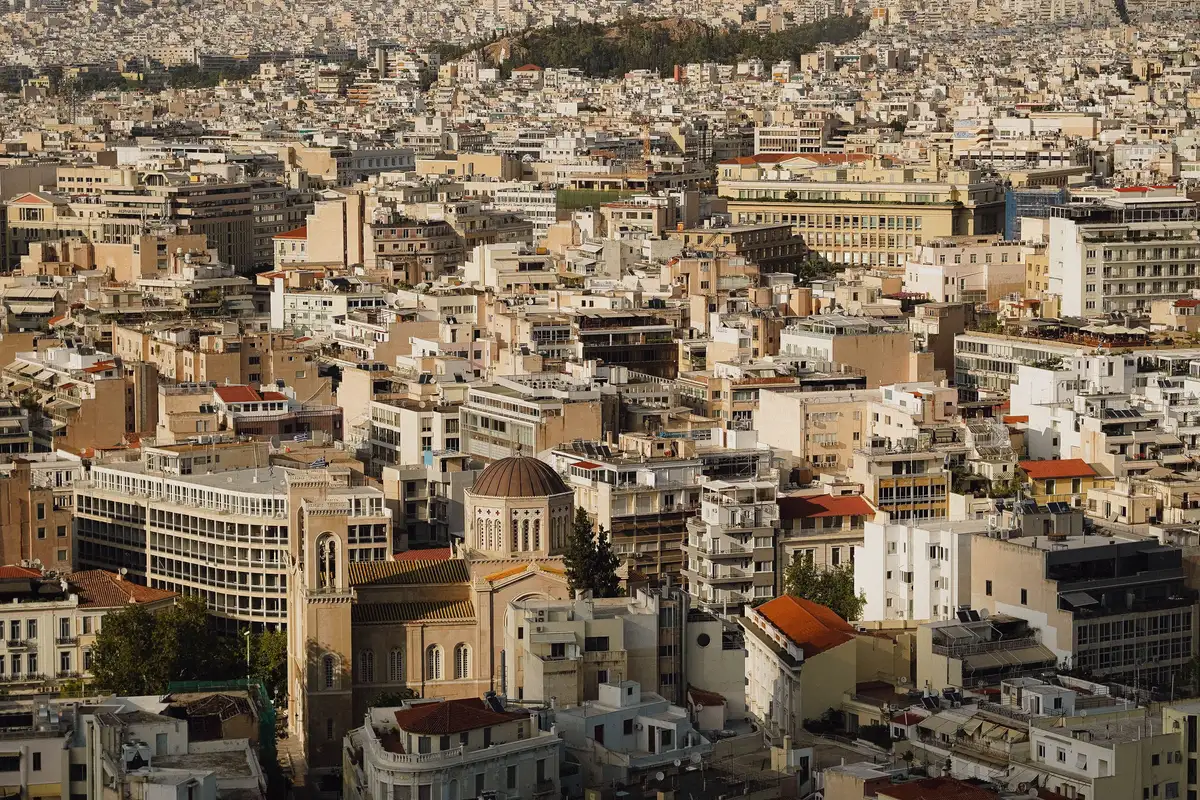
Athens sits in the southeast of mainland Greece, on the shores of the Saronic Gulf, and its metropolitan area is home to around 3.5 million people—nearly a third of the country’s population. The Greek spoken in Athens today has been the nation’s official language since independence in the 19th century, and “yassou” (γεια σου) will get you an informal “hi” at any shop or taverna.
How to get to Athens
Athens International Airport (Eleftherios Venizelos, code ATH) is about 35 km from the center and handles most flights arriving from Brazil, almost always with a connection in European cities like Lisbon, Madrid, Rome, or Istanbul.
From the airport to the center, the most reliable option is the Line 3 (blue) metro, which takes about 40 minutes to Syntagma station, the city’s beating heart. The airport ticket costs more than a regular ride—around €8 per person in 2026—but it spares you the unpredictable taxi traffic during rush hour. For official schedules and line status, check the STASY website, Athens’ metro operator.
Around town, the metro, tram, and bus system is integrated and covers the main tourist sights well. A single 90-minute ticket costs €1.20, a 24-hour pass €4.10, a five-day pass €8.20, and there’s also a three-day tourist ticket for €20 (2026 prices) that already includes the airport ride. If you’re sticking to the historic center—Acropolis, Plaka, Monastiraki, Syntagma—you can easily walk most of your itinerary and save the metro for the longer stretches.
Best time to visit and how long to stay
Avoid the peak of summer, between July and August: temperatures easily top 35°C, tour groups pack the Acropolis early in the morning, and accommodation prices climb. The so-called shoulder seasons—April, May, late September, and October—offer mild weather, shorter lines, and more affordable lodging, without sacrificing sunny days. In the low season (November to March), hotel and ticket prices tend to drop significantly, but some archaeological sites shorten their opening hours.
Two full days comfortably cover the Acropolis, the Acropolis Museum, and Plaka. With three days, you can add the Ancient Agora, a boat trip to the nearby islands (Aegina, Hydra, or Poros), or a day trip to Delphi. If you’re planning to tack on the Greek islands—Mykonos and Santorini are the most sought-after—budget at least 4 to 5 extra days.
What to see in Athens
The Acropolis and the Parthenon
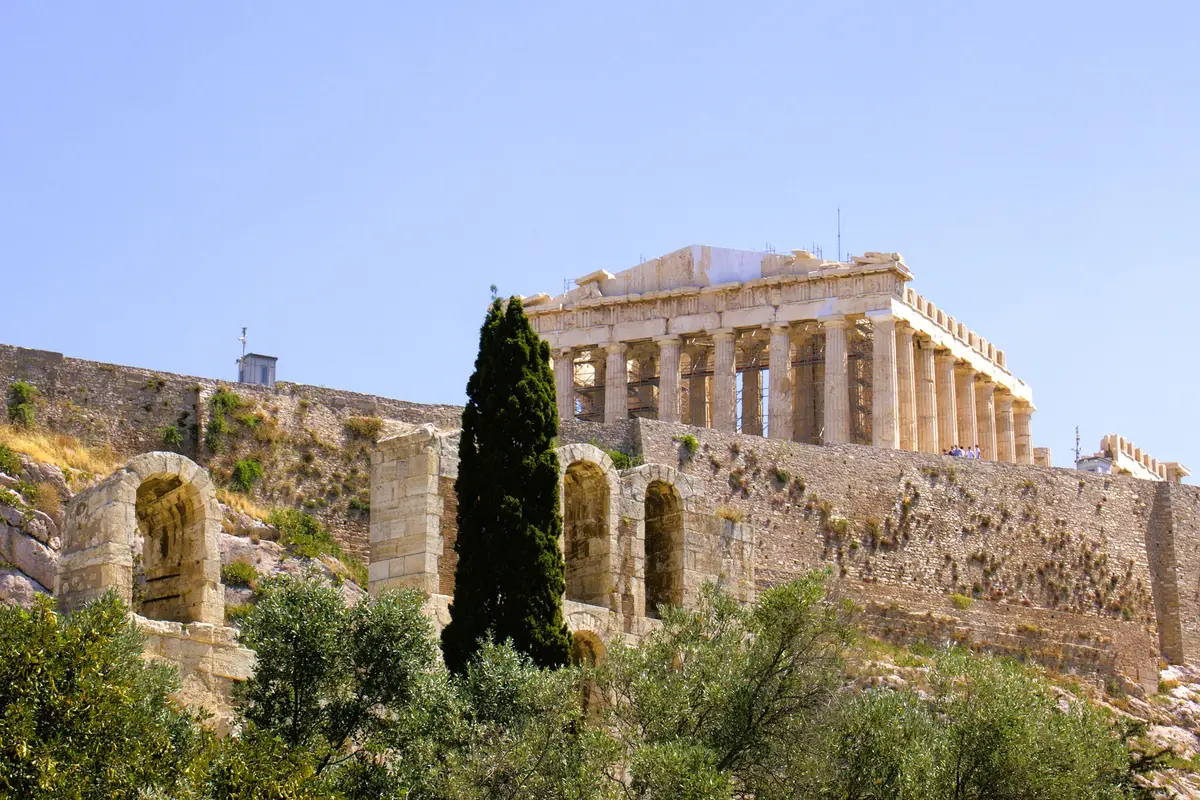
The Acropolis is the rocky hill that dominates the Athens skyline and houses the most famous temple complex of Ancient Greece, with the Parthenon as its centerpiece, along with the Erechtheion (with its famous caryatid columns), the Temple of Athena Nike, and the Theater of Dionysus at the base of the hill. A single ticket costs about €35 in the high season (April to October) and €25 the rest of the year, prices valid as of July 2026; visitors under 18 get in free with ID. Don’t buy your ticket on the spot—the standing line in the sun can stretch past an hour on peak days; booking online in advance is what really saves you time, not money.
The Acropolis Museum
At the foot of the hill, the museum houses original pieces removed from the site for preservation, including authentic caryatids and a glass floor that reveals archaeological excavations beneath the building. The combined ticket (Acropolis + Museum) runs between €36 and €38 in 2026, and a visit to the museum alone usually takes 1.5 to 2 hours. It’s worth booking late morning, when the museum is quieter than right at opening. For updated hours, check the official Acropolis Museum website.
The Plaka Neighborhood
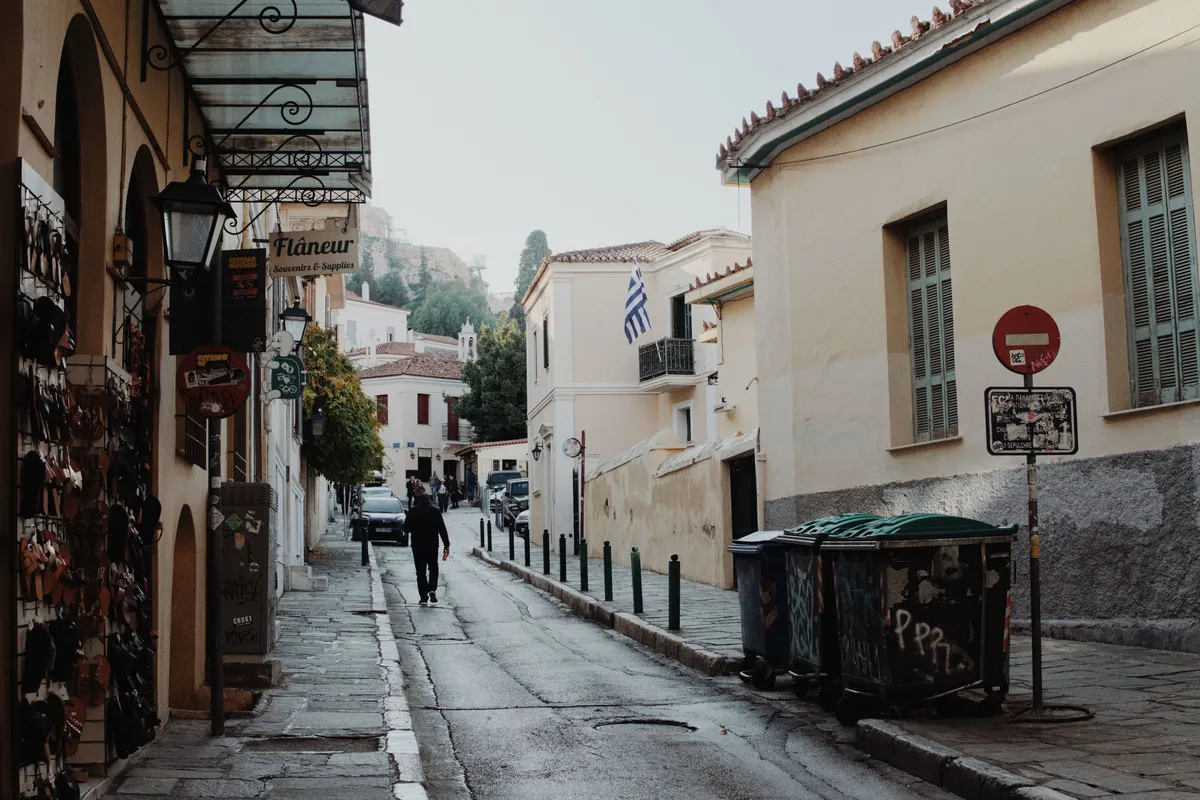
At the foot of the Acropolis on the opposite side from the museum, Plaka is Athens’ oldest neighborhood—narrow cobblestone streets, neoclassical houses, tavernas with sidewalk tables, and little shops selling ceramics and olive oil. It’s where the city unwinds: great for wandering without a set route in the late afternoon, stopping for a freddo coffee, and watching the sun dip below the rooftops.
The Ancient Agora
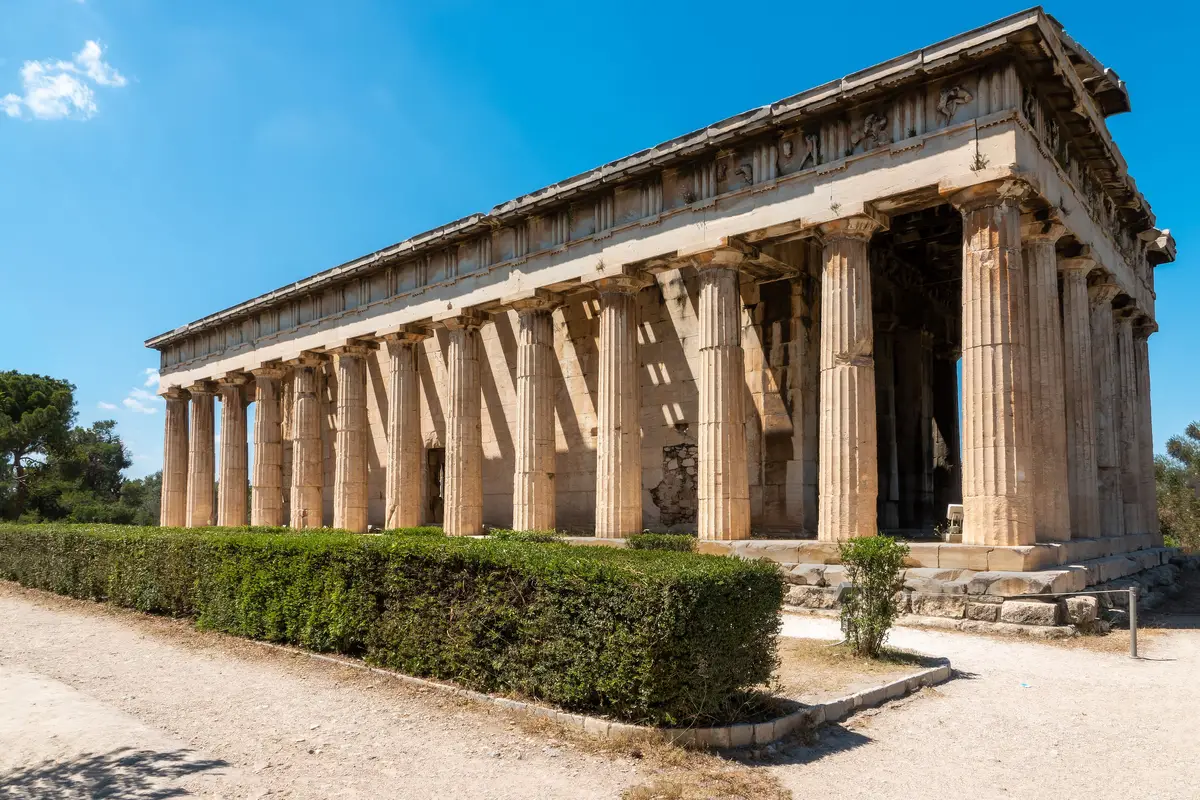
The Agora was the public square of classical Athens—a space for commerce, politics, and philosophy, where Socrates actually walked and debated. Today, columns remain, along with the remarkably well-preserved Temple of Hephaestus and the Agora Museum, housed in a reconstruction of the ancient Stoa of Attalos. Less crowded than the Acropolis, it’s a peaceful stop that takes between 40 minutes and an hour.
What to combine with your visit
One under-the-radar combo that pays off if you’re staying more than two days is the single ticket that grants access to the Acropolis plus five or six other archaeological sites around the city—including the Ancient Agora, the Roman Agora, and the Temple of Olympian Zeus—for about €30 in the high season, a price close to the Acropolis-only ticket. If you’d rather have historical context guided in Portuguese without organizing every leg yourself, you can book the combined Acropolis and museum ticket with a Portuguese-speaking guide, which skips the box office line and locks in your entry time.
If you have an extra day to spare, you can add a day trip to Delphi, home of the famous oracle of Ancient Greece, or a one-day cruise through the islands of the Saronic Gulf (Aegina, Hydra, and Poros), which are close enough for a round trip in a single day.
Where to Eat in Athens
Athenian cuisine revolves around olive oil, tomatoes, feta cheese, and fresh fish. It’s worth seeking out tavernas that are a bit further from the direct line of sight of the Acropolis — prices tend to drop by half just two or three blocks away from the most obvious tourist spots. A street souvlaki costs between €3 and €5, a full meal at a neighborhood taverna runs €12 to €18 per person, and an iced freddo espresso with a spinach pie (spanakopita) comes to about €5 to €7 (2026 prices). Factoring in three meals plus snacks throughout the day, the average daily food spend lands around €55 — higher in the tourist center, lower in neighborhoods like Koukaki or Pangrati.
Where to Stay in Athens
Plaka and Monastiraki put everything within walking distance — the Acropolis, the museum, nightlife — but they cost more and can get noisy at night. Koukaki, just south of the Acropolis, has become a favorite for pairing fairer prices and great restaurants with a still-walkable distance to the main sights. Syntagma, meanwhile, is practical if you’ll be relying heavily on the metro to get to the airport or other parts of the city.
Practical Tips and Costs
Brazilians don’t need a visa for stays of up to 90 days in Greece, just a passport valid for at least six months; starting in the last quarter of 2026, the ETIAS — a pre-travel electronic authorization — goes into effect, and it’s worth checking before you buy your ticket. The Brazilian Ministry of Foreign Affairs recommends travelers have at least €60 per day per person available. Adding up accommodation, food, transport, and tours, a mid-range travel profile runs between €40 and €65 per day just for day-to-day expenses (not counting lodging and airfare), while those seeking more comfort can go past €90 a day.
On currency: the euro is the official currency, and international credit and debit cards are widely accepted in Athens. Standard cards usually charge a higher IOF tax on conversions; digital accounts with commercial exchange rates tend to come out cheaper than exchanging cash at airport bureaus. Safety is another common concern: Athens’ historic center and tourist neighborhoods are considered safe for walking at night, with the same basic precautions you’d take in any European capital — keeping an eye on your belongings on busy streets and avoiding poorly lit shortcuts off the tourist trail.
Frequently Asked Questions
What language is spoken in Athens?
Modern Greek is the official language of the city and all of Greece. In tourist areas, restaurants, and hotels, English is widely spoken, but picking up a few basic phrases like “yassou” (hello) and “efcharistó” (thank you) goes a long way in daily life.
What’s worth visiting in Athens?
The highlights are the Acropolis with the Parthenon, the Acropolis Museum, the historic Plaka neighborhood, and the Ancient Agora. If you have more time, you can add the Temple of Olympian Zeus, the Monastiraki neighborhood, and a boat trip through the Saronic Gulf islands.
Is Greece an expensive country to travel to?
Compared to other Western European destinations, Greece tends to be more affordable, especially outside summer. A mid-range travel profile runs between €40 and €65 per day in Athens, not counting accommodation and airfare.
Is it safe to walk around Athens at night?
Yes, the tourist neighborhoods and the historic center are considered safe, with the same basic precautions recommended for any major European city, like keeping an eye on your personal belongings in crowded spots.
How much does a day in Athens cost?
The Brazilian Ministry of Foreign Affairs recommends having at least €60 per person per day available. In practice, spending on food, transport, and tours ranges from €40 to €90 a day, depending on the level of comfort you choose.
Conclusion
Athens delivers history in its rawest form without demanding a complicated itinerary: two or three well-organized days are enough to cover the Acropolis, the museum, Plaka, and the Ancient Agora without rushing. Book your tickets in advance, pick a shoulder season to dodge the extreme heat and the crowds, and set aside one free afternoon just to wander through Plaka at your own pace. To round out your trip through Europe, the Budapest itinerary, the stress-free Milan guide, or the 7-day Berlin itinerary here on Voyage Voyage can help you piece together the rest of your European adventure.