 Marcelo Oliveira
Santorini, Greece needs three to four nights to balance the caldera, volcanic beaches, and a boat trip without turning every sunset into a race. Choosing between Oia and Fira changes your budget, your travel time, and even the pace of your whole trip.
Hotels in Santorinifree cancellation options onlySee hotels ›Booking.com partner (advertising): we may earn a commission at no extra cost to you.
For a first visit, stay in Fira if you want buses and restaurants nearby; pick Oia if silence and that late-afternoon light are your top priorities. May, June, September, and early October strike the best balance between the sea, opening hours, and less pressure on hotels.
How to get to Santorini
Santorini receives both flights and ferries. By sea, there are connections from Piraeus, Rafina, and other islands; the fast ferries take about 4h30 to 5h, while conventional ones take 7 to 8 hours, according to the official Santorini portal.

When you arrive at the port of Athinios, leave some buffer time: the road to Fira is short on the map, but it runs on the ferry schedule. To fit the island into a larger route, this guide to Athens with the Acropolis and Plaka helps you plan the connection.
On the island, Fira acts as the bus terminal; the tourism board reports frequencies of 30 to 60 minutes in high season, with fares usually between €1.80 and €2.50 (July 2026).
When to go to Santorini
Santorini works best between May and October if you want boats and beaches, but July and August bring heat, crowds, and the most expensive room rates. In April and October, there are fewer services, but more room to breathe while you walk.
If your goal is to photograph Oia without the crowds, sleep in the village and head out early; arriving only in the late afternoon usually means traffic and packed viewpoints.
Winter doesn’t shut the island down, but it reduces direct flights, boat tours, and part of the hotel scene. Use it for Fira, museums, and wineries—not for promising yourself a beach itinerary.
What to do in Santorini
Start with the Fira–Imerovigli walk along the caldera, and pick just one big sea excursion. Akrotiri adds archaeology; Perissa and Kamari show off the dark sand; Oia delivers the classic whitewashed houses and the view.
A catamaran tour of the Santorini caldera gives you a whole new perspective of the island from the water and stops you from trying to cross the entire coast by car in a single day.
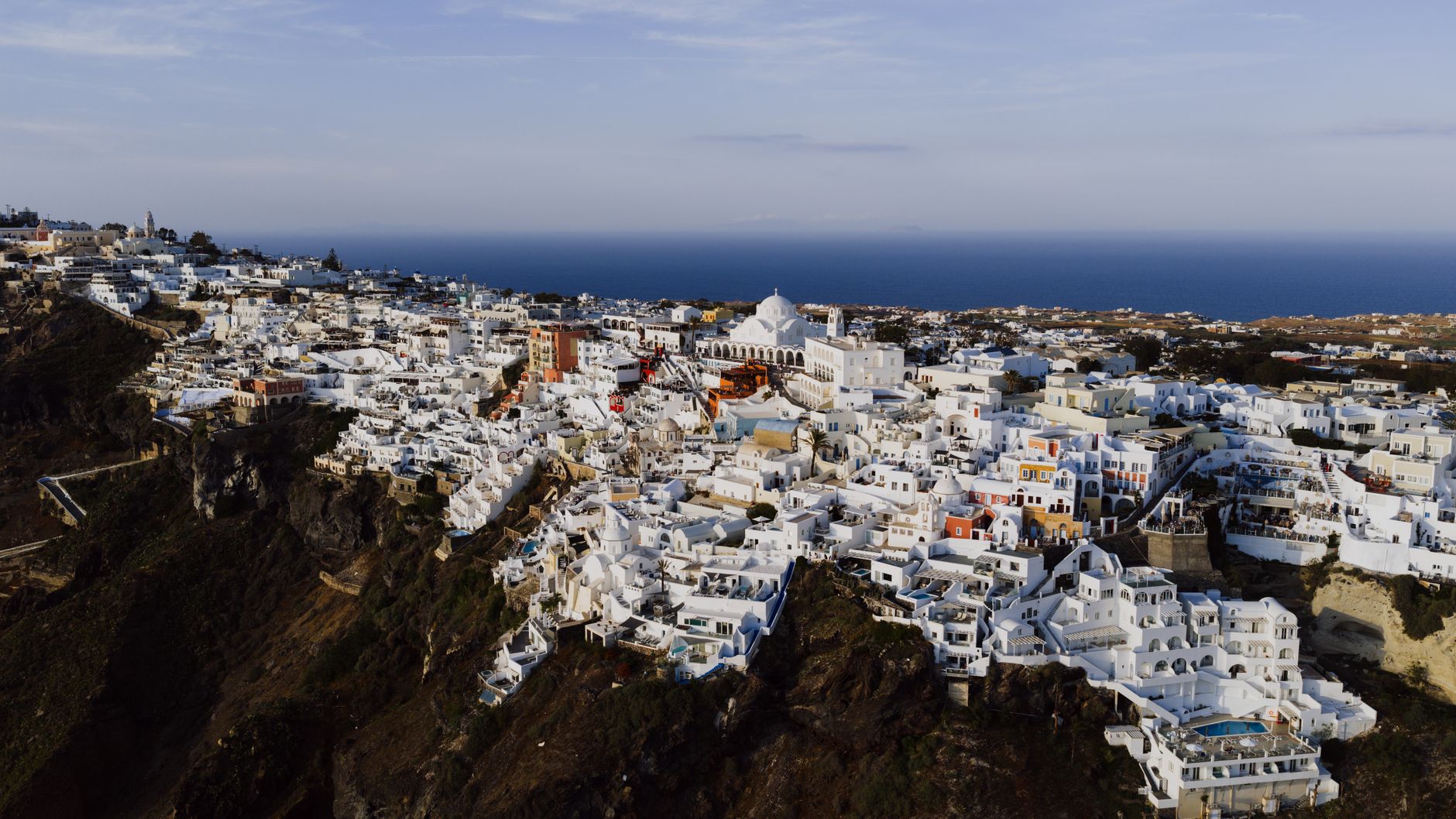
Leave two mornings free for neighborhoods and beaches. That way, if the wind cancels a boat, your whole plan doesn’t fall apart. Also check out ideas for the Italian coast and getting around if your trip continues through the Mediterranean.
The Archaeological Museum of Fira usually runs from 8:30 am to 3:30 pm or 8 pm between April and October 2026, with monthly variations and usually closed on Tuesdays; double-check on the museum’s website.
Avoid cramming Akrotiri, Oia, and a boat trip into one day. The distance isn’t huge, but bus schedules and parking will eat up all the time you thought you had.
Oia or Fira: where to stay
Oia delivers the classic scene and highly sought-after hotels; Fira is the functional base, with more bus options, markets, and dinner choices. Imerovigli is usually the middle ground for those who don’t mind walking and want the caldera view.
For a tighter budget, look at Karterados, Kamari, or Perissa and use the bus; for a honeymoon, choose the caldera knowing that stairs and luggage are part of the package.
Don’t book just for the pool photo: check the real distance to Fira, whether there’s a shuttle, and if the view is over the caldera or facing east.
Where to stay in Santorini
| Hotel | Rating | |
|---|---|---|
| Cycladic Suites & SpaFira · Agiou Athanasiou 8, Fira | 9,81.211 reviews | See prices |
| Orama Hotel & SpaFira | 9,31.217 reviews | See prices |
| Xaravgi Resort SuitesFira | 9,2127 reviews | See prices |
| Illusion SuitesFira | 9,7200 reviews | See prices |
| Santorini Kastelli ResortKamari · Main Street, Kamari | 9,6999 reviews | See prices |
| Santorini PalaceFira · Main Street, Fira | 9,41.356 reviews | See prices |
| Anthemis SuitesImerovigli | 9,8118 reviews | See prices |
| Porto Fira SuitesFira · On the Fira caldera | 9,6352 reviews | See prices |
Booking.com rating on 30/09/2026
How much Santorini costs
Santorini is one of the most expensive Greek islands in summer. In July 2026, the bill changes most depending on your hotel and transfers; compare nights in Oia, Fira, and the eastern beaches before you lock in your route.
Save money by keeping lunches simple, using the bus on direct routes, and booking just one well-chosen boat trip. Ferry, flight, and accommodation prices should be checked for your exact dates, as they vary with demand.

To avoid a shock, set aside a line in your budget for port and airport transfers: simultaneous ferry arrivals put pressure on taxis and shuttles.
Plan your schedule around geography, not your photo list. The caldera is on the west side; beaches like Kamari and Perissa are on the other side. Crossing the island in the middle of the day takes more time than it looks.
Only book the hot restaurants when that’s a real priority for your trip. For everything else, walking a little off the main Oia and Fira paths usually opens up simpler, less view-driven options.
Wheeled luggage doesn’t mix well with every staircase. Confirm whether your accommodation offers help with bags and if your transfer drops you at the door, especially for hotels hanging over the caldera.
Pack a light layer for the end of the day. Even in warm months, the wind on the island’s edge changes how it feels during a walk or on an open boat.
The sunset is a highlight, but it doesn’t have to rule every evening. In Oia, arrive early or pick a less obvious spot so you don’t end the day stuck in the exit crowd.
A car gives you freedom, but it demands attention to parking and alcohol. If you’re staying in Fira, buses and a punctual transfer might be more comfortable than driving every day.
 Partner · Civitatissee all activities in Santorini ›
Santorini Day Trip: Kamari, Oia, & Fira
Rating 9.2 · 19 reviews on Civitatis
- Santorini Caldera Catamaran Trip + LunchRating 9.2 · 226 reviews on Civitatisfrom€95per personSee ›
- Glass-Bottom Boat Tour of Santorini CalderaRating 8.1 · 39 reviews on Civitatisfrom€37per personSee ›
- Akrotiri, Red Beach & Oia Day TripRating 7.7 · 171 reviews on Civitatisfrom€51per personSee ›
- See ›Fira Free TourRating 8.7 · 369 reviews on Civitatis
Civitatis prices on 28/09/2026, from, per person. They may change. Want to compare? Activities in Santorini on GetYourGuide ›
Buy water and snacks before heading to a more remote beach. In the most touristy areas, convenience exists, but you pay for the location.
If your trip includes other Cyclades islands, buy your ferry legs after you’ve settled on hotels. The order of the islands should respect schedules, ports, and the sea, not just proximity on a map.
Use mornings for museums, ruins, and hikes. The afternoon is better for a break, a beach, or moving between spots without sacrificing the busiest part of the day.
At restaurants with a view, check if the outdoor table is guaranteed. A reservation might only secure a seat, not the balcony you see in the promo photos.
Travel insurance and a card with international coverage cut down on surprises. The island is set up for tourism, but a ferry delay or an extra hotel night weighs heavily on an already high budget.
For photos, prefer side streets, churches, and smaller viewpoints. That gives you a more real read of the island and keeps you from depending on one famous shot.
On windy days, confirm your boat on the morning of departure. Companies adjust routes for safety, and a different excursion can still be better than losing the whole day waiting.

Don’t treat Santorini like an island of vast distances, but don’t treat it like a theme park either. The charm lies in alternating villages, sea, and history with open space in your itinerary.
Couples should decide upfront whether the priority is the room, the view, or the location. Trying to get all three at the peak of summer usually blows the budget.
For families, the east side offers easier beach access. The caldera is beautiful, but it comes with stairs, unfenced pools, and narrow paths.
Check the cancellation policy before booking expensive experiences in advance. Wind, ferries, and route changes can require a buffer that a rigid fare won’t give you.
In the end, choose fewer spots and stay longer at each one. That decision improves your cost per day and lets you notice what shifts between the white morning light and the caldera at dusk.
When planning your morning, leave time to find the boarding point, not just for the journey itself. Ports, hotels, and stairway access all run on different rhythms, especially on busy days.
Pick one dinner with a view and let the rest be driven by the food and the location. That mix keeps every meal from carrying the weight of being the trip’s perfect moment.
If you’re relying on the bus, snap a photo of the updated schedules at the stop. Frequency changes with the season, and connections in Fira don’t work like a continuous urban network.
When comparing hotels, read recent reviews about noise and accessibility. A place close to the center can be convenient, but it can also get heavy foot traffic at night in the summer.
For supplies, grab sunscreen, water, and snacks in Fira or a larger village. On the beaches and viewpoints, price and selection follow how far you are from the markets.
The itinerary gets simpler when one main activity anchors each day: caldera, archaeology, beaches, or a boat trip. Anything extra comes after, if time and energy allow.
If you’re torn between one more island or one more night, choose the night. Santorini rewards a morning without packing up and a more relaxed exit to the next ferry.
Keep digital copies of your bookings and transfer contacts. At the port, cell signal and meeting instructions can be less clear than at the hotel.
With that buffer, the island stops being a string of postcards and starts fitting your pace, with choices that still work even when the weather or the schedule shifts.
On the way back, leave a comfortable margin before your ferry or flight. That simple habit keeps one last transfer from turning your goodbye to the island into a sprint.
 HotelAs soon as you have datesCompare neighbourhoods and guest ratings.See hotels ↑
- ActivitiesBefore you travelBook ahead the ones with limited spots.Civitatis ›
 More activitiesTo compareTickets, day trips and tours with flexible cancellation.GetYourGuide ›
Frequently Asked Questions
How many days should you spend in Santorini?
Santorini calls for three nights to see Fira, Oia, a beach, and the caldera without relying on tight scheduling. Four nights let you add Akrotiri or a boat trip with room for wind.
Oia or Fira?
Oia is better if you prioritize the scenery and don’t mind paying more. Fira is more practical for buses, meals, and getting around the island.
When should you visit Santorini?
May, June, September, and early October offer a solid mix of weather, running tours, and lighter crowds than July and August.
Is Santorini expensive?
Santorini can be pricey, especially for caldera-side stays in the summer. Sleeping outside Oia and booking ahead is the most direct way to cut the total.
Before you book, also check the Athens guide to plan your arrival from mainland Greece.
Conclusion
Santorini works when you pick one base and trim your list of sights. On Voyage Voyage, use the Mediterranean destination guides to map out the sequence before you buy the ferry ticket.
To compare destinations before booking, also read which Greek island to choose.