Mykonos, in Greece, is the Cyclades island best known for its pricey nightlife, buzzing beaches, and whitewashed houses with blue doors — but it’s also the island where your budget can spiral out of control faster than anywhere else in Greece, if you don’t know what you’re getting into.
The short version: Mykonos is worth it if you want parties and luxury beaches, but it really does cost: a hotel in July/August runs €300 to €600+ per night, and a sunbed at a buzzy beach club goes from €25 to €160 per day (May 2026). Outside high season, costs drop by up to 70%.
| Hotel (high season) | €300-600+/night (3-4 stars, Jul/Aug) — source: Mykonos 2026 cost guide |
|---|---|
| Hotel (low season) | €100-180/night (May, June, September), same source, Mar 2026 |
| Sunbed | €25 (back row) to €160/day (private cabana) — beach club guide, May 2026 |
| Ferry from Athens | From €53 (conventional, 4h40) or €87.70 (high-speed, 2h40) — Ferryhopper, Sep 2026 |
| Visa | Brazilians don’t need a traditional visa; starting in 2026, the ETIAS electronic authorization (€20, valid 3 years) — confirm the timeline on the official website |
| Where it is | Cyclades island, Aegean Sea, Greece |
How to get to Mykonos: flight or ferry
The fastest way to get there is by plane, with direct flights from Athens in about 40 minutes, or seasonal direct flights from other European capitals in summer. The most popular alternative for those already in Greece is the ferry from Piraeus (Athens’ port): the conventional one takes about 4h40 and costs from €53, while the high-speed one makes the crossing in 2h40 from €87.70 (Ferryhopper, Sep 2026 — see the fact box above).
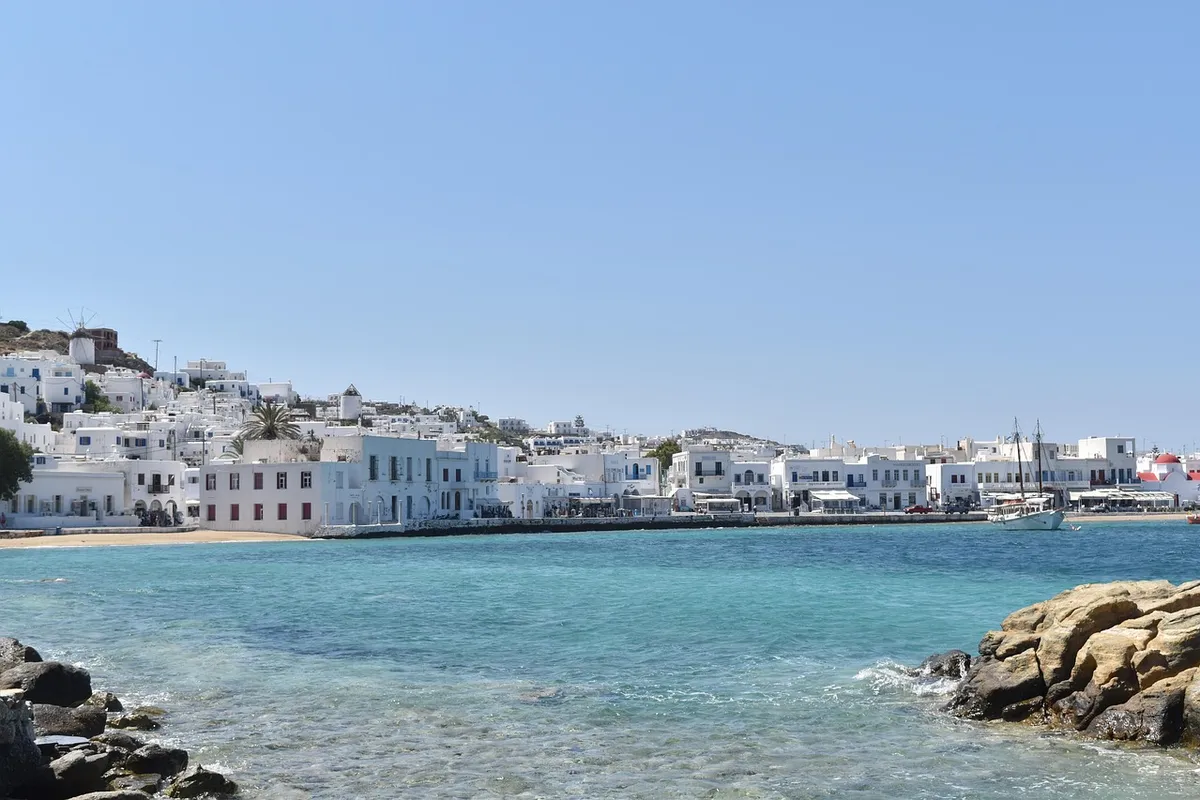
If you’re passing through another Greek island like Santorini, there’s also a direct ferry between the two — it’s worth booking ahead in July and August, when the fastest routes sell out first.
Best time to visit Mykonos
High season (July and August) brings the most intense nightlife, beach clubs at full capacity, and hotel prices at their peak. Those looking for peace and quiet with fewer crowds and less partying tend to prefer May, June, or September, when the weather is still great for the beach but lodging prices drop by 60% to 80% compared to peak season (Mar 2026, see the fact box above).
Outside the May-to-September window, much of the island’s tourist infrastructure — beach clubs, beach restaurants, some hotels — simply shuts down for the European low season. Confirm what’s open before planning a winter trip.
What are the best beaches in Mykonos
Mykonos has beaches with very different vibes: Paradise Beach and Super Paradise are the ones most associated with daytime partying, with loud music and lively beach clubs from the afternoon on; Psarou is the chic beach, near buzzy restaurants like Nammos, with a wealthier crowd and higher prices; Ornos is calmer and more family-oriented, with gentle waters and simple infrastructure of umbrellas and fish restaurants.
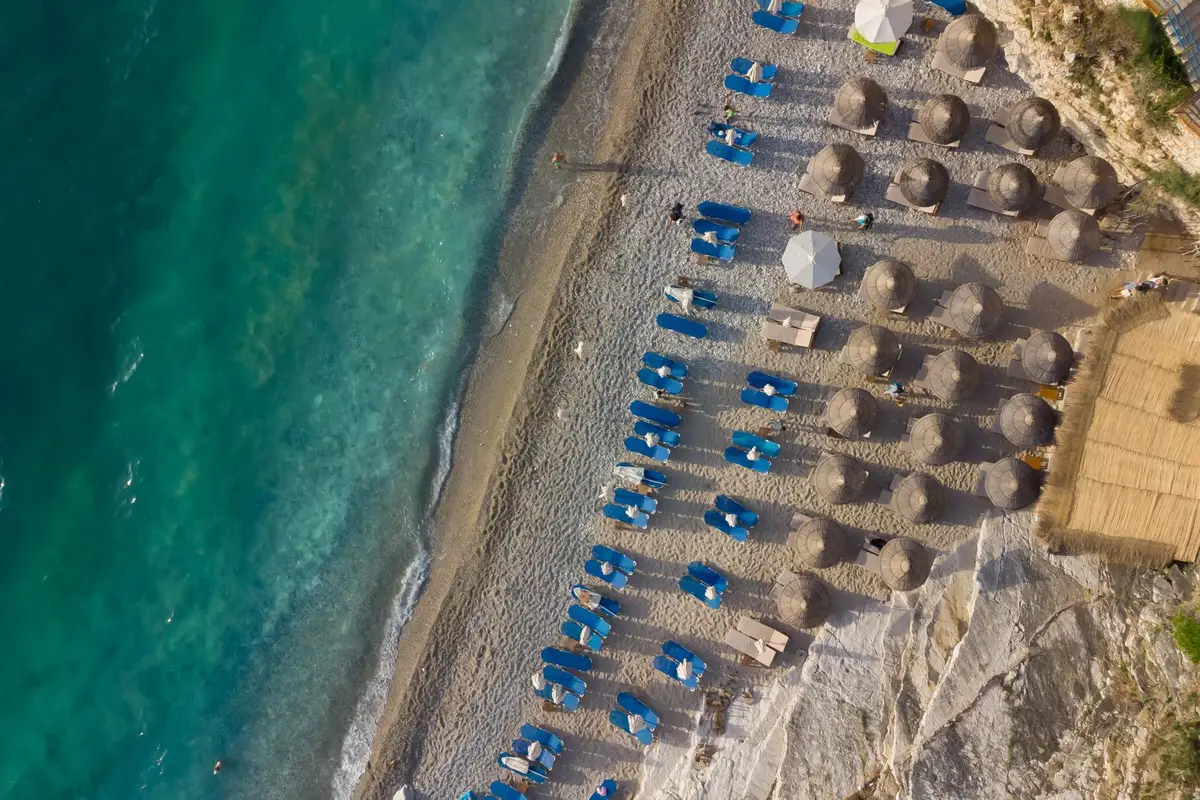
For those who want to visit several beaches on the south side of the island in a single trip without worrying about transportation, there’s the option of a boat tour of Mykonos’ southern beaches, which passes near Paradise, Super Paradise, and other coves only reachable by water or trail.
What a trip to Mykonos really costs
The biggest budget shock in Mykonos isn’t the hotel — it’s the beach. In July and August 2026, 3- and 4-star hotels cost between €300 and €600+ per night, and a day’s sunbed at a famous beach club adds another hefty chunk: €25 in the back row at Super Paradise Beach Club, between €40 and €80 at Tropicana (Paradise Beach), from €110 plus about €100 minimum spend per person at Nammos (Psarou), and up to €160 for a private cabana at Scorpios (data from May 2026, greektriplanner.me).
| Item | High season | Low season |
|---|---|---|
| 3-4 star hotel/night | €300-600+ (Mar 2026) | €100-180 (Mar 2026) |
| Sunbed/day | €25-160 (May 2026) | many beach clubs closed |
Prices in euros — confirm before your trip, beach club prices change by season.
Adding up lodging, one sunbed per day at a mid-range beach club, and meals, the real cost of a day in Mykonos in high season comes to between €150 and €400 per person (May/Mar 2026) — well above the average for other, less hyped Greek islands.
Where the parties are and what a night out costs
Mykonos nightlife splits into two phases: daytime beach parties at the beach clubs of Paradise and Super Paradise, and the nightlife scene in Mykonos Town (Chora), concentrated around the area known as Little Venice and the cocktail bars nearby. The minimum spend at buzzy beach clubs usually already includes part of the sunbed price, as in the case of Nammos mentioned above.
If you don’t want to spend on a beach club, you can enjoy the public beach at any of them for free, bringing your own towel and chair, and save your party budget for one night instead of repeating the whole routine every day.
Is Mykonos worth it, or just overpriced hype?
It’s worth it for anyone specifically looking for parties, upscale beaches, and an intense social scene — that’s exactly what the island has been shaped around for the past few decades. If you’re after peace and quiet, lower prices, and more “authentic” Greek islands, you’ll likely be disappointed, because a good chunk of the island’s infrastructure (buzzing restaurants, beach clubs, much of the hotel scene) was built for people paying for a premium experience, not for budget travelers.
The good news is you can find a balance: stick to public beaches without a beach club, eat away from Chora’s most touristy streets, and visit outside July and August to cut costs significantly — without losing what makes Mykonos Mykonos, namely the scenery and the ambient party vibe, even if you never splurge on a beach cabana.
How many days in Mykonos is enough?
2 to 3 days are enough to explore Chora, hit 2-3 different beaches, and enjoy at least one big night out, without the rushed pace of a day trip. Anyone adding Mykonos to an itinerary with another Greek island — Santorini is the most common combo — usually books that same 2-3 day window before moving on.
Tourist traps and what nobody tells you
- Minimum spend at luxury beach clubs: that “free” sun lounger at some beach clubs in Psarou actually comes with a minimum food and drink spend per person that can top €100 (May 2026) — ask about the policy before you sit down.
- Trap restaurants on touristy streets: cases like DK Oyster in Chora have earned a public reputation for charging more than expected without making prices clear before you order — confirm menu prices before ordering seafood by weight.
- Public beaches exist, but they get crowded: even at beaches with a beach club, the public stretch of sand is free by law — arrive early if you don’t want to pay for a lounger, because free space is limited and highly contested.
- Fast ferries sell out first: in July and August, fast ferry tickets (2h40) disappear before conventional ones — book at least a few weeks ahead if your dates are fixed.
- ETIAS starting in 2026: even without needing a traditional visa, Brazilian travelers should confirm the new ETIAS electronic authorization requirement before boarding, since the implementation timeline can change.
Where to stay in Mykonos
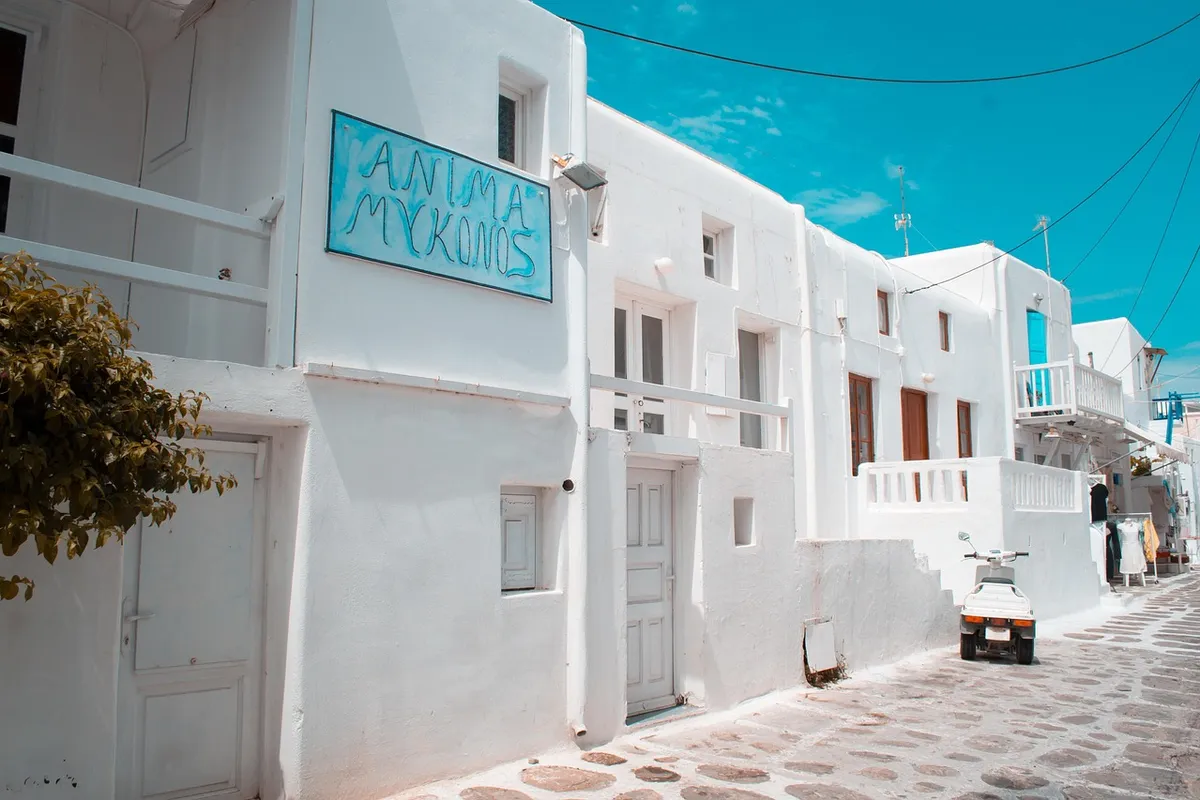
Staying in Chora (Mykonos Town) puts you steps from the bars and restaurants, but it’s the priciest and noisiest area. Ornos and Platys Gialos are quieter, close to family-friendly beaches, with good bus or taxi access to the center. If daytime beach club life is your priority, consider staying near Paraga or Elia, closer to the buzzy southern beaches.
Practical tips
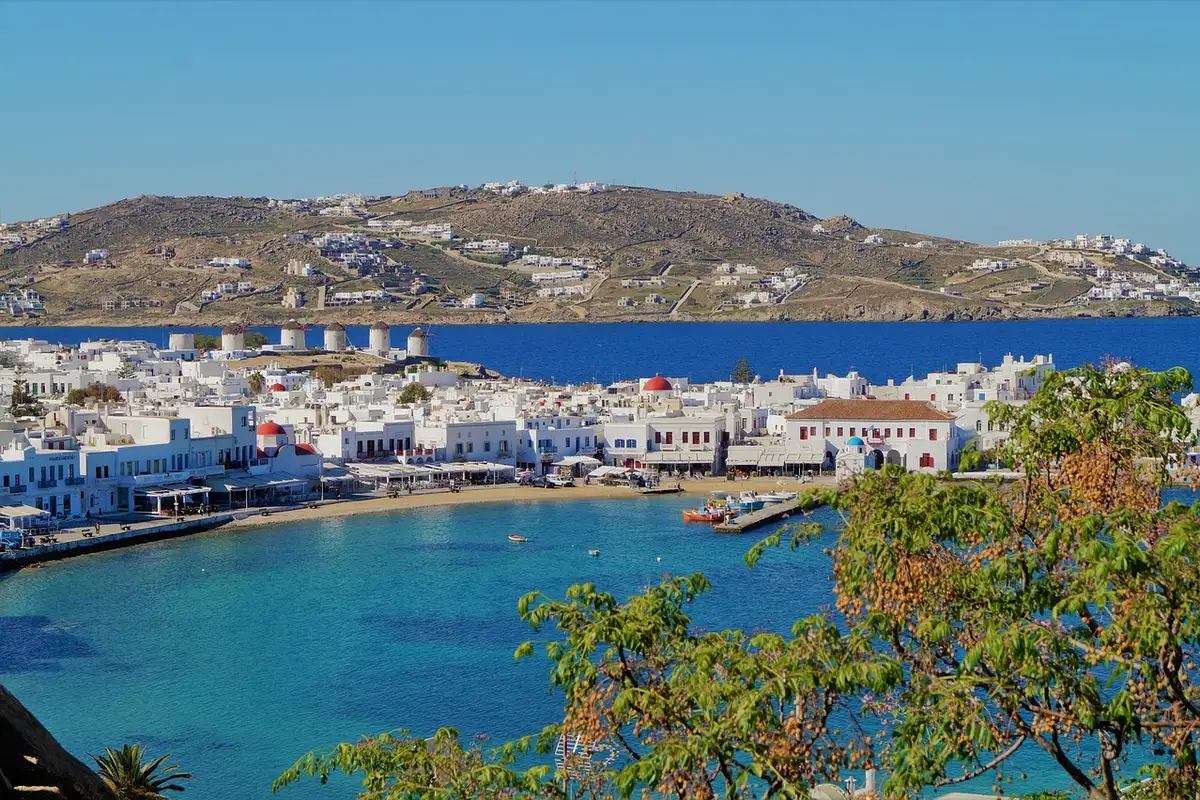
Bring extra cash beyond what you planned — in Mykonos it’s easy to spend more than expected between one more drink and a last-minute sun lounger. Book your hotel and ferry in advance if your trip falls in July or August, since everything sells out fast. To round out your Greek island itinerary, it’s also worth visiting the Mykonos windmills, the island’s free postcard view, and checking out the guide to Greek islands: which one to choose to decide whether to pair Mykonos with Santorini, Paros, or another Cyclades island.
Frequently asked questions
Do Brazilians need a visa to visit Mykonos?
Brazilians don’t need a traditional visa to enter Greece for tourist stays of up to 90 days within the Schengen Area. Starting in 2026, the ETIAS electronic authorization will be required, costing €20, valid for up to 3 years, and it doesn’t replace the 90-day limit — confirm the exact timeline on the official website before you travel.
Is Mykonos good for people who don’t want to party?
Mykonos still works for those who aren’t into partying, especially outside July and August or by staying in areas like Ornos: you can enjoy the beaches, the food, and Chora’s whitewashed houses without setting foot in a buzzy beach club. But the island’s fame and much of its tourist infrastructure revolve around nightlife.
Is it worth booking a sun lounger in advance?
At in-demand beach clubs like Nammos or Scorpios, yes — the best rows (front row, cabanas) sell out fast in high season. At simpler beaches like Ornos, you can usually just show up and rent one on the spot without any trouble.
Mykonos or Santorini: which should you visit first?
It depends on your travel style: Mykonos delivers parties, buzzy beaches, and nightlife; Santorini delivers Greece’s most famous sunset, villages that put you straight into “relax” mode, and outings like the Santorini Caldera boat tour. Many travelers combine both in a single trip by ferry, so the order matters less than booking 2-3 days for each.
Conclusion
Mykonos delivers exactly what it promises — parties, chic beaches, and postcard-worthy scenery — as long as your budget is calculated using real accommodation and beach club prices, not just the flight. Pick the right season for your travel style and the rest falls into place. For more Greece itineraries, Voyage Voyage has other practical guides like this one.