Berlin works best when you stop treating the city like a checklist of monuments and start reading it in layers: the Prussian capital, the showcase of Nazism, the city split by the Cold War, and the cultural laboratory that emerged after 1989. In a 7-day itinerary, you can see the Brandenburg Gate, the Reichstag, the East Side Gallery, and Museum Island without rushing, but the real payoff comes when you mix these postcards with neighborhoods, parks, markets, and urban voids that explain why Berlin still feels so current.
If you have 7 days in Berlin, the best itinerary isn’t the one that stacks museums, but the one that alternates heavy history, creative neighborhoods, and outdoor breathers. That way, you understand the city without turning your trip into a marathon of subway rides, lines, and exhaustion.
Getting there and finding your bearings
The city’s main gateway is Berlin Brandenburg Airport (BER), connected to the center by public transit and regional trains. In practice, that means there’s no need to rush for a taxi upon arrival if you’re staying in Mitte, Friedrichshain, or Kreuzberg. Berlin also rewards explorers who like to go by axis: the historic center is compact, while the most interesting neighborhoods spread out in layers that are well connected by U-Bahn, S-Bahn, tram, and bike.
For your first moves around town, the Berlin WelcomeCard usually makes sense because it covers public transit and offers discounts at many attractions. If your travel style is more contemplative, the ideal approach is to set up bases by zone and block out your days: one for the political center, another for the Wall, another for museums, another for neighborhood Berlin. That separation avoids the city’s most common mistake—zigzagging between extremes just to check famous names off the map.
Best time to visit and how many days make sense
Seven days work really well in Berlin because the city shifts its tone with the season and the neighborhood. May, June, and September usually deliver the most pleasant balance for walking a lot without excessive heat or harsh cold. In summer, the city moves outdoors: canals, biergartens, parks, lakes, rooftops, and open-air cinema. Berlin’s official tourism site highlights the long nights, bike rides, and life by the water as a strong part of the experience during this season.
In winter, Berlin turns more introspective, which pairs well with memorials, museums, and long coffee breaks, but it demands a different kind of energy. If your question is “what’s the best time to visit Berlin?”, the most practical answer is: late spring, early summer, and early fall. As for “what’s the coldest month?”, that usually points to January, when the outdoor itinerary weighs heavier.
7-day Berlin itinerary
This itinerary is designed for travelers who want to see essential Berlin without repeating the same kind of experience every day. The idea is to alternate landmarks, historical context, art, nature, and the city’s current pulse.
Day 1: Brandenburg Gate, Reichstag, and the political center
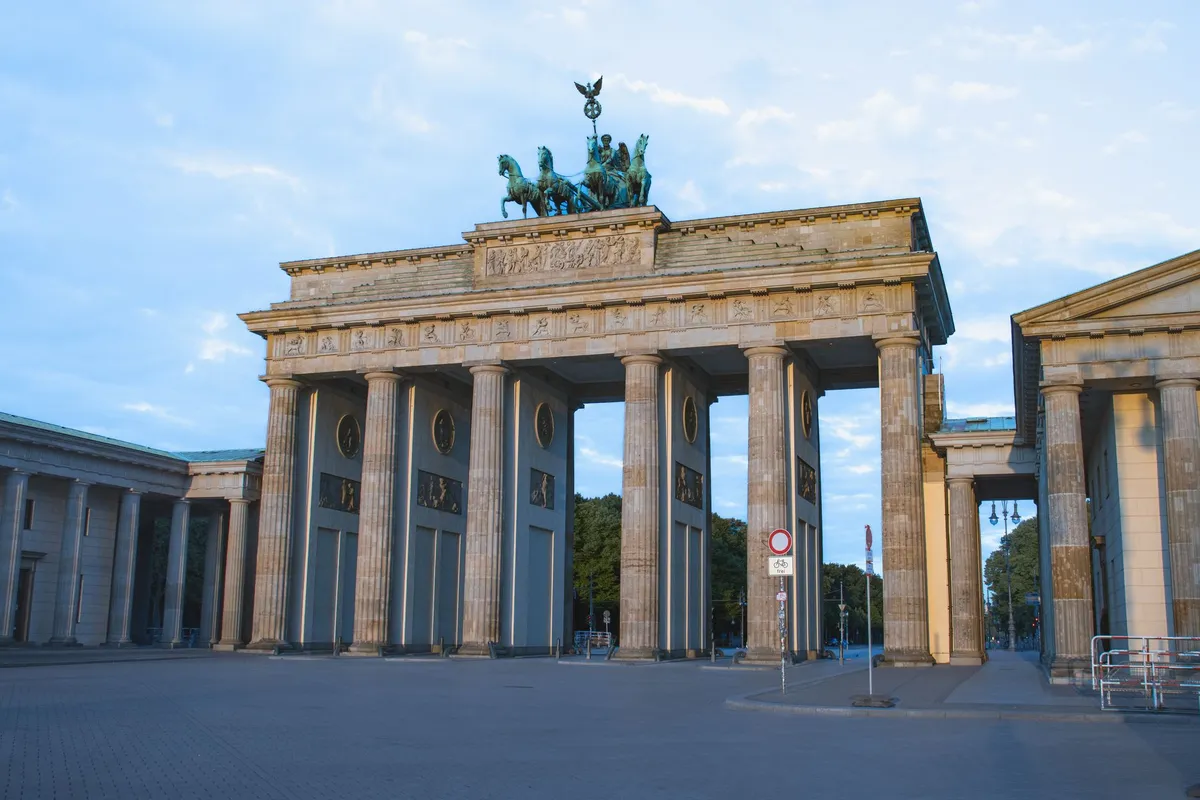
Start with what seems obvious, but do it the right way. The Brandenburg Gate is more than a pretty photo: it encapsulates the passage from Prussia to a unified Germany and, later, the city divided by the Cold War. Arrive early to see Pariser Platz still breathing slowly, walk over to the Holocaust Memorial, and save the Reichstag for late morning or early afternoon.
The Reichstag deserves an advance reservation, even though entry is free. The Bundestag officially states that the dome and rooftop terrace require prior registration, entry is free, and the last access is usually at 9:45 PM. This is one of those rare places where the view isn’t just beautiful: it helps you understand how German democracy wanted to become visible after the 20th century.
If you want to contextualize this axis without relying on scattered plaques, it’s worth booking the free walking tour of Berlin, which is usually a great way to connect the Brandenburg Gate, Unter den Linden, and the city’s history on day one.
Day 2: Museum Island without the rush, with focus
Museum Island wasn’t built to be conquered like a checklist. Choose two museums with intention, not five out of anxiety. The complex is a UNESCO World Heritage Site, and 2025 marked the bicentennial of the island’s first museum, a celebration that continues to drive special programming according to Berlin’s official tourism board. In 2026, the practical alert remains: the Pergamon Museum still has areas closed for renovation, so it’s best to check the official Museum Island guide beforehand to see what’s open and decide whether your day will lean more toward archaeology, painting, or Egypt.
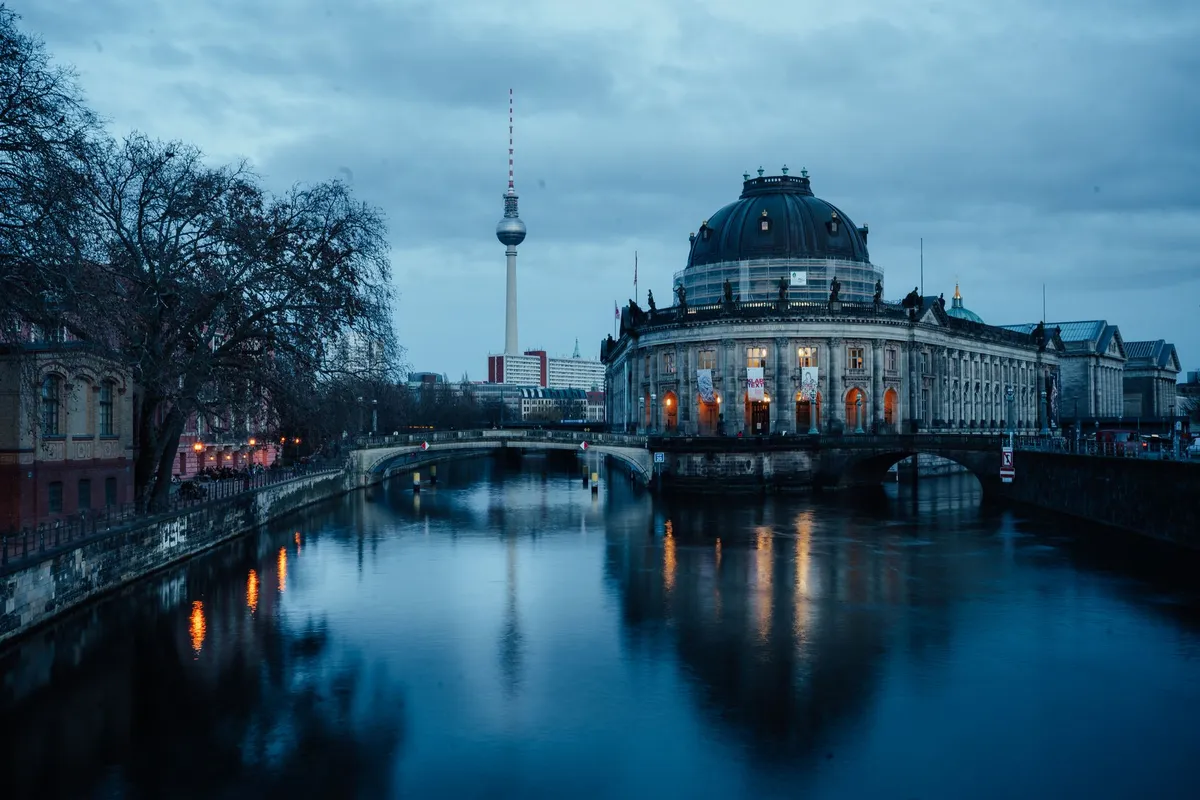
The vibe here is different: silence, monumental facades, long corridors, staircases, display cases, and pieces that seem to have crossed empires to reach you. If you like itineraries with breathing room, close out the afternoon by crossing the Monbijoubrücke or sitting by the water to watch the city slow down. It’s an excellent counterpoint to the next day, which dives into the Wall and divided Berlin.
If you want to keep the historical thread of your trip going, it’s worth pairing this with the article on the history of the Wall, museums, and contemporary culture in Berlin, which deepens the backdrop this itinerary uses as its guiding thread.
Day 3: East Side Gallery, Friedrichshain, and the city after 1989
Now you step into the Berlin that speaks most to the present. The East Side Gallery was a stretch of the Wall and is now presented by the official tourism board as the world’s largest open-air gallery. It spans 1.3 kilometers of art and memory, with 1,316 meters of the longest continuous remaining stretch of the Wall still standing. Go early or late in the afternoon if you want fewer people between you and the murals.

From there, instead of heading straight to another memorial, keep the day going in Friedrichshain: cafés, little shops, bars, and a certain vibe of a city that repurposed its scars without over-polishing them. This is the best day to notice how Berlin is known not just for its history, but also for its ability to turn ruin, emptiness, and improvisation into urban language.
If you want to go deeper into the Wall topic with someone providing context on escapes, borders, and the almost invisible marks on the city’s ground, another great option is booking the Berlin Wall and Cold War free tour, which fits perfectly into this third day.
Day 4: Kreuzberg, Neukölln, and Berlin’s current life
After three intense days of landmarks, you gain a lot by making room for the city as it is today. Kreuzberg and Neukölln explain Berlin’s lively, migrant, creative, and sometimes rough-around-the-edges side. This is where the questions that almost never show up in a traditional itinerary—but that people actually ask—come in: what’s life like in Berlin, what do Germans think of Brazilians, why does the city feel less formal than Munich or Vienna? The answer shows up more on the street than in any museum.
Berlin mixes Germans, Turks, Arabs, Europeans from everywhere, students, artists, tech folks, and a huge foreign population that softens the initial culture shock quite a bit. That doesn’t mean there’s no bureaucracy—it just means a more hybrid urban life. Walk along Oranienstrasse, check out the street art without turning everything into a wall safari, and leave time for a slow coffee or a market lunch. This is also a good day to notice what the city has that feels most Brazilian in a social sense: sidewalk tables, packed parks, long conversations, nights that start late.
Day 5: Charlottenburg, Tiergarten, and elegant Berlin
Day five is there to break the idea that Berlin is only political concrete and creative warehouses. Charlottenburg Palace shows the city’s Prussian, aristocratic layer, while the Tiergarten brings back green, silence, and scale. This contrast helps explain why so many people find Berlin a strange capital: it never delivers a single identity for very long.
If the sky is clear, take a slow walk through the park. In summer, the official tourism push reinforces how the city spreads out through gardens, lakes, canals, and biergartens—and that’s exactly why this day shouldn’t be underestimated. Berlin tires you less when you accept that seeing everything isn’t the goal. The goal is letting the city form a coherent picture in your memory.
Day 6: Tempelhofer Feld and the creativity of empty spaces
This is the most off-the-beaten-path day of the itinerary, and that’s precisely why it usually ends up among the favorites for people who like coming back with something beyond the obvious to tell. Tempelhofer Feld occupies the area of a former airport and today works as one of Europe’s most fascinating urban voids. Instead of becoming condos or an over-domesticated park, the area stayed huge, open, windy, and claimed by the public in the most Berlin way possible: running, biking, skating, picnicking, grilling, and watching the sunset.
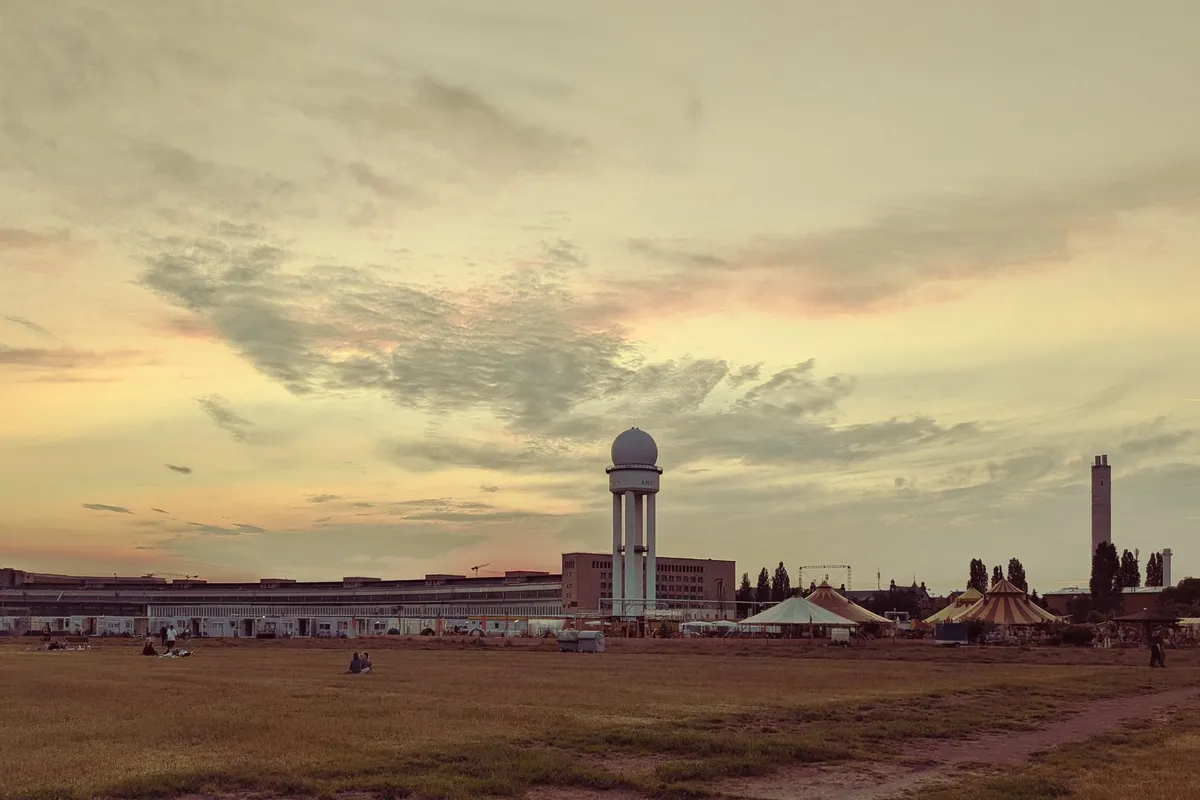
If you want a single place to understand today’s Berlin, I’d bet on this one: a former airport turned into a radically free public space. It’s also the kind of place that indirectly answers the question “how do you say hi in German?” because the most Berlin version of the trip might be less “Guten Tag” and more an informal park hangout with beer and bikes.
Day 7: market, smaller memorial, or a short day trip
On the last day, choose how you want to close the story. If you feel you still need more historical weight, head to the Berlin Wall Memorial on Bernauer Strasse or the Topography of Terror. If your body is asking for lightness, make it a flea market Sunday, a long brunch, and a walk with no destination. If you want an extra beyond the obvious, fit in Potsdam without turning the day into a palace marathon.
This ending matters because Berlin rarely delivers its best memory at the “most beautiful attraction in Germany”—it comes from the sum of contradictions. The city might not be the most photogenic in the country in a classic sense, but few places offer such historical density alongside such a mutating urban life.
How to pair the classics without falling into the obvious
The itinerary above already includes Brandenburg Gate, the Reichstag, the East Side Gallery, and Museum Island, but the difference lies in how you stitch these points together. Instead of seeing the Reichstag and rushing into compulsive museum hopping, you let the dome converse with the memory of Nazism and reunification. Instead of treating the East Side Gallery as an isolated photo op, you stretch the day into Friedrichshain. Instead of using all your free time on more indoor attractions, you make room for Tempelhof and the Tiergarten.
If you want a useful, practical complement, the article on how to plan your trip to Berlin helps with logistics, transport, and neighborhoods, while this itinerary assumes you want a more sensory, less school-like city.
Where to eat between currywurst, markets, and outdoor tables
You don’t need to turn Berlin’s food scene into a gourmet pilgrimage. The city delivers beautifully when you alternate simple eats, migrant influences, and the occasional reward-worthy dinner. Currywurst is still a street classic, but the Berlin döner might say more about the city today. Markets like Markthalle Neun work great for sampling different things without locking your itinerary into a single reservation.
In summer, the street becomes a dining room. Outdoor beer gardens, sidewalk tables, and restaurants near the water are a real part of the experience, not an extra. If you like combining sightseeing with meals, this is the kind of city where a late lunch and sunset in the same area make way more sense than crossing town for a “famous” restaurant.
Where to stay without sabotaging your logistics
Mitte is the most practical base for a first visit, especially on this 7-day itinerary, because it shortens access to the political center, Museum Island, and transport connections. Friedrichshain and Kreuzberg are more interesting choices for those who want to head out on foot at night, see bars, art, and a less rigid local life. Prenzlauer Berg works for those who prefer a more residential pace and quiet cafés.
The most expensive mistake is picking a seemingly cheap hotel far from the transport axis and then paying for it in time, fatigue, and line changes. Berlin is big enough to punish bad locations, but well-connected enough to reward those who think about their base beforehand.
Practical tips to make the trip count
Brazilians usually travel to Germany as tourists without a short-stay visa, but immigration rules can change and should be confirmed close to your travel date. Cost-wise, Berlin tends to be friendlier than Paris or London, but seven days call for keeping an eye on accommodation, museums, and nights out. The question “how much does 7 days in Germany cost?” varies a lot, but Berlin lets you save considerably if you mix free attractions, public transport, and simple meals.
On the topic of work and local life, Germany’s minimum wage rose to 13.90 euros per hour on January 1, 2026. That doesn’t turn the city into a cheap place to live—rent remains a sensitive issue—but it helps put the cost-of-living conversation in context. For travelers, the practical takeaway is different: Berlin can still be intense without demanding the same daily spending level as pricier Western European capitals.
What can’t you miss in Berlin? Seeing the Brandenburg Gate, booking a visit to the Reichstag, walking the East Side Gallery, and saving at least one late afternoon for a less monumental side of Berlin, like Tempelhof or Kreuzberg. And that’s worth more than cramming your itinerary with names you’ll barely remember later.
Frequently Asked Questions
What’s the best time to visit Berlin?
May, June, and September tend to be the most balanced months for doing a lot of walking, enjoying longer days, and soaking up the city without the harsh winter cold or the heaviest summer crowds.
What’s the coldest month in Berlin?
January is usually the coldest time of year. It doesn’t have to ruin your trip, but it does change the experience of parks, long walks, and outdoor sightseeing quite a bit.
What can’t I miss in Berlin?
Booking the Reichstag visit, seeing the Brandenburg Gate, walking the East Side Gallery, and spending time in at least one lively neighborhood like Kreuzberg or Friedrichshain. It’s those contrasts that really make the city shine.
What’s life like in Berlin?
More laid-back and diverse than many people expect when they think of Germany. Berlin blends heavy history, a vibrant cultural scene, multicultural neighborhoods, massive parks, and an urban rhythm that values streets, bikes, and outdoor living whenever the weather cooperates.
How do you say “hi” in German?
The most neutral option is “Hallo.” In more formal settings, “Guten Tag” still works perfectly well.
Conclusion
A 7-day Berlin itinerary pays off when you accept that the city doesn’t want to be consumed all at once. It wants to be read slowly: in the concrete of the Wall, the glass of the Reichstag, the solemnity of the museums, the wind at Tempelhof, and the neighborhood life that keeps going without asking history for permission.
If you love cities that hand you ready-made answers, Berlin might frustrate you. If you love places that keep asking questions, this is one of Europe’s best destinations. Explore more itineraries here on Voyage Voyage to pair Berlin with more stops across Germany and the continent.