 Marcelo Oliveira
The Brandenburg Gate is Berlin’s most recognizable postcard image — and one of the few monuments in the world that has survived two world wars, a divided city, and a reunification, still standing, open 24 hours a day, and free to visit. It’s also the perfect starting point for any itinerary through the German capital.
Hotels in Berlinfree cancellation options onlySee hotels ›Booking.com partner (advertising): we may earn a commission at no extra cost to you.
The Brandenburg Gate stands on Pariser Platz in the Mitte district, with free entry and 24-hour access. The Brandenburger Tor U-Bahn and S-Bahn station (lines U5, S1, S2, S25) is less than 100 meters away. From the gate, you can walk to the Reichstag (5 min), the Holocaust Memorial (3 min), and the Tiergarten.
| Price | Free — open-air monument, open 24h |
|---|---|
| Where it is | Pariser Platz, Mitte, 10117 Berlin |
| How to get there | U-Bahn/S-Bahn: Brandenburger Tor station (U5, S1, S2, S25) | Bus: line 100 |
| Visit duration | 30–45 minutes (the gate alone); 2–3 hours with the surroundings |
| Best time | Before 9am (empty) or at dusk (illumination) |
| Inaugurated | 1791, under King Frederick William II of Prussia |
What is the Brandenburg Gate and why is it worth visiting?
The Brandenburg Gate is a neoclassical triumphal arch 26 meters tall, inaugurated in 1791 at the western entrance to Berlin. At the top, the Quadriga — a chariot pulled by four horses with the goddess of Victory — is the most photographed sculpture in Germany. During the Cold War, the gate stood in no man’s land between the two walls, and no one could get close to it from either side.
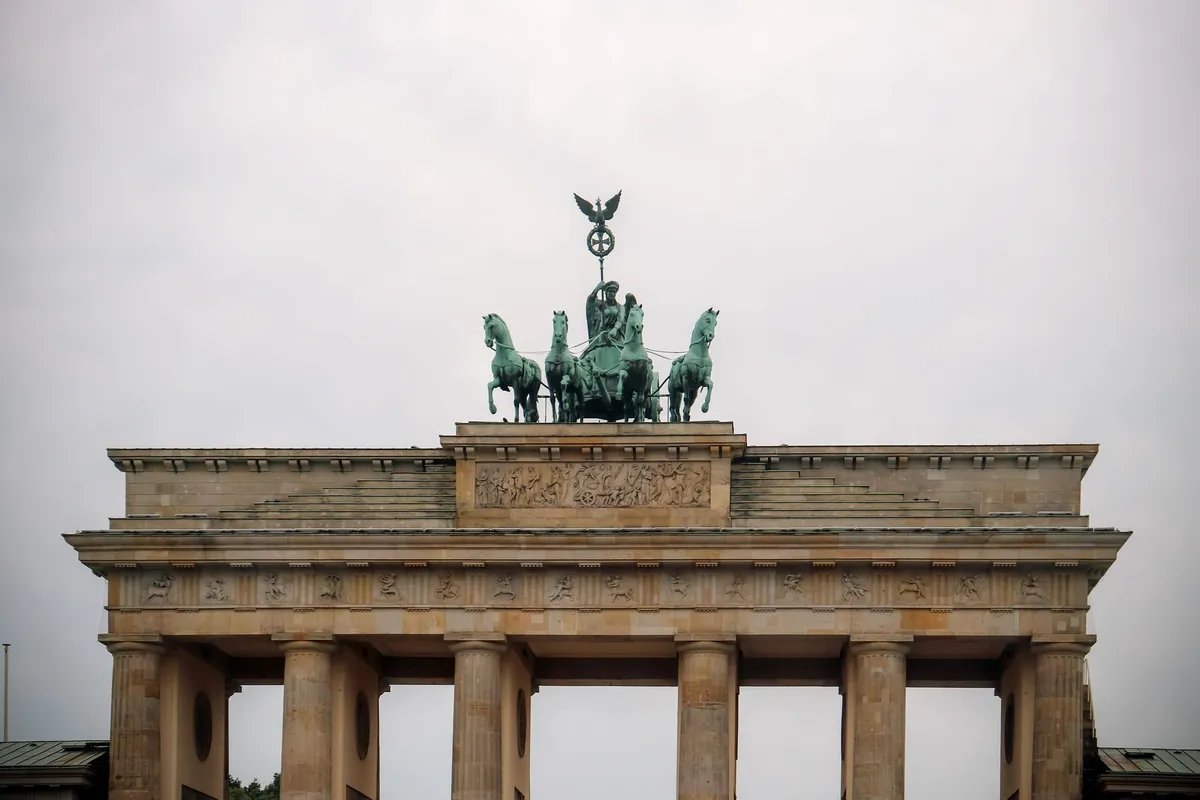
Today, the monument is the symbol of German reunification and the most central point in Berlin. The visit is quick (30–45 minutes), free, and works as a natural starting point for exploring the Reichstag, the Holocaust Memorial, and Unter den Linden avenue — all on foot, in under 10 minutes.
Where to stay in Berlin
| Hotel | Rating | |
|---|---|---|
| Hotel Gat Point CharlieMitte · Good base for Portão; plan your way back | 8,67.134 reviews | See prices |
| Living Hotel Großer KurfürstMitte · Central base, close to the metro | 8,63.065 reviews | See prices |
| Motel One Berlin-AlexanderplatzMitte · Near Alexanderplatz | 8,715.840 reviews | See prices |
| Courtyard by Marriott Berlin City CenterMitte · City centre, with a metro station nearby | 9,02.625 reviews | See prices |
| Gold Palais HotelPrenzlauer Berg · In Prenzlauer Berg, a neighbourhood of bars and cafés | 8,91.435 reviews | See prices |
| Holiday Inn Berlin City Center East Prenzlauer BergPrenzlauer Berg · Chain hotel in Prenzlauer Berg | 8,72.380 reviews | See prices |
| Victor’s Residenz-Hotel Berlin MittePrenzlauer Berg · In the Prenzlauer Berg district | 8,42.251 reviews | See prices |
| Schulz Hotel Berlin Wall at the East Side GalleryFriedrichshain-Kreuzberg · Next to the East Side Gallery | 8,618.211 reviews | See prices |
| Hotel Steglitz InternationalSteglitz-Zehlendorf · Base in the southwest; check the route to Wannsee | 8,34.278 reviews | See prices |
Booking.com rating on 30/09/2026
How to get to the Brandenburg Gate
Getting to the Brandenburg Gate is easy with Berlin’s public transport. The Brandenburger Tor station serves both the U-Bahn (line U5) and the S-Bahn (lines S1, S2, S25) — the station exit puts you right on Pariser Platz, less than 100 meters from the gate.
Bus 100, which connects the Central Station (Hauptbahnhof) to Alexanderplatz passing by the main tourist spots, also stops right in front of the gate. It’s one of Berlin’s most useful lines for tourists — it covers almost everything that matters for €3.50 per AB ticket (Aug 2026).
By taxi or rideshare app, ask to go to Pariser Platz — the exact address is Pariser Platz, 10117 Berlin.
The history of the Brandenburg Gate
The Brandenburg Gate was commissioned by King Frederick William II of Prussia in 1788 and inaugurated in 1791, inspired by the Propylaea of the Acropolis of Athens. Architect Carl Gotthard Langhans designed the 12 Doric columns that form five passageways — the central one was reserved for royalty.
In 1806, Napoleon invaded Berlin and took the Quadriga to Paris as a war trophy. The sculpture only returned in 1814, after the French defeat, and gained a laurel wreath and the Iron Cross as symbols of Prussian victory.
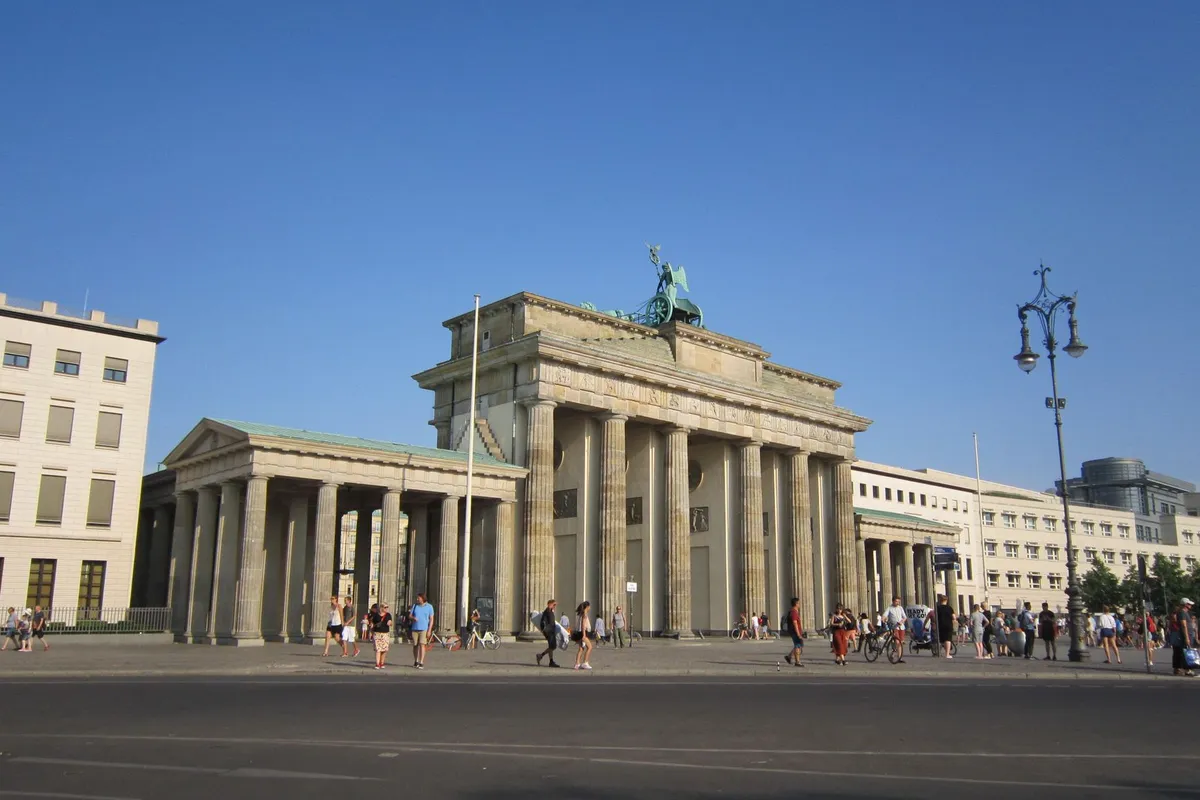
In World War II, the gate was seriously damaged by bombing. Restoration began in the 1950s, with Berlin already divided. In 1961, the Berlin Wall was erected and the gate was trapped in the death strip — inaccessible from both sides. On November 9, 1989, thousands of Berliners climbed the Wall in front of the gate, and the image became the definitive symbol of the end of the Cold War.
Since 2002, after a complete restoration, the Brandenburg Gate has been open to pedestrians and closed to cars — Pariser Platz became a pedestrian-only square.
What to see near the Brandenburg Gate
The area around the Brandenburg Gate concentrates Berlin’s most important attractions within a 10-minute walk. You can combine everything in one morning or afternoon without taking any transport.
Reichstag (5 min walk): the German parliament has a glass dome open to the public with a 360° view of Berlin. Entry is free, but requires advance booking through the official Bundestag website.
Holocaust Memorial (3 min walk): 2,711 gray concrete blocks form a silent, undulating field. The underground information center is free and tells individual stories of the victims.
Unter den Linden: Berlin’s most famous avenue starts at the gate and heads toward Museum Island — 1.5 km of historic buildings, universities, and embassies.
Tiergarten: Berlin’s largest park begins on the other side of the gate. It’s Berlin’s answer to Central Park — perfect for a break after walking through the tourist area.
To understand the full historical context, the Berlin Wall and Cold War free tour passes by the gate and explains what each part of the area meant during the division — no fixed cost, just tips.
 Partner · Civitatissee all activities in Berlin ›
Sachsenhausen Concentration Camp Tour
Rating 9.5 · 135 reviews on Civitatis
- See ›Free Walking Tour of BerlinRating 9.5 · 41,690 reviews on Civitatis
- Berlin Cathedral Ticket + Audio GuideRating 4.7 · 6 reviews on Civitatisfrom€29.42per personSee ›
- Berlin Boat RideRating 8.4 · 10 reviews on Civitatisfrom€21per personSee ›
- Alexanderplatz TV Tower TicketsRating 8.2 · 645 reviews on Civitatisfrom€20per personSee ›
Civitatis prices on 28/09/2026, from, per person. They may change. Want to compare? Activities in Berlin on GetYourGuide ›
What’s the best time to visit the Brandenburg Gate?
The best time to visit the Brandenburg Gate depends on what you want. Before 9am, Pariser Platz is practically empty — you can take photos with no one in front of you, and the morning light illuminates the eastern facade. At dusk and at night, the monument gets artificial lighting and the mood changes completely.
Avoid midday: tour groups fill the square between 11am and 3pm, and street vendors selling souvenirs and costumes get more insistent. Tuesday through Thursday tends to be less crowded than weekends.
The visit to the gate itself takes 30–45 minutes. If you combine it with the Reichstag, the Holocaust Memorial, and a walk to Unter den Linden, set aside 2–3 hours for the area.
Fun facts about the Brandenburg Gate
The Brandenburg Gate holds stories that don’t show up on the signs at Pariser Platz — from a chariot kidnapped by Napoleon to a central passageway forbidden to civilians and a pop scandal in 2002. These are the details that turn a quick photo into a visit with context.
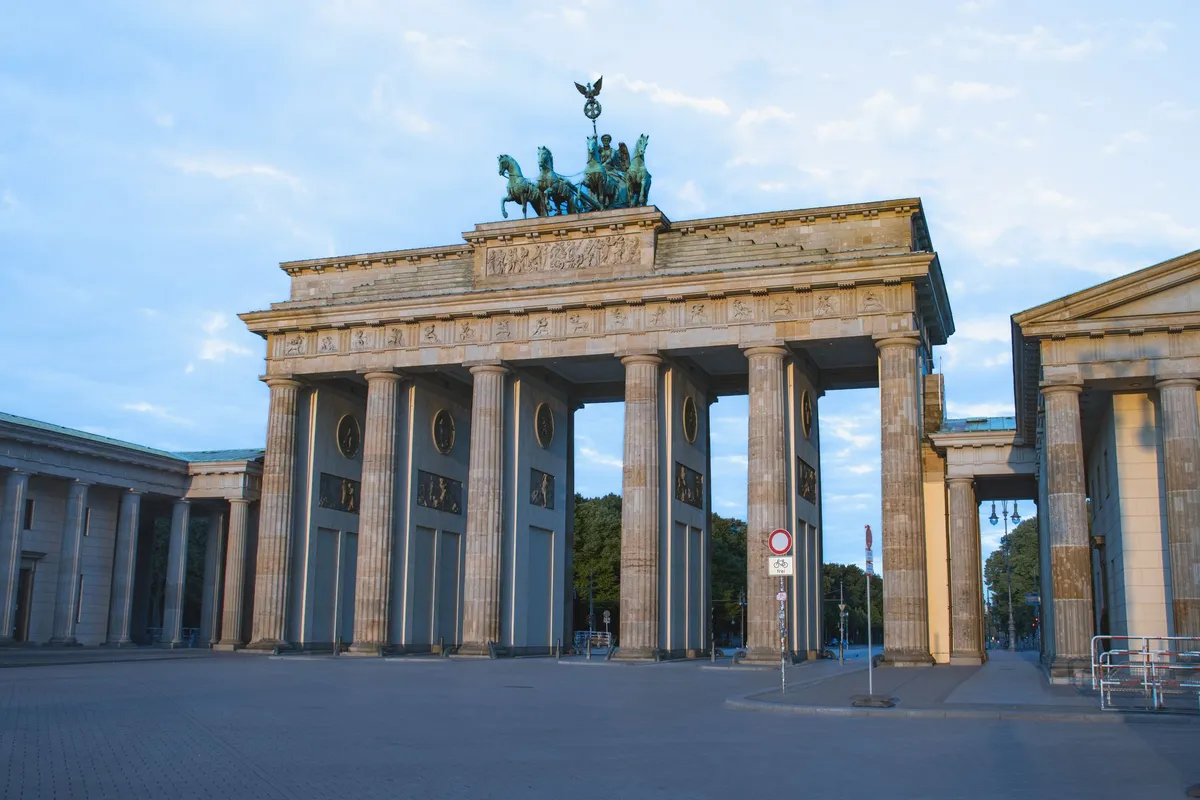
The Quadriga faces the wrong way. The chariot on top of the gate was originally placed facing west. When Napoleon returned it, the Prussians turned it to face east — the direction the enemies came from. To this day, it faces east.
The central passageway was off-limits. Of the gate’s five passageways, the middle one was exclusive to the royal family. Civilians could only use the side ones. Today they’re all open and pedestrian-only.
Michael Jackson dangled his son from the balcony next door. The Hotel Adlon Kempinski, on Pariser Platz next to the gate, is where Michael Jackson caused controversy in 2002 by showing his son from a fourth-floor window. The hotel has been the same since 1907, rebuilt after the war.
Brazilians don’t need a visa to visit Germany for stays of up to 90 days within the Schengen area (Aug 2026).
 HotelAs soon as you have datesCompare neighbourhoods and guest ratings.See hotels ↑
- ActivitiesBefore you travelBook ahead the ones with limited spots.Civitatis ›
 More activitiesTo compareTickets, day trips and tours with flexible cancellation.GetYourGuide ›
Frequently asked questions
Do you have to pay to see the Brandenburg Gate?
The Brandenburg Gate is an open-air monument on Pariser Platz in Berlin — the visit is completely free and access works 24 hours a day, every day of the year. There’s no ticket office or access control.
What’s the connection between the Brandenburg Gate and the Berlin Wall?
The Brandenburg Gate was trapped in the death strip between the two Berlin walls from 1961 to 1989 — no one could get close to it from either side. When the Wall fell on November 9, 1989, thousands of people climbed the Wall in front of the gate, and the image became the symbol of German reunification.
Does the Brandenburg Gate ever close?
The Brandenburg Gate never closes — it’s an open-air monument accessible 24 hours a day in Berlin. Pariser Platz may be partially closed during events like New Year’s Eve or concerts, but the gate remains visible and accessible from the sides.
Is it worth going to the Brandenburg Gate at night?
The Brandenburg Gate gets special lighting at dusk and looks particularly beautiful at night, with fewer tourists and a completely different atmosphere from a daytime visit. The area is safe and well lit, and pairs well with dinner at the restaurants on Pariser Platz or a stroll through the Tiergarten.
Conclusion
The Brandenburg Gate is the natural starting point for any visit to Berlin — free, open 24 hours, and surrounded by the city’s most important attractions. Go early for crowd-free photos or at dusk for the lighting. To complete your itinerary, check out the complete Berlin guide, the 7-day off-the-beaten-path itinerary, and the history of the Wall and the museums. The Berlin free tour is the most practical way to connect the gate to everything else. Voyage Voyage helps you travel with the right context.