Choosing what to prioritize in Munich gets easier when you combine three very different experiences in the same day or weekend: the calm of the Nymphenburg Palace Gardens, the green expanse of the Englischer Garten, and the lively atmosphere of the Hofbräuhaus. This trio works because it delivers a palace, a park, and a historic beer hall without requiring major travel between them.
If you want a practical slice of Munich, start at Nymphenburg to see the city’s royal side, set aside a few hours to walk through the Englischer Garten, and save the Hofbräuhaus for the end of the day, when the experience makes the most sense with music, beer, and Bavarian dishes.
Why to combine all three places in one itinerary
These three stops show complementary sides of Munich. Nymphenburg delivers the aristocratic past, the Englischer Garten shows how the city lives its open spaces, and the Hofbräuhaus sums up the social side that many people seek in Bavaria. Instead of putting together a fragmented itinerary, it’s worth concentrating these visits in the same article because they answer the same question from anyone looking for what’s worth your time in Munich.
The practical gain is in the rhythm. You start the day in a quieter place, move on to a huge park where you can pace your walk, and end at a beer hall where sitting down is part of the experience. For those short on time, this trio avoids two common mistakes: spending the whole trip in the historic center and underestimating travel time to day trips like Neuschwanstein. If you have energy left, that castle is better saved for another day, as we explain in our guide to Neuschwanstein Castle.
Nymphenburg Palace Gardens: where Munich slows down
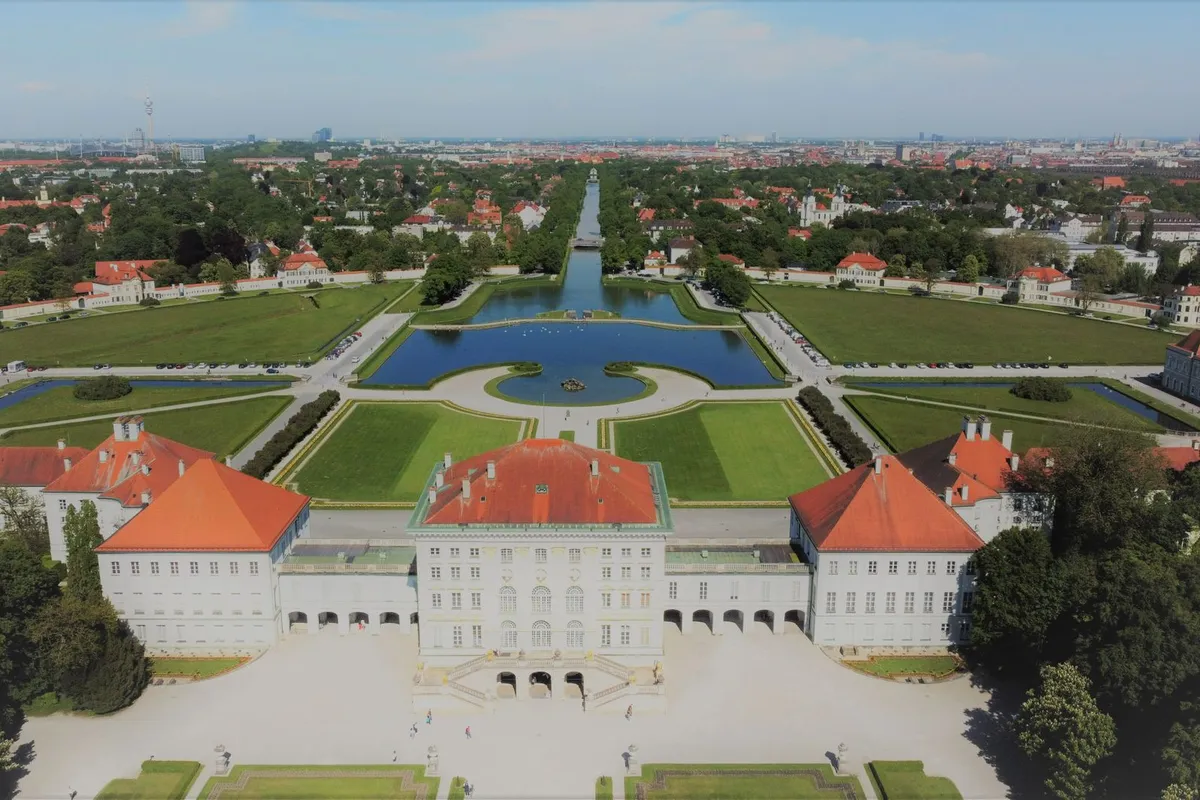
The Nymphenburg gardens work best when you arrive early and stroll without rushing. The complex mixes formal parterres in front of the palace with an English-style landscaped park, which makes the visit less rigid than many people imagine. You don’t need to enter every building to enjoy the place: just the canal, the tree-lined avenues, and the palace’s perspective already deliver one of Munich’s most elegant scenes.
According to the official Bavarian palace administration, the park opens daily from 6 a.m. and closes between 6 p.m. and 9:30 p.m. depending on the month; from May to September, the main gate closes at 9:30 p.m. The main palace is open daily from 9 a.m. to 6 p.m. between April and October 15, and from 10 a.m. to 4 p.m. between October 16 and March. In 2026, the palace ticket costs 10 euros, while the combined spring-to-mid-October ticket goes for 20 euros. If your plan is just to walk the gardens, you cut costs and still enjoy one of the city’s most beautiful areas.
It’s worth going inside the building only if you love rococo interiors, court halls, and want to see the scale of the residence where Ludwig II was born. Otherwise, treat Nymphenburg as a long breather, almost a palace-park, and leave the museums and rooms for another trip. The topic of hours and tickets changed in 2026 with clear seasonal windows and timed entry at the palace, so it makes sense to check the official website before you go.
Englischer Garten: the park that shows Munich in motion
If Nymphenburg calls for contemplation, the Englischer Garten calls for curiosity. The park was born in the late 18th century and today still works as a lived-in space, not just a tourist attraction. Instead of trying to see everything, focus on a few spots: the Monopteros area, the lawns near the Eisbach, and the beer gardens scattered along the way. That’s enough to feel how locals use the park.
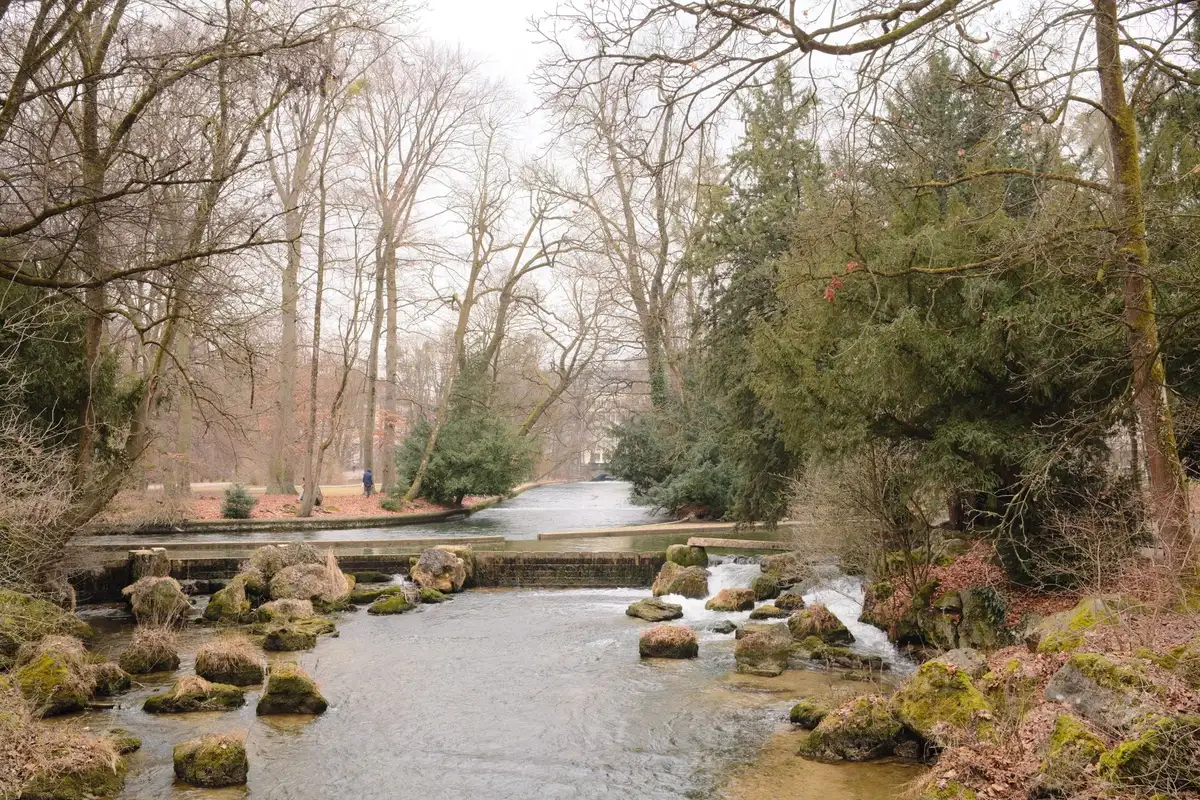
Munich’s English Garden is public and open year-round, which changes the visit strategy quite a bit. On sunny days, the park feels like an extension of the city’s living room; on cold days, the walk is still worth it for the landscape and the almost unexpected green scale so close to the center. Don’t try to “complete” the entire park: pick a section, walk for two or three hours, and use the time you save for the rest of your itinerary.
This logic applies even more if you’re putting together a trip through classic Central European cities. In our guide to Vienna, for example, reading the city also improves when you alternate palaces and green areas instead of just stringing together museum after museum.
If you’d like to include a guided activity on your trip, a great bridge between the historic center and the parks is booking a free walking tour of Munich to understand the city’s context before heading out on your own. The tour helps tie together history, architecture, and the neighborhoods many people pass through without noticing.
Hofbräuhaus: is the fame worth it?
The Hofbräuhaus only really works when you arrive with the right expectations. Don’t expect an intimate beer hall. The place is big, noisy, and theatrical, with a band, communal tables, and a constant rotation of tourists and locals. Precisely because of that, it’s worth it as a cultural experience when you want to see Munich’s classic image live, not just in photos.
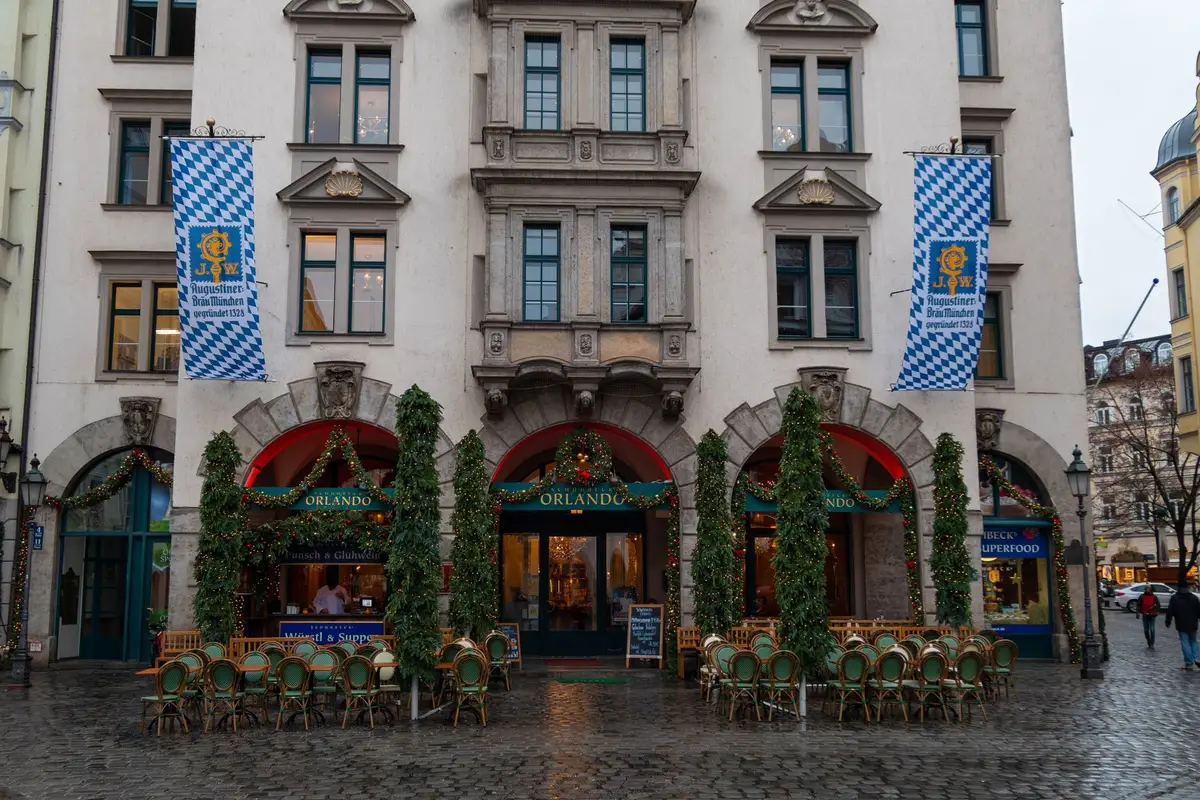
The official Hofbräuhaus website states it’s open daily from 11 a.m. to midnight, with the kitchen serving until 10 p.m. and last drink orders at 11:30 p.m. It also notes that reservations are more important for groups of four or more, while some parts of the house may have open seating depending on capacity. If you want a livelier atmosphere, arrive in the late afternoon; if you prefer less chaos, try an early lunch or an early dinner before the peak.
Another handy tip: the Hofbräuhaus sits on Platzl, just a few minutes from Marienplatz, and the restaurant itself lists Marienplatz as the most convenient U-Bahn and S-Bahn stop. That makes it super easy to fit the beer hall in after a stroll through the city center. If you’d rather see the city without covering too much ground on foot, another option is hopping on Munich’s sightseeing bus to connect the main sights without the rush.
How to Plan Your Visit in One Day
The smoothest, simplest itinerary: morning at Nymphenburg, early afternoon at the Englischer Garten, and evening at the Hofbräuhaus. In the morning, the light tends to flatter the gardens and palace best; in the park, the afternoon makes for a more enjoyable walk; and at the beer hall, the experience gets better as the room fills up. This order also saves you from doubling back to the city center multiple times.
If you only have half a day, skip the palace interior without guilt and treat Nymphenburg as an outdoor-only visit. If you’re putting together a longer trip through Germany, it’s worth saving your energy for a heavier day trip and using this trio as a city day—no trains, no extra check-ins, no unnecessary marathon. For those coming from other capitals, as we showed in our Berlin itinerary, this mix of dense days and easygoing days makes the whole trip so much better.
Frequently Asked Questions
Can you visit Nymphenburg, the Englischer Garten, and the Hofbräuhaus in one day?
Yes, as long as you don’t try to see everything in depth. The best approach is to spend the morning at Nymphenburg, leave two or three hours for the Englischer Garten, and wrap up the day at the Hofbräuhaus.
Are the Nymphenburg gardens free?
Yes, access to the park and the outer gardens is free. What costs money is entry to the main palace, the park buildings, and some of the museums in the complex.
How much time should you set aside for the Englischer Garten?
Two or three hours already make for a great experience if you pick one section of the park. Trying to cross the whole area usually tires you out more than it helps.
Do you need to reserve a table at the Hofbräuhaus?
For couples or small groups, you can often just walk in and find a spot, but the Hofbräuhaus’s own website recommends reservations for groups of four or more. During peak hours, arriving early helps.
Conclusion
If you want a slice of Munich that feels meaningful without turning into a checklist, these three places work beautifully together. The gardens of Nymphenburg show the city in its elegant mode, the Englischer Garten brings a sense of lightness, and the Hofbräuhaus delivers the most social side of Bavaria. Here at Voyage Voyage, that’s exactly the kind of combination that makes a trip feel fuller without becoming a marathon.