You wind up the forested road in Schwangau and, around a curve, the white towers appear perched on the rock, as if someone had sketched a fairy-tale castle and pasted it onto the Bavarian Alps. This is Neuschwanstein Castle, Germany’s most photographed building and the most-cited inspiration behind Disney’s castle. It sits about 120 km from Munich, is open to visitors every day of the year (except January 1st, December 24th, 25th, and 31st), and can only be explored inside on a guided tour with a scheduled time.
A Neuschwanstein Castle ticket costs 21 euros (full price) or 20 euros (concession), plus a 2.50 euro booking fee if purchased online — recommended, as time slots often sell out weeks in advance during the high season (May to September). The guided tour lasts about 30 minutes and departs promptly at the time printed on your ticket, so arriving late means losing your spot.
How to get to Neuschwanstein Castle
“Can I do it as a day trip from Munich?” Yes, you can, and it’s how most visitors do it. Take a regional train from Munich Hauptbahnhof to Füssen — the journey takes about 2 hours and doesn’t require a transfer on most departures. From Monday to Friday, it’s worth buying the Bayern Ticket: it gives you access to regional trains, S-Bahn, and buses across all of Bavaria from 9 am (and all day on weekends), which often works out cheaper than a single ticket if you’re traveling in a group.
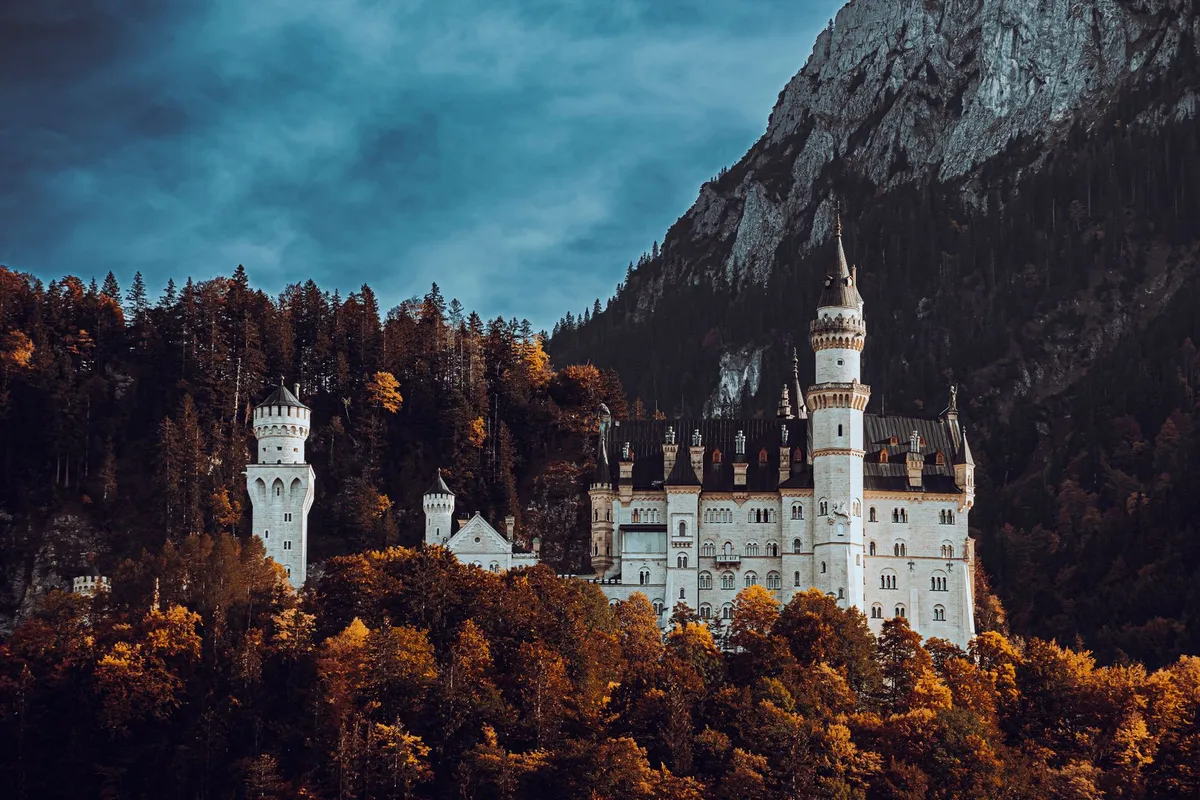
Once you arrive at Füssen station, follow the crowd to the bus stop and catch line 73 or 78 — in about 10 minutes you’ll get off in Hohenschwangau, the village at the foot of the region’s two castles. By car, the drive from Munich takes about 1 hour 40 minutes, with paid parking available near the ticket center.
From the ticket office to the castle entrance, you still have to climb the hillside: it’s a 1.5 km walk uphill, about 40 minutes at a leisurely pace, or you can take the shuttle bus (3 euros up, 2 euros down) or a horse-drawn carriage (8 euros up, 4 euros down). The bus drops you about 500 meters from the castle — there’s still a final short walk.
If you’d rather not manage train and bus schedules on your own, the train tour to Neuschwanstein Castle from Munich takes care of the whole day with a Spanish-speaking guide, and the tour that combines Neuschwanstein with Linderhof Palace makes the most of the journey to see two of Ludwig II’s palaces in one day.
Best time to visit and how much time to allow
“Is it worth going in winter, or is it only worth it in summer?” Both seasons have their charm, but for different reasons. Between May and September, the gardens are green and the days are long, but the area is packed and tickets sell out weeks in advance. In December and January, with snow covering the towers, the photos look even more like a fairy tale and the crowds shrink — at the cost of shorter days and real cold on the climbs.
Set aside a full day if you want to combine Neuschwanstein with its neighbor Hohenschwangau and the Marienbrücke: counting travel time, the climb, the guided tour, and the descent, you can do it all in 5 to 7 hours starting from Füssen. If you’re coming from Munich on a day trip, leave early — before 8 am — so you’re not rushing back.
What to see inside Neuschwanstein Castle
“Is the castle as beautiful inside as it is outside?” It’s different from what the facade promises: instead of medieval furniture, you’ll find halls inspired by Richard Wagner’s operas, with frescoes telling the legends of Lohengrin and Parsifal covering walls and ceilings.
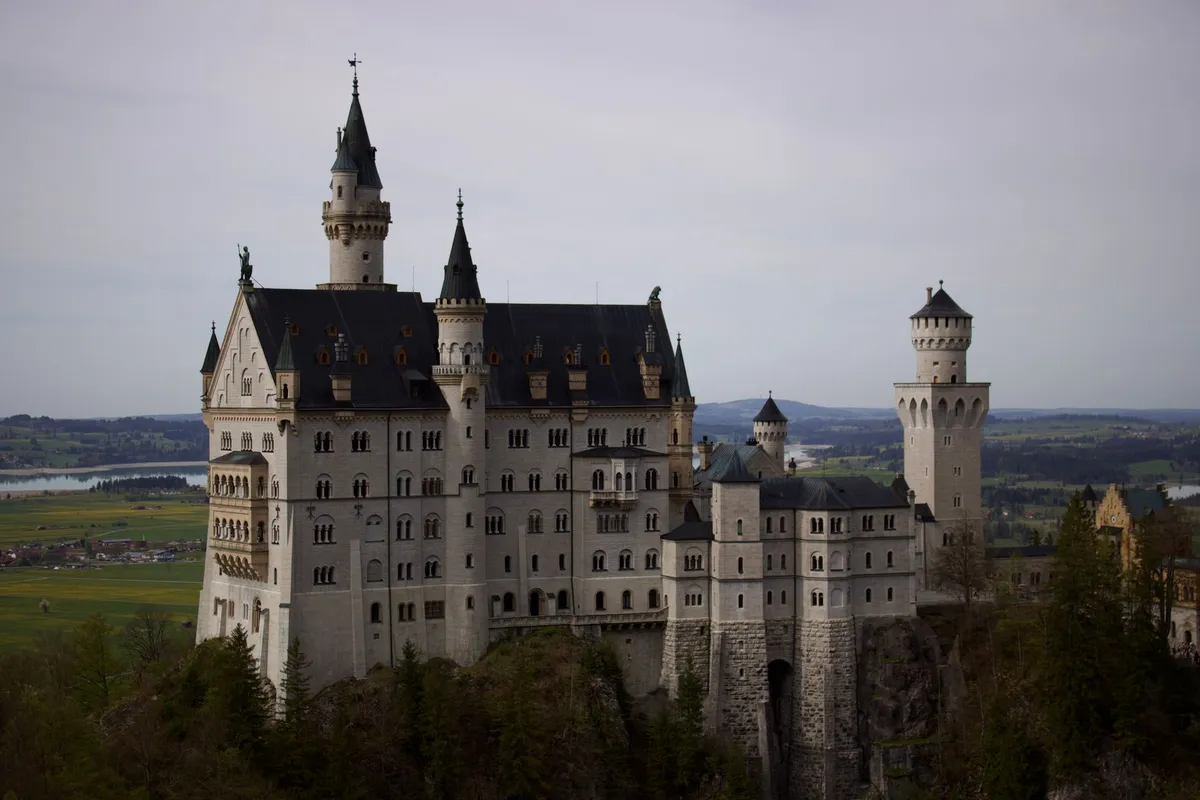
King Ludwig II of Bavaria commissioned the work in 1868 and laid the foundation stone on September 5, 1869, intending to build a private refuge, far from politics, after losing real power in the Austro-Prussian War of 1866. The original plan called for more than 200 rooms, but only about 15 were finished before the money ran out. Ludwig drowned in Lake Starnberg in 1886, under circumstances never fully explained — he had just been declared unfit to rule days earlier. Weeks after his death, the castle opened to the public to help pay off construction debts, and it has never closed since.
On the tour, you’ll pass through the king’s bedroom, carved like a Gothic altar, the artificial grotto that mimics an opera cave, and the Hall of Singers, the castle’s largest room, decorated for recitals Ludwig never actually held there. It’s common to hear that the castle inspired Disney’s Sleeping Beauty Castle — Walt Disney himself visited the region before designing the park, though Disney has never officially confirmed a direct link. Details of the construction and Ludwig II’s biography are documented on the Wikipedia page about the castle.
What to combine with your visit
“Does Neuschwanstein alone fill the day, or can I see more?” You can, and the two closest spots are worth adding to your itinerary without straying too far off the path.
Hohenschwangau Castle
On the other side of the valley, on the opposite hill, sits Hohenschwangau Castle — where Ludwig II spent his childhood and from where, as an adult, he watched his dream castle grow on the mountain in front of him. It’s yellow, simpler on the outside, and for many visitors, just as interesting as its more famous neighbor.
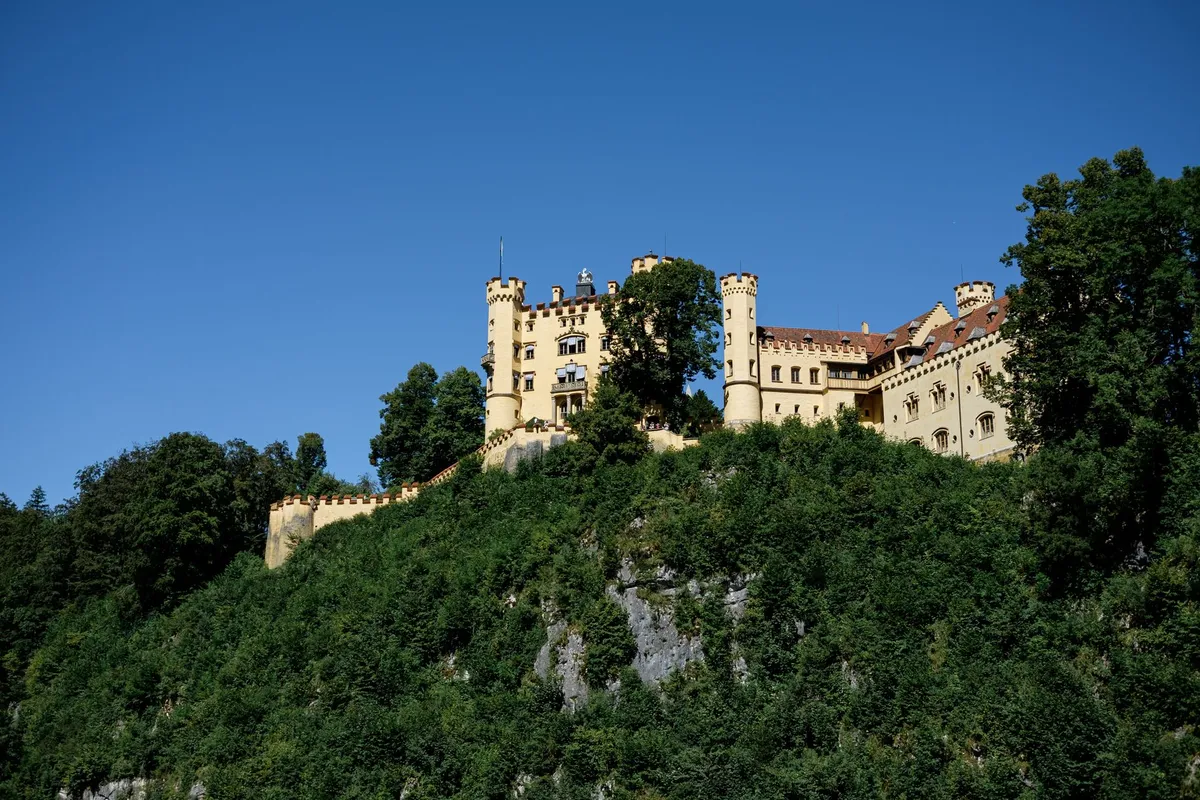
Tickets for the two castles are sold separately and have their own time slots — if you want to visit both on the same day, book both in advance and allow at least 1.5 hours between tours.
Marienbrücke and Lake Alpsee
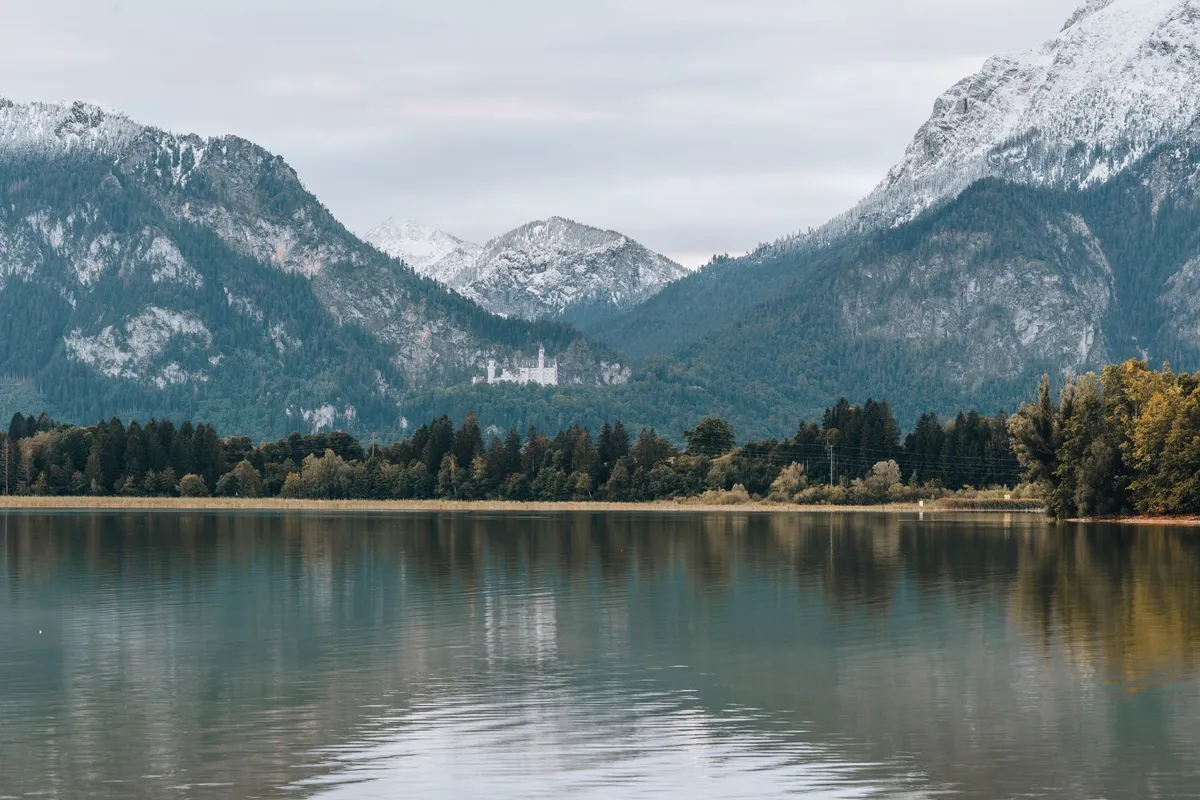
The Marienbrücke, a suspension bridge spanning the Pöllat River gorge, is where the castle’s most famous photos are taken — it’s worth a 10-minute detour on foot before or after your tour, though it closes in strong winds or icy conditions. At the foot of the mountain, Lake Alpsee completes the scene: a loop around the lakeside trail takes about an hour and shows the castle reflected on the surface on calm days.
If you have more time and are already in the region, you can head to Berlin, about 6 hours away by train, to round out your trip by pairing Bavarian medieval history with contemporary Germany.
Where to Eat in Hohenschwangau and Füssen
“Can you eat near the castle, or is it all overpriced and boring?” In Hohenschwangau, right at the foot of the climb, restaurants cater to tourists and charge a bit more for the convenience, but they do the job well for a quick meal before or after your tour — Bavarian dishes like schweinshaxe (pork knuckle) and spätzle show up on most menus. For a more affordable and authentic meal, save your appetite for Füssen: the historic center has traditional breweries and bakeries with prices closer to everyday German life, plus more vegetarian options than the restaurants in Hohenschwangau.
Where to Stay Near the Castle
“Is it worth sleeping in Füssen, or can you do it all from Munich?” Both options work, but they solve different problems. Staying in Füssen costs more per night than staying in Munich, but it eliminates the morning train ride and lets you get to the ticket center as soon as it opens — important in peak season, when the earliest tour times sell out first. Staying in Munich, on the other hand, makes sense if you’re already based there anyway or plan to visit the castle as a day trip within a longer Bavarian itinerary.
Practical Tips for Not Missing Your Time Slot
Buy your ticket on the official ticket website as far in advance as possible — during peak season and the year-end holidays, last-minute slots at the physical counter usually sell out by around 8 a.m. Pick up your physical ticket at the sales center in Hohenschwangau at least 1 hour before your scheduled time: arriving at the last minute, without accounting for the ticket line and the uphill walk, is the most common way to miss your tour.
Photography is not allowed inside the castle, and large backpacks must be left in the luggage storage at the entrance. Wear closed, comfortable shoes — the climb is on stone and can get slippery on rainy or snowy days — and bring an extra layer even in summer, since the altitude makes the wind colder than down in the valley.
Frequently Asked Questions
How much does a Neuschwanstein Castle ticket cost?
A regular ticket costs 21 euros and a reduced ticket 20 euros (as of July 2026); buying through the official website adds a booking fee of 2.50 euros per ticket.
Do I need to buy tickets in advance?
Yes, especially between May and September and during the year-end holidays — time slots sell out weeks in advance, and on-site purchases on the day of your visit are very limited.
How long does the castle visit take?
The guided tour inside lasts about 30 minutes. Adding the uphill walk, waiting, and the way back, set aside 2 to 3 hours just for Neuschwanstein.
Can I visit Neuschwanstein and Hohenschwangau on the same day?
Yes, as long as you book both tickets in advance and plan at least 1h30 between your tour times.
How do I get from Munich to Neuschwanstein Castle without a car?
Take the train to Füssen (about 2 hours), then the bus (line 73 or 78) to Hohenschwangau, from where you walk, take the local bus, or ride a horse-drawn carriage up to the castle entrance.
Conclusion
Neuschwanstein Castle delivers the postcard you’ve seen in a thousand photos, but the story behind it — of a king who built a private world and died without ever seeing his work finished — is what stays with you after the visit. Book your ticket in advance, lace up comfortable shoes for the climb, and set aside a full day to combine the castle with Hohenschwangau and the Marienbrücke. You’ll find more Europe travel itineraries right here on voyagevoyage.com.br.