Nice delivers a type of travel experience that works beautifully without a car: you step out of the airport, hop on the tram, cross the city, and within minutes you’re surrounded by the sea, old buildings, and scenic viewpoints. On the French Riviera, few bases are as practical for a 2- or 3-day itinerary combining beach, historic center, day trips, and great food all in one spot.
In Nice, prioritize the Promenade des Anglais, Vieux Nice, Castle Hill, Place Massena, and the Cours Saleya market, setting aside 2 or 3 days to explore the city without rushing and still fit in a day trip along the Riviera. If you’re planning a first trip to the Côte d’Azur without relying on complicated logistics, Nice is usually the simplest base to start from.
How to get to Nice
The easiest way to get into Nice is by flying into Nice Côte d’Azur Airport, the main gateway to the French Riviera. From there, the T2 tram line connects the airport to the city center and Port Lympia, passing through Jean Médecin—a handy reference point if you’re staying near the shops, the Nice-Ville train station, or the main tourist hub. For a first trip, this tram connection is often the detail that makes Nice work so well as a base. Official access and transport info is available on the Nice Côte d’Azur Airport website.
If you’re arriving by train, Nice-Ville station is also a great entry point for exploring the city on foot and taking day trips to Monaco, Cannes, or Antibes. If you land early, you can drop your bags at the hotel and head straight to the waterfront. This is a destination where staying near the Jean Médecin axis, Vieux Nice, or the Promenade des Anglais makes a real difference—cutting down on travel time and letting you enjoy the city on foot.
If you’d like an introductory tour to get your bearings on day one, a great option is booking the free walking tour of Nice in Portuguese or Spanish, especially if you want to understand the layout of the old town, center, and waterfront before planning the rest of your itinerary.
Best time to visit and how long to stay
Nice works year-round, but the experience shifts quite a bit with the seasons. Between May and June and from September to early October, the city usually strikes a nice balance of pleasant weather, long days, and less high-season pressure than July and August. In peak summer, the water is more inviting and the beach vibe ramps up, but the busiest spots in Vieux Nice and along the Promenade get more crowded and more expensive.
In winter, Nice doesn’t turn into a ghost town. Temperatures can stay mild by European standards, and the city remains interesting for walking, visiting museums, and using as a base. For a tight itinerary, 2 days is enough to hit the main highlights. With 3 days, you can explore Nice at a relaxed pace, fit in some beach time or a museum, and still squeeze in a day trip along the Riviera. If your trip includes 5 days in Monaco or other nearby bases, Nice helps tie the itinerary together without constant hotel changes.
What to see in Nice
The best sights in Nice are concentrated in a relatively compact area, making it easy to put together a strong walking itinerary. The key is not to treat the city merely as a gateway to the Riviera: it has enough attractions to stand on its own, especially if you mix the waterfront, historic center, viewpoints, and market.
Promenade des Anglais
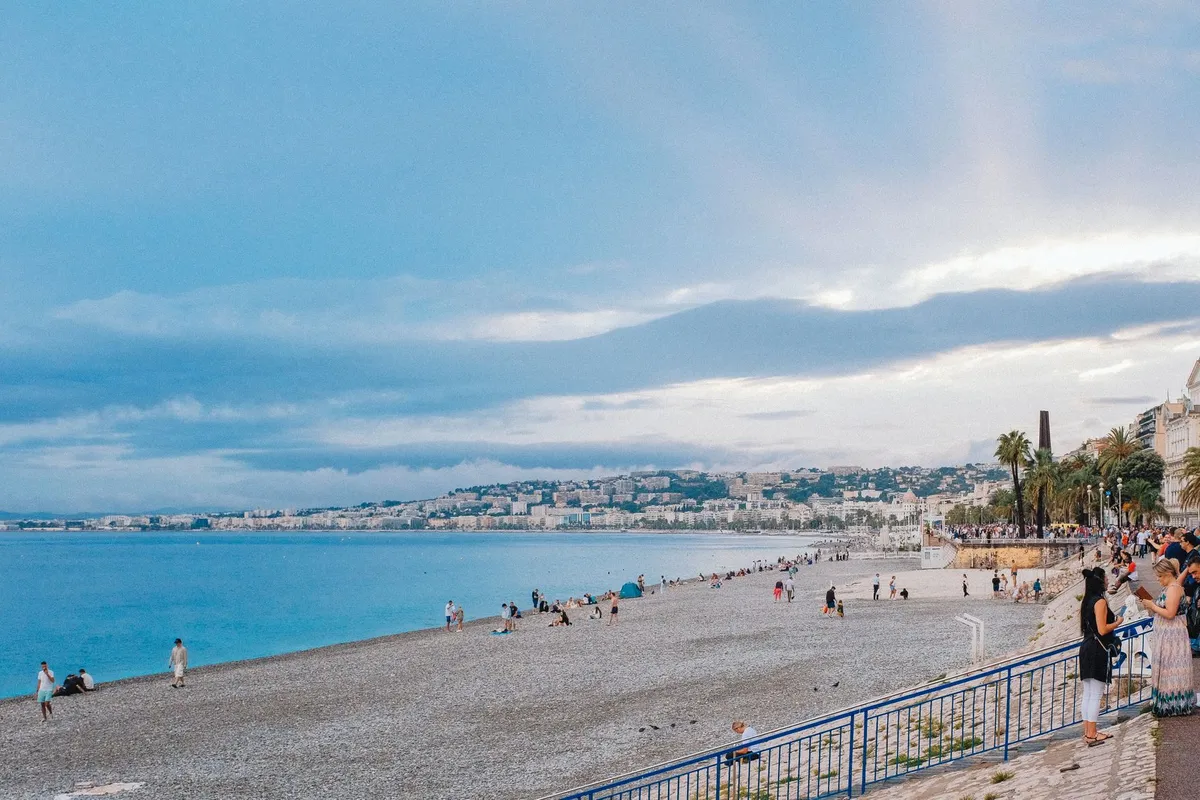
The Promenade des Anglais is Nice’s most iconic address and, at the same time, the easiest to enjoy. The avenue hugs the Baie des Anges for several kilometers, with a wide walking path, a bike lane, and open views of the Mediterranean. The most pleasant stretch for first-time visitors tends to be between the area around Hotel Negresco and where it meets Quai des États-Unis, where the scenery blends best with the historic center.
It’s worth walking early in the morning, late in the afternoon, and—if the weather cooperates—sitting for a few minutes in the iconic blue chairs facing the sea. It sounds simple, but this ritual helps you understand why Nice works so well for travelers who love a city with built-in pauses. If you’re planning a larger European itinerary, the same urban-travel mindset shows up in destinations like Milan without the rush and Vienna, though Nice trades palaces and museums for light, sea, and a seaside rhythm.
Vieux Nice and Cours Saleya
Vieux Nice is the contrast that completes the waterfront: narrow streets, ochre facades, laundry hanging from windows, small squares, and a density of restaurants and gelato shops that begs for exploration without a rigid map. This is where you feel the city closest to its cultural border with Italy, both in the architecture and in the rhythm of the tables.
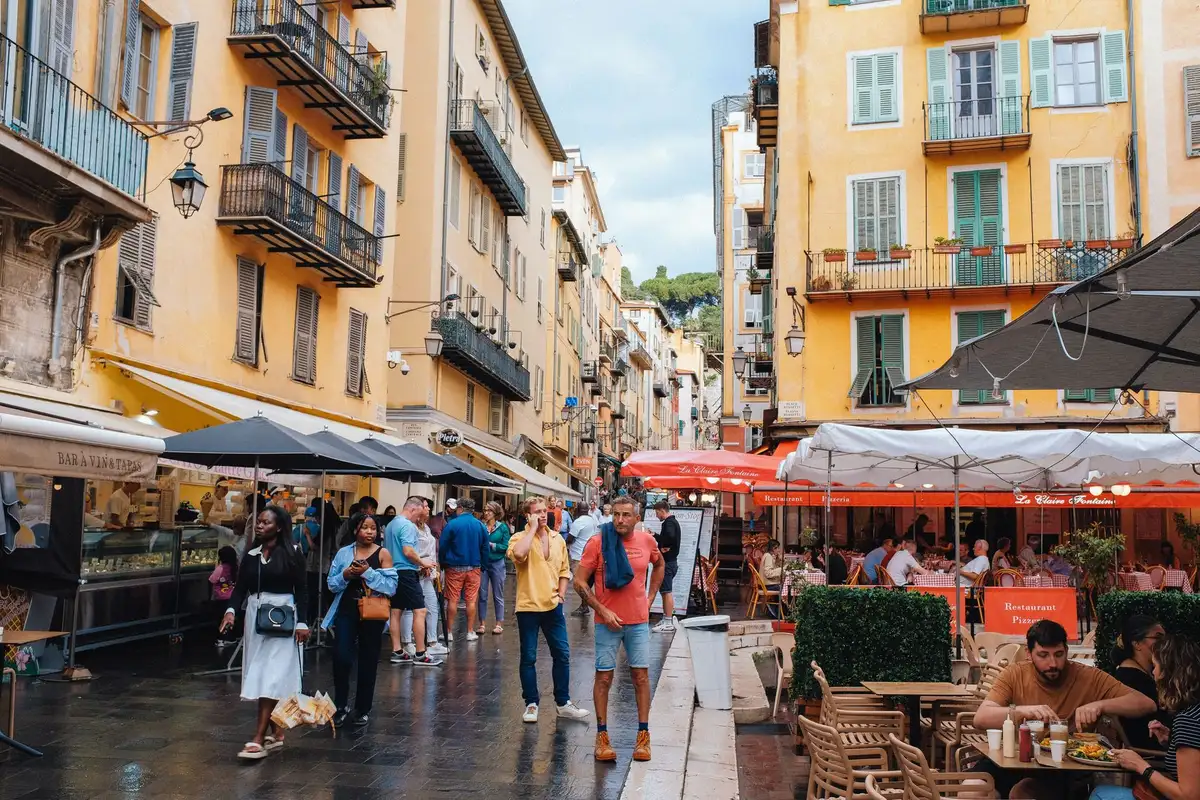
Within this area, Cours Saleya deserves its own time. The flower market is one of Nice’s symbols, but the square also works as a corridor of cafés, stalls, and restaurants. Arrive early for the most pleasant atmosphere; around lunchtime, the energy picks up and the experience shifts from a contemplative stroll to a lively city at full volume. If you only have one stretch of time in Nice, combine the Promenade, Vieux Nice, and Cours Saleya in the same block because they fit together perfectly on foot. The official Nice tourism page is also handy for checking updated neighborhoods and highlights before your trip at Explore Nice Côte d’Azur.
Castle Hill
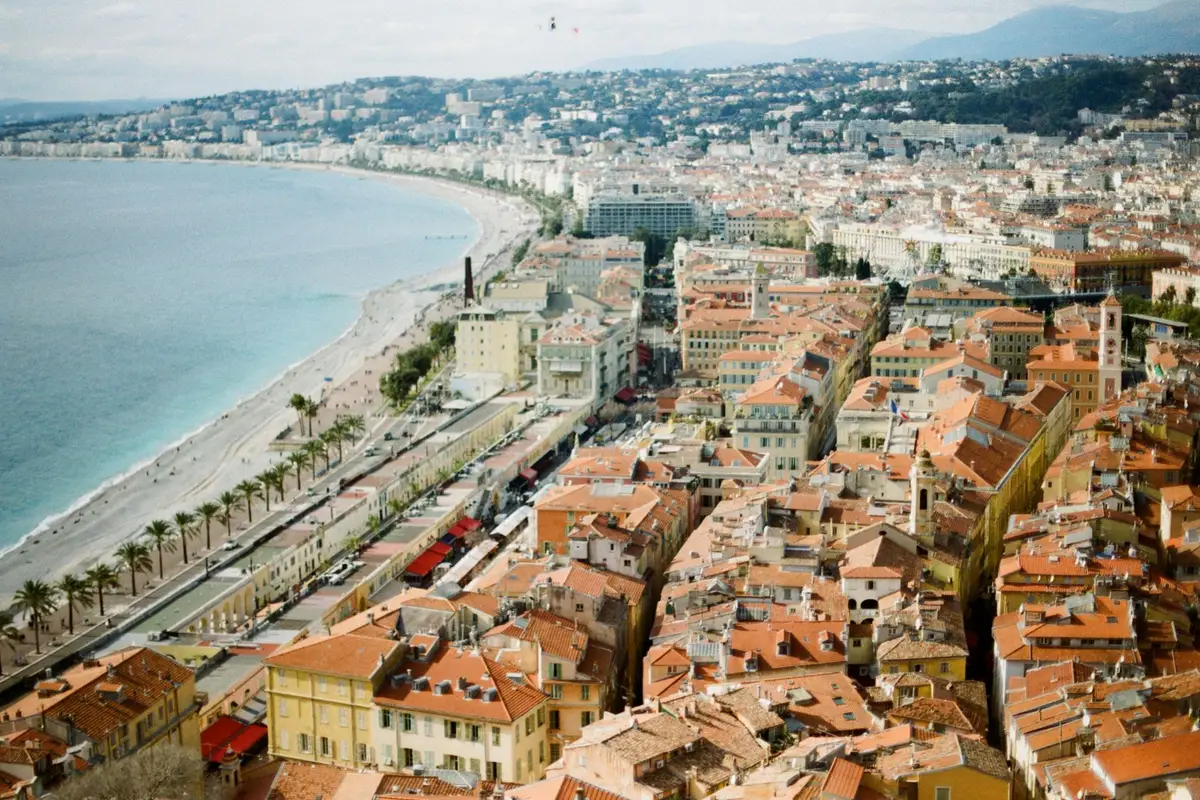
Castle Hill, or Colline du Château, is the spot that visually organizes the city. From the top, you can see the curve of the Promenade des Anglais, the color of the water, the rooftops of the center, and the port. Don’t expect an intact castle: today the highlight is the park, the paths, and the view. Still, it’s exactly this viewpoint that makes many people realize how Nice is laid out between sea, hill, and old town.
You can go up on foot, by elevator, or via stairs, depending on where you start and your energy level. The best time tends to be early morning or late afternoon, when the light favors photos and the heat is less intense. For anyone who loves urban viewpoints, this is the outing that most justifies slowing down and spending a few minutes just taking in the shape of the bay.
If you want to explore the center with historical context before or after the viewpoint, the free walking tour of Nice helps connect the seafront, the old town, and the main points along the central axis without you wasting time figuring out a route on the fly.
Place Massena
Place Massena is the link between the more classic city and the more commercial side of Nice. The reddish facades, the geometric-patterned paving, and the suspended contemporary sculptures make it a place worth pausing at, not just passing through. This is where a lot of people calibrate their trip: on one side, you head into Vieux Nice; on the other, you enter the shopping corridor of Avenue Jean Medecin.
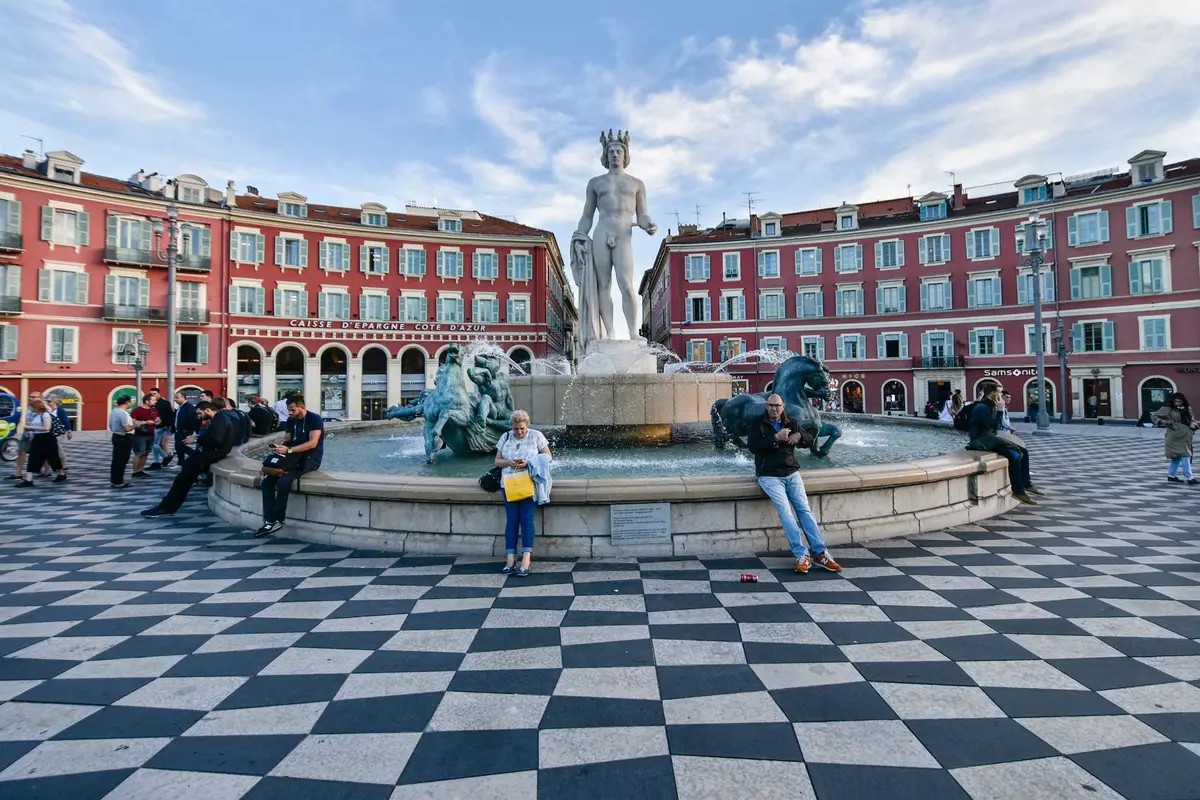
It’s worth crossing the square at different times of day. By day, it keeps things moving smoothly; at night, it takes on a whole new feel with lights and more buzz. If your hotel is nearby, you’ve nailed the logistics of your trip.
Matisse Museum, Marc Chagall Museum, and Port Lympia
To round out your itinerary, Nice goes beyond the classic trio of seafront, center, and viewpoint. The Matisse Museum is a great pick if you want to weave art into your trip and understand the painter’s connection to the south of France. The Marc Chagall Museum, meanwhile, tends to appeal even to travelers who aren’t planning a fully cultural itinerary, because the collection is strong and getting there is easy. Port Lympia, on the other hand, is a perfect way to close out the late afternoon if you’re into marinas, boats, and a side of Nice that feels less touristy than the Promenade stretch. If art is part of your plan, it’s worth checking hours and exhibitions directly on the Marc Chagall Museum website.
If you want to add more attractions without overloading your itinerary, pick one of the museums and round it out with Port Lympia or a long break at Cours Saleya. That way, the trip stays varied without turning into a checklist race.
What to Pair with Nice
Nice is one of the best bases on the Riviera for day trips by train or tour. Monaco is the most obvious pairing, especially if you want a contrast of sea, luxury, and a compact urban circuit. Antibes, Cannes, Eze, and Saint-Paul-de-Vence fit in nicely when you’re looking to mix villages, coastline, and art. If you’d rather keep things simple, it also makes sense to book a French Riviera tour from Nice, which cuts down on train transfers and keeps the day more streamlined.
If you’re only squeezing in one day trip, choose based on what you want out of the trip: Monaco to see a different kind of coastal city, Antibes for a balance of sea and old town, or Cannes if you’re after boulevard vibes and classic Riviera atmosphere. If you’re putting together a multi-city European trip, Nice works great as a coastal counterpoint after dense bases like Florence or Amsterdam.
Where to Eat in Nice
Vieux Nice holds most of the practical dining options if you want to eat between sightseeing stops, but it’s worth being selective about the experience. To try the local cuisine, look for places serving Niçoise dishes like salade niçoise, pissaladière, and socca. The latter—a thin chickpea pancake—is a simple snack that makes way more sense on the ground than in abstract description: hot, lightly toasted, and perfect for a quick break between one street and the next.
Around Cours Saleya and the surrounding streets, you’ll find tables with great atmosphere, but also the spots most exposed to tourist traffic. A practical way to balance this is to have lunch in the area and save dinner for streets a bit off the main historic center or along the axis between Place Massena and Jean Medecin. If your day was full of beach and long walks, the city works best when you lower your expectations for a celebratory dinner and prioritize a pleasant table, local wine, and a simple dish done really well.
Where to Stay in Nice
For a first visit, three areas work especially well. The first is around Place Massena and Jean Medecin, which makes transport, shopping, and walking to Vieux Nice easy. The second is the Promenade des Anglais stretch, best if you want to open your window and feel the city in seaside mode. The third is Vieux Nice itself, which delivers atmosphere and a central location but costs you in quiet and luggage-friendly access.
If your goal is maximum convenience, the area between Place Massena and Jean Medecin usually offers the best compromise between price, mobility, and urban energy. For romantic stays or scenery-focused trips, the seafront wins points. Vieux Nice, meanwhile, works best for those willing to trade some noise for historic charm right at your doorstep. In Nice, staying far from the center rarely pays off if you’re only there for 2 or 3 days, because you save on the nightly rate but lose time on what the city does best: getting almost everywhere on foot.
Practical Tips to Make the Most of It
Keep in mind that Nice’s beaches are pebbly, not sandy. That changes the experience quite a bit: water shoes can help, and a thicker towel makes a real difference. If you’re picturing a beach with a gentle entry and soft sand, adjusting that expectation beforehand will save you some frustration.
It’s also worth organizing the city into clusters. A strong cluster would be the Promenade, Place Massena, Vieux Nice, and Cours Saleya. Another: Castle Hill and Port Lympia. A third: the museums. This breakdown keeps your itinerary natural and cuts down on backtracking. For time-sensitive details like museum hours, market schedules, and transport operations, always double-check the official city, airport, and venue pages before heading out.
If you’re using Nice as a Riviera base, try not to pack every day with day trips. The city works best when there’s time left for aimless walks, especially in the early morning and late afternoon. That’s exactly the rhythm that turns Nice from a practical stopover into a memorable destination.
Frequently Asked Questions
How many days should I spend in Nice?
For a first visit, 2 days is enough to see the essentials. With 3 days, you can explore Nice without rushing and still fit in the beach, a museum, or a day trip along the Riviera.
Is Nice worth it without a car?
Absolutely, and then some. The airport connects to the center via tram line T2, the main attractions are relatively close together, and the most popular day trips work well by train or tour.
What are the best attractions in Nice?
The classics are the Promenade des Anglais, Vieux Nice, Cours Saleya, Castle Hill, and Place Massena. If you have extra time, add the Matisse Museum, the Marc Chagall Museum, or Port Lympia.
When should I visit Nice to avoid crowds?
May, June, September, and early October usually offer a good balance of pleasant weather and a less crowded city than the July–August peak.
Where should I stay in Nice on a first visit?
The most practical areas are Place Massena, Jean Medecin, Promenade des Anglais, and Vieux Nice. For the best balance of mobility and value, the area around Massena and Jean Medecin usually works best.
The Bottom Line
Nice works beautifully once you accept that the city doesn’t need to prove anything all the time: just alternate between the seafront, the old town, a viewpoint, great food, and the occasional detour along the Riviera. If your trip calls for a base that’s beautiful, practical, and easy to slot into a larger France itinerary, Nice deserves a strong spot on your Voyage Voyage radar.