Florence fits almost entirely within a 20-minute walk, yet it holds Brunelleschi’s Dome, Michelangelo’s David, and the world’s largest collection of Renaissance art. This guide covers what to see, how much time to set aside, and how to buy tickets without wasting half a day in line — with prices updated for July 2026.
Whether you have just a weekend or are planning a full Tuscany itinerary, it’s easy to adapt: the essentials of Florence fit into two full days, and three days leave room to breathe between one gallery and the next.
Quick Answer
Florence needs at least 2 full days for the main attractions — the Duomo, Uffizi, Ponte Vecchio, and Piazzale Michelangelo — and 3 days if you want to include the Accademia (David) and a day trip to Pisa or San Gimignano. The best time to visit is April-May or September-October, when the heat has subsided but the museums don’t close early yet. Book your Duomo and Uffizi tickets in advance: in high season, the line without a reservation stretches past two hours.
How to Get to Florence
Florence Airport (Peretola, code FLR) is 15 minutes from the center by taxi or the Vola in Bus shuttle. Travelers coming from other Italian cities usually prefer the train: Santa Maria Novella, Florence’s central station, receives high-speed Frecciarossa and Italo trains direct from Rome (1h30) and Milan (1h45), plus regional trains from Pisa (1h) and Siena (1h30).
By car, avoid the historic center — a large part of it is a ZTL (limited traffic zone), which fines any vehicle without a permit. Leave your car in a peripheral parking lot and continue on foot or by bus. If you’re combining Florence with Rome and Venice on the same trip, you’ll find the ideal route order and train times in our guide to traveling Rome, Florence, and Venice by train.
Best Time to Visit & How Long to Stay
Between May and September, Florence gets crowded: more festivals, more street life, but also longer lines and higher hotel prices. The shoulder season — April and May, then September and October — delivers pleasant weather with far fewer crowds. From November to March, the city empties out and the museums are peaceful; just be prepared for the damp cold.
As for how many days: two days cover the essentials (Duomo, Uffizi, Ponte Vecchio, Piazzale Michelangelo); three days add the Accademia and a slower stroll through the Oltrarno neighborhood; five days or more allow for day trips to Pisa, Siena, or San Gimignano without changing hotels.
What to See in Florence
Duomo — Cathedral of Santa Maria del Fiore
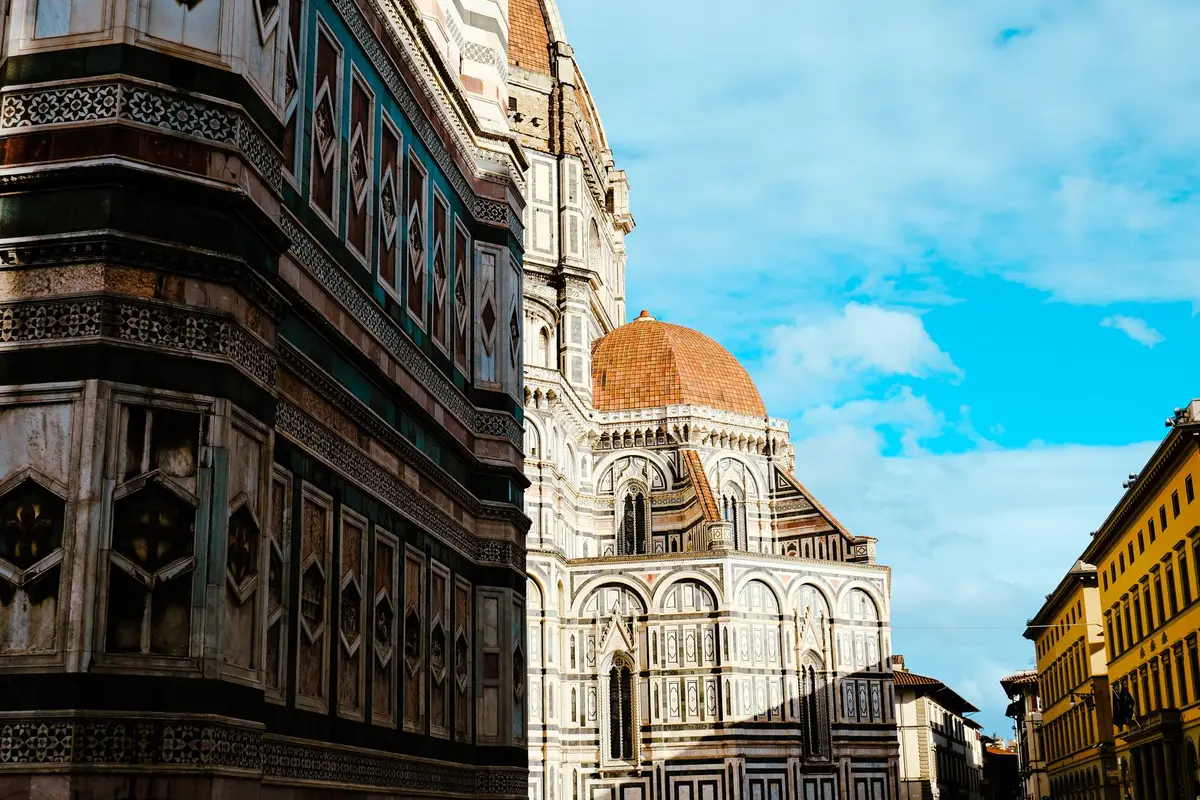
Entry to the cathedral is free, but to see up close what makes the Duomo famous — Brunelleschi’s dome, Giotto’s Campanile, the Baptistery, and the Museum — you’ll need the combined Brunelleschi Pass ticket. Climb the dome early in the morning: it’s 463 steps with no elevator, and the afternoon heat makes the ascent much more tiring.
Book in advance through the combined ticket for the Baptistery, Duomo Museum, and Giotto’s Campanile, which includes a scheduled time slot and lets you skip the line at the ticket office.
Galleria degli Uffizi
One of the largest collections of Renaissance art on the planet, featuring works by Botticelli, Da Vinci, and Michelangelo. On the first Sunday of every month, entry is free — but arrive well before opening, because the free line usually wraps around the block. Apart from that day, a timed-entry ticket costs €4 more than the standard one and is worth every cent in time saved.
Ponte Vecchio
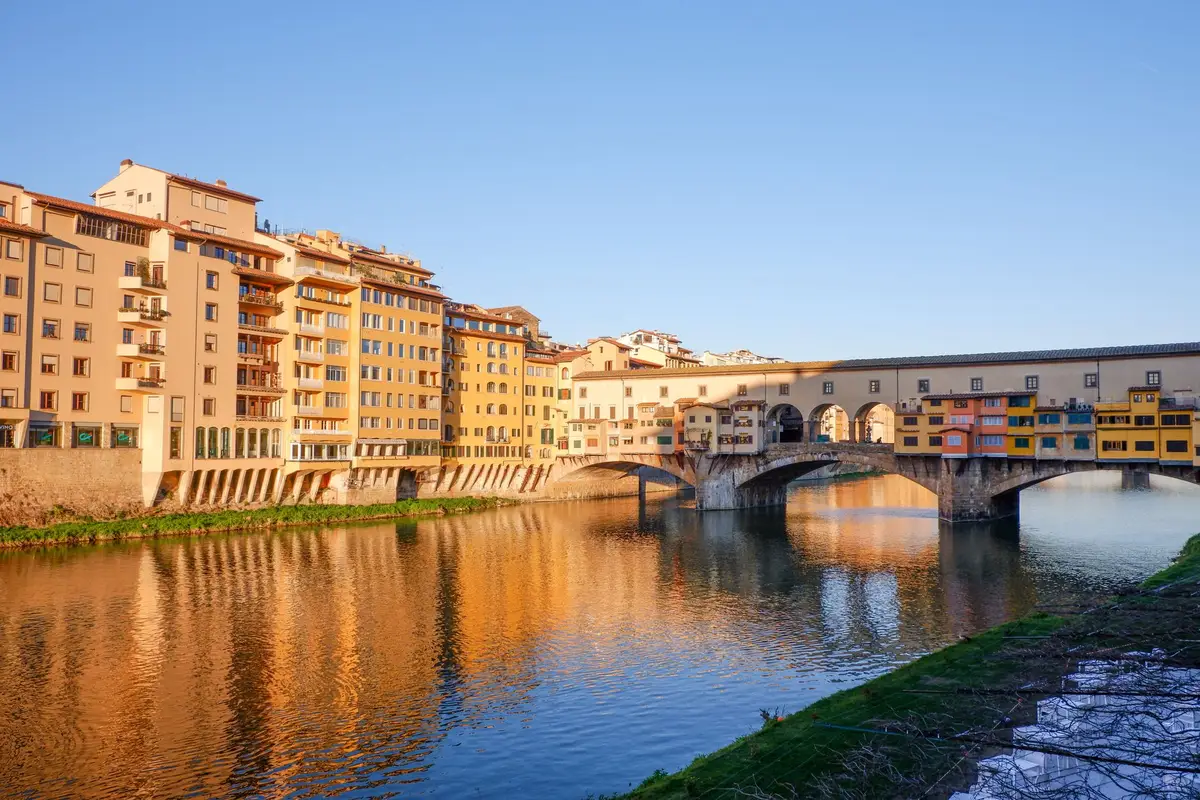
Europe’s most famous medieval bridge crosses the Arno River lined with jewelry shops that have occupied the same spot since the 16th century. There’s no entry fee — cross it in the late afternoon, when the golden light hits the river and the shops are still open.
Piazzale Michelangelo
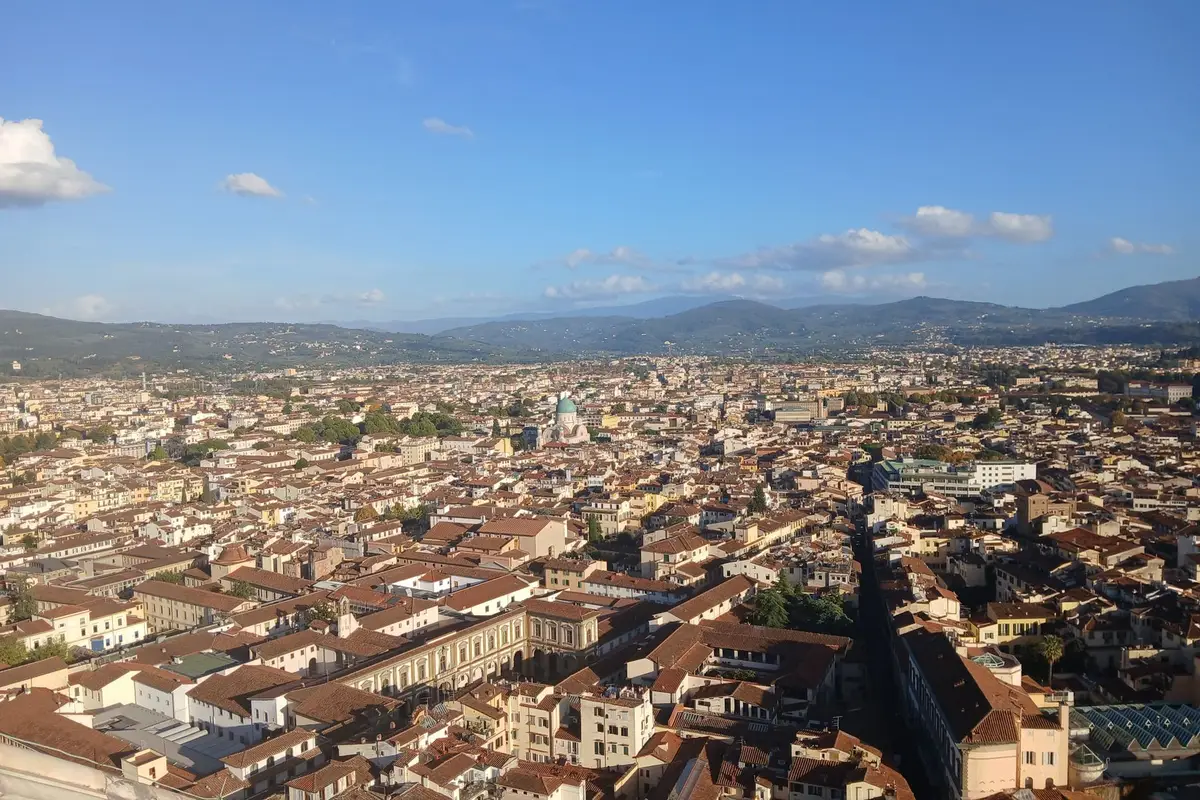
The 15-20 minute walk up from the Oltrarno leads to the city’s best free viewpoint: from there, you can see all of Florence, with the Duomo at the center of the landscape. Go just before sunset — it’s the busiest time, but also the most beautiful.
Galleria dell’Accademia
Here you’ll find Michelangelo’s original David, sculpted between 1501 and 1504. The gallery is small and the visit is quick, but tickets are also in high demand — book a timed entry, especially between June and August.
What to Combine with Florence
The Leaning Tower of Pisa is an hour away by train and can be visited in half a day — check out our complete guide to the Leaning Tower of Pisa to plan your day trip. If you have more time, you can continue to Rome by high-speed train in 1h30; check out our complete Rome guide before deciding on your itinerary. Siena, San Gimignano, and the Chianti region are also classic full-day trips from Florence, ideal for those who want to see rural Tuscany beyond the capital.
For day trips leaving directly from Florence — including Pisa, Siena, and Chianti — it’s worth checking out the options from the Pisa and Leaning Tower excursion, which takes care of transportation and tickets.
Where to Eat
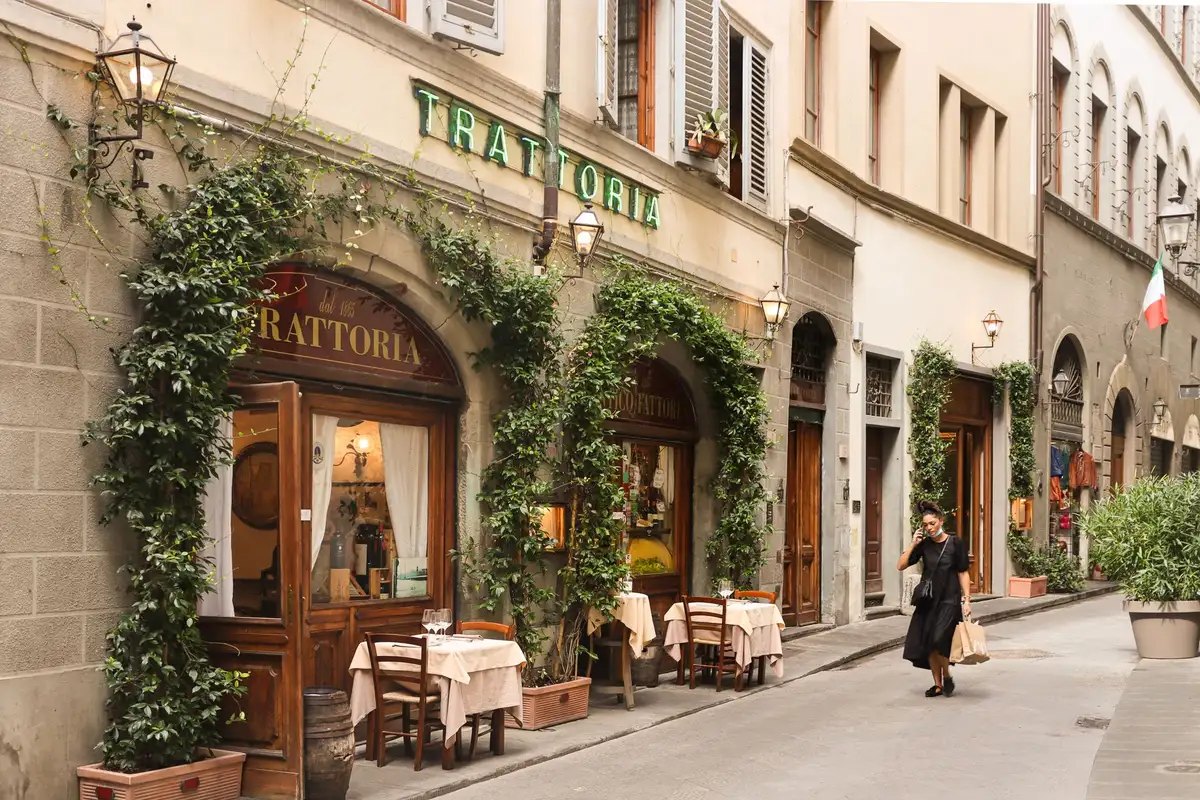
Florence is the home of bistecca alla fiorentina — a generous cut of grilled steak, usually served to share between two people. Also try lampredotto, a tripe sandwich sold at street stalls, cheaper and equally traditional. At the Mercato Centrale, you’ll find producer stalls on the ground floor; upstairs, a food hall with dozens of options for any time of day.
Avoid restaurants with photographed menus and “tourist menus” right in front of the Duomo — prices go up and quality goes down. Walk two or three blocks away from the main tourist spots and prices tend to be fairer.
Where to Stay
The historic center (near the Duomo and Piazza della Signoria) puts everything just a few minutes’ walk away, but it costs more and gets crowded with tourists at night. Oltrarno, across the river, is equally close on foot and has a more authentic neighborhood vibe, with slightly lower prices. Santa Maria Novella, around the train station, is practical for those arriving late or leaving early, but it’s less charming.
Practical Tips
Book the Duomo, Uffizi, and Accademia at least a week in advance during high season — in July and August, some time slots sell out days ahead. The combined “Passepartout 5 Days” ticket, which grants access to the Uffizi, Palazzo Pitti, and Giardino di Boboli, costs €38 (July 2026) and is worth it if you plan to visit all three.
The historic center is small and flat — you can do everything on foot, no public transport needed. Bring comfortable shoes: Florence’s cobblestones will punish your feet after a full day of walking.
Frequently Asked Questions
How many days do I need to see Florence?
Two days cover the essentials — the Duomo, Uffizi, Ponte Vecchio, and Piazzale Michelangelo. Three days give you time for the Accademia and a more relaxed stroll through Oltrarno.
What’s the best time to visit Florence?
April–May and September–October offer the best balance of pleasant weather and fewer crowds. June through August is hotter and busier; from November to March the city is quiet but cold and damp.
Is entry to Florence’s Duomo free?
Yes, entry to the cathedral itself is free. Climbing the dome, visiting Giotto’s Campanile, the Baptistery, and the Duomo Museum requires a paid ticket, sold as a combo.
Do I need to book Uffizi tickets in advance?
It’s highly recommended, especially between June and August. Without a reservation, the line can stretch past two hours; booking a timed entry costs about €4 extra.
Can I visit Florence on a day trip from Rome?
It’s possible, but tight — the high-speed train takes about 1h30 each way, leaving you with only a few hours in the city. Ideally, spend at least one night to make the most of it.
Conclusion
Florence rewards those who arrive with tickets sorted and a relaxed itinerary: the city is small enough to be explored on foot, and dense enough in art and history to justify every hour of queue avoided with a good reservation. For more Italy and Europe itineraries, keep exploring the guides at voyagevoyage.com.br.