 Marcelo Oliveira
The Butte-aux-Cailles is the Paris neighborhood for anyone looking to swap monumental avenues for small streets, low facades, ever-changing murals, and no-fuss tables. In the 13th arrondissement, between Place d’Italie and Parc Montsouris, it fits into half a day; with lunch and a stroll to the Cité Florale, it becomes one of the best local Paris itineraries.
Hotels in Parisfree cancellation options onlySee hotels ›Booking.com partner (advertising): we may earn a commission at no extra cost to you.
To compare another side of Parisian street art, also check out our guide to Belleville in Paris, with its viewpoint and multicultural restaurants.
To explore the Butte-aux-Cailles, get off at Corvisart or Place d’Italie, wander the streets of the Butte-aux-Cailles, des Cinq-Diamants, and Daviel, and set aside three to five hours to see street art, eat, and explore without a rigid map. The best strategy is to walk slowly and embrace the detours.
How to get to the Butte-aux-Cailles
The Butte-aux-Cailles sits in the 13th arrondissement, south of central Paris. Corvisart is the most practical station for diving straight into the neighborhood vibe; Place d’Italie works better if you’re coming from other parts of the city and want to pass through the busier surroundings first. From there, walk toward Rue de la Butte-aux-Cailles without trying to find a “gateway”: the contrast appears gradually.
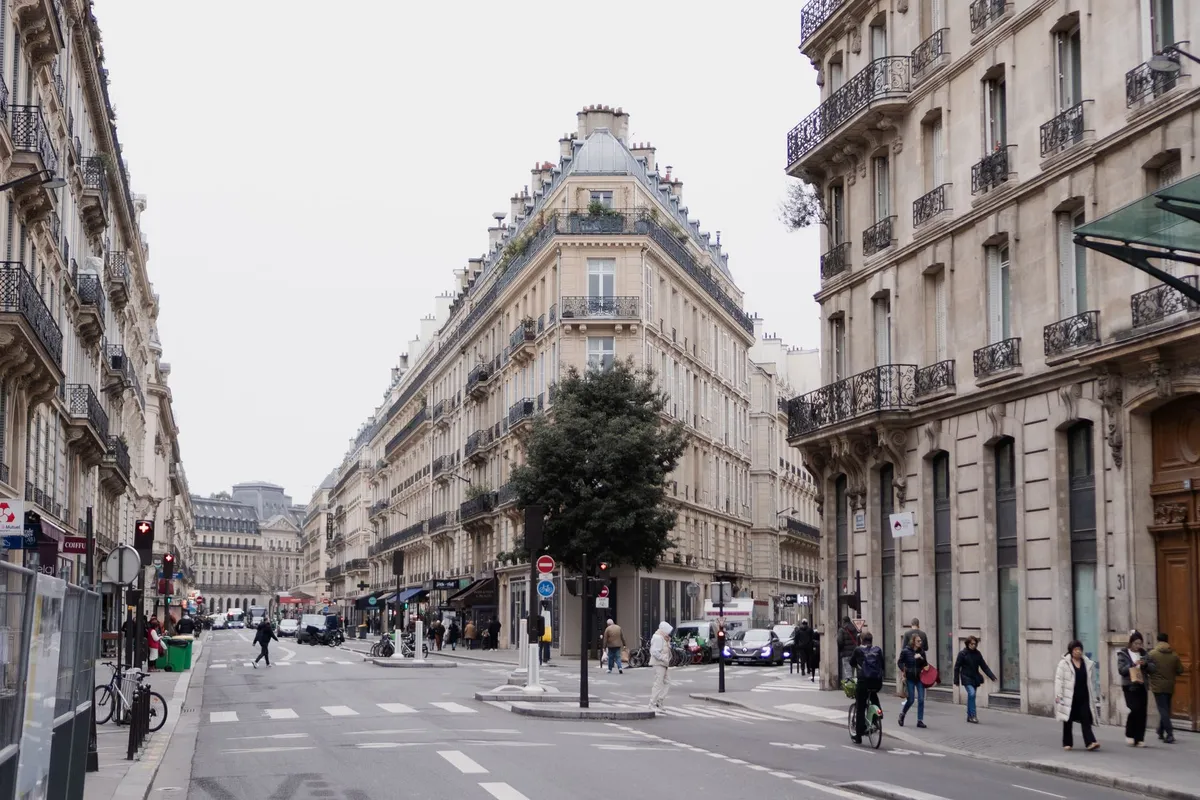
Taking the metro is simpler than using a taxi. The neighborhood is compact, has gentle slopes, and makes sense on foot; save the bike or car for another day. If you start at Place d’Italie, treat the transition from big buildings to narrow streets as part of the walk. In a few minutes, Paris changes scale.
The Butte-aux-Cailles isn’t an attraction with set hours, an entrance fee, or an official route. The Paris je t’aime page places it between Place d’Italie and Parc Montsouris, with the pool and street art among its landmarks. Go with a starting point in mind and let the side streets decide the rest.
Best time and how long to stay
The Butte-aux-Cailles is great year-round, but it’s especially pleasant on dry spring and fall days, when walking and sitting at an outdoor table are comfortable. In summer, start in the morning or late afternoon; in winter, plan lunch and coffee so you’re not relying only on the streets. The street art keeps changing, so there’s no “right time” to catch the murals.
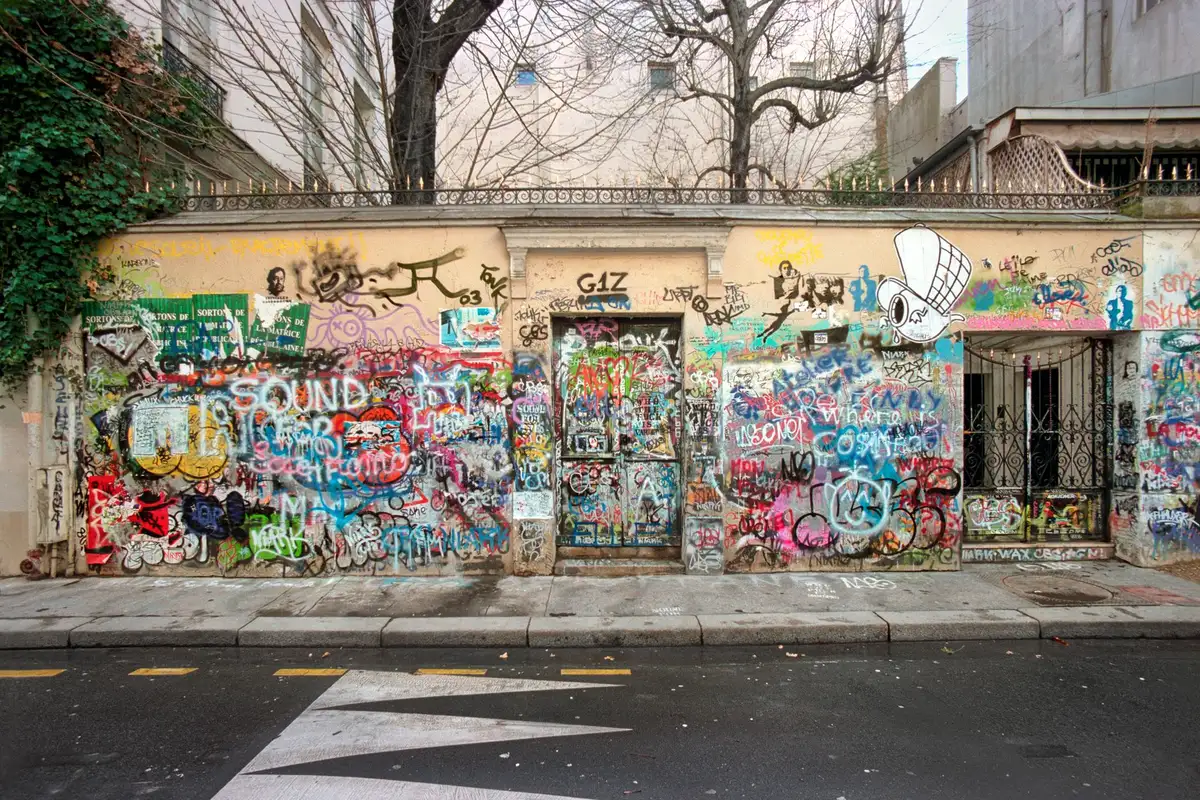
Three hours are enough to walk around and grab a coffee. Five hours let you photograph at a relaxed pace, have lunch, and stretch over to the Cité Florale. This isn’t the best neighborhood to squeeze in between the Louvre and the Eiffel Tower: the two ends of Paris require travel time, and you’d lose exactly what you came for—that feeling of wandering without a set schedule.
Photography lovers should pick the early morning, when the light hits the facades and the sidewalks are less crowded. If you’re after bars and evening vibes, arrive near the end of the afternoon. Either way, leave some slack in your plan: a wall painted today might look different on your next visit.
What to see and do in the Butte-aux-Cailles
The main activity is walking. Rue de la Butte-aux-Cailles, Rue des Cinq-Diamants, Rue Daviel, Rue Alphand, and the small stretches around them are packed with houses, narrow sidewalks, and artistic interventions. Look for pieces without turning the walk into a hunt for a fixed checklist: many of the best finds are on doors, side gables, and nearly hidden passageways.
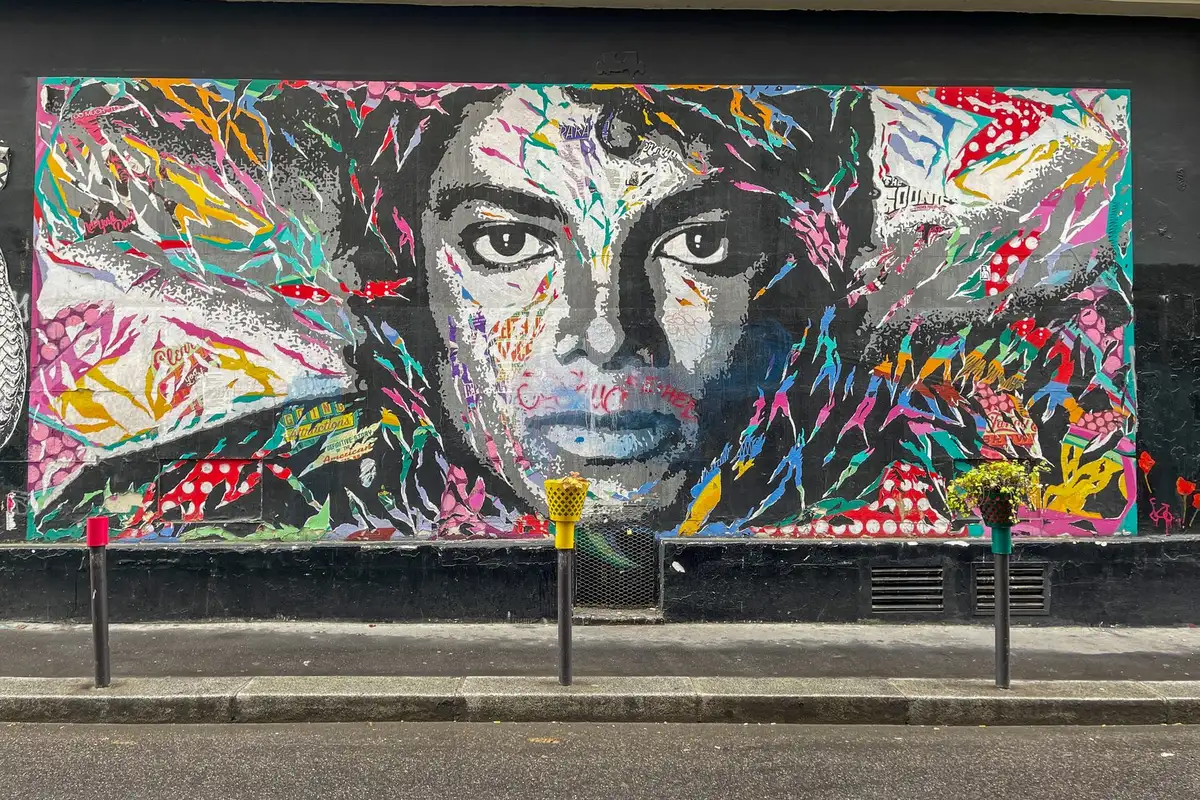
The city of Paris highlights the Butte-aux-Cailles as one of its street art territories and cites, for example, a work by Seth on Rue Oublot. That’s useful as a reference, but not as a guarantee that a piece will look the same: street art is temporary. Photographing, observing, and moving on is more respectful than hunting for a work as if it were a fixed collection.
The Piscine de la Butte-aux-Cailles is another landmark. The Art Nouveau building opened in 1924, features a grand vaulted ceiling, and is recognized as a historic monument; the City of Paris explains its history. To swim, check hours, conditions, and any closures directly on the municipal website before leaving your hotel.
 Partner · Civitatissee all activities in Paris ›
- See ›Montmartre Free Walking TourRating 9.5 · 828 reviews on Civitatis
- Seine River CruiseRating 8.4 · 14,366 reviews on Civitatisfrom€21per personSee ›
- Eiffel Tower 3rd Floor TicketsRating 8.1 · 2,758 reviews on Civitatisfrom€99per personSee ›
- Paris Hop On Hop Off Bus, Big BusRating 8.4 · 7,822 reviews on Civitatisfrom€49per personSee ›
Civitatis prices on 28/09/2026, from, per person. They may change. Want to compare? Activities in Paris on GetYourGuide ›
What to combine on the same day
Pair the Butte-aux-Cailles with the Cité Florale if you want to extend the residential atmosphere, or with Chinatown/the 13th’s avenues if you prefer urban contrast and Asian food. The first plan is a peaceful walk; the second mixes scenery and restaurants. Both work better than trying to cross the city to Montmartre in the same stretch.
For a first trip, the Butte-aux-Cailles also pairs well with our guide to Notre-Dame de Paris, but on separate days. Notre-Dame is all about history and lines; the Butte calls for unstructured time. That split keeps your trip more balanced and avoids using the word “local” for a neighborhood you rushed through.
Where to eat and drink in the neighborhood
Eating in the Butte-aux-Cailles is about choosing based on the moment. There are cafés, bistros, and bars around the main streets, but the best spot depends on the day, the time, and the line. Do a loop before deciding, read the menu, and see if the table fits your break. For lunch, arriving early helps; for dinner, it’s worth booking at the small, in-demand places.
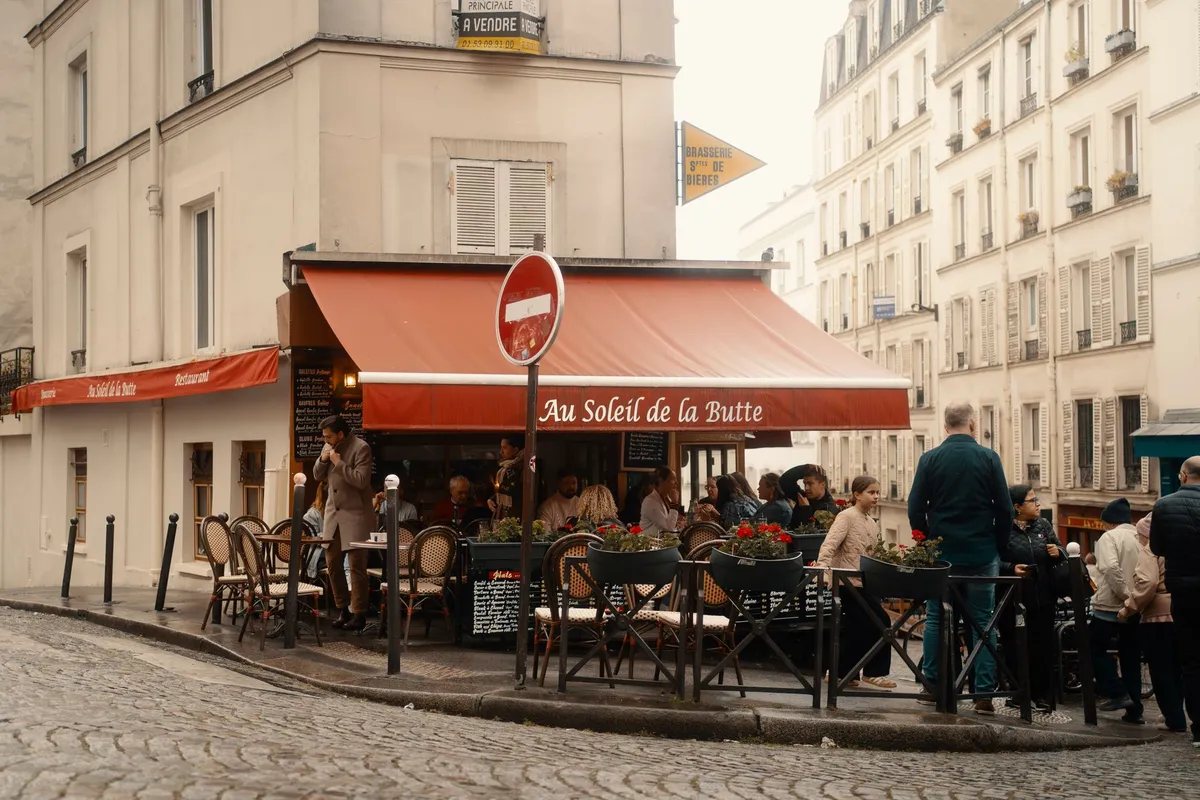
Avoid building expectations around a single spot you saw on social media. The payoff of this neighborhood is being able to choose spontaneously: coffee to start, a simple lunch, dessert, and maybe a glass of wine at the end of the afternoon. If the line is long, take it as a sign to walk two streets over: there’s almost always a calmer option nearby.
Where to stay to explore the Butte-aux-Cailles
Staying near Place d’Italie is an efficient choice for anyone who wants metro access, restaurants, and prices that can be more moderate than in touristy neighborhoods. The Butte-aux-Cailles is walkable, but you’re still connected to the center. Sleeping in the heart of the neighborhood, on the other hand, is a choice for atmosphere, not for proximity to the big postcard sights.
Before booking, check the actual metro station rather than just the straight-line distance. It’s also worth checking for air conditioning in summer, an elevator, and luggage policies, since old buildings and small streets can make arrival less practical. For a short trip, being near a metro line matters more than finding the most charming facade.
Where to stay in Paris
| Hotel | Rating | |
|---|---|---|
| Westside Arc de Triomphe HotelÉtoile and Champs-Élysées · 800 m from the Arc de Triomphe | 8,6936 reviews | See prices |
| Hôtel KepplerÉtoile and Champs-Élysées · 450 m from the Arc de Triomphe | 9,3811 reviews | See prices |
| Hôtel Elysées RégenciaÉtoile and Champs-Élysées · 600 m from the Arc de Triomphe | 8,71.583 reviews | See prices |
| Le Tsuba HotelÉtoile and Champs-Élysées · 450 m from the Arc de Triomphe | 9,01.210 reviews | See prices |
| Hôtel Etoile MaillotÉtoile and Champs-Élysées · 800 m from the Arc de Triomphe | 8,81.448 reviews | See prices |
| The Chess HotelOpéra · 200 m from the Opéra Garnier | 8,4471 reviews | See prices |
| Le Basile HôtelOpéra · 350 m from the Opéra Garnier | 9,21.376 reviews | See prices |
| Hôtel Saint-Pétersbourg Opéra & SpaOpéra · 300 m from the Opéra Garnier | 8,83.997 reviews | See prices |
| Hôtel le 209 Paris BercyBercy and Gare de Lyon · Near the Grand Bleu quay | 8,42.695 reviews | See prices |
| Novotel Paris Gare de LyonBercy and Gare de Lyon · Gare de Lyon | 8,52.985 reviews | See prices |
| Novotel Paris Centre BercyBercy and Gare de Lyon · Bercy | 8,63.646 reviews | See prices |
| Hotel de Flore - MontmartreMontmartre · Montmartre | 8,53.935 reviews | See prices |
| Hôtel BOHEM, Sacré-CœurMontmartre · Near Sacré-Cœur | 9,3502 reviews | See prices |
| Hôtel des Arts MontmartreMontmartre · Montmartre | 9,62.522 reviews | See prices |
Booking.com rating on 30/09/2026
Practical tips to make the most of it
Wear comfortable shoes and keep your phone charged for maps and photos. The neighborhood is safe for a typical daytime walk, but it’s still Paris: watch your wallet and documents in crowded areas, avoid leaving things on the table, and take the metro back late if you don’t know the way.
Don’t photograph residents or restaurant tables as if they were scenery. The Butte-aux-Cailles has tourism, but it’s a residential neighborhood with daily life. Respecting doors, entrances, and sidewalk passage preserves exactly what makes the place special. If you visit the pool, bring ID and confirm the rules beforehand: municipal hours can change.
There’s a bit of history behind the neighborhood’s different scale. The hill remained outside Paris’s limits for a long time and was urbanized in its own way; that’s why some streets escape the grand boulevard layout that dominates other areas. You don’t need to memorize dates to enjoy the walk, but understanding this origin helps you see the houses and the slopes as part of a city that grew in layers.
Also plan your way back. After lunch or the bars, Corvisart and Place d’Italie keep the neighborhood well connected, but a line transfer can be more tiring than it seems after many hours of walking. Save your hotel address, double-check the last route on your transit app, and only use a taxi when it makes sense for your luggage or the time of night. This simple prep keeps the end of the evening easy.
If you’re traveling with kids, choose the short walk and pair the neighborhood with a stop at the pool only if the age rules and hours allow. For solo travelers, it’s a great spot to sit at a café and watch the world go by without feeling like you’re in a purely touristy zone. Couples can use the neighborhood as a more laid-back alternative to dinner in overly crowded areas.
To round out your trip with a different view of the city, it’s worth booking a Seine river cruise for another day. If you also want to see Paris from above, you can secure your Eiffel Tower ticket before the trip.
Check out other Paris activities that might fit into the rest of your itinerary.
 HotelAs soon as you have datesCompare neighbourhoods and guest ratings.See hotels ↑
- ActivitiesBefore you travelBook ahead the ones with limited spots.Civitatis ›
 More activitiesTo compareTickets, day trips and tours with flexible cancellation.GetYourGuide ›
Frequently Asked Questions
Is Butte-aux-Cailles worth it?
Butte-aux-Cailles is worth it if you want to see a less monumental side of Paris, with small streets, bars, and street art. It works best as a half-day or evening outing, without trying to squeeze in too many distant attractions on the same itinerary.
How do I get to Butte-aux-Cailles by metro?
Corvisart is a convenient station for reaching Butte-aux-Cailles and starting your walk; Place d’Italie is also great, especially if you’re coming from other metro lines and want to explore the 13th arrondissement.
Where is the street art in Butte-aux-Cailles?
The street art in Butte-aux-Cailles appears mainly on the streets of Butte-aux-Cailles, des Cinq-Diamants, Daviel, Alphand, and nearby alleys. The pieces change frequently, so walking without a rigid route is the best way to discover current works.
Is the Piscine de la Butte-aux-Cailles open to the public?
The Piscine de la Butte-aux-Cailles is a municipal pool open to the public during set hours. Before swimming, check the schedule, prices, and any closures on the official City of Paris website.
Conclusion
Butte-aux-Cailles is Paris for those who accept that the best memory might be a street, a mural that disappears tomorrow, or a leisurely lunch. Give the neighborhood time, walk with intention, and discover more itineraries on Voyage Voyage.