 Marcelo Oliveira
Monaco, the second-smallest country in the world, is small enough to fit on a pocket map, but five days here offer far more than the half-day dash most tourists make from Nice. You’ll have time to leisurely climb up to the Rocher, understand why the Monte-Carlo Casino became a global symbol of luxury, walk the Formula 1 circuit, and still escape to Èze or Nice on a quick train trip.
Hotels in Monacofree cancellation options onlySee hotels ›Booking.com partner (advertising): we may earn a commission at no extra cost to you.
A 5-day Monaco itinerary covers the Rocher and the Prince’s Palace, the Oceanographic Museum, the Monte-Carlo Casino, Port Hercule, and the Formula 1 circuit, with time to spare for Larvotto Beach and a day trip to Èze. Staying in Nice or Menton, just minutes away by train, helps you save a lot—Monaco has some of the most expensive hotel rates in Europe.
How to get to Monaco
“Can you really do Monaco as a stress-free day trip?” Yes, and the train is the simplest way to do it. Monaco doesn’t have its own airport: you’ll fly into Nice Côte d’Azur Airport (NCE), about 30 km away. From the airport, the most practical route is a taxi, private transfer, or bus to the Nice train station, followed by a train to Monaco.
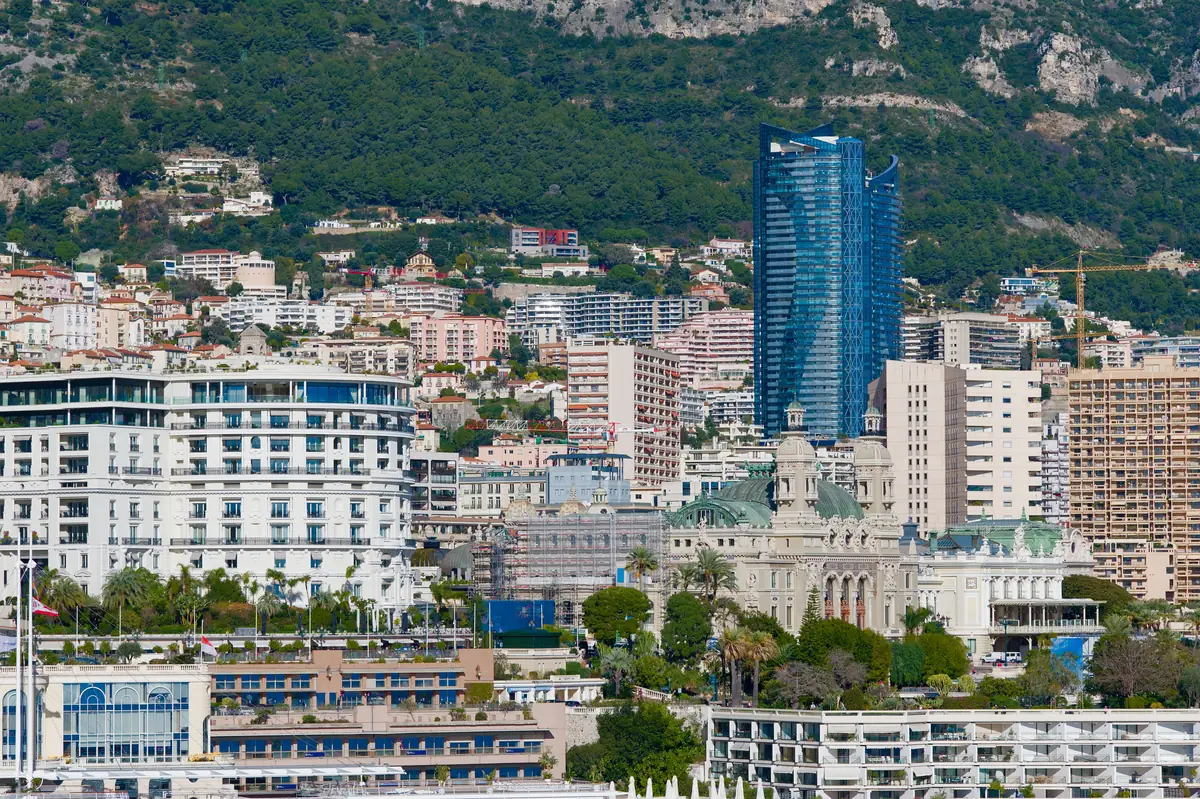
From Nice to Monaco, the regional train (TER) is the cheapest and fastest option: the journey takes about 20 minutes and starts at €9.00 (July 2026), with departures every 15 minutes for most of the day. The Monaco Monte-Carlo station is right in the city, according to the official Monaco tourism website, and from there you can walk to most central attractions. If you’d rather not switch modes of transport, you can book a train excursion from Nice with a guide and organized itinerary, which makes things much easier if you’re short on time.
If you’re driving, keep in mind that Monaco has narrow streets, lots of tunnels, and expensive parking—it’s better to leave the car in Nice or Menton and take the train for the final leg. Once inside the principality, getting around on foot is easy: from one end to the other, the entire country is just over 2 km.
Best time to visit and how long to stay
“Is it better to go in the buzzing summer or avoid the crowds?” It depends on what you’re after. Between May and September, temperatures range from 22°C to 30°C, the sea is inviting for a swim, and the event calendar (including the Formula 1 Grand Prix itself, in May) is in full swing—but accommodation prices skyrocket and lines get longer. September and October still bring warm days (16°C to 20°C) with far fewer people, making them a great choice if you prioritize comfort over the party scene.
Five days is enough time to explore Monaco at a relaxed pace and still set aside at least one full day for a day trip to Èze, Menton, or Nice itself—all less than 30 minutes away by train, which really expands your itinerary without needing to switch hotels.
What to see: a day-by-day 5-day itinerary
“Where do you even start in such a tiny country?” With the oldest neighborhood. Splitting your five days by area keeps you from crisscrossing the city and leaves room for spontaneity—and for simply sitting on a terrace and watching the sea.
Day 1 — The Rocher, the historic district
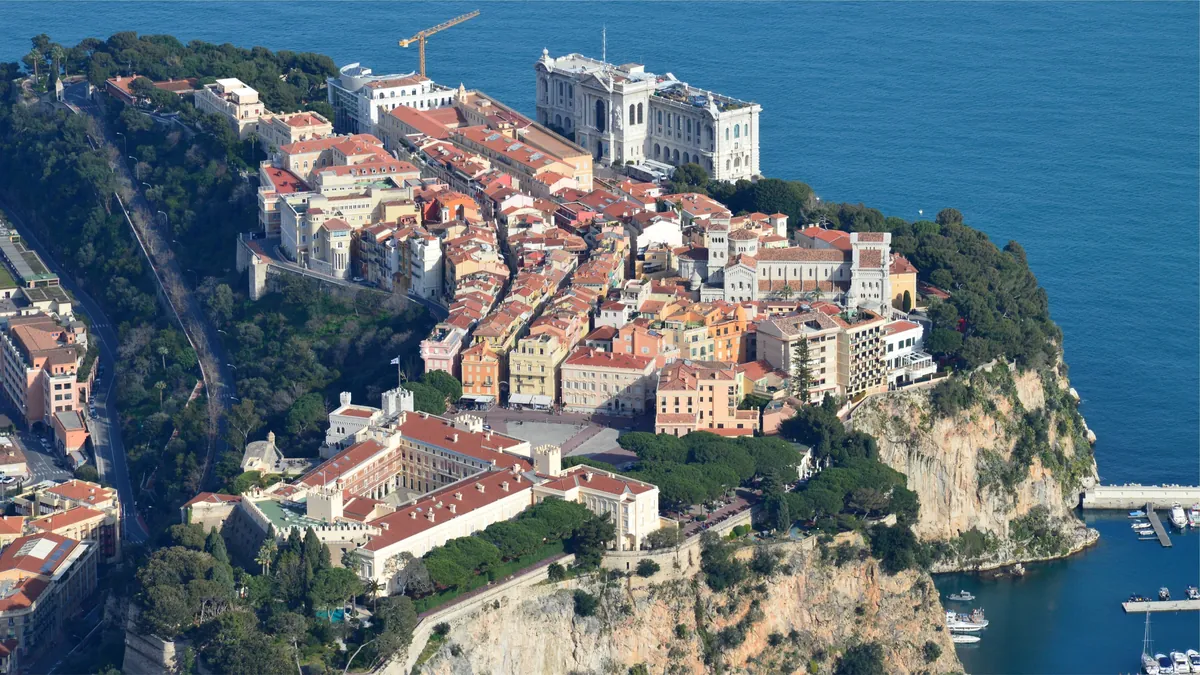
Start at the Rocher (Monaco-Ville), the cliff where the city was born. Climb up the Rampa Principal to the Prince’s Palace, where the changing of the guard happens promptly at 11:55 am—arrive 20 minutes early to get a good spot. Right next door, Monaco Cathedral holds the tomb of Princess Grace Kelly, and the Saint Martin Gardens offer one of the most beautiful views of the coastline. Spend the afternoon at the Oceanographic Museum of Monaco, perched on a cliff overlooking the sea, with shark and ray tanks and one of Europe’s largest coral reef collections; tickets cost €16 for adults and €10 for children, students, and seniors (July 2026). To skip the line, the skip-the-line ticket to the Oceanographic Museum lets you pick your day and bypass the ticket booth.
Day 2 — Port Hercule and the Formula 1 circuit
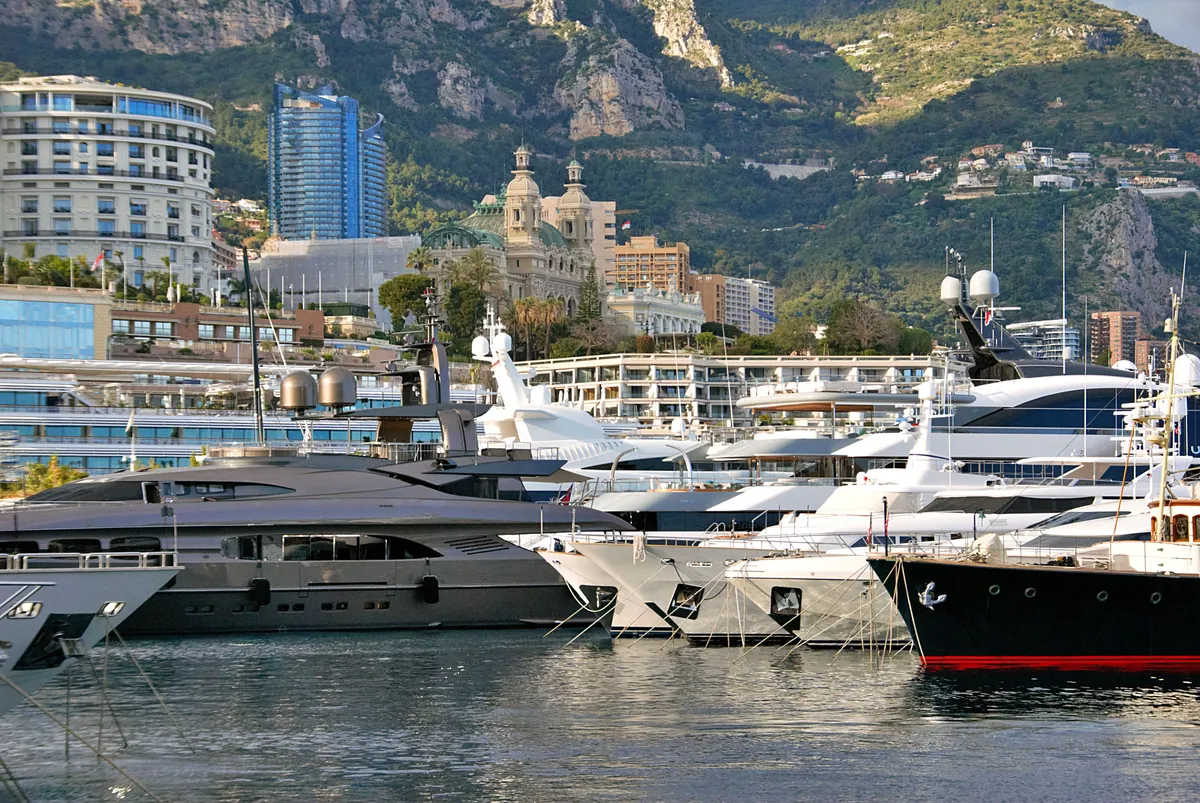
Day two is for strolling along Port Hercule, where envy-inducing yachts sit side by side, and following the route of the Monaco Grand Prix street circuit—the Fairmont hairpin, the tunnel, and the pit straight are spots any racing fan will recognize instantly, even without entering a closed track, since the circuit is made up of the city’s regular streets. If you want to understand the story behind each corner, it’s worth booking a guided tour of the Formula 1 circuit, which brings the race’s behind-the-scenes details to life in a way you’d miss on a self-guided walk.
Day 3 — Monte-Carlo and the Casino
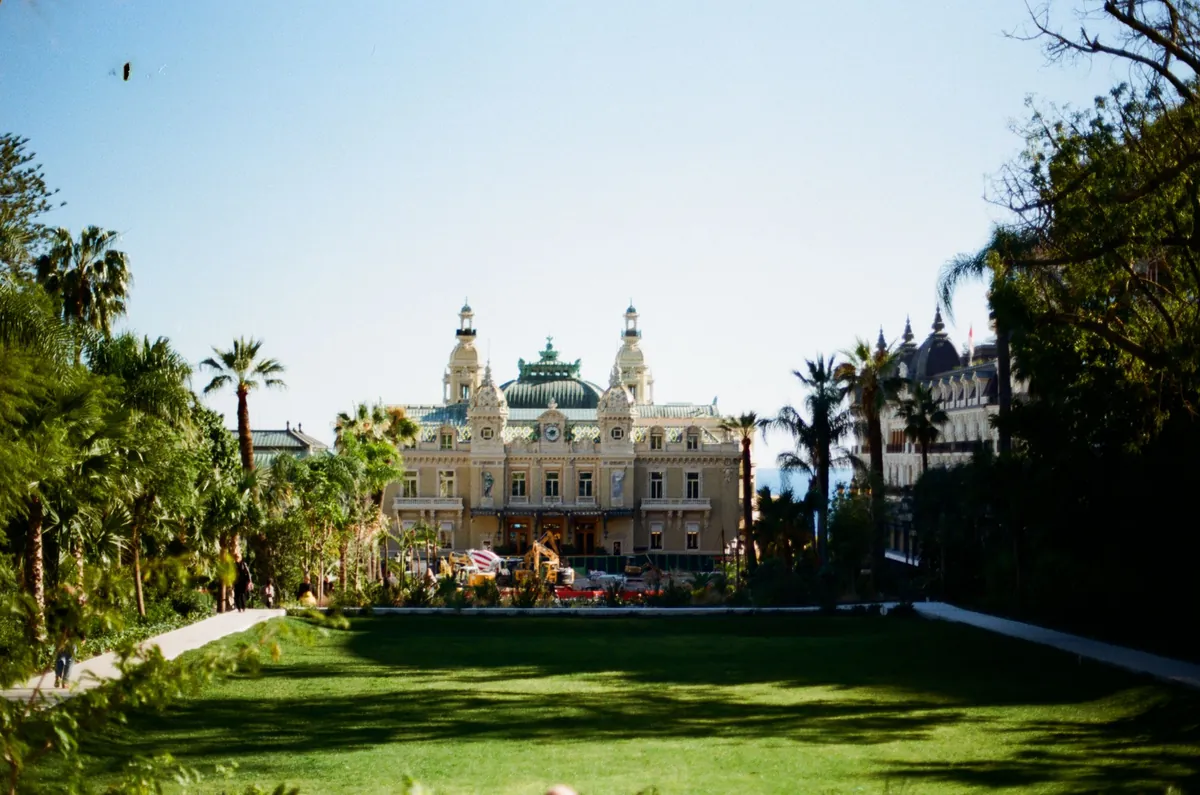
Monte-Carlo is the district that gave European luxury its name. The Belle Époque facade of the Monte-Carlo Casino is free to photograph from the outside, and the entrance hall is also open to visitors; to see the gaming rooms, you need to be over 18, pay an entry fee, and follow a more formal dress code in the evening. Right next door, the Place du Casino is home to international designer boutiques and the Café de Paris, great for an overpriced coffee but with a view of the sports cars parked out front.
Day 4 — Larvotto Beach and the Japanese Garden
After three days of pounding the pavement, day four calls for a slower pace. Larvotto Beach is Monaco’s only public beach, with free access and artificial sand, perfect for a swim in the Mediterranean without leaving the country. Just a short walk away, the Japanese Garden of Monaco is a peaceful escape with lakes, wooden bridges, and bamboo groves—worth a calm half-hour stroll. If you’re into water sports, you can rent jet skis, stand-up paddleboards, and aquabikes around the Monte-Carlo Beach Club area.
Day 5 — Day trip to Èze
On your last day, hop on the train to explore Èze, a medieval village perched on a cliff about 15 minutes from Monaco, with stone alleyways and a viewpoint that rivals any postcard from the French Riviera. Menton, further toward the Italian border, is another great day-trip option if you prefer a larger town with beaches and a colorful historic center.
 Partner · Civitatissee all activities in Monaco ›
Oceanographic Museum Ticket
Rating 8.8 · 63 reviews on Civitatis
- Formula 1 Circuit Guided TourRating 8.9 · 23 reviews on Civitatisfrom€44per personSee ›
- Monaco Guided TourRating 8 · 4 reviews on Civitatisfrom€65per personSee ›
Civitatis prices on 28/09/2026, from, per person. They may change. Want to compare? Activities in Monaco on GetYourGuide ›
What to combine with Monaco
Monaco is rarely a standalone destination — most travelers pair the principality with other stops along the French Riviera or with larger cities in mainland Europe. If your trip includes Paris before or after, be sure to check out the complete Paris guide and the itinerary for Notre-Dame Cathedral to round out your French leg. If you’re passing through Italy, the guides to historic Rome and Venice will help you plan the next stretch of your journey. And if you’re drawn to small countries packed with personality, the Vatican City guide showcases another “country within a city” that’s also doable in just a few days.
Where to Eat
“Can you eat well in Monaco without spending a fortune?” Yes, but it takes some smart choices. Near Port Hercule and on the streets farther from the Casino, neighborhood restaurants serve pasta and Provençal dishes at prices far more reasonable than the trendy spots in Monte-Carlo. At the Condamine Market, you can put together a picnic with cheeses, breads, and fresh fruit for a fraction of what you’d pay at a restaurant. For a special occasion, the principality’s Michelin-starred addresses — many inside the grand hotels — come with a hefty price tag, but they deliver a dining experience worthy of the hype; book ahead, especially on weekends.
Where to Stay
Monaco has some of the most expensive hotels in Europe, so where you stay has a big impact on your budget. If you want to be within walking distance of everything and don’t mind the price, the Hôtel de Paris Monte-Carlo, right next to the Casino, is the ultimate in Monégasque luxury. The Columbus Monte-Carlo offers a more modern vibe with slightly friendlier rates, and the Hotel Ambassador Monaco is a functional pick for those who prioritize practicality. To really save, the most common move among travelers is to base yourself in Nice or Menton and take the train over each day — a 20-minute ride that opens up a much wider range of hotels and apartments at far more realistic prices.
Where to stay in Monaco
| Hotel | Rating | |
|---|---|---|
| Port PalaceMonte Carlo · Avenue Kennedy 7 | 9,01.648 reviews | See prices |
| Hôtel de Paris Monte-CarloMonte Carlo City Centre · Place du Casino | 9,6465 reviews | See prices |
| Hôtel Hermitage Monte-CarloMonte Carlo City Centre · Square Beaumarchais | 9,3816 reviews | See prices |
| Hôtel Métropole Monte-Carlo - Spa GuerlainMonte Carlo City Centre · Avenue De La Madone 4 | 9,3321 reviews | See prices |
| Hôtel de FranceMonte Carlo · Rue de la Turbie 6 | 8,31.085 reviews | See prices |
| Columbus Hotel Monte-Carlo, Curio Collection by HiltonFontvieille · Avenue Des Papalins 23 | 8,51.646 reviews | See prices |
| Novotel Monte-CarloMonte Carlo City Centre · Bld Princesse Charlotte 16 | 8,43.674 reviews | See prices |
| Fairmont Monte CarloMonte Carlo City Centre · Avenue Des Spélugues 12 | 8,84.642 reviews | See prices |
Booking.com rating on 30/09/2026
Practical Tips
Monaco uses the euro, even though it’s not part of the European Union, and Brazilians don’t need a visa for short tourist stays — always double-check the current rules before you travel, as they can change. Getting around is easy on foot, by city bus, or via the free public elevators, which are a huge help with the terrain’s steep slopes. During the Formula 1 Grand Prix in May, hotels and trains fill up fast and prices spike considerably — if you’re not a racing fan, you might want to avoid those dates. Pack comfortable clothes and walking shoes: despite being small, Monaco has steep hills between the Rocher and Monte-Carlo.
 HotelAs soon as you have datesCompare neighbourhoods and guest ratings.See hotels ↑
- ActivitiesBefore you travelBook ahead the ones with limited spots.Civitatis ›
 More activitiesTo compareTickets, day trips and tours with flexible cancellation.GetYourGuide ›
Frequently Asked Questions
How many days do you need to see Monaco?
One to two days is enough to hit the main sights, but five days lets you explore at a relaxed pace, enjoy the beach, and still squeeze in day trips to Èze, Menton, or Nice.
Is the Monte-Carlo Casino worth visiting?
Yes, for the Belle Époque architecture, which you can admire from the outside for free. Going inside the gaming rooms requires being over 18 and paying an entry fee, with a more formal dress code in the evening.
Do Brazilians need a visa for Monaco?
For short tourist stays, Brazilians typically don’t need a visa, but rules can change — always check official sources before you travel.
How do I get from Nice to Monaco?
By train, in about 20 minutes, with frequent departures starting at €9.00 (July 2026). It’s the most practical option, since Monaco doesn’t have its own airport.
Where should I stay to save money in Monaco?
Nice and Menton, just minutes away by train, offer hotels far cheaper than those in the principality and also work great as a base for other French Riviera excursions.
Conclusion
Five days in Monaco give you room to explore the principality without rushing — from the historic Rocher to the Monte-Carlo Casino, past the Formula 1 circuit and a day trip to Èze — all without giving up a more affordable base in Nice or Menton. For more Europe itineraries and other destinations, keep exploring the guides at voyagevoyage.