 Marcelo Oliveira
Vatican City is the smallest country in the world—44 acres nestled inside Rome—and, at the same time, one of the most visited destinations on the planet. Technically, you don’t “travel to the Vatican”: you pass through Rome and, after a short walk of a few blocks, cross invisibly into another sovereign state, with its own currency, army, radio station, and passport. Entry to St. Peter’s Square and Basilica is free; the Vatican Museums and the Sistine Chapel require a paid ticket. From the US, you can reach Rome with a single layover, and the Vatican is less than 2.5 miles from the historic center. What few tourists realize is that 2025 was a Holy Year—the Jubilee that happens every 25 years—and visitors who went during that period experienced something completely different from any other visit.
Hotels in Romefree cancellation options onlySee hotels ›Booking.com partner (advertising): we may earn a commission at no extra cost to you.
How to get to the Vatican
The Vatican doesn’t have its own airport—you land in Rome, at Fiumicino International Airport (FCO). The Leonardo Express connects Fiumicino to Termini station in 32 minutes for €14 (check the current fare before you travel). From Termini, Metro Line A goes to Ottaviano station in about 15 minutes; it’s another 8 to 10 minutes on foot to St. Peter’s Square. Alternatively, buses 40 and 64 depart from Termini and arrive at Lungotevere, a 10-minute walk from the Vatican.
If you’re already in Rome, the Vatican is easily accessible on foot or by metro from any point in the historic center. From the Trevi Fountain to the Vatican is about a 30-minute walk, a pleasant stroll along the right bank of the Tiber. From the Colosseum, the metro is more practical: Colosseo to Termini, switch to Line A, get off at Ottaviano—about 20 minutes total.
Best time to visit and how long to stay
The golden rule is to avoid July and August: intense heat, lines that can reach 3 hours at the Vatican Museums, and sky-high hotel prices. The most balanced window is from March to May and from September to November. The last Sunday of every month is free at the Vatican Museums—open from 9 AM to 2 PM, with last entry at 12:30 PM. It’s a good option to save money, but be prepared for even longer lines than usual.
If your visit falls during a Holy Year—the next one will be in 2050—the Vatican is especially busy. The 2025 Jubilee attracted tens of millions of additional pilgrims to the city of Rome throughout the entire year, with ceremonies, openings of holy doors, and events that transform the liturgical calendar into a global spectacle.
To cover the essentials—St. Peter’s Square, the Basilica, and the Museums including the Sistine Chapel—you need at least one full day, split into two parts: the Museums in the morning (the earlier the better) and the Basilica in the afternoon, when the lines at the museums have already thinned out. Anyone wanting to see the gardens, the necropolis underground, and other reserved-access areas needs a second day.
What to see and do in the Vatican
The Vatican concentrates more works of art per square meter than anywhere else in the world. According to the most cited data, the Vatican Museums house about 70,000 works—of which only a fraction is on permanent display. But what’s really worth seeing?
The Vatican Museums and the Gallery of Maps
The entrance to the Vatican Museums is on Via dei Musei, on the north side of the complex. The standard ticket costs €20 at the box office (in person) or €25 online including the booking fee—2026 prices, check the official Vatican Museums website before purchasing. Book weeks in advance during high season—time slots sell out regularly.
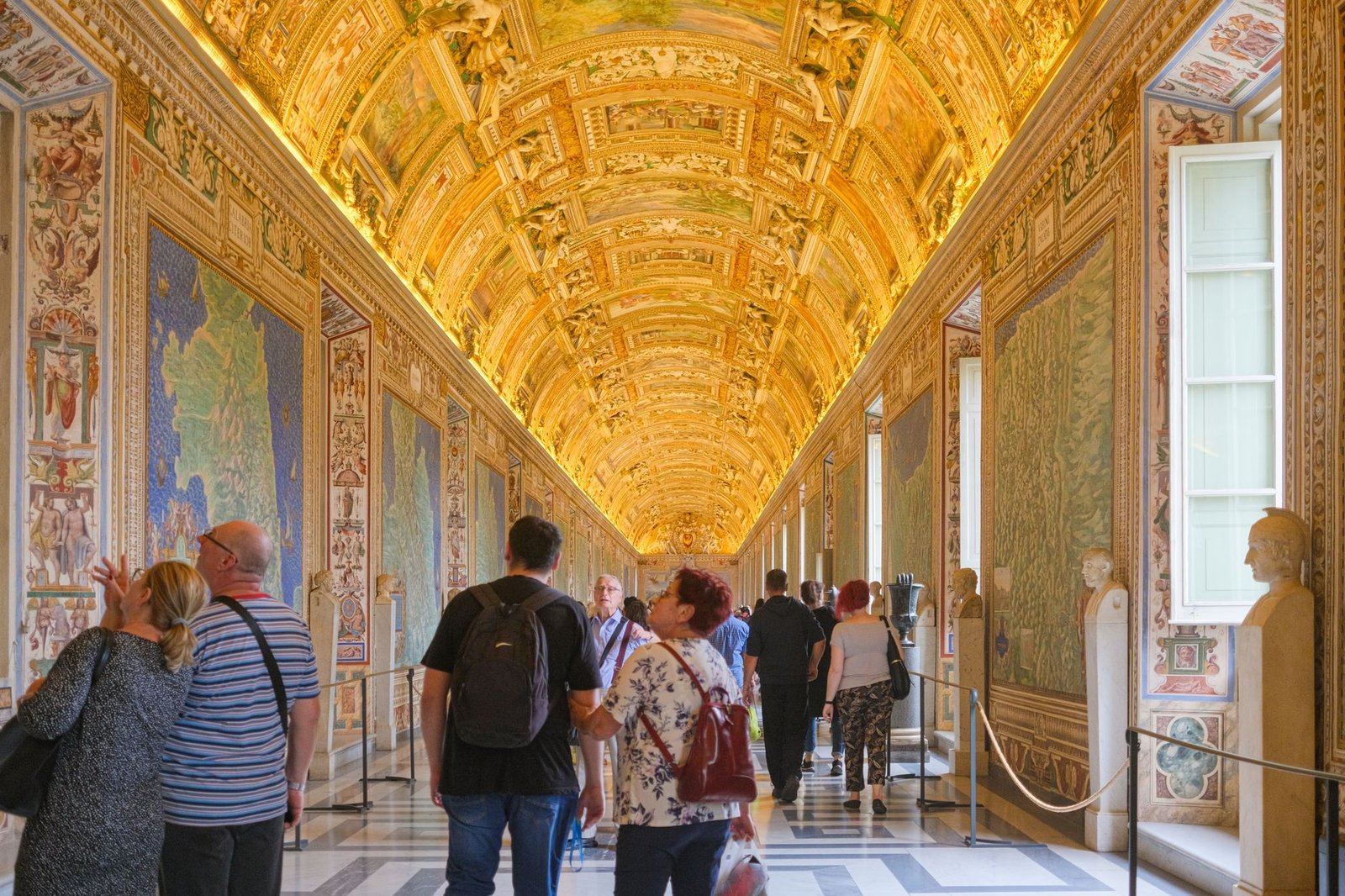
The route through the museums takes you through a sequence of rooms that requires at least 3 hours to enjoy at a relaxed pace. The highlight before the Sistine Chapel is the Gallery of Maps: a 120-meter corridor with a completely frescoed ceiling and 40 cartographic panels of the Italian regions painted in the 16th century. It looks like a geographical archive transformed into a work of art.
The Sistine Chapel
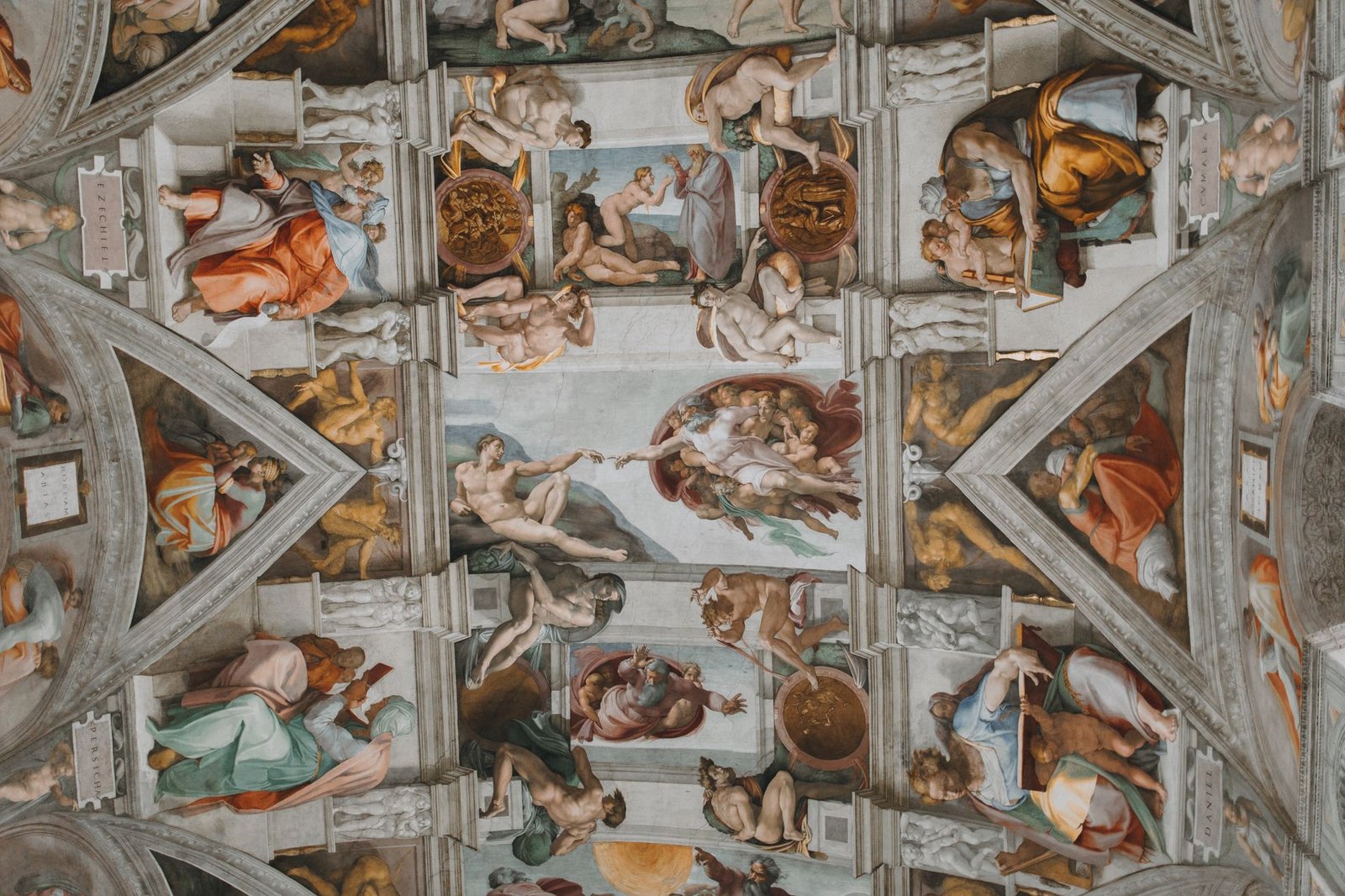
At the end of the museum route, you enter the Sistine Chapel. It’s a rectangular room smaller than most people imagine—and when you look up, Michelangelo’s ceiling painting fills your entire field of vision. He painted the ceiling between 1508 and 1512, reluctantly: he was hired by Pope Julius II at a time when he considered himself a sculptor, not a painter. The result is over 500 figures spread across scenes from Genesis, with the famous “Creation of Adam” right in the center. Photos are prohibited due to an exclusive rights agreement with a Japanese broadcaster that funded the restoration in the 1980s—guards patrol constantly.
St. Peter’s Basilica and the Square
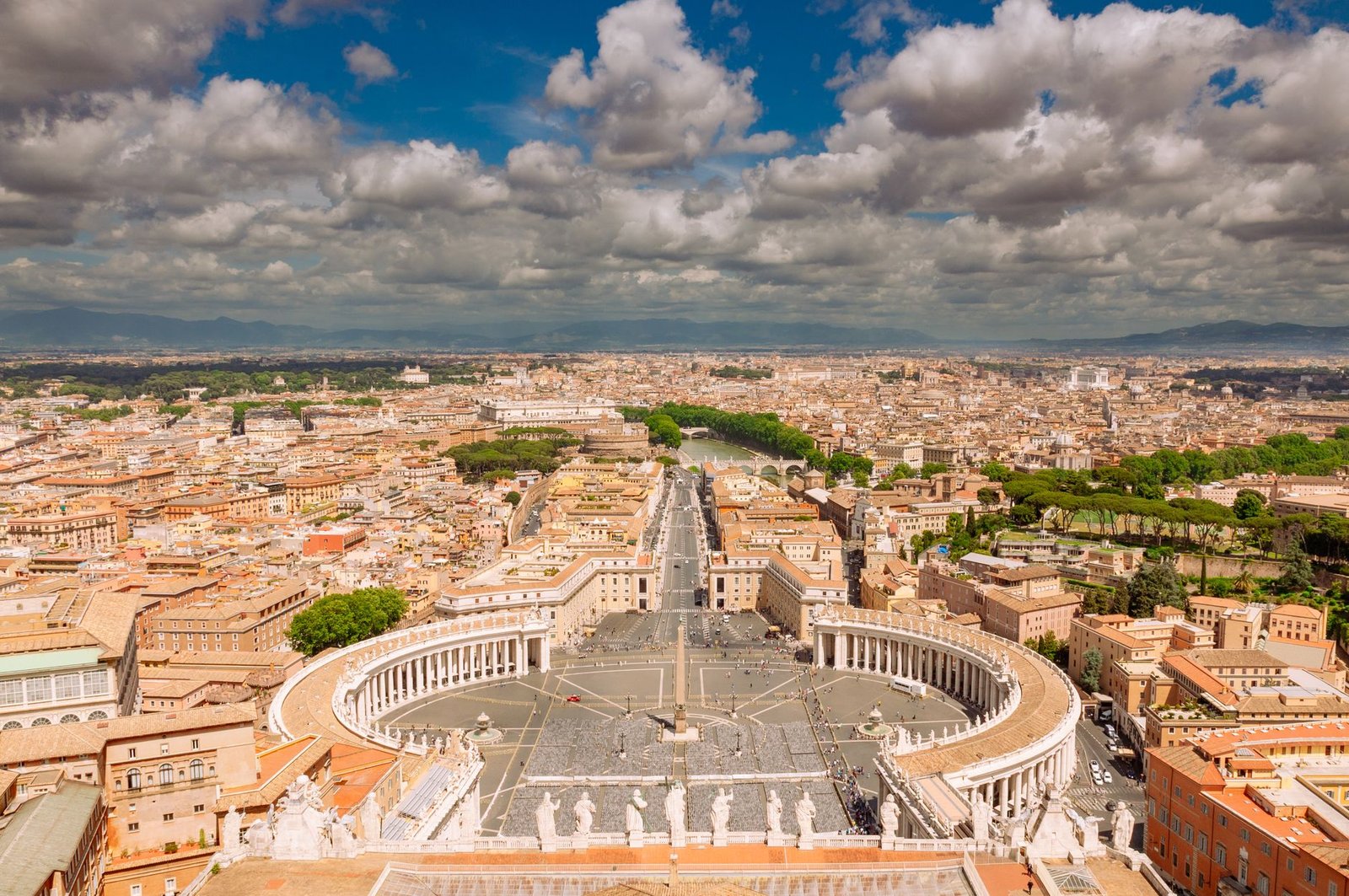
Entry to St. Peter’s Basilica is free from the Square, with a security check. The square itself, designed by Bernini with its two curved colonnades, is one of the most well-resolved public spaces in the history of Western architecture. For everything inside the basilica—Michelangelo’s Pietà, Bernini’s baldachin, the papal tombs, and the climb to the dome—we have a complete guide to St. Peter’s Basilica with all the details and practical tips.
The Vatican as a country: how it works
Why is the Vatican a country? The answer has a date: February 11, 1929, when Benito Mussolini and Pope Pius XI signed the Lateran Treaty. Until then, the question of the Catholic Church’s independence from the Italian state had been in dispute since the unification of Italy in 1870. The agreement recognized the Vatican as a sovereign state—independent, neutral, and inviolable—in exchange for the Vatican’s recognition of the Italian state. Its full official name is the Vatican City State.
The Vatican has about 885 residents, according to 2025 data—the smallest population of any country in the world. Living in the Vatican is possible, but exclusive: residency is granted only to those who work there—members of the clergy, administrative staff, members of the Swiss Guard, and their families. Vatican citizenship is functional, not hereditary: when you stop working at the Vatican, you lose the right of residence and revert to your original nationality.
The official languages are Latin—used in formal ecclesiastical documents and as the Church’s liturgical language—and Italian, the language of daily life, staff, and interactions with Rome. The Pope usually speaks in Italian, but the Holy See’s official documents are issued in Latin.
The Vatican is governed by the Pope, who combines the role of head of state of the Vatican with the spiritual leadership of the Catholic Church. It is an absolute theocratic monarchy—the power is elected (by the College of Cardinals in Conclave) but is for life and not subject to democratic review. The Vatican Secretary of State functions as a kind of prime minister, coordinating the Roman Curia, the Church’s bureaucratic apparatus.
Is the Vatican rich? It depends on how you measure it. The state itself has a relatively modest budget—around €400 million annually, mainly from donations from the faithful (Peter’s Pence) and museum revenues. The Holy See, a distinct legal entity that administers the Catholic Church’s assets worldwide, controls real estate, works of art, and investments of incalculable value. The Vatican is not the country with the highest GDP per capita in the world—that title varies between Monaco and Luxembourg—but it is certainly one of the entities with the highest concentration of historical and artistic wealth on the planet.
The Swiss Guard and the oldest active army
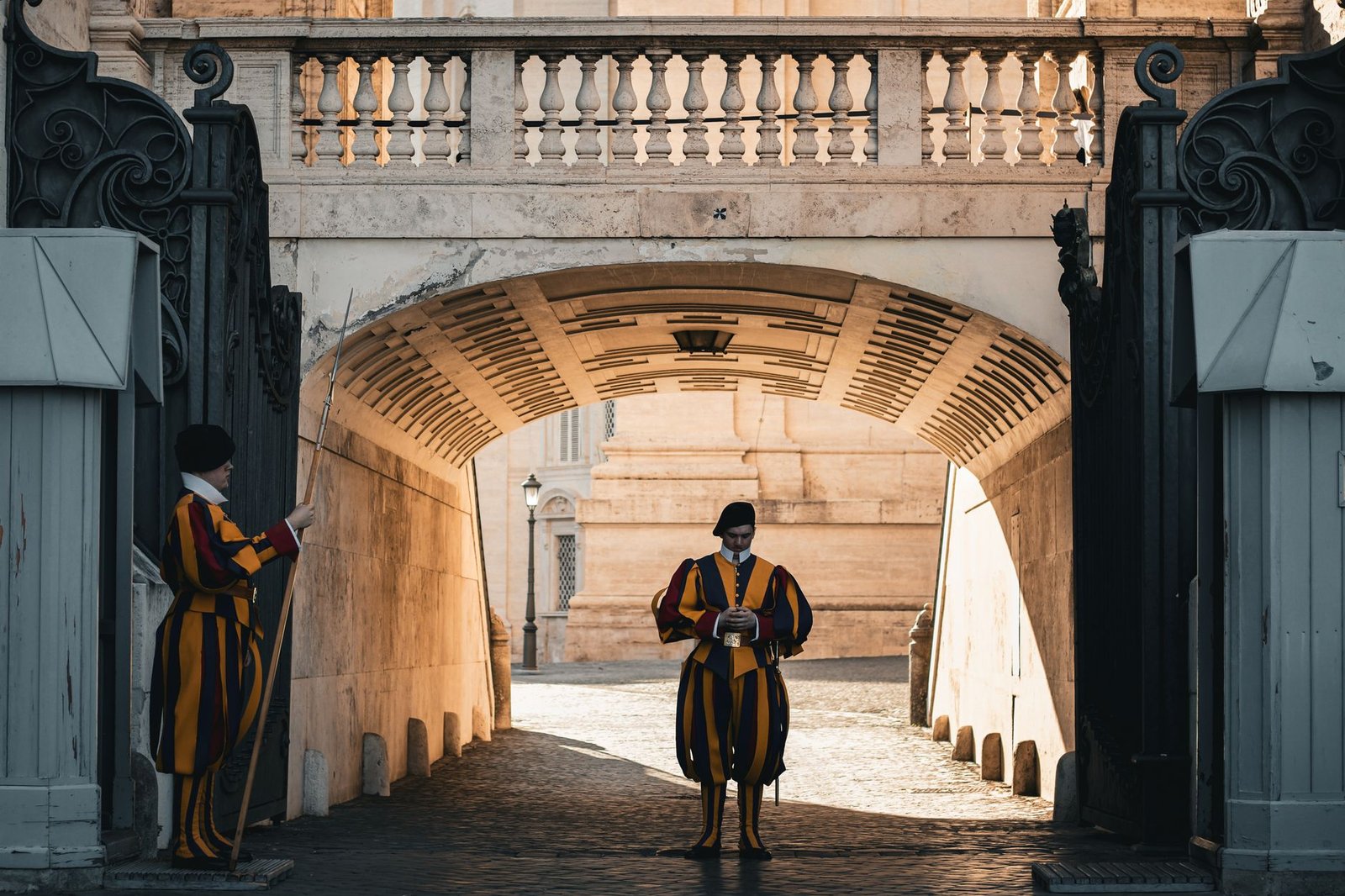
The Pontifical Swiss Guard was founded in 1506 by Pope Julius II—the same pope who commissioned the Basilica and forced Michelangelo to paint the Sistine Chapel. The colorful uniforms you see at the entrances were designed (according to tradition, though historically disputed) based on sketches by Michelangelo. The guards are required to be Swiss citizens, male, practicing Catholics, with military training and a minimum height of 1.74m (5’8″). There are about 135 guards on duty—and they are, at the same time, one of the most photographed sights in the Vatican and one of the most effective security forces in the world.
What happens in the Vatican every 25 years
Every 25 years, the Pope proclaims a Jubilee—the Holy Year. The last one was in 2025, the previous one in 2000 (with John Paul II). During the Jubilee, the Pope opens the Holy Door of St. Peter’s Basilica, which remains closed in other years, and pilgrims who pass through it, having confessed and fulfilled specific conditions, receive a plenary indulgence—total remission of the temporal punishment for sins. The Holy Year has roots in the Jewish Old Testament and was adopted by Catholicism in 1300 by Pope Boniface VIII. For non-Catholics, the Jubilee is a fascinating observation: Rome doubles or triples its visitor flow, and the Vatican becomes the epicenter of one of the largest religious events on the global calendar.
What to combine and nearby areas
Castel Sant’Angelo, a 10-minute walk from St. Peter’s Square, was Emperor Hadrian’s mausoleum and later a papal emergency fortress. A secret corridor—the Passetto di Borgo—connected the castle directly to the Vatican for escape in case of attacks. The terrace offers one of the best panoramic views of Rome.
The Trastevere neighborhood is a 15-minute walk from the Vatican, on the other side of the Tiber. It’s the most atmospheric district of the old city, with medieval churches, narrow alleys, and the neighborhood life that the historic center has lost. The Basilica of Santa Maria in Trastevere has 12th-century mosaics that rival anything in the museums.
For those wanting to explore Rome beyond the Vatican, the Complete Guide to Rome here on Voyage Voyage covers neighborhoods, transportation, food, and the city’s other monuments—including the Colosseum, which is on the opposite end of the city but equally accessible by metro.
Where to eat near the Vatican
Eating in the immediate vicinity of St. Peter’s Square is, generally, a terrible culinary idea: tourist-oriented establishments charge double for half the quality. The Prati neighborhood—just a block north of the Vatican—offers a much better alternative, with bakeries, bars, and trattorias where Vatican employees have lunch.
On Via Cola di Rienzo, Prati’s main artery, you’ll find cafes where a standing espresso costs €1.20 to €1.50 and pastry shops with a morning cornetto for €1 or €2. For lunch, a plate of the daily pasta at a restaurant without a plastic menu runs €12 to €16. Roman cuisine has its own logic: the further you are from the tourist attractions, the better and cheaper it gets.
Quality gelaterias in Prati usually have covered containers and seasonal ingredients on the menu. Look for ones that aren’t right in front of the main attractions—a scoop at a good place costs between €2 and €3.
Where to stay in Rome
Prati is the logical choice for anyone wanting the Vatican as their central point: quiet, residential, with a good selection of hotels at reasonable prices (by Rome’s standards) and the metro a 10-minute walk away. The only downside is access to the rest of the city—you’ll need the metro for the Colosseum and the Centro Storico.
The Centro Storico—neighborhoods like Navona, Campo de’ Fiori, and the Pantheon—is more expensive, but puts you in the middle of everything. It’s the right choice for anyone staying more than 4 days and wanting to explore Rome at a leisurely pace. For short visits focused on the Vatican, Prati is more practical and economical.
The Borgo neighborhood, immediately in front of the Vatican (between St. Peter’s Square and Castel Sant’Angelo), has hotels in an unbeatable location, but the prices reflect that. An interesting option for anyone wanting to wake up 5 minutes from the basilica without thinking about transportation.
Where to stay in Rome
| Hotel | Rating | |
|---|---|---|
| G55 Design HotelHistoric centre · On Via del Gesù, 55 | 8,2649 reviews | See prices |
| Hotel BarrettHistoric centre · On Via di Torre Argentina, 47 | 8,62.764 reviews | See prices |
| Horti 14 Borgo Trastevere HotelTrastevere · Garden and bar; on Via di San Francesco di Sales, 14 | 9,11.636 reviews | See prices |
| Hotel San FrancescoTrastevere · 300 m from the Porta Portese market | 8,2563 reviews | See prices |
| Central Lodge HotelMonti / Termini · On Via Buonarroti, 19 | 8,71.277 reviews | See prices |
| Hotel FioriMonti / Termini · 750 m from Cavour metro station | 8,81.202 reviews | See prices |
| The B PlacePrati / Borgo · 150 m on foot from Lepanto metro station | 8,11.575 reviews | See prices |
| Hotel MetropolisPrati / Borgo · 200 m from Lepanto metro station | 8,5547 reviews | See prices |
Booking.com rating on 30/09/2026
Practical tips
Dress code throughout the Vatican area: shoulders and knees must be covered to enter the Basilica. The same rule applies to the Museums. Anyone arriving in shorts or a tank top may be turned away—no exceptions and no negotiation.
Currency: the Vatican issues its own euro coins, highly sought after by collectors, but uses the Italian euro as its practical circulating currency. Vatican coins sometimes appear in change at shops and cafes—keep one if you come across it.
About the Pope’s salary: the Pope does not receive a salary. All living costs, residence, travel, and healthcare are covered institutionally by the Vatican. The Pope may receive personal donations, but there is no papal paycheck. It’s one of the most powerful jobs in the world without formal compensation.
Visa: US citizens enter the Vatican—and all of Italy—without a visa for stays of up to 90 days. Check the rules for the ETIAS system (electronic authorization planned for the Schengen Zone) on the official website before traveling, as requirements may change.
What the Vatican has of its own: besides the army (Swiss Guard), the state has its own postal service (with stamps collected worldwide), a bank (Institute for the Works of Religion, known as the IOR), a pharmacy (famous in Rome for having hard-to-find imported medications), a radio station (Vatican News), a newspaper (L’Osservatore Romano), a small railway, and a private supermarket with tax-free prices—accessible only to employees.
 HotelAs soon as you have datesCompare neighbourhoods and guest ratings.See hotels ↑
 More activitiesTo compareTickets, day trips and tours with flexible cancellation.GetYourGuide ›
Frequently asked questions
Why is the Vatican a country?
The Vatican became an independent state through the Lateran Treaty, signed on February 11, 1929, between Benito Mussolini (for the Italian government) and Pope Pius XI. The agreement resolved the “Roman Question”—the conflict between the Church and the Italian state that had lasted since the unification of Italy in 1870. With the treaty, the Catholic Church recognized the Italian state, and Italy recognized Vatican sovereignty over the 44-acre enclave in Rome.
How many people live in the Vatican, and is it possible to live there?
The Vatican had about 885 residents in 2025, according to official data—the smallest population of any recognized country. It is possible to live there, but only if you are a Vatican citizen, and citizenship is functional: it is granted to those who hold a position in the state (clergy, staff, Swiss Guard, and their immediate families). When you stop working at the Vatican, you lose your citizenship and revert to your original nationality. Vatican citizenship is not inherited.
What happens in the Vatican every 25 years?
Every 25 years, the Vatican proclaims a Holy Year (Jubilee). The Pope opens the Holy Door of St. Peter’s Basilica, and pilgrims who pass through it in a state of grace receive a plenary indulgence. The last Jubilee was in 2025; the previous one was in 2000. The tradition of regular Jubilees was established in 1470 by Pope Paul II, who set the 25-year interval. There are also extraordinary Jubilees, called outside the regular cycle for special occasions.
Is the Vatican the richest country in the world?
It depends on the criteria. The Vatican City State has an annual budget of about €400 million—modest for a state. But the Holy See, the legal entity that administers the Catholic Church’s assets worldwide, controls real estate, works of art, and investments of immense and practically incalculable value. By conventional GDP per capita, countries like Monaco, Liechtenstein, and Luxembourg rank higher. The Vatican is extraordinarily rich in terms of historical and symbolic assets—not necessarily in current income.
What is the official language of the Vatican, and who governs it?
The official languages are Latin (for formal ecclesiastical documents) and Italian (the language of daily life). The Vatican is governed by the Pope, who combines the roles of head of state of the Vatican and spiritual leader of the Catholic Church. It is an absolute theocratic monarchy: the Pope is elected by the cardinals in Conclave, governs for life, and is not answerable to any democratic body. The Vatican Secretary of State coordinates the daily administration of the Roman Curia.
Conclusion
Visiting the Vatican means crossing, in less than an hour from Rome, into the world’s smallest country—and one of the greatest artistic collections in human history. St. Peter’s Square is free to enter; the museums require an advance reservation and a few hours of planning. The rest is letting the scale of it all sink in: the Sistine Chapel ceiling is bigger than any reproduction suggests, and the Swiss Guard is more real than any souvenir from a shop.
Explore the other destination guides here on Voyage Voyage and plan your next adventure with more confidence.