You’ve already decided you want to see Crete, Greece, beyond Santorini and Mykonos — and every road leads to the largest Greek island, the only one big enough to fill a complete itinerary without depending on another island. Here’s what changes the trip: Crete isn’t an island you “hit and run” — it’s almost a small country, with 2,000 m mountains, 4,000-year-old Minoan palaces and beaches that range from turquoise to pale pink, all separated by hours of driving.
A 5-day itinerary in Crete is enough to see Heraklion and Chania, the two main historic cities, visit the Palace of Knossos and reach a famous beach like Balos or Elafonissi. That requires a rental car, since Crete is the largest Greek island and the distances run over an hour of driving, but the result is a complete itinerary, with history, city and beach all in one.
If you just want to relax on the beach without moving around, you’re better off in Mykonos; if you want history, nature and scenery on a single island, you’ll leave Crete satisfied.
| Knossos Palace ticket | from €25 (combo with the Heraklion Archaeological Museum, Sep/2026) — confirm on the official site before you go |
|---|---|
| Best time to go | June and September/October (sea at 22.6–23.4°C, less crowded than Jul/Aug) |
| Visa for Brazilians | not required (Schengen, tourism up to 90 days); ETIAS is not yet in force in 2026 |
| Car rental | essential outside the cities — check the daily rate on a comparison site (varies by season) |
| How to get there | flight with a connection in Athens to Heraklion (HER) or Chania (CHQ) |
| How many days | 5 days covers the essentials; 7+ days to include the south coast and more beaches |
How to get to Crete from Brazil
There are no direct flights from Brazil to Crete: the route involves a connection in Europe, usually in Athens, from where short flights (about 45 minutes) reach the island’s two airports, Heraklion (HER) or Chania (CHQ). The most common route leaves from São Paulo or Rio with a connection in Lisbon, Madrid, Frankfurt or Istanbul, followed by a second connection in Athens — the full journey usually takes between 16 and 24 hours depending on the layovers.
You can also arrive by ferry from Piraeus, the port of Athens, with overnight crossings of 7 to 9 hours to Heraklion — an option for those already in mainland Greece who want to save compared to a domestic flight, though it takes more travel time. Check updated schedules on the official Greek ferry companies’ site.
The best time to go and how many days to stay in Crete
The best time to visit Crete is June or the period between September and October: the sea is already warm (22.6°C to 23.4°C in those months, according to historical water temperature data) and the island isn’t yet at the peak crowds of July and August, when the sea rises to 25–26°C but hotels and roads fill up with European tourists. Winter (November to March) is too cold for the beach, with the sea dropping to 15.8–17.5°C, but it works for those who only want the historic side without the heat.
As for trip length: 5 days is the comfortable minimum to leave Crete feeling you’ve seen the essentials — a historic city, the Palace of Knossos and a famous beach. With 7 days or more you can include the south coast (Matala, the Samaria Gorge) and a second coastal city without rushing.
| Duration | What you can see | Best for |
|---|---|---|
| 3 days | Heraklion + Knossos + 1 nearby beach | those passing through, combining with another island |
| 5 days | Heraklion, Chania, Knossos, Balos or Elafonissi | first trip to Crete, a balanced itinerary |
| 7+ days | all of the above + south coast, Rethymno, Samaria Gorge | those who want to explore the island without rushing |
What to see in Crete: cities, beaches and the Palace of Knossos
Crete concentrates most of its attractions around three fronts: the historic northern cities (Heraklion, Chania, Rethymno), the archaeological site of Knossos and the beaches of the west and south, including Balos and Elafonissi. None of these attractions is less than 30 minutes by car from another, so the itinerary needs to group them by region instead of trying to see everything in any order.
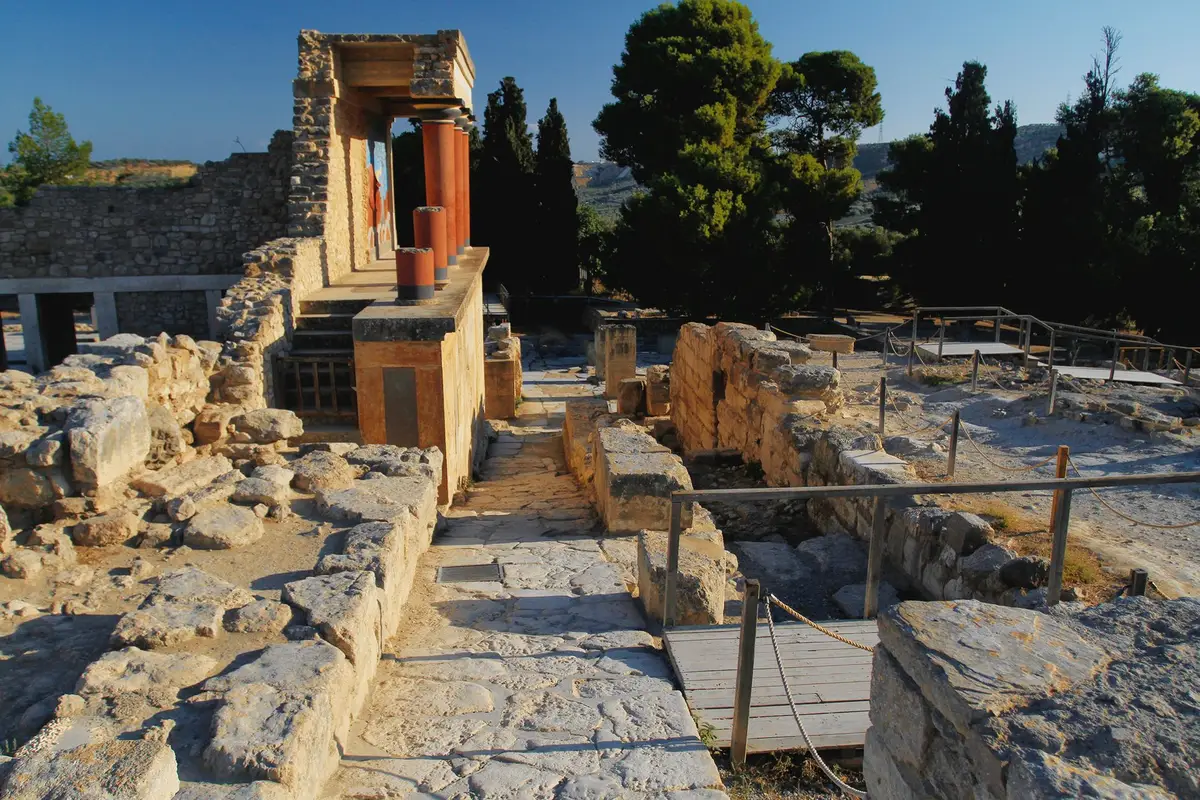
Palace of Knossos (Knossos)
The Palace of Knossos is the most important archaeological site of the Minoan civilization, 5 km from Heraklion, and the reason many visitors choose Crete in the first place. The combined ticket with the Heraklion Archaeological Museum costs from €25 (Sep/2026) — confirm the exact price and exemptions on the official site before buying, since prices at Greek archaeological sites change by season.
Arrive at opening time to avoid the midday heat and the cruise groups, which usually disembark in Heraklion in the late morning.
Balos and Elafonissi: the two most famous beaches
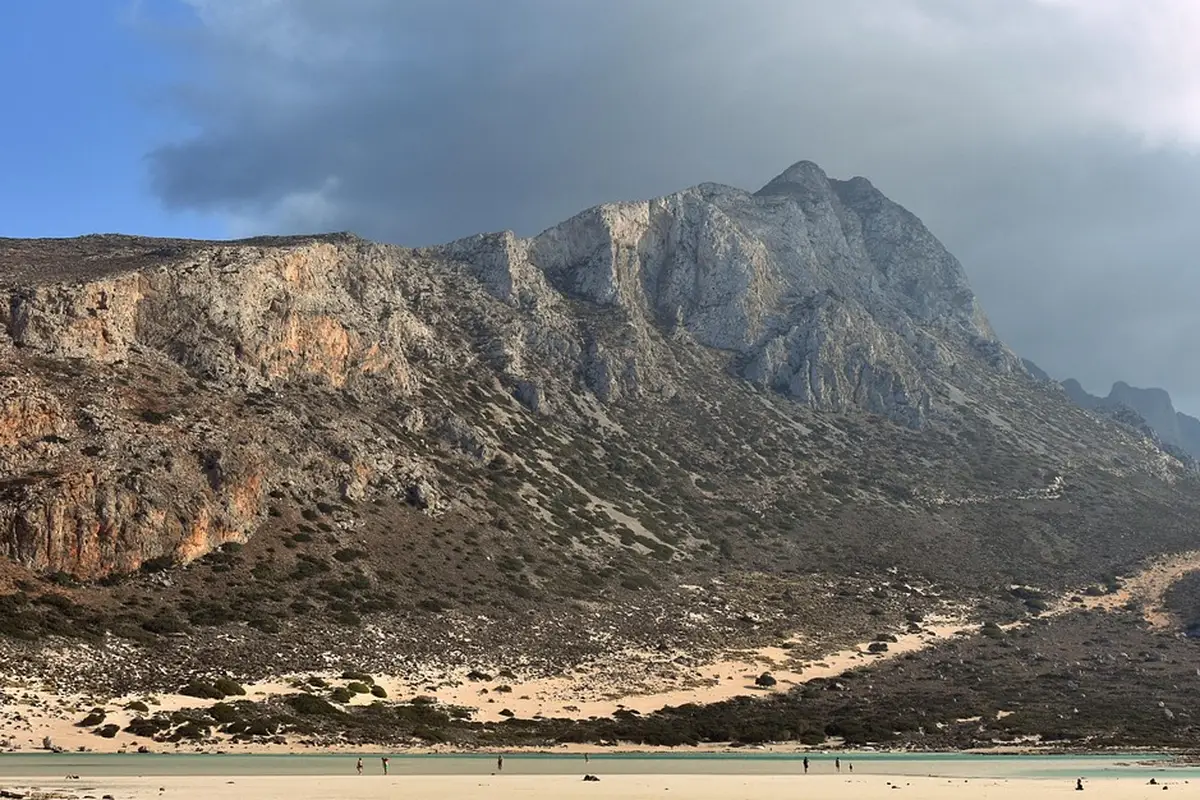
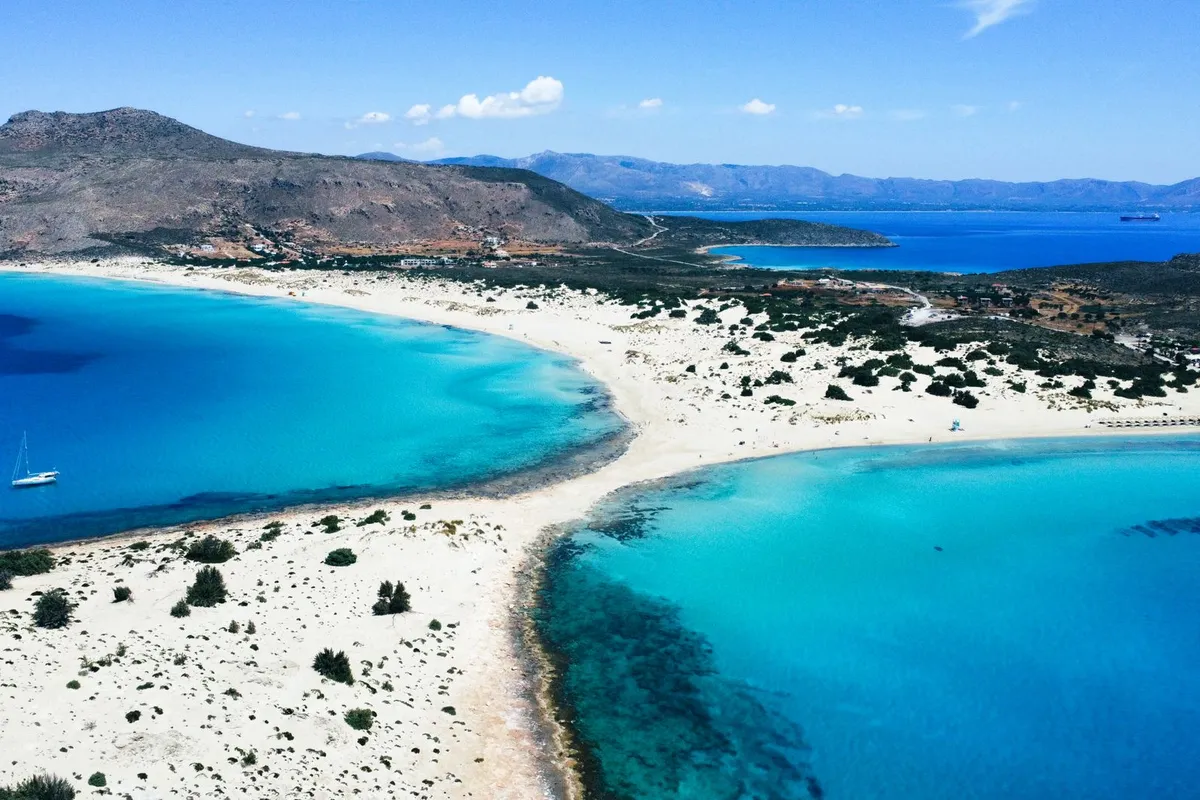
Balos is a shallow, turquoise lagoon surrounded by dunes, at the far northwest of the island; Elafonissi is famous for its pinkish sand, at the far southwest, near a nature reserve. Both are more than an hour’s drive from Chania and can’t be visited comfortably on the same day — choosing one per trip is usually the most practical decision.
Do I need to rent a car in Crete?
Yes — renting a car in Crete is practically mandatory if you want to get out of the main cities. Public transport between cities does exist (KTEL buses), but it doesn’t cover the most famous beaches well, like Balos and Elafonissi, and organized tours tend to be pricier and less flexible than driving yourself.
The route to Balos deserves a heads-up: the road is paved up to the village of Kaliviani and then turns into about 8 km of narrow, potholed dirt road to the parking lot — many rental companies restrict this stretch in the contract, so confirm whether your insurance covers unpaved roads before you set off. The road to Elafonissi, on the other hand, is paved the entire way.
| Option | Time from Chania | Best for |
|---|---|---|
| Rental car to Balos | 1h30–2h (last 8 km on dirt) | those who want freedom to set their own schedule |
| Rental car to Elafonissi | 1h15–2h (fully paved road) | those who prefer a smoother drive |
| Boat tour to Balos | varies, departs from Kissamos | those who don’t want to drive on the dirt road |
5-Day Crete Itinerary: Day by Day
This itinerary starts in Heraklion (where most flights land) and ends in Chania, covering the two main historic cities and one of the famous beaches, without requiring more than 2 hours of driving per day.
Day 1 — Arrival and Heraklion
Check in, stroll through Heraklion’s historic center (the Venetian Koules Fortress, the 1866 Street market) and have dinner in the city. An adjustment day, no rush.
Day 2 — Palace of Knossos and Archaeological Museum
Early morning at the Palace of Knossos to beat the heat and the crowds, followed by the Heraklion Archaeological Museum in the afternoon, which houses the main Minoan finds — the two are usually sold as a combined ticket.
Day 3 — On to Chania (with a stop in Rethymno)
A drive of about 2h30 between Heraklion and Chania, with a few hours’ stop in Rethymno, a smaller city with a beautifully preserved Venetian-Ottoman historic center. Arrive in Chania to sleep.
Day 4 — Balos or Elafonissi
A full day dedicated to one of the two famous beaches — choose based on your travel style (Balos for lagoon scenery and a willingness to tackle the dirt road; Elafonissi for a simpler drive and pink sand). Back in the late afternoon for dinner in Chania.
Day 5 — Chania’s Venetian Harbor and Departure
A free morning for the Venetian harbor, the Splantzia neighborhood and last-minute shopping; afternoon for Chania Airport (CHQ) or the drive back to Heraklion, depending on where your return flight departs from.
Chania, Heraklion, Rethymno or Agios Nikolaos: Where Should You Stay?
For a 5-day itinerary, the most practical split is two or three nights in Heraklion (close to Knossos and the main airport) and two or three nights in Chania (close to the western beaches and home to the island’s most photogenic historic center).
- Heraklion: the most practical, close to the airport and Knossos, but with less visual charm than Chania.
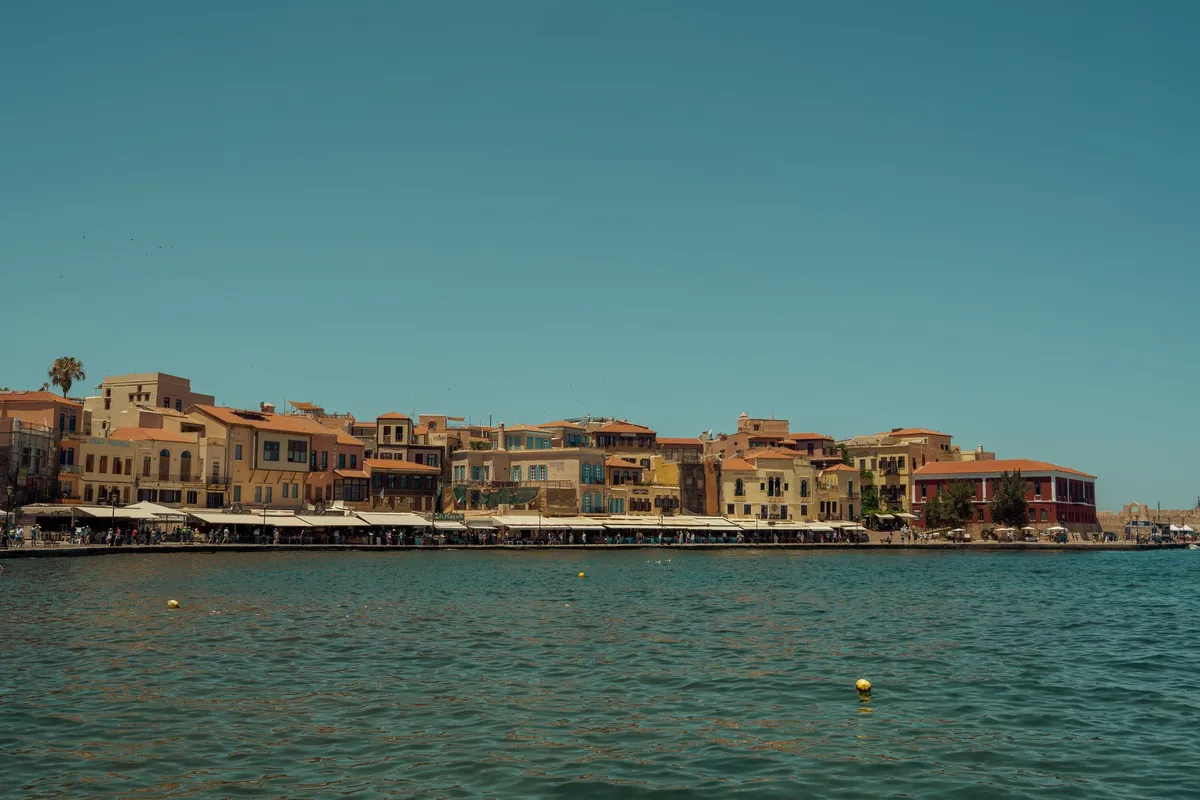
- Chania: the prettiest for strolling, the ideal base for Balos and Elafonissi, with a Venetian harbor lined with waterfront restaurants.
- Rethymno: a middle ground between the two, good for those who want less bustle and a compact historic center.
- Agios Nikolaos: further east, close to the prison island of Spinalonga, best for those extending the itinerary beyond 5 days.
Where to Eat in Crete
Cretan cuisine is considered one of the healthiest in the Mediterranean, with heavy use of local olive oil, wild herbs and cheeses like myzithra — the so-called Mediterranean diet actually originated in 20th-century Cretan eating habits. It’s worth seeking out tavernas away from the main waterfront — menus in multiple languages and photos of the food on the door usually signal higher prices and more generic food.
If you’re combining Crete with another Greek island on the same trip, you can take the opportunity to visit the Santorini caldera, about a 45-minute flight from Heraklion.
If you’d rather not drive to Knossos, you can book your Palace of Knossos ticket with transport included from Heraklion — also handy for skipping part of the ticket line at the entrance.
How Much Does a 5-Day Trip to Crete Cost?
Not counting your international flight, daily costs in Crete run around €60 to €100 per person (Sept 2026), adding up accommodation in a guesthouse or 3-star hotel (€40–70/night per room), meals at local tavernas (€15–25/day per person), a rental car split between 2 people and the Knossos ticket (€25). Traveling as a pair and sharing the car brings that total down; traveling solo means paying proportionally more for the rental car, an item you can’t really skip outside the cities.
Tourist Traps and What Nobody Tells You About Crete
- The island is bigger than it looks on the map: going from end to end (from Chania to Agios Nikolaos) can take more than 3 hours — you can’t “see everything” in 3 or 4 days without rushing.
- Balos via dirt road may not be covered by your car insurance: check the rental contract before heading down the final few kilometers of dirt to the viewpoint.
- July and August mean packed roads and parking lots at the most famous beaches — arriving after 10am in Balos or Elafonissi in high season can mean waiting in line to park.
- Many waterfront restaurants charge a “couvert” for bread and olives even if you didn’t ask for it — ask beforehand whether the item is charged.
- Heraklion Airport is small and doesn’t have many food options — if your connecting flight in Athens is tight, eat before boarding.
Frequently Asked Questions
How much does the Palace of Knossos ticket cost?
The Palace of Knossos ticket, combined with the Heraklion Archaeological Museum, starts at €25 (reference: Sept 2026) — confirm the exact price and any exemptions on the official website before your trip, since Greek archaeological site prices are adjusted by season.
Balos or Elafonissi: which beach should you choose?
Balos has the more dramatic lagoon scenery, but it requires 8 km of dirt road to get there; Elafonissi has pinkish sand and an entirely paved route from Chania, making it the simpler option for anyone who doesn’t want to drive on unpaved roads.
Do Brazilians need a visa to visit Greece?
No, Brazilians don’t need a visa to enter Greece as tourists, for up to 90 days within any 180-day period, under Schengen Area rules. The ETIAS system, which will eventually require a paid electronic authorization, remains postponed and was not yet in effect in 2026 — check the current status on the official ETIAS website.
Is the road to Balos difficult?
The road to Balos is paved up to the village of Kaliviani and then turns into about 8 km of dirt, narrow and full of potholes, up to the parking lot near the viewpoint — drivable with care, but check whether your rental car insurance covers that stretch.
Is Crete worth it, or is it better to go straight to Santorini or Mykonos?
It depends on the style of your trip: Crete is more worth it for those seeking history, nature, and a variety of landscapes on a single large island; Santorini and Mykonos deliver more beach and nightlife concentrated in small areas, with less driving.
Conclusion
A 5-day itinerary in Crete works best when you accept the island’s logic: fewer stops, more driving time between them, and a rental car as an unavoidable part of the budget. Heraklion for the history of Knossos, Chania for its Venetian charm, and one of the two famous beaches round out a complete first trip — and leave plenty of material for anyone who wants to come back and explore the southern coast of the largest Greek island. For other Greece itineraries, the Voyage Voyage Greek islands guide helps you decide what to combine with Crete on the same trip.