Nusa Penida’s limestone cliffs, viewpoints, and turquoise waters — the island sits just 45 minutes by boat from Bali and packs some of Indonesia’s most jaw-dropping scenery — limestone cliffs plunging into turquoise sea, snorkeling spots with manta rays, and viewpoints that justify every rupiah spent. If you want to know how to get there, what it’ll cost, and which beaches are actually worth the effort, this guide covers it all with updated prices and the pitfalls tours don’t tell you about.
Nusa Penida is an island 25 km off Bali’s southeast coast, accessible by fast boats departing from Sanur (IDR 150,000-300,000, 30-45 min). The entrance fee costs IDR 25,000 per adult, and natural attractions are open from 6am to 7pm. Ideally, dedicate 2-3 days to explore the west side beaches (Kelingking, Broken Beach) and east side (Diamond, Atuh) without rushing.
| Entrance fee | IDR 25,000 adult / IDR 15,000 child (Aug 2026) — nusapenidatour.org |
|---|---|
| Snorkeling permit | IDR 100,000 per day (Aug 2026) |
| Fast boat (Sanur) | IDR 150,000-300,000, one-way, 30-45 min (Aug 2026) |
| Attraction hours | 6am-7pm, daily (access by natural light) |
| Ideal duration | 2-3 days (day trip possible, but rushed) |
| How to get there | Fast boat from Sanur or public ferry from Padang Bai |
How to get to Nusa Penida from Bali?
The fastest way to reach Nusa Penida is to catch a fast boat from Sanur harbor, about 25 minutes from Bali’s airport. The crossing takes 30-45 minutes and costs between IDR 150,000 and IDR 300,000 per leg (Aug 2026), depending on the operator and the season.
The first boats leave around 7:30am and the last ones at 4pm. Book the 7:30am or 8am boat to arrive before 9:30am, when the flood of day-trippers clogs the roads and viewpoints. Buy your ticket in advance during high season (Jul-Aug and holidays) — boats frequently sell out.
| Option | Price (Aug 2026) | Time | Best for |
|---|---|---|---|
| Fast boat (Sanur) | IDR 150,000-300,000 | 30-45 min | most travelers, frequent departures |
| Public ferry (Padang Bai) | IDR 31,700 | 60-90 min | those bringing a scooter, tight budgets |
The budget alternative is the public ferry from Padang Bai, which costs just IDR 31,700 (Aug 2026) and accepts scooters and cars. The downside: departures at 10am and 2pm with frequent delays, and the trip takes longer. If you’re staying in Ubud or East Bali, Padang Bai is closer than Sanur.
When you disembark at Toya Pakeh or Sampalan harbor, you pay the island entrance fee on the spot (IDR 25,000 per adult). Bring cash in rupiah — they don’t accept cards. Since 2026, the fee can be purchased online in advance, but the booths on arrival still operate.
How much does it cost to visit Nusa Penida in 2026?
A day on Nusa Penida realistically costs between IDR 400,000 and IDR 800,000 per person (roughly $25-50 USD at the Aug 2026 exchange rate), adding up boat, entrance fee, driver, and food. Those doing snorkeling add IDR 100,000 for the Marine Protected Area permit.
| Item | Cost (Aug 2026) |
|---|---|
| Fast boat round trip (Sanur) | IDR 300,000-600,000 |
| Island entrance fee | IDR 25,000 |
| Bali Tourism Tax (provincial) | IDR 150,000 (paid on arrival in Bali) |
| Private driver (full day) | IDR 400,000-600,000 |
| Snorkeling permit (MPA) | IDR 100,000 per day |
| Lunch at a local warung | IDR 30,000-60,000 |
Real total cost of a day with snorkeling: IDR 855,000-1,385,000 (about $55-90 USD, Aug 2026), including round-trip boat, island fee, driver, marine permit, and lunch. Those booking an all-inclusive day tour from Bali (boat + driver + lunch) pay around IDR 500,000-700,000 — cheaper, but with less flexibility and fixed stops.
What are the best beaches on Nusa Penida?
Nusa Penida’s beaches split between the west side (Kelingking, Broken Beach, Angel’s Billabong) and the east side (Diamond Beach, Atuh Beach, Thousand Islands). Most visitors can’t see both sides in a single day because of the rough roads — plan at least one day for each side. If you want to compare with other Southeast Asian islands, check out our guide to the best beaches in Phuket.
West side — Kelingking Beach, Broken Beach, and Angel’s Billabong
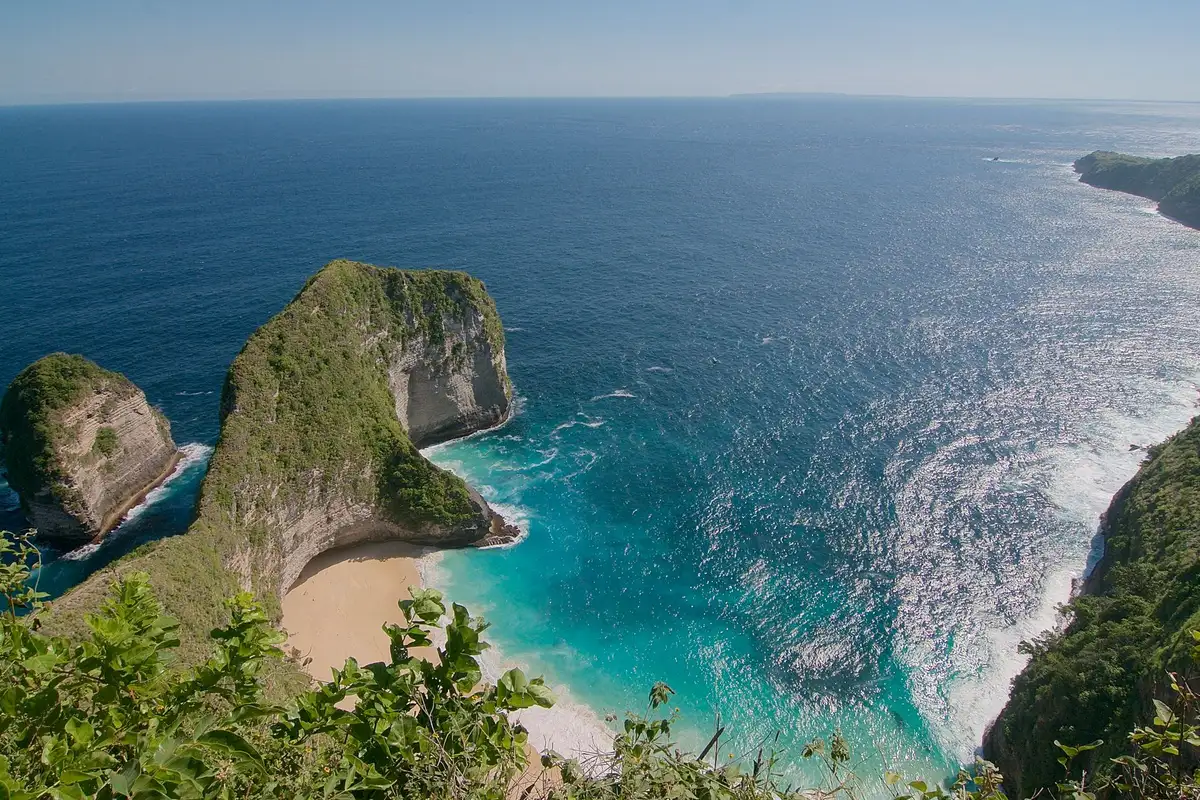
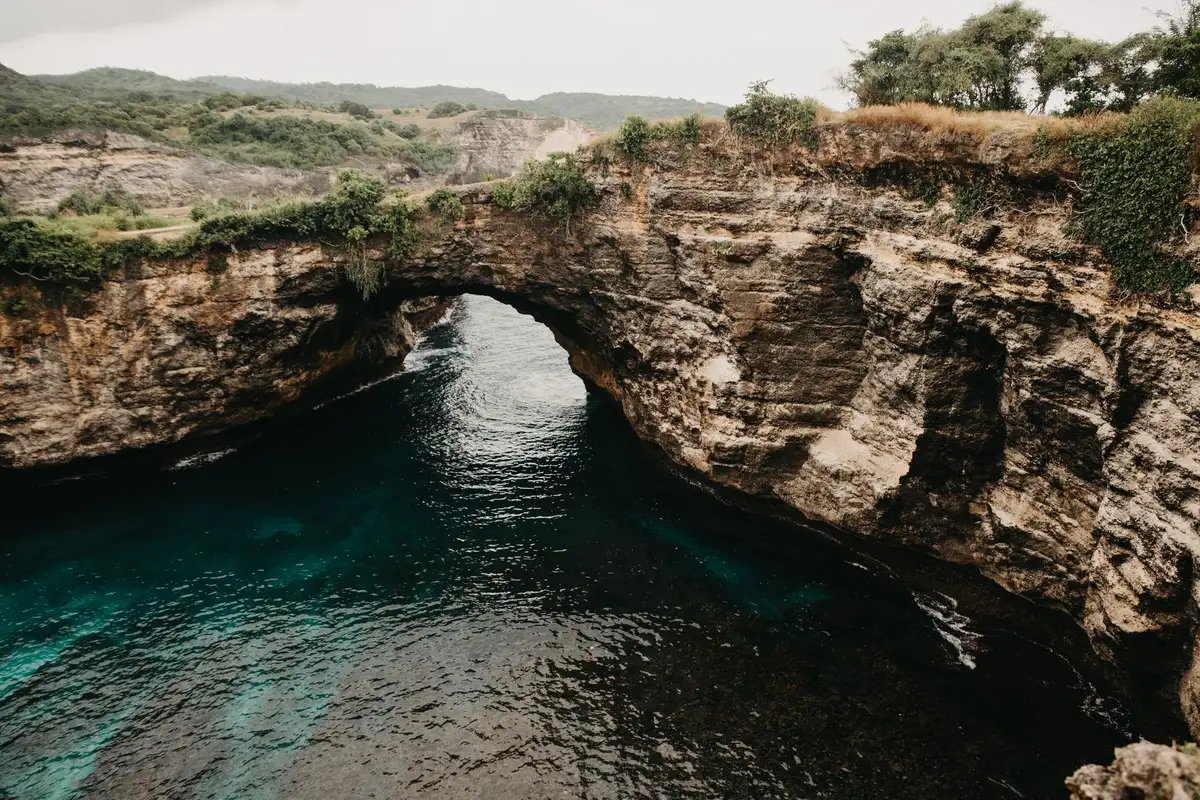
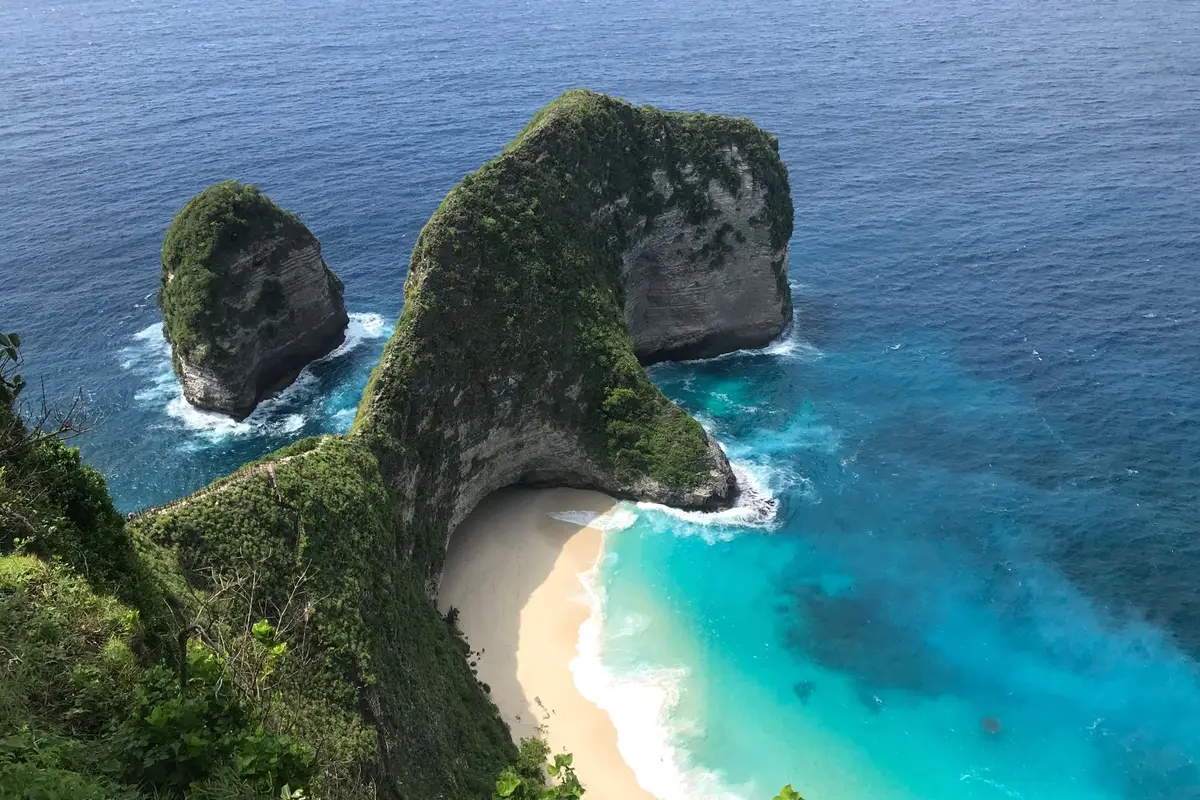
Kelingking Beach is the most photographed spot in all of Indonesia: a T-Rex-shaped headland with turquoise sea 200 meters below. The viewpoint at the top is accessible to anyone, but hiking down to the beach is another story (more on that in the next section). Broken Beach is a 10-minute drive away and impresses with its natural stone arch over the ocean — there’s no access to the water, but the view makes up for it. Right next door, Angel’s Billabong is a natural pool formed between the rocks, but it’s only safe at low tide — strong waves have already swept tourists off the spot.
East side — Diamond Beach, Atuh Beach, and Thousand Islands
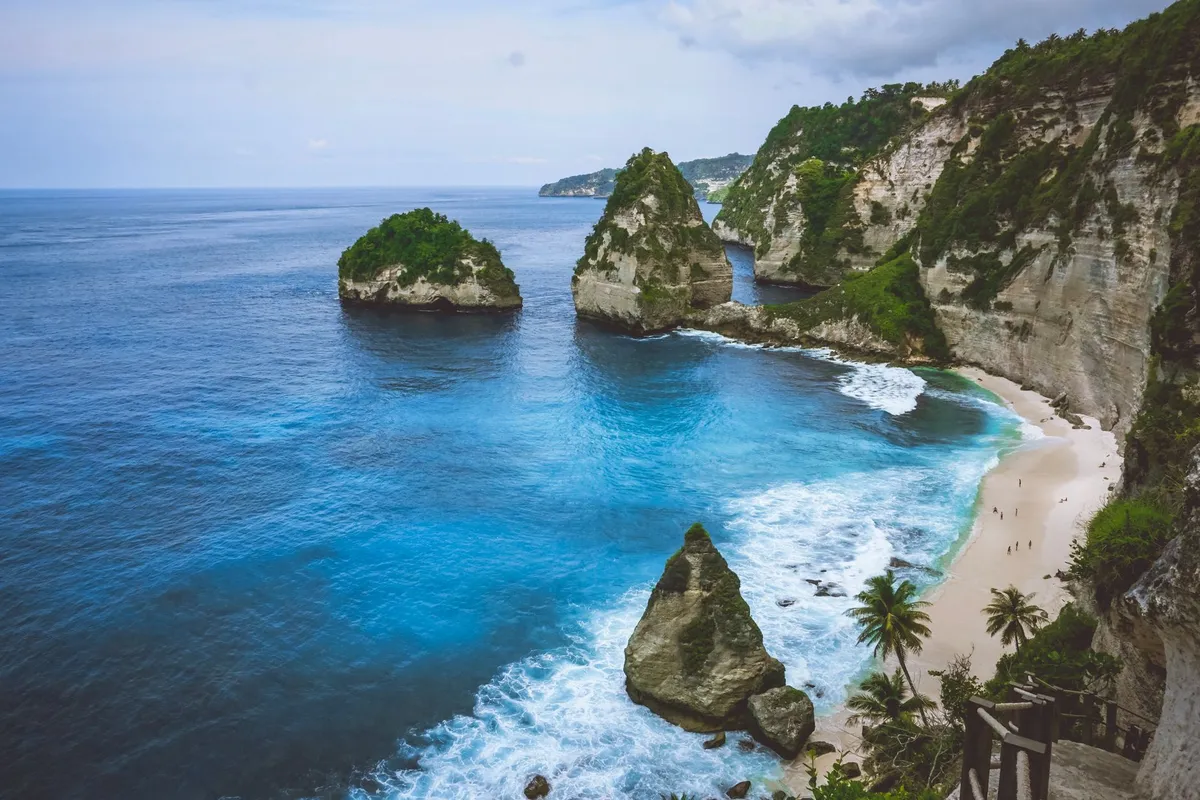
Diamond Beach has white sand, green-cloaked cliffs, and staircases carved into the rock that lead down to the sand strip. The descent calls for closed-toe shoes — flip-flops slip on wet rocks. The sea often has strong currents, so swimming isn’t always possible. Atuh Beach, right next door, offers better conditions for snorkeling when the tide is calm. From the Thousand Islands Viewpoint lookout, you’ll spot islets that look like mushrooms rising from the sea — it makes for the best photos on the east side.
Crystal Bay — the best for swimming and snorkeling
Crystal Bay is the island’s most accessible beach and the only one with decent infrastructure (warungs, loungers, restrooms). The water is calm on most days, and snorkeling in the shallow part already reveals colorful corals and clownfish. It’s also the departure point for boats to Manta Point, where groups of manta rays swim in shallow waters — one of Southeast Asia’s most sought-after dives.
Can you actually hike down to Kelingking Beach?
Yes, it’s possible to hike down to the sand at Kelingking Beach, but the trail is steep, lacks railings for most of the way, and demands good physical fitness. The 200-meter elevation drop takes 30-60 minutes to descend and up to 90 minutes to climb back up, with stretches of loose dirt and exposed rocks.
Leave before 7 a.m. to beat the heat — the trail is fully exposed to the sun. Bring at least 1 liter of water, wear shoes with good grip, and don’t attempt the descent in flip-flops. Swimming at the beach below is dangerous: currents are strong and there are no lifeguards. Most visitors are perfectly happy with the view from the top lookout, which is spectacular without the risk of the descent.
How many days should you spend in Nusa Penida?
The ideal amount of time in Nusa Penida is 2-3 full days. With two days, you can cover the west side (Kelingking, Broken Beach, Angel’s Billabong) in one day and the east side (Diamond, Atuh, Thousand Islands) plus snorkeling on the other. A third day lets you visit Crystal Bay at a relaxed pace, explore the underground temple Goa Giri Putri, and enjoy the sunset without rushing.
A day trip from Bali is possible but rushed: you arrive around 9:30 a.m., navigate potholed roads to see 2-3 spots, and head back between 3-4 p.m. It works if you just want to see Kelingking from the lookout and Broken Beach, but there’s no time to hike down trails, go snorkeling, or visit the east side. If you’re doing a day trip, booking a tour with snorkeling and transport included makes the most of your time.
What’s the best time to visit Nusa Penida?
The dry season between April and October offers clear skies, calm seas for the crossing, and good visibility for diving. July and August are the busiest months, with higher prices on boats and accommodation — May, June, and September strike the balance between good weather and fewer tourists.
From November to March, monsoons bring heavy rain, rough seas, and frequent fast boat cancellations. Limestone trails get slippery and dangerous. It’s not impossible to visit during this time, but be prepared for delays and limitations — and Angel’s Billabong is off-limits due to wave risk.
Where to stay in Nusa Penida?
Most hotels and guesthouses are concentrated in the north of the island, between Toya Pakeh and Sampalan, near the arrival ports. This area has the best selection of restaurants, ATMs, and minimarkets. If you want to stay close to Crystal Bay, there are smaller options on the northwest side — ideal for enjoying the sunset on foot.
Expect simple accommodations: Nusa Penida has no luxury resorts like Bali. Guesthouses with air conditioning and breakfast run IDR 200,000-500,000 per night (Aug 2026). Wi-Fi works in most places but is slow. If you plan to rent a scooter, ask your host for a recommendation — they usually have contacts with reliable rental shops.
What nobody tells you about Nusa Penida
Nusa Penida is not Bali. Infrastructure is basic, roads are narrow and full of potholes, and most tourist accidents involve scooters. These are the gotchas the tours don’t mention:
- Dangerous roads: loose gravel, steep slopes, and massive potholes make scooter rides a risky adventure. Police fine IDR 1,000,000 for driving without an International Driving Permit with motorcycle endorsement (Aug 2026, source: nusapenidatour.org). Hire a private driver — it costs IDR 400,000-600,000 for a full day and is much safer.
- ATMs that run out of cash: the 10-15 ATMs concentrated in Toya Pakeh and Sampalan are often empty or reject foreign cards. Withdraw everything you need before leaving Bali.
- Treacherous ocean currents: most of Nusa Penida’s beaches are NOT safe for swimming. The sea is rough and has already swept tourists away at Angel’s Billabong and Diamond Beach. Crystal Bay and Atuh Beach (at low tide) are the exceptions.
- No Grab or Gojek: ride-hailing apps don’t work on the island. Your transportation depends on a hired driver or a rented scooter.
- Trash and plastics: Bali banned single-use plastics under 1 liter, but improper disposal is still visible on some beaches, especially during monsoon season.
Frequently Asked Questions
Do I need a visa to go to Nusa Penida?
Brazilians don’t need a visa to enter Indonesia for trips of up to 30 days. Nusa Penida is part of the province of Bali, so the same entry stamp at Ngurah Rai airport already covers your visit to the island. You just need to pay the Bali Tourism Tax of IDR 150,000 upon arrival in the province (Aug 2026).
Can you swim at Nusa Penida’s beaches?
Most of Nusa Penida’s beaches have strong currents and aren’t safe for swimming. Crystal Bay is your best bet for a swim — calm, shallow waters most of the year. Atuh Beach also allows swimming when the tide is low. Kelingking Beach and Diamond Beach are stunning for photos, but the sea there is dangerous.
Does Nusa Penida have Grab or Gojek?
Nusa Penida has no coverage from ride-hailing apps like Grab or Gojek. The only way to get around is by renting a scooter (with an International Driving Permit) or hiring a private driver, who charges between IDR 400,000 and IDR 600,000 for a full day (Aug 2026).
Is Crystal Bay good for snorkeling?
Crystal Bay is excellent for snorkeling, with preserved coral and visibility of up to 15 meters during the dry months (Apr–Oct). Crystal Bay is also the departure point for boats heading to Manta Point, where you can swim with manta rays in shallow water. The Marine Protected Area permit costs IDR 100,000 per day (Aug 2026).
Are there ATMs on Nusa Penida?
Nusa Penida has between 10 and 15 ATMs, concentrated in Toya Pakeh and Sampalan on the north side of the island. The catch is they often run out of cash and many reject international cards. The recommendation is to withdraw all the cash you’ll need before leaving Bali.
Conclusion
Nusa Penida delivers beaches you won’t find anywhere else in Southeast Asia — from Kelingking Beach seen from above to snorkeling with manta rays at Crystal Bay. With 2–3 days, a hired driver, and rupiah in your pocket, you’ll enjoy the island without any hassle. If you’re planning a trip to Bali, set aside at least two days to cross the strait and explore Nusa Penida’s beaches on your own. And if your trip includes a stop in Thailand, check out our complete Bangkok itinerary. At VoyageVoyage you’ll find more practical guides to help you plan your Southeast Asia route.