 Marcelo Oliveira
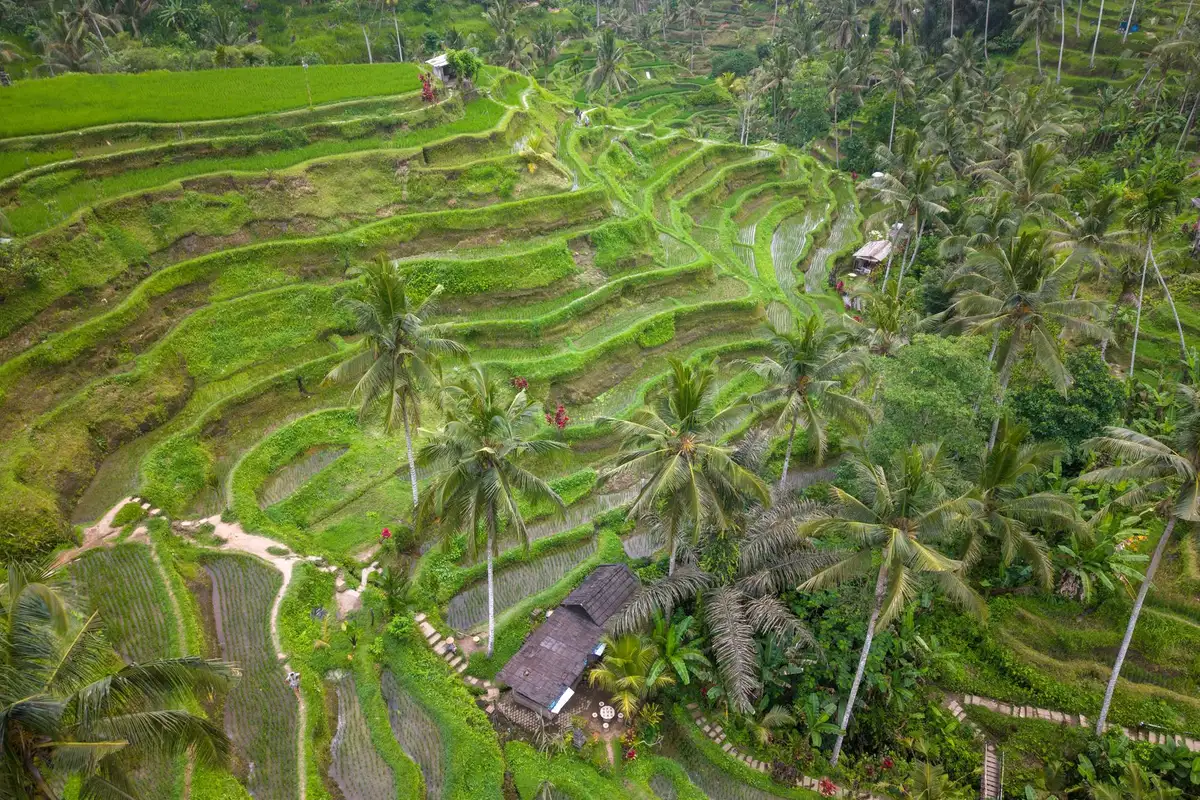
Tegallalang is Bali’s most famous rice terrace — and deservedly so. The green steps carved into the side of a valley just 20 minutes from Ubud form a landscape that looks like a postcard, but one that actually works: local farmers have been growing rice here for over a thousand years using subak, the Balinese irrigation system recognized by UNESCO. This guide covers everything you need for a hassle-free visit: how to get there, what it costs, the best time for photos, and what’s worth doing (or skipping) on site.
Hotels in Ubudfree cancellation options onlySee hotels ›Booking.com partner (advertising): we may earn a commission at no extra cost to you.
Tegallalang is 10 km north of Ubud and open from 8am to 6pm. Entry costs between IDR 10,000 and IDR 50,000 (~US$0.60 to US$3, Aug 2026), depending on which access point you choose — the swings are charged separately, from IDR 100,000 to IDR 300,000.
How to get to Tegallalang
Tegallalang sits on Jalan Raya Tegallalang, about 10 km north of central Ubud. By scooter, the ride takes 20 minutes along the main road — it’s the cheapest option (scooter rental: IDR 70,000–100,000/day, Aug 2026) and the most flexible, but it requires an international driver’s license and full attention to Balinese traffic, which is chaotic.
The calmer alternative is hiring a private driver for half a day (IDR 300,000–400,000, ~US$19–25, Aug 2026). He waits while you explore and can also take you to other stops along the way, like Tirta Empul temple or Kanto Lampo waterfall. Grab and Gojek work for getting there, but the internet signal around the rice fields is weak — book your return ride before you leave the nearest restaurant.
Best time of day and year
Arrive between 7:30 and 8:30 in the morning. The light is soft, the temperature is still pleasant, and organized tour groups don’t show up until after 10am. After that, the terraces get packed and the combination of strong sun and high humidity makes the walk exhausting.
The other good window is late afternoon, between 3:30 and 5pm — the golden light hits the steps from the side and makes for the best photos. Avoid midday: besides the heat, it’s peak visiting hours.
As for the time of year, the terraces are greenest and most photogenic in March, August and September, when the rice is in its growing phase. In April and October, the fields take on a golden tone before the harvest. From December to February it rains a lot — the rice fields look beautiful, but the trails get slippery.
What to see and do at the terraces
Tegallalang isn’t an attraction with a single gate. The valley stretches for hundreds of meters and several different access points lead to viewpoints, trails and activities. These are the ones worth your time:
Hiking through the terraces
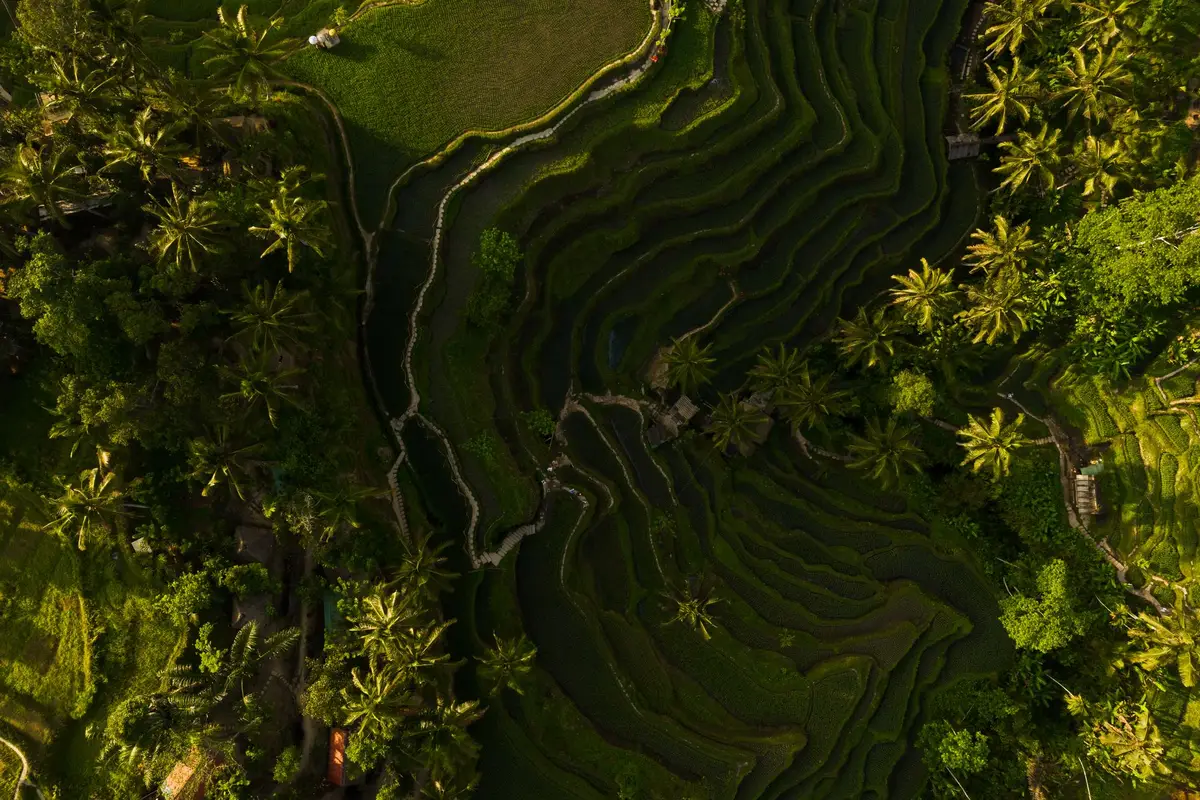
The main trail descends through the valley, winds between the rice steps and climbs up the other side. It’s about 1.5 km round trip, with uneven stairs and narrow stretches — closed shoes with non-slip soles are essential. The walk takes 1 to 2 hours, depending on photo stops. Along the way, locals ask for voluntary donations (IDR 10,000–20,000) for path maintenance.
Swings (Bali Swing)
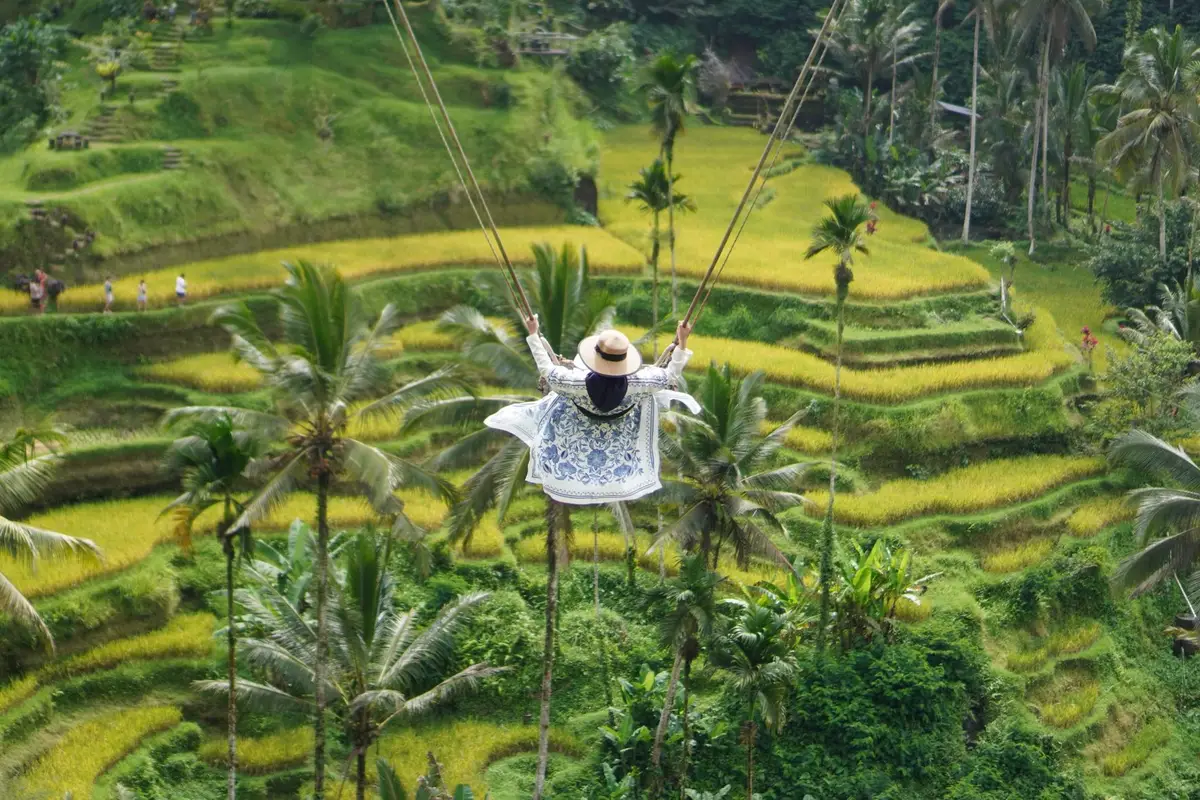
The giant swings over the valley have become one of Bali’s most shared images. There are several operators along the terraces, with prices between IDR 100,000 and IDR 300,000 (~US$6–19). The most popular ones include photo and video in the package. The experience lasts just a few minutes, but the line can take half an hour at peak times. If you’re only after the photo, the smaller, cheaper swings (IDR 50,000–100,000) deliver a similar result.
Subak system and local culture
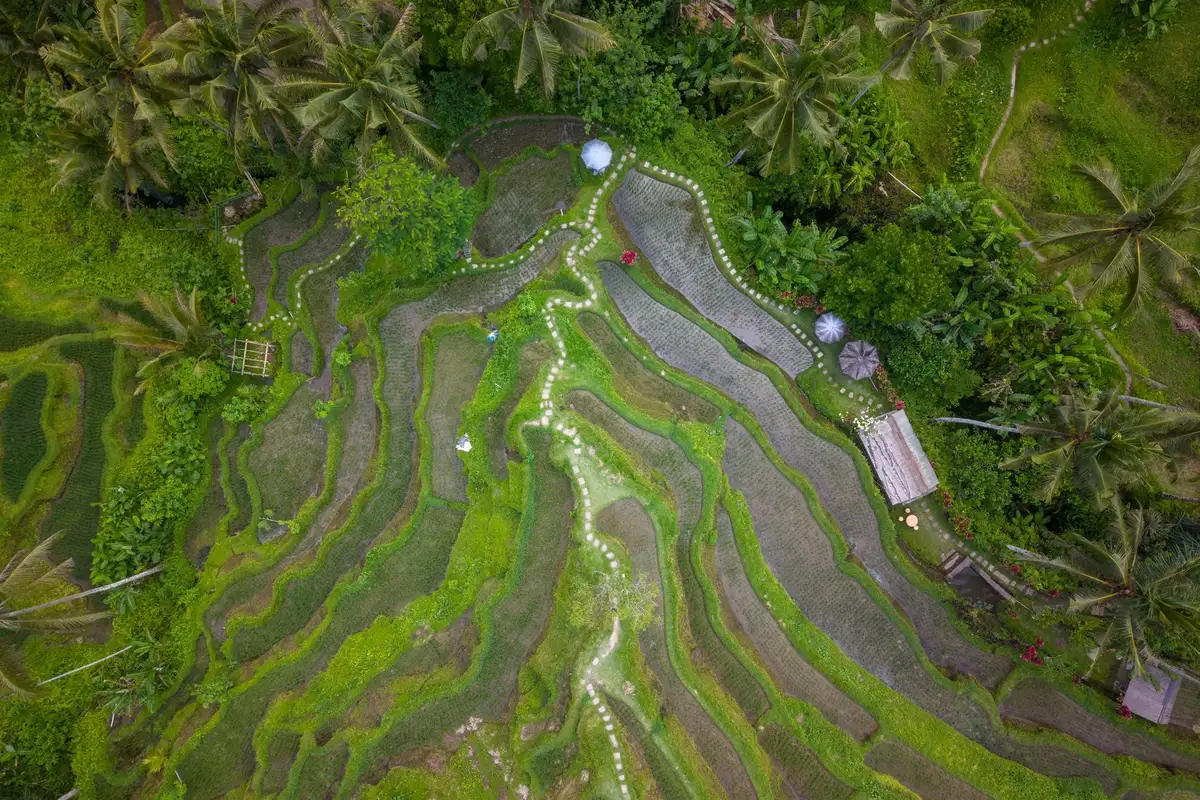
What sets Tegallalang apart from just any pretty terrace is subak — the cooperative irrigation system that distributes spring water among all the farmers in the valley, following the Tri Hita Karana philosophy (harmony between people, nature and spirituality). Subak was declared a UNESCO World Heritage Site in 2012. Some farmers will explain the process if you ask — a IDR 20,000 tip is welcome.
 Partner · Civitatissee all activities in Ubud ›
- Boat to the Gili IslandsRating 6.6 · 351 reviews on Civitatisfrom€36.25per personSee ›
- Mount Batur Sunrise Hike + Hot SpringsRating 9.6 · 501 reviews on Civitatisfrom€20.20per personSee ›
- Mount Batur Sunrise 4x4 TourRating 8.4 · 14 reviews on Civitatisfrom€39.52per personSee ›
- Nusa Penida & Nusa Lembongan SnorkelingRating 8.2 · 101 reviews on Civitatisfrom€48.95per personSee ›
Civitatis prices on 28/09/2026, from, per person. They may change. Want to compare? Activities in Ubud on GetYourGuide ›
What to combine with your visit
Tegallalang is on the way between Ubud and several important temples, so combining stops on the same day is easy. Tirta Empul temple (15 minutes north) has Bali’s most famous purification pools — entry IDR 50,000. Gunung Kawi (20 minutes), with its shrines carved into the rock, is less visited and just as impressive.
A central Bali tour with a driver covers Tegallalang, Tirta Empul and a waterfall in a single day — it’s the most practical way to see everything without worrying about navigation. For a broader overview of Ubud and the region, check out our complete Ubud guide.
Where to eat nearby
Several restaurants line the edge of the Tegallalang valley, with decks looking straight out over the terraces. Tegallelang Rice Terrace Restaurant serves Balinese dishes like nasi goreng and mie goreng for IDR 40,000–80,000 (~US$2.50–5, Aug 2026). Further south, Ceking Rice Terrace Warung is simpler and cheaper, with dishes starting at IDR 25,000.
A popular option is Alas Harum café, on the same road, which combines a swing, luwak coffee (made from beans digested by civets) and a restaurant with a view — all in one place. The full package runs between IDR 200,000 and 400,000 (Aug 2026). If you have time, continue 10 more minutes north to Kintamani — the restaurants on the rim of Mount Batur serve a buffet overlooking the lake and caldera for IDR 100,000–150,000 (~US$6–9, Aug 2026). It’s one of the best lunch views in all of Bali.
Where to stay in Ubud
The base for visiting Tegallalang is Ubud. Guest houses downtown start at IDR 200,000/night (~US$12, Aug 2026); mid-range hotels with a pool run between IDR 500,000 and IDR 1,000,000. If you want to stay near the rice fields, look for places on Jalan Raya Tegallalang — there are options with terrace views starting at IDR 400,000.
For those visiting Bali for the first time, the ideal is to split your stay between Ubud (culture and nature) and the south of the island (Seminyak or Canggu beaches). Three nights on each side gives a good balance. US citizens need a visa for Indonesia (visa on arrival, IDR 500,000 — confirm on the Indonesian Immigration website).
Where to stay in Ubud
| Hotel | Rating | |
|---|---|---|
| Weda Cita Resort and Spa Ubud by MahaputraNyuh Kuning · Jalan Raya Nyuh Kuning | 9,21.315 reviews | See prices |
| Kastara ResortKeliki · Jalan Bangkiang Sidem, Keliki | 9,52.743 reviews | See prices |
| Sabana UbudPengosekan · Jl. Premasanti, Pengosekan | 9,51.053 reviews | See prices |
| Purana Suite UbudMas · Jl. Raya Pengosekan, 1 (Mas) | 9,51.417 reviews | See prices |
| Taman Amartha HotelTaman Kaja · Jl. Sriwedari, 67 | 9,21.163 reviews | See prices |
| Anumana Ubud HotelPadang Tegal · Jl. Wenara Wana (Monkey Forest Road) | 9,11.243 reviews | See prices |
| Bisma Eight UbudBisma · Jalan Bisma | 9,31.518 reviews | See prices |
| GayatriPadang Tegal · Jl. Wenara Wana 41 | 9,11.045 reviews | See prices |
Booking.com rating on 30/09/2026
Practical tips
Bring small bills in rupiah. Most access points, donations and smaller swings don’t accept cards. ATMs are in Ubud — withdraw before you head out. Use sunscreen and a hat: even early in the morning, Bali’s equatorial sun burns fast.
Wear closed shoes with grippy soles — flip-flops slip on the wet dirt steps. Also bring a water bottle and a plastic bag to protect your phone if it suddenly rains. Tropical showers last 20–30 minutes and stop as quickly as they start. Avoid flying a drone without authorization — Indonesian regulations require a permit, and locals often charge extra fees if they notice. For aerial shots, the roadside viewpoints already offer angles that make the gear unnecessary.
If you’re exploring more destinations in Asia, Singapore is a 2.5-hour flight from Bali — check out our Gardens by the Bay guide to fit it into your trip.
 HotelAs soon as you have datesCompare neighbourhoods and guest ratings.See hotels ↑
- ActivitiesBefore you travelBook ahead the ones with limited spots.Civitatis ›
 More activitiesTo compareTickets, day trips and tours with flexible cancellation.GetYourGuide ›
FAQ
Do you have to pay to enter Tegallalang?
Tegallalang charges between IDR 10,000 and IDR 50,000 (~US$0.60 to US$3) depending on the access point. There’s no central ticket office — each entrance along the valley belongs to a different family or cooperative, and prices vary. Additional donations may be requested along the trail.
What’s the best time to visit Tegallalang?
The best time to visit Tegallalang is between 7:30 and 8:30 in the morning, when the light is soft, the temperature is pleasant and tour groups haven’t arrived yet. The second option is late afternoon, between 3:30 and 5pm, when the golden light hits the terraces from the side.
Is the swing in Tegallalang worth it?
The swing in Tegallalang is worth it for the photo with the rice fields in the background, but the experience itself lasts just a few minutes. Prices range from IDR 100,000 to IDR 300,000 (~US$6 to US$19). To save money, the smaller, cheaper swings deliver similar photos for half the price.
Is Tegallalang far from Ubud?
Tegallalang is just 10 km north of Ubud, about 20 minutes by scooter or car. Access is via Jalan Raya Tegallalang, the main road connecting Ubud to the terrace area. A private driver for half a day costs between IDR 300,000 and 400,000 (~US$19–25).
Conclusion
Tegallalang delivers exactly what it promises: a landscape of stepped rice fields that works both as a quick morning outing and as a half-day plan with a trail, a swing and lunch with a view. Arrive early, wear closed shoes and don’t forget small bills — with those three things sorted, the rest flows. To plan your full itinerary through Ubud and Bali, keep exploring Voyage Voyage.