 Marcelo Oliveira
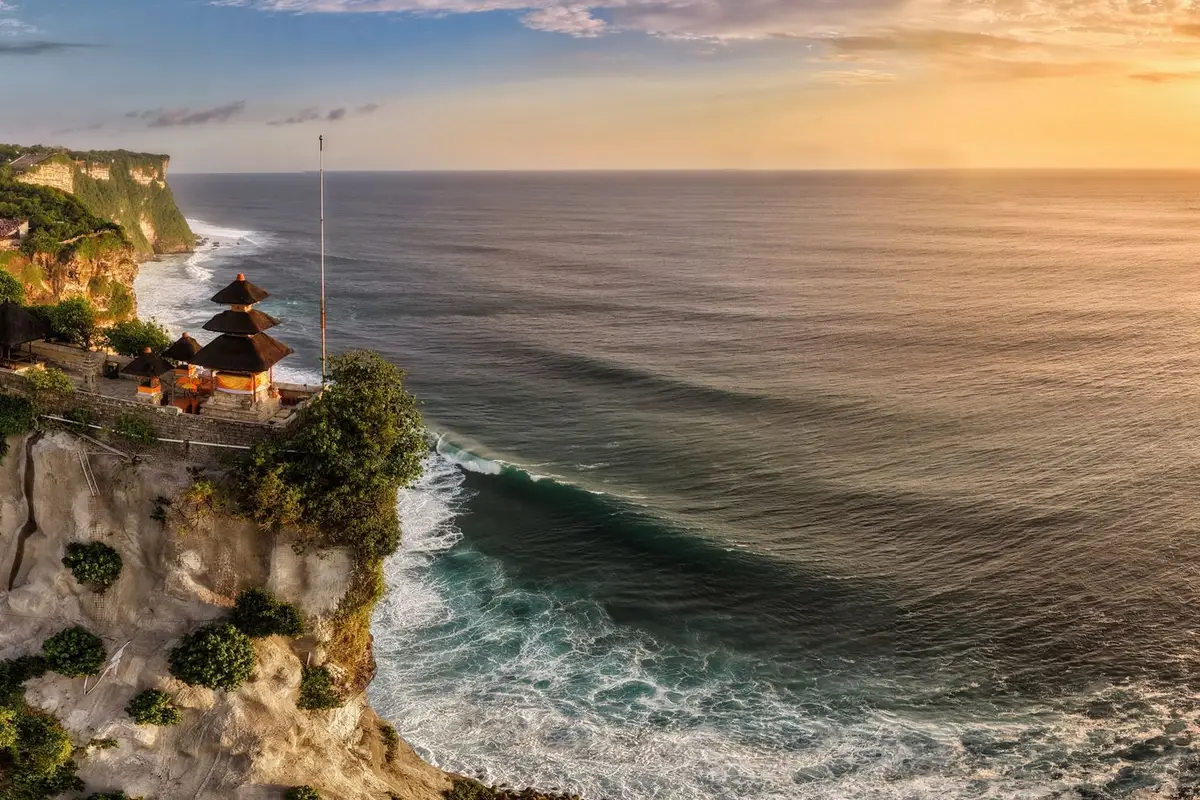
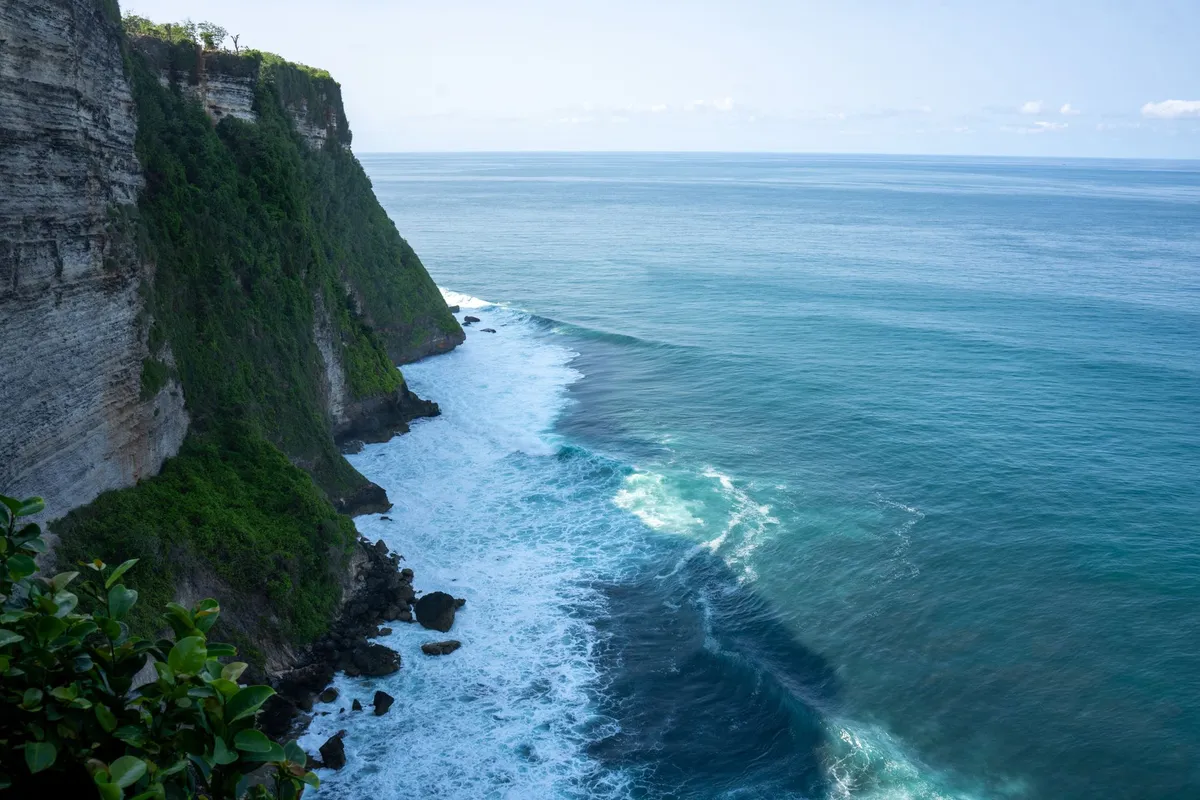
Uluwatu, Bali is where the island bares its teeth — literally, with 70-meter cliffs plunging into the Indian Ocean and monkeys that will snatch your sunglasses without a second thought. The Uluwatu Temple (Pura Luhur Uluwatu) sits at the southwestern tip of the island, and the combination of an ancient temple, dramatic cliffs and a sunset Kecak dance makes this one of the most unforgettable stops on any Bali itinerary.
Hotels in Uluwatufree cancellation options onlySee hotels ›Booking.com partner (advertising): we may earn a commission at no extra cost to you.
Arrive between 4 and 5 p.m. to explore the temple at ease, secure a seat for the Kecak dance and watch the sunset without rushing — the full combo takes about 3 hours.
How to get to Uluwatu
Uluwatu sits on the Bukit Peninsula, at the southern tip of Bali. There’s no public transport that reaches the temple — your options are a private car, a ride-hailing app (Grab or Gojek) or a rented scooter.
From Kuta or Seminyak, the drive takes between 1 hour and 1h30 depending on traffic. From Ubud, count on at least 1h30 to 2 hours. A Grab ride to Uluwatu costs between IDR 100,000 and 200,000 (~US$6–12, Aug 2026) depending on your starting point. If you use Grab/Gojek, arrange your return with the driver or book it from inside the temple — the area has internet coverage, but drivers aren’t always available after nightfall.
Renting a scooter (IDR 70,000–100,000/day, ~US$4–6) gives you total flexibility, but the access road is narrow and poorly lit at night — if you come by scooter, head back before dark or bring a flashlight.
Best time to visit and how long to allow
Bali’s dry season (April to October) delivers the best sunsets in Uluwatu, with clear skies and a haze-free horizon most days. In the rainy season (November to March), quick downpours can cover the sun right at showtime — but the shoulder months (April and October) usually bring good weather with fewer tourists.
For the temple + Kecak + sunset, allow 3 to 4 hours: arrive around 4 p.m., explore the temple and the side trails along the cliffs, and take your seat for the show at 6 p.m. If you’re combining it with a beach (Padang Padang or Suluban), you’ll need the whole afternoon, leaving around 1–2 p.m.
What to see in Uluwatu
Uluwatu is more than a temple — it’s a scenic complex where every bend in the path opens a different view of the ocean. These are the spots that justify the trip.
Pura Luhur Uluwatu (the temple)
One of Bali’s six directional temples (the Sad Kahyangan), built in the 11th century to protect the island from sea spirits. The inner sacred area is closed to visitors, but the outer perimeter follows a paved trail along the cliff edge. Entry costs IDR 60,000 (~US$4, Aug 2026) for foreign visitors, and the temple is open from 7 a.m. to 7 p.m., according to the official Indonesia tourism website. A sarong and sash are mandatory — if you don’t have one, they’ll lend you one at the entrance.
Sunset Kecak dance
The performance takes place in an open-air amphitheater, with the ocean and the sunset as its backdrop. About 70 men seated in a circle chant “cak-cak-cak” with no instruments at all, while dancers act out a passage from the Hindu Ramayana. At the climax, a performer dances barefoot over embers. The show lasts roughly 1 hour.
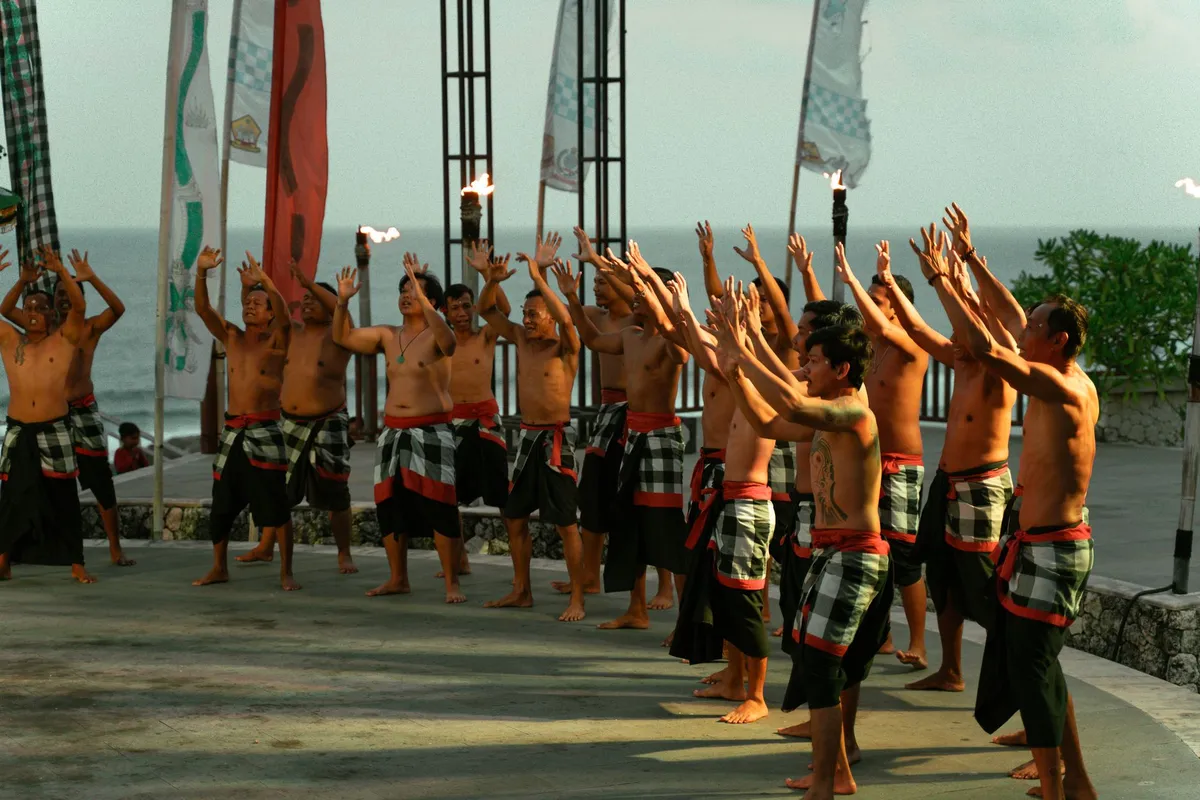
Tickets cost IDR 150,000 (~US$9, Aug 2026) for adults and IDR 75,000 for children (ages 3–9). The ticket office opens at 4:30 p.m. (Mondays, Wednesdays, Fridays and Saturdays) or 5 p.m. (Tuesdays, Thursdays and Sundays). Buy online for a ~10% discount or head to the counter as soon as it opens — the first rows fill up within 20 minutes during peak season (July–August).
Cliff trail
Before or after the temple, walk the trail that skirts the cliffs to the south. The route takes about 20 minutes and offers different views of the temple with the ocean behind it. The trail is paved but has no railing — watch the edges, especially if it’s windy.
What to combine with Uluwatu
Uluwatu sits on the same peninsula as some of Bali’s best beaches, and the beach + temple + Kecak combo is the perfect afternoon plan. If you’re after more nature and temples, you can explore Ubud, with its temples and waterfalls, on another day.
The South Bali Tour with Uluwatu and Jimbaran takes care of transport and includes a stop for sunset and a seafood dinner on Jimbaran beach — a hassle-free alternative if you don’t want to negotiate a ride back in the dark.
 Partner · Civitatissee all activities in Uluwatu ›
Rafting & Quad Biking in Bali
Rating 9.2 · 95 reviews on Civitatis
- Blue Lagoon Bali SnorkelingRating 8.5 · 46 reviews on Civitatisfrom€21.95per personSee ›
- Devdan Show in Nusa Dua TheatreRating 9.5 · 8 reviews on Civitatisfrom€18.08per personSee ›
Civitatis prices on 28/09/2026, from, per person. They may change. Want to compare? Activities in Uluwatu on GetYourGuide ›
Nearby beaches
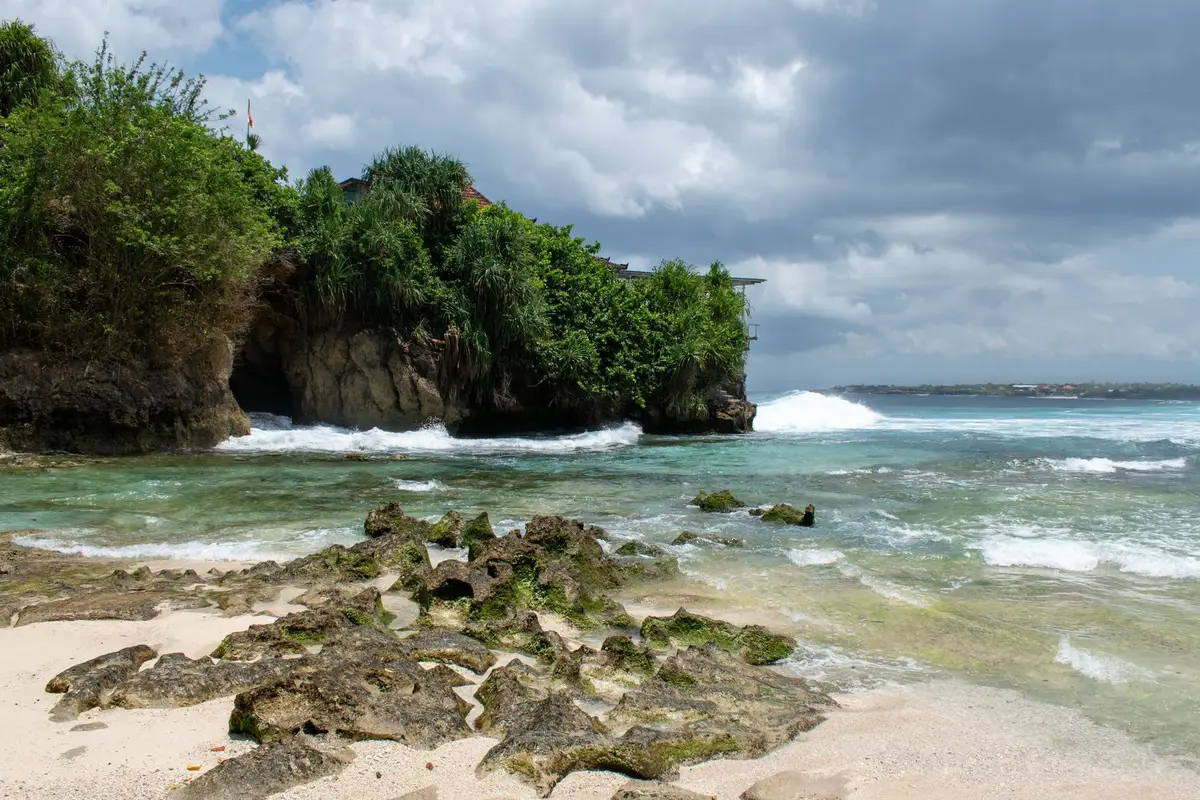
Padang Padang — the region’s most famous beach, with white sand squeezed between rock formations. Access is via a staircase between the rocks. Good for swimming and light surfing; bring sunscreen and water.
Suluban (Blue Point) — the entrance passes through a cave that opens onto a narrow beach with strong waves, popular with experienced surfers. Low tide widens the stretch of sand; at high tide, the beach practically disappears.
Bingin — quieter, with beachfront cafés and natural rock pools at low tide. Ideal if you want to avoid the crowds. To round out your trip, the Tegallalang rice terraces are about 2 hours away in the island’s interior.
Where to eat near Uluwatu
The Uluwatu area has grown its dining options in recent years. The warungs (local eateries) along the road to the temple serve nasi goreng and mie goreng for IDR 25,000–45,000 (~US$1.50–3). For something more elaborate, the strip between Uluwatu and Bingin has cafés with ocean views and international menus.
The classic post-Kecak dinner is in Jimbaran, about 20 minutes north: seafood stalls right on the sand, with grilled fish, squid and shrimp for IDR 150,000–300,000 (~US$9–18) per person, including rice and sides. The stalls get packed on weekends — arrive by 7 p.m.
Where to stay in Uluwatu
Uluwatu is an excellent base for beach and surf lovers. The area ranges from guesthouses at IDR 250,000/night (~US$15) to clifftop resorts with infinity pools at IDR 2,000,000+ (~US$120). Most hotels are clustered between Uluwatu and Bingin, with easy access to the temple and the beaches.
If you prefer Seminyak’s nightlife or Ubud’s charm, you can visit Uluwatu on a half-day round trip — but you’ll miss the sunset if you don’t time your departure carefully. The general Bali guide helps you put together a full island itinerary.
 See hotels in Uluwatu on Booking ›
Practical tips
Monkeys: Uluwatu’s monkeys are tame but opportunistic. They steal sunglasses, hats, water bottles and phones — and then “negotiate” their return in exchange for food. Keep everything you can in zippered pockets or a closed backpack. Don’t feed them; it only makes the behavior worse.
Sarong: mandatory for men and women. If you don’t have one, they lend them free at the temple entrance (return it on your way out). It must cover from the knees down.
Payment: the temple and Kecak ticket counters accept cash and QRIS (Indonesian digital payment). International credit cards are generally not accepted — bring rupiah in cash as a backup.
The currency is the Indonesian rupiah (IDR). The exchange rate in August 2026 hovers around IDR 3,000 per US$1. Reliable money changers are in Kuta and Seminyak — avoid the ones offering rates that look “too good” on the street.
- HotelAs soon as you have datesCompare neighbourhoods and guest ratings.See hotels ↑
- ActivitiesBefore you travelBook ahead the ones with limited spots.Civitatis ›
 More activitiesTo compareTickets, day trips and tours with flexible cancellation.GetYourGuide ›
Frequently asked questions
How much does Uluwatu Temple entry cost?
Entry to Uluwatu Temple costs IDR 60,000 (~US$4, Aug 2026) for international visitors and IDR 40,000 for Indonesians. Children ages 4 to 12 pay IDR 40,000 (foreigners) or IDR 30,000 (Indonesians). Parking costs IDR 4,000 for cars.
What time does the Kecak dance start in Uluwatu?
The Kecak dance in Uluwatu takes place every day at sunset. The ticket office opens at 4:30 p.m. on Mondays, Wednesdays, Fridays and Saturdays, and at 5 p.m. on Tuesdays, Thursdays and Sundays. The show starts around 6 p.m. and lasts about 1 hour. Tickets cost IDR 150,000 (~US$9) for adults.
Do you need to wear a sarong in Uluwatu?
The sarong is mandatory for all visitors to Uluwatu Temple, regardless of gender. The fabric must cover from the knees down, along with a sash around the waist. If you don’t have one, you can borrow one free at the temple entrance and return it on your way out.
Is it safe to visit Uluwatu with the monkeys?
Uluwatu’s monkeys are sacred and protected, but they can steal belongings like sunglasses, hats and phones. The visit is safe as long as loose items are kept in zippered pockets or a closed backpack. Avoid staring directly at the monkeys and don’t try to feed them.
Do US citizens need a visa for Bali?
US citizens can enter Indonesia with a Visa on Arrival, valid for 30 days and extendable for another 30. The cost is IDR 500,000 (~US$30, Aug 2026), payable in rupiah or US dollars at Ngurah Rai Airport. Your passport must be valid for at least 6 months. Check the latest details with the U.S. Department of State.
Conclusion
Uluwatu delivers in 3 hours what many destinations can’t pull off in a full day: sacred architecture, raw nature and a cultural performance that uses the sunset itself as its stage. It’s a must-stop for anyone who wants to bring home more from Bali than a tan. To plan the rest of your island itinerary, keep following Voyage Voyage.