Best beaches in Phuket — Thailand’s most sought-after island packs over 30 stretches of sand along 50 km of Andaman Sea coastline. From Patong, packed with bars and sun loungers, to Banana Beach, voted the 2nd best beach in the world in 2025, each stretch caters to a different type of traveler. This guide helps you find the beach that matches your vibe, what it really costs, how to reach the hidden beaches, and the scams that catch unsuspecting tourists off guard.
The best beaches in Phuket for most Brazilian travelers are Kata Beach (families), Nai Harn (swimming and sunsets), Freedom Beach (crystal-clear water without the crowds), and Banana Beach (easy snorkeling). The best time to visit is from November to February, when the sea is calm and rain is scarce—and you can enjoy them all spending between 100 and 300 THB on transport per leg.
| Access | Public beaches, no entry fee—exception: longtail boat to Freedom Beach (1,100-1,500 THB round trip, Aug/2026) |
|---|---|
| Free? | Yes, all beaches are public; sun loungers are paid in Patong and Karon (100-200 THB) |
| Best time to visit | November to February (dry season, calm sea); avoid Jun-Sep (monsoons, red flags) |
| Suggested time | 3-5 days to explore the main beaches without rushing |
| Getting around | Scooter (200-300 THB/day), Grab (ride-hailing app), tuk-tuk (negotiate the fare first) |
| Visa | Brazilians: visa-exempt for up to 60 days (Aug/2026) — Thai Embassy |
What are the best Phuket beaches for each type of traveler?
Phuket has a beach for everyone, but picking the wrong one can ruin your day. Patong suits those after nightlife and shopping; Kata and Karon please families; Nai Harn and Freedom Beach are for those seeking clean water and peace. Below are the ones truly worth the trip.
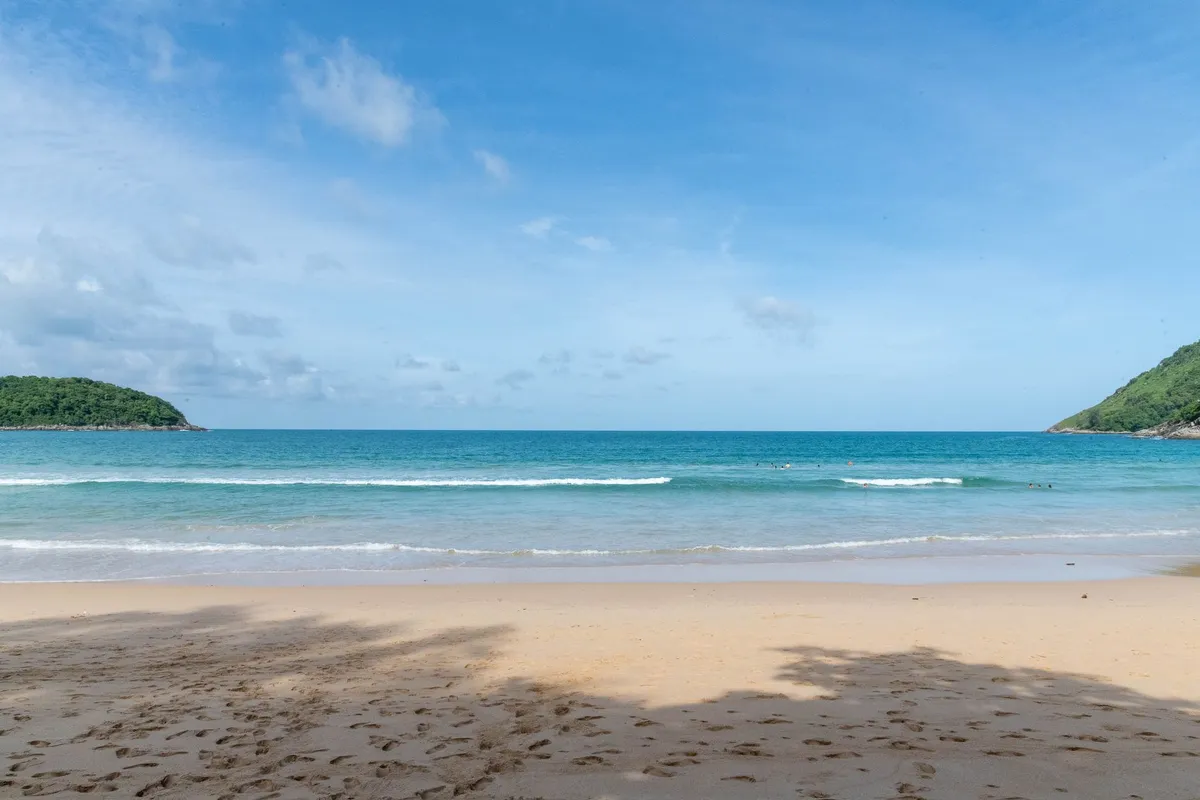
Kata Beach — soft sand, gentle waves in high season, and full infrastructure with restaurants and minimarkets just two minutes from the shore. It’s the most balanced choice for families with kids. In the low season (May-October), the waves pick up and attract beginner surfers.
Nai Harn Beach — on the southern tip, surrounded by green hills. The water is clear, the sand strip is medium-sized, and there are no big hotel chains on the shoreline, keeping the crowds in check. The sunset here is considered one of the best on the island.
Freedom Beach — only reachable by longtail boat (10 minutes from Patong, 1,100-1,500 THB round trip, Aug/2026) or via a steep 20-minute trail from the Avista Hideaway Resort. The reward is a stretch of white sand with water so clear you can spot fish without a mask.
Banana Beach — voted the 2nd best beach in the world in 2025, it sits on the island’s northwest, between Nai Thon and Bang Tao. Access is via a steep 5-minute descent from a free parking lot by the roadside. Arrive before 10am to snag a spot—the beach is small and fills up fast in high season.
Patong Beach — the most famous and most crowded. Bars, shops, jet skis, and the Walking Street of Bangla Road are all here. If you want a beach to relax, this isn’t it; if you want excitement, nightlife, and easy access to everything, it’s the most practical base.
Karon Beach — a long stretch (3 km) with plenty of room even in January. The sand “squeaks” underfoot—it’s made of quartz grains. Great for walks and for those who want a beach without Patong’s chaos, but with hotels and restaurants nearby.
Mai Khao Beach — the longest (11 km), in the island’s north, next to Sirinat National Park. It’s the opposite of Patong: nearly deserted, no vendors, no music. Planes from the airport fly low overhead here, and the photos are worth the detour.
How much does it cost to enjoy Phuket’s beaches?
All of Phuket’s beaches are public and free—you don’t pay an entry fee to any of them. The real cost lies in transport between them, activities, and food by the shore.
| Item | Average Cost | Notes |
|---|---|---|
| Scooter (daily rental) | 200-300 THB (Aug 2026) | Cheapest way to get around the island |
| Grab (short ride) | 100-300 THB | App with fixed pricing; safer than tuk-tuks |
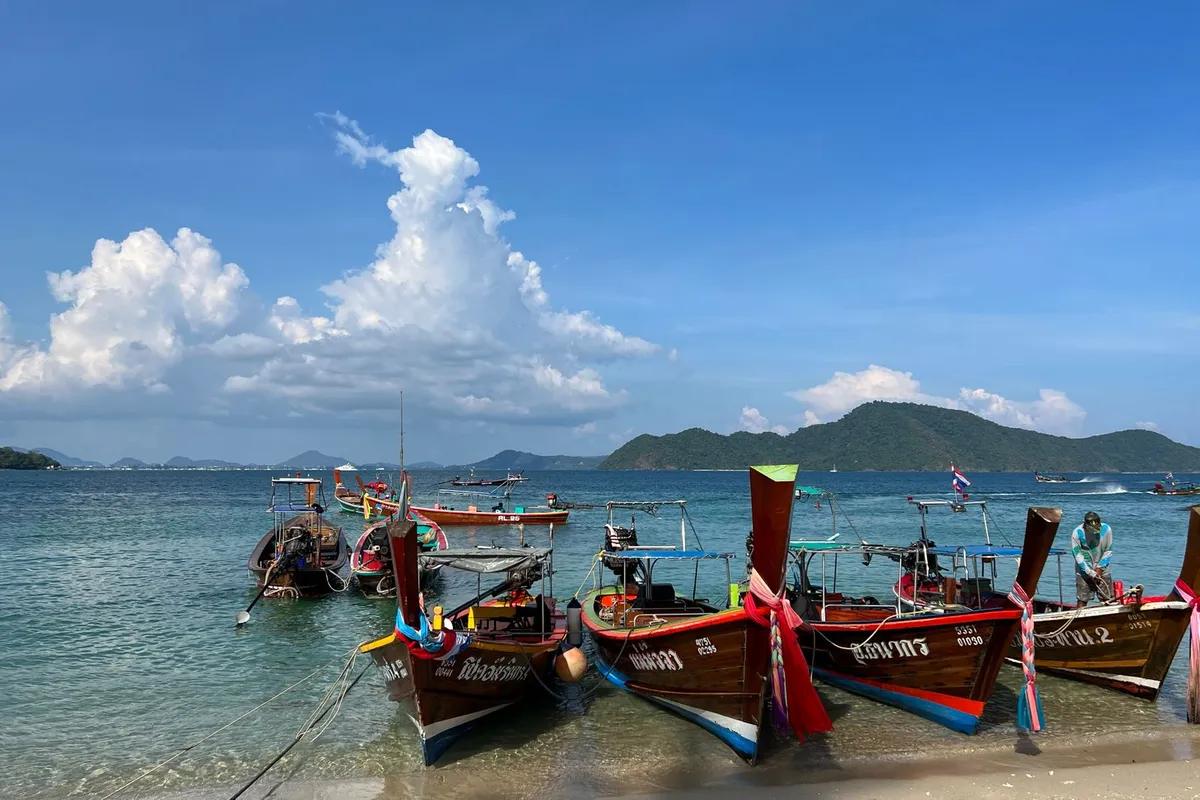
| Longtail boat to Freedom Beach | 1,100-1,500 THB round trip (Aug 2026) | Price per boat (up to 6 people) |
| Sun lounger + umbrella | 100-200 THB | Patong and Karon; smaller beaches don’t have them |
| Coral Island snorkeling tour | 1,550-1,755 THB/person (2025) | Includes transfers, lunch, and equipment |
| Similan Islands day trip | ~3,060 THB/person (2024) | Nov-Apr; all-inclusive — quantocustaviajar.com |
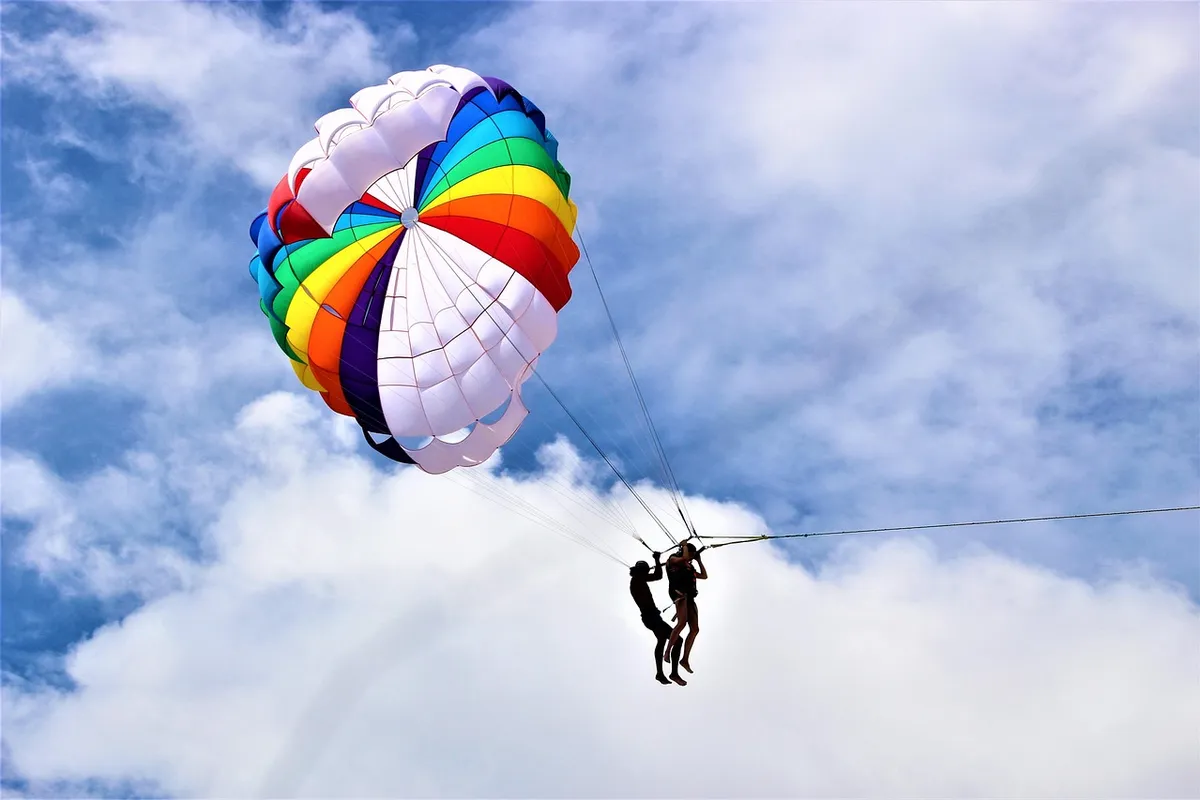
| Parasailing | 500-1,200 THB (2025) | Patong and Karon |
| Beachfront lunch | 150-400 THB | Pad thai on the beach: ~80-120 THB; restaurant: 200-400 THB |
A typical beach day in Phuket costs between 500 and 2,000 THB per person (about $15-60 USD, Aug 2026), depending on transport and activities. If you rent a scooter, eat at street stalls, and bring your own snorkel, you can spend less than 500 THB a day, not counting accommodation.
When’s the Best Time to Visit Phuket’s Beaches?
The dry season runs from November to February — clear skies, calm seas, and temperatures between 25 °C and 32 °C. It’s the best window for snorkeling, boat trips, and swimming at beaches like Freedom and Banana Beach, where the sea needs to be calm for the longtail to dock.
From March to May, the heat ramps up (above 34 °C) and isolated rain showers start, but the beaches still work great and hotel prices drop.
From June to October, it’s monsoon season: frequent rain, rough seas, and red flags at Kata, Karon, and Nai Harn. Some beaches on the east side (Rawai, Ao Yon) stay sheltered and are great for swimming during this period. The Similan Islands close from May to October.
How to Get to Phuket’s Most Beautiful Beaches
Phuket is an island connected to the mainland by a bridge, with an international airport (HKT) that receives direct flights from Bangkok (1h15), Kuala Lumpur, and Singapore. From the airport, the transfer to Patong takes 45 minutes and costs 200-800 THB depending on the service (airport bus, Grab, or taxi).
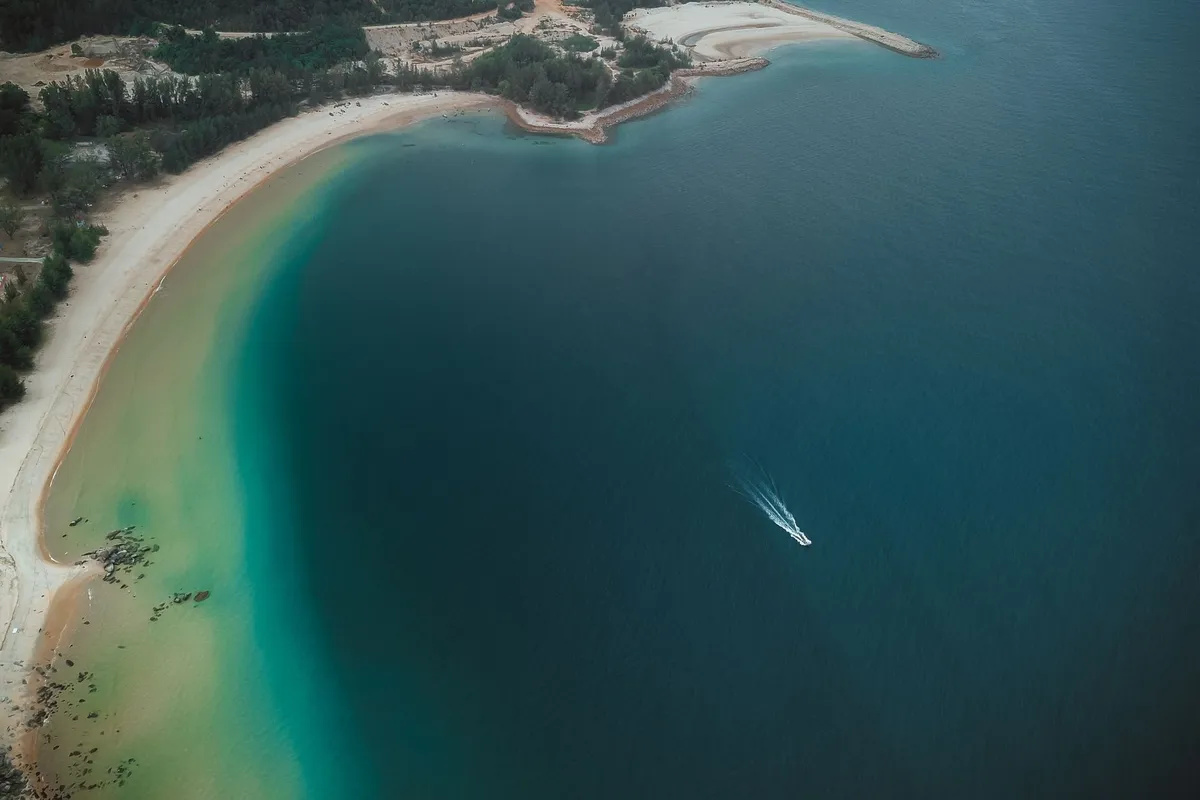
Once on the island, the most practical (and cheapest) way to hop between beaches is by scooter (200-300 THB/day with basic insurance). The Grab app works well and saves you from the exhausting haggling with tuk-tuks, which charge 400 to 600 THB for short trips.
For beaches with no road access — Freedom Beach, for example — you’ll need to hire a longtail boat from Patong pier (1,100-1,500 THB round trip, Aug 2026). Agree on your return time before you get off.
If you’re coming from Bangkok, the domestic flight is the fastest option. Another common route for travelers is combining Phuket with Kuala Lumpur or Singapore, taking advantage of cheap AirAsia flights.
What Else to Do in Phuket Besides the Beach?
Phuket isn’t just sand and sea. The island has attractions that can easily fill a whole day away from the beach — and they pair well with rainy days or for anyone looking to mix up their itinerary.
Boat trip to Phi Phi and Khai Islands — the most popular day trip leaves Phuket in the morning and returns late afternoon. You’ll visit Maya Bay (yes, the one from the movie), snorkel in absurdly clear water, and have lunch on Phi Phi Don Island. Book ahead during high season. You can reserve the all-inclusive Phi Phi & Khai tour.
Snorkeling at Coral Island (Koh Hae) — just 15 minutes by speedboat from Rawai. Shallow reefs, warm water, and colorful fish without needing to dive deep. Perfect for first-timers. The Coral Island snorkeling tour includes equipment, lunch, and hotel transfers.
Old Phuket Town — the historic center has colorful Sino-Portuguese buildings, cafés, street art, and night markets on Sunday evenings (the Walking Street on Thalang Road). It’s worth a full afternoon.
Big Buddha viewpoint — the 45-meter statue atop Nakkerd Hill offers panoramic views of the island. Free entry; cover your shoulders and knees (sarongs are available at the entrance).
Where to Eat Near Phuket’s Beaches
In Thailand, the best food is rarely at the expensive restaurant — it’s at the street stall. In Phuket, this is especially true in the beach areas, where beachfront restaurants charge up to double for the same food you can get on the street behind.
Kata and Karon: the street parallel to the beach has dozens of Thai restaurants serving pad thai, som tam (green papaya salad), and fried rice for 80-150 THB. Mom Tri’s Kitchen, on the cliff between Kata and Kata Noi, has panoramic views and above-average prices, but it’s worth it for a special occasion.
Rawai: the seaside seafood market is an attraction in itself. You pick your fish, squid, or shrimp at the stall, and the restaurant next door cooks it however you like (grilled, fried, curried) for a fee of 100-200 THB. Giant shrimp goes for 400-800 THB per kilo (Aug 2026).
Patong: Bangla Road and the surrounding area have it all — from fast food to rooftop restaurants. To eat cheap, head to the side streets and look for places with menus in Thai (a sign of local prices).
Where to Stay in Phuket: Which Beach Should You Base Yourself At?
Choosing your hotel in Phuket is, in practice, choosing your home beach. Each one has a different profile of accommodation and price.
| Beach | Vibe | Price range (per night) |
|---|---|---|
| Patong | Hustle, shopping, nightlife | 600-5,000 THB |
| Kata | Families, balance | 800-4,000 THB |
| Karon | Peace with amenities | 700-3,500 THB |
| Nai Harn | Quiet, couples | 900-6,000 THB |
| Mai Khao | Secluded resorts, honeymoons | 2,000-15,000 THB |
Kata is the most versatile base: close enough to Patong for a night out, far enough to sleep in peace. If you’re on a tight budget, hostels in Patong go for under 400 THB a night.
What are the common scams and pitfalls on Phuket’s beaches?
Phuket is safe for tourists, but there are recurring scams that catch people off guard. None of them will ruin your trip if you know they exist.
Jet ski with pre-existing damage — the most common scam in Patong. You rent the jet ski, return it, and the owner points out a “scratch” that was already there, demanding thousands of baht. Avoid renting jet skis in Phuket. If you insist, film the entire machine before you head out.
Inflated tuk-tuk prices — tuk-tuks in Phuket don’t use meters and charge 400 to 600 THB for rides that cost 100 THB on Grab. Agree on the price before you hop in, or just use the app.
Scratch-card scam on the street — someone stops you, asks you to scratch a “promotional” card, and you “win” a prize that requires sitting through a 90-minute timeshare presentation. Ignore them and keep walking.
Taxi to a jewelry store — the driver offers a free or super cheap ride, but makes a “quick” stop at a jewelry shop where his commission is waiting. Pieces sold as priceless gems are worth a fraction of the price.
Ignored red flags — this isn’t a scam, it’s a real risk. During monsoon season, the rip currents at Kata and Karon are strong. Respect the flags and swim where there are lifeguards.
Frequently asked questions
Do I need a visa to go to Phuket?
Brazilian passport holders don’t need a visa to enter Thailand for stays of up to 60 days (rule in effect as of Aug/2026). You just need a passport valid for at least 6 months and a return ticket. Check for updates on the Thai embassy website.
Is the sea water in Phuket warm?
The sea temperature in Phuket stays between 27 °C and 30 °C all year round — comfortable for swimming without a wetsuit. During high season (Nov-Feb), the water is clearer and calmer.
Can you go from Phuket to Phi Phi in one day?
Yes. The speedboat day trip leaves Phuket around 8am and returns at 5pm, with stops at Maya Bay, snorkeling, and lunch on Phi Phi Don. The crossing takes about 45 minutes on a fast boat. During high season, book at least 2 days in advance.
Is Phuket safe for tourists?
Phuket is one of the safest destinations in Southeast Asia for tourists. The main risks are scams (jet ski, tuk-tuk, jewelry) and scooter accidents — wear a helmet, respect left-hand traffic, and avoid driving at night on unlit roads.
Conclusion
Phuket delivers beaches for every kind of trip — from Patong, which never shuts down even at night, to Banana Beach, which requires a hike down a trail to reveal crystal-clear water. With 3 to 5 days, a rented scooter, and this guide on your phone, you can hit the best ones without wasting time on those that aren’t worth the trek. If you’re putting together a bigger Southeast Asia itinerary, pair Phuket with Bangkok — the flight takes 1h15 and costs little. Safe travels, and remember: negotiate the tuk-tuk before you hop in. For more destination guides around the world, keep exploring Voyage Voyage.