 Marcelo Oliveira
The Museo Nacional del Prado sits on the Paseo del Prado in Madrid and holds one of the core collections of European painting. For a well-organized visit, the key move isn’t trying to see everything: it’s choosing a few rooms, buying a timed ticket, and setting aside two to three hours for works like Las Meninas, The Garden of Earthly Delights and paintings by Goya.
Hotels in Madridfree cancellation options onlySee hotels ›Booking.com partner (advertising): we may earn a commission at no extra cost to you.
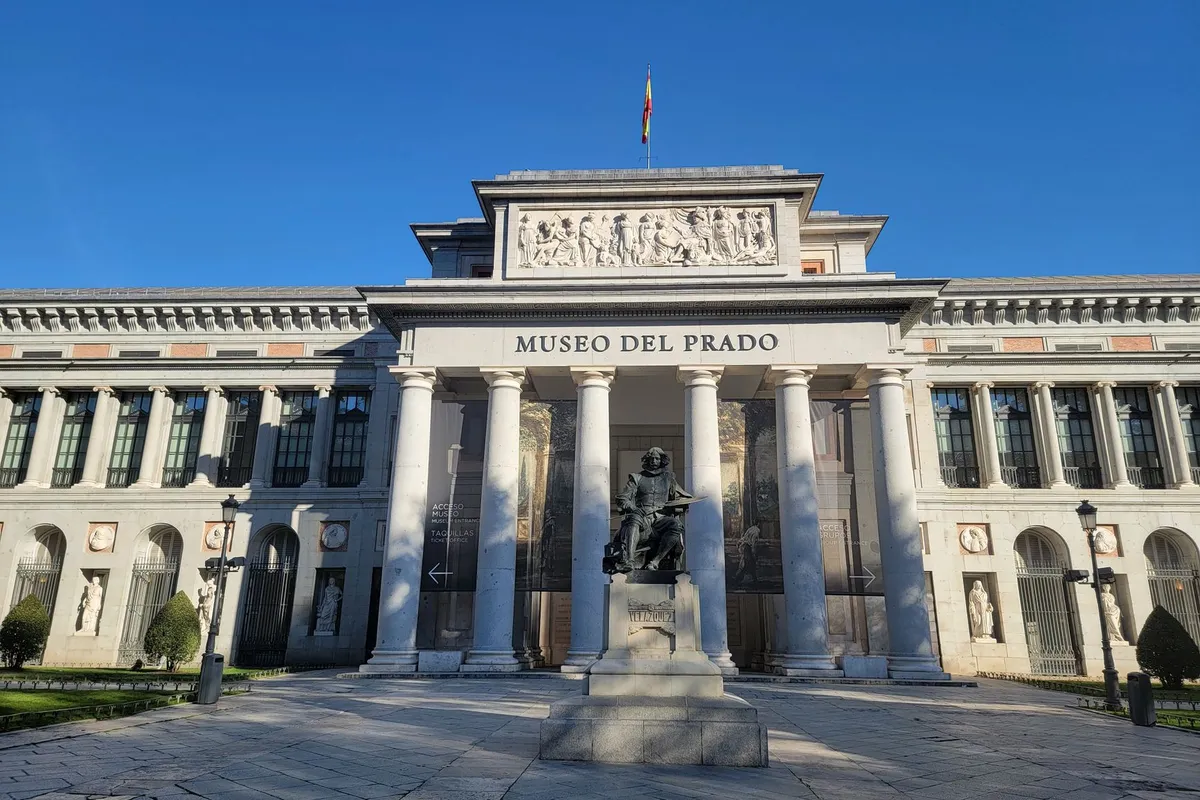
Where the Museo del Prado is and how to get there
The address is Paseo del Prado s/n, 28014 Madrid, on the cultural axis linking the Atocha area to Plaza de Cibeles. The museum faces the Royal Botanical Garden and is close to Retiro Park; Banco de España and Atocha are the most practical metro stations for the walk. When planning your time in the city, it deserves a spot alongside the Madrid guide, not as a rushed stop between Puerta del Sol and Retiro.
The complex has more than one entrance. If you buy a ticket online, check the door and entry time slot on your voucher. Arriving a few minutes early is more useful than grabbing the first available slot: the museum requires a dated and timed pass, and the last entry is 30 minutes before closing.
What day is the Museo del Prado free? Tickets and opening hours
Based on prices checked in August 2026, a general ticket costs €15; reduced admission is €7.50 for eligible groups with proof, and the audio guide costs an extra €5. Admission includes the collection and, depending on the schedule and the conditions stated at purchase, temporary exhibitions. If you’d rather arrive from Brazil with your booking already sorted, there’s a Museo del Prado ticket with a Portuguese-language audio guide; the page lists the terms of that option and you still go through the building’s access control line.
According to the official source for hours and rates, the Prado is open Monday to Saturday from 10am to 8pm, and Sundays and public holidays from 10am to 7pm. On January 6, December 24 and December 31, hours are reduced to 10am–2pm; it’s closed on January 1, May 1 and December 25. Rooms begin to be cleared ten minutes before closing.
The general public can enter free during the last two hours of opening, subject to capacity and to picking up the corresponding ticket at the box office. In practice, that means 6pm–8pm Monday to Saturday and 5pm–7pm on Sundays and public holidays. It’s a good option for seeing just a few works, but it doesn’t replace a long visit: there’s less usable time and capacity is limited.
What to see at the Museo del Prado
The collection grew out of the Spanish royal collections, and the museum opened to the public in November 1819. The result is especially strong in Spanish, Flemish and Italian painting. Instead of hunting for a definitive list of “most important works,” it’s worth organizing your visit around the artists and periods that genuinely interest you.
- Velázquez: Las Meninas is the best-known starting point, but The Surrender of Breda helps you grasp the scale of the artist’s history painting.
- Goya: The Naked Maja and The Third of May 1808 show very different phases of his output; the Prado’s holdings are also essential for understanding his portraits and prints.
- Bosch, Rubens and El Greco: The Garden of Earthly Delights, The Three Graces and The Knight with His Hand on His Breast are natural stops on a first route.
The Prado map in Portuguese locates several of these works and keeps you from wandering the building aimlessly. For a Spain trip centered on heritage, the articles on the Alhambra in Granada and the history of Córdoba help expand your itinerary beyond Madrid.
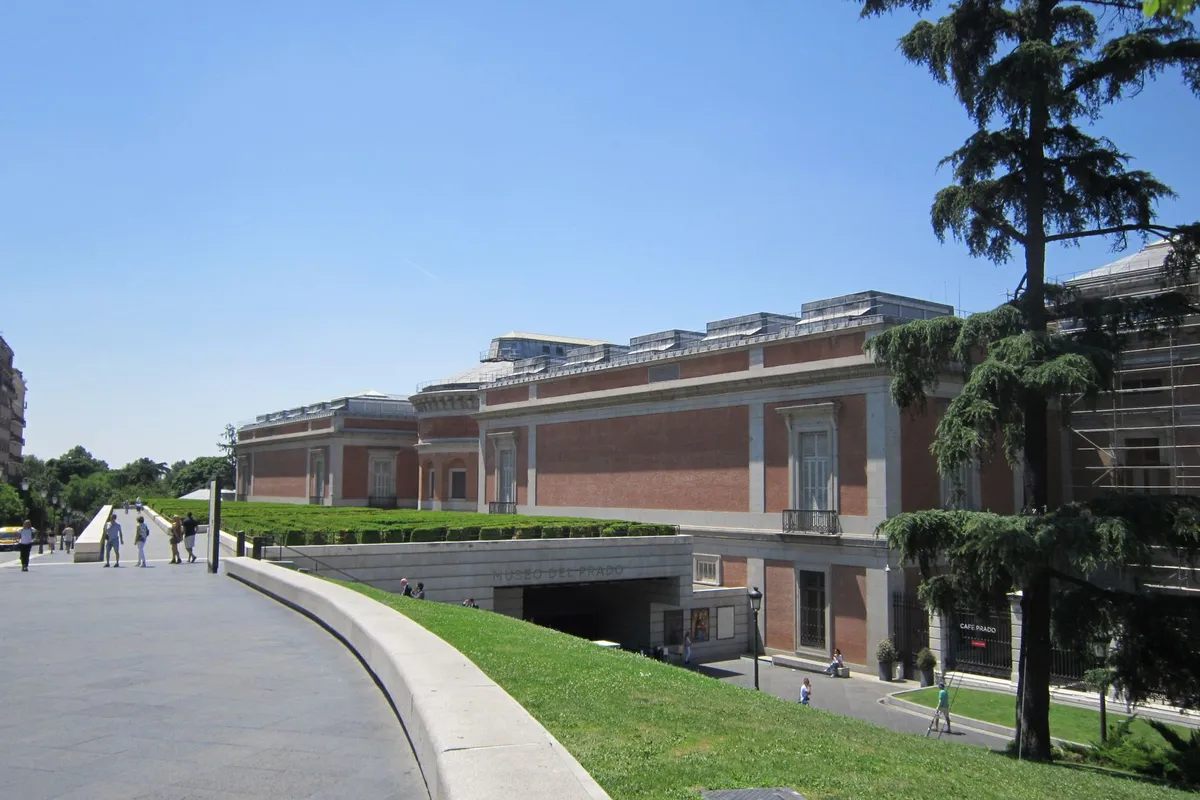
How long does it take to visit the Museo del Prado
A first visit focused on key works calls for about two to three hours. Under two hours works when you have a specific interest — Velázquez, Goya or Flemish painting — and walk in knowing what you’re looking for. Half a day makes sense if you want to see the main sections at a relaxed pace, use an audio guide and include temporary exhibitions.
There’s no “correct” amount of time to move through the building. The collection is vast: a curated route serves the visit better than trying to cover too many rooms. The museum’s digital map and list of highlighted works are better references than an improvised route at the entrance.
Why you can’t take photos at the Museo del Prado
The official rule is clear: photography and filming are not allowed in the rooms. The policy is part of the visiting conditions set by the museum for the safety and comfort of the public. So the facade and outdoor areas can give you trip photos, but inside the galleries your phone should stay put away.
Why it’s called the Museo del Prado
“Prado” is the name of the place where the museum was established, on today’s Paseo del Prado. Juan de Villanueva’s building was designed in 1785 as a Cabinet of Natural Sciences; later, under Ferdinand VII, it became the Royal Museum of Painting and Sculpture. The name Museo del Prado cemented the link between the institution and this area of Madrid.
 HotelAs soon as you have datesCompare neighbourhoods and guest ratings.Booking ›
 ActivitiesBefore you travelBook ahead the ones with limited spots.Civitatis ›
 More activitiesTo compareTickets, day trips and tours with flexible cancellation.GetYourGuide ›
Frequently asked questions
Is the Museo del Prado worth it?
It’s worth it when you treat the visit as a choice of collection rather than an obligation to tick off an attraction. If you want to see Velázquez, Goya, El Greco, Bosch, Rubens and Titian face to face with the originals, the Prado holds a group of works hard to match in any other city. If painting isn’t your thing, you can do a short pass during the free hours or prioritize something else in Madrid.
What is the most important museum in Spain?
There’s no single official ranking, but the Prado is Spain’s main reference for European painting from the 12th century to the early 20th and usually holds that spot in cultural guides. The Reina Sofía is essential for modern and contemporary art — especially for Guernica — and the Thyssen-Bornemisza fills in the timeline. The choice depends on which artistic period your trip wants to prioritize.
What day are Madrid’s museums free?
There’s no single day that applies to every museum in Madrid. At the Prado, general free entry happens during the last two hours of each opening day, with different times Monday to Saturday versus Sundays and public holidays. The Reina Sofía, the Thyssen and municipal museums have their own rules; before building your itinerary, confirm the calendar directly with each institution, since exhibitions and holidays can change the conditions.