 Marcelo Oliveira
A Coruña is an Atlantic city in Galicia, in northwestern Spain, where a Roman lighthouse, urban beaches and a compact Old Town all fit into the same stroll. It’s a destination that works just as well for a 1-day stop as for a 2-day stay, especially if you love maritime history, seafood, architecture and walks by the water.
Hotels in A Corunhafree cancellation options onlySee hotels ›Booking.com partner (advertising): we may earn a commission at no extra cost to you.
In Galician and Spanish, the name is A Coruña; in English, it’s often written as A Coruña too, though you’ll also see La Coruña in older texts. In this guide, you’ll find its location, history, top attractions, a one-day itinerary, how to get there, cost of living and the best way to combine the city with other places in Galicia.
Is A Coruña worth it?
Yes, above all for anyone who wants a coastal city with a personality of its own, not just a base for visiting somewhere else. A Coruña has a center that’s relatively easy to explore, a waterfront that stitches together beaches and monuments, and enough attractions to fill a day without turning the trip into a check-in race. The Tower of Hercules provides the big historic symbol; Riazor and Orzán set the beach rhythm; and the Old Town packs in squares, churches, glass galleries and restaurants.
The best mindset is to think of a walkable city, open to the Atlantic and with changeable weather. The wind can show up even on clear days, and the sea is as much a part of the experience as the museums. For a first visit, set aside a full day. With two days, you can visit a museum at ease, take a boat ride or explore the coast without everything depending on the clock.
Where A Coruña is and what the name means
A Coruña sits in northwestern Spain, in the autonomous community of Galicia, on a peninsula and bay facing the Atlantic Ocean. It’s a port and coastal city, unlike Santiago de Compostela, which lies inland and revolves around religious heritage and the Camino. The regional distance makes it easy to combine the two, but the atmosphere is different: in A Coruña, the horizon, the seafront promenade and the urban beaches are part of the center’s daily routine.
You’ll see three forms of the name in travel materials: A Coruña, the Galician and Spanish form; A Corunha, the Portuguese form; and, in older texts or translations, La Coruña. The exact meaning of the word “Coruña” shouldn’t be treated as a simple translation. There are historical and linguistic hypotheses, but the safe takeaway for visitors is the coexistence of the official Galician form and the other variants used in different languages.
According to the final INE communication released by the municipality, A Coruña had 251,543 inhabitants as of January 1, 2025. That number helps you grasp the scale: it’s not a coastal village, but a city with services, a university, a port, commerce and a cultural life that keeps going after high season. See the official population update.
How A Coruña grew into a port city
The question “what happened to A Coruña?” is ambiguous: sometimes it refers to Deportivo La Coruña, the football club, not the city. This guide is about the destination. A Coruña didn’t disappear, nor can it be summed up in a single episode; it has layered Roman, port, defensive and urban history over time.
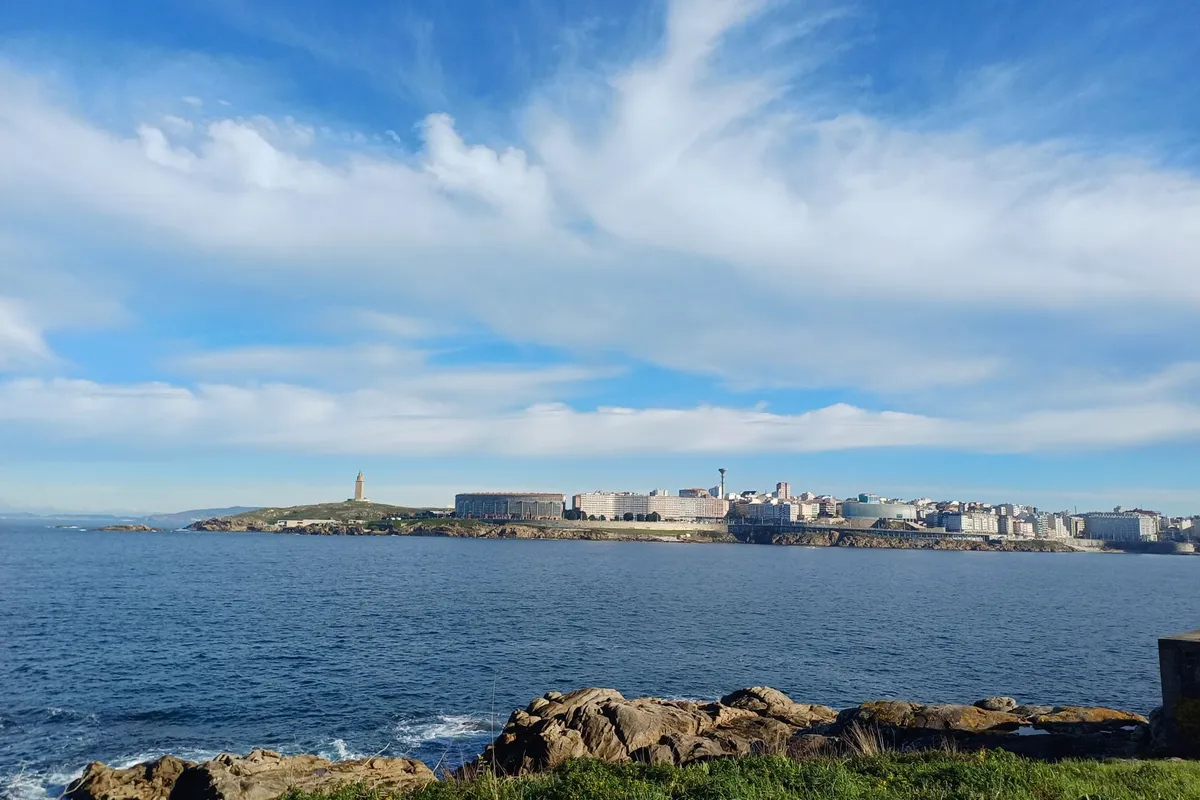
Its location at the gateway to the Atlantic brought trade, fishing, the movement of people and also strategic disputes. The city grew around its relationship with the sea, while the old area preserved streets and buildings that help tell that story. Today, the same waterfront can show you a lighthouse of Roman origin, a beach used by locals, cultural venues and a promenade with an urban scale.
The result is a historic destination without excessive solemnity. You can start with ancient memory, pass through a square tied to local political life and end up watching surfers at Riazor. That succession of uses is one of the best answers for anyone who wants to understand the city beyond a checklist of sights.
Tower of Hercules: the city’s symbol
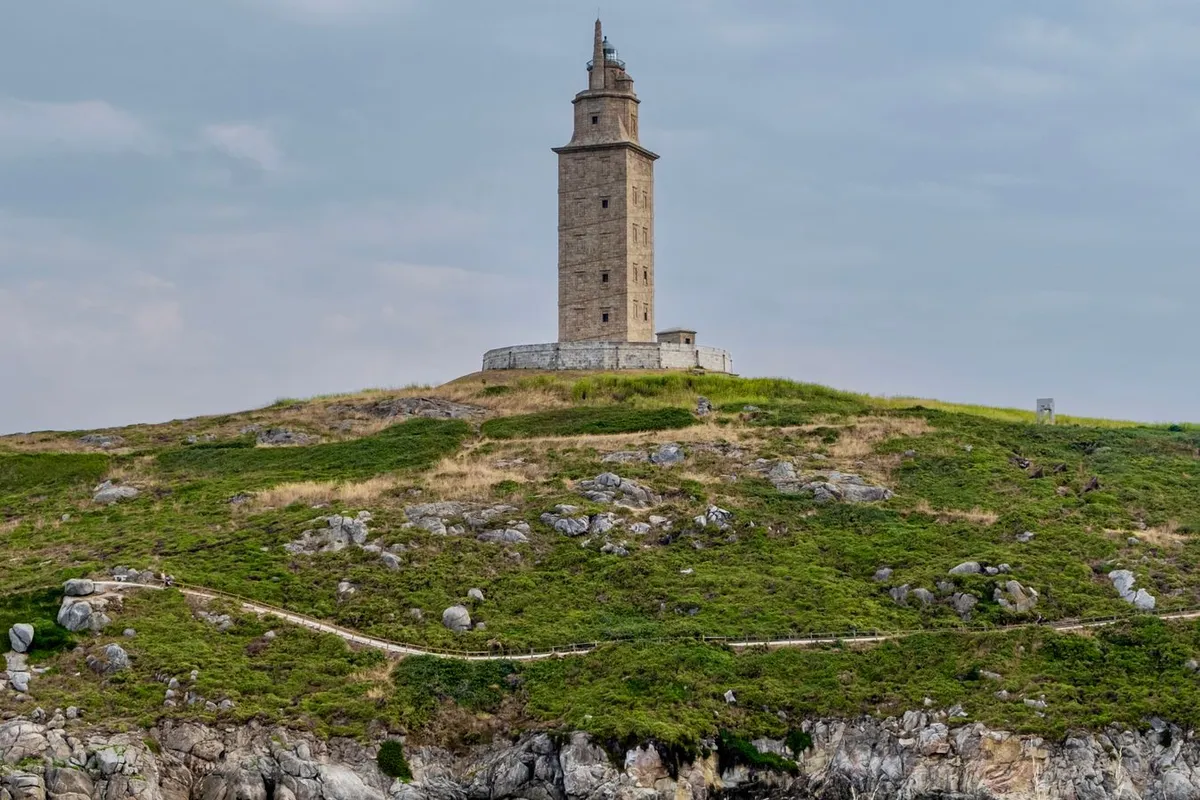
The Tower of Hercules is the must-see. It’s a Roman lighthouse that’s still in operation and has become A Coruña’s visual emblem. It stands in an open area by the sea, with paths, sculptures and a landscape that highlights both the structure and its surroundings. Even if you don’t climb the tower, walking through the park and taking in the coastline is already a major experience.
How to visit the Tower
Set aside at least an hour for the area, more if you want to take photos, go inside the monument and walk without rushing. Check opening hours and access availability before you head out, since tickets and operations can vary by season. The tower makes a great first attraction of the day or a late-afternoon finale, when the light brings out the contours of the coast.
If you prefer to understand the place through a local narrative, the activity widget below features a free tour directly tied to the city’s symbol. Availability varies, so it’s worth checking the date, time and conditions before booking.
 Partner · Civitatissee all activities in A Corunha ›
- 2026 Solar Eclipse Viewing Day Tripfrom€59per personSee ›
- Santiago de Compostela Food + Cathedral TourRating 9.1 · 56 reviews on Civitatisfrom€70per personSee ›
- Muxía & Fisterra Day TripRating 9.4 · 310 reviews on Civitatisfrom€39per personSee ›
- La Coruña Boat TripRating 9.5 · 199 reviews on Civitatisfrom€35per personSee ›
Civitatis prices on 28/09/2026, from, per person. They may change.
Urban beaches and the seafront promenade
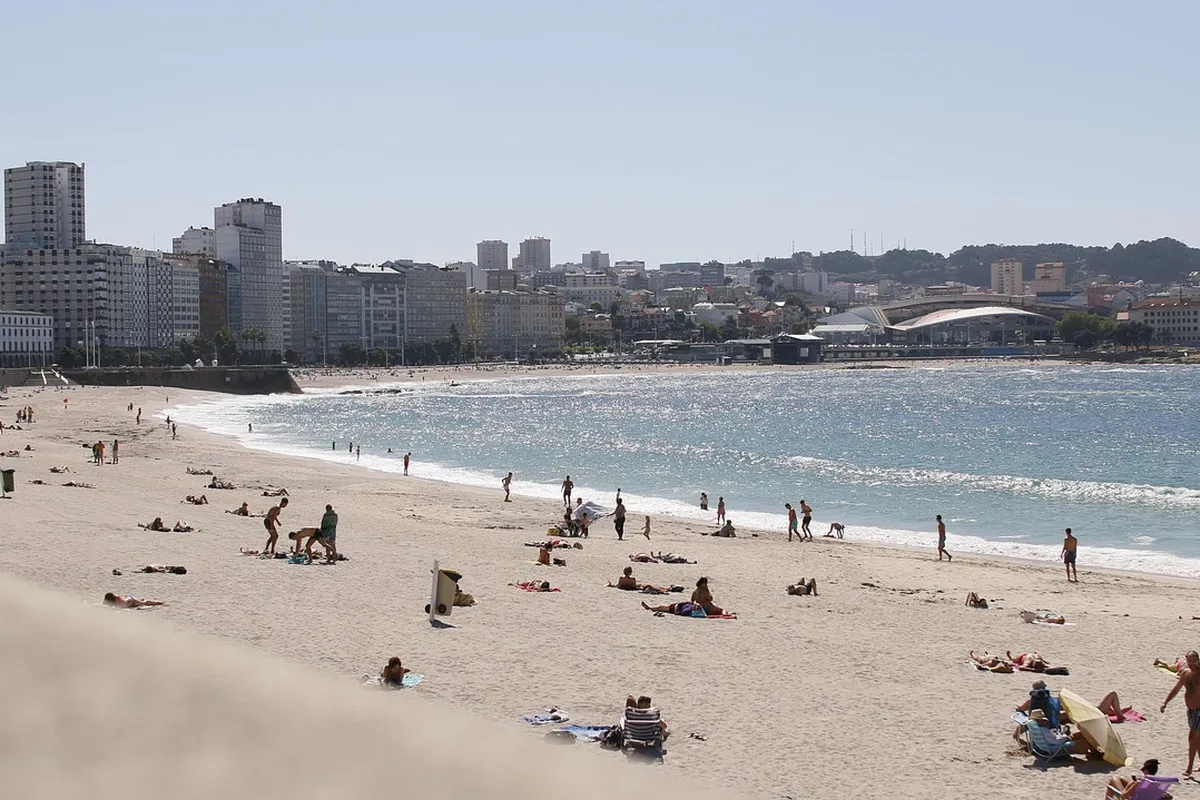
A Coruña is a coastal city in the most everyday sense of the word: you don’t have to leave the center to find sand, a swim and a boardwalk. Riazor and Orzán are the best-known urban beaches, with their stretch of sand woven into the waterfront. The Lapas area, closer to the Tower, adds a smaller, scenic stretch to the circuit. Together, the urban beaches span more than two kilometers, according to the municipal tourism portal.
Riazor, Orzán or Lapas?
Riazor is a natural choice for taking in the bay and feeling the scale of the waterfront. Orzán sits in the same urban system and can be folded into your walk, especially if the sea is running with waves. Lapas plays a different role in the itinerary: it brings the beach closer to the Tower of Hercules and creates a more contemplative transition between monument and ocean.
The seafront promenade is best enjoyed without rushing. Walk, notice the glass galleries on the buildings and leave some room for the weather. On windy days, the experience can be lovelier with a light jacket than with a rigid beach plan. The landscape is part of the visit even when the water isn’t inviting you in.
How to choose your A Coruña attractions
On a first visit, prioritize the Tower of Hercules, María Pita Square, the Old Town and Riazor or Orzán: this set shows you the Roman origins, the civic center and the everyday relationship with the Atlantic. If you only have one day, save the museums for a second trip and keep the itinerary continuous between center, Tower and waterfront.
With kids or rain, swap part of the walk for Domus, Aquarium Finisterrae or Casa das Ciencias. With a second day and clear weather, add Monte de San Pedro and a longer stretch of the seafront promenade. The choice works best when it follows the group’s profile and the forecast, not when it tries to cram every attraction into a few hours.
Old Town, María Pita and museums
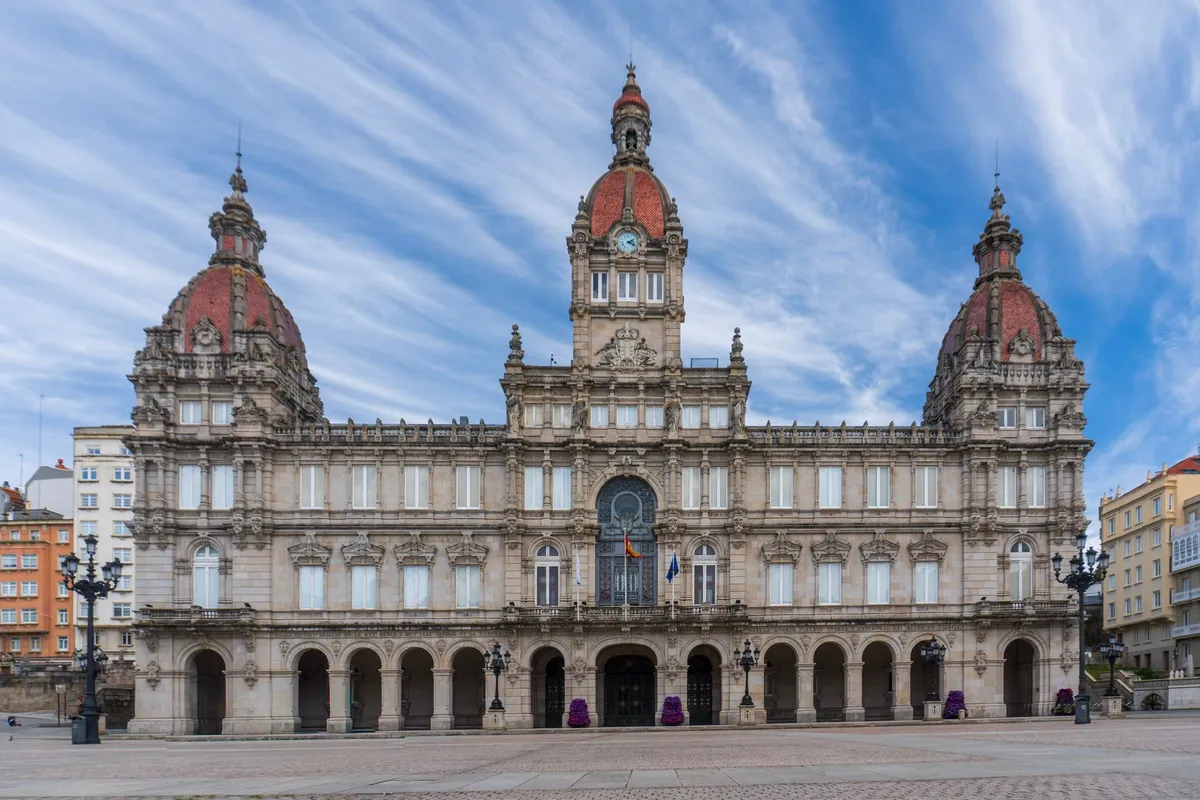
The Old Town deserves a walk of its own. The best approach is to wander the streets and squares without turning the stroll into a rushed hunt for facades. María Pita Square is an important urban reference point, with the city hall building and a monumental scale that contrasts with the smaller streets around it.
The glass galleries are another hallmark of A Coruña. They’re not just a decorative detail: they help explain how local architecture responds to the light, the humidity and the Atlantic wind. Between stops, it’s worth setting aside time to eat octopus, fish, shellfish or a simple Galician dish. The city works well when you alternate heritage, food and sea.
Domus, Aquarium Finisterrae and Casa das Ciencias
For a family trip or a rainy day, the interactive museums are a big advantage. Domus explores the human being; Aquarium Finisterrae brings visitors closer to the marine environment; and Casa das Ciencias sits in an urban park and focuses on science communication. Pick one based on the time you have, rather than trying to visit all three in the same half-day.
It’s also worth checking the city’s cultural calendar. Temporary exhibitions, concert halls and port-related activities can change the experience of a short visit. The safest information is always the attraction’s official schedule on the date of your trip.
What to do in A Coruña in 1 day
With only one day, the strategy is to build a continuous axis between the center, the Old Town, the Tower and the beaches. Don’t try to do every museum. The itinerary below is a flexible base, adjustable to your arrival time and the weather.
Morning: María Pita and the Old Town
Start at María Pita Square and walk through the Old Town. Notice the glass galleries, step into an open church or historic building and take a coffee break. If you love history, this is the moment to read the city before reaching the great Roman monument.
Midday and afternoon: Tower of Hercules
After lunch, head to the Tower of Hercules. Set aside time for the park, the lighthouse and the coastal area. If a ticket or guided visit is available, choose the option that doesn’t compromise the rest of your day. The surrounding landscape matters; don’t reduce the visit to a photo in front of the facade.
Late afternoon: Riazor, Orzán or a boat ride
Wrap up the day on the waterfront. Riazor and Orzán are easy choices for watching the light change and having dinner near the sea. On a date with departures available, the boat tour widget below offers another perspective on the bay and the seafront promenade. Confirm operations and times before counting on it as a fixed part of your itinerary.
Getting there and getting around
A Coruña Airport, also called Alvedro, is about 8 kilometers from the center, according to Aena. Line 4051/A4 connects the airport to the city, with central stops such as Puerta Real and Marina. Prices and intervals can change, so check Aena’s bus page close to your trip. A taxi is the simplest alternative if you’re arriving with luggage or outside bus hours.
You can also arrive by train or intercity bus. If you’re coming from Santiago de Compostela, the rail link makes it easy to build a car-free circuit. Within A Coruña, the historic center, María Pita and the waterfront are all walkable; urban buses or taxis handle the longer stretches to the Tower and the museums.
In short: a car isn’t necessary for a central one-day itinerary, but it can help if you want to explore beaches and coastal villages outside the municipality. If you do rent one, consider parking and the narrow streets of the old area before choosing your accommodation.
Cost of living in A Coruña
A Coruña shouldn’t be treated as a single-price destination. Costs depend on the neighborhood, the season, the type of rental and how much you cook or eat out. On Numbeo, updated May 4, 2026, an inexpensive restaurant meal showed up at €13.50, with a reported range of €12 to €15. It’s a collaborative reference, not an official rate.
For housing, Idealista’s historical data recorded an average asking price of €11.1/m² in June 2026. Ciudad Vieja-Centro showed €13.1/m² and Agra del Orzán-Ventorrillo €9.8/m². Based on the municipal average, a 50 m² property would theoretically equal €555 per month before expenses; that’s a reference calculation, not a quote or a guarantee of availability.
For a short trip, the biggest costs are accommodation, restaurants and transport. For a longer stay, rent is the dominant variable. Build your budget by separating housing, food, transport, tickets and a buffer for surprises; also confirm whether the listing includes building fees, utilities, deposit and other charges.
A Coruña on a Galicia trip
A Coruña works well as the main destination of an Atlantic getaway or as one of the bases for a trip through Galicia. A two-day itinerary gives you more room for museums, a relaxed walk along the waterfront and a long seafood meal. On a regional trip, the city can be combined with Santiago de Compostela, creating a contrast between urban coastline and inland heritage.
There’s no need to try to cover all of Galicia in a single sequence. If A Coruña is the priority, keep at least one night in the city. If a broad route is the priority, choose your transfers based on available transport and real visiting time, not just distance on the map. Costa da Morte, Lugo and the Rías Baixas are other chapters, each with its own logistics.
 HotelAs soon as you have datesCompare neighbourhoods and guest ratings.Booking ›
- ActivitiesBefore you travelBook ahead the ones with limited spots.Civitatis ›
Quick questions
These answers sum up the most common questions about location, history, population and cost of living in A Coruña.
Where is A Coruña in Spain?
It’s in the northwest of the country, in Galicia, on a peninsula and bay facing the Atlantic.
What does Coruña mean?
“A Corunha” is the Portuguese form of “A Coruña.” The word’s etymology doesn’t have a single reliable translation for tourist use; what matters is recognizing the linguistic forms used in the region.
What is the population of La Coruña?
The final INE communication cited by the municipality recorded 251,543 inhabitants as of January 1, 2025.
Is A Coruña expensive to live in?
In June 2026, the average asking rent was €11.1/m²; in May, an inexpensive meal showed up at €13.50 in the collaborative reference consulted. Both figures are dated snapshots and don’t replace current research on the neighborhood and the property.
Verdict: how many days to set aside
Set aside 1 day if you want to see María Pita, the Old Town, the Tower of Hercules and an urban beach on a straightforward itinerary. Set aside 2 days if you want to include a museum, a boat ride, unhurried meals and a longer walk along the waterfront. A Coruña is worth the stop because it delivers, on a manageable scale, what so many people look for in Galicia: history, sea, food and a city that stays alive beyond the postcard.
Sources consulted: Spain.info; Spain.info España; Turismo de Galicia; Visit Coruña — Tower of Hercules; Visit Coruña — beaches; A Coruña municipality — population; Aena — airport distance; Aena — buses; Visit Coruña — how to get there; Numbeo — food; Idealista — rent.