 Marcelo Oliveira
If you’ve ever wondered whether Guadalajara, Mexico, is the same as Mexico City, the answer is no — they’re two different cities, nearly 460 km (286 miles) apart. Guadalajara is the capital of the state of Jalisco, in western Mexico, while Mexico City is the country’s federal capital, and confusing the two is the most common mistake people make when they start planning their trip.
Hotels in Guadalajarafree cancellation options onlySee hotels ›Booking.com partner (advertising): we may earn a commission at no extra cost to you.
Guadalajara is Mexico’s second-largest city, the capital of Jalisco, and is known as the birthplace of mariachi and tequila. It’s about a 1.5-hour flight or a 6–7 hour bus ride from Mexico City, has a lower cost of living than the capital, and packs a colonial historic center, the artisan neighborhood of Tlaquepaque, and the Tequila region all within a few kilometers. You can cover the essentials in 3 days, with an extra day for the agave distilleries.
How to get to Guadalajara, Mexico
Miguel Hidalgo y Costilla International Airport (GDL) receives direct flights from several Mexican cities and the United States; there are no direct flights from Brazil (from Guarulhos or Galeão), so the most common route is a connection through Mexico City (a domestic flight of about 1h20) or via the US. From Guadalajara’s airport to the center is about 20 km, easily covered by an authorized taxi, a ride-hailing app, or the executive bus that connects the terminal to the Minerva area.
If you’re already in Mexico City and want to add Guadalajara to the same trip, you have two practical options: a domestic flight of about 1h20 (the fastest) or a long-distance bus, which takes 6 to 7 hours depending on the company and traffic leaving the capital. For those putting together a bigger Mexico itinerary, it’s worth planning your first stop in Mexico City beforehand and only then deciding whether to add Guadalajara to the route.
Best time to visit and how long to stay
From November to April, you’ll find the dry season, with clear days and mild temperatures between 15°C and 27°C — the most comfortable window for walking around the center and Tlaquepaque without rain. From June to September, it rains almost every day, usually in the afternoon, which doesn’t ruin the trip but calls for an umbrella and a more flexible itinerary.
Three full days are enough to cover the historic center, Tlaquepaque, and an extra day for Tequila or the Lake Chapala region. If you only have a weekend, you can still see the essentials of the center and the artisan neighborhood, saving the Tequila excursion for another visit.
What to see in Guadalajara
The itinerary naturally splits into three hubs: the colonial historic center, the artisan neighborhood of Tlaquepaque, and day trips to Tequila or Zapopan — each takes half a day to a full day.
Historic center and Guadalajara Cathedral
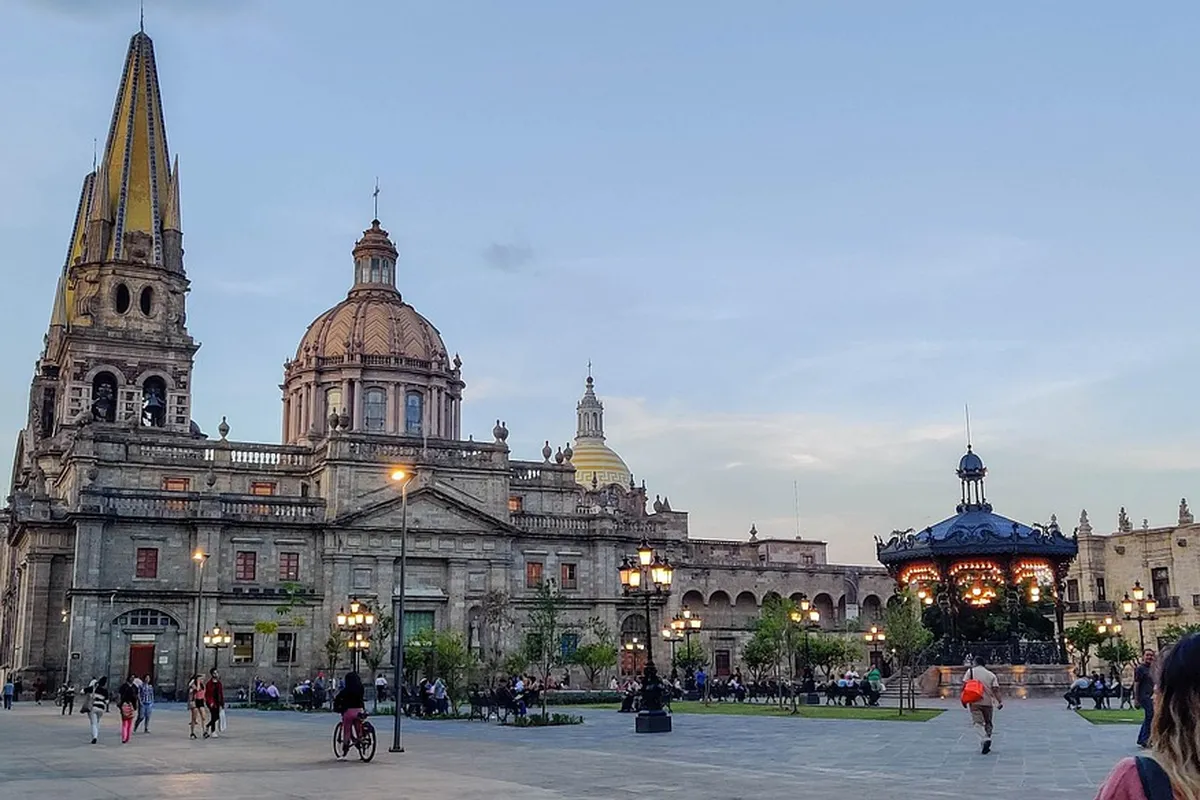
Guadalajara Cathedral, with its two neo-Gothic towers covered in yellow tile, is the visual landmark of the center and sits right next to Plaza de Armas. Around it, a cluster of connected plazas (Plaza de Armas, Plaza Guadalajara, Rotonda de los Jaliscienses Ilustres) brings together the Government Palace and the Degollado Theater, all within a few minutes’ walk of each other.
Hospicio Cabañas, a UNESCO World Heritage Site
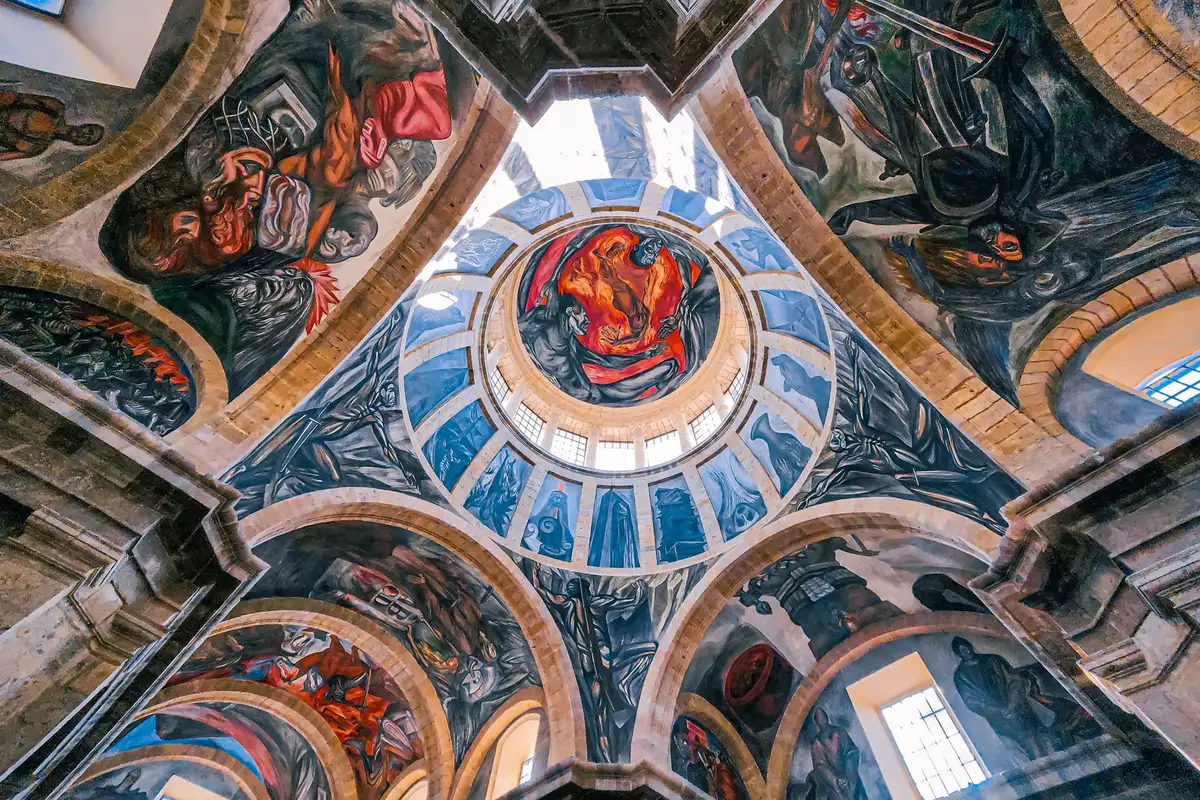
Hospicio Cabañas has been a UNESCO World Heritage Site since 1997 and houses the murals of José Clemente Orozco, including the panel “The Man of Fire” painted on the dome of the central chapel — considered one of the most intense works of Mexican muralism. Arrive early to see the natural light illuminating the ceiling without the midday crowds.
San Juan de Dios Market
It’s the largest covered market in Latin America and packs three floors with everything from crafts and clothing to food stalls where you can try torta ahogada, Guadalajara’s signature dish. Go hungry and negotiate prices at any stall without a fixed tag.
 Partner · Civitatissee all activities in Guadalajara ›
- Traditional Mexican Cowboy ShowRating 9.5 · 21 reviews on Civitatisfrom€40.21per personSee ›
- Mezcala Island Tripfrom€65.87per personSee ›
- Lucha Libre ExperienceRating 8.3 · 6 reviews on Civitatisfrom€74.28per personSee ›
- See ›Guadalajara Free Walking TourRating 9.3 · 816 reviews on Civitatis
Civitatis prices on 28/09/2026, from, per person. They may change.
What to pair with Guadalajara
Two day trips account for much of what makes Jalisco famous: the tequila route and the artisan neighborhood of Tlaquepaque, both less than an hour from the center.
Tlaquepaque, the art and mariachi neighborhood
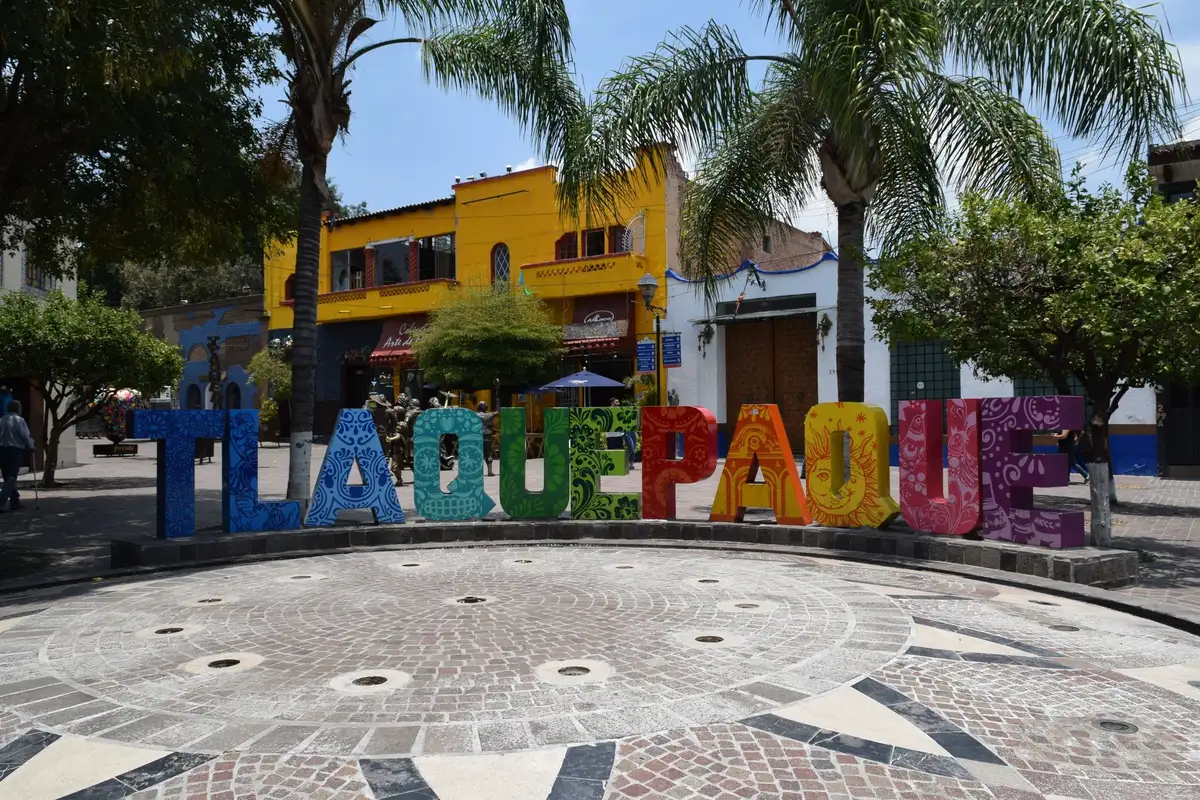
Tlaquepaque is about 20 minutes from downtown Guadalajara and is packed with art galleries, glass and ceramic craft shops, and Jardín Hidalgo, a square where mariachi bands play live at night. El Parián restaurant, in the heart of the square, is where most visitors stop to hear live mariachi while they dine.
Tequila: the town and the drink
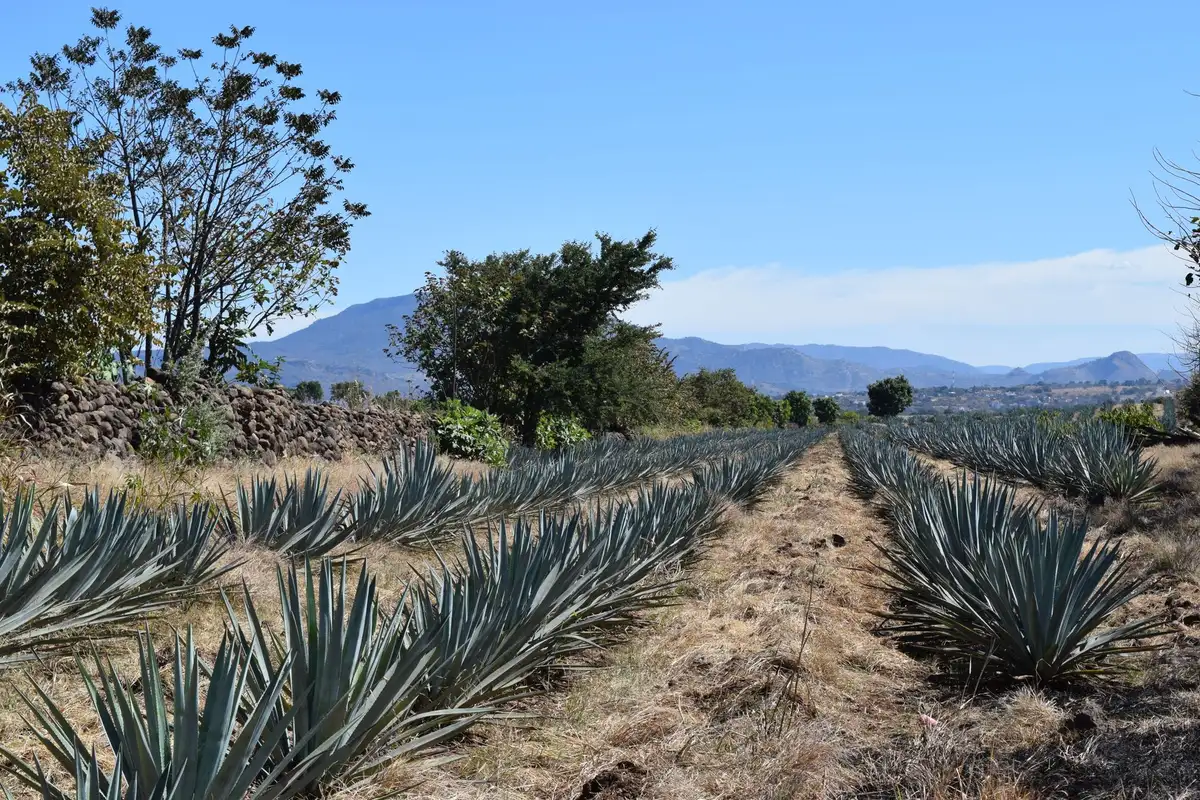
The town of Tequila is about 60 km from Guadalajara, surrounded by blue agave plantations that are now a UNESCO World Heritage Site. The most comfortable way to get there is the José Cuervo Express tourist train, which leaves from Guadalajara and includes onboard tastings; if you prefer to go on your own, you can take a bus or a rental car in about an hour on the road. Booking ahead matters, especially on weekends and Mexican holidays.
If you want to handle this without worrying about bus schedules, the Tequila tour with a visit to the La Rojeña distillery leaves from Guadalajara and covers the region’s oldest continuously operating factory.
Travelers putting together a bigger Mexico itinerary often add Guadalajara to other stops, like Oaxaca or the ruins of Chichén Itzá, though these are in another part of the country and require a separate flight.
Where to eat in Guadalajara
Torta ahogada — a pork-stuffed roll drowned in spicy tomato sauce — was born in Guadalajara, and it’s the dish every local has a strong opinion about where to find the best version. It’s worth hunting down the stalls at Mercado San Juan de Dios or the traditional spots in the Analco neighborhood, which are cheaper and livelier than the touristy restaurants downtown.
Birria (a meat stew, usually goat or beef, in a spicy broth) and the traditional cantinas around the city center — which serve free snacks with every round of drinks — round out the itinerary for anyone who wants to eat like a local without relying on tourist restaurants.
Where to Stay in Guadalajara
The Historic Center holds most of the attractions within walking distance and is usually the most practical choice for a 2-3 day stay. Colonia Americana, a bit further out, is packed with bars, cafés, and a newer food scene, with tree-lined streets and early-20th-century buildings — a great option if nightlife is your priority and you don’t mind walking a bit less to the center.
 See hotels in Guadalajara on Booking ›
Practical Tips and Cost of Living
The Mexican peso (MXN) is the currency used throughout Guadalajara and the rest of Mexico; as of July 2026, an espresso costs about 39 MXN on average and a cappuccino around 56 MXN, according to Expatistan, and UNESCO lists the Hospicio Cabañas as a World Heritage Site. Rent for a one-bedroom apartment downtown or in well-located neighborhoods runs from 9,000 to 16,000 MXN per month — a handy reference if you’re comparing hotel rates against the local cost of living.
Guadalajara is generally cheaper than Mexico City when it comes to transportation, entertainment, and shopping, which makes it an easier-on-the-wallet option for anyone who’s already visited the capital and wants to extend their trip. Always carry pesos in cash for markets and local transport, since most stalls and taxis don’t accept cards.
- HotelAs soon as you have datesCompare neighbourhoods and guest ratings.See hotels ↑
- ActivitiesBefore you travelBook ahead the ones with limited spots.Civitatis ›
Frequently Asked Questions
Where is Guadalajara located?
Guadalajara sits in western Mexico, the capital of the state of Jalisco, about 460 km from Mexico City — roughly a 1.5-hour flight or a 6 to 7-hour bus ride between the two cities.
What is the cost of living in Guadalajara?
The cost of living in Guadalajara is considered low by international standards: rent for a one-bedroom apartment runs between 9,000 and 16,000 MXN per month, and a coffee costs between 39 and 56 MXN, according to 2026 data from Expatistan.
What to do in Guadalajara?
Guadalajara’s highlights are the historic center with the Cathedral and Hospicio Cabañas (Orozco’s murals, a UNESCO World Heritage Site), the Tlaquepaque neighborhood with handicrafts and live mariachi, Mercado San Juan de Dios, and day trips to the Tequila region.
What currency is used in Guadalajara, Mexico?
The currency used in Guadalajara, as in all of Mexico, is the Mexican peso (MXN). Cards are accepted at restaurants and larger stores, but markets and taxis usually ask for cash.
Is Guadalajara worth it?
Guadalajara is worth it for anyone seeking authentic Mexican culture without the capital’s fast pace: it packs a UNESCO World Heritage site, mariachi, its own cuisine, and the tequila region just a few miles away, all with a lower cost of living than Mexico City.
Conclusion
Guadalajara makes for a complete trip on its own, with no need to lean on Mexico City to justify the visit — the difference between the two is exactly what makes each one worth its own dedicated trip. For more destination guides like this, just check out the other itineraries on Voyage Voyage.