Cáceres, Spain, is a must-stop for anyone who wants to wander through a remarkably preserved medieval city in Extremadura, between Madrid and the Portuguese border. The best plan is to stay in the modern center or near the Ciudad Monumental, set aside a full day for the walls and plazas, and use the city as a base to explore Mérida, Trujillo, or Monfragüe National Park.
- Duration: 1 night and 1 full day; 2 nights if you include day trips.
- Base: Around Plaza Mayor or the new center, both a short walk from the historic core.
- Getting there: Train or bus from Madrid, Mérida, Badajoz, and other Extremadura cities; check dates on the Renfe planner.
- Getting around: The monumental center is for walking; a car is more useful for the surrounding areas.
- Budget: Moderate, with most of the itinerary possible without tickets; set aside extra for museums, towers, and guided tours.
- Best time to visit: Spring and fall, when it’s more comfortable to walk the stone slopes.
- Entry to Spain: Brazilians should confirm current documentation before boarding; see the guide on ETIAS for Brazilians.
Where is Cáceres in Spain?
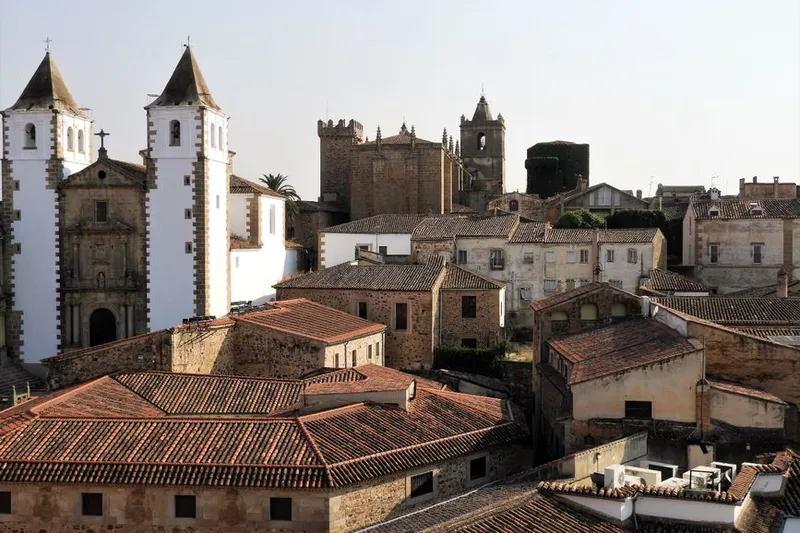
Cáceres is in western Spain, in the autonomous community of Extremadura and the province of the same name, relatively close to Portugal. The city isn’t on the most obvious Spanish circuit, but it works perfectly between Madrid, Mérida, and Seville for those who prefer heritage, regional food, and historic streets over an intense urban trip.
The Ciudad Monumental occupies the upper part; Plaza Mayor marks the transition to the newer center. This division solves a practical question: choose accommodation near the square if you want to walk out for dinner and return without relying on a taxi. To compare with another Spanish destination with a concentrated historic center, check out this guide to Córdoba.
Don’t confuse the city of Cáceres with the province: the city is the provincial capital and is in Extremadura.
What is there to do in Cáceres, Spain?
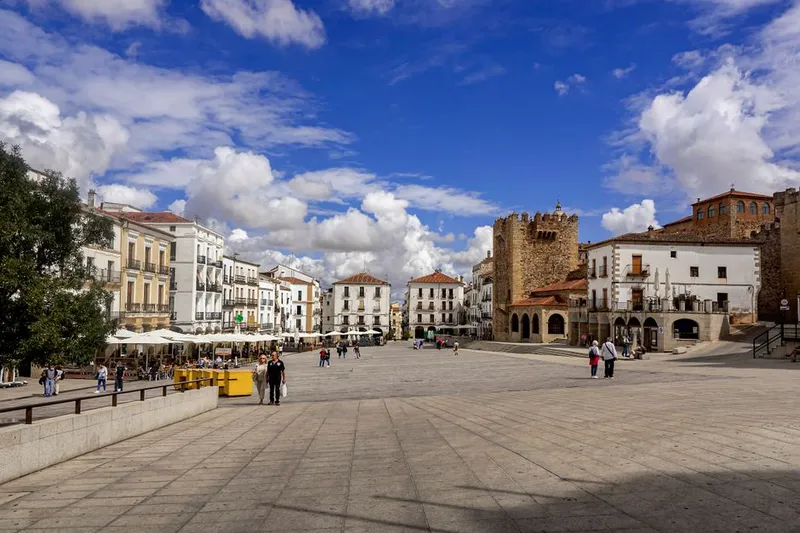
The essential in Cáceres is to explore the Ciudad Monumental at a leisurely pace: start at Plaza Mayor, go up through the Arco de la Estrella, follow the stone alleys, and stop in front of palaces, churches, and towers. The historic complex is a UNESCO World Heritage Site since 1986, recognized for its blend of Roman, Islamic, Gothic, and Renaissance heritage.
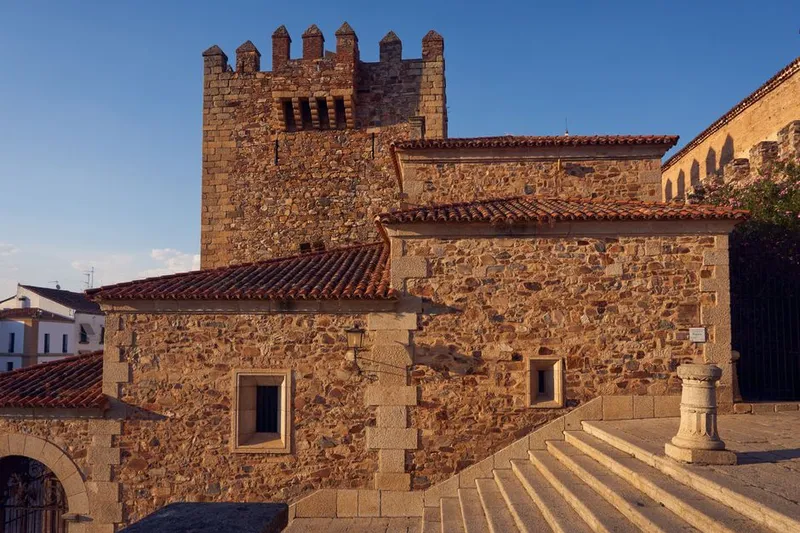
Prioritize these spots on your first day: Plaza Mayor to get a sense of the whole; Arco de la Estrella as the classic entrance; Plaza de Santa María and the co-cathedral; Plaza de San Jorge; and the area around Torre de Bujaco. The charm lies less in “checking off” attractions and more in connecting one plaza to another through streets that preserve the medieval layout.
If you enjoy context, include the Museo de Cáceres and a visit to a tower or palace that’s open on your date. Schedules, access, and hours change, so check the official Cáceres tourism portal before finalizing your itinerary. If you prefer a guided experience, you can see the full tour of Cáceres.
How to get to Cáceres, Spain?
To get to Cáceres, the most practical route for those coming from outside Extremadura is usually to fly into Madrid and continue by train or bus, or to fit the city in between Madrid, Mérida, and Badajoz. The train station is outside the medieval core, so expect a taxi, city bus, or a longer walk to your accommodation.
| Origin | Best option | When to choose |
|---|---|---|
| Madrid | Train via Renfe or bus | To include Cáceres as a stop between the capital and western Spain. |
| Mérida | Bus or car | To combine Roman ruins and a medieval city in one trip. |
| Portugal | Car or bus with a connection | To explore the border and have flexibility in the surrounding areas. |
Frequency and travel times vary by day and track work, so search for your exact date on the Renfe website and the bus portal before booking non-refundable accommodation. Don’t plan a tight connection: the station isn’t inside the monumental area.
What is the best time to visit Cáceres?
The best time to visit Cáceres is spring or fall, when walking through the exposed streets and plazas is more rewarding. In summer, the Extremadura heat is intense at midday; in winter, the pace is calmer, but you’ll need to accept cold nights and shorter days.
In spring, prioritize mornings and late afternoons for photographing the stone facades. In fall, the city also works great as a base for food and road trips. In any season, tackle the old core early and save the new center, museums, and meals for the hottest part of the day.
Do you need to book attractions in Cáceres?
You don’t need to book to walk through the Ciudad Monumental, but it’s worth checking in advance for visits to towers, palaces, museums, the co-cathedral, and guided experiences. On weekends, holidays, and event dates, buy or confirm online so you don’t plan your day around a closed door or a sold-out session.
The safe process is simple: open the official portal, confirm the place you want, and only then choose your time. For a guided tour in Portuguese, check the conditions and availability of the guided tour of Cáceres. Keep your confirmation on your phone and arrive a few minutes early: historic access points can be narrow.
1-day itinerary in Cáceres
Morning: Start at Plaza Mayor, enter through the Arco de la Estrella, and explore Plaza de Santa María, Plaza de San Jorge, and the nearby alleys. The goal is to do the outer circuit first, before the sun and crowds pick up.
Afternoon: Choose a museum, tower, or palace that’s open and have lunch in the historic center or just below it. Then, stroll through the new part without treating the itinerary like a race: Cáceres rewards short detours to courtyards, facades, and viewpoints.
Evening: Return to Plaza Mayor to see the illuminated walls and have dinner. If you have a second night, use the next day for Mérida or Trujillo. If you’re already planning Andalusia, you can link this stop to the Seville itinerary.
Tours and guided visits in Cáceres
A guided tour makes sense if you’re short on time or want to understand the succession of Roman, Islamic, and Christian periods that explains the architecture. If you prefer freedom, exploring on your own is enough: use the official portal as a reference for opening hours and plan breaks in the squares.
What to Eat and Where to Stay
Look for Extremadura’s cuisine instead of generic menus: Iberian pork products, regional cheeses, olive oil, and game dishes show up often. For lodging, the main criterion is walking distance from Plaza Mayor; a hotel in the new center usually makes taxi arrival easier while keeping the historic center close.
If your trip falls on a busy weekend, book your accommodation first and only then lock in transportation. A base near Plaza Mayor saves you time getting around and keeps you from hauling your suitcase up the cobblestone streets at the end of the day.
More Options to Book
If you want to compare activities, use the tours in Cáceres page and confirm the language, meeting point, cancellation policy, and what’s included before booking.
Frequently Asked Questions About Cáceres
How old is Cáceres, Spain?
Cáceres has ancient origins, with occupation predating the Romans, and the most recognizable form of the historic center results mainly from medieval and Renaissance transformations. There isn’t a single “age” for the city: the Roman, Islamic, Jewish, and Christian layers are exactly the key to reading the whole.
What is the population of Cáceres, Spain?
The municipality’s population changes with each statistical review. For an up-to-date figure, check the official INE table, which compiles official figures by municipality and sex; it’s more reliable than repeating an old total in a travel guide.
What happened in Cáceres, Spain?
This search could refer to different local news, so there’s no single event that defines the city. For trip planning, the relevant point is that Cáceres maintains a protected monumental city, with programming and any access changes announced by official tourism.
In which region of Spain is the province of Cáceres located?
The province of Cáceres is in the autonomous community of Extremadura, in western Spain. Its capital is the city of Cáceres, while Mérida is the administrative capital of the autonomous community; Madrid is the national capital of Spain.
Is Cáceres Worth Adding to Your Itinerary?
Yes, if you want a compact historic city and have at least one night to spare for it. Arrive with transportation confirmed, walk through the Ciudad Monumental in the first half of the day, and leave room for the actual opening hours of monuments; that way Cáceres earns its spot on your itinerary for what it delivers, not just as a stopover between bigger cities.