 Marcelo Oliveira
In the 10th century, Córdoba was one of the largest cities in the world—the capital of the Umayyad Caliphate, boasting libraries, illuminated streets, and over 100,000 inhabitants at a time when most of Europe was still stumbling through the Middle Ages. What remains of that golden age is the Mosque-Cathedral, Spain’s third most-visited monument, surrounded by a historic center that still breathes the coexistence of Moorish, Jewish, and Christian cultures.
Hotels in Córdobafree cancellation options onlySee hotels ›Booking.com partner (advertising): we may earn a commission at no extra cost to you.
You can get a solid feel for Córdoba in one full day if you focus only on the Mosque-Cathedral and the historic center, but two days give you time to include the Alcázar de los Reyes Cristianos and the Jewish Quarter without rushing. It’s a classic stop between Seville (40 minutes by high-speed train) and Madrid (1 hour), making it easy to fit into even the busiest Andalusia itineraries.
How to get to Córdoba
Córdoba’s train station receives the AVE (high-speed train), with a journey of about 40 minutes from Seville and about 1h45 from Madrid—the fastest and most comfortable way to arrive. Coming from Málaga, the train ride takes just over 1 hour. The station is about a 20-minute walk from the historic center, or 10 minutes by city bus.
There’s no major commercial airport in Córdoba, so travelers coming from outside Spain usually fly into Seville or Madrid and continue by train. If you’re driving a rental car, you’ll find paid parking lots on the edges of the historic center, since most of the old streets are closed to vehicles.
Best time to visit and how long to stay
Spring (April and May) is the peak of tourism in Córdoba because of the Patio Festival, when locals open their flower-filled courtyards to the public—but it’s also the busiest and most expensive time for accommodation. Fall (September and October) offers still-pleasant weather with fewer crowds. Summer in Córdoba is notoriously scorching, with temperatures exceeding 40°C in July and August, making walks through the historic center uncomfortable in the middle of the day.
One full day covers the Mosque-Cathedral, the Roman Bridge, and the Jewish Quarter. With two days, you’ll have time for the Alcázar de los Reyes Cristianos and a slower stroll through the flower-lined streets of Alcázar Viejo, without racing against the heat.
What to see in Córdoba
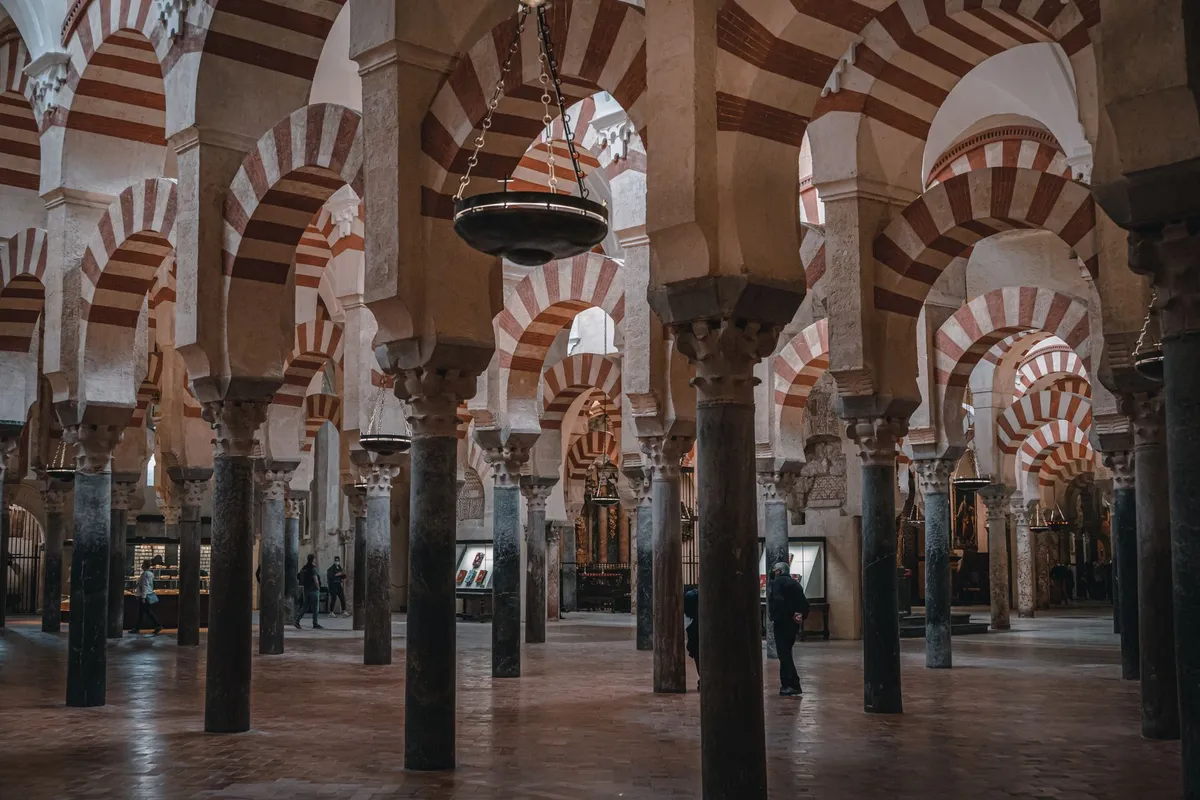
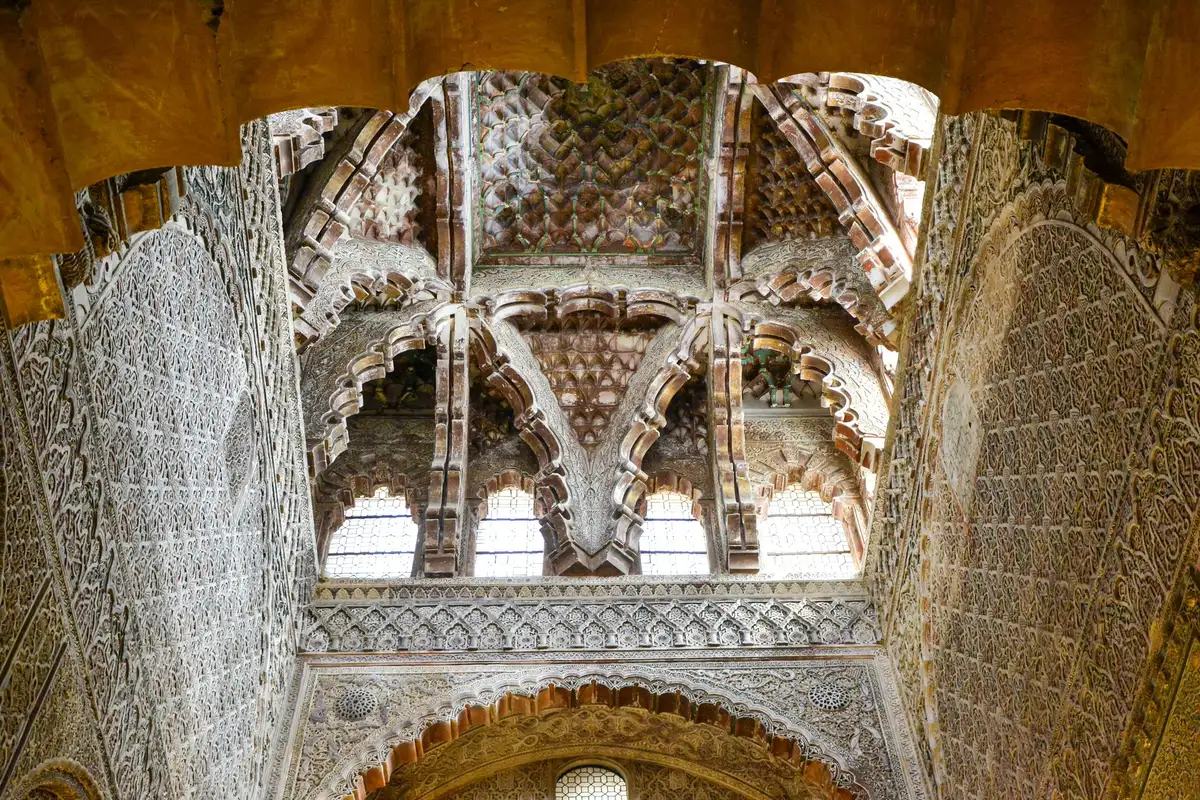
The Mosque-Cathedral (Mezquita-Catedral) is the main reason for the trip: over 850 columns of marble, granite, and jasper support red and white arches that create one of Spain’s most photographed interiors, with a Renaissance cathedral built literally inside the Moorish structure in the 16th century. General admission costs around €15 (July 2026), with discounts for students and those over 65, and children up to 10 enter free. From Monday to Saturday, from 8:30 AM to 9:30 AM, entry is free during the morning mass service, no ticket required—but access is restricted to the prayer areas.
Alcázar de los Reyes Cristianos
The Alcázar de los Reyes Cristianos holds Roman, Visigothic, Moorish, and Christian layers, and it’s where Christopher Columbus met with the Catholic Monarchs before his voyage to the Americas. The monument reopened in June 2026 after restoration work, with visits currently limited to the areas that are open—worth checking the official Alcázar website before you go. The gardens, with fountains and water features on terraces, are often the highlight for those visiting outside the extreme summer heat.
Jewish Quarter and Roman Bridge
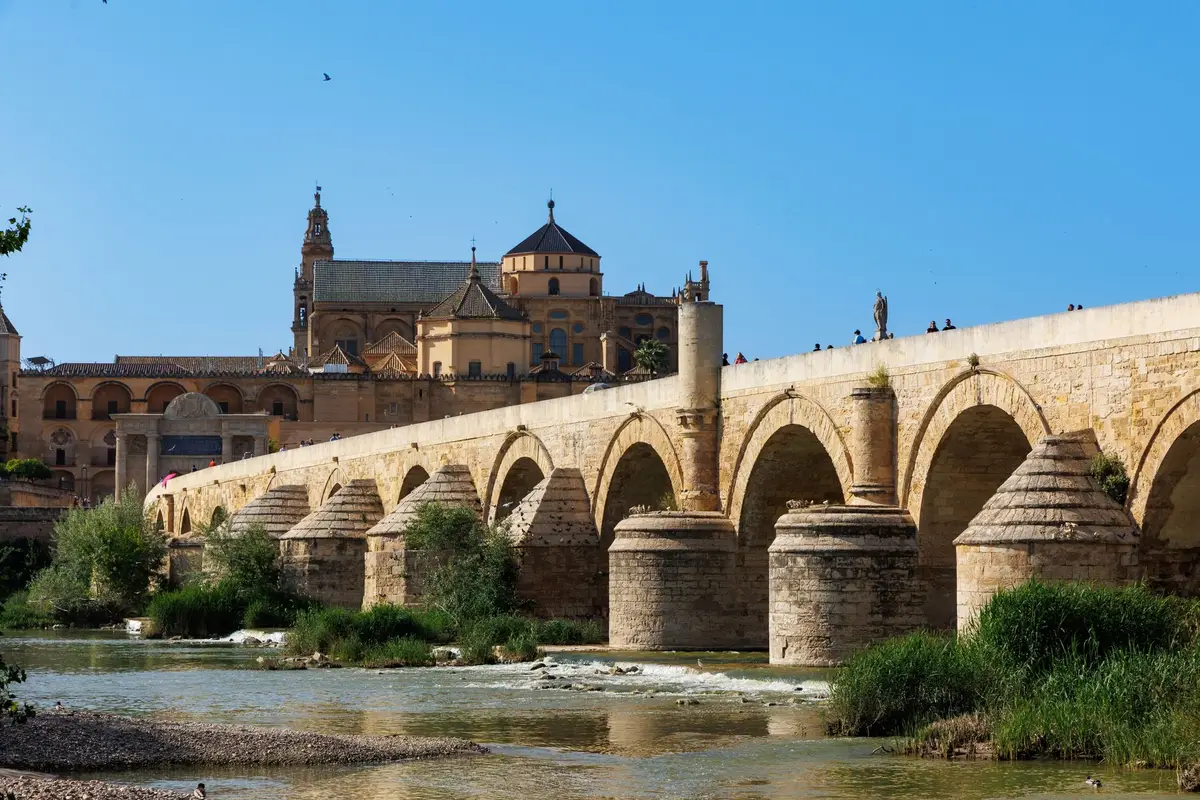
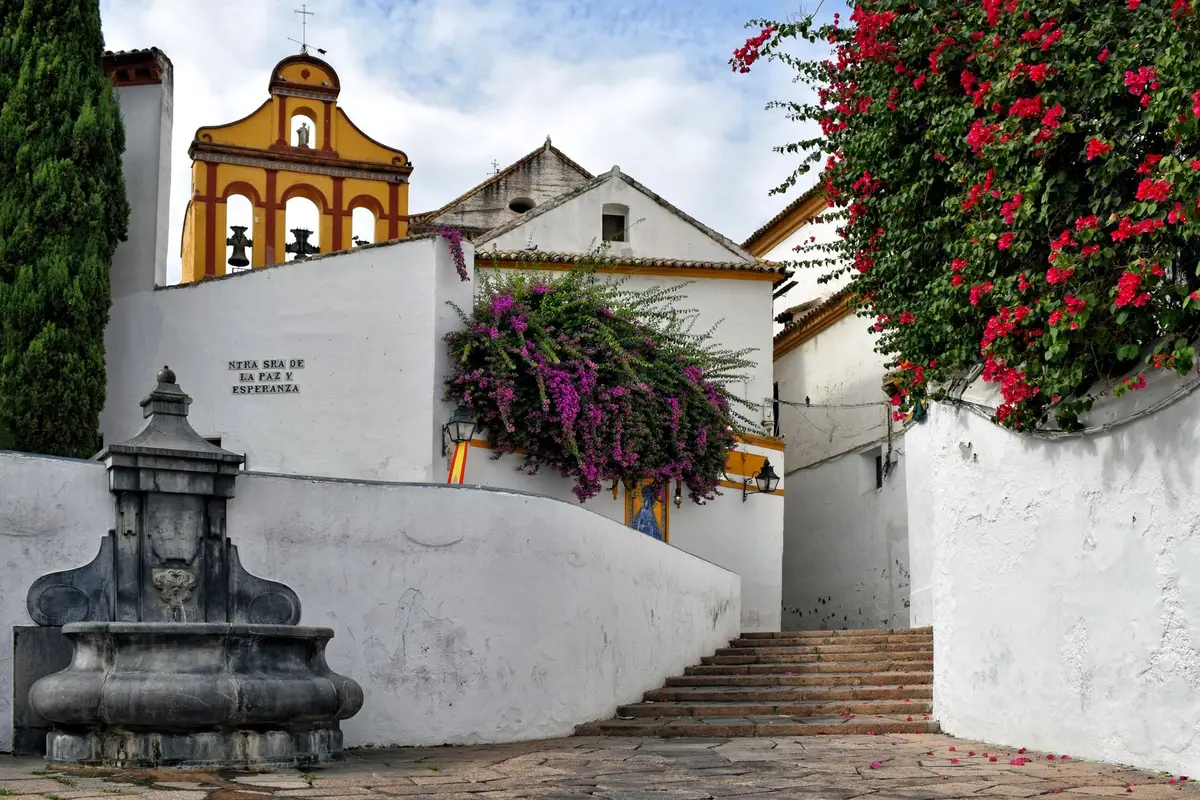
The Jewish Quarter (Judería) is a maze of narrow, whitewashed alleys, home to the 14th-century Synagogue—one of the few remaining in Spain—and Calleja de las Flores, a street lined with flower pots hanging from the walls, one of the most photographed corners in the city. The Roman Bridge, nearly 2,000 years old, crosses the Guadalquivir River and offers the classic view of the Mosque-Cathedral in the background, especially beautiful at sunset.
What to pair with Córdoba
A guided tour of the Mosque-Cathedral with a local guide really helps you understand the layering of styles—without context, it’s easy to walk through the building without noticing the historical layers stacked there. For those with more time, Medina Azahara, a ruined palace city about 8 km from the center, was the administrative capital of the Caliphate in the 10th century and is one of the region’s least-visited (and most impressive) sites.
You can also book a guided tour of the Mosque-Cathedral with priority access, which helps you skip much of the line at the main entrance. If you’re stringing together Andalusian destinations, you can round it out with our guide to Valencia, between historic center, beach, and paella, or check out the itinerary for Barcelona beyond the Sagrada Família.
Where to eat in Córdoba
The dish most associated with the city is salmorejo, a cold tomato cream thicker than gazpacho, topped with chopped hard-boiled egg and ham — practically ubiquitous on menus in the historic center. Also worth trying is rabo de toro (oxtail slow-cooked until tender), a tradition dating back to when the city had an active bullring. The areas around Plaza de la Corredera, a porticoed square that once served as a bullring and site of executions, are packed with bars and restaurants at more affordable prices than those right around the Mezquita-Catedral.
Where to Stay in Córdoba
The Jewish Quarter (Judería) is the most practical and charming base, with hotels in old houses just steps from the Mezquita-Catedral, though it’s also the priciest and most touristy. San Basilio, also known as Alcázar Viejo, is a bit further out but boasts the most beautiful flower-filled patios and a more residential vibe. If you’re looking for lower prices, check out accommodations near Plaza de la Corredera, still within the historic center but with more budget-friendly rates.
Where to stay in Córdoba
| Hotel | Rating | |
|---|---|---|
| Hotel Mezquita CenterOutside the historic centre · On Calle Bulevar Hernán Ruiz, 19 minutes on foot from the Mosque-Cathedral | 9,43.435 reviews | See prices |
| Hotel Cetina Casa de AguilarCórdoba city centre · In the city centre, with a terrace | 9,32.186 reviews | See prices |
| Sercotel Córdoba DeliciasOutside the historic centre · On Calle Islas Chafarinas, about 3 km from the Mosque-Cathedral | 9,04.935 reviews | See prices |
| Petit Palace Córdoba anteriormente Soho Boutique CórdobaAv. de América · On Avenida de América, 17 minutes on foot from the Mosque-Cathedral | 9,07.220 reviews | See prices |
| H10 Palacio ColomeraPlaza de las Tendillas · On Plaza de las Tendillas, 300 m from the Roman Temple | 9,24.127 reviews | See prices |
| Hotel Boutique Patio del PosaderoCórdoba city centre · On Calle Mucho Trigo, 800 m from the Mosque-Cathedral of Córdoba | 9,61.050 reviews | See prices |
| Las Casas de la Judería de CórdobaJudería · In 17th- and 18th-century houses, 250 m from the Mosque-Cathedral | 9,22.388 reviews | See prices |
| Hospes Palacio del Bailio, a Member of Design HotelsCórdoba city centre · In a 16th-century palace, in the heart of the old city | 9,11.630 reviews | See prices |
Booking.com rating on 30/09/2026
Practical Tips
Book your Mezquita-Catedral ticket online in advance, especially in spring and on weekends — the walk-up line can exceed an hour during peak times. There’s no official combo ticket covering all monuments, but there are packages that bundle the Mezquita, Alcázar, and Jewish Quarter into a single reservation. Brazilians don’t need a visa for tourism in Spain for up to 90 days; just double-check the current rules on the official Spanish Ministry of Foreign Affairs website before your trip, including the status of the ETIAS system for entering the European Union.
Córdoba’s historic center is small and walkable, but the cobblestone streets and uneven terrain make rolling suitcases and high heels impractical. In summer, avoid long walks between 1 PM and 5 PM — the region’s dry heat is more intense than the forecast usually suggests.
 HotelAs soon as you have datesCompare neighbourhoods and guest ratings.See hotels ↑
Frequently Asked Questions
How many days do you need to see Córdoba?
A full day covers the Mezquita-Catedral, the Roman Bridge, and the Jewish Quarter. With 2 days, you can add the Alcázar de los Reyes Cristianos at a relaxed pace and still have plenty of time to wander the flower-lined streets.
Is Córdoba worth visiting just for the Mezquita-Catedral?
Yes, even a quick half-day visit justifies the stop, as the monument is considered one of the most important examples of preserved Islamic architecture in the West. Pairing it with Seville or Madrid on the same train trip makes the logistics a breeze.
What’s the best time to visit Córdoba?
April and May, during the Patios Festival, are the most beautiful months, but also the busiest and priciest. September and October strike a nice balance of pleasant weather and fewer crowds. Avoid July and August due to the extreme heat.
Can you go from Córdoba to Seville or Madrid in the same day?
Yes, the high-speed train connects Córdoba to Seville in about 40 minutes and to Madrid in just over an hour, making Córdoba an easy stop to fit into even short itineraries.
Conclusion
Córdoba packs into a historic center small enough to explore on foot one of Europe’s most impressive monuments and one of Spain’s best-preserved medieval neighborhoods. Book your Mezquita-Catedral ticket ahead of time, dodge the midday heat in summer, and save at least one free afternoon to get lost in the winding alleys of the Jewish Quarter. For more itineraries and tips on destinations like this, you’ll find them right here on voyagevoyage.
Before continuing through Andalusia, check out the Seville itinerary with Alcázar and heat tips.