 Marcelo Oliveira
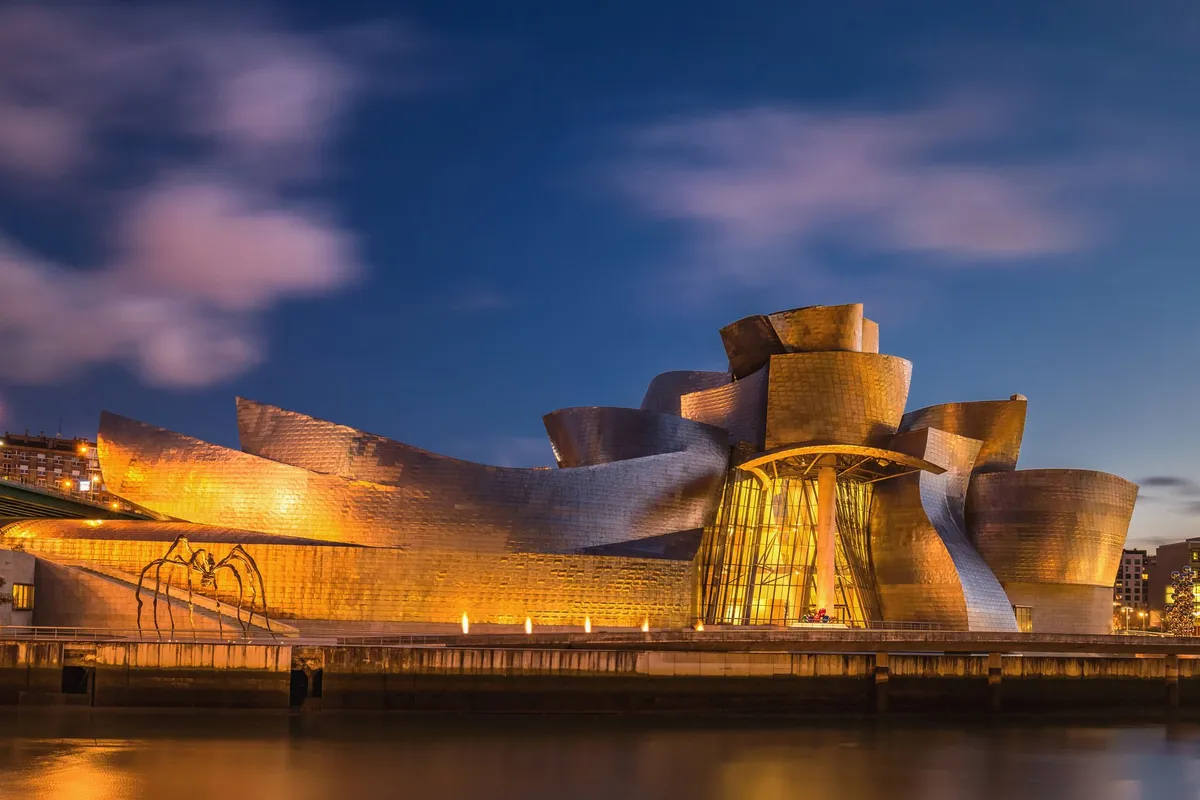
Until the 1990s, Bilbao was known mainly for heavy industry and the decline of its shipyards. The opening of the Guggenheim Museum in 1997 changed that story so radically it became a case study in urban planning—the so-called “Bilbao effect.” Today, the city pairs this landmark of contemporary architecture with an intact historic center and one of Spain’s most respected food scenes: Basque pintxos.
Hotels in Bilbaofree cancellation options onlySee hotels ›Booking.com partner (advertising): we may earn a commission at no extra cost to you.
You can see the best of Bilbao in 2 days: one for the Guggenheim Museum and the riverside promenade, another for the Casco Viejo and its pintxos bars. The city also works as a base for full-day trips along the Basque coast, including San Juan de Gaztelugatxe and Guernica, both less than an hour away.
How to get to Bilbao
Bilbao Airport (BIO) receives direct flights from several European capitals and sits about 12 km from the center, connected by bus (Bizkaibus A3247) in roughly 30 minutes. From Madrid, the high-speed train takes about 5 hours, while the flight covers the route in just over 1 hour—for those coming from outside Europe, it usually makes sense to fly into Madrid and then catch a connecting flight. From San Sebastián, the bus (Alsa) takes about 1h15, making it one of the easiest connections in the Basque Country.
Once in the city, Bilbao’s metro (designed by Norman Foster) and the tram cover the main sights well, and the Casco Viejo is entirely walkable from Abando station.
Best time to visit and how long to stay
June and September strike a good balance between weather and crowds: mild temperatures and less rain than the rest of the year—the Basque Country is known for unpredictable weather even in summer. July and August are hotter and busier, but still a far cry from the heat of southern Spain. Fall and winter bring more rain, so it’s worth packing a waterproof jacket even in May.
Two full days cover the essentials: the Guggenheim Museum, the riverside promenade, the Casco Viejo, and a round of pintxos. With 3 days, you can add a full-day trip to the coast, like San Juan de Gaztelugatxe or Guernica.
What to see in Bilbao
The Guggenheim Museum is the reason most visitors come to the city: the titanium, glass, and limestone structure designed by Frank Gehry is, for many people, more impressive from the outside than the collection inside. General admission costs €15 (July 2026), with reduced entry for seniors over 65 and students up to 26, and free entry for those under 18. On Tuesdays, from 6 PM to 8 PM, admission is free—but expect a line. The museum is open Tuesday through Sunday, 10 AM to 7 PM, with extended hours until 8 PM in summer (June 15 to September 13).
Casco Viejo and the Siete Calles
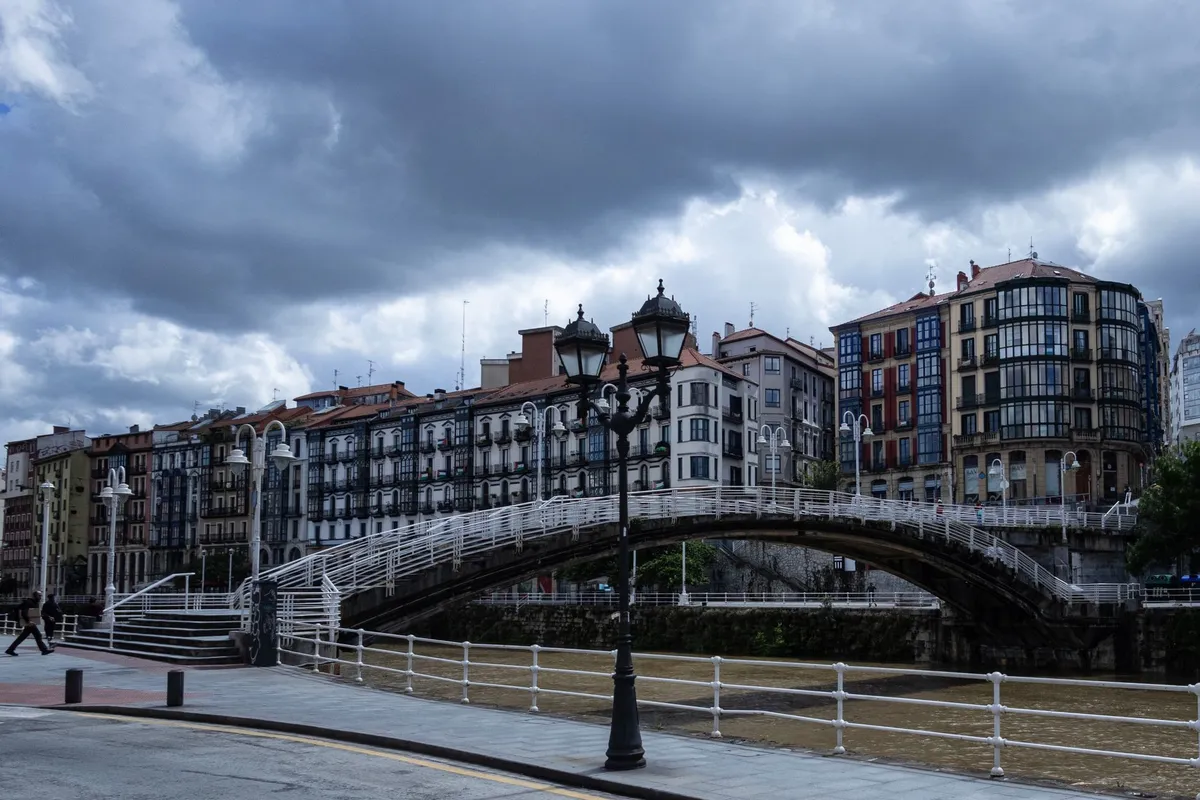
The Casco Viejo, also known as the Siete Calles (seven streets), is Bilbao’s medieval core, home to the 14th-century Catedral de Santiago and the Mercado de la Ribera, one of Europe’s largest covered markets, on the banks of the estuary. More details on visiting hours are on the official Bilbao tourism website. It’s also where you’ll find the highest density of pintxos bars per square meter in the city.
The Estuary and Zubizuri Bridge
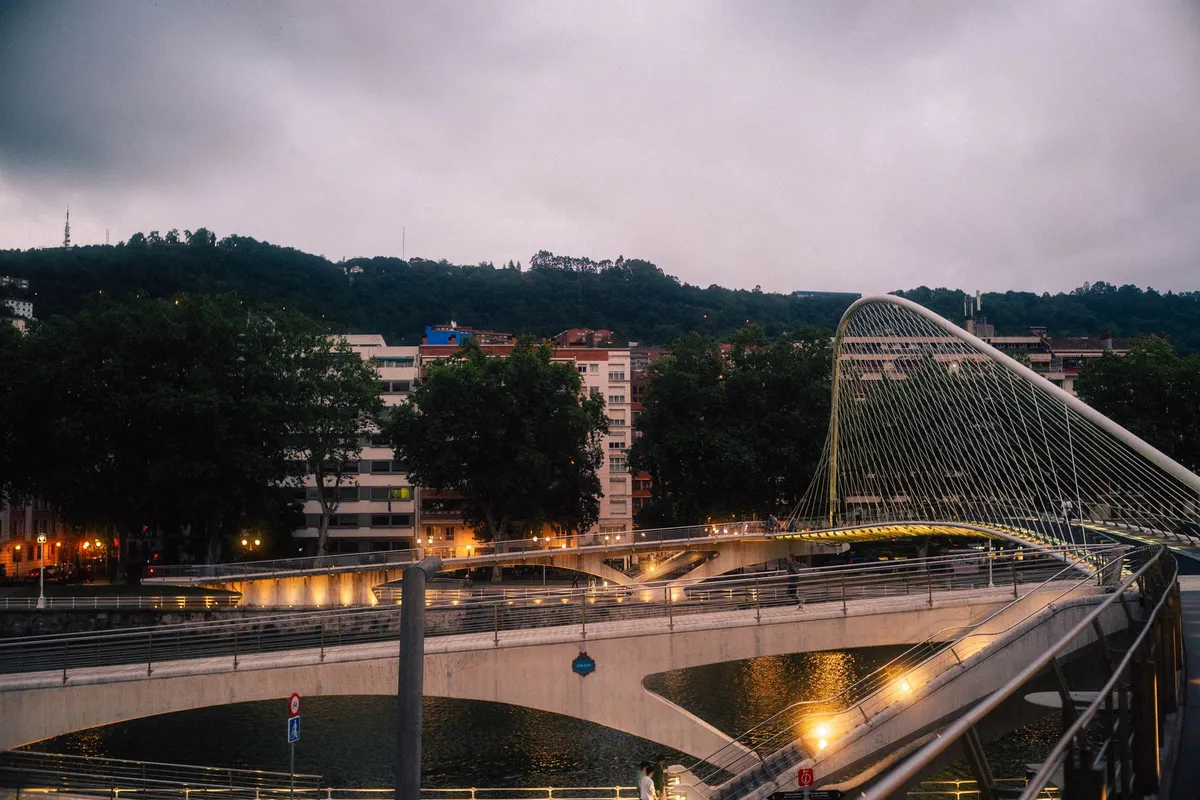
The walk along the estuary, from the Guggenheim Museum to the Zubizuri Bridge (designed by Santiago Calatrava), is free and perfectly captures the contrast between industrial Bilbao and the reinvented city. At night, the museum and the bridge get a different lighting scheme—a great chance for photos without the daytime crowds.
What to pair with Bilbao
A free walking tour of the Casco Viejo helps you understand the city’s history before you get lost on your own in the pintxos bars—the local guide charges only a tip and the tour lasts about 2 hours. If you have a free day, San Juan de Gaztelugatxe, an island connected to the mainland by a staircase of 241 steps and a filming location for “Game of Thrones,” is the most sought-after excursion on the Basque coast, usually combined with Guernica and Bermeo.
You can also book the San Juan de Gaztelugatxe, Guernica, and Bermeo tour with transportation included, a convenient option if you don’t want to rent a car just for that stretch. If you’re stringing together destinations in northern Spain, check out our guide to Valencia, between old town, beach, and paella, or revisit the itinerary for Barcelona beyond the Sagrada Família.
 Partner · Civitatissee all activities in Bilbao ›
- San Juan de Gaztelugatxe, Guernica + Mundaka Day TripRating 9.8 · 24 reviews on Civitatisfrom€69per personSee ›
- Laguardia and Haro Trip + 2 WineriesRating 9 · 2 reviews on Civitatisfrom€75per personSee ›
- See ›Free Walking Tour of BilbaoRating 9.2 · 231 reviews on Civitatis
- Vitoria-Gasteiz Day TripRating 10 · 1 reviews on Civitatisfrom€70per personSee ›
Civitatis prices on 28/09/2026, from, per person. They may change. Want to compare? Activities in Bilbao on GetYourGuide ›
Where to eat in Bilbao
Pintxos are the Basque version of tapas: small bites piled on a slice of bread, usually held together with a toothpick, served at the counters of Casco Viejo bars. The traditional practice is to hop from bar to bar, eating 1 or 2 pintxos and sipping a txikito (a small glass of wine) at each stop—the so-called “poteo.” Calle Santa María and Plaza Nueva are home to the most traditional bars, while the Mercado de la Ribera is a cheaper option for sampling fish and local products outside pintxos hours.

Where to stay in Bilbao
The Casco Viejo is the liveliest and most walkable base, close to bars and the metro station, but it can also be noisier at night. Abando and Indautxu, between the train station and the Guggenheim, are quieter and still well located. If you’re looking for lower prices, check out accommodations near Deusto, across the estuary, a short walk over the Zubizuri Bridge to the museum.
Where to stay in Bilbao
| Hotel | Rating | |
|---|---|---|
| Letoh Letoh BilbaoCasco Viejo · A 2-minute walk from the Arriaga Theatre and 1 km from Abando station | 9,03.684 reviews | See prices |
| GOIEN BOUTIQUE HOTELCasco Viejo · Near Santiago Cathedral and the Arriaga Theatre | 9,51.053 reviews | See prices |
| Bilder Boutique HotelCity centre · A few steps from the Arriaga Theatre | 9,03.464 reviews | See prices |
| Catalonia Gran Vía BilbaoEnsanche · On Bilbao's Gran Vía, with a terrace and garden | 9,12.848 reviews | See prices |
| Hotel Tayko BilbaoCasco Viejo · In a 1924 building, 200 m from the Arriaga Theatre and Santiago Cathedral | 9,22.618 reviews | See prices |
| Vincci Consulado de BilbaoEnsanche · On Alameda Mazarredo, with a terrace and city views | 9,26.618 reviews | See prices |
| The Artist Grand Hotel of ArtEnsanche · Opposite the Guggenheim Museum, with a rooftop terrace | 9,33.466 reviews | See prices |
| Hotel MiróCity centre · Opposite the Guggenheim Museum, in a hotel designed by fashion designer Antonio Miró | 9,11.731 reviews | See prices |
Booking.com rating on 30/09/2026
Practical tips
Book your Guggenheim Museum tickets online, especially on weekends and holidays — the walk-up line tends to get long between 11am and 1pm. The combined Artean Pass, which bundles the Guggenheim and the Museo de Bellas Artes for around €18, is worth it if you plan to visit both museums. Brazilians don’t need a visa for tourism in Spain for up to 90 days, but it’s a good idea to double-check the current rules on the official website of Spain’s Ministry of Foreign Affairs before your trip, since the ETIAS system for the European Union is still being rolled out gradually.
Bring a jacket even in summer: the museum’s galleries tend to be heavily air-conditioned, and the Basque weather changes fast, with rain possible any time of year. The Barik card, used on Bilbao’s public transit, is worth it if you’re staying more than 2 days and plan to use the metro or buses often.
 HotelAs soon as you have datesCompare neighbourhoods and guest ratings.See hotels ↑
- ActivitiesBefore you travelBook ahead the ones with limited spots.Civitatis ›
 More activitiesTo compareTickets, day trips and tours with flexible cancellation.GetYourGuide ›
Frequently Asked Questions
How many days do you need to see Bilbao?
Two full days cover the Guggenheim Museum, the riverside promenade, and the Casco Viejo with a round of pintxos. With 3 days, you can add a full-day excursion along the Basque coast.
Is Bilbao worth visiting just for the Guggenheim Museum?
Yes — the architecture alone justifies the stop even if you’re not into contemporary art, and the city around it — Casco Viejo, the river, pintxos — rounds out the visit beautifully.
What’s the best time to visit Bilbao?
June and September offer the best balance of mild weather and less rain. July and August are hotter and more crowded. The Basque climate is unpredictable year-round, so a waterproof jacket is a smart call no matter when you go.
Can you do Bilbao and San Sebastián on the same trip?
Yes — the bus between the two cities takes about 1h15, one of the easiest connections in the Basque Country, and many itineraries pair them in the same week.
Conclusion
Bilbao proves a city can reinvent itself around a single building without losing its own identity — the Casco Viejo and the pintxos culture are just as strong as they were before the Guggenheim. Book the museum in advance, set aside a full evening for poteo through the old town’s bars, and consider extending your trip to the Basque coast. For more itineraries and destination tips like this, you’ll find them right here on voyagevoyage.