 Marcelo Oliveira
The Monti neighborhood in Rome is the city’s oldest rione and sits just a few minutes’ walk from the Colosseum — cobblestone streets, vintage thrift shops, traditional trattorias, and nightlife clustered around Piazza della Madonna dei Monti. Unlike the Centro Storico, it keeps a lived-in neighborhood feel without giving up its central location.
Hotels in Romefree cancellation options onlySee hotels ›Booking.com partner (advertising): we may earn a commission at no extra cost to you.
Monti sits between Via Nazionale, Via Cavour, and Via dei Fori Imperiali, just steps from the Colosseum and the Imperial Forums. It’s reachable via Cavour station (metro line B) or on foot from Termini, and it combines vintage shopping, local dining, and a calmer pace than the Centro Storico — ideal for anyone who wants to stay close to the attractions without sacrificing authenticity.
| Where it is | Between Via Nazionale, Via Cavour, and Via dei Fori Imperiali, 1 metro stop from Termini |
|---|---|
| How to get there | Metro line B, Cavour station (inside the neighborhood) or Colosseo; on foot from Termini (~1 km) |
| Best time | 8am-10am (cafés and photos without crowds); 10am-12pm (shopping); 5pm-7pm (light and lively piazza) |
| Mercato Monti | Saturdays and Sundays — fashion, jewelry, and vintage (Aug/2026, check the official website) |
| Suggested time | Half a day to a full day; at least 2h if you go to Mercato Monti |
| Near | Colosseum, Imperial Forums, Santa Maria Maggiore, San Pietro in Vincoli |
What the Monti neighborhood in Rome is
Monti is Rione I of Rome — the first and oldest of the city’s historic neighborhoods, and the one closest to the classic circuit of ruins. It occupies the area between Via Nazionale, Via Cavour, and Via dei Fori Imperiali, with the Colosseum literally just a few steps away.
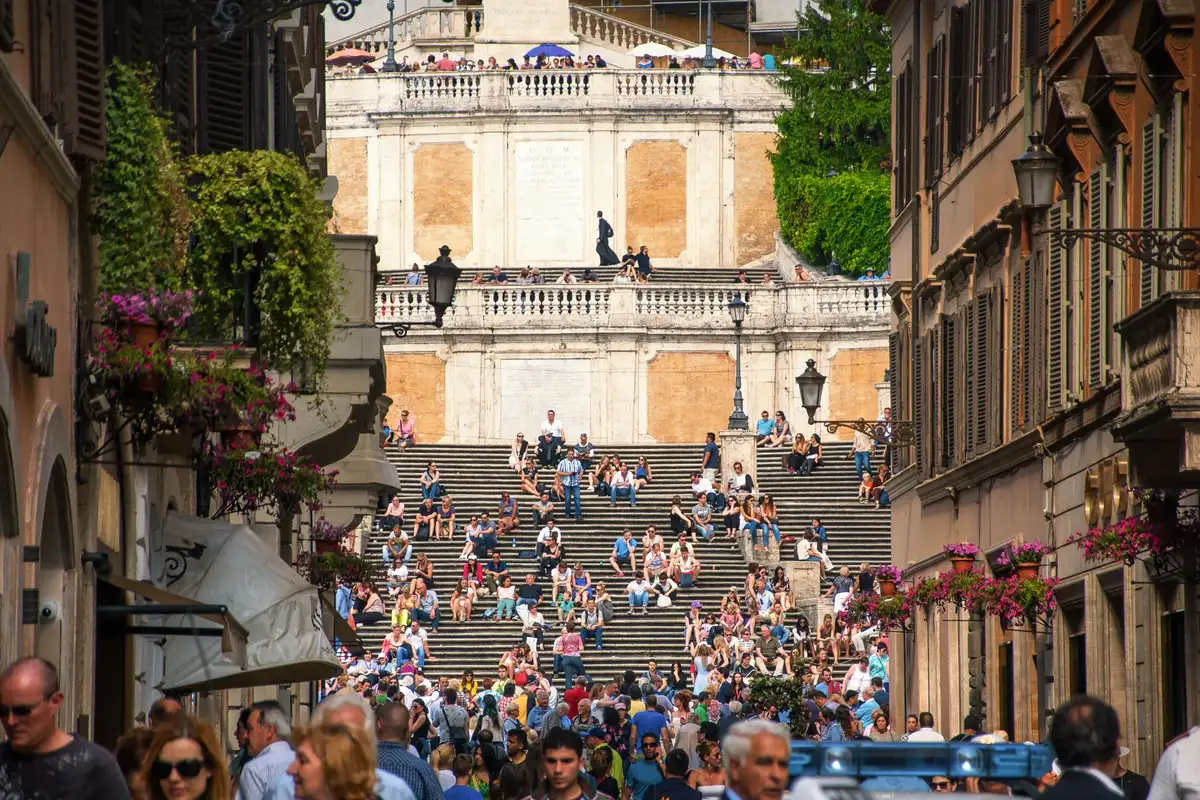
Over the past two decades, Monti has gone through a transformation similar to that of bohemian neighborhoods in other European capitals: record stores, art studios, small galleries, and vintage thrift shops have moved into alleys that were once purely residential. The result is a neighborhood that blends its ancient legacy — churches, historic stairways, narrow lanes — with a contemporary scene of cafés, cool bars, and independent shops.
The social heart of the neighborhood is Piazza della Madonna dei Monti, a square with a historic fountain that stays quiet during the day and fills with people sitting on the steps around the fountain at night, especially on weekends.
What to do in the Monti neighborhood
What to do in Monti is, above all, to wander the alleys without rushing and let the main square guide your route — but the neighborhood also packs religious and historic attractions worth a dedicated stop, including a quick detour to the complete Colosseum guide for anyone combining both visits on the same day.
Piazza della Madonna dei Monti
The neighborhood’s meeting point, with a 16th-century fountain. It’s where locals and visitors sit down for a glass of wine or a coffee, especially at dusk.
Basilica of San Pietro in Vincoli
The Basilica of San Pietro in Vincoli houses Michelangelo’s Moses, one of the most visited sculptures in Rome outside the Vatican Museums — and because it’s inside Monti, it usually has far shorter lines than other works by the artist.
The rione has an administrative origin dating back to medieval Rome — the official division of Rome into rioni lists Monti as number one, still in effect in the city’s addressing system.
Church of Santa Maria ai Monti
A Baroque building from 1580, less known than Rome’s great basilicas, but a well-preserved example of the style — worth a 10-15 minute stop if you’re already walking through the area.
Scalinata dei Borgia
A staircase covered in vegetation that has become one of the most photographed corners of the neighborhood, a green counterpoint amid the stone facades.
Monti is also the perfect base for quickly crossing over to the Colosseum, the Imperial Forums, the Trajan’s Markets, and the Basilica of Santa Maria Maggiore — all a short walk away.
 See activities in Rome on GetYourGuide ›
How to get to Monti by metro
The most direct way to reach Monti is via Cavour station on metro line B, which sits practically inside the neighborhood. Colosseo station, also on line B, is another option, especially for anyone already visiting the Colosseum and the Forums.
If you’re staying near Termini, Rome’s central train station, you’re just one metro stop away — or you can tackle the roughly 1 km walk along Via Nazionale or Via Cavour, an easy route on mostly flat ground.
| Option | Time | Best for |
|---|---|---|
| Metro to Cavour | 1 stop from Termini | Arriving right in the heart of the neighborhood |
| Metro to Colosseo | 2 stops from Termini | Combining with a Colosseum visit |
| On foot from Termini | ~15 min (1 km) | Anyone already walking through the center |
Where to stay in Rome
| Hotel | Rating | |
|---|---|---|
| G55 Design HotelHistoric centre · On Via del Gesù, 55 | 8,2649 reviews | See prices |
| Hotel BarrettHistoric centre · On Via di Torre Argentina, 47 | 8,62.764 reviews | See prices |
| Horti 14 Borgo Trastevere HotelTrastevere · Garden and bar; on Via di San Francesco di Sales, 14 | 9,11.636 reviews | See prices |
| Hotel San FrancescoTrastevere · 300 m from the Porta Portese market | 8,2563 reviews | See prices |
| Central Lodge HotelMonti / Termini · On Via Buonarroti, 19 | 8,71.277 reviews | See prices |
| Hotel FioriMonti / Termini · 750 m from Cavour metro station | 8,81.202 reviews | See prices |
| The B PlacePrati / Borgo · 150 m on foot from Lepanto metro station | 8,11.575 reviews | See prices |
| Hotel MetropolisPrati / Borgo · 200 m from Lepanto metro station | 8,5547 reviews | See prices |
Booking.com rating on 30/09/2026
Is Monti worth visiting
Yes: Monti is worth the visit and even worth staying in for anyone seeking a balance between a central location and a more authentic neighborhood feel than the Centro Storico, without the Centro’s steeper prices or Trastevere’s distance.
It’s the right choice for anyone who prioritizes being close to the Colosseum and the Imperial Forums, enjoys walking through alleys with independent shops, and doesn’t mind trading a postcard view for authenticity. Those looking for more intense nightlife or on a quick stopover wanting to maximize walking time between monuments might prefer the Centro Storico; those who want the more “Roman” bohemian vibe and don’t mind crossing the Tiber will find it in Trastevere.
Where to eat in the Monti neighborhood
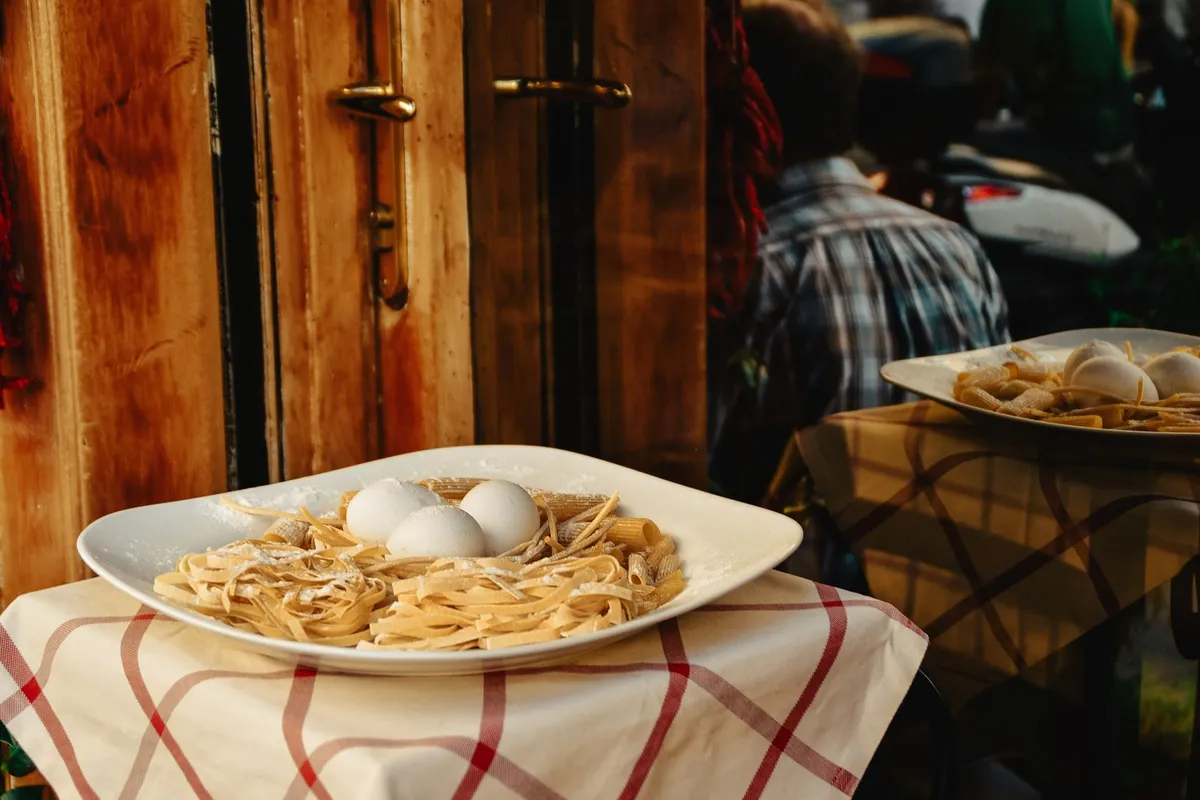
Monti has it all: traditional trattorias that have been around for decades, pizza al taglio to eat on the go, and fine-dining restaurants — the price gap between these options is wide, so it pays to choose with intention.
- La Bocaccia — pizza al taglio (by the slice), a good option for eating quickly and cheaply while walking through the neighborhood.
- Gelateria do Angeletto — a gelato shop with its own production, perfect for wrapping up your stroll with a gelato.
- Ai Tre Scalini — a wine bar operating since 1895, for anyone wanting wine and snacks in a historic setting.
- Cipasso — a Mediterranean bistro with good vegetarian options.
- Ami Poke — Italy’s first Hawaiian poke bar, a lighter option that’s a change of pace from the traditional Italian circuit.
- Per Me — fine dining, with dishes starting at €85 (Aug/2026, check the official website) — for anyone wanting a special-occasion meal.
The neighborhood has been heavily gentrified, so it’s worth avoiding very cheap fixed-price menus near the busiest streets — they’re usually a sign of careless food, the same trap that exists near any tourist attraction in Rome.
Where to shop and find thrift stores in Monti
Monti is Rome’s strongest neighborhood for anyone who loves vintage and independent fashion — the city’s “cool neighborhood” reputation comes largely from the shops in its alleys.
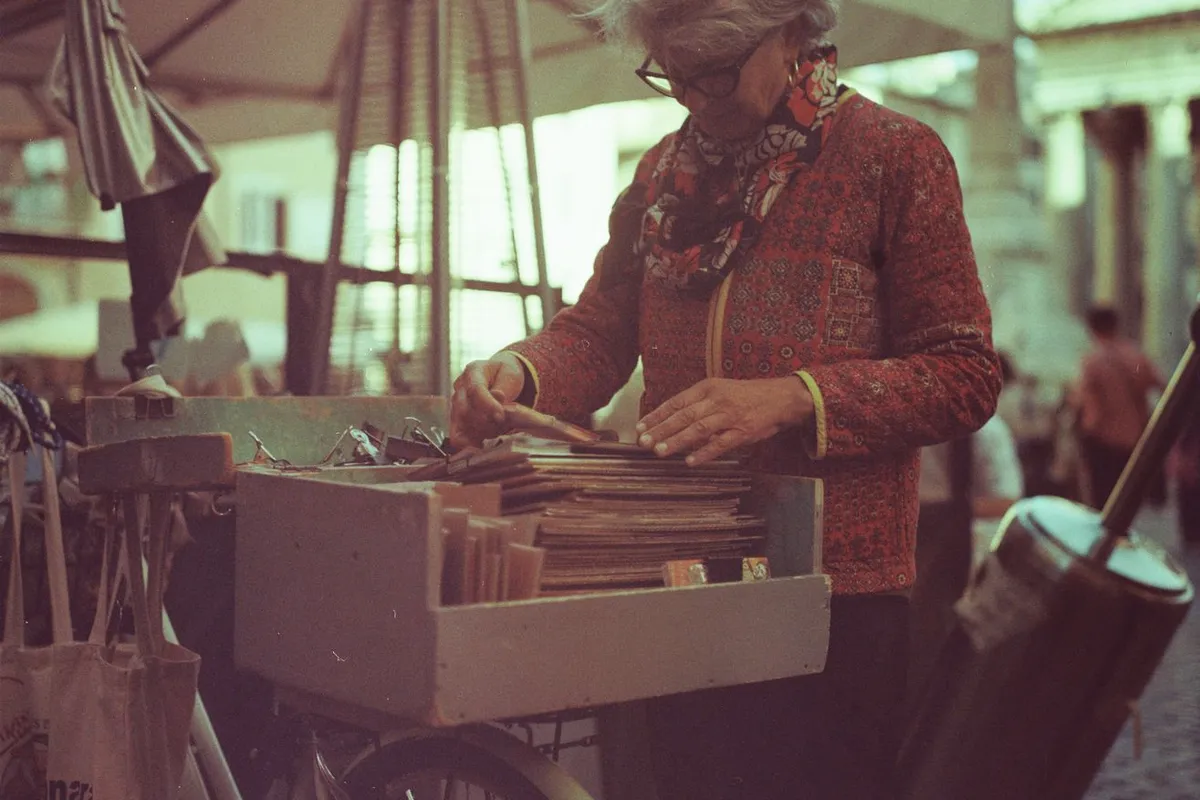
Mercato Monti takes place on Saturdays and Sundays (Aug/2026, check times on the official website) and brings together independent designers, jewelers, and made-in-Italy pieces in a market format. Outside the weekend, permanent thrift stores like Pifebo Vintage and King Size Vintage keep the neighborhood relevant for anyone hunting one-of-a-kind pieces any day of the week. There’s also Mercato Rionale, on Via Baccina, more focused on everyday products.
Set aside at least two hours if your goal is to take in Mercato Monti at a relaxed pace — the stalls change from week to week and it’s worth the time to dig through. To check updated dates and times before you go, the Mercato Monti official website lists upcoming editions.
If you want to round out your shopping with a guided tour of Rome’s historic center in Portuguese, you’ll find options just below — handy for anyone who prefers to understand the context of each street rather than just wander without a plan.
Best time to visit Monti
The window between 8am and 10am is best for anyone wanting empty streets, authentic cafés, and photos without people walking through the frame. Between 10am and 12pm, the independent shops open and it’s the ideal moment for shopping with more relaxed service — without the late-afternoon bustle.
Late afternoon, between 5pm and 7pm, brings the most beautiful light for walking through the main square, and it’s when the neighborhood starts filling up for aperitivo. Weekends, especially after 2pm, draw the biggest crowds — if tranquility is your priority, visit on a weekday morning.
Gotchas and what nobody tells you
- Gentrification has driven prices up: Monti stopped being the “hidden” neighborhood years ago — very cheap fixed-price menus near the central streets tend to be shallow and bland, the same tourist trap found at any trendy spot in Rome.
- Mercato Monti is weekends only: anyone visiting on a weekday expecting the fashion market will only find the permanent shops — it’s not the same experience.
- Cobblestone paving: wear comfortable shoes — Monti’s stone streets tire you out faster than they look in photos.
- Don’t confuse it with Monte Mario or Monteverde: “Monti” is the name of the central rione; accidentally booking accommodation in similarly named neighborhoods can leave you far from the historic circuit.
Before finalizing your neighborhood itinerary, it’s also worth checking out other activities available for the rest of your stay in Rome — booking ahead helps you avoid lines at the city’s most popular attractions.
 HotelAs soon as you have datesCompare neighbourhoods and guest ratings.See hotels ↑
- More activitiesTo compareTickets, day trips and tours with flexible cancellation.GetYourGuide ›
Frequently asked questions
Is Monti close to the Colosseum?
Yes, the Monti neighborhood is just a few minutes’ walk from the Colosseum, with the Imperial Forums and Trajan’s Markets also within a short walking distance.
Is Monti safe for tourists?
Monti is considered one of the calmest and most tourist-friendly neighborhoods in Rome, with no specific safety alerts beyond the standard precautions of any large European city, such as keeping an eye on your belongings in crowded places.
Is it worth staying in Monti?
It’s worth it for anyone seeking a balance between a central location and neighborhood feel — accommodation prices in Monti usually fall between the Centro Storico (more expensive) and more distant neighborhoods, according to the region-by-region comparison in the complete Rome guide.
How much time should I set aside to visit Monti?
Half a day is enough to walk the main streets and see Piazza della Madonna dei Monti; set aside a full day, with at least 2 extra hours, if your visit includes Mercato Monti on the weekend.
Is Mercato Monti open every day?
No — Mercato Monti runs on Saturdays and Sundays (check updated times on the market’s official website before you go).
Conclusion
Monti solves a common dilemma for anyone traveling to Rome: staying close to the Colosseum without giving up a neighborhood that feels lived-in, not just a postcard. Between old trattorias, vintage thrift stores, and Piazza della Madonna dei Monti as a meeting point, the neighborhood makes for a relaxed half-day or serves as a base for your entire stay. To round out your city itinerary, check out Voyage Voyage’s complete Rome guide, with what to prioritize in each neighborhood, including the guide to St. Peter’s Basilica in the Vatican for anyone combining both visits on the same trip.