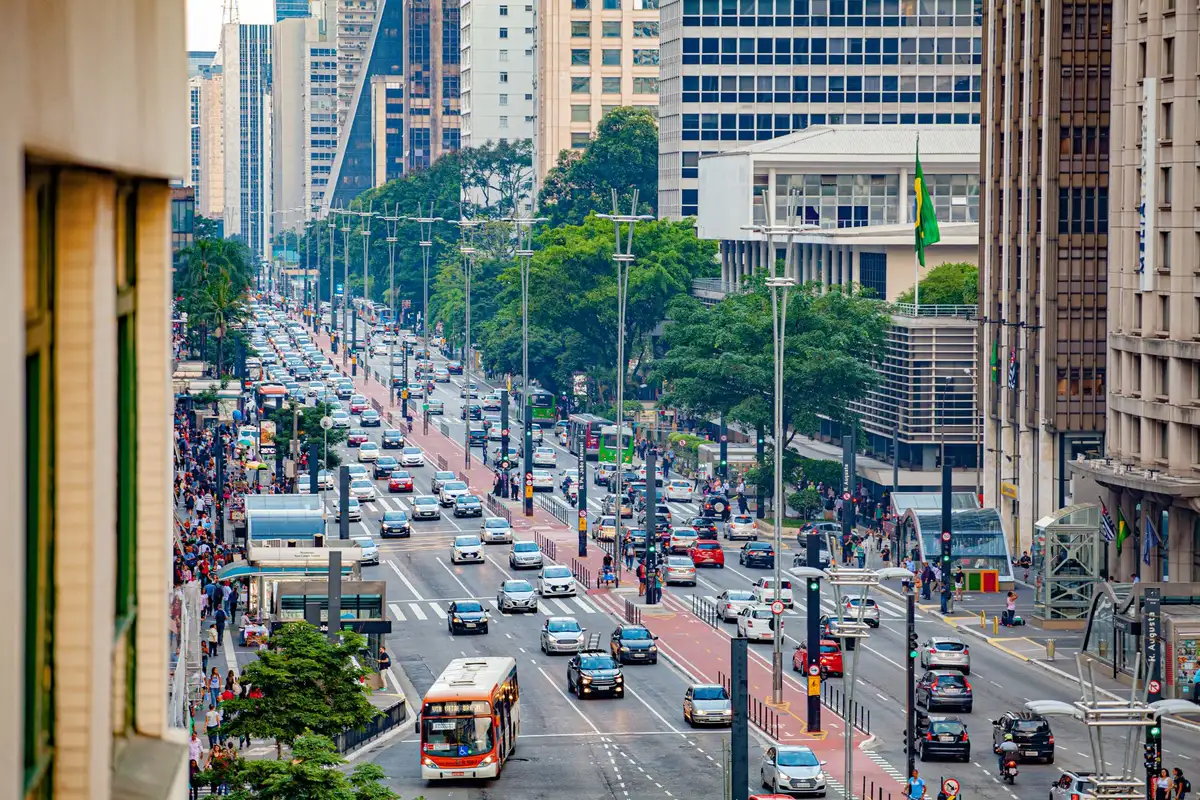
The Avenida Paulista, what to do there changes completely depending on the day of the week: on weekdays it’s São Paulo’s financial center, full of traffic and glass towers; on Sundays, it closes to cars and becomes the city’s largest free public space, with markets, music, and cyclists. Between one extreme and the other, you’ll find heavyweight museums, parks hidden behind the buildings, and a nightlife that only gets going after 10 PM.
In short: set aside at least half a day. MASP and Sesc Avenida Paulista anchor the cultural scene, Parque Trianon is your green escape just steps from the metro, and on Sundays (from 9 AM to 4 PM, when the city closes the avenue to vehicles) the whole stretch turns into a pedestrian, bike, and rollerblade paradise, with craft fairs and live music from end to end.
| Price | The avenue is free; MASP R$ 60 full / R$ 30 half-price, free on Tuesdays (Jul 2026) — MASP official website |
|---|---|
| Closed to cars | Sundays and holidays, 9 AM to 4 PM (Jul 2026) |
| Sesc Avenida Paulista | Tuesday to Sunday, 10 AM-8 PM, free entry to exhibitions (Jul 2026) — Sesc SP |
| Visit duration | 2 hours (quick stroll) to a full day (with museums) |
| Getting there | Metro Line 2-Green: Consolação, Trianon-Masp, or Brigadeiro stations |
| Length | 1.7 miles (2.8 km), from Paraíso to Consolação |
How to get to Avenida Paulista by metro?
Avenida Paulista is served by three stations on Metro Line 2-Green: Consolação, Trianon-Masp, and Brigadeiro, all with direct exits onto the avenue. Trianon-Masp drops you literally at the museum’s doorstep.
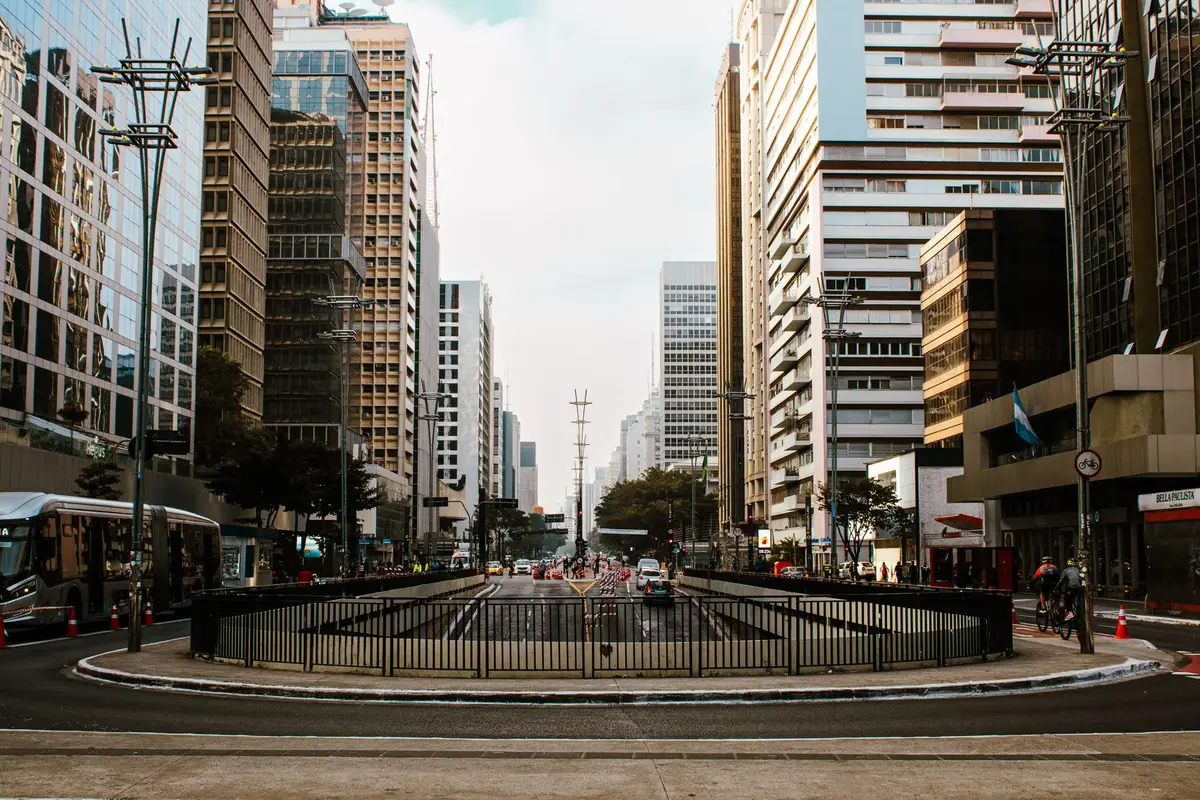
If you’re coming by bus, the avenue has a dedicated lane and dozens of lines crossing the route; by car, the problem isn’t getting there, it’s parking — corporate buildings charge between R$ 15 and R$ 30 per hour, and on Sundays, many of the side streets close too. The simplest option remains the metro, at R$ 5.20 per trip (Jul 2026): no other street in São Paulo has three stations this close together. If you’ve already followed our 3-day São Paulo itinerary, you know this is the city’s most useful line for tourists.
What’s the best time to visit and how long should you spend on Avenida Paulista?
Any time of year works, but Sunday changes everything: it’s the only day the avenue becomes a pedestrian space. If you only have one stop in São Paulo, save Sunday morning for it — you can combine the market, a museum, and a relaxed lunch.
On weekdays, budget 2 to 3 hours to walk the main stretch and pop into one or two cultural venues. With MASP, Sesc, and Parque Trianon on the itinerary, a full day is justified. December brings the Christmas decorations and busier shopping; July, with São Paulo’s winter, usually offers clearer skies for photos of the empty avenue in the morning.
What to see on Avenida Paulista: MASP, Sesc, Conjunto Nacional, and more
The trio that sums up the avenue is MASP, Sesc Avenida Paulista, and Parque Trianon — all within a 10-minute walk of each other, between the Trianon-Masp and Consolação stations.
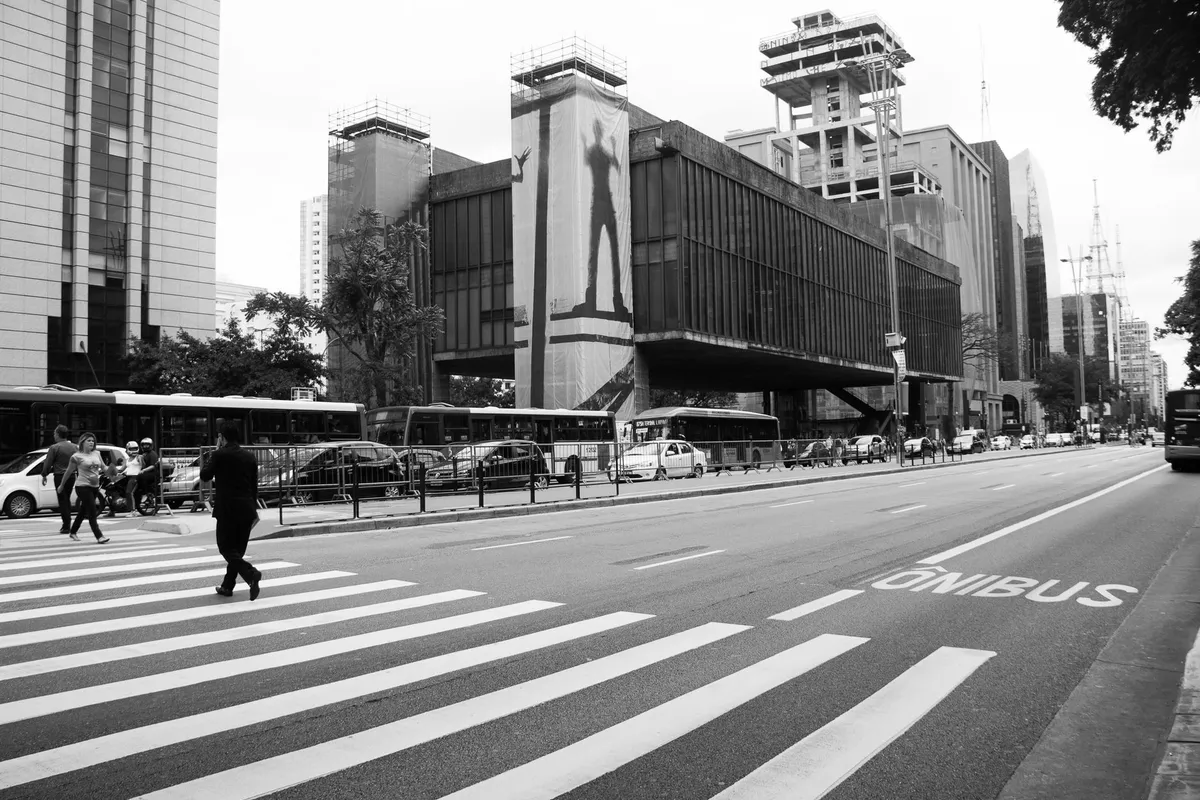
MASP holds the most significant European art collection in Latin America, with free entry every Tuesday (Jul 2026). Underneath the building, the open-air esplanade hosts antique fairs on weekends. Sesc Avenida Paulista is open Tuesday to Sunday, 10 AM to 8 PM, with exhibitions and a viewpoint on the top floor — free, no reservation needed. Parque Trianon, right next to the metro station, is a remnant of the Atlantic Forest in the middle of the skyscrapers, with free entry.
Other spots worth 20 minutes: Conjunto Nacional (No. 2,000), with a bookstore and street-level cinema; Casa das Rosas, a 1935 mansion with free literary programming; and Itaú Cultural, with free contemporary art exhibitions.
What to do on Avenida Paulista on Sundays?
Every Sunday and holiday, from 9 AM to 4 PM (Jul 2026), Avenida Paulista closes to cars and becomes a pedestrian, bike, skate, and rollerblade zone — the program dubbed Parque Paulista. It’s the best day to experience the avenue without the traffic and the weekday rush.
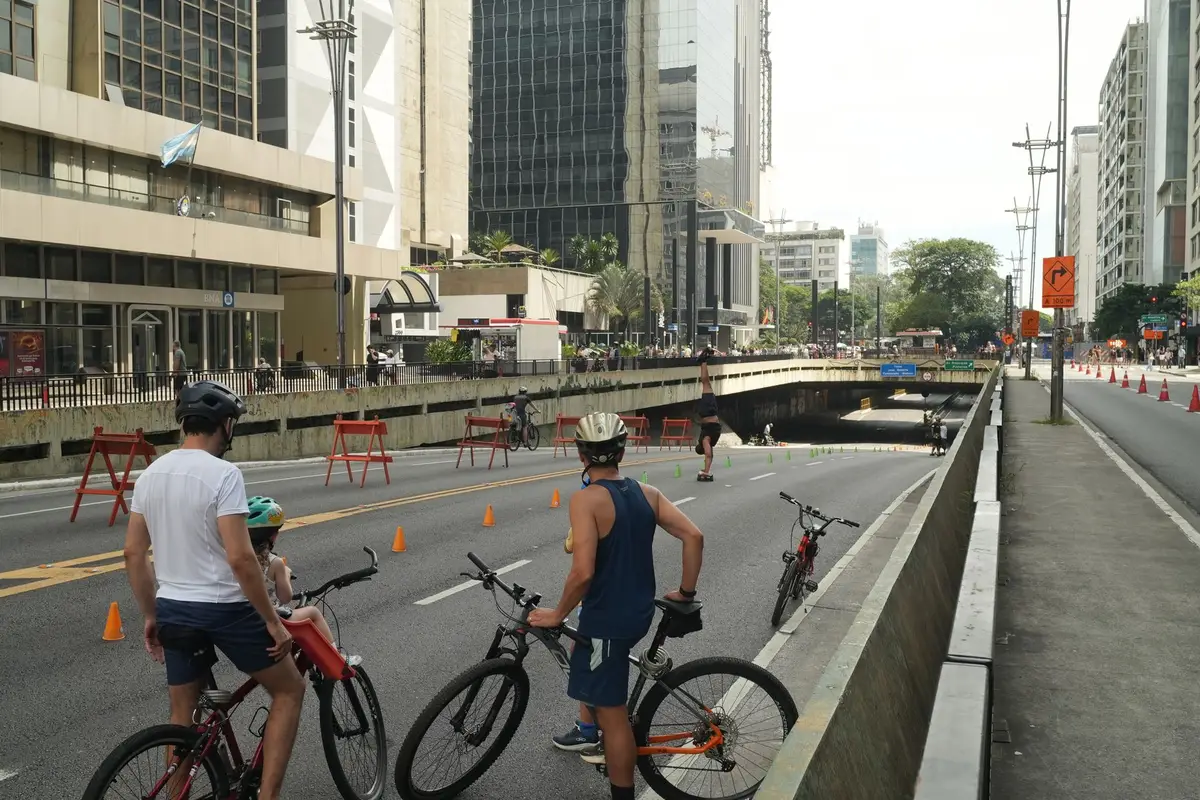
Along the 1.7 miles (2.8 km), you’ll find craft fairs, food trucks, street musicians, artists blowing giant soap bubbles, and, frequently, a protest or political rally — the avenue is also the city’s main stage for demonstrations, so it’s worth checking the schedule beforehand if you want to avoid crowds. If you want to bike without your own, you’ll find shared bike stations at fixed points along the way.
Is Avenida Paulista safe at night?
During the day and early evening, the avenue is one of São Paulo’s most monitored areas, with constant policing and a heavy flow of people. After midnight on weekdays, though, the crowds thin out significantly and it’s worth doubling your attention, as in any major urban center.
Basic safety tips: avoid flashing your phone or jewelry on the less-lit side streets, prefer ride-hailing apps over long walks late at night, and stick to the blocks between MASP and Conjunto Nacional, where the crowds linger later thanks to the bars and restaurants.
Where to Eat Near Avenida Paulista?
The avenue and its surrounding streets cover everything from a quick snack to a special dinner. Conjunto Nacional itself has a food court and cafés; on the side streets off Rua Augusta and Rua Haddock Lobo, restaurants and bars serve executive lunches during the week and fill up at night. The Jardins neighborhood, right next to Paulista, is home to the area’s most refined dining scene, with prices ranging from neighborhood bistros to Michelin-starred spots.
Where to Stay Near Avenida Paulista?
Staying right on Avenida Paulista or in the neighboring districts—Jardins, Bela Vista, and Consolação—puts you just a few minutes’ walk from the metro and the main attractions. It’s the most practical area in São Paulo for anyone relying on public transit and wanting to walk to restaurants and nightlife without a car, which also applies if you’re following the 3-day São Paulo itinerary and using Paulista as your base.
If you’d rather book a guided tour than explore on your own, there are options that cover São Paulo’s central area, hitting much of what’s described below in a single morning.
Practical Tips and What Nobody Tells You
Total cost for a day on Paulista: counting MASP admission outside Tuesday (R$ 60), a meal at Conjunto Nacional (R$ 35-50), and the metro (R$ 5.20 per leg, Jul/2026), you can wrap up the day at around R$ 100-130 per person—and much less if you go on a Tuesday (free MASP) or Sunday (the avenue and its markets cost nothing).
- MASP is emptiest on Wednesday evenings, when it’s open until 8pm—avoid the lunch hour Tuesday through Sunday, when lines for the free Tuesday collection form early.
- Parking right on the avenue on a weekday is pricey and spots are hard to find; if you’re driving, budget R$ 15-30/hour at a private lot (Jul/2026).
- On Sundays, Parque Paulista frequently hosts political demonstrations—usually normal and peaceful, but you can check local news before heading out if you’d rather steer clear.
- Bringing your own bike or rollerblades on Sunday is allowed and common; if you don’t have them, the shared bike stations cover a good chunk of the route.
Book the free walking tour of São Paulo’s historic center, which passes by spots near Paulista and helps you understand the avenue’s context before exploring on your own.
Frequently Asked Questions
Is Avenida Paulista closed to cars every Sunday?
Yes. Every Sunday and holiday, from 9am to 4pm (Jul/2026), Avenida Paulista fully closes to vehicles and becomes a space for pedestrians, cyclists, and skaters, in the program known as Parque Paulista.
Is MASP free?
MASP is free on Tuesdays; on other days, admission costs R$ 60 (full price) and R$ 30 (half price), according to the official website’s rates as of July 2026. The open-air space beneath the building, with its markets, is always free to access.
How many kilometers long is Avenida Paulista?
Avenida Paulista is about 2.8 km long, connecting the Paraíso neighborhood to the Consolação area in São Paulo’s expanded downtown.
Can you bring a bike or rollerblades to Avenida Paulista?
Yes, especially on Sundays and holidays, when the road closes to cars from 9am to 4pm. On other days, the avenue has a bike lane, but the vehicle traffic requires more caution.
Conclusion
Avenida Paulista delivers everything from a quick two-hour stroll to a full day of museums, markets, and nightlife—the difference comes down to catching the right Sunday or taking advantage of MASP’s free Tuesday. If your itinerary moves on to other Brazilian capitals, it’s also worth checking out what to do in Curitiba before wrapping up your trip. For more São Paulo and Brazil itineraries, keep exploring voyagevoyage.com.br.