what to do in Curitiba fits perfectly into two or three days if you group your sightseeing by region: Jardim Botânico and the city center on day one; Parque Jaime Lerner, Tanguá, and Tingui on day two; Santa Felicidade or Morretes on day three. The capital of Paraná state has considerable distances between some of its postcard spots, which is why the Linha Turismo tourist bus, a taxi, or a ride-hailing app can save you time and keep your itinerary from feeling too scattered.
To explore Curitiba without rushing, set aside two full days and prioritize a logical geographic sequence. Start at the Jardim Botânico greenhouse, then head to the Historic Center and the MON (Oscar Niemeyer Museum); the next day, combine Ópera de Arame, Parque Tanguá, and the Ukrainian Memorial. If you have a third day, choose between Santa Felicidade or the train to Morretes.
How many days do you need in Curitiba?
Two full days let you see the main tourist attractions in Curitiba without cramming five neighborhoods into a single morning. Three days is the most comfortable option if you want to include museums, parks, and a meal in Santa Felicidade; four days only make sense if you’re planning the train trip to Morretes, want to explore the Serra do Mar at a relaxed pace, or are using the city as a base for exploring Paraná.
If you’re traveling in winter, leave some extra buffer for cold mornings, fog, and rain. Curitiba sits at about 900 meters (2,950 feet) above sea level, and the weather can change within the same day. In summer, the parks are greener, but late-afternoon showers also call for a Plan B involving a museum, a café, or the Municipal Market. Check updated hours directly on the Turismo Curitiba website before heading out.
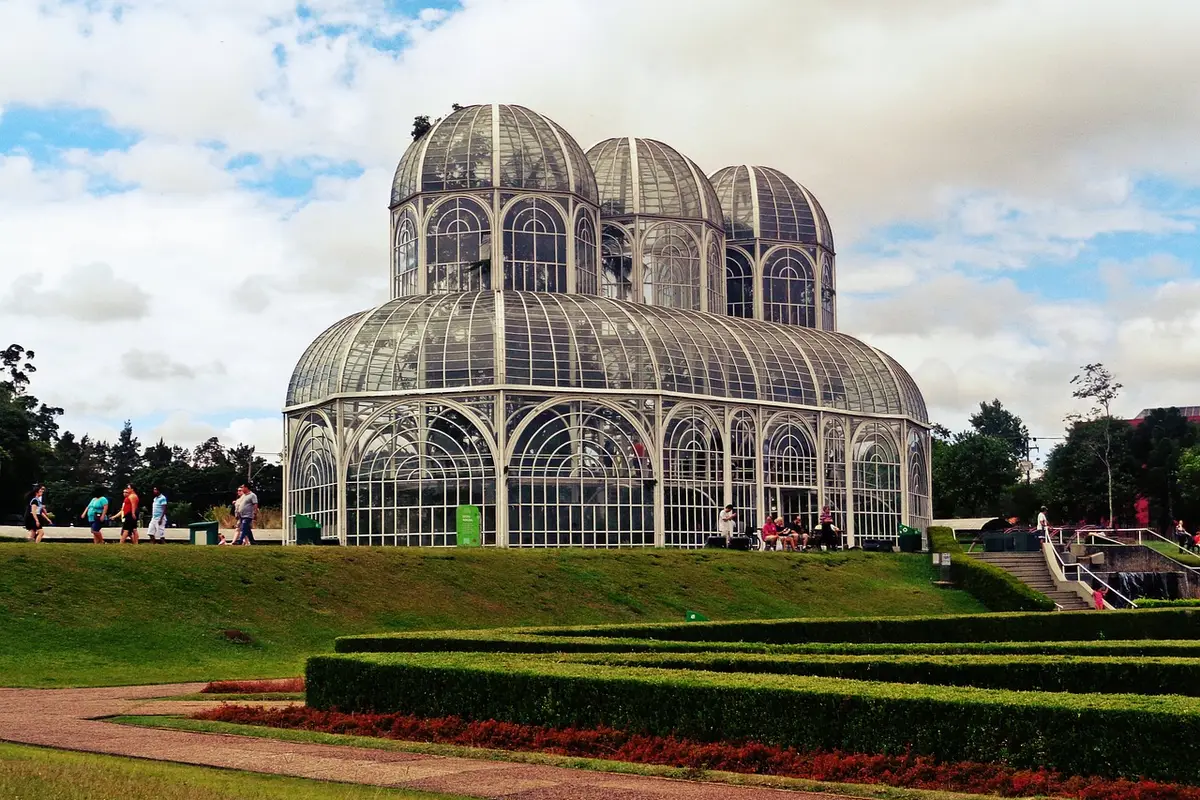
In practice, start your park visits early and save the city center for after lunch. The Jardim Botânico greenhouse doesn’t require hours of your time, but the visit is much better when you stroll through the gardens without rushing. Downtown, focus your walking on the area between Praça Tiradentes, Largo da Ordem, and Rua XV; these spots are close together, with cafés and restaurants that make for an easy break without extra travel.
The rule that prevents wasted time is simple: visit no more than three areas per day and keep one indoor activity as a backup in case of rain.
Curitiba itinerary: what to see in two days
A Curitiba itinerary works best when organized by zones, not by a random list of attractions. On day one, start at the Jardim Botânico Francisca Maria Garfunkel Rischbieter in the morning, when the light favors the greenhouse and the French gardens are still quieter. The greenhouse, inaugurated in 1991, is the city’s most iconic postcard spot; also walk through the outdoor area, around the lake, and through the gardens—just don’t expect to spend a full day here.
Afterward, head downtown for Rua XV de Novembro, Largo da Ordem, Paço da Liberdade, and the Memorial de Curitiba. On Sundays, the Feira do Largo da Ordem changes the neighborhood’s rhythm, but keep in mind the crowds. Next, choose the Oscar Niemeyer Museum in the Centro Cívico neighborhood. The building known as the “Museu do Olho” (Eye Museum) can take up a few hours if you want to see the exhibitions; it’s worth checking the schedule and opening hours before planning your route.
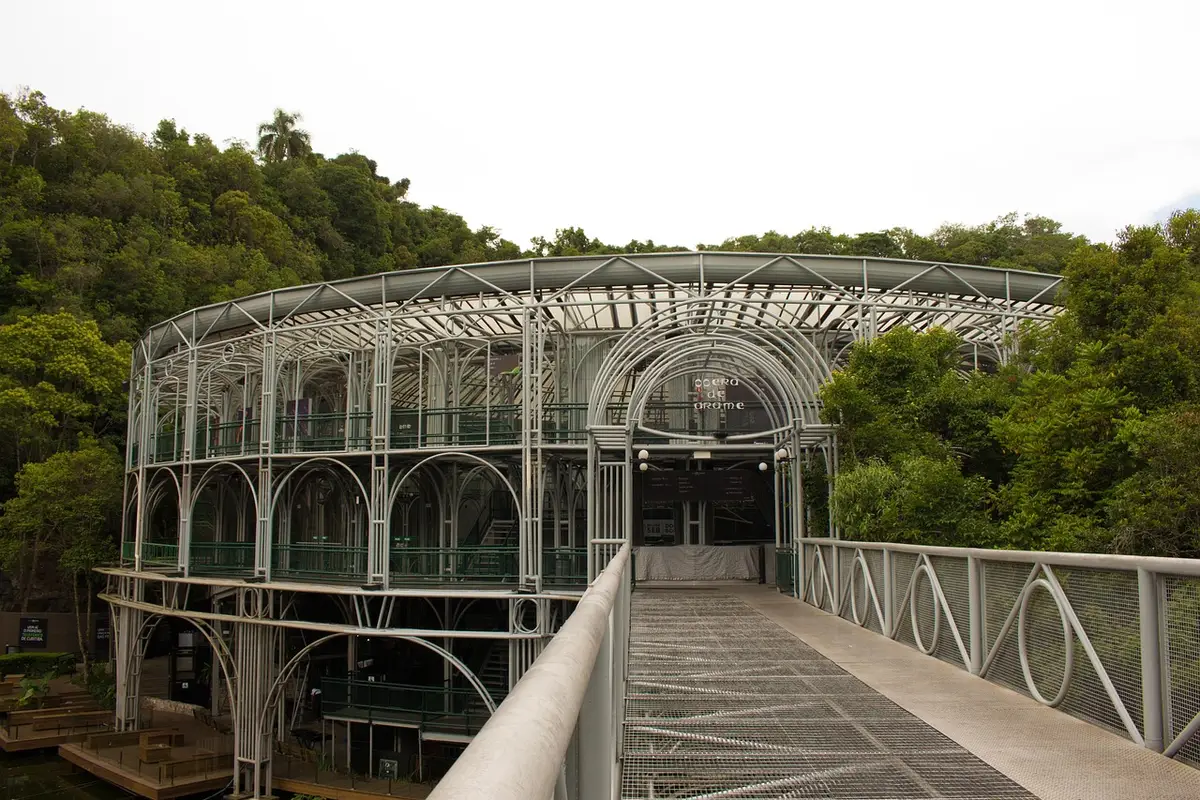
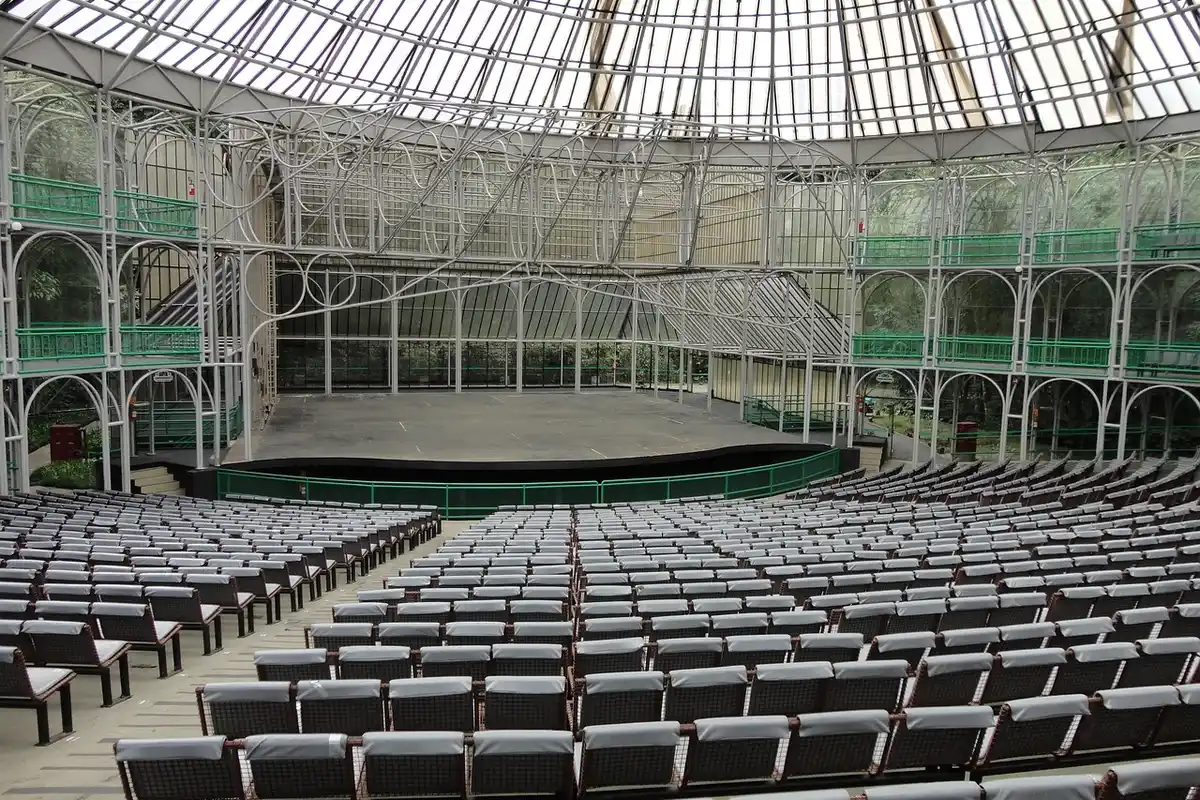
On day two, focus on the Parque Jaime Lerner–Ópera de Arame complex and the parks in the northern part of the city. The Ópera de Arame features a tubular steel structure, a transparent roof, and sits over a lake; it’s part of the Parque das Pedreiras, right next to the Pedreira Paulo Leminski. Turismo Curitiba itself notes that hours can vary depending on event programming, so confirm before crossing town. For detailed hours, tickets, and how to get there from Jardim Botânico, check out our guide to Jardim Botânico and Ópera de Arame.
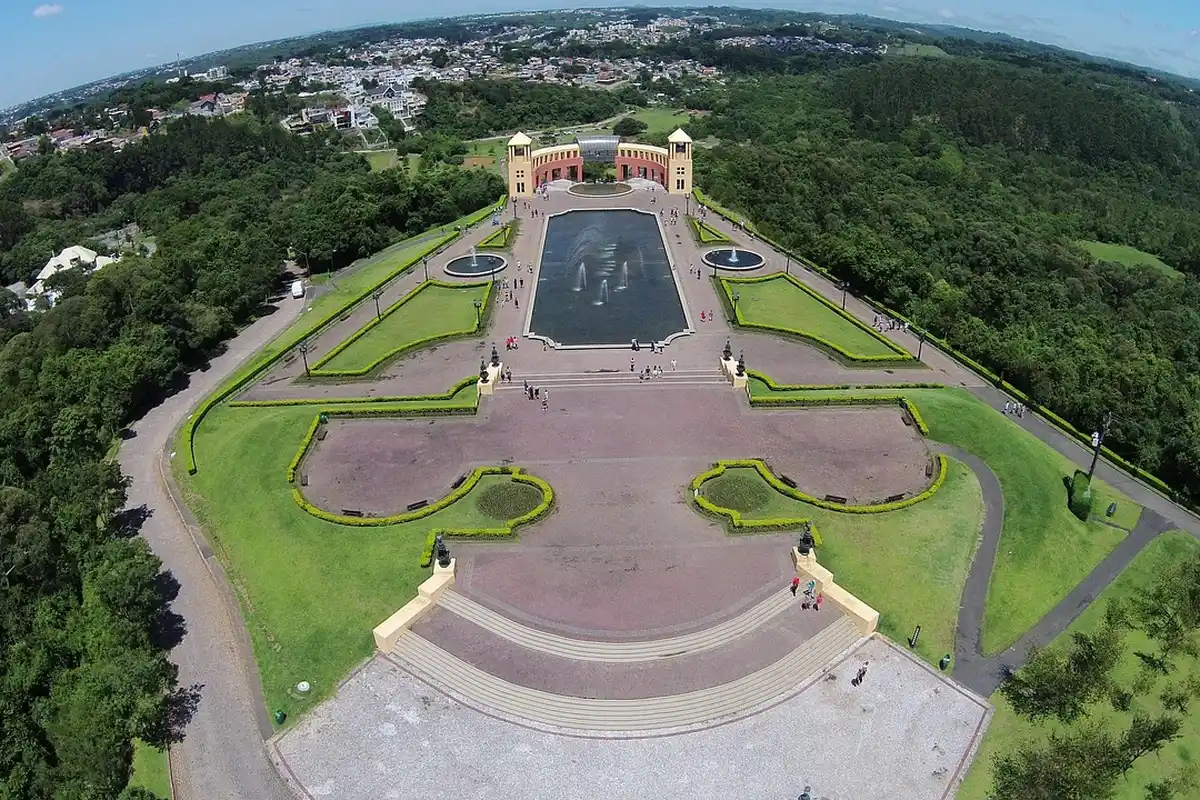
From Parque Jaime Lerner, head to Parque Tanguá in the late afternoon. The viewpoint, the reflecting pool, and the view over the old quarry make for a short stop that works best in soft light. If you have time left, add Parque Tingui and the Ukrainian Memorial, with its replica wooden chapel, pysanky eggs, and icons. Don’t try to squeeze in the Zoo, Barigui, and Santa Felicidade on this same circuit—they’ll pull your route to other parts of the city.
To get a general overview before choosing your stops, a panoramic tour of Curitiba can be useful on day one. It won’t replace a walk through the neighborhoods, but it reduces the uncertainty for anyone arriving without knowing the city’s layout.
Free things to do in Curitiba
Most of the best parks are free. Jardim Botânico, Parque Tanguá, Parque Tingui, Bosque Alemão, Parque Barigui, Rua XV, and the area around Largo da Ordem make for a budget-friendly day, though specific attractions and hours may have their own rules. Curitiba’s charm lies precisely in the contrast between green spaces, architecture, and neighborhoods: you don’t need to pay admission to walk around the outside of the greenhouse, admire the Ópera de Arame from the exterior, or stop at the viewpoints.
Use the Linha Turismo bus when your budget allows and you want to save time; instead of getting off at every stop, pick two or three. To spend less, use regular buses with a route app and group nearby attractions into the same time slot. The most expensive mistake is calling a ride-hailing car between every park: Curitiba looks compact on a map, but the tourist hubs are spread out.
On a short trip, don’t try to “complete” the Linha Turismo route. Treat it as a tool for getting around, not as a goal: get off where you actually want to spend time and hop back on when you’re done. For photographers, Jardim Botânico in the morning and Tanguá near sunset are the easiest wins; on cloudy days, the inside of the MON or the Municipal Market reduce your dependence on the weather.
Is the train to Morretes worth it?
The train to Morretes is worth it when experiencing the Serra do Mar is part of your trip’s goal, not when you just need to “check off” an attraction. The scenery, the viaducts, and arriving in a historic town make for a full day of content; in exchange, you give up the chance to explore Curitiba that day. Go with a reservation, check the operating conditions, and consider returning by road if the package you choose combines train and van.
If you want this logistics handled for you, there’s a train tour to Morretes and Antonina departing from Curitiba. Check what’s included, the duration, and the meeting point before booking. If you only have two days, save Morretes for another trip and enjoy Curitiba without turning every visit into a race.
Getting to and Around Curitiba
Afonso Pena International Airport is in São José dos Pinhais, outside the city limits of Curitiba. Plan this transfer before booking your first tour, especially if you’re arriving at night. Downtown, walking works well between Rua XV, Largo da Ordem, and Centro Cívico. Jardim Botânico, Ópera de Arame, Tanguá, and Tingui, on the other hand, require a bus, taxi, ride-hailing app, or the Linha Turismo tourist bus.
If you’re staying in the Centro or Batel, there’s no need to rent a car just to visit Curitiba. A car helps when your trip continues to inland cities, but it brings parking headaches and doesn’t eliminate the walking inside the parks. Without a car, the secret is to plan your itinerary by zone and not crisscross the city in the middle of the day.
Avoid planning your route based only on straight-line distance. The most efficient way to get around is to decide whether your day will be “downtown and museums” or “northern parks.” With a rental car, watch out for parking and each park’s rules; without one, there’s no obstacle, as long as you’re okay with slightly longer trips and spreading out your stops.
Where to Stay in Curitiba
Centro and Batel are the most practical bases for a first visit. Centro cuts down on walking to historic attractions and offers good access to public transport; Batel has more restaurants, hotels, and nightlife, but it can be pricier. Juvevê and Alto da XV also work if you want quieter streets without straying from the cultural hub. Santa Felicidade is great for dinner, but not as a first-choice base if you’ll be relying on daily commutes.
If you’re planning to continue your trip through the South, also check out what to do in Blumenau beyond Oktoberfest, the Iguaçu Falls guide, and the Balneário Camboriú itinerary.
Use this widget as a way to discover activities available in the city, after you’ve decided which days will be for parks and which will be for organized tours.
Frequently Asked Questions
How many days should I spend in Curitiba?
Two full days are enough to see Curitiba’s main sights; three days let you add Santa Felicidade or the train ride to Morretes without cramming your itinerary.
What are the free things to do in Curitiba?
Jardim Botânico, Parque Tanguá, Parque Tingui, Bosque Alemão, Parque Barigui, Rua XV de Novembro, and the area around Largo da Ordem are among Curitiba’s free attractions.
Is the train to Morretes worth it?
The train to Morretes is worth it if you have a third day and want to ride through the Serra do Mar; on a two-day trip, Curitiba deserves priority.
Can you explore Curitiba without a car?
Curitiba can be explored without a car using the Linha Turismo bus, regular buses, ride-hailing apps, and walking downtown, as long as you group attractions by region each day.
Conclusion
Curitiba rewards those who leave room between one park and the next. Plan by region, check attraction schedules, and use this Voyage Voyage itinerary as a starting point to tailor the city to your own pace.