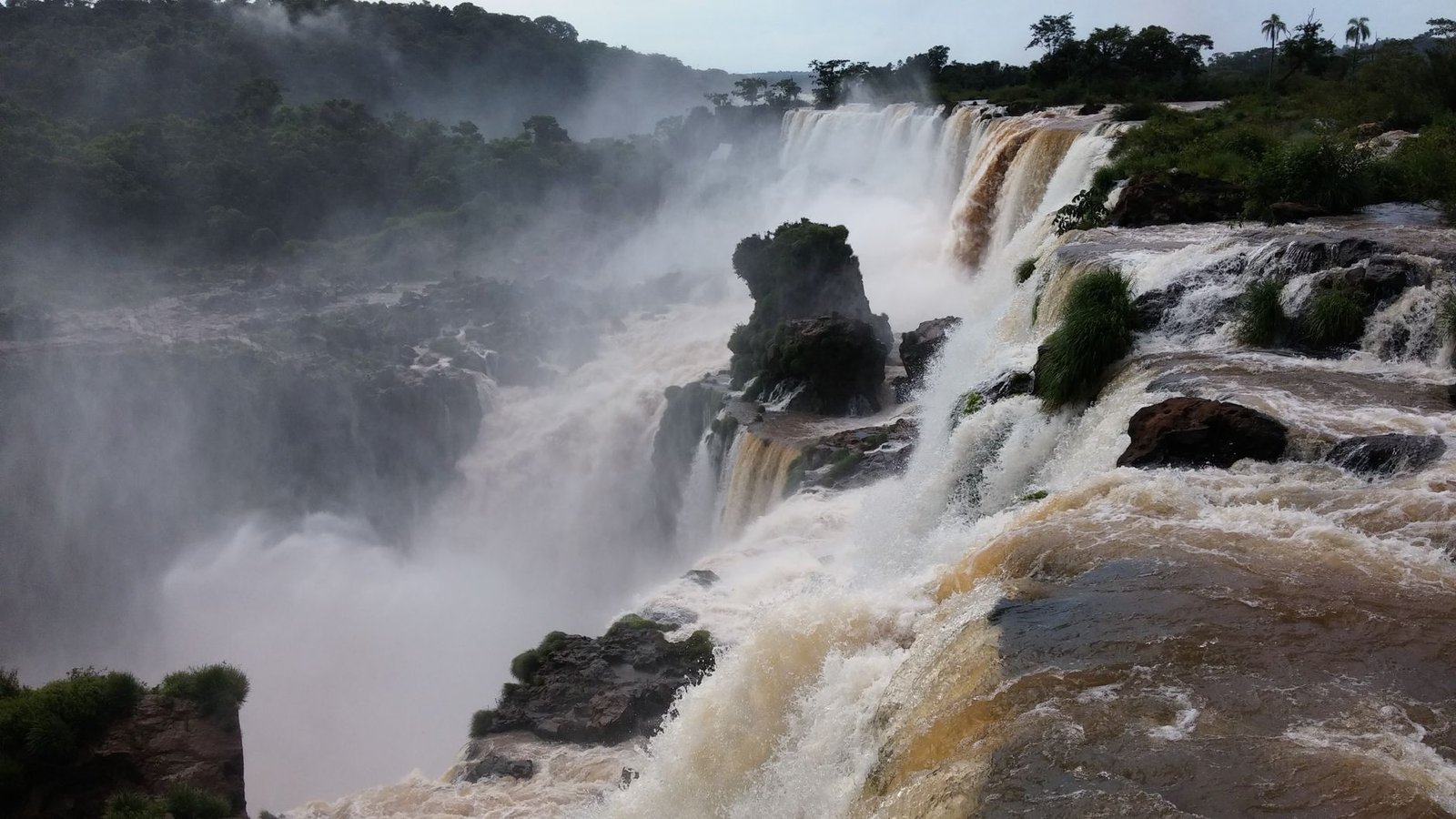
The Iguazu Falls sit on the border between Brazil and Argentina, near the city of Foz do Iguaçu in Paraná state, and are made up of around 275 waterfalls spread across nearly 3 km. This isn’t a trip that takes up your whole day: you can see everything in half a day, but most travelers set aside a full day to explore both sides, Brazil and Argentina. First-time visitors usually have the same questions: how much does it cost, when should I go, and which side is more worth it.
Where the Falls are and why they’re unique
The closest city is Foz do Iguaçu, in the far west of Paraná, about 650 km from Curitiba and 1,050 km from São Paulo. On the other side of the river is Puerto Iguazú, in Argentina, and just a few minutes’ drive away you can also reach Ciudad del Este, in Paraguay — it’s one of the few places in the world where three countries are less than 20 minutes apart from each other. The Iguazu Falls were voted one of the 7 Natural Wonders of the World in a global poll organized by the New7Wonders foundation in 2011, alongside destinations like the Great Barrier Reef and Ha Long Bay.
How much it costs to enter Iguazu Falls
“How much is the ticket?” is the first question anyone planning a trip asks, and the price has changed recently. Since December 19, 2025, the ticket for Iguaçu National Park (Brazilian side) costs R$ 105 for Brazilians, R$ 121 for Mercosur visitors, and R$ 134 for other foreigners, with no half-price entry — only children up to 6 years old get in free. This price already includes the internal transport to the Falls Trail, the 1 km walking trail, elevators, and the main viewpoints, including the one at Garganta do Diabo, which is part of the circuit and has no separate fee. Always check the current price on the official website before buying, as prices are usually adjusted once a year.
If you want to go beyond the trail, you can book the Macuco Safari, the boat tour that gets you close to the falls — in 2026, the full version (jungle trail + boat) costs around R$ 384 per person, with a 50% discount for children aged 7 to 11, students, and Brazilian seniors. This ticket is sold separately and is not included in the park entrance fee.
Best time to visit
The Falls can be visited year-round, but the experience changes quite a bit depending on the season. Between December and March, in the summer, the water volume tends to be higher due to regional rains, which makes the falls more powerful and the mist more intense — but it’s also high season, with more crowds and heat of 30°C or more. Between June and August, in the winter, the weather is milder and visitor numbers are lower, which makes it easier to get photos without the crowds, even if the water volume is a bit lower in dry years. If your focus is avoiding lines, arrive at the first entry time and skip weekends and long holidays.
How the tour works and how long it takes
The Brazilian park is open Tuesday to Friday from 9 am to 4 pm, and on Saturdays, Sundays, and holidays from 8:30 am to 4 pm, always with tickets purchased in advance on the official website, since the number of visitors per time slot is limited. Upon entering, the park’s own buses take visitors about 12 km to the start of the Falls Trail — from there, the main tour is done on foot, along a 1 km walkway with views of the falls, including the final stretch over Garganta do Diabo. Set aside 2 to 3 hours just for the Brazilian side, and a full day if you also want to include the Argentine side, which has longer trails and a small train to the Garganta do Diabo viewpoint from that side.
Why it’s called Garganta do Diabo
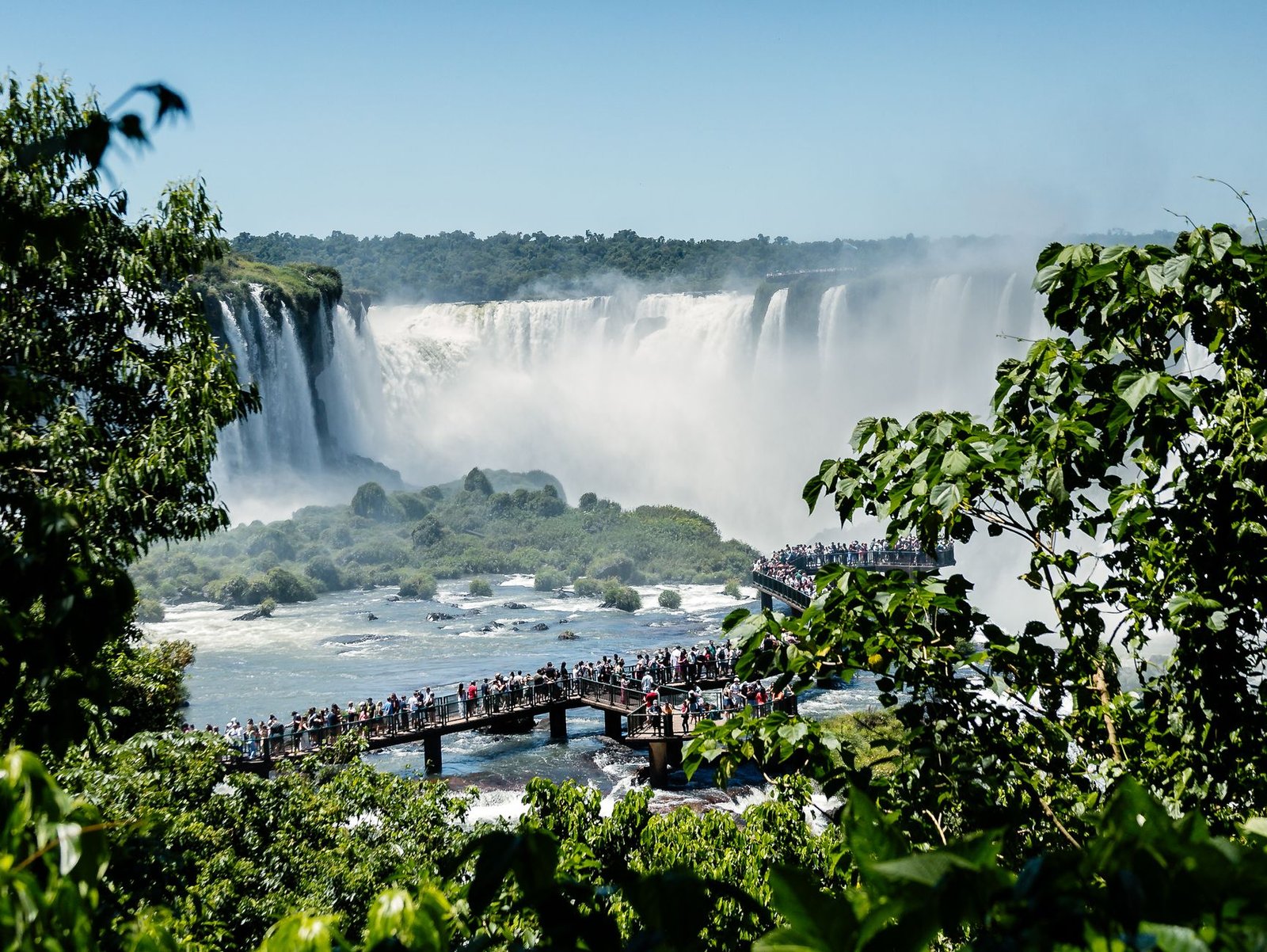
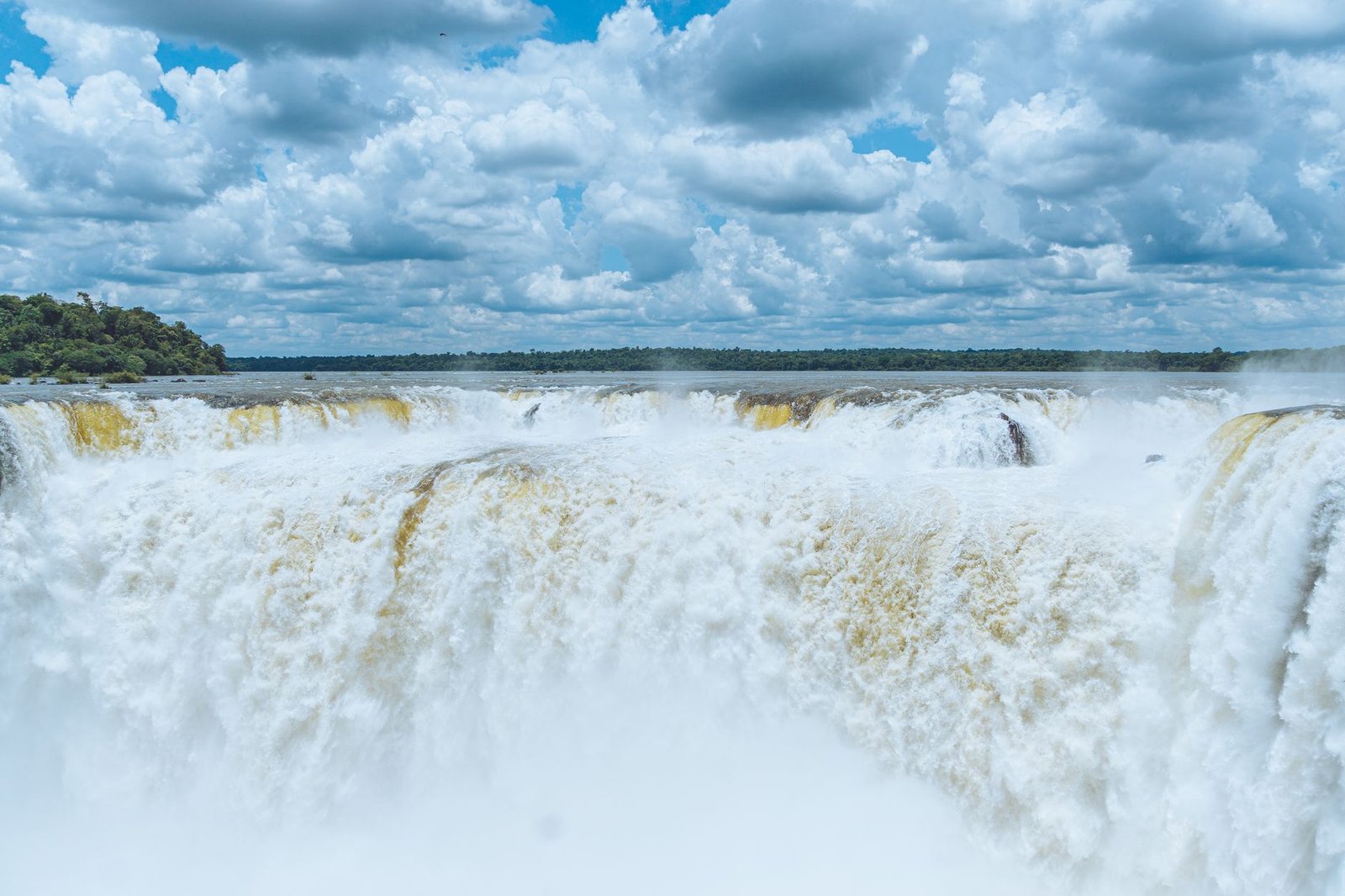
“Garganta do Diabo, why that name?” The “U”-shaped waterfall concentrates the largest volume of water in the entire complex, plunging all at once amid a cloud of foam and a roar that dominates the surroundings — the feeling of standing at the edge of an abyss covered in mist gave rise to the nickname back in the 19th century. It’s considered the most impressive point of the Falls and can be seen both from the Brazilian side, from above, on a walkway over the precipice, and from the Argentine side, up close, after a train ride and walkways.
Brazil or Argentina: which side to choose
There’s no consensus on which falls are “more beautiful” — both sides show the same waterfall from different angles. The Brazilian side has a short, panoramic trail, ideal for those who want the overall view in a few hours and wide shots of practically all the falls at once. The Argentine side concentrates about 80% of the falls’ area and has longer trails (Upper Circuit and Lower Circuit), bringing visitors closer to the water — including Garganta do Diabo, seen from above, almost inside the falls. Those with just one day usually prioritize Brazil for the panoramic view; those with two days do both sides and leave with a complete picture of the park.
If you want to check the official details on access and rules for the Brazilian park before buying your ticket, it’s worth checking the ICMBio visitor guide.
Frequently asked questions
How much does it cost to take the boat ride at Iguazu Falls?
The Macuco Safari, the boat tour that gets close to the falls on the Brazilian side, costs around R$ 384 per person in 2026 for the full version (trail + boat), with half-price entry for children aged 7 to 11, students, and Brazilian seniors. Check the current price on the official website before booking.
How much is the ticket for Garganta do Diabo?
There’s no separate fee: the Garganta do Diabo viewpoint, on the Brazilian side, is included in the Iguaçu National Park ticket, which in 2026 costs R$ 105 for Brazilians.
How many hours does the Iguazu Falls tour take?
Just the Brazilian side usually takes 2 to 3 hours, including internal transport and the walk along the walkway. To visit both sides, Brazil and Argentina, set aside a full day for each.
What’s the difference between the Iguazu Falls in Brazil and Argentina?
It’s the same waterfall seen from two countries. The Brazilian side offers a short trail with a panoramic view of the whole; the Argentine side has longer trails, concentrates most of the park’s area, and brings visitors closer to the water, including Garganta do Diabo.
Which country is closest to Foz do Iguaçu?
Foz do Iguaçu borders Puerto Iguazú, in Argentina, directly and is just minutes from Ciudad del Este, in Paraguay, making the region one of the few places in the world with three countries so close to each other.
Conclusion
Iguazu Falls offers everything from a quick half-day visit to a two-day itinerary exploring both countries. The key is to buy your park ticket in advance, decide whether the Macuco Safari is worth adding, and set aside time for the Argentine side if your trip allows. If you love the idea of a waterfall that also happens to be an international border, you’ll want to check out Niagara Falls, between the US and Canada. Explore the other destination guides here on Voyage Voyage.
Traveling with family or someone who needs a more comfortable pace? Check out the Foz do Iguaçu itinerary with kids and reduced mobility.