Niagara Falls sits right on the line that separates the United States from Canada, and it’s exactly that geography that makes the place a one-of-a-kind attraction: you can photograph the falls from two different countries in the same day. On one side is New York State, on the other is the province of Ontario, and between them flows the Niagara River, which also serves as a natural border. Before you lock in your trip, it’s worth understanding how this division works and which side to choose for your stay — the answer changes depending on what you want to see first.
Which countries and states does Niagara Falls sit between?
“Niagara Falls divides the US and Canada across which states?” It’s the first question on every traveler’s mind, and the answer is straightforward: the falls sit on the border between New York State in the United States and the province of Ontario in Canada. There’s no “state” on the Canadian side — Canada is divided into provinces, and Ontario is the one that borders there.
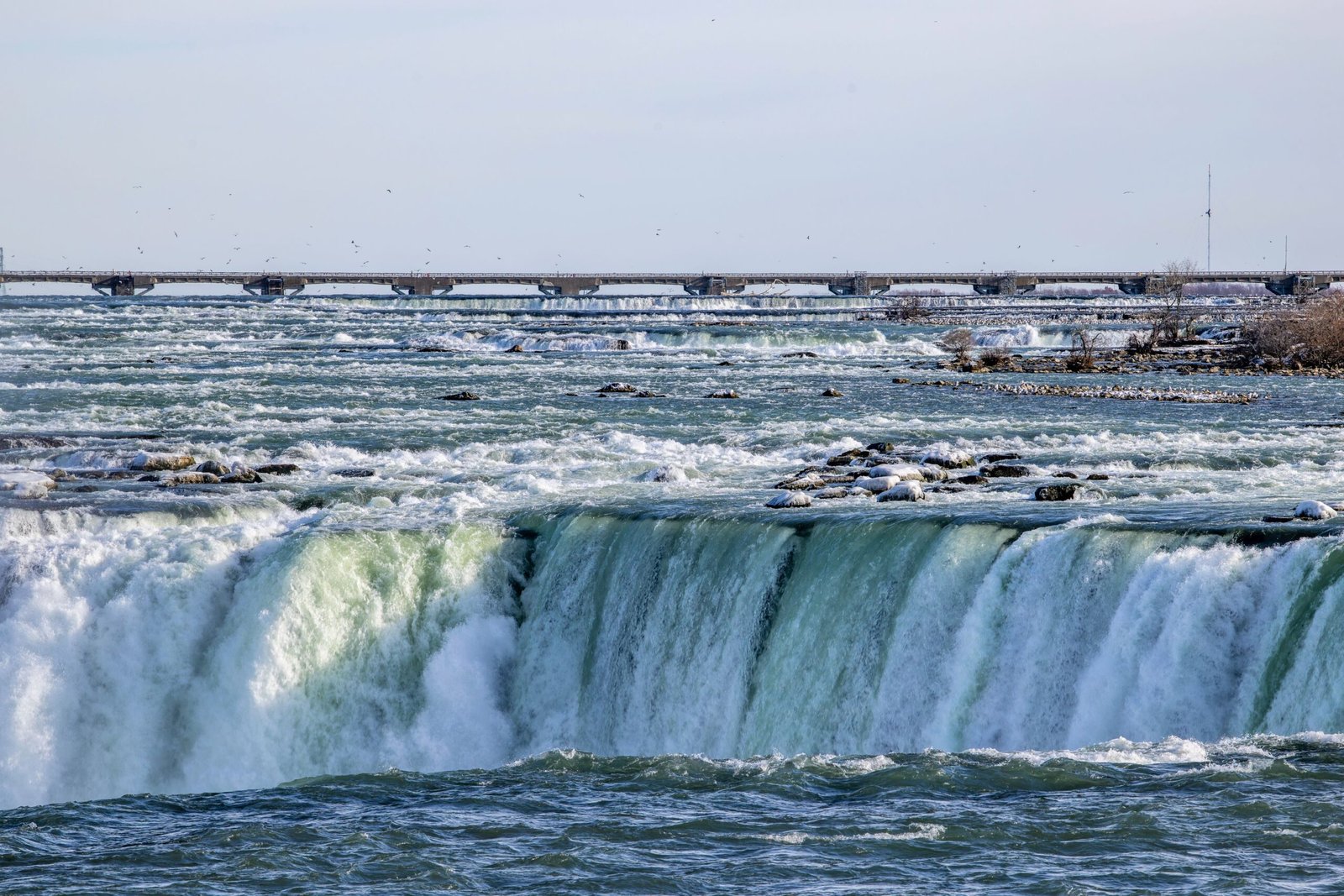
The falls are actually made up of three parts: Horseshoe Falls (the largest, mostly on the Canadian side), American Falls, and the smaller Bridal Veil Falls, both on the US side. The Niagara River, which connects Lake Erie to Lake Ontario, is what draws this natural border.
There are two twin cities with the same name, one on each side: Niagara Falls, New York (USA), and Niagara Falls, Ontario (Canada). They’re connected by international bridges, and that’s exactly what answers another common question — the American city that directly borders Canada there is Niagara Falls, New York itself, separated from its Canadian twin by less than 2 km of river.
Yes, New York borders Canada — not just at this point. The state has a long border line that follows the Niagara River, Lake Ontario, and Lake Erie, also meeting the province of Quebec further east. As for the US city closest to Canada overall, it’s usually Niagara Falls (NY) or Buffalo, 27 km to the south, depending on which border crossing you’re considering.
How to get to Niagara Falls
By plane, the most convenient airport on the American side is Buffalo Niagara International Airport (BUF), about 30 minutes by car from the falls. From Brazil, you’ll typically connect in New York, Toronto, or another US hub before reaching Buffalo. On the Canadian side, Toronto Pearson Airport (YYZ) is about 1h30 away by car or bus.
If you’re already in New York City, you can fly to Buffalo in just over 1h20, or brave the 6 to 7-hour drive or bus ride. From Toronto, the trip to the Canadian side of the falls is roughly 1h30 by car, bus, or regional train.
Once you’re in the area, buses and the WEGO (the Canadian side’s tourist transit system) shuttle between hotels and the main attractions. On the American side, Niagara Falls State Park has parking and is very walkable from downtown.
Best time to visit and how long to stay
Summer (June to August) brings the highest water volume and warmest weather, but also the biggest crowds and longest lines for the boat tours. May, September, and October offer fewer people, more affordable hotel rates, and — in the fall — trees around the Niagara River turning shades of red that contrast beautifully with the water.
In winter, parts of the falls partially freeze, creating a dramatic sight, but several attractions (like the boat) close due to ice. If your goal is to see the waterfall in full force, avoid December through March.
A full day is enough to see the essentials on both sides, including the boat ride and a spin around the nighttime viewpoint. If you want to hit the trails, explore both sides at a relaxed pace, and still visit Niagara Falls State Park without rushing, plan for 2 days.
What to see: top attractions
Maid of the Mist (American side) and Hornblower (Canadian side)
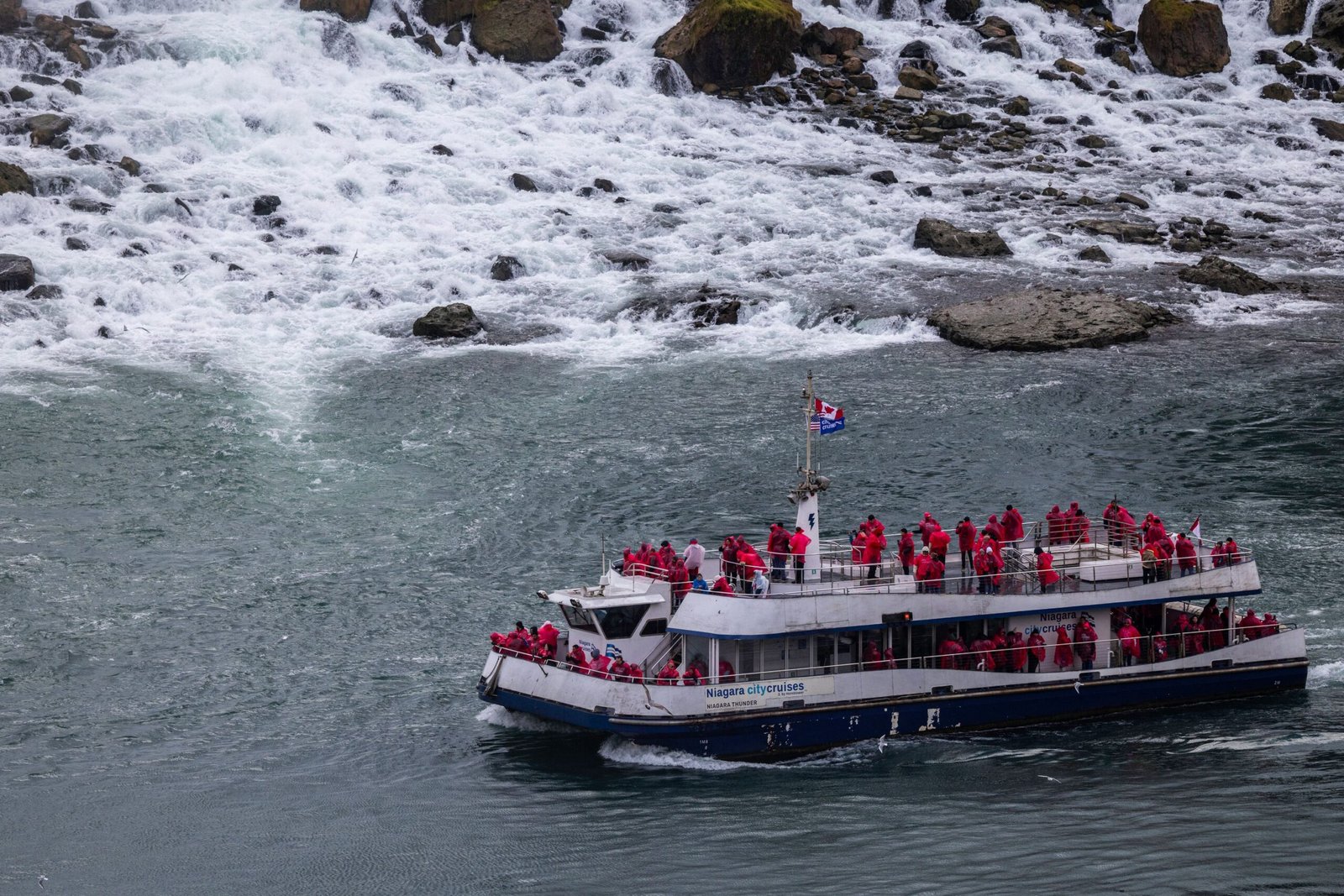
It’s the classic boat tour, taking you right up close to the base of Horseshoe Falls. In 2026, Maid of the Mist tickets cost US$ 30.25 for adults and US$ 19.75 for kids ages 6 to 12; children under 5 get in free. The season typically runs from May to October, with boats departing from Niagara Falls State Park.
Cave of the Winds
A wooden walkway that brings you within a few feet of Bridal Veil Falls — expect to get wet. Adult admission is US$ 23 and US$ 19 for kids (ages 3 to 12). It’s located in the same park as Maid of the Mist, and many people combine both on the same day.
Journey Behind the Falls (Canadian side)
Tunnels carved into the rock that lead to observation platforms right behind Horseshoe Falls itself. It’s the Canadian version of the “wet and up-close” experience.
Skylon Tower and nighttime viewpoints
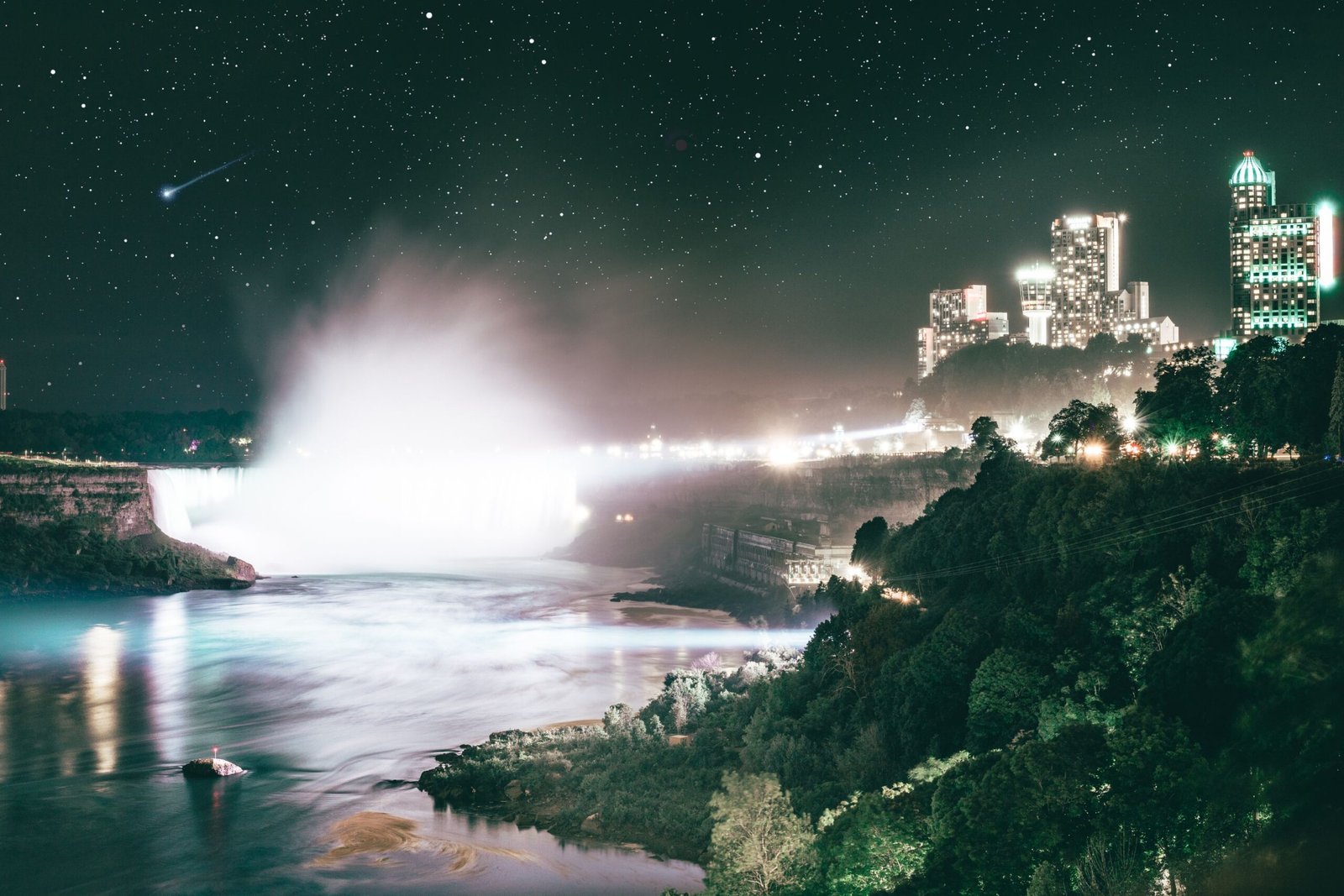
The observation tower on the Canadian side offers the widest view of the entire falls complex, especially at night when the colorful lights kick in — usually between sunset and midnight, with fireworks on summer dates.
What to pair with your visit
If you love grand waterfalls, add Iguazu Falls to your list, on the Brazil-Argentina border — another spot where a waterfall serves as a dividing line between countries, but on an even grander scale. If you’re passing through New York City before or after Niagara Falls, you can also check out the urban classics like Times Square and Central Park.
On the Canadian side, many travelers head to the wine region of Niagara-on-the-Lake, about 30 minutes by car, known for icewine and a small, well-preserved historic center.
If you have more days in Canada on your itinerary, you can also add Vancouver to the trip — on the other side of the country, but with the same balance of city and nature that appeals to anyone who loved Niagara Falls.
Where to eat
On the American side, downtown Niagara Falls (NY) has simpler options geared toward passing tourists — cafés, diners, and a few hotel restaurants. On the Canadian side, Clifton Hill and the area near Fallsview concentrate the widest variety, from buffets to restaurants with views of the falls, usually at a higher price because of the location.
If you don’t want to pay the view premium, walk a few blocks away from the riverfront — prices drop significantly and the quality doesn’t change much.
Where to stay: American or Canadian side?
The most impressive view of the falls — including Horseshoe Falls in its entirety — is from the Canadian side, so anyone who wants to wake up facing the scenery tends to choose Ontario. Hotels in Clifton Hill and around the Fallsview Casino area are just a few minutes’ walk from the main attractions.
If you’re looking for lower prices, less nighttime buzz, and don’t mind skipping the “postcard view,” you can stay on the American side in Niagara Falls (NY) and cross the Rainbow Bridge on foot for a day trip.
Practical Tips for Crossing the Border
To cross between the two sides—whether by car, bus, or on foot across the Rainbow Bridge—Brazilians need to have the required documents to enter both the United States and Canada (a valid passport and, depending on the case, a visa or electronic travel authorization for each country). Always double-check visa/electronic authorization requirements on the official channels of both countries before you travel, as the rules change frequently.
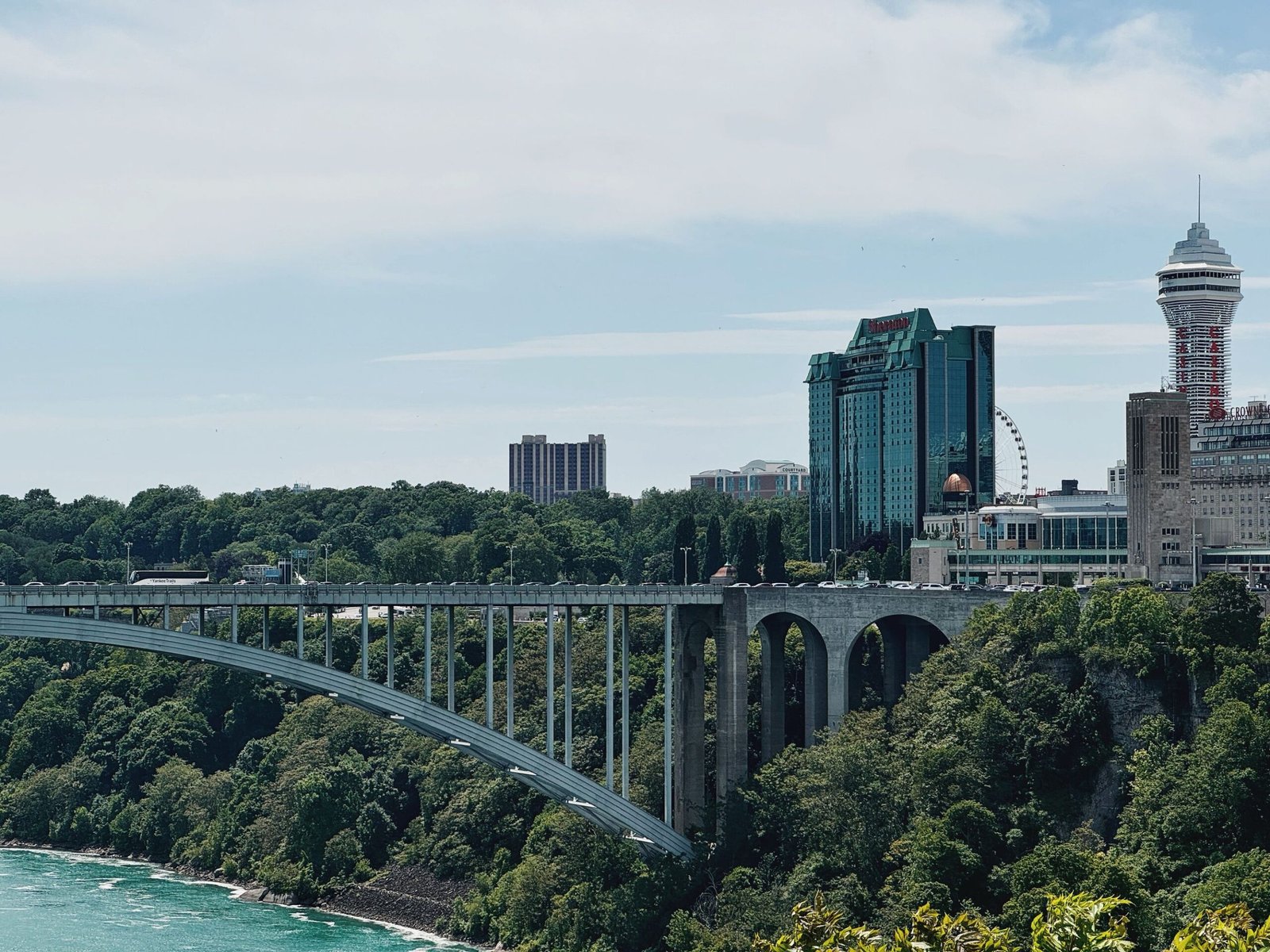
The Rainbow Bridge is open 24 hours a day, every day, and is the most popular crossing for pedestrians. There are also the Whirlpool Rapids and Lewiston-Queenston bridges, which are farther from the tourist center. Always carry a form of ID, and if you’re driving a rental car, check whether the rental company allows crossing the international border.
The currency changes from country to country: on the American side, you pay in US dollars; on the Canadian side, in Canadian dollars. International cards work on both sides, but check your provider’s conversion rates before withdrawing cash.
Frequently Asked Questions
Niagara Falls separates the US and Canada across which states?
The falls sit between New York State (USA) and the province of Ontario (Canada). No other American state is involved in this specific border.
Which US city borders Canada at this point?
Niagara Falls, in New York State, is the American city right on the border, separated by the river from its sister city Niagara Falls, Ontario.
What’s the closest city to Niagara Falls?
On the American side, Buffalo (NY) is about 17 miles away. On the Canadian side, Toronto is roughly 80 miles away (about 1.5 hours by car).
Which US city is closest to Canada?
It depends on the point of the border, but in the falls region, Niagara Falls (NY) and Buffalo (NY) are the closest references, along with other border towns in states like Michigan and Washington.
What state is Niagara Falls in?
On the American side, it’s in New York State. On the Canadian side, it’s in the province of Ontario—both countries have a city called Niagara Falls, each on its own side of the river.
Does New York border Canada?
Yes. Besides the stretch near the falls, New York State borders Canada along Lake Ontario, Lake Erie, and also with the province of Quebec further east.
Conclusion
Niagara Falls is one of the rare places in the world where the line between two countries runs literally through the water you’re admiring—and choosing which side to stay on changes the experience quite a bit, from the nightly rate to the view out your window. Check the document requirements for crossing the border before you lock in your itinerary, and decide whether your priority is the Canadian panoramic view or the more budget-friendly access on the American side. Explore the other destination guides here on Voyage Voyage.