 Marcelo Oliveira
Ubud, Bali, is the cultural heart of the Indonesian island — and also the place where rice terraces, ancient temples, and hidden jungle waterfalls share space with trendy cafés and yoga classes. Unlike the beaches and temples of southern Bali, Ubud delivers a more authentic Indonesia, where Hindu ceremonies happen right on the street and greenery dominates every corner.
Hotels in Ubudfree cancellation options onlySee hotels ›Booking.com partner (advertising): we may earn a commission at no extra cost to you.
Ubud is the ideal base for exploring Bali’s most important temples, waterfalls like Tegenungan and Tibumana, and the famous Tegallalang rice terraces — all within a 30-minute scooter ride, with tickets between IDR 25,000 and IDR 130,000 (US$ 1.60 to US$ 8.30, Aug 2026).
| Where it is | Central-eastern Bali, Indonesia — 36 km from Ngurah Rai Airport (1h–1h30 by car) |
|---|---|
| Tickets (range) | IDR 25,000–130,000 per attraction (US$ 1.60–8.30) — Aug 2026, Bali Holiday Secrets |
| Best time | April to October (dry season); avoid Nyepi week (March) |
| How long | Minimum 3 days; ideally 5 days for distant waterfalls and temples |
| Local transport | Scooter (US$ 5–10/day, Aug 2026) or private driver (US$ 35–50/full day, Aug 2026) |
| Visa | Brazilians: Visa on Arrival (30 days, IDR 500,000 / ~US$ 31, Aug 2026) at the airport |
How do you get to Ubud from Bali’s airport?
Ngurah Rai International Airport is 36 km from Ubud, and the drive takes between 1 hour and 1h30 depending on traffic — which in Bali is unpredictable, especially leaving Denpasar. The most practical way is to book a transfer or grab a taxi through the Grab app (Asia’s Uber equivalent), which costs between US$ 22 and US$ 30 for the full trip (Aug 2026).
If you prefer more freedom, booking a private transfer from the airport to Ubud guarantees a fixed price and a driver waiting at arrivals — handy for those landing on night flights. Another option is to arrange the transfer with your hotel before the trip; many Ubud hotels offer the service for US$ 25–35 (Aug 2026).
Once you’re in Ubud, transport changes: the streets are narrow, traffic is slow downtown, and there’s no reliable public transport. Most travelers rent a scooter for US$ 5 to US$ 10 per day (Aug 2026) — but heads up: they drive on the left in Bali, and the rural roads near the waterfalls can be steep and unpaved. For those who don’t feel safe on two wheels, a private driver for a full day runs between US$ 35 and US$ 50 (Aug 2026) and solves the longer trips (Tirta Empul, Gunung Kawi, the northern waterfalls).
How many days should you stay in Ubud to enjoy it without rushing?
Three days is the minimum to cover central Ubud, the Tegallalang rice terraces, and one or two waterfalls. With five days, you can add more distant temples like Tirta Empul and Gunung Kawi, fit in a sunrise at Mount Batur, and still have a free afternoon for the Ubud Art Market or a Balinese cooking class.
The best time to visit is between April and October, when it rains less and the trails to the waterfalls are more accessible. The rainy season (November to March) isn’t impassable, but the dirt roads get slippery and the waterfalls, though fuller, require caution. Avoid Nyepi week (usually in March): Bali’s Day of Silence closes the airport, forbids tourists from leaving their hotels, and shuts down the island for 24 hours.
An efficient 4-day Ubud itinerary looks like this: Day 1 — downtown (Palace, Monkey Forest, market); Day 2 — temples (Tirta Empul, Gunung Kawi, Goa Gajah); Day 3 — waterfalls (Tegenungan + Tibumana or Tukad Cepung); Day 4 — Tegallalang early in the morning, free afternoon for shopping or yoga.
What to do in Ubud: temples, waterfalls, and rice terraces worth the visit?
Ubud packs three types of attractions that, together, justify the trip: Hindu temples centuries old, waterfalls tucked into tropical ravines, and rice terraces carved into hillsides. Everything sits within a 30 km radius — the challenge isn’t getting there, it’s choosing what to prioritize.
Beyond the three big pillars, Ubud also delivers the Sacred Monkey Forest (the monkey forest in the city center, with IDR 130,000 admission (Aug 2026) — Aug 2026), the Ubud Royal Palace (free entry during the day), the Ubud Art Market for Balinese crafts, and Kecak dance shows at sunset. For those who want to go further, the guided Ubud tour with a Portuguese-speaking guide covers the main spots in a day and includes transport.
Which temples in and around Ubud are unmissable?
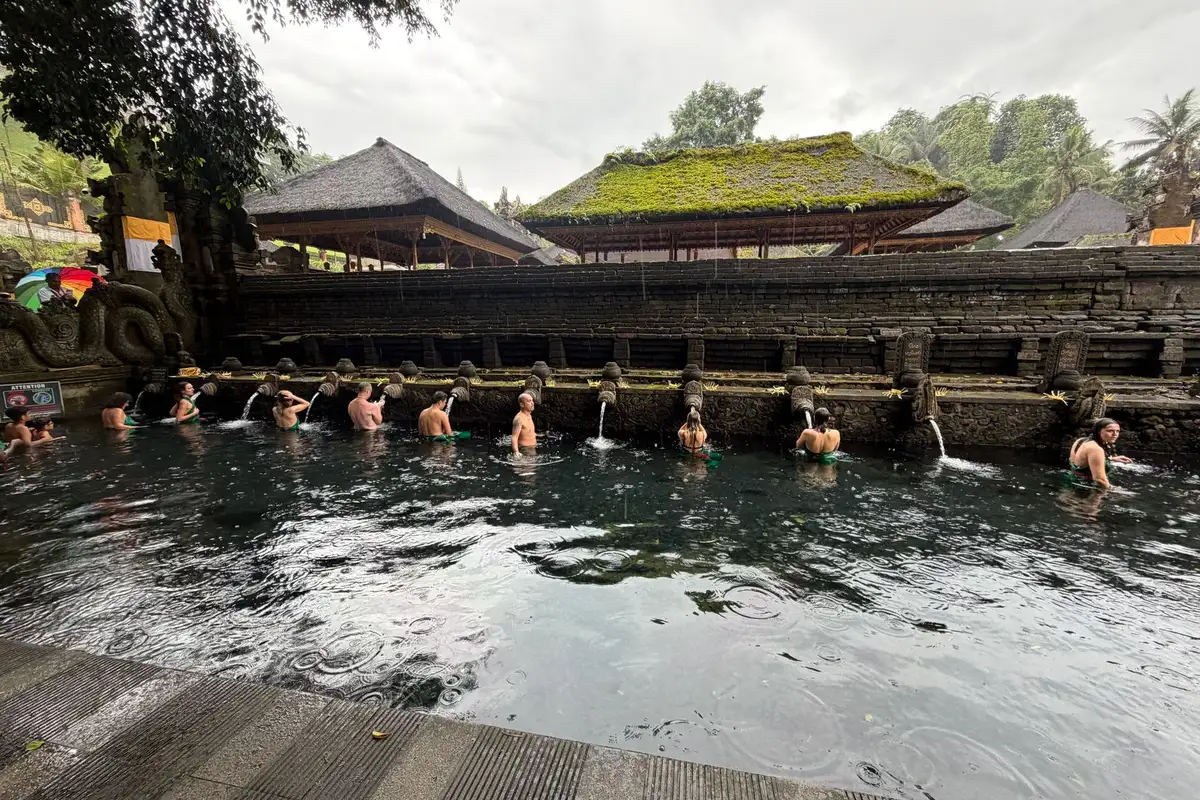
Tirta Empul is the temple that impresses the most: its purification pools, fed by sacred springs since 926 AD, welcome Balinese devotees and tourists who step into the water following a ritual of 30 spouts. Admission costs IDR 75,000 for adults (Aug 2026, Bali Holiday Secrets), and a sarong is mandatory — they provide one at the entrance at no extra cost.
Gunung Kawi (IDR 75,000, Aug 2026) is an 11th-century funerary complex carved into stone walls at the edge of a valley with a river. The descent has 371 steps through rice fields — beautiful and tiring, especially on the way back up. Arrive before 9am to catch the place nearly empty.
Goa Gajah (Elephant Cave, IDR 50,000, Aug 2026) is just 6 km from central Ubud. The cave entrance, carved like a demon’s mouth, dates to the 9th century. The visit is quick (30–40 minutes), but it’s worth it for the historical context and the springs beside it.
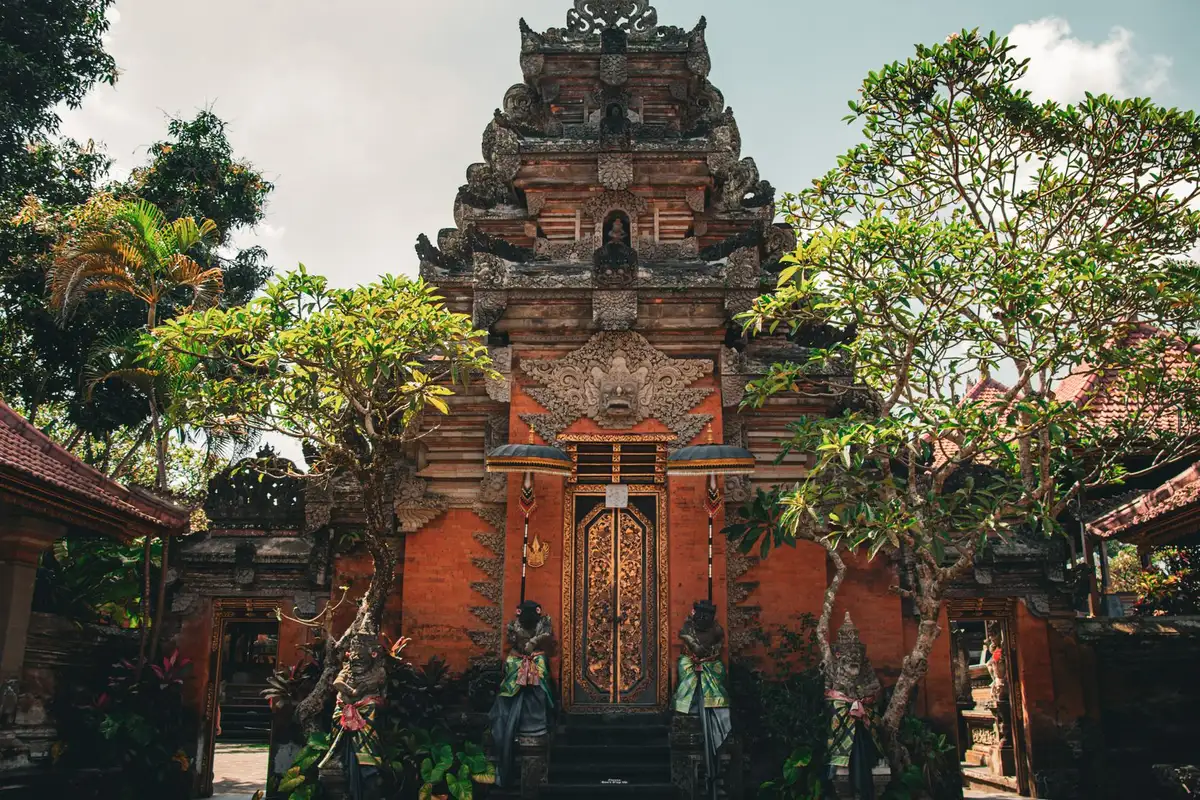
Pura Taman Saraswati (Ubud Water Palace, IDR 50,000, Aug 2026) is downtown, with a lotus pond on its facade. At night, the temple hosts Balinese dance performances (IDR 100,000 (Aug 2026), tickets on site).
| Temple | Adult ticket | Distance from Ubud | Best for |
|---|---|---|---|
| Tirta Empul | IDR 75,000 (~US$ 4.80, Aug 2026) | 15 km / 30 min | Purification ritual, photos |
| Gunung Kawi | IDR 75,000 (~US$ 4.80, Aug 2026) | 18 km / 35 min | Carved ruins, hiking |
| Goa Gajah | IDR 50,000 (~US$ 3.20, Aug 2026) | 6 km / 15 min | Quick visit, history |
| Pura Saraswati | IDR 50,000 (~US$ 3.20, Aug 2026) | Downtown | Lotus pond, evening dance |
Which waterfalls should you visit near Ubud?
The waterfalls around Ubud are the kind of outing that rewards the effort of the descent: hidden in ravines covered in tropical vegetation, each has its own personality — and cheap tickets (IDR 25,000 to 35,000, Aug 2026).
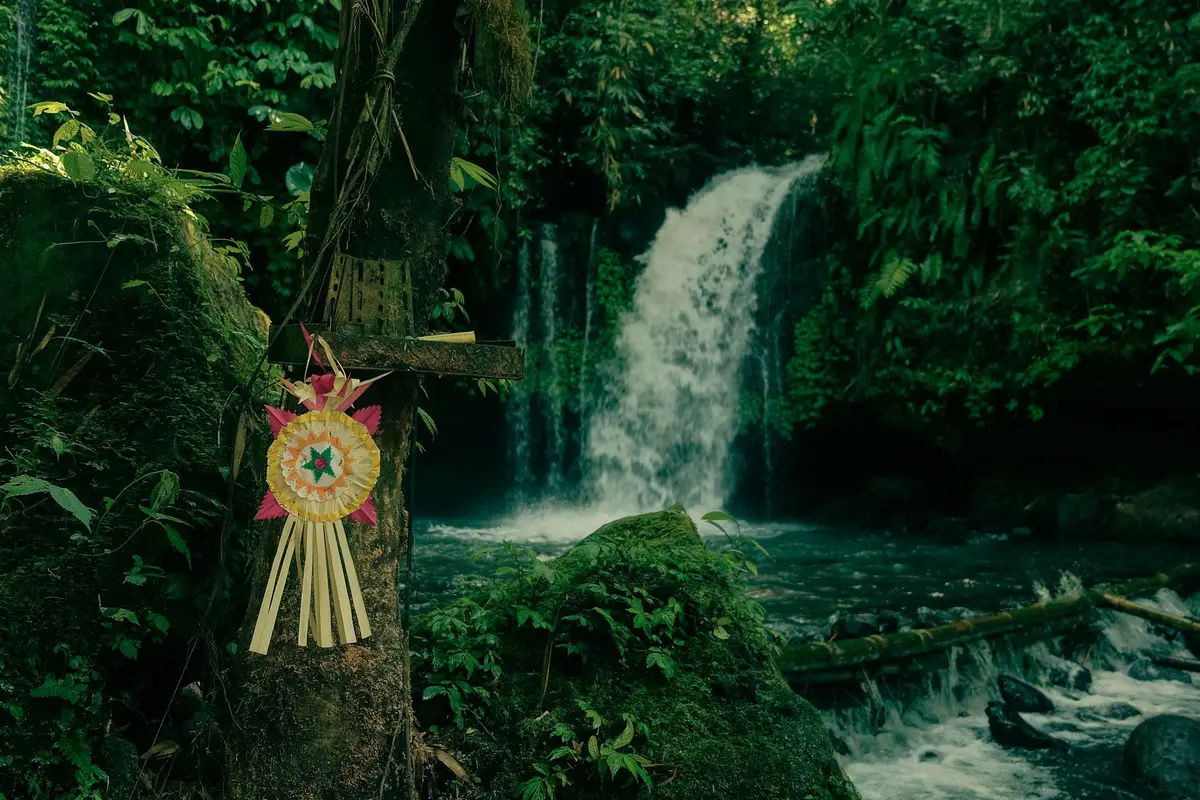
Tegenungan (IDR 30,000, Aug 2026) is the most accessible: a 20-minute drive from downtown with a paved staircase down. The water volume is impressive, and you can swim at the base. Get there early (before 9am) to dodge the crowds and get photos without people in them.
Tibumana (IDR 25,000, Aug 2026) is calmer and less touristy than Tegenungan. The short trail (10 minutes) cuts through a bamboo grove, and the natural pool at the base is shallow enough to enter safely. It works well for those who want to chill without fighting for space.
Tukad Cepung (IDR 35,000, Aug 2026) is unlike any other: it sits inside a grotto, and when the sun comes through the cave opening, the light beams cut through the waterfall creating an effect that looks like a movie set. The descent requires walking along the riverbed (wear rubber sandals). The best time to see the sunbeams at Tukad Cepung is between 9am and 10:30am — outside that window, the effect doesn’t happen.
You can combine Tegenungan + Tibumana in one morning, or Tukad Cepung + Gunung Kawi (just 10 minutes away) in an efficient half-day. Those with more time can pair Ubud with a day trip to Nusa Penida and its beaches.
Is the Tegallalang rice terrace worth visiting?
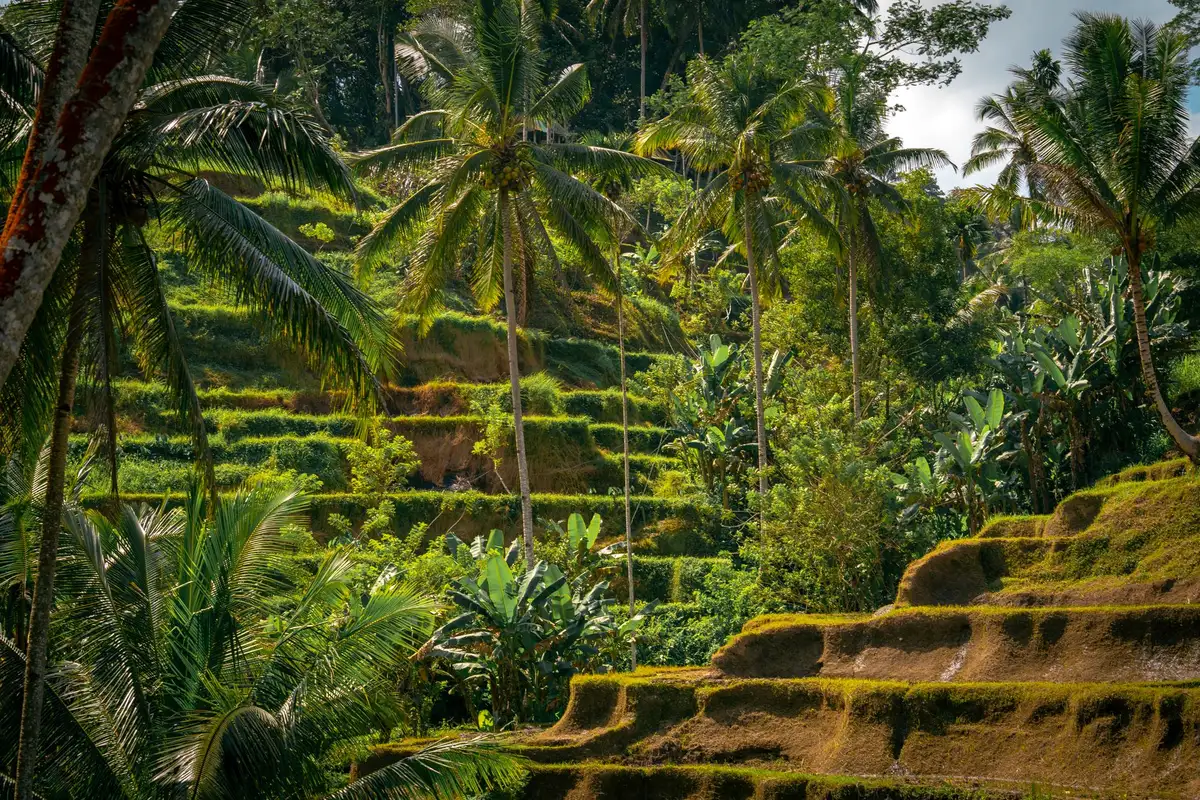
Yes, but go with calibrated expectations. Tegallalang Rice Terrace (IDR 25,000–50,000, Aug 2026) is Bali’s most photographed postcard — and its most touristified too. The view is real: rice steps descending a steep slope, with coconut palms in the background. But along the way, locals charge informal tolls to access certain stretches or private “viewpoints” (IDR 10,000–20,000 (Aug 2026) each).
To see Tegallalang without the crowds, arrive before 8:30am or go after 4pm — between 10am and 3pm, the place fills up with tour vans and the experience loses half its charm. For a detailed guide with the trail, swing, and photo tips, check out our full article on Tegallalang. Those seeking more authentic, empty rice terraces might consider Jatiluwih (1h30 from Ubud, a UNESCO site), where the walk is longer but the scenery is untouched.
 Partner · Civitatissee all activities in Ubud ›
- Boat to the Gili IslandsRating 6.6 · 351 reviews on Civitatisfrom€36.25per personSee ›
- Mount Batur Sunrise Hike + Hot SpringsRating 9.6 · 501 reviews on Civitatisfrom€20.20per personSee ›
- Mount Batur Sunrise 4x4 TourRating 8.4 · 14 reviews on Civitatisfrom€39.52per personSee ›
- Nusa Penida & Nusa Lembongan SnorkelingRating 8.2 · 101 reviews on Civitatisfrom€48.95per personSee ›
Civitatis prices on 28/09/2026, from, per person. They may change. Want to compare? Activities in Ubud on GetYourGuide ›
How much does visiting Ubud cost — tickets, transport, and real expenses?
A typical day in Ubud costs between US$ 36 and US$ 72 per person (Aug 2026), including tickets, transport, and food. Attraction tickets are cheap individually (IDR 25,000–130,000 each, or US$ 1.60–8.30), but they add up fast when you visit three or four spots a day.
Real total cost of a day with temples and a waterfall (Aug 2026): Tirta Empul IDR 75,000 + Gunung Kawi IDR 75,000 + Tegenungan IDR 30,000 + driver for the day US$ 40 (~IDR 640,000) + lunch at a warung IDR 60,000 + water and snacks IDR 30,000 = roughly IDR 910,000 (US$ 58) for two people, or US$ 29 per person. With a scooter instead of a driver, the total drops to about IDR 340,000 per person (US$ 22).
The approximate conversion in August 2026: 1 US dollar = ~15,700 Indonesian rupiah (IDR). International cards are accepted at larger restaurants and hotels, but warungs, temples, and waterfalls run on cash — withdraw rupiah from an ATM in central Ubud (fees vary by bank).
Where to eat well in Ubud on a budget?
The warungs — family-run Balinese restaurants — are Ubud’s secret to eating well for IDR 30,000–60,000 (US$ 1.90–3.80, Aug 2026) per full meal. The classic dish is nasi goreng (fried rice with egg and vegetables) or nasi campur (rice with assorted sides), which costs IDR 25,000–40,000 (Aug 2026) at most warungs.
Good value downtown: Warung Biah Biah (authentic Balinese cuisine, dishes from IDR 35,000, Aug 2026), Ibu Oka (Balinese roast suckling pig — babi guling — famous for its flavor and its line, IDR 60,000, Aug 2026, per dish), and Clear Café for those seeking vegetarian and organic options (IDR 60,000–90,000, Aug 2026). Outside downtown, prices drop: roadside warungs near Tegallalang charge IDR 20,000–30,000 (Aug 2026) per dish.
Avoid eating at the snack bars glued to tourist attraction parking lots — prices are double those of downtown warungs and the quality is worse. Better to eat lunch before or after visiting the attraction.
Where to stay in Ubud: best areas and hotels?
Central Ubud (Jalan Raya Ubud and around the Palace) is the most practical area for those who don’t want to depend on transport: it’s close to restaurants, the market, and the Monkey Forest, and you can cover a lot on foot. The downside is traffic and the noise of motorbikes.
For more quiet and rice-field views, the Sayan and Campuhan areas (to the west) or Penestanan offer hotels with infinity-edge pools over the valley. They’re 10–15 minutes by scooter from downtown, which works well with a bit of planning.
Options by price range: tight budget — guesthouses and inns downtown for US$ 15–30/night (Aug 2026) (Pondok Naya, for example); mid-range — hotels with a pool and breakfast for US$ 50–100 (Aug 2026) (Sthala Ubud, Komaneka); luxury — valley resorts (Four Seasons Sayan from US$ 500/night, Aug 2026, Hanging Gardens of Bali). Most hotels include breakfast, and some offer free airport transfers for bookings of 3+ nights.
Where to stay in Ubud
| Hotel | Rating | |
|---|---|---|
| Weda Cita Resort and Spa Ubud by MahaputraNyuh Kuning · Jalan Raya Nyuh Kuning | 9,21.315 reviews | See prices |
| Kastara ResortKeliki · Jalan Bangkiang Sidem, Keliki | 9,52.743 reviews | See prices |
| Sabana UbudPengosekan · Jl. Premasanti, Pengosekan | 9,51.053 reviews | See prices |
| Purana Suite UbudMas · Jl. Raya Pengosekan, 1 (Mas) | 9,51.417 reviews | See prices |
| Taman Amartha HotelTaman Kaja · Jl. Sriwedari, 67 | 9,21.163 reviews | See prices |
| Anumana Ubud HotelPadang Tegal · Jl. Wenara Wana (Monkey Forest Road) | 9,11.243 reviews | See prices |
| Bisma Eight UbudBisma · Jalan Bisma | 9,31.518 reviews | See prices |
| GayatriPadang Tegal · Jl. Wenara Wana 41 | 9,11.045 reviews | See prices |
Booking.com rating on 30/09/2026
What nobody tells you about Ubud — traps and common mistakes
Ubud has pitfalls the guidebooks don’t mention. Here are the ones that catch first-time travelers the most:
Thieving monkeys: at the Sacred Monkey Forest and the temples, monkeys snatch sunglasses, phones, water bottles, and open bags. Keep everything in a zippered pocket or inside a closed backpack before entering. Don’t make eye contact with the monkeys or show them food.
Rice terrace tolls: in Tegallalang, locals charge IDR 10,000–20,000 (Aug 2026) to let you pass through stretches of the path or to use a particular farmer’s “viewpoint.” It’s not a scam — it’s the informal system that exists there — but nobody warns you and it catches you off guard.
Instagrammable swings (Bali Swing): the swings over the valley cost US$ 35–50 (Aug 2026) and are built exclusively for photos. If the experience matters more than the photo, your money goes further on a Balinese cooking class or a ticket to Tirta Empul.
Scooter without a license: Bali traffic police frequently stop tourists and charge fines of IDR 250,000–1,000,000 (Aug 2026) for driving without an international license (a Brazilian driver’s license isn’t valid on its own). If you’re going to rent a scooter, get an International Driving Permit (IDP) before your trip.
Nyepi: the Day of Silence (usually in March) shuts down the entire island for 24 hours — no flights, no leaving the hotel, no lights. If your trip coincides with it, know that the day before has spectacular parades (Ogoh-Ogoh), but the day after is total confinement.
 HotelAs soon as you have datesCompare neighbourhoods and guest ratings.See hotels ↑
- ActivitiesBefore you travelBook ahead the ones with limited spots.Civitatis ›
 More activitiesTo compareTickets, day trips and tours with flexible cancellation.GetYourGuide ›
Frequently asked questions
Do Brazilians need a visa to go to Bali?
Brazilians can enter Indonesia with the Visa on Arrival (VOA), issued directly at Ngurah Rai Airport in Bali. The VOA costs IDR 500,000 (~US$ 31, Aug 2026), is valid for 30 days, and can be extended for another 30 days at local immigration offices. Your passport must be valid for at least 6 months from the date of entry.
Does Ubud have a beach?
Ubud has no beach — the town sits in Bali’s mountainous interior, 30 km from the coast. The nearest beaches (Sanur, to the east) are a 45-minute drive away. Those who want to combine beach and culture usually split their stay between Ubud (3–4 nights) and a coastal area like Seminyak, Canggu, or Uluwatu, with its temple and the Kecak dance at sunset.
What’s the best time to visit Ubud?
Bali’s dry season runs from April to October, and that’s the most comfortable period to visit Ubud — dry trails, less humidity, and clear skies. July and August are high season (hotel prices rise 20–40%), so May, June, and September offer the best balance between weather and cost.
Is it safe to ride a scooter in Ubud?
Ubud is reasonably safe for scooters if you already have experience on two wheels. Downtown roads are busy but slow; the bigger risk is on the rural roads toward the waterfalls, which can be steep, without shoulders, and slippery after rain. Wear a helmet (required by law), carry an International Driving Permit, and avoid driving at night, when lighting is poor.
Do you need to wear a sarong at Bali’s temples?
Yes, the sarong (cloth tied around the waist) is mandatory at all Bali temples, for both men and women. Most tourist temples (Tirta Empul, Gunung Kawi, Goa Gajah) provide sarongs free at the entrance, but it’s worth bringing your own — it costs IDR 30,000–50,000 (Aug 2026) at the Ubud market and lasts the whole trip.
Conclusion
Ubud is the kind of destination that rewards those who go beyond the obvious: behind the postcard rice terraces are temples where real ceremonies happen every day, waterfalls you reach after a descent through the jungle, and warungs where a full meal costs less than a coffee at the airport. With three to five days, a bit of planning, and a willingness to wake up early, Ubud delivers a Bali that beach resorts simply don’t show. If you want to expand your itinerary across the island, check out our complete Bali guide. For more destinations in Asia and around the world, keep exploring Voyage Voyage.