 Marcelo Oliveira
Senso-ji Temple in Asakusa is Tokyo’s oldest Buddhist temple — founded in 645 AD — and the most visited in all of Japan, drawing around 30 million people a year. Admission to Senso-ji Temple is free and the grounds are open 24 hours; the main hall opens from 6am to 5pm (6:30am from October to March).
Hotels in Tokyofree cancellation options onlySee hotels ›Booking.com partner (advertising): we may earn a commission at no extra cost to you.
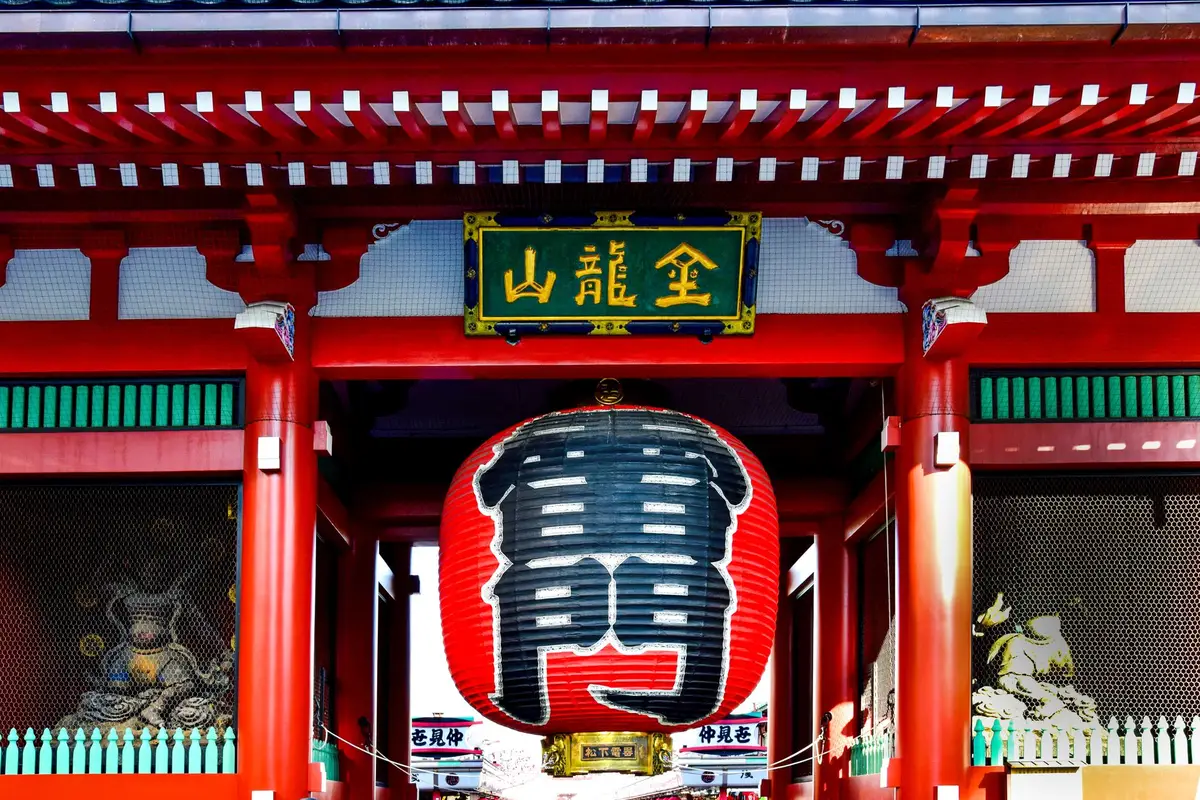
From the Kaminarimon gate with its 4-meter red lantern to the Hondo hall at the back of the complex, it’s 250 meters of shopping street, incense, and rituals that have repeated without pause since the Edo period. Being here at 6am versus 2pm is a whole different experience — and in this article you’ll find out how to make the most of every bit of it, which subway station to get off at, and what else to do in Asakusa after the temple.
What Senso-ji Temple is and why it’s worth visiting
Senso-ji (金龍山浅草寺) was founded in 645, dedicated to the goddess Kannon (the bodhisattva of compassion), and has survived earthquakes, fires, and the 1945 bombings — the main hall you see today was rebuilt in 1958, but it keeps the layout and style of the original. It’s the spiritual heart of Asakusa, the neighborhood that was the center of Tokyo’s popular entertainment for centuries.
For first-time visitors to Tokyo, Senso-ji works like a condensed lesson in Japanese culture: you learn to toss coins into the offering box, to light incense at the big bronze burner (and waft the smoke toward your body, which tradition says cures illness), to shake an omikuji (paper fortune), and to tell a Shinto torii from a Buddhist gate. All of it without paying a cent.
Where to stay in Tokyo
| Hotel | Rating | |
|---|---|---|
| GLOU Higashi ShinjukuShinjuku · In Okubo, 1-1-38, Shinjuku-ku | 8,21.567 reviews | See prices |
| Tokyu Stay ShinjukuShinjuku · In Shinjuku, 3-7-1 | 8,71.655 reviews | See prices |
| Shibuya Tokyu REI HotelShibuya · In Shibuya, 1-24-10 | 8,43.747 reviews | See prices |
| Hotel Indigo Tokyo Shibuya by IHGShibuya · In Dogenzaka, 2-25-12, Shibuya-ku | 9,11.718 reviews | See prices |
| Asakusa Tobu HotelAsakusa · In Asakusa, 1-1-15, Taito-ku | 9,17.846 reviews | See prices |
| OTHER SPACE AsakusaAsakusa · In Asakusa, 3-4-10, Taito-ku | 9,02.957 reviews | See prices |
| KOKO HOTEL Ginza-1chomeGinza / Marunouchi · In Ginza, 1-9-5, Chuo-ku | 8,37.219 reviews | See prices |
| Hotel GrandBach Tokyo GinzaGinza / Marunouchi · In Ginza, 5-13-12, Chuo-ku | 8,92.884 reviews | See prices |
| Marunouchi HotelGinza / Marunouchi · In Marunouchi, 1-6-3, Chiyoda-ku | 9,12.107 reviews | See prices |
Booking.com rating on 30/09/2026
Hours and admission
Senso-ji Temple charges no admission. The outer complex (gates, Nakamise-dori, courtyard) is accessible 24 hours — in the early hours it’s completely empty and makes for crowd-free photos. The main hall (Hondo) opens from 6am to 5pm from April to September, and from 6:30am to 5pm from October to March, according to the official Senso-ji website.
The best time to visit Senso-ji is between 6am and 8am: the Kaminarimon gate is empty, the Nakamise shops are still closed, and the low light makes the red lantern glow against a clear sky. After 10am, the walkways fill up and shooting without a crowd takes patience.
What to see in the complex
Kaminarimon (Thunder Gate)
The first gate of the complex has two guardians: Fūjin (god of wind, on the left) and Raijin (god of thunder, on the right). The giant red lantern weighs 700 kg and was donated by Panasonic (yes, the electronics company — the name is engraved on its base). It’s Tokyo’s most classic postcard shot and the spot where everyone stops for their first photo.
Nakamise-dori
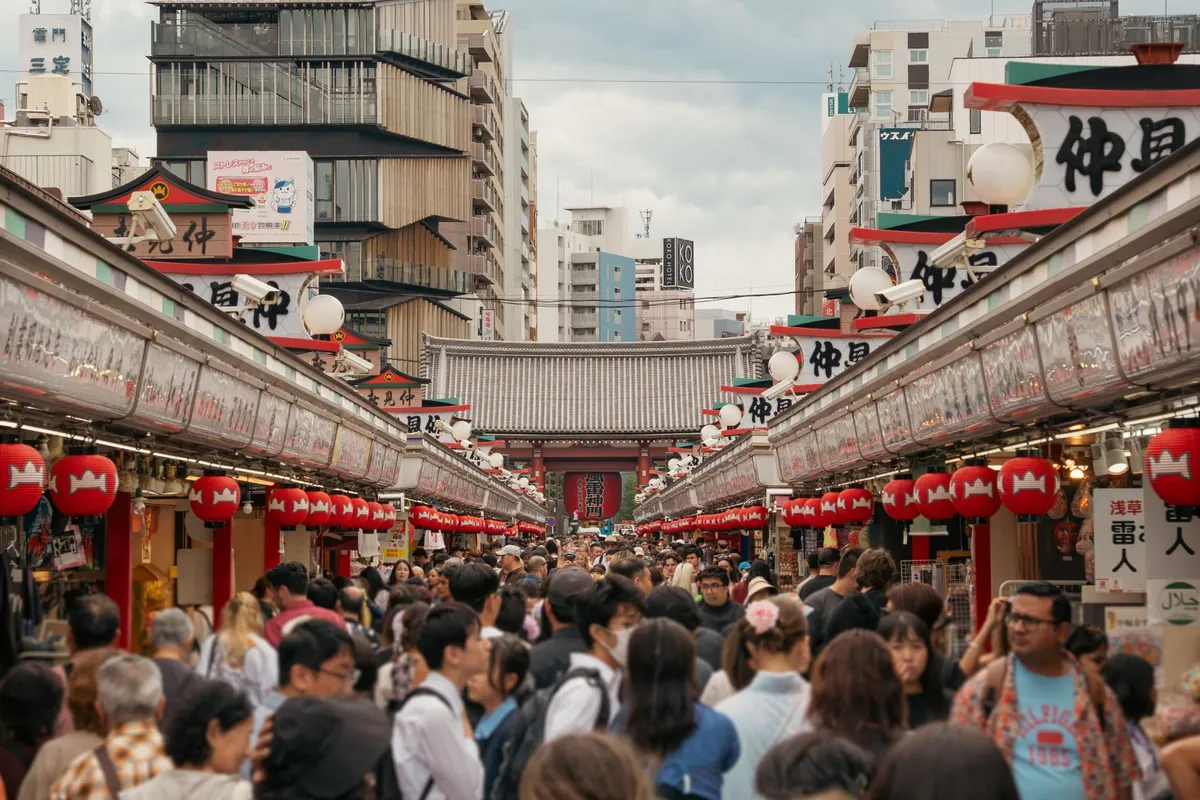
It’s 250 meters of covered shopping street between the Kaminarimon and the second gate (Hōzōmon), with around 90 shops selling senbei (rice crackers), ningyō-yaki (batter cakes filled with sweet bean paste), fans, yukata, and souvenirs. The street has existed since the 18th century and is considered one of Japan’s oldest shopping areas. Shops open around 9–10am and close between 5pm and 7pm.
Hōzōmon and the Main Hall (Hondo)
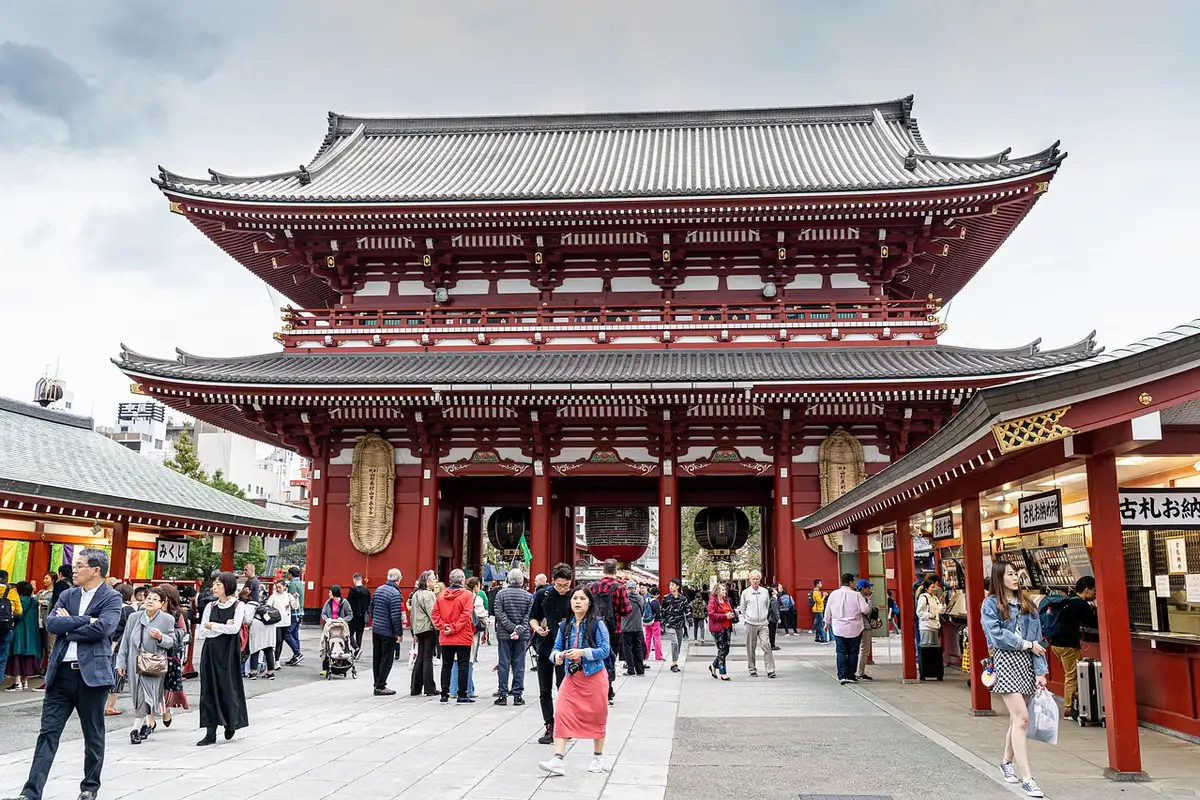
The second gate, Hōzōmon, houses a pair of giant sandals (waraji) measuring 4.5 meters and weighing 500 kg. Just behind it, the Hondo hall enshrines the image of Kannon — which in fact no one ever sees, because it’s considered hibutsu (a secret image, never shown to the public). In the courtyard between the two, the large bronze incense burner (jōkōro) is where visitors waft incense smoke over themselves.
Five-Story Pagoda
The 53-meter pagoda (Gojū-no-tō) was rebuilt in 1973 and is the second tallest in Japan. You can’t go up, but its silhouette against the sky — especially at dusk — is one of the most beautiful compositions in the complex. From its base, the Tokyo Skytree appears in the background, creating a contrast between old and contemporary Japan.
 See activities in Tokyo on GetYourGuide ›
How to get to Senso-ji
Senso-ji Temple is in the Asakusa neighborhood, on the east bank of the Sumida River. The nearest station is Asakusa, served by three lines:
Ginza Line (Tokyo Metro): Exit 1 puts you a 1-minute walk from the Kaminarimon. It’s the most convenient line coming from Shibuya, Ginza, or Ueno — from Shibuya it’s about 30 minutes with no transfers.
Tobu Skytree Line: same station, handy if you’re coming from the Tokyo Skytree (2 stops, 3 minutes). Tsukuba Express: Exit A1, a 3-minute walk to the temple.
Water Bus (boat): the Sumida River line of Tokyo Cruise departs from Hinode Pier (near Hamamatsuchō) and reaches Asakusa in 40 minutes — the river route is a sightseeing trip in itself and costs from 780 yen (Aug 2026). See more transport options in the complete Tokyo itinerary on VoyageVoyage.
What to do in Asakusa after the temple
Asakusa can easily fill at least half a day. After Senso-ji, walk 5 minutes north to Hoppy-dori (Hoppy Street), where open-air bars serve yakitori and chuhai at budget prices from lunchtime on. The Tokyo Skytree is a 15-minute walk across the Sumida River via the Azumabashi bridge — or 2 train stops on the Tobu Skytree Line. If you want to extend the outing, Tokyo Disneyland is a 40-minute train ride away.
Brazilians don’t need a visa to enter Japan for stays of up to 90 days — just a valid passport and a return ticket (Ministry of Foreign Affairs of Japan).
Practical tips
Draw an omikuji (paper fortune) for 100 yen: shake the metal box, pull out a stick, and find the number on the matching drawer. Got “great blessing” (大吉)? Take it home with you. Got “curse” (凶)? Tie it to the temple’s rack to neutralize the bad luck — the gesture is part of the ritual.
There’s no mandatory dress code at Senso-ji, but covering your shoulders is a sign of respect. Renting a kimono in Asakusa starts at 3,000 yen for half a day — several shops are a 2-minute walk from the Kaminarimon and take care of everything, from dressing to hair.
In May, the Sanja Matsuri — one of Tokyo’s three biggest festivals — takes over Asakusa for three days with mikoshi (portable shrines) carried by hundreds of people. It’s spectacular, but Senso-ji gets absolutely packed; plan ahead. If you have more time in the capital, you can also do the day trip to Mount Fuji, leaving Shinjuku in the morning and returning at the end of the day.
 HotelAs soon as you have datesCompare neighbourhoods and guest ratings.See hotels ↑
- More activitiesTo compareTickets, day trips and tours with flexible cancellation.GetYourGuide ›
Frequently asked questions
Does Senso-ji Temple charge admission?
Senso-ji Temple does not charge admission. Access to the entire complex, including the Kaminarimon, Nakamise-dori, and the main hall (Hondo), is free. The only optional cost is the omikuji (paper fortune), which costs 100 yen.
What’s the best time to visit Senso-ji Temple?
The best time to visit Senso-ji Temple is between 6am and 8am, when the complex is practically empty and the light is ideal for photos. The main hall opens at 6am (6:30am from October to March). After 10am, the walkways fill up with tour groups.
How do I get to Senso-ji Temple by subway?
To get to Senso-ji Temple by subway, get off at Asakusa Station on the Ginza Line (Tokyo Metro) and use Exit 1 — the Kaminarimon gate is a 1-minute walk away. From Shibuya, the trip takes about 30 minutes with no transfers.
Is it worth visiting Senso-ji Temple at night?
It’s worth visiting Senso-ji Temple at night because the outer complex stays open 24 hours and the nighttime lighting transforms the atmosphere. The main hall will be closed, but the Kaminarimon, the Hōzōmon, and the pagoda are lit up and practically empty — ideal for photos.
Conclusion
Senso-ji Temple condenses into one open, free complex the most accessible of what Tokyo has to offer in traditional Japanese culture: monumental gates, incense, paper fortunes, centuries-old street food, and an atmosphere that changes completely between dawn and night. Fit the visit in early, set aside time for the Nakamise and the surrounding Asakusa, and the neighborhood will fill an entire morning without any effort. If Japan is already on your itinerary, also check out Hakone or Kawaguchiko to see Mount Fuji. Keep planning on VoyageVoyage.