 Marcelo Oliveira
Mount Fuji shows up in photos from every angle, but a Mount Fuji day trip from Tokyo is the most practical way to see the volcano up close without needing an overnight stay. With a direct bus leaving from Shinjuku, you can head out early, stand at the 5th Station at 2,300 m above sea level, have lunch in a village with crystal-clear springs, and be back in Tokyo by night — all in a single day.
Hotels in Tokyofree cancellation options onlySee hotels ›Booking.com partner (advertising): we may earn a commission at no extra cost to you.
The most efficient day trip combines Lake Kawaguchiko, the 5th Station and Oshino Hakkai, with costs starting at ¥5,000 (~US$33) per person including transport and a meal (Aug/2026).
How to get to Mount Fuji from Tokyo
The gateway is the town of Kawaguchiko, about 120 km from Tokyo. Two options dominate the route: the highway bus and the express train. Both leave from Shinjuku, the most convenient hub.
Highway bus (the cheapest option)
The Fujikyu Highway Bus leaves from the Busta Shinjuku terminal (south side of the station) and reaches Kawaguchiko Station in about 1h35. The ticket costs between ¥2,000 and ¥2,200 (~US$13–14, Aug/2026) each way. Book through the Fujikyu website in advance — on weekends and holidays, morning departures sell out fast.
Fuji Excursion express train
The JR Fuji Excursion train makes the Shinjuku → Kawaguchiko run in about 2 hours, with a reserved seat and Mount Fuji views from the right-hand window. The fare is ¥4,130 (~US$27, Aug/2026). It’s covered by the Japan Rail Pass, which makes it free for pass holders.
Leave Shinjuku between 6:30 and 7:30 a.m. — the earlier you go, the better your chance of seeing Mount Fuji without clouds.
Best season and how much time to set aside
Mount Fuji is visible year-round, but the odds of a clear sky shift a lot depending on the season. From October to January, dry air keeps visibility high on most days. From July to September, clouds form almost every afternoon — if you come during this period, prioritize arriving before 10 a.m.
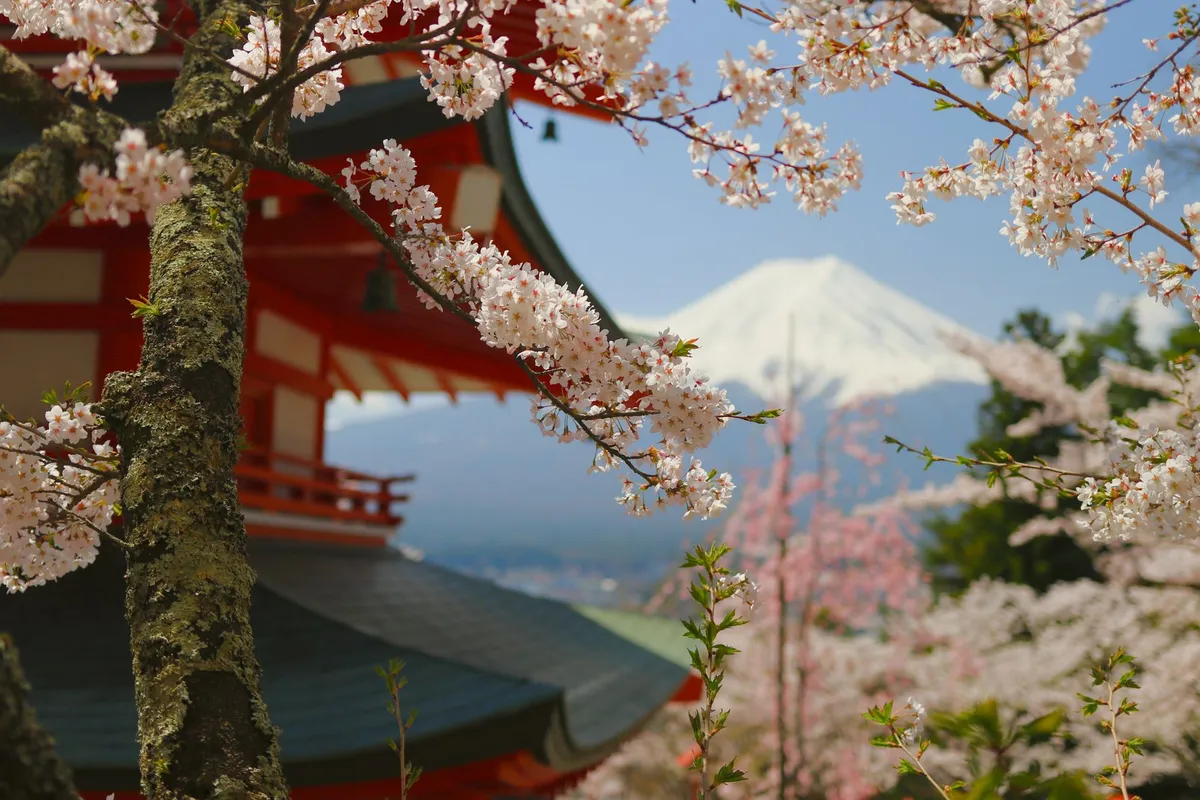
Spring (late March to early April) pairs cherry blossoms with a snow-capped peak — that’s the classic Chureito Pagoda shot. Fall (October–November) brings koyo, the red foliage around the lakes. In winter, snow sharpens the volcano’s silhouette, but the 5th Station road is usually closed from mid-November to April.
For a relaxed day trip, set aside the whole day: leave Tokyo between 6:30 and 7:30 a.m., return between 6 and 7 p.m. If you want to climb Mount Fuji to the summit (only from July to early September), you’ll need at least two days, with an overnight stay in a mountain hut — that’s no longer a day trip.
What to see on a Mount Fuji day trip
One day is short, so pick three stops instead of trying to fit everything in. The most balanced itinerary combines the 5th Station, one of the lakes and a village or viewpoint.
5th Station (Gogome) — Subaru Line
At 2,300 m above sea level, the 5th Station via the Subaru Line route is the highest point reachable without climbing. From here, the view opens up over the Kawaguchiko valley and, on clear days, all the way to the Pacific coast. The site has the Komitake-jinja shrine, souvenir shops, a post office (send a postcard stamped with the Mount Fuji seal) and the start of the Ochudo trail, an easy 30-minute walk along the slope.
From Kawaguchiko, take the Fujikyu bus to the 5th Station (50 min, ~¥1,540 one way). Since 2024, access via the Subaru Line requires an online reservation between July and September, with a ¥2,000 per-person fee — check dates on the official website.
Lake Kawaguchiko
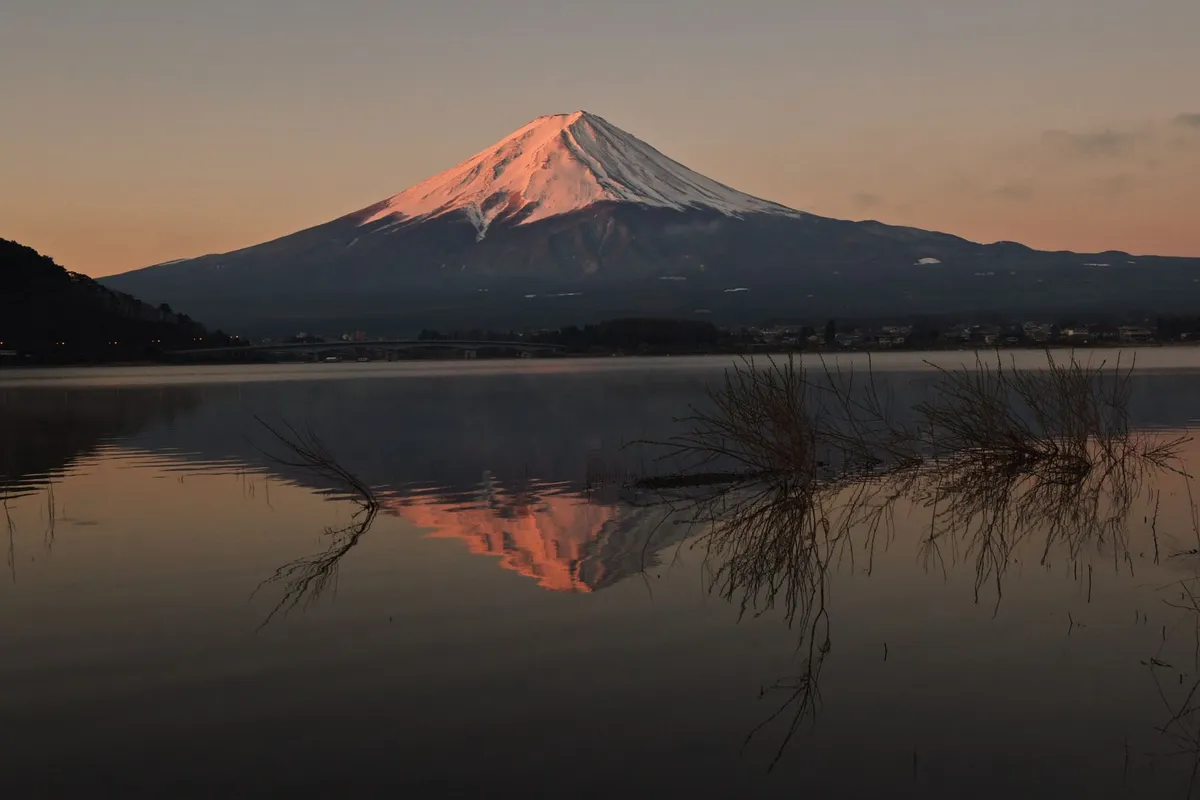
The most touristy of the Fuji Five Lakes, Kawaguchiko offers the most accessible reflection shot. The Music Forest (a garden on the north shore) and Oishi Park (east shore, with lavender in June) are the favorite framings. The itinerary that passes through Asakusa before heading to the region works well for anyone with 2 days in Tokyo.
Chureito Pagoda (Arakura Sengen)
It’s 398 steps up to the viewpoint, but the reward is Japan’s most iconic photo: red pagoda, cherry blossoms (or fall foliage) and Mount Fuji in the background. It’s in the city of Fujiyoshida, a 15-minute train ride from Kawaguchiko Station (Fujikyu line, Shimoyoshida stop). Access is 24 hours, free.
Oshino Hakkai
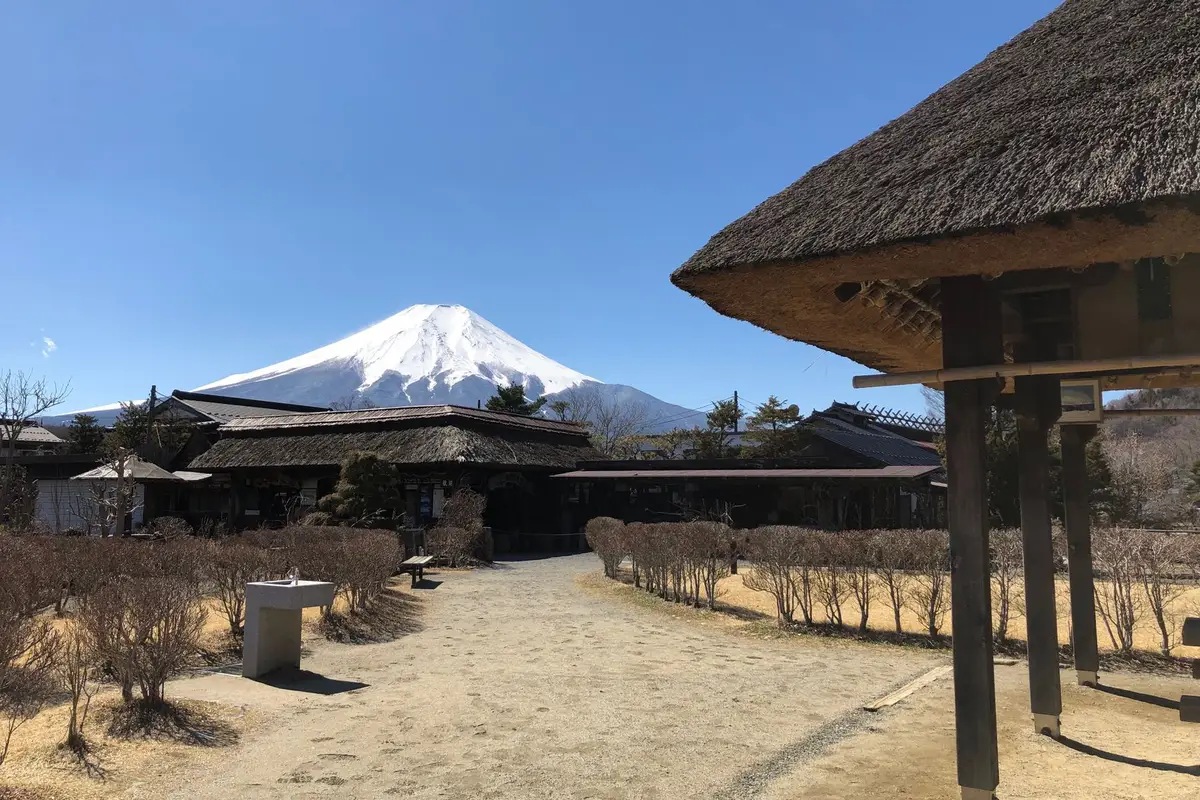
A village with eight springs fed by Mount Fuji’s snowmelt, which filters the water through lava layers for 80 years before it bubbles up crystal clear. The water is so transparent it seems not to exist. Beyond the ponds, the village preserves thatched-roof houses and an open-air museum. From Kawaguchiko, the bus takes about 25 minutes.
What to combine with Mount Fuji
If the day trip is your only stop outside Tokyo, it’s worth extending the experience with a guided tour that includes the 5th Station, Oshino Hakkai and Lake Kawaguchiko on the same day — the guide handles the logistics of local buses, which can be confusing for anyone who doesn’t read Japanese.
The Mount Fuji Tour leaves from Shinjuku with a guide and transport included, and covers the main spots without rushing. For those who want lake and mountain in the same package, the Mount Fuji + Lake Kawaguchiko Tour is another popular option.
 See activities in Tokyo on GetYourGuide ›
If you have more time, you can combine Kawaguchiko with Fushimi Inari in Kyoto on the same Japan trip — the shinkansen links Tokyo to Kyoto in 2h15. Before leaving Tokyo, spend at least a day exploring the itinerary through the capital’s temples, tech and food scene.
Where to eat in the Mount Fuji area
The local specialty is houtou, a wide, flat noodle cooked in miso broth with kabocha squash and vegetables. It’s a hearty dish, ideal for colder days in the lakes region. Most restaurants around Kawaguchiko Station serve houtou for ¥1,100 to ¥1,500 (~US$7–10, Aug/2026).
At the 5th Station, the Fujisan Miharashi restaurant serves houtou with a view — literally. For something faster, the kombini (7-Eleven, Lawson) near Kawaguchiko Station sell onigiri, sandwiches and bento for ¥200–600 (~US$1.30–4).
In Oshino Hakkai, try the soba (buckwheat noodles) made with the spring water. The texture changes when the base is real mineral water, and here the argument isn’t marketing — it’s hydrology.
Where to stay (if you decide to spend the night)
The day trip works well, but staying overnight lets you see the sunrise behind Mount Fuji (the Diamond Fuji) and enjoy an onsen with a view of the volcano — an experience that’s hard to replicate in just one day.
The Kawaguchiko area has the largest supply, from hostels starting at ¥4,000/night (~US$27) to traditional ryokans with kaiseki dinner and private bath for ¥20,000–40,000 (~US$135–270). Fujiyoshida and Yamanakako are cheaper, less crowded alternatives.
Where to stay in Tokyo
| Hotel | Rating | |
|---|---|---|
| GLOU Higashi ShinjukuShinjuku · In Okubo, 1-1-38, Shinjuku-ku | 8,21.567 reviews | See prices |
| Tokyu Stay ShinjukuShinjuku · In Shinjuku, 3-7-1 | 8,71.655 reviews | See prices |
| Shibuya Tokyu REI HotelShibuya · In Shibuya, 1-24-10 | 8,43.747 reviews | See prices |
| Hotel Indigo Tokyo Shibuya by IHGShibuya · In Dogenzaka, 2-25-12, Shibuya-ku | 9,11.718 reviews | See prices |
| Asakusa Tobu HotelAsakusa · In Asakusa, 1-1-15, Taito-ku | 9,17.846 reviews | See prices |
| OTHER SPACE AsakusaAsakusa · In Asakusa, 3-4-10, Taito-ku | 9,02.957 reviews | See prices |
| KOKO HOTEL Ginza-1chomeGinza / Marunouchi · In Ginza, 1-9-5, Chuo-ku | 8,37.219 reviews | See prices |
| Hotel GrandBach Tokyo GinzaGinza / Marunouchi · In Ginza, 5-13-12, Chuo-ku | 8,92.884 reviews | See prices |
| Marunouchi HotelGinza / Marunouchi · In Marunouchi, 1-6-3, Chiyoda-ku | 9,12.107 reviews | See prices |
Booking.com rating on 30/09/2026
Practical tips
Bring a jacket even in summer: the 5th Station sits at 2,300 m and the temperature can be 10°C lower than in Tokyo. Comfortable shoes are enough for the 5th Station and Oshino Hakkai, but a longer trail (like the Ochudo) calls for sneakers with grippy soles.
The Fuji Pass (¥6,600/2 days, Aug/2026) covers unlimited buses in the Kawaguchiko area, the ropeway and the lake boat. If you plan to visit 3+ attractions, it pays off compared to individual tickets. The Mt. Fuji Panoramic Ropeway in Tenjoyama Park costs ¥1,000 round trip and offers a panorama of the lake with Fuji in the background — it works even on cloudy days, as long as it isn’t raining.
Wi-fi is available at Kawaguchiko Station and the 5th Station, but the signal is spotty along the route. If you need an offline map, download the area in Google Maps before leaving Tokyo.
 HotelAs soon as you have datesCompare neighbourhoods and guest ratings.See hotels ↑
- More activitiesTo compareTickets, day trips and tours with flexible cancellation.GetYourGuide ›
Frequently asked questions
How do you get to Mount Fuji from Tokyo?
Mount Fuji is about 120 km from Tokyo. The most common route is the highway bus from the Busta Shinjuku terminal to Kawaguchiko Station, taking about 1h35, for ¥2,000–2,200 (~US$13–14, Aug/2026). Another option is the Fuji Excursion express train, which makes the same trip in 2 hours for ¥4,130 (~US$27).
How much does it cost to go to Mount Fuji from Tokyo?
The minimum cost of a Mount Fuji day trip is around ¥5,000 (~US$33, Aug/2026) per person, considering a round-trip bus (~¥4,000) and one meal (~¥1,200). If you add the ropeway, summer 5th Station entry and souvenirs, you might spend between ¥8,000 and ¥10,000 (~US$53–66).
Can you climb Mount Fuji in one day?
The climb to Mount Fuji’s summit takes 5 to 7 hours up and 3 to 5 hours down, totaling 8 to 12 hours of effort. Although technically possible in one day, most climbers stay overnight at the 7th or 8th station to watch the sunrise from the top. The official climbing season runs from July to early September.
What’s the best time to see Mount Fuji?
Mount Fuji has the best visibility between October and January, when cold, dry air keeps the sky clear more often. Spring (late March to April) pairs cherry blossoms with snow on the peak, and fall (October–November) brings red foliage. In summer, clouds usually cover the summit from mid-afternoon onward.
Do you need a visa to visit Mount Fuji?
Brazilians don’t need a visa to visit Japan for stays of up to 90 days for tourism. The passport must be valid for the entire stay. At immigration, you need to present a return ticket and proof of accommodation.
Conclusion
Mount Fuji is more accessible than it seems — a full day is enough to reach the 5th Station, wander around Kawaguchiko and get back to Tokyo without rushing. With buses starting at ¥2,000 and meals for just a bit more, it’s one of the best value-for-impact day trips in Japan. For more practical itineraries across Asia and the world, keep following Voyage Voyage.