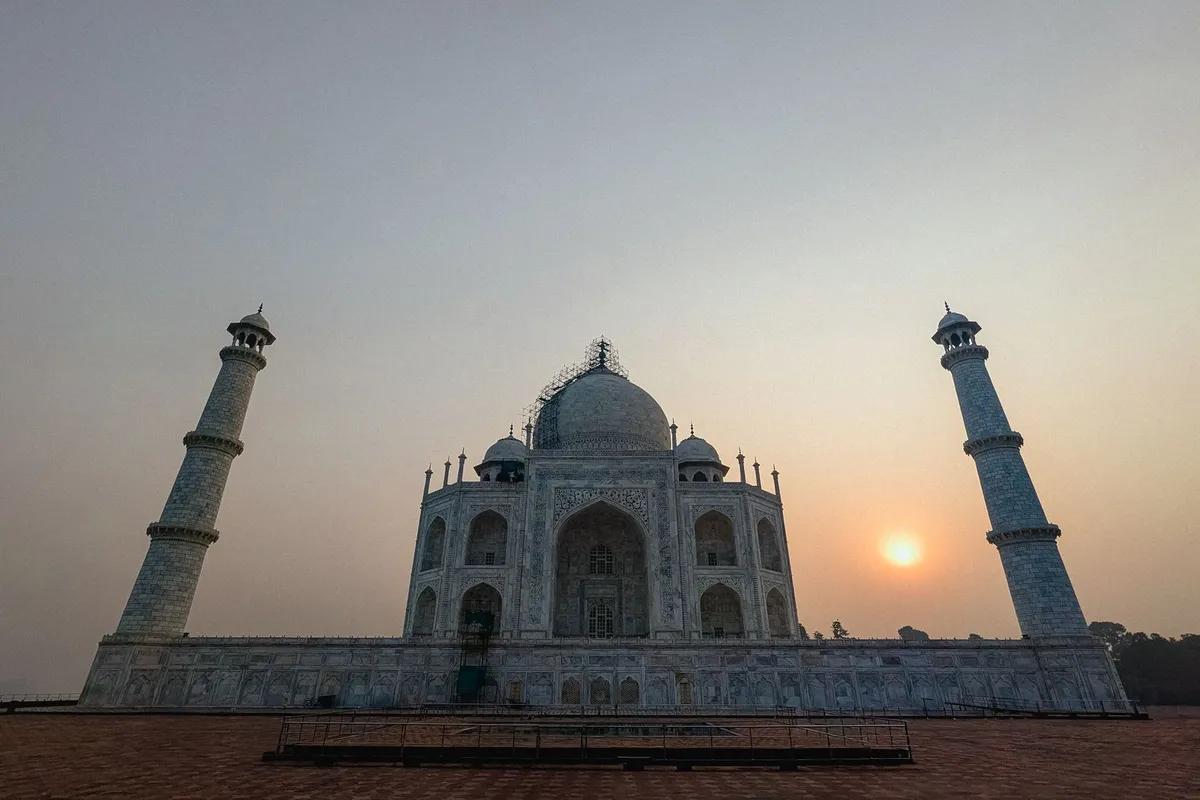
The Taj Mahal, best time for photos: sunrise, between 5:45 AM and 6:45 AM depending on the season, is the most recommended. The light is golden and soft, the marble takes on a rosy hue, and the gates open 30 minutes before dawn, still without the crowds. Sunset is the second-best option.
Anyone who has visited Agra knows: the difference between arriving at 6 AM and arriving at noon isn’t just about the light. It’s the difference between a photo with the Taj Mahal practically empty in front of you and a photo crowded with tourists and guides holding up little flags. This guide details the right time, the real costs, the entry gates, and the rules that can make or break your photo session — if you’re still putting together your full itinerary, also check out the complete Taj Mahal guide, with history, tickets, and what else to see in Agra.
| Price | foreigners: around Rs 1,100 to Rs 1,300 (~$13 to $15 USD), plus Rs 200 to enter the main mausoleum (Aug 2026) — check the official website |
|---|---|
| Free? | children up to 15 enter for free |
| Hours | opens 30 min before sunrise and closes 30 min before sunset, every day except Friday (Aug 2026) |
| Line / time | separate lines for foreigners and locals; allow 2-3 hours to photograph at a relaxed pace |
| Getting there | taxi or tuk-tuk to the East or West Gate; passport required at the entrance |
| Address | Dharmapuri, Forest Colony, Agra, Uttar Pradesh, India |
How much does it cost to enter and what are the opening hours?
Entry costs between Rs 1,100 and Rs 1,300 for foreigners (~$13 to $15 USD, Aug 2026), plus Rs 200 to access the main mausoleum. Opening hours run from sunrise to sunset, every day except Friday, when the Taj Mahal is closed to general visitation.
Buy your ticket online on the official website to save Rs 50 and skip the physical ticket booth line — essential for anyone who wants to get in as soon as the gates open.
How to arrive early and which gate to enter (East or West)?
The East Gate, near the Taj Nature Walk and the town of Fatehabad, usually has a shorter line and is the most recommended choice for those arriving in the dark, still before dawn. The West Gate is closer to the Agra Cantt area, but it gets more people — including tour groups arriving by bus.
Arrive at least 45 minutes before opening. The gates open 30 minutes before sunrise, and the security line (with X-ray and bag check) takes time. A taxi or tuk-tuk booked the night before saves you from haggling over a fare at 5 AM.
Bring your physical passport — it’s required at the entrance for foreigners, and there’s no accepted digital alternative at the gates. Without it, you’ll be denied entry even with a purchased ticket.
Best season and how much time to set aside for photos?
According to the official Wikipedia entry on the Taj Mahal, the haze and dust of the dry season in northern India tend to be more intense between April and June. October through February is the most recommended window: clear skies, mild temperatures, and more predictable light. March also works well, still with good visibility before the extreme heat of April to June, when fog and air pollution often hurt the contrast in photos.
Set aside 2 to 3 hours inside the complex if your goal is to photograph at a relaxed pace: walk the gardens, test different angles on the marble platform, and still visit the side mosque and the Jawab (the mirror building on the other side).
Sunrise or sunset: which is more worth it for photos?
Sunrise wins in most comparisons: soft light, fewer people, and the white marble takes on a pinkish tone in the first minutes after the gates open. It’s also the coolest time of day in Agra, which helps anyone facing long walks with camera gear.
Sunset has one specific advantage: the light comes from the west and hits the monument’s front facade directly, creating a golden-orange effect as the sun sets behind the dome. Those who want the front view without dealing with backlighting prefer this time — but they’ll find more visitors, since that’s when full-day tour groups gather before closing.
If you can only pick one time, sunrise has less competition and more even light — the safest choice for non-professional photographers.
| Time | Crowds | Light | Best for |
|---|---|---|---|
| Sunrise | low | golden and soft | first visit, tranquility |
| Sunset | high | frontal, orange | front view without backlight |
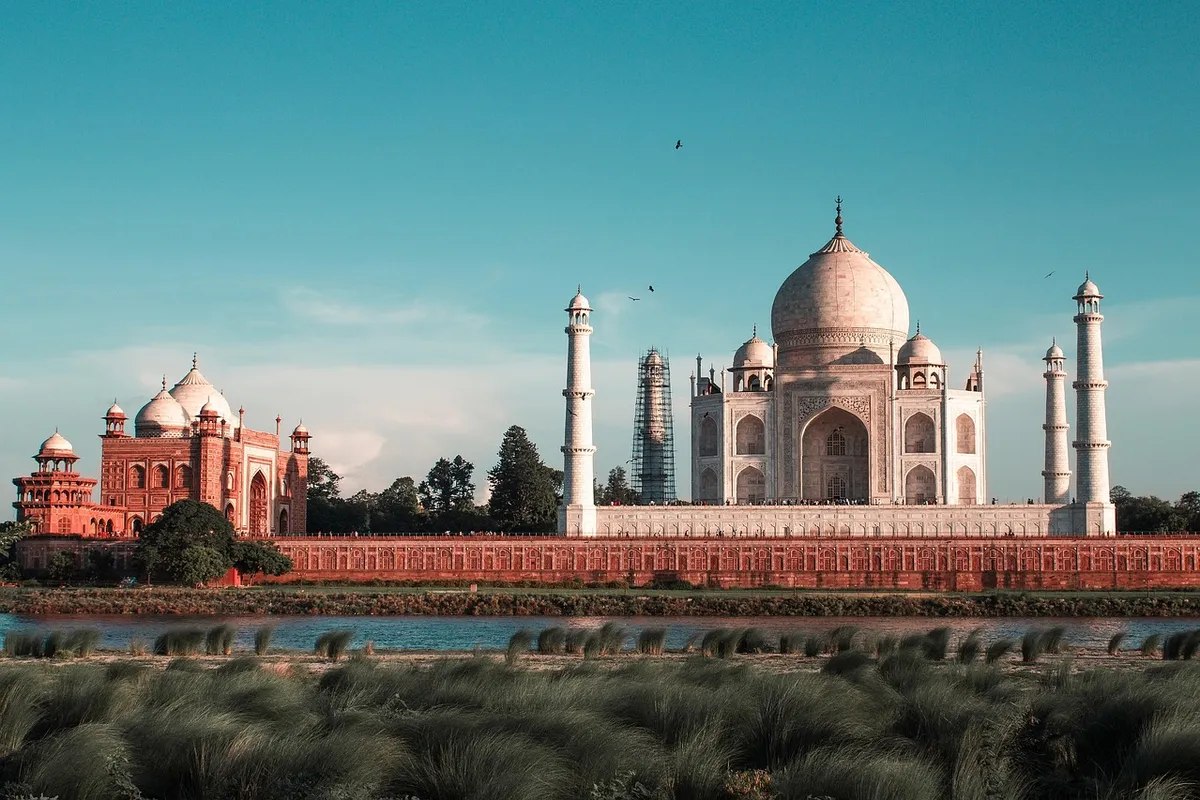
| Mehtab Bagh at dusk | low | frontal, from across the river | iconic shot without crowds |
What to pair with your Taj Mahal visit?
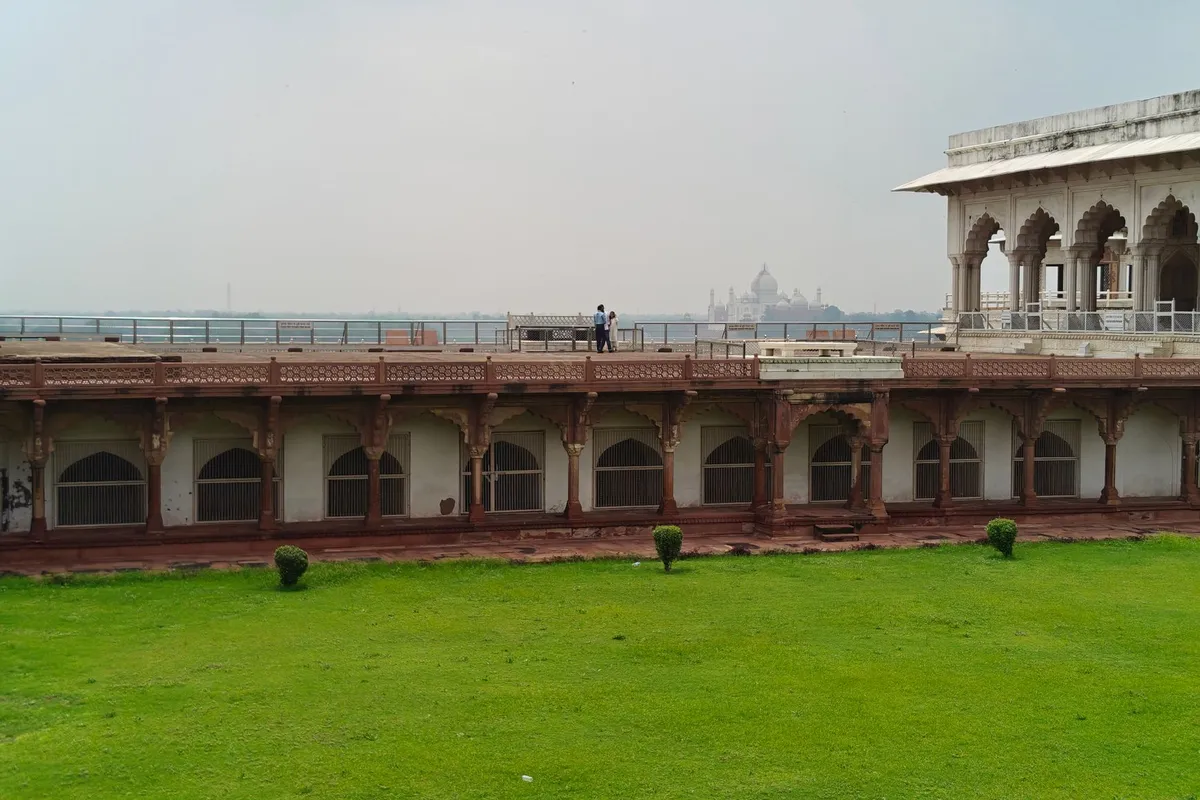
Agra Fort, about a 20-minute drive away, is the most natural complement: from there you can spot the Taj Mahal in the distance, and the visit usually doesn’t exceed 1.5 hours. If your trip includes other ancient wonders, it’s worth comparing the logistics with those of Machu Picchu in Peru — another monument that also rewards early risers. Mehtab Bagh — the “Moonlight Garden” across the Yamuna River — offers the complete frontal view of the monument without entering the main complex, and is another sunrise or sunset option for those who already shot from inside the day before.
To simplify the dawn logistics, many travelers prefer to book an early-morning guided tour of the Taj Mahal, which already includes transportation and avoids haggling with tuk-tuk drivers in the dark.
Where to eat near the Taj Mahal?
Sadar Bazaar concentrates the highest-rated restaurants near the complex, with affordable Mughlai and vegetarian options. After your sunrise photo session, a nearby breakfast will give you energy for the rest of the outing without having to head back to the hotel.
Where to stay in Agra for sunrise photography?
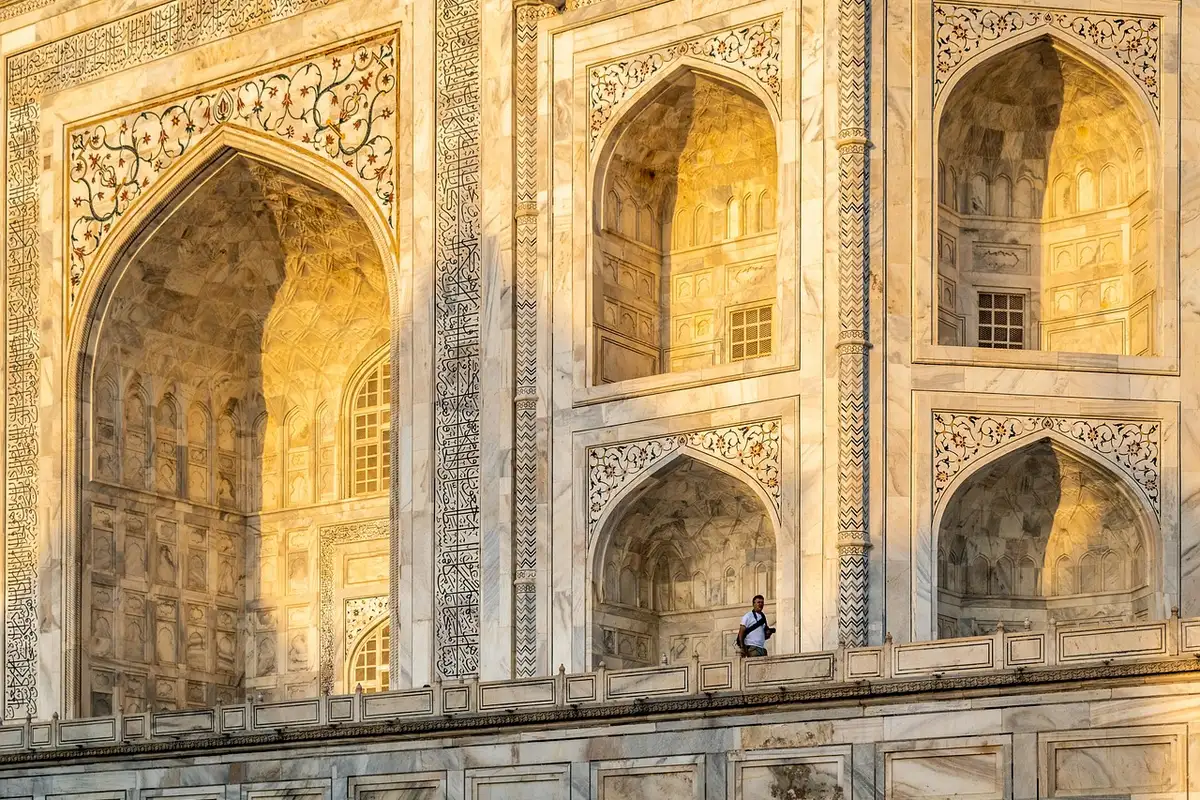
Accommodations in the Taj Ganj area, less than a 10-minute walk from the East or South Gate, eliminate the dark car ride and let you walk to the gates in the early hours. For those prioritizing comfort, hotels near the West Gate also work, but they require transportation booked in advance for sunrise time.
Staying in Taj Ganj is what separates those who arrive relaxed at the gates at 5:45 a.m. from those still stuck in traffic when the sun comes up.
Practical tips for photographing the Taj Mahal
Just like other destinations that require careful documentation and visa preparation, it’s worth planning ahead — check what to verify before traveling in our guide to visas and travel insurance. Tripods are prohibited inside the complex and also at Mehtab Bagh — security enforces this rule strictly, and equipment can be confiscated or incur a “professional” fee. The alternative is burst mode on your camera or resting the device on your bag or the ground to stabilize the shot.
The total cost of a morning of photography runs around R$ 90 to R$ 130 per person (Aug 2026): foreigner ticket (~R$ 65-78) plus the mausoleum entry fee (~R$ 12) and round-trip transport from your hotel.
Gotchas and what nobody tells you
Larger video cameras, tripods, big power banks, food, and even pens can be refused at the security check — bring only the essentials. Inside the main mausoleum, photography is prohibited; the iconic shots are taken from outside, on the marble platform and in the gardens. And the Taj Mahal is closed to general visitation on Fridays, as the complex’s mosque remains in use for prayers — those who plan an itinerary without checking this risk arriving for nothing.
Frequently asked questions
Is the Taj Mahal closed on any day of the week?
Yes, the Taj Mahal is closed to general visitation on Fridays because the complex’s mosque remains open for prayers. On other days, it operates from sunrise to sunset.
What’s the best month of the year to photograph the Taj Mahal?
October, November, December, January, February, and March offer the best combination of clear skies, mild temperatures, and good visibility for photos, without the haze and extreme heat of the Indian summer.
Can you photograph the Taj Mahal from outside without paying admission?
Partially: Mehtab Bagh, across the Yamuna River, has its own ticket that’s much cheaper than the main complex and offers the complete frontal view of the monument, but it doesn’t replace the experience of entering the gardens and the marble platform.
Can you bring your phone and take photos inside the mausoleum?
You can bring your phone into the complex, but photographing inside the main mausoleum — where the tombs are — is prohibited. Allowed photos are taken from outside, in the gardens and on the platform.
What is Mehtab Bagh and is it worth it for photos?
Mehtab Bagh is a historic garden across the Yamuna River, facing the Taj Mahal, and it’s worth it for those seeking the symmetrical, frontal shot of the monument without the crowds of the main complex, especially at sunset.
Conclusion
The best time to photograph the Taj Mahal is still at sunrise: soft light, a less crowded complex, and marble glowing in golden tones that fade after 8 a.m. Arrive early through the East Gate, leave your tripod at the hotel, and keep Mehtab Bagh as your backup plan for a crowd-free front shot. For more India itineraries and travel tips, you’ll find them right here on Voyage Voyage.