 Marcelo Oliveira
Jaipur, the Pink City: that nickname sums up the capital of Rajasthan, India, where centuries-old forts, storybook palaces, and chaotic bazaars coexist in a city of 3 million people where everything — from facades to fences — carries shades of terracotta pink. The nickname was born in 1876, when Maharaja Ram Singh II ordered the entire city center painted to welcome the Prince of Wales, and the tradition became municipal law.
Hotels in Jaipurfree cancellation options onlySee hotels ›Booking.com partner (advertising): we may earn a commission at no extra cost to you.
Jaipur is the gateway to the Golden Triangle (Delhi–Agra–Jaipur), India’s most popular itinerary: you can fit all three cities into 5 to 7 days, with 4- to 6-hour train rides between them. Americans need a visa for India — the e-Visa costs around US$25 (Jul 2025) and is approved within 72 hours.
How to get to Jaipur
Jaipur International Airport (JAI) receives direct flights from Delhi (50 min), Mumbai (2 hrs), and Bangalore. Coming from the US, the most common route goes through Delhi with a connection in Doha, Dubai, or Istanbul — the US–Delhi leg takes 14 to 18 hours depending on the layover.
From Delhi, the Shatabdi Express train makes the trip in 4 hrs 30 min with air conditioning and a meal included (from ₹800, about US$9, Jul 2025). Another option is hiring a car with a driver — common in India and surprisingly cheap (₹3,000–4,000 per day, ~US$35–47, Jul 2025). From Jaipur’s airport to the city center, a prepaid taxi costs about ₹400 (~US$5, Jul 2025) for the 13 km to the Hawa Mahal area.
Best time to visit and how many days to stay
The best time to visit Jaipur is from October to March, when temperatures range between 8 °C and 27 °C (46–80 °F) and it barely rains. From April to June the thermometer climbs past 45 °C (113 °F) — walking around becomes torture. The monsoon (July–September) brings heavy rain but prices up to 40% lower; if you don’t mind afternoon downpours, it’s a budget-friendly window.
Set aside at least 2 full days for Jaipur: one for the forts (Amber + Nahargarh + Jaigarh) and another for the historic center (Hawa Mahal, City Palace, Jantar Mantar). With 3 days, you can fit in the bazaars at a relaxed pace plus a sunrise hot air balloon ride.
What to see in the Pink City
Jaipur packs in six heritage attractions you can visit on foot or by tuk-tuk. The ideal plan is to start early at the forts — where the heat and crowds build fast — and save the historic center for the afternoon.
Amber Fort (Amer Fort)
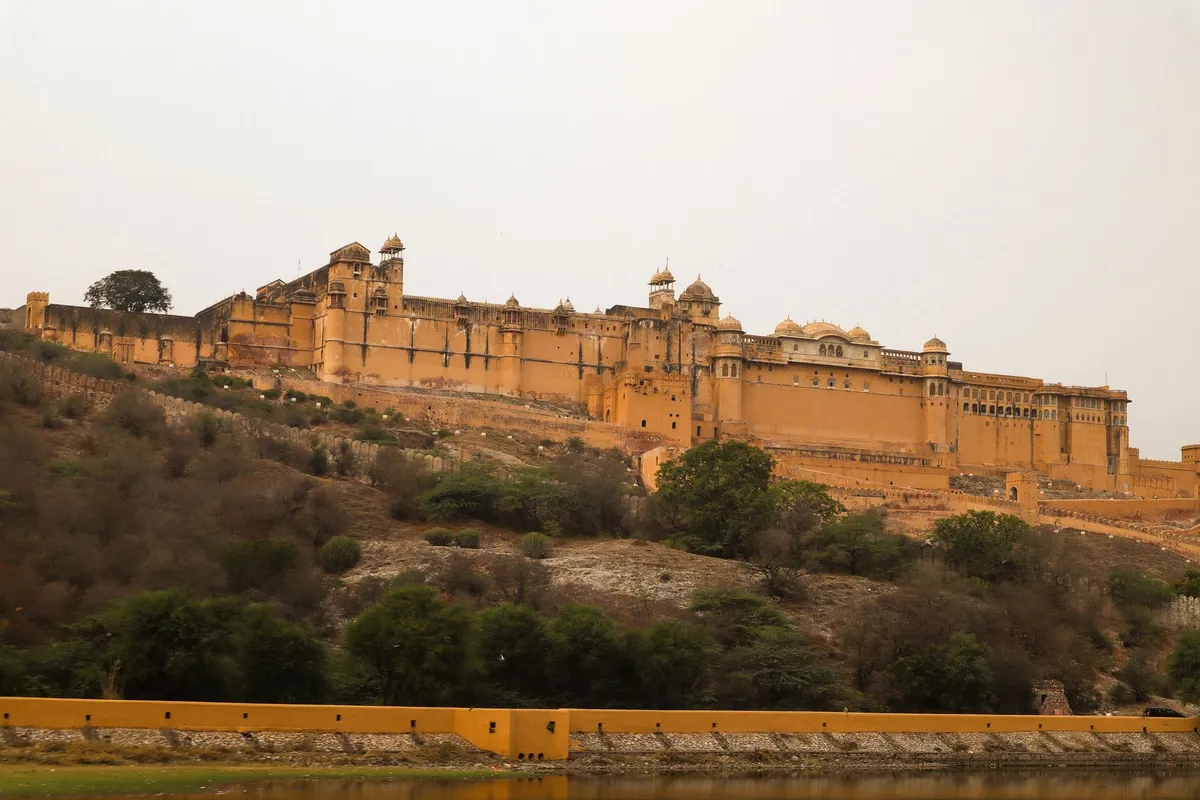
Located 11 km from the center, Amber Fort is Jaipur’s number one attraction. Built in 1592 from red sandstone and marble, the complex has four courtyards, the Hall of Mirrors (Sheesh Mahal) — where candles create the effect of thousands of stars — and views over Maota Lake. Admission costs ₹500 for foreigners (~US$6, Jul 2025) and the fort is open from 8 am to 5:30 pm. Book the guided Amber Fort tour with transport so you don’t waste time haggling over a tuk-tuk.
Hawa Mahal (Palace of Winds)
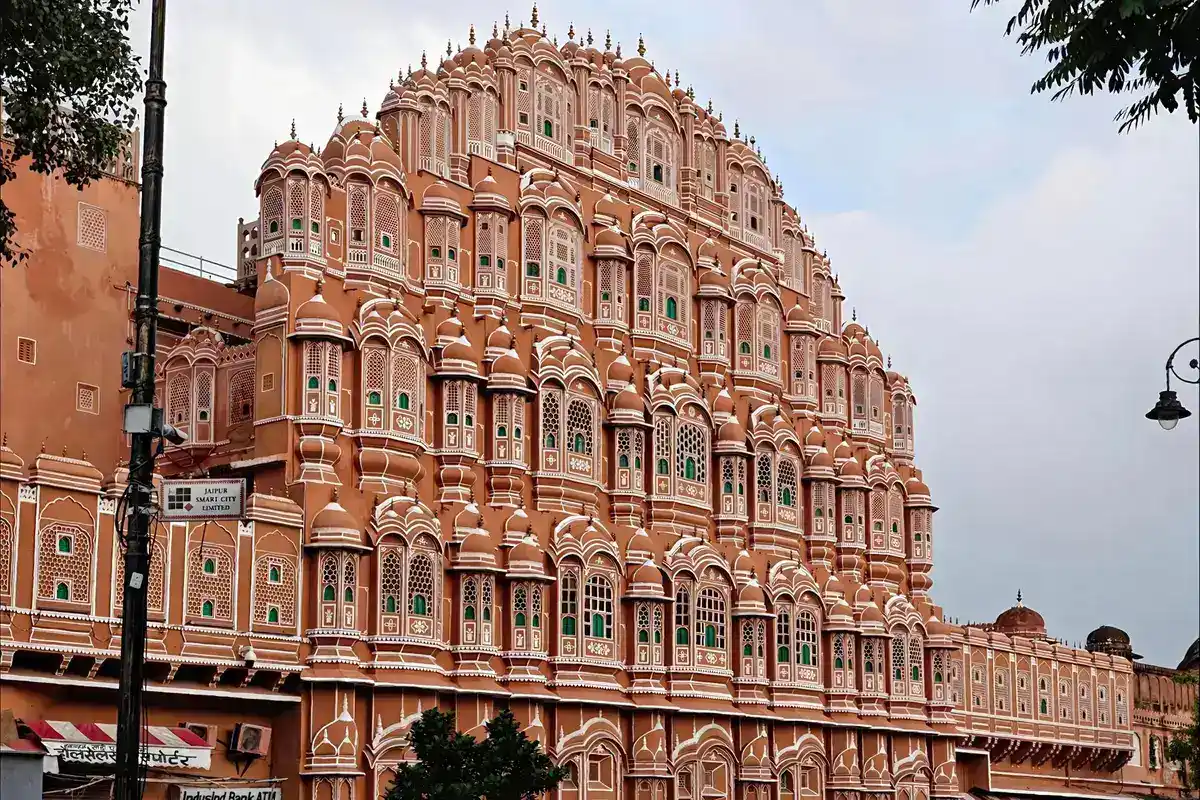
The facade with its 953 tiny windows was designed in 1799 so the royal women could watch the street without being seen. Viewing it from outside is free; inside, admission costs ₹200 (~US$2.50, Jul 2025). The best photo angle is from the sidewalk across the street, early in the morning, when the light hits the pink facade head-on.
City Palace
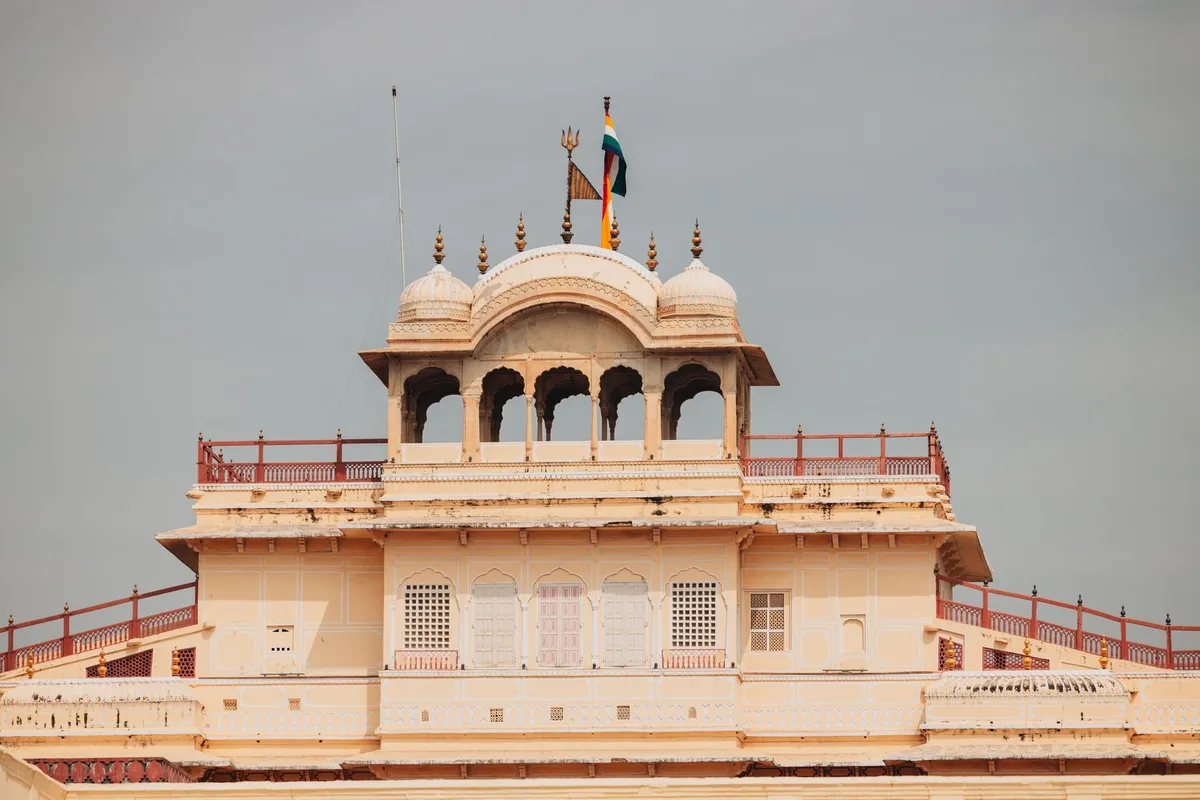
Still partially inhabited by the royal family, the City Palace blends Rajput and Mughal architecture. The standard ticket (₹500, ~US$6) gives access to the museum, the Pritam Niwas courtyard, and the two enormous Gangajali silver urns — the largest silver objects in the world, according to Guinness. The Chandra Mahal wing requires a separate ticket (₹2,500, Jul 2025) and a mandatory guide.
Jantar Mantar
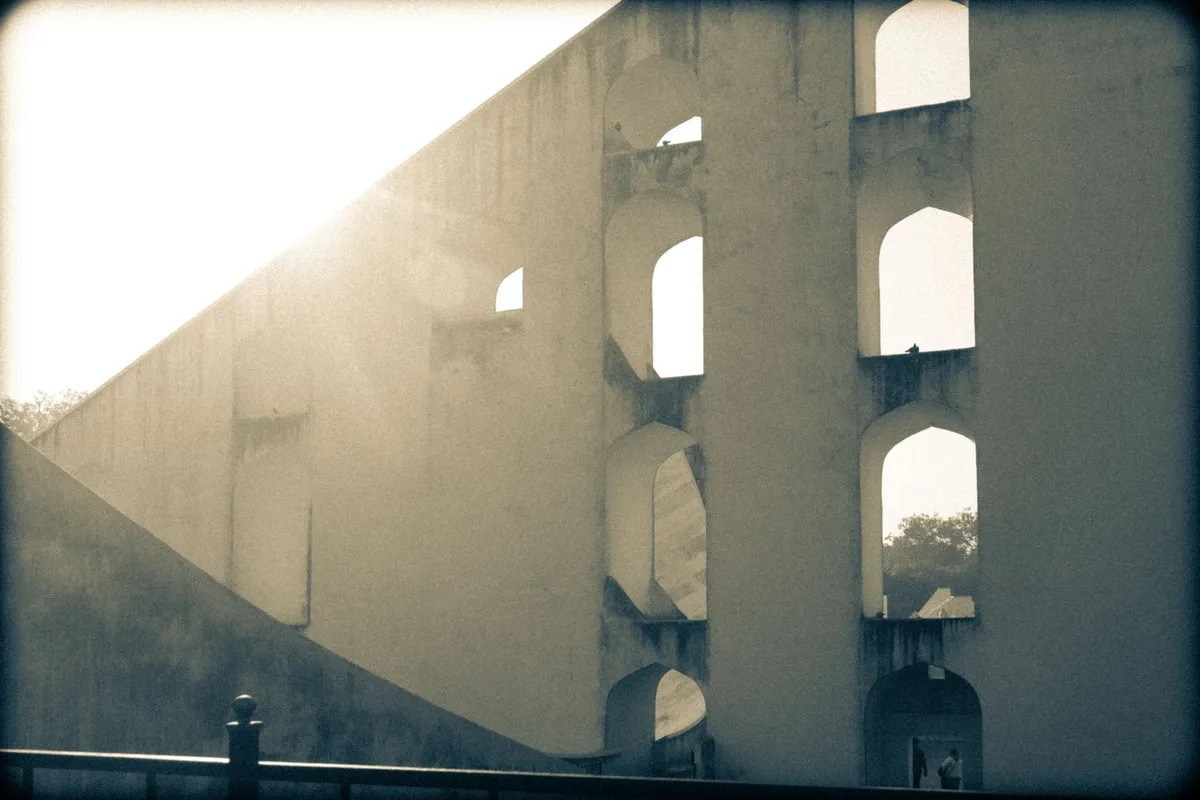
A UNESCO World Heritage Site, this open-air observatory was built in 1734 by Maharaja Jai Singh II. The Samrat Yantra, the largest stone sundial on the planet (27 m tall), tells time with an accuracy of 2 seconds — the complex has been a UNESCO World Heritage Site since 2010. Admission: ₹200 (~US$2.50, Jul 2025). It sits right next to the City Palace — visit both back to back.
Nahargarh and Jaigarh
The Nahargarh (on the crest of the Aravalli hills) and Jaigarh (home to the world’s largest wheeled cannon, the Jaivana) forts complete the fort circuit. Nahargarh has the best sunset in the city: bring snacks and water, because the café at the top charges a premium. A combined ticket for both costs ₹300 (~US$3.50, Jul 2025).
What to combine with Jaipur
Jaipur is part of the Golden Triangle, India’s most classic tourist route. From Jaipur to Agra (home of the Taj Mahal) it’s 240 km — 4 hours by car or 3 hrs 40 min by train. From Agra to Delhi, another 230 km. The full circuit works well in 5 to 7 days. If you’re continuing on through Asia, it’s worth pairing India with a stop in Tokyo or Singapore — many airlines offer a free stopover in Dubai or Doha along the way.
Those with more time can continue to Udaipur (the “Venice of India,” 6 hrs by car) or Jodhpur (the “Blue City,” 5 hrs). The Chetak Express train connects Jaipur to Udaipur in 7 hrs with air conditioning and tickets from ₹500 (~US$6, Jul 2025), one of the most scenic train rides in Rajasthan.
 Partner · Civitatissee all activities in Jaipur ›
- Evening Walking Tour of JaipurRating 5.5 · 4 reviews on Civitatisfrom€7.33per personSee ›
- Photography Walking Tour of JaipurRating 7 · 6 reviews on Civitatisfrom€7.33per personSee ›
- Pub Crawl of Jaipurfrom€13.74per personSee ›
- Food Tour of JaipurRating 9 · 2 reviews on Civitatisfrom€10.99per personSee ›
Civitatis prices on 28/09/2026, from, per person. They may change.
Where to eat in Jaipur
Rajasthani cuisine is rich in spices and almost entirely beef-free — the state is predominantly vegetarian. The signature dish is dal baati churma: lentils with charcoal-baked wheat balls and sweet flour. Laal maas (lamb in red chili sauce) is the most famous meat option.
In the Johari Bazaar area, stalls serve kachori (fried pastry stuffed with lentils) for ₹20–30 (~US$0.35, Jul 2025). LMB (Laxmi Misthan Bhandar), operating since 1727, is a must-stop for the full Rajasthani thali (₹400–600, ~US$5–7, Jul 2025). For rooftops with Hawa Mahal views, Wind View Café and Tattoo Café are the most sought-after — book at night because they fill up.
Where to stay in Jaipur
The best area to stay is the Pink City (the walled center), where Hawa Mahal, City Palace, and Jantar Mantar are all within walking distance. Highly rated hostels start at ₹500/night (~US$6, Jul 2025); heritage hotels — converted old havelis — run ₹2,000–5,000 (~US$24–60, Jul 2025) and are worth it for the architecture.
For those seeking luxury, Jaipur has some of India’s most spectacular palace-hotels: the Rambagh Palace (former maharaja’s residence, rooms from US$400, Jul 2025) and the Jai Mahal Palace, both operated by Taj Hotels. On the budget end, the MI Road neighborhood is packed with hostels, restaurants, and travel agencies.
 See hotels in Jaipur on Booking ›
Practical tips for Jaipur
Visa: US citizens need an Indian e-Visa (from US$25, Jul 2025), available on the official site indianvisaonline.gov.in. It’s approved within 72 hours. Don’t confuse it with intermediary sites that charge triple.
Local transport: Uber and Ola work in Jaipur and are the safest way to get around. Tuk-tuks are cheaper (₹100–200 per ride, Jul 2025), but negotiate the price BEFORE getting in. Renting a motorcycle/scooter (~₹300/day, Jul 2025) is an option for those experienced with chaotic traffic.
Haggling: in the bazaars (Johari, Bapu, Tripolia), the first price is usually 3 to 5 times the real one. Start by offering 30% of what they ask. Jaipur is known for gemstones, block print fabrics, and juttis shoes — the bazaars close around 8 pm.
Health: drink only sealed bottled water, avoid ice from street stalls, and bring strong repellent (mosquitoes carry dengue during the monsoon). Travel insurance with coverage for India is essential.
- HotelAs soon as you have datesCompare neighbourhoods and guest ratings.See hotels ↑
- ActivitiesBefore you travelBook ahead the ones with limited spots.Civitatis ›
Frequently asked questions
Why is Jaipur called the Pink City?
Jaipur earned the Pink City nickname in 1876, when Maharaja Ram Singh II ordered all the facades in the center painted terracotta pink to welcome the Prince of Wales, Albert Edward. The tradition became municipal law and is maintained to this day — any renovation in the historic center must respect the original color.
How many days do you need to see Jaipur?
Jaipur requires at least 2 full days: one for the fort circuit (Amber, Nahargarh, Jaigarh) and another for the historic center (Hawa Mahal, City Palace, Jantar Mantar, bazaars). With 3 days, you’ll have time for a hot air balloon ride and shopping in the bazaars without rushing.
Is Jaipur safe for tourists?
Jaipur is considered one of the safest cities in India for tourists, including women traveling solo. The precautions are the same as in any large Asian city: avoid carrying large amounts of visible cash, use ride-hailing apps at night, and keep digital copies of your documents. Common scams include jewelers who “guarantee” resale back home and drivers who detour to partner shops.
What’s the best time to visit Jaipur?
The best time to visit Jaipur is from October to March, when temperatures range between 8 °C and 27 °C (46–80 °F). January is the coldest month (lows of 5 °C/41 °F). From April to June, the heat exceeds 45 °C (113 °F) and makes outdoor sightseeing grueling. The monsoon (July–September) brings rain, but also accommodation prices up to 40% lower.
Do US citizens need a visa for India?
US citizens need a visa to enter India, but the process is simple: the tourist e-Visa costs from US$25 (Jul 2025), is requested through the official site indianvisaonline.gov.in, and is approved within 72 hours. The electronic visa is valid for stays of up to 30 days (e-Tourist Visa) or multiple entries over 1 to 5 years, depending on the category chosen.
Conclusion
Jaipur delivers an accessible India for first-time visitors: grand forts, food with personality, quality crafts, and prices that make Thailand look expensive. Two days are enough for the essentials, but three let you enjoy the bazaars and the sunset at Nahargarh without watching the clock. Plan your trip with Voyage Voyage and combine Jaipur with Agra and Delhi on the Golden Triangle to make the most of your e-Visa.