 Marcelo Oliveira
If you want to understand how the Subte in Buenos Aires works, the short answer is: simple, cheap, and fast. With a SUBE card in hand, you use the Subte, buses, and trains with a single rechargeable pass — and the Subte fare costs ARS 1,684 with a registered SUBE (Aug/2026). In this guide you’ll learn to use the system without a hitch, from buying the card to the lines that take you to the top attractions.
Hotels in Buenos Airesfree cancellation options onlySee hotels ›Booking.com partner (advertising): we may earn a commission at no extra cost to you.
The Subte has 6 lines (A, B, C, D, E, H), runs from 5am to 11pm, and covers the main tourist neighborhoods — Palermo, Recoleta, San Telmo, and the Centro. Combined with Uber and the colectivo (bus), you can get around Buenos Aires without needing a car.
| Subte fare | ARS 1,684 with registered SUBE / ARS 2,526 unregistered (Aug/2026) — official SUBE website |
|---|---|
| Colectivo (bus) | From ARS 852.90 with registered SUBE (Aug/2026) |
| Subte hours | Mon–Sat: 5am–11pm / Sun and holidays: 8am–10pm |
| Lines | 6 lines (A, B, C, D, E, H) + Premetro |
| Where to buy SUBE | Kiosks, metro/train stations, Mercado Pago |
| Uber available? | Yes, it works normally in Buenos Aires |
How does the Buenos Aires Subte work?
The Subte is easy to use: you tap your SUBE card on the turnstile, the fare is debited automatically, and the gate opens. There are 6 lines identified by letters and colors, which cross at transfer stations in the city center.
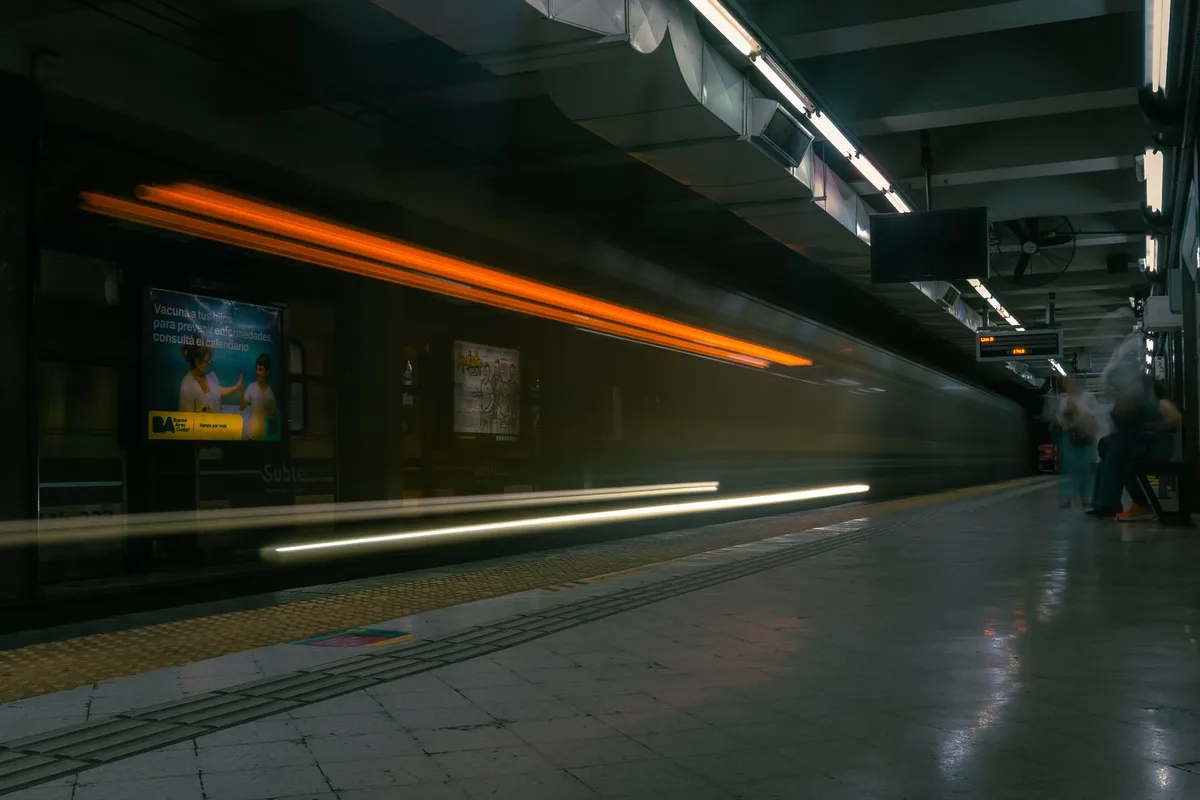
Lines A through E run west to east (or northwest to southeast), departing from terminal stations in the neighborhoods and converging on the central area. Line H is the exception: it cuts across the city north to south, connecting the other lines without having to pass through the center. The main transfers are at Lima/Avenida de Mayo (A-C), Diagonal Norte/Carlos Pellegrini/9 de Julio (B-C-D), and Independencia (C-E) stations.
The Subte is the oldest metro in Latin America — Line A opened in 1913 and still keeps stations with original tiles, an almost museum-like experience. Trains run every 3 to 5 minutes during peak hours and up to 8 minutes off-peak.
Where to stay in Buenos Aires
| Hotel | Rating | |
|---|---|---|
| Hilton Buenos AiresPuerto Madero · On the docks, within walking distance of Madero Tango and Puente de la Mujer | 9,11.699 reviews | See prices |
| Pleno MaderoPuerto Madero · Puerto Madero at a mid-range price, walk back from the docks | 9,0904 reviews | See prices |
| Almarena Madero Urbano, Affiliated by MeliáPuerto Madero · The best-value option with a high rating in Puerto Madero | 8,41.242 reviews | See prices |
| L'Adresse Hôtel BoutiqueSan Telmo · Boutique hotel in San Telmo, near La Ventana and El Querandí | 8,91.029 reviews | See prices |
| Patios de San TelmoSan Telmo · Historic mansion in the tango-house neighbourhood | 8,31.595 reviews | See prices |
| Hotel DolmenCity centre · In the centre, close to the Obelisco and Tango Porteño | 8,61.748 reviews | See prices |
| Hotel Intersur RecoletaRecoleta · Quiet Recoleta, a good base for families | 8,7981 reviews | See prices |
| Up Barrio NorteRecoleta · Good price between Recoleta and Palermo | 8,43.076 reviews | See prices |
| Dazzler by Wyndham PoloPalermo · Palermo, for bars and restaurants | 8,91.730 reviews | See prices |
| Palermo BridgePalermo · Palermo with mid-range prices and lots of reviews | 8,63.135 reviews | See prices |
Booking.com rating on 30/09/2026
Where to buy and top up the SUBE card?
The SUBE card is mandatory to use any public transport in Buenos Aires — Subte, colectivo (bus), and train. There’s no option to pay cash at the turnstile.
You buy the SUBE at street kiosks (look for the “SUBE” sticker in the window), at ticket offices in metro and train stations, or through the Mercado Pago app (digital version on your phone). The physical card costs approximately ARS 3,000 (Aug/2026). Top-ups are made at the same points of sale, at automatic terminals inside the stations, or through the SUBE and Mercado Pago apps.
Register your SUBE on the official website or in the app — the fare with a registered card is 33% cheaper than unregistered. The process takes 5 minutes and only requires an email. For tourists, the digital SUBE through Mercado Pago is the most practical option: you top up through the app and pay with an international credit card.
How much does the Subte fare cost?
The Subte fare costs ARS 1,684 per trip with a registered SUBE and ARS 2,526 unregistered (Aug/2026, according to Infobae). The price is fixed regardless of distance — one station or ten, the price is the same.
| Transport | Registered SUBE | Unregistered SUBE | Best for |
|---|---|---|---|
| Subte (metro) | ARS 1,684 (Aug/2026) | ARS 2,526 | Centro, Palermo, Recoleta |
| Colectivo (bus) | ARS 852–1,093 (Aug/2026) | ARS 1,356–1,739 | Neighborhoods without a metro, La Boca |
| Uber | ARS 3,000–8,000 per short ride | Night, rain, luggage | |
| Taxi | ARS 4,000–10,000 (flag drop + km) | Trust, no app | |
Those who use the Subte more than 20 times a month get a progressive discount: from the 21st trip the price drops, reaching ARS 1,010 on the 41st trip (Aug/2026). For a tourist on a 5- to 7-day trip, the practical math is simple: load ARS 20,000–30,000 onto your SUBE and use it without worrying.
Which Subte lines to use for the top attractions?
The most useful lines for tourists are C, D, and H. With these three you reach most points of interest without needing an Uber or taxi.
Line C (blue) is the backbone: it connects Retiro (bus and train terminal) to Constitución, passing Avenida 9 de Julio and the Obelisco (Lavalle station). It’s the transfer line — it crosses all the others.
Line D (green) takes you to Palermo: Palermo station for Palermo Soho/Hollywood, Plaza Italia for the Botanical Garden and the Zoo, Bulnes or Scalabrini Ortiz for the best parrillas and empanadas in Buenos Aires.
Line A (light blue) goes to Plaza de Mayo (Casa Rosada) and the Congress. It’s the historic line, with cars that are worth the ride on their own.
Line H (yellow) crosses north to south: useful for going from Recoleta (Las Heras station) to San Telmo (San José station) without changing lines.
For La Boca and Caminito, the Subte doesn’t reach — the closest station is Constitución (Line C), where you catch the colectivo 29 or 64 (10 minutes) or a short Uber. Puerto Madero is also a 10-minute walk from L.N. Alem station (Line B).
 Partner · Civitatissee all activities in Buenos Aires ›
Polo Match in Buenos Aires with a Local Guide
- Mendoza Wine Tasting ExperienceRating 8.7 · 15 reviews on Civitatisfrom€43.91per personSee ›
- Alijibe Tango ShowRating 9.5 · 15 reviews on Civitatisfrom€57.09per personSee ›
- See ›Buenos Aires Free Walking TourRating 8.1 · 112 reviews on Civitatis
- Fileteado Porteño: Buenos Aires Folk Art WorkshopRating 8 · 4 reviews on Civitatisfrom€45.67per personSee ›
Civitatis prices on 28/09/2026, from, per person. They may change. Want to compare? Activities in Buenos Aires on GetYourGuide ›
Uber, taxi, or colectivo: when to use each?
Uber works normally in Buenos Aires and is the most convenient option when the Subte doesn’t cover your route or when you have luggage, it’s night, or it’s raining. The app works with an international credit card — no SUBE or cash needed.
The taxi is safe and regulated (black with a yellow roof). Use the meter — if the driver says it’s broken, switch taxis. It accepts cash in pesos; some accept cards. Short rides cost ARS 4,000–6,000 (Aug/2026). Uber usually comes out 20–30% cheaper than a taxi for the same distance.
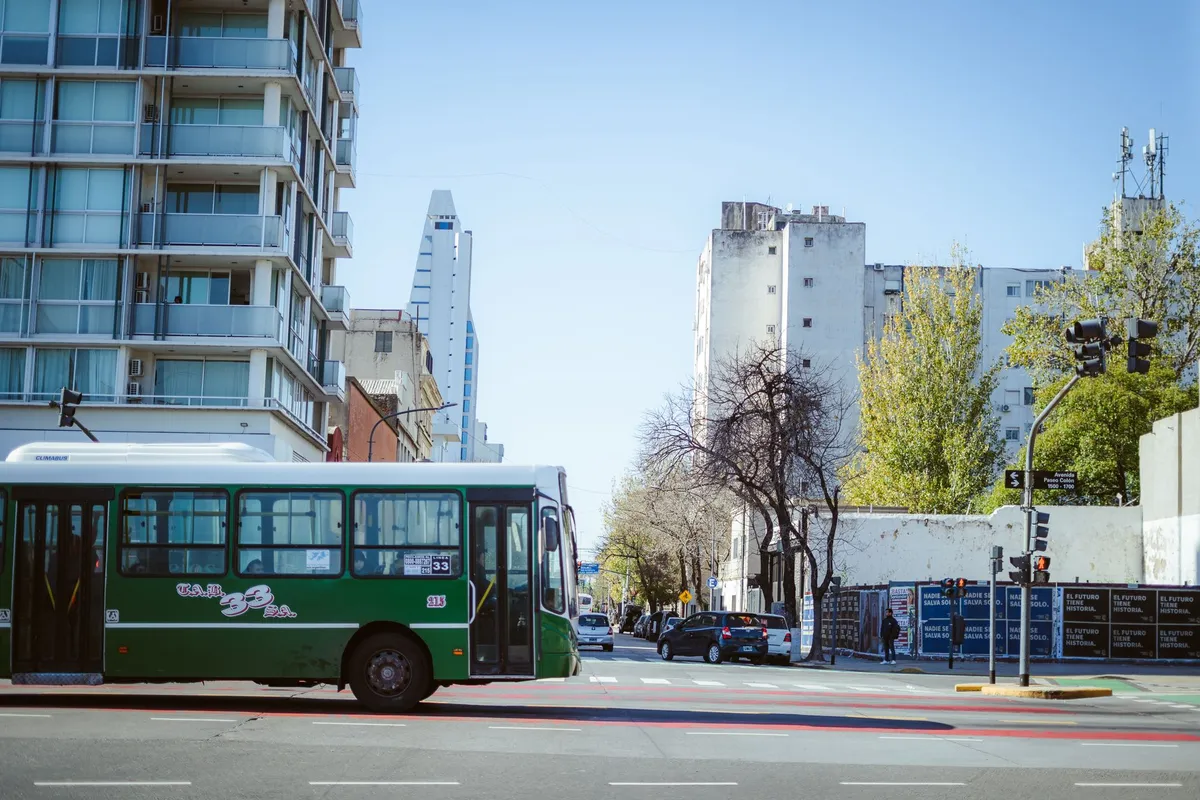
The colectivo (bus) is the most far-reaching transport: 150+ lines covering every corner of the city, 24 hours a day. It’s essential for La Boca and neighborhoods without a metro. You board at the front, tap your SUBE on the reader, and tell the driver your destination (they adjust the fare on the reader by distance). The Cómo Llego app (official city app) or Google Maps shows which line to take and where to get off.
Gotchas: what nobody tells you
A SUBE with no credit shows no mercy. The Subte turnstile won’t open and the colectivo won’t leave without a balance. There’s no “pay later” and no cash alternative. Always keep ARS 5,000+ as a reserve — top up before you hit zero.
Rush hour is brutal. Between 7:30–9:30am and 5:30–7:30pm, the Subte gets so packed there’s no room for anyone else. If you can, plan your sightseeing trips outside these hours — between 10am and 4pm the metro runs smoothly.
Watch your phone on the Subte. Phone thefts happen, especially at stations and during boarding/exiting. Keep your phone in your pocket or hold it firmly with both hands. Don’t use headphones in both ears.
The Subte closes early. The last trip is at 11pm Monday to Saturday and at 10pm on Sundays and holidays. If an Argentine dinner starts at 9pm, the ride back will almost always be by Uber or taxi.
Air conditioning is a lottery. Line A cars (the oldest) don’t always have AC. In the Buenos Aires summer (December–March), the newer lines (H, B) are more comfortable.
 HotelAs soon as you have datesCompare neighbourhoods and guest ratings.See hotels ↑
- ActivitiesBefore you travelBook ahead the ones with limited spots.Civitatis ›
 More activitiesTo compareTickets, day trips and tours with flexible cancellation.GetYourGuide ›
Frequently asked questions
Does the Subte run overnight?
The Buenos Aires Subte does not run overnight. The last trip leaves between 10:50pm and 11pm Monday to Saturday, and around 10pm on Sundays and holidays. After closing, your options are Uber, taxi, or colectivo (bus), which runs 24 hours on several lines.
Do you need a SUBE card to ride Uber?
No, Uber in Buenos Aires works with an international credit or debit card registered in the app, independent of the SUBE card. SUBE is exclusively for public transport (Subte, colectivo, and train). They’re completely separate systems.
Is there integration between the Subte and buses?
Yes, the Red SUBE system offers a discount on the second trip when you combine Subte and colectivo within a 2-hour window. The discount is applied automatically to a registered SUBE card — one more reason to register your card. The savings reach 50% on the second leg of the trip.
Is the Subte safe for tourists?
The Buenos Aires Subte is considered safe during operating hours. The precautions are the same as any big-city metro: watch your belongings, keep your phone in your front pocket, avoid empty cars at late hours. Central stations have police presence and cameras. The biggest risk is phone theft, not violence.
Conclusion
The Subte, the colectivo, and Uber cover all of Buenos Aires — with a registered SUBE card and the Cómo Llego app on your phone, you get around easily and for little money. Use the Subte for the main routes in the center and Palermo, the colectivo for La Boca and neighborhoods without a metro, and Uber for the ride back from dinner. To plan your full itinerary, check out our complete Buenos Aires guide on Voyage Voyage.