 Marcelo Oliveira
Segovia, Spain fits neatly into one day when your route follows the Aqueduct–Plaza Mayor–Cathedral–Alcázar axis. The historic center is compact, but the city shouldn’t be treated as a two-hour stop: set aside 7 to 9 hours to walk without rushing, tour both major interiors, and still sample Castilian cuisine.
Hotels in Segoviafree cancellation options onlySee hotels ›Booking.com partner (advertising): we may earn a commission at no extra cost to you.
Where is the city of Segovia?
Segovia sits in central Spain, in the autonomous community of Castile and León, and works especially well as a day trip from Madrid.
The old city occupies a rocky rise between the Eresma and Clamores rivers. That geography explains both the defensive position of the Alcázar and the open views across the Castilian plain. According to UNESCO, the historic core and the Aqueduct form a site recognized as a World Heritage Site since 1985.
If you’re planning to use the Spanish capital as your base, you can pair this outing with our complete Madrid guide. Segovia delivers a very different landscape: walls, golden stone, Romanesque churches, and a castle rising above the valley — all without switching hotels.
How to get to Segovia from Madrid
The high-speed train is the fastest option: the journey between Madrid-Chamartín and Segovia-Guiomar takes roughly 27 to 30 minutes.
High speed: fast, but outside the center
Renfe lists a trip of about 27 minutes. The trade-off is that Segovia-Guiomar sits 6 km from the historic center. Factor the city bus or taxi between the station and the Aqueduct area into your plan; the train time alone doesn’t represent the full journey.
Bus: the most convenient arrival
The bus usually takes about 65 minutes from the Intercambiador de Moncloa and drops you a few minutes’ walk from the center. For a day trip, the practical difference can be smaller than it seems, since you get off right near where the walk begins.
Regional train and car
Segovia Tourism notes that the regional train with a connection in Cercedilla takes approximately 2 hours, but arrives close to the center. By car, the drive from Madrid usually runs around 1 hour; consider parking and traffic restrictions before entering the historic area.
What is there to see in Segovia, and what should you prioritize?
On a first visit, prioritize the Roman Aqueduct, Plaza Mayor, the Cathedral, the Alcázar, the old Jewish Quarter, and the view from the Pradera de San Marcos.
This cluster concentrates the city’s main layers without turning the outing into a monument marathon. The official tourism itinerary also organizes the first day starting from the Aqueduct, crossing Plaza Mayor and continuing to the Alcázar, before reaching the Jewish Quarter and the viewpoint.
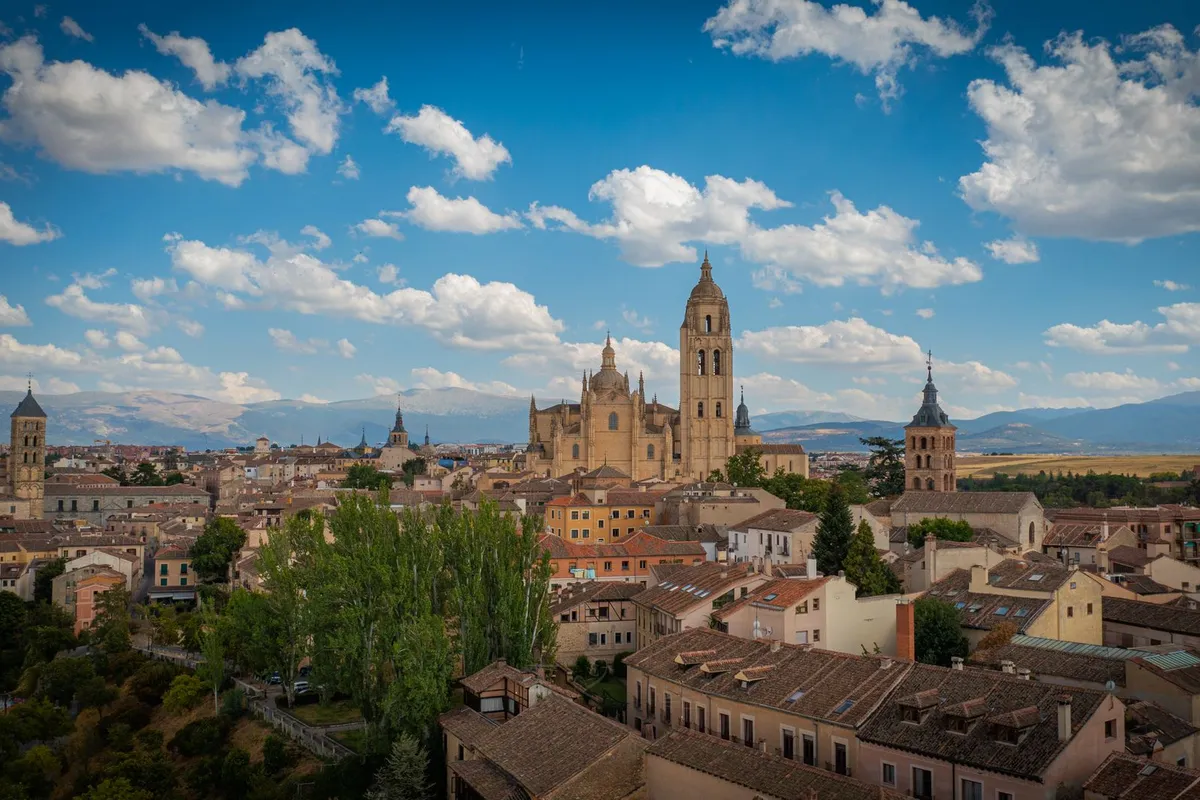
If time is short, keep the Aqueduct, Cathedral, and Alcázar. With an extra hour, cross the old Jewish Quarter and head down to the Pradera de San Marcos, where the castle’s silhouette appears in full. For those who prefer a guided take on the heritage, the activity below covers the central landmarks.
 Partner · Civitatissee all activities in Segovia ›
- Segovia Cathedral & Episcopal Palace TicketsRating 8.4 · 129 reviews on Civitatisfrom€4per personSee ›
- Segovia Guided Tour + Cathedral or AlcázarRating 9.3 · 2,867 reviews on Civitatisfrom€23per personSee ›
- Segovia Guided Tour + AlcazarRating 9.3 · 1,247 reviews on Civitatisfrom€19per personSee ›
- Segovia Hot Air Balloon RideRating 9.4 · 191 reviews on Civitatisfrom€205per personSee ›
Civitatis prices on 28/09/2026, from, per person. They may change.
What to do in Segovia in 1 day?
In 1 day, start at the Aqueduct in the morning, walk along Calle Real to the Cathedral, have lunch near Plaza Mayor, and visit the Alcázar in the afternoon.
| Suggested time | Stop | Practical call |
|---|---|---|
| 9am | Aqueduct and Plaza del Azoguejo | Check out the upper section from the Postigo del Consuelo before moving on. |
| 10:30am | Calle Real and Plaza Mayor | Go into the Cathedral if you want to compare the exterior architecture with the interior. |
| 12:30pm | Lunch | Allow 1 to 1.5 hours; cochinillo is a longer meal. |
| 2:30pm | Alcázar | Buy the tower option only if stairs aren’t a limitation. |
| 5pm | Jewish Quarter and Pradera de San Marcos | Choose the Jewish Quarter if you’re tired; head down to the viewpoint if you want the best view of the castle. |
The times are a framework, not a reservation. Confirm the Alcázar’s entry window and any liturgical adjustments at the Cathedral before buying return tickets. On hot days, make the descent to the Pradera de San Marcos late in the afternoon and bring water for the climb back up.
Segovia Aqueduct: the natural start of the walk
The Aqueduct is Segovia’s symbol, a monumental Roman work and the most logical place to begin your walk through the historic center.
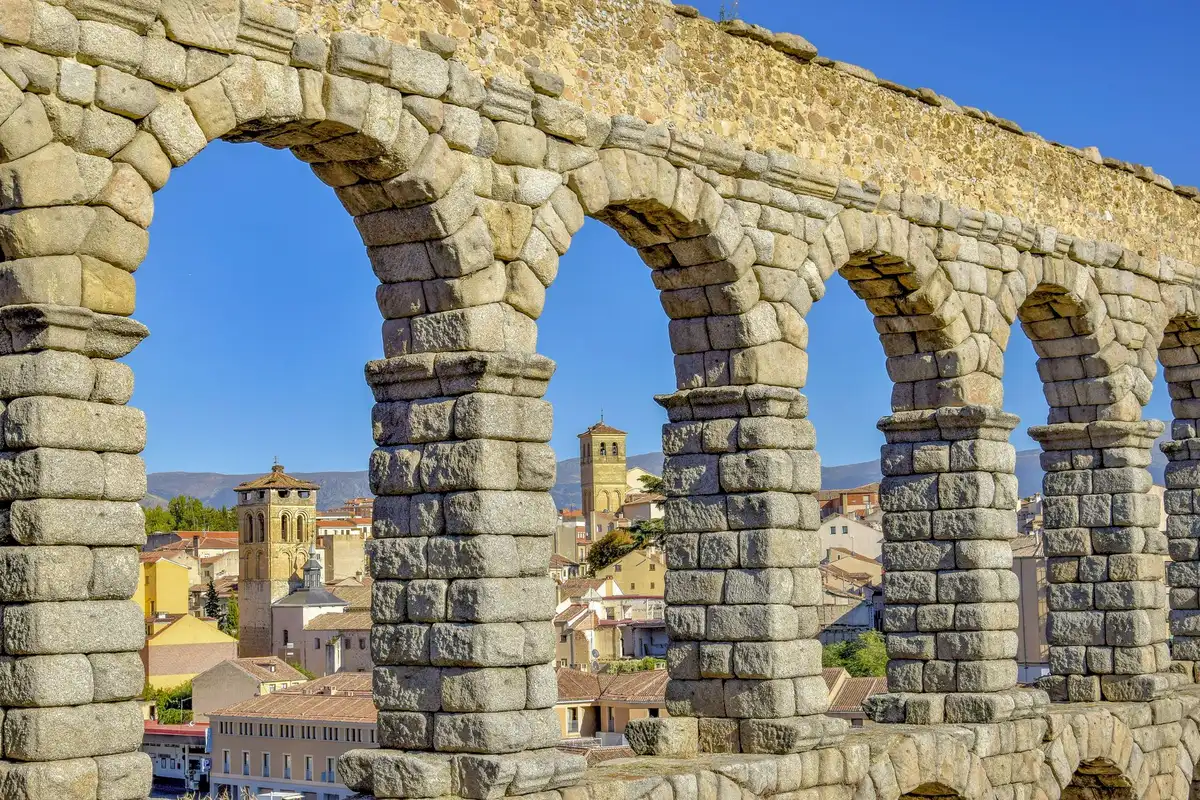
The best introduction starts at Plaza del Azoguejo, where the arches dominate the scene. Then climb the stairs near the Postigo del Consuelo to see the upper channel and how the structure relates to the city’s rooftops. The outdoor area is open and requires no ticket.
UNESCO’s heritage description dates the Roman construction to around the 1st century and highlights its state of preservation. More than a photo op, the Aqueduct marks the transition between the modern city and Calle Real, the pedestrian route that leads to Plaza Mayor.
Segovia Cathedral: is it worth going inside?
The Cathedral is worth entering for anyone who appreciates Gothic architecture, stained glass, and sacred art; on a tight itinerary, at least take in the exterior from Plaza Mayor.
The general visit includes the Cathedral and the Episcopal Palace. As of August 2026, the published general rate was €4, and the last entry was half an hour before closing. Religious celebrations can affect opening hours, so check the Cathedral’s official hours and prices on the day of your visit.
Climbing the tower requires a separate time slot and effort; it isn’t necessary to understand the building. If you already plan to climb the Tower of Juan II at the Alcázar, compare the two experiences before paying for both: the Cathedral tower offers an urban perspective, while the castle’s emphasizes the valley and the walls.
Segovia Alcázar: palace or castle?
The Alcázar is both fortress and royal residence, built on the promontory where the Eresma and Clamores rivers define the old city.
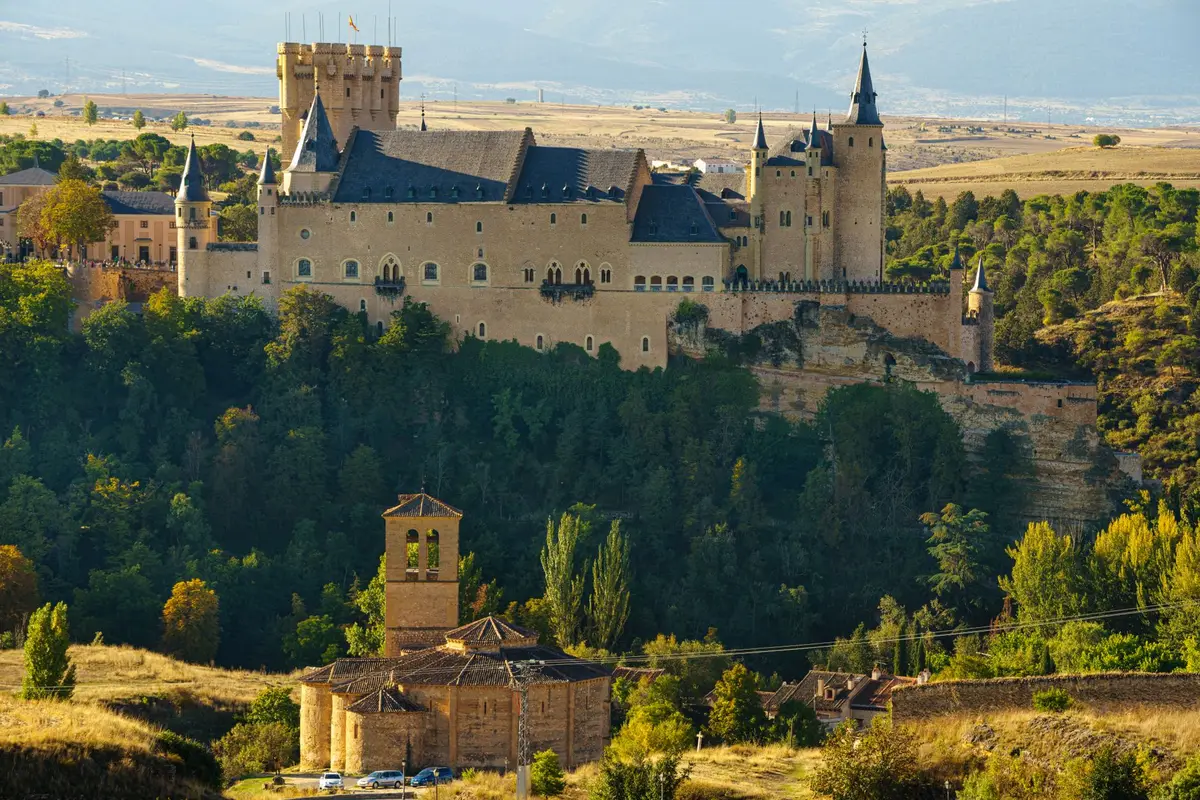
The interior brings together ceremonial halls, decorated ceilings, weapons, and references to the Castilian monarchy. The visit makes more sense after walking through the center, because the castle visually closes the axis that began at the Aqueduct. The Tower of Juan II adds a sweeping view, but it involves many steps and isn’t the best choice for anyone with reduced mobility.
As of August 2026, the Castile and León Tourism Portal listed €7 for general admission and €10 for the palace with tower. Since hours and rates can change, use these figures as a budget reference and confirm official sales before your visit.
What is the history of Segovia, and what does its name mean?
Segovia’s history combines a pre-Roman origin, Roman engineering, multicultural medieval urban planning, the power of the Crown of Castile, and artistic expansion in the 16th century.
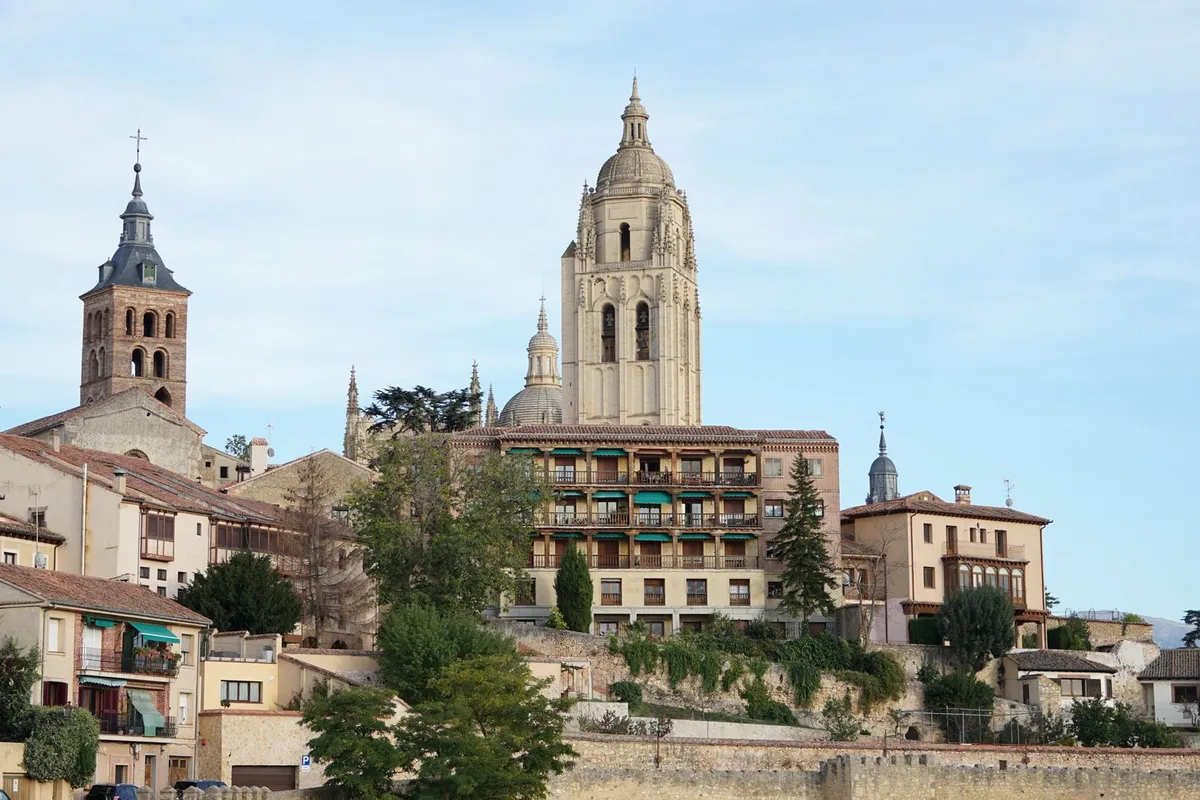
The Aqueduct records the Roman presence. In the Middle Ages, Christians, Jews, and Muslims left their marks on the layout and architecture. The Alcázar began taking medieval shape around the 11th century, and the current Gothic Cathedral was built in the 16th century. UNESCO recognizes precisely this layering of traditions, not just the three most photographed monuments.
“Segovia” has no consensus modern translation. The Thesaurus of Spanish Cultural Heritage records the old forms Segoviam and Seguvia and associates the city with Celtiberia. There are popular hypotheses linking the Celtic root to strength or victory, but it’s more accurate to present the place name as Celtiberian with a debated meaning, without turning a hypothesis into certainty.
How much time should you allow, and when is a day trip worth it?
Set aside 7 to 9 hours in Segovia to do the full itinerary, including the Cathedral, the Alcázar, and an unhurried meal.
A day trip is worth it when you’re already staying in Madrid and want a compact historic city. It’s not worth trying to squeeze Segovia and another monumental city into the same day: travel time and entry slots reduce the experience to facades. Spending a night becomes worthwhile if you want to explore the Eresma valley, the Royal Mint, Romanesque churches, and the city after the groups head back to the capital.
At lunch, roast cochinillo is the signature dish, but it demands more time and appetite. For a fast itinerary, choose smaller portions or a shorter menu near Plaza Mayor. Book a restaurant on weekends and holidays; using the meal as a break between the Cathedral and the Alcázar saves you from walking back over the same stretch.
If your trip includes other walled cities or medieval ensembles, compare the experience with our Cáceres, Spain itinerary. Segovia stands out for its linear sequence of monuments; Cáceres calls for more time wandering through streets and palaces.
Another historic city that fits into one day: Burgos and its Gothic cathedral.
 HotelAs soon as you have datesCompare neighbourhoods and guest ratings.Booking ›
- ActivitiesBefore you travelBook ahead the ones with limited spots.Civitatis ›
Frequently asked questions about Segovia
Segovia is a small provincial capital, easy to explore on foot in its historic core, and rich in heritage from very different periods.
How many people live in Segovia, Spain?
The municipality had 52,375 inhabitants as of January 1, 2025, according to the official series from Spain’s National Statistics Institute. The figure refers to the municipality, not the province, and is revised annually.
What should you do if you only have half a day?
Start at the Aqueduct, follow Calle Real, see Plaza Mayor, and choose just one interior: the Cathedral or the Alcázar. The castle offers a more unique experience; the Cathedral requires less of a detour and fits better when time is short.
Is Segovia just a day trip?
No. One day covers the essential monuments, while two days let you walk through the Eresma valley, visit Romanesque churches, and see the historic center with fewer crowds. The choice depends on your priority: efficiency from Madrid or a slower read of the city.
For a first visit, the safest decision is simple: pick transportation that gets you there by 9:30am, book the Alcázar in advance, and plan your return for after 6pm. That way, the itinerary preserves time for what makes Segovia different — the continuous walk between a Roman work, a Gothic cathedral, and a medieval castle.