 Marcelo Oliveira
The Tulum Ruins are the only Maya archaeological site built right on the edge of the Caribbean Sea, perched on a cliff with turquoise water shimmering just below. Entry costs 265 pesos for foreign visitors (~US$15, Aug 2026), hours run from 8am to 5pm, and a full visit takes 1.5 to 2 hours.
Hotels in Tulumfree cancellation options onlySee hotels ›Booking.com partner (advertising): we may earn a commission at no extra cost to you.
That’s plenty of time to see the Temple of the Descending God, walk along the original wall that gives the site its name, and head down to the beach inside the archaeological complex itself.
Riviera Maya coast, 4 km from downtown Tulum, Quintana Roo.
Colectivo (35 pesos), taxi (100-150 pesos) or bike (~20 min) from downtown.
8am to 5pm, daily (last entry 3:30pm) — Aug 2026.
1.5 to 2 hours at the site; +30 min if you hit the beach.
Foreigners 265 pesos / Mexicans 80 pesos (Aug 2026).
Cenote Cristal, Aldea Zamá, Tulum Beach and Sian Ka’an.
What are the Tulum Ruins and why do they sit by the sea?
Tulum was a walled Maya city, founded around 564 AD as a trading port serving Cobá, one of the great inland Maya capitals. The name “Tulum” means wall in Maya — a direct nod to the stone enclosure that still surrounds much of the site on the landward sides. Before that, the place was called Zamá, “dawn,” because this stretch of coast is where the sun rises first across the entire territory that is now Mexico.
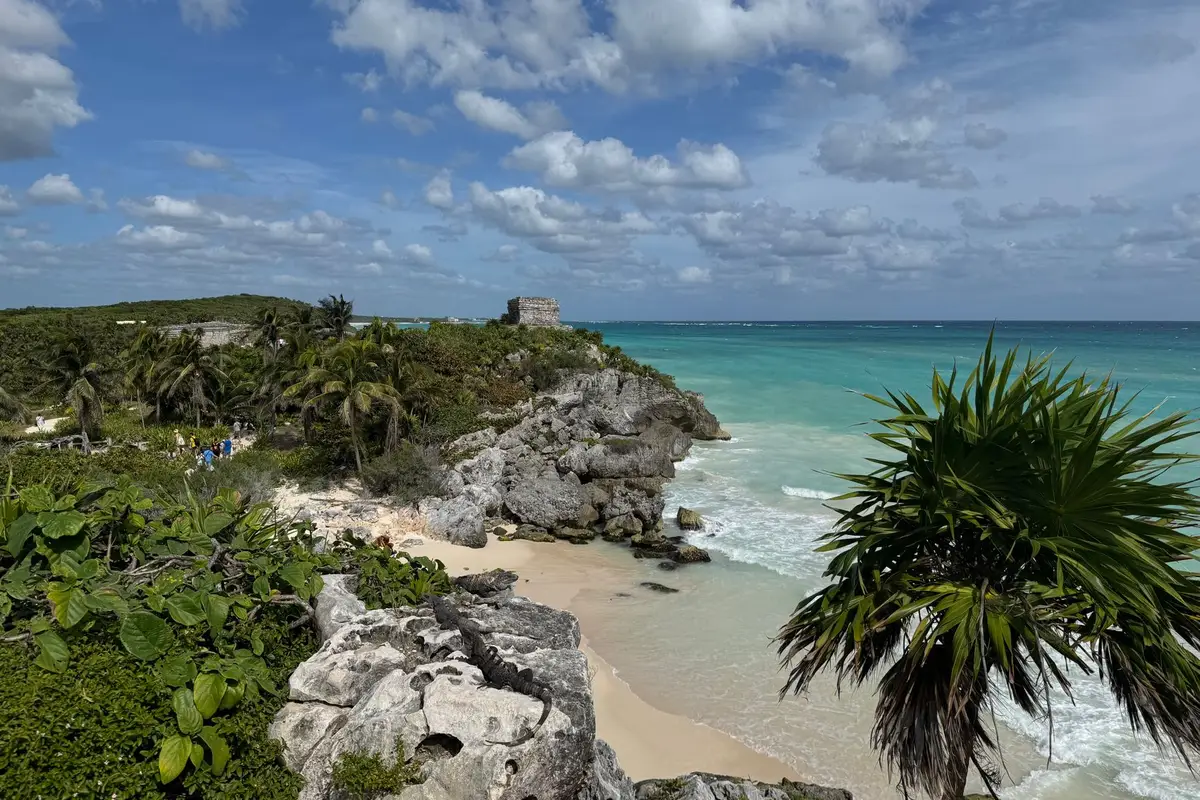
The cliffside position wasn’t an aesthetic choice: it served as a lighthouse and lookout point for Maya vessels sailing the coast trading salt, obsidian, jade and honey. It’s that combination — gray stone architecture, low dune vegetation and the Caribbean blue in the background — that makes Tulum the only Maya archaeological site with an open-sea view.
How much does it cost to enter the Tulum Ruins in 2026?
Entry costs 265 Mexican pesos for foreign visitors (around US$15) and 80 pesos for Mexicans and residents (Aug 2026). The price already reflects a 50% reduction announced by Quintana Roo’s Tourism Secretariat in July 2026, under the “Tulum Renace” program — before that, foreign admission ran 210-265 pesos with separate fees for Parque del Jaguar.
Sunday is the only day with free entry for the Mexican public; for foreigners the regular rate applies every day. Access to Parque del Jaguar — the parking and shopping area that now serves as the entry gate — became free for Mexicans after the 2026 overhaul, but confirm conditions for foreigners on the official site before you go, since these fees have changed more than once in the past two years.
| Foreigners | 265 Mexican pesos (~US$15) — Aug 2026 |
|---|---|
| Mexicans/residents | 80 Mexican pesos — Aug 2026 |
| Sunday | Free for Mexicans only |
| Hours | 8am to 5pm, daily (last entry 3:30pm) |
| Local guide | 600-800 pesos per group, not required |
| Getting there | Colectivo, taxi or bike from downtown Tulum |
What are the archaeological zone’s opening hours?
The Tulum Ruins are open from 8am to 5pm every day of the week, with last entry allowed at 3:30pm (Jul/Aug 2026). Mexican national holidays may affect these hours, so it’s worth checking the INAH (National Institute of Anthropology and History) website the week of your trip.
There’s no weekly closing day like some museums have — the site operates every day of the year, barring extreme weather events such as hurricanes, which are common in the region between June and November.
How do you get to the Tulum Ruins from downtown, Cancún or Playa del Carmen?
From downtown Tulum, the site is just 4 km away: you can bike along the cycle path (about 20 minutes), take a colectivo along Carretera Federal 307 (35 pesos) or grab a taxi (100-150 pesos). From Cancún, the cheapest option is the ADO bus (about 2 hours); from Playa del Carmen, the same ADO stops directly at “Tulum Zona Arqueológica,” or you can catch a colectivo along the 307.
| Option | Price | Time | Best for |
|---|---|---|---|
| Bike (from downtown) | standalone rental | ~20 min | those already staying in the Pueblo |
| Colectivo (307) | 35 pesos | ~15 min | tight budgets |
| Taxi | 100-150 pesos | ~10 min | arriving early without depending on colectivo schedules |
| ADO from Cancún/Playa | varies by leg | 1.5-2h | those not renting a car |
| Guided tour | check current rates | half day | combining with Cobá or a cenote on the same trip |
If you’d rather not deal with colectivo logistics or traffic on the 307, you can book the tour combining the Tulum Ruins with the Maya city of Cobá, with transport and guide included — great for anyone with only half a day free on the Riviera Maya.
What is there to see inside the archaeological site?
The highlight is the Temple of the Descending God, Tulum’s most photographed structure, built almost on the cliff’s edge with the sea as a backdrop. Next to it, El Castillo is the tallest and most central building in the complex, set on an elevated platform with a front staircase facing the sea — it served as a temple and, most likely, a nighttime lighthouse.
Set aside time for the Temple of the Frescoes, with mural paintings still partially visible depicting Maya deities, and for walking along the original wall that gives the site its name — one of the few Maya settlements completely enclosed by stone fortifications.
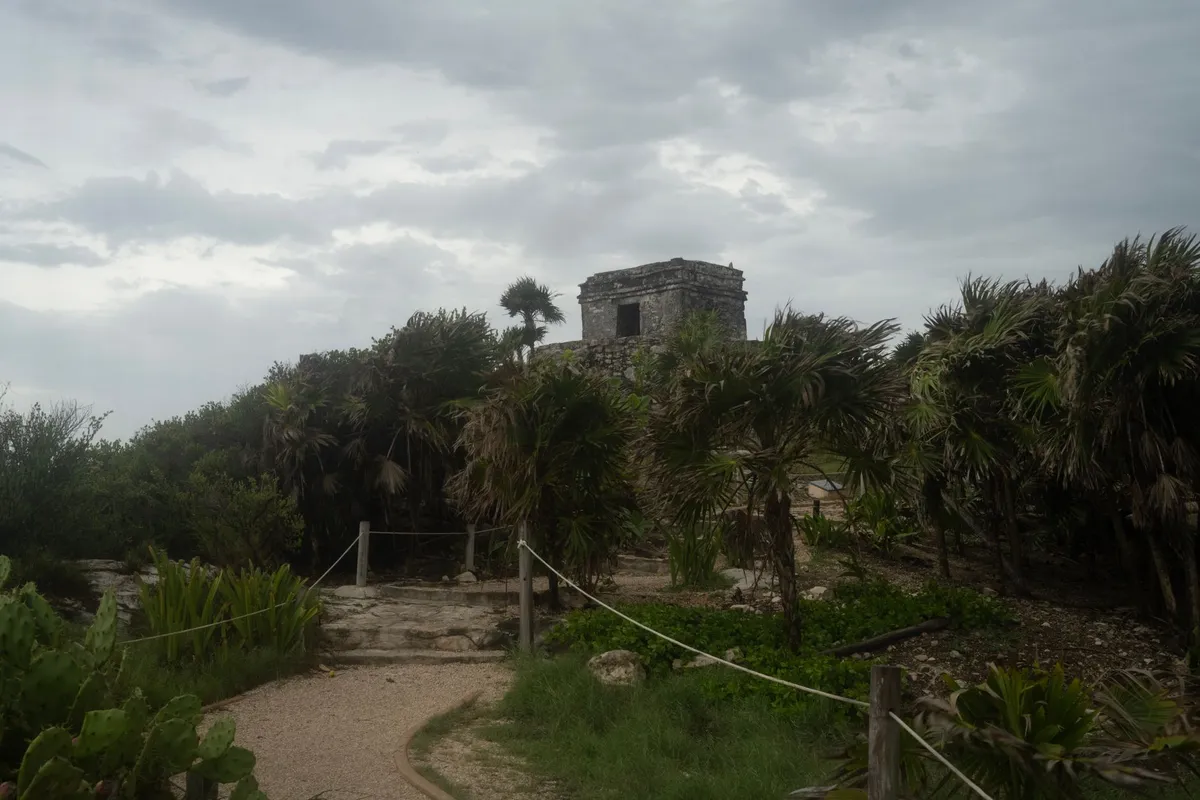
Climbing or entering the structures isn’t allowed — ropes mark the minimum distance at each temple, and enforcement is constant and fines anyone who crosses. The beach inside the site itself, just below the cliff, is usually open for swimming, but access may be restricted during sea turtle nesting season, so have a plan B if swimming there is a must. If you want to dig deeper into the history before you go, check out the Maya city of Tulum entry on Wikipedia, with a more detailed timeline of its occupation.
For those who prefer to combine the ruins with other Riviera Maya spots on the same day, consider a guided tour that already includes transport:
 Partner · Civitatissee all activities in Tulum ›
Chichén Itzá, Coba & Ik Kil Cenote Day Trip
Rating 9.5 · 1,089 reviews on Civitatis
- Tulum Sunset Boat RideRating 8 · 1 reviews on Civitatisfrom€96.61per personSee ›
- Catamaran Cruise to Isla MujeresRating 7.6 · 1,892 reviews on Civitatisfrom€52.69per personSee ›
- Tulum & Coba Day TripRating 8.7 · 1,388 reviews on Civitatisfrom€95.73per personSee ›
- Isla Contoy & Isla Mujeres TourRating 9.3 · 868 reviews on Civitatisfrom€149.31per personSee ›
Civitatis prices on 28/09/2026, from, per person. They may change. Want to compare? Activities in Tulum on GetYourGuide ›
Is visiting the Tulum Ruins worth it? How much time should you set aside?
Yes, it’s worth it — it’s Mexico’s only seaside Maya site, with a blend of history and scenery no other archaeological complex in the region offers. Set aside 1.5 to 2 hours to explore the site at your own pace; with a hired guide, count on 2.5 hours total, including more detailed explanations of each structure.
Compared to other Maya ruins in Mexico, Tulum is smaller and quicker to visit than Chichén Itzá or Cobá, which makes it easy to pair with a beach or cenote day on the same outing.
The real total cost of the visit
In practice, visiting the Tulum Ruins on your own costs between US$18 and US$30 per person (Aug 2026): foreign admission (~US$15) + round-trip transport from downtown (colectivo or taxi, US$4-12) + water and sunscreen bought along the way. Add a local guide split among the group and the cost climbs to the US$30-50 per person range.
Tulum Ruins or Chichén Itzá: which should you choose?
Tulum wins on scenery and logistics; Chichén Itzá wins on historical grandeur. Tulum is just minutes from downtown and the visit fits into a morning; Chichén Itzá is a UNESCO World Heritage Site and one of the New Seven Wonders of the World, but it’s about 2.5 hours by car from Tulum, requiring a full day dedicated to the trip.
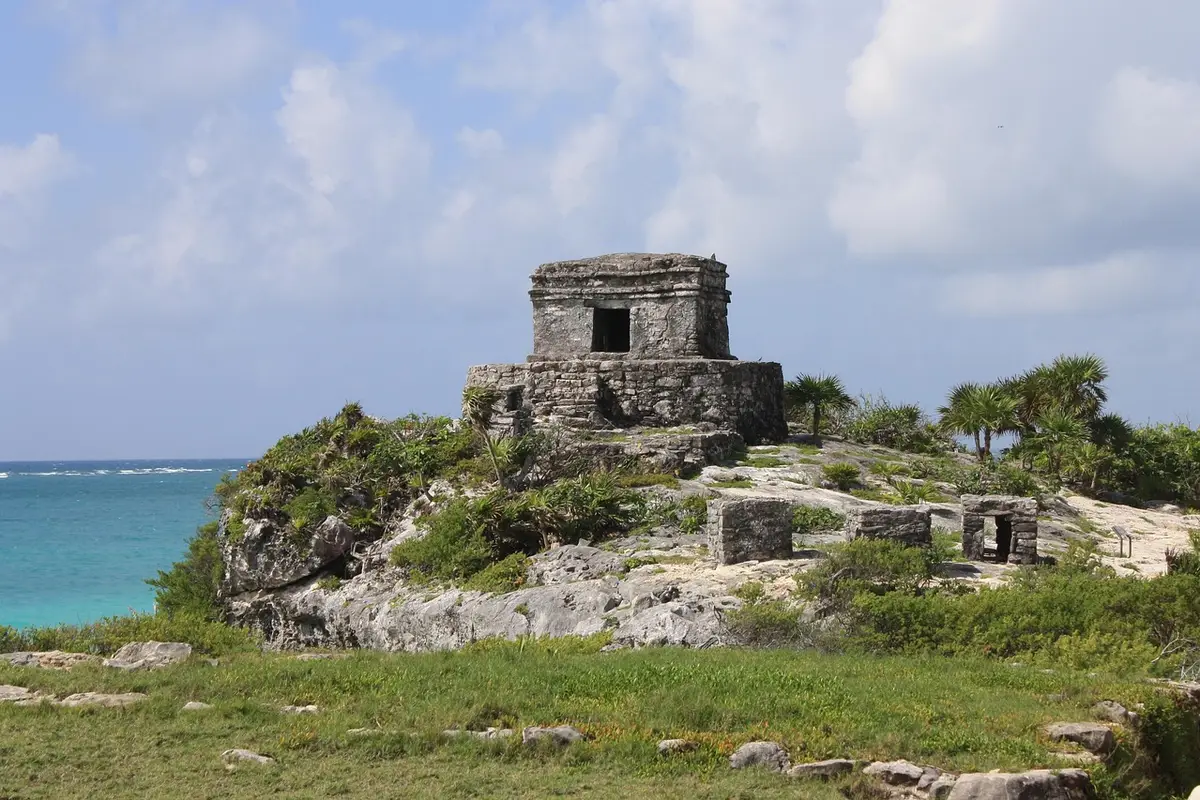
If you have just one free day on the Riviera Maya and want to balance history with beach time, Tulum is usually the pick. If you’re willing to wake up early and trade the whole day for a larger-scale archaeological experience, go with Chichén Itzá — worth reading our complete Chichén Itzá guide before deciding. You can do both on separate trips, or visit Tulum and the nearby cenotes on the same day without rushing.
What’s the best time to visit to avoid lines and heat?
Arrive at the entrance by 7:30-7:45am to be inside the site right at 8am — that half hour of head start changes the whole experience. Visiting mid-morning means facing a long line, blazing sun with zero shade and tour groups on top of tour groups fighting for the same photo angle at the Temple of the Descending God.
There’s no tall vegetation inside the site, so the heat hits directly all day long — bring biodegradable sunscreen (required in the region’s preservation areas), a hat, sunglasses and plenty of water, since there’s no shop inside the archaeological zone.
What nobody tells you before you go
A few things only those who’ve been know:
The two-entrance system got more bureaucratic. Since Parque del Jaguar was created, passing through it before reaching the archaeological site has become part of the route — allow a few extra minutes beyond what you’d expect.
Persistent vendors along the entrance path. Plenty of people offer tours, handicrafts and transport right at the entrance; some can be pushy, but a polite “no, gracias” does the trick.
Sargassum on the beach between May and August. Seaweed can pile up on the site’s sand strip during those months, affecting swimming — it doesn’t spoil the ruins visit, but it adjusts expectations for anyone wanting to swim there.
Beach access can close without notice. During sea turtle nesting periods, the descent to the sand is off-limits for conservation.
No climbing. Unlike decades ago, climbing the structures is now forbidden — respect the isolation ropes, enforcement fines anyone who crosses.
If you plan to spend more than a day in the region, you can book other Riviera Maya activities on the same platform — from cenotes to boat trips departing from Tulum:
 HotelAs soon as you have datesCompare neighbourhoods and guest ratings.Booking ›
- ActivitiesBefore you travelBook ahead the ones with limited spots.Civitatis ›
 More activitiesTo compareTickets, day trips and tours with flexible cancellation.GetYourGuide ›
Frequently asked questions
Do you need a guide to visit the Tulum Ruins?
It’s not required. The Tulum Ruins have explanatory signs and can be visited on your own, but local guides charge between 600 and 800 pesos per group and add historical context the signs don’t cover.
Can you swim at the beach inside the archaeological site?
Yes, for most of the year the beach below the Tulum cliff is open for swimming. Access may be temporarily closed during sea turtle nesting season or due to sargassum between May and August.
Are the Tulum Ruins and the cenotes in the same place?
No. The Tulum Ruins are on the coast; the region’s most visited cenotes, such as Cenote Cristal and Gran Cenote, are a few kilometers inland, usually combined on the same day trip.
How long does a visit to the Tulum Ruins take?
On average, a visit to the Tulum Ruins takes 1.5 to 2 hours without a guide, or about 2.5 hours with a hired guide, accounting for more detailed explanations at each structure.
Can you climb the Tulum Ruins?
No. Climbing or entering the structures at the Tulum Ruins is forbidden; ropes mark the minimum permitted distance at each temple, with constant on-site enforcement.
Conclusion
The Tulum Ruins solve a rare equation on the Riviera Maya: real Maya history, Caribbean views and a visit that fits into a morning. Arrive early, bring water and sunscreen, and you’ll leave with photos no other archaeological site in Mexico can replicate. To round out your itinerary in the region, Voyage Voyage has complete guides to Tulum, cenotes and Chichén Itzá to plan the rest of your day — and if you have more free days, it’s worth extending the trip to Holbox, the car-free island in northern Quintana Roo.