 Marcelo Oliveira
Is Pamplona worth the trip?
Pamplona is worth the trip in two very different versions: during San Fermín, the city becomes an intense collective celebration; the rest of the year, it reveals a walkable medieval center, city walls, and Navarran cuisine. The festival runs from July 6 to 14, and the encierro is just one of its rituals. To decide when to go, consider your tolerance for crowds, your lodging budget, and your genuine interest in the programming beyond the bulls.
Hotels in Pamplonafree cancellation options onlySee hotels ›Booking.com partner (advertising): we may earn a commission at no extra cost to you.
The decision depends on your travel style: July delivers an exceptional and exhausting party; other dates let you see the city and the encierro route at a relaxed pace. For a first visit, choose consciously between seasonal intensity and urban heritage.
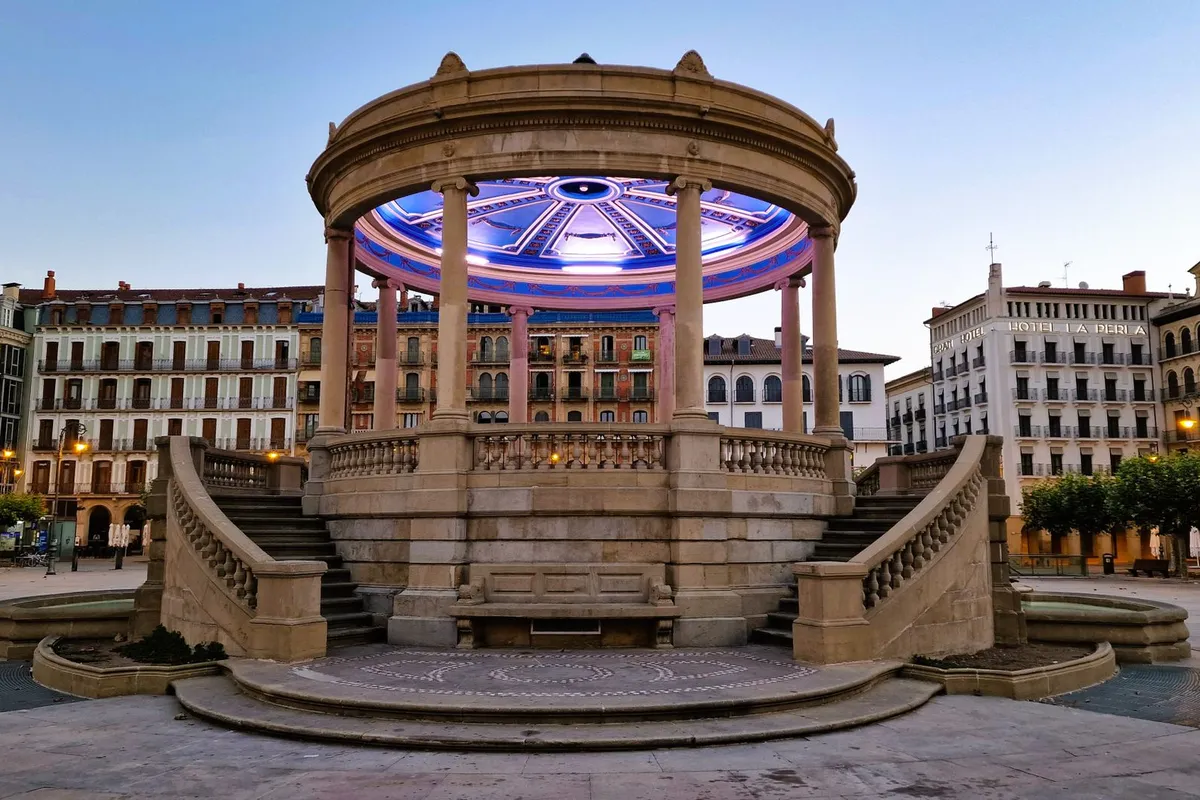
How San Fermín works
San Fermín spans nine days, from the Chupinazo to the Pobre de Mí, and blends religion, music, street life, sports, family activities, fireworks, and bullfighting. In 2026, the opening took place at 12:00 on July 6 at the Casa Consistorial, and the closing was on the night of July 14.
Chupinazo: the opening
The rocket launched from the balcony of the Ayuntamiento marks an immediate shift in pace. Plaza Consistorial gets extremely packed, and the spectacle is also broadcast on big screens around the city. If you don’t like being squeezed or intense physical contact, watching from a square with a screen is a better choice than trying to push into the middle of the crowd.
White, red, and a party in the streets
White clothing and a red neckerchief form the most recognizable visual code, but the event doesn’t require a mandatory costume. The peñas, bands, giants, and cabezudos bring music to different areas. The official 2026 program featured 516 events, a scale that explains why reducing San Fermín to the encierro shortchanges the experience.
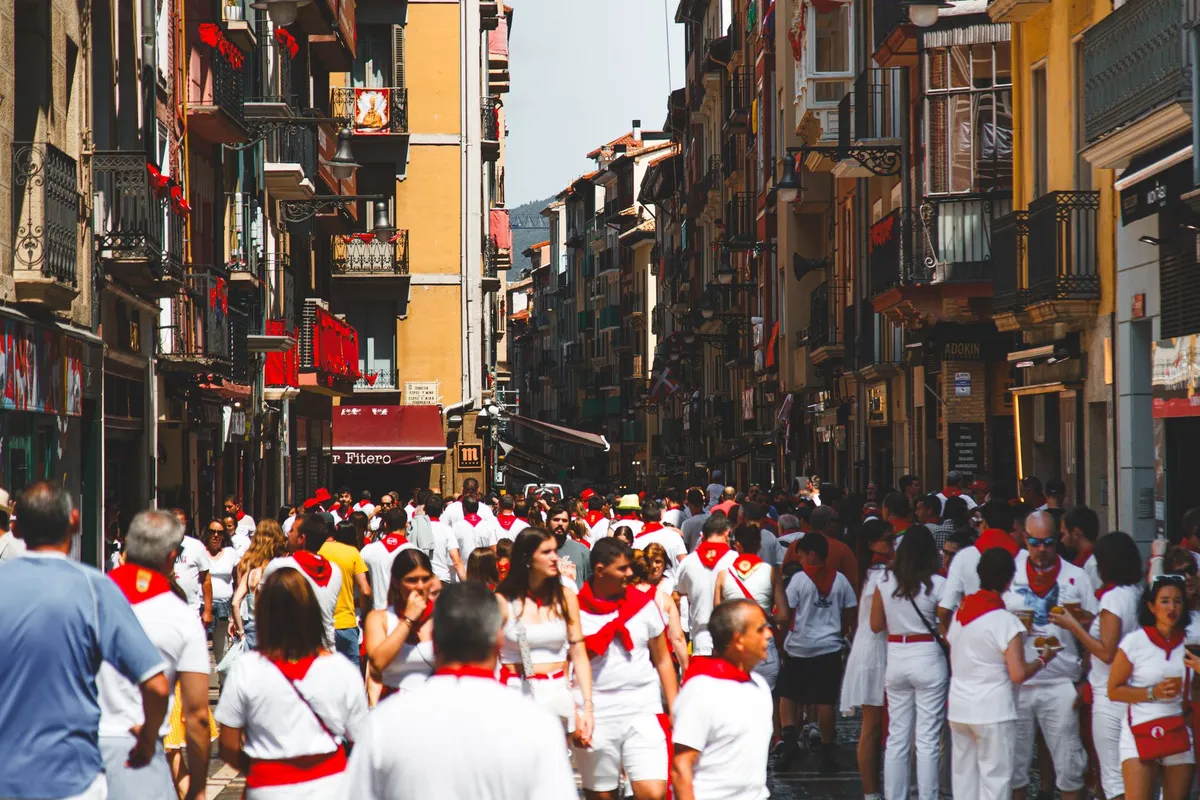
Procession, giants, and fireworks
On July 7, the San Fermín procession links the Casa Consistorial, the Cathedral, and the saint’s chapel. Every day brings giant parades, music, and activities for kids; at night, fireworks launch from the Ciudadela area. That diversity lets you build a day without bullfighting: encierro watched from a safe spot, breakfast, giants, an afternoon rest, music, and fireworks.
A themed guided tour is useful before the busiest hours, especially to locate the Cuesta de Santo Domingo, Plaza Consistorial, and Estafeta without fighting for space during an event.
 Partner · Civitatissee all activities in Pamplona ›
- Baztan Valley & Zugarramurdi Caves Day TripRating 9.2 · 160 reviews on Civitatisfrom€85per personSee ›
- The Monastery of Leyre and Javier Castle Day TripRating 9.7 · 15 reviews on Civitatisfrom€79per personSee ›
- Irati Forest & Ochagavía Day TripRating 9.4 · 28 reviews on Civitatisfrom€85per personSee ›
- San Sebastián Day TripRating 9.3 · 3 reviews on Civitatisfrom€79per personSee ›
Civitatis prices on 28/09/2026, from, per person. They may change.
The encierro: schedule, route, and how to watch
The encierro takes place at 8:00 from July 7 to 14 and starts from the Cuesta de Santo Domingo toward the Plaza de Toros. There are eight runs, each with six bulls, and the sprint usually lasts just a few minutes; spectators’ planning starts long before.
What visitors actually see
From the street, your view depends on the spot and the barrier, and there’s no guarantee you’ll follow the whole route. Private balconies offer a steadier angle, but they require booking and a trustworthy source. The simplest alternative is to watch on TV or a big screen and then walk the route once access returns to normal.
The route passes through Santo Domingo, Plaza Consistorial, Mercaderes, Estafeta, Telefónica, and the entrance to the arena. Each stretch has different geometry and risk. This guide does not recommend running: participating requires knowing the rules, excellent physical condition, sobriety, and accepting a real risk of serious injury or death.
Arrive early, but don’t improvise
If you plan to watch from the barriers, you need to arrive well before 8:00 and follow police instructions. Streets close, exits become limited, and a spot that looks open may not offer visibility. Children, people with reduced mobility, or anyone who feels unwell in crowds are better off in a controlled space.
Safety and limits for visitors
The best strategy is to treat San Fermín like a major urban event: agree on a meeting point, protect your documents, carry only what you need, and don’t count on your phone working in congested areas. Alcohol, lack of sleep, and crowds make simple decisions harder.
At the 2026 Chupinazo, the Municipal Police banned backpacks, glass, flour, eggs, and sharp objects in Plaza Consistorial. Specific rules can change each edition, so check the official notice a few days before your trip.
- Wear closed, non-slip shoes.
- Avoid carrying your passport, full wallet, and valuables.
- Set a route back to your hotel before events begin.
- Respect blockades, barriers, and security staff instructions.
- In an emergency, move out of the flow before trying to call or ask for help.
The festival also involves bullfighting, a topic that may clash with personal values. You can visit Pamplona in July without buying tickets to the bullfights and focus your itinerary on music, popular culture, food, the procession, and fireworks.
How many days to stay
Outside San Fermín, 2 days are enough for the historic center, Cathedral, walls, Ciudadela, and a pintxos crawl. During the festival, 3 nights let you experience morning, afternoon, and night without trying to cram every ritual into one day.
One night is enough to soak up the atmosphere, but it exposes your itinerary to cancellations, exhaustion, or bad weather. Four or more nights only pay off if you plan to follow several runs, specific concerts, or travel at a slow pace. Sleep counts as part of the planning: hotels in the center cut down on travel but get noise until late.
Where to stay during the festival
Casco Antiguo is the most practical choice for experiencing the festival on foot, while Ensanche balances proximity and access. Farther-out neighborhoods offer potentially quieter nights and less extreme prices, but you’ll need to check special transport and road closures.
Casco Antiguo
Stay here if your priority is being close to the encierro, Plaza Consistorial, and Plaza del Castillo. Confirm soundproofing, reception rules, and luggage access: taxis may not reach the door, and sleeping in the morning can be tough.
Ensanche and residential areas
Ensanche lets you walk to the center and retreat when the intensity wears you down. Iturrama and San Juan tend to require more travel, but they give you access to everyday shops and a less festive pace. Book many months in advance and be wary of payments outside platforms or verifiable contracts.
 See hotels in Pamplona on Booking ›
What to do in Pamplona beyond the festival
Pamplona doesn’t end at the encierro route: the medieval center, fortifications, and parks support a visit independent of July. The official Pamplona tourism guide helps you organize the axis between the Cathedral, Portal de Francia, and Baluarte del Redín, which reveals the relationship between the city and the Camino de Santiago.
Historic center and Cathedral
Start at Plaza Consistorial, continue to Mercado de Santo Domingo and the Museo de Navarra, then cross over to the Catedral de Santa María. The Gothic cloister is the main reason to go in. On San Nicolás and Estafeta streets, swap the attraction mindset for a pause mindset: pick a few bars and order pintxos in stages.
Walls, Taconera, and Ciudadela
The preserved set of walls totals about 5 kilometers, according to official Navarra tourism. You don’t need to walk all of it: Baluarte del Redín, Portal de Francia, Taconera, and Ciudadela form an efficient, free sequence.
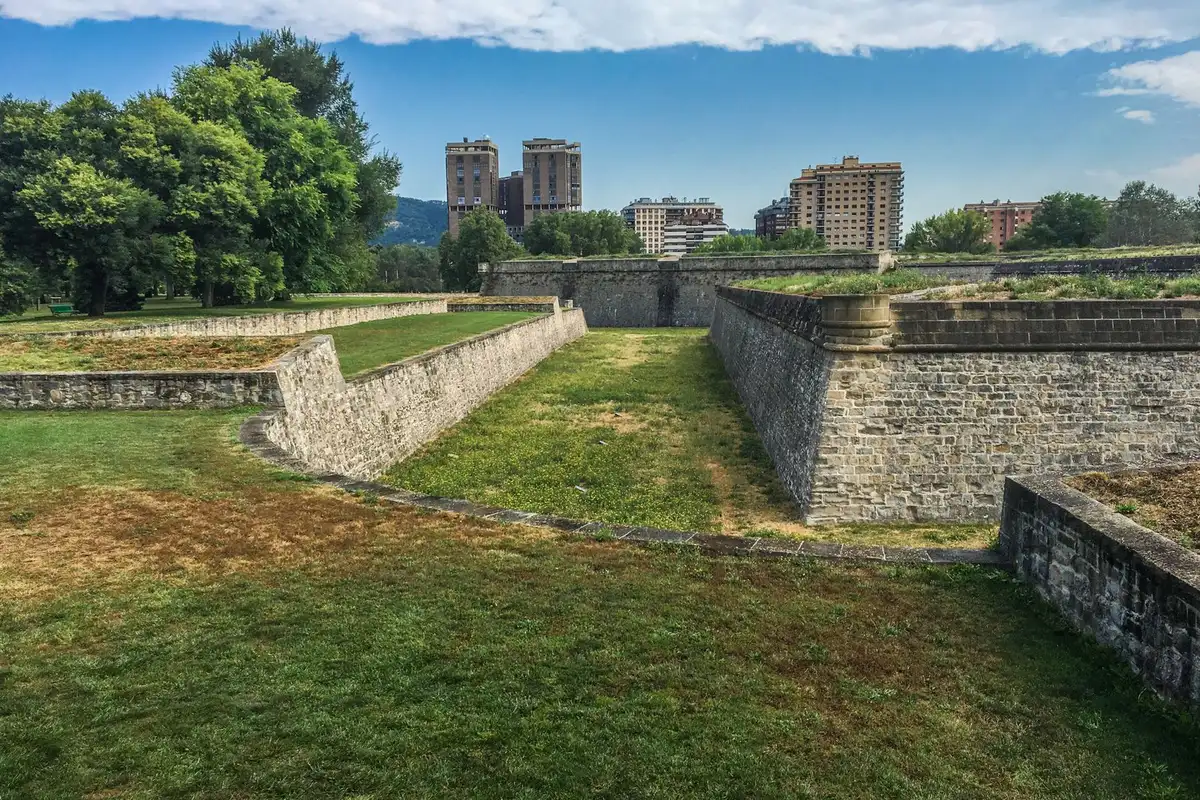
A general guided tour works best outside encierro hours, when the streets allow for explanations and stops again.
How to get there and get around
Pamplona receives direct trains from Madrid, Barcelona, Zaragoza, San Sebastián, and other cities, while buses complete the regional connections. The train station is northwest of the center and connects via urban line 9.
Noáin airport is about 6 kilometers away but has a limited network; Bilbao and other nearby cities may offer more flights, as long as you factor the ground leg into the comparison. During San Fermín, confirm special routes, taxi stands, and hotel access: a regular day’s map doesn’t reflect festival closures.
To continue through the north, San Sebastián is about 82 kilometers away and pairs pintxos culture with the coast. Bilbao works better as a major cultural base, while Santander extends the itinerary along the Cantabrian coast.
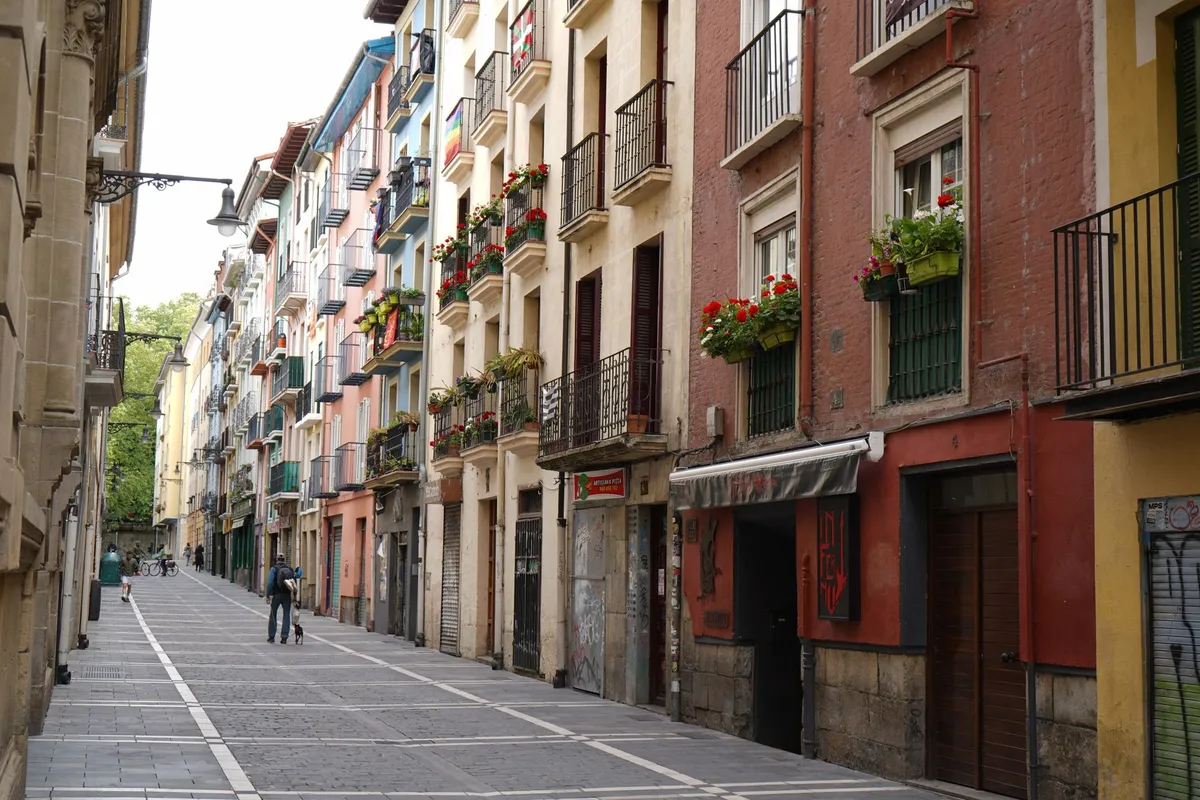
Pamplona outside San Fermín
Visiting outside July is the best choice for anyone who values heritage, walking, and food over crowds. Hotels return to normal rates, the streets let you admire facades, and the encierro route can be walked at ease, with no barriers or jostling for space.
The Espacio Sanfermin Espazioa, next to the Cuesta de Santo Domingo, offers an immersive introduction to the festival outside the July 6–14 period. Pair it with the walls, the Museo de Navarra, and the Cathedral to understand that the celebration is born from a city with its own identity.
Spring and early fall favor walking; winter brings cold and rain, but also fewer visitors. In any season, set aside a meal to try chistorra, Navarran vegetables, cheeses, and pintxos without turning the food into a checklist of stops.
How to fit Pamplona into northern Spain
Choose San Fermín if the festival itself is the reason for your trip and you accept noise, checkpoints, crowds, and higher prices. Choose another date if your goal is to see the city, walk the fortifications, and follow a food itinerary with room to improvise.
During July, book lodging first, then transport, and only then pick two or three events per day. Outside the festival, do the opposite: sketch out the Navarra circuit and use Pamplona as a compact base for one or two nights.
The most responsible decision is not to treat the encierro as a personal challenge. Watching safely, understanding the context, and exploring the city after the run offers a far more complete reading of Pamplona.
- HotelAs soon as you have datesCompare neighbourhoods and guest ratings.See hotels ↑
- ActivitiesBefore you travelBook ahead the ones with limited spots.Civitatis ›