 Marcelo Oliveira
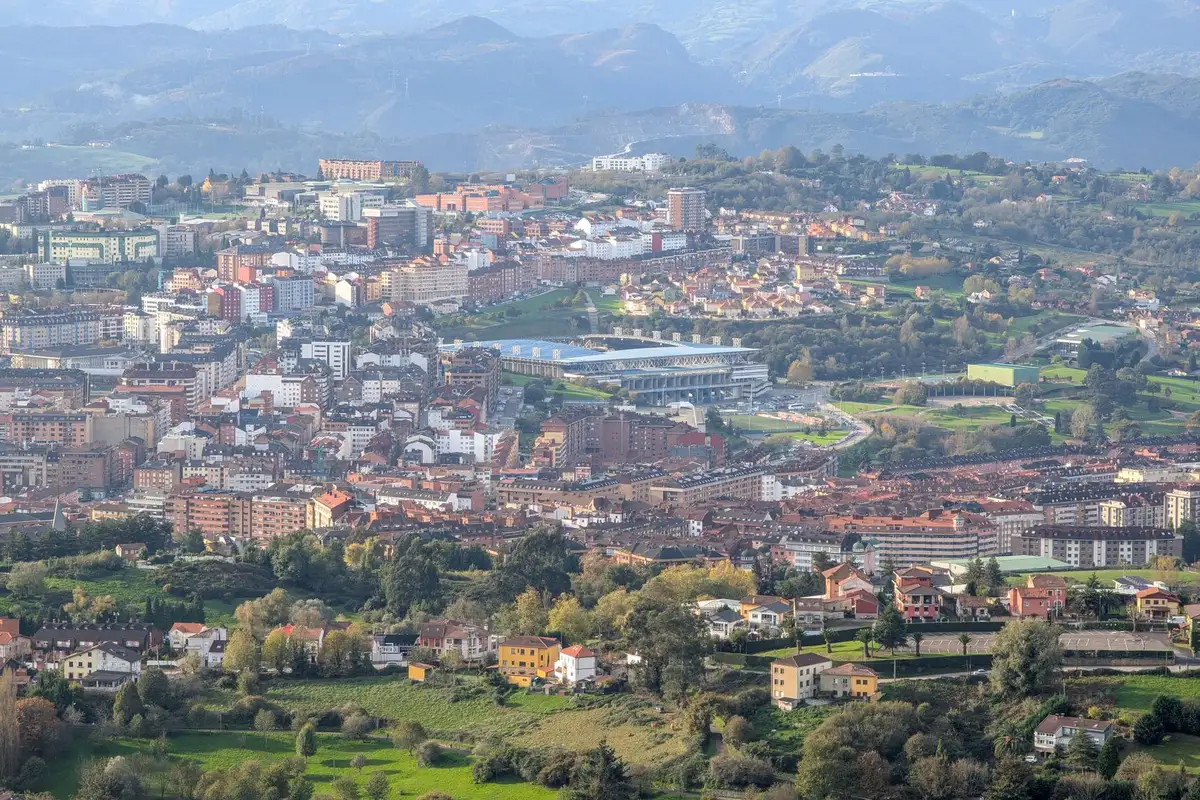
Oviedo — also called Uviéu in Asturian — is the capital of the Principality of Asturias, in northern Spain. It’s a great base for anyone who wants to combine a historic center, pre-Romanesque art, and getaways around the region; as a place to live, the city tends to work better for those who value a walkable, university-town routine than for those expecting the pace and offerings of a metropolis.
Hotels in Oviedofree cancellation options onlySee hotels ›Booking.com partner (advertising): we may earn a commission at no extra cost to you.
Is Oviedo the capital of Asturias? Where is it?
Yes. Oviedo/Uviéu is the capital of the Principality of Asturias and sits in the center of the autonomous community, between the Cantabrian coast and the Cantabrian Mountains. In practice, that position makes it a convenient urban base for exploring the coastline, the mountains, and other Asturian cities without having to sleep at every stop.
Don’t confuse the city with the region: Asturias is a Spanish autonomous community in the north of the country; Oviedo is its administrative capital. Gijón, on the coast, is another major urban reference point, while Avilés forms a metropolitan area with both. The official Asturias tourism site points out that Oviedo is the second most populous municipality in the region and has a strong cultural, commercial, and neighborhood life.
Oviedo, Asturias, and the old kingdom: what the names tell us
There are different explanations for the origin of the names “Oviedo” and “Asturias”; so it’s best to avoid literal translations or treating any etymology as certain. The safest fact for travelers is historical: Oviedo rose to prominence when Alfonso II elevated it to the court of the Kingdom of Asturias, a medieval Christian kingdom in the northwest of the Iberian Peninsula, centered on present-day Asturias with influence that extended into neighboring areas.
That past isn’t a footnote: it explains why the city is packed with pre-Romanesque architecture and why the Cathedral of San Salvador is the starting point of the Camino Primitivo. The “capital of the kingdom” designation helps you understand the scale of the monuments, but today’s itinerary is pleasantly compact.
What to see in Oviedo
For a first visit, start with the Cathedral of San Salvador and the buildings around it, walk to the Fontán, and save another moment for the monuments on Monte Naranco. This slice shows the two sides that set Oviedo apart: the historic center made for walking and the heritage of the old kingdom, which sits outside the tourist core.
Cathedral, Cámara Santa, and historic center
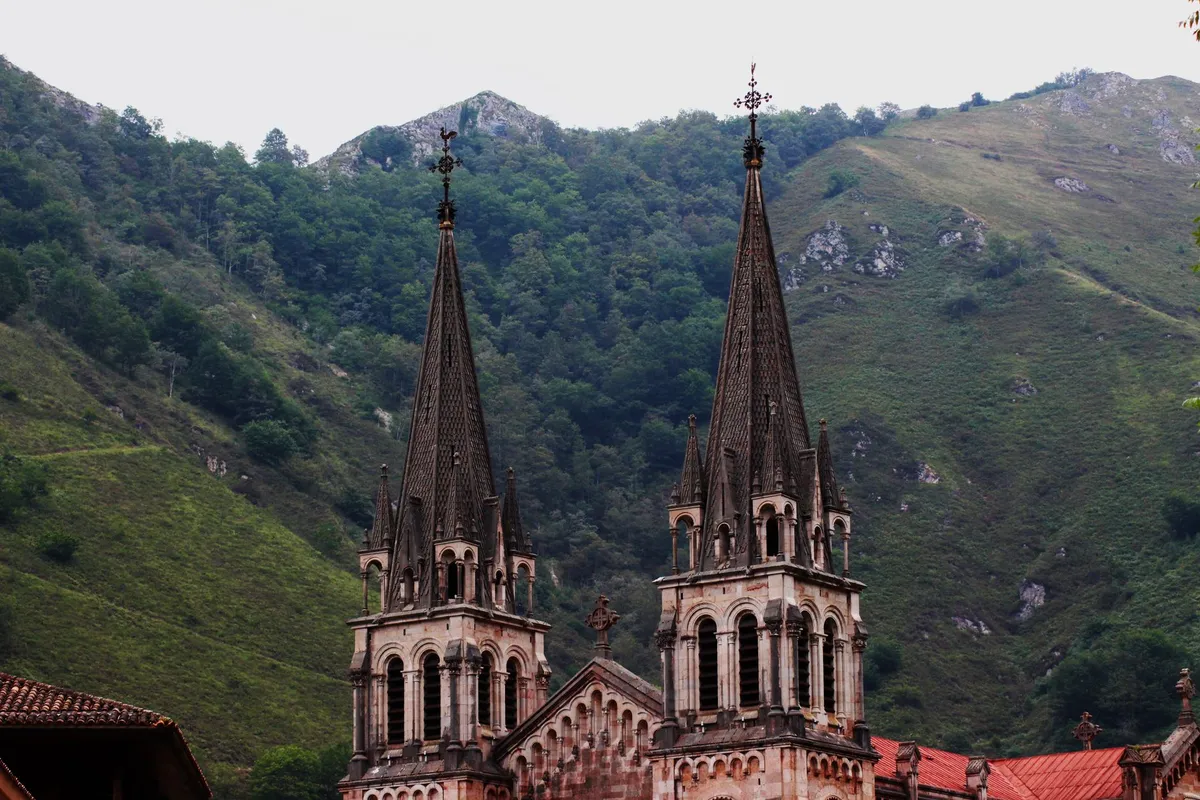
The Cathedral is the anchor of the visit. The cultural ticket gives access to the monumental complex — Cathedral, Cámara Santa, Church Museum, Gothic cloister, and crypt — and can be bought at reception or online; groups of more than 15 people need to book. The tower is a separate visit, about 1 hour, and requires attention to the schedule. For up-to-date access and accessibility information, check the Cathedral’s official page.
In the surrounding streets, include San Tirso, the Museum of Fine Arts, and the Archaeological Museum. Then head to the Fontán and Trascorrales squares: they’re not “check-it-off-the-list stops,” but the best way to grasp Oviedo’s scale and fit in a cider or a meal without crossing the whole city.
Santa María del Naranco and San Miguel de Lillo
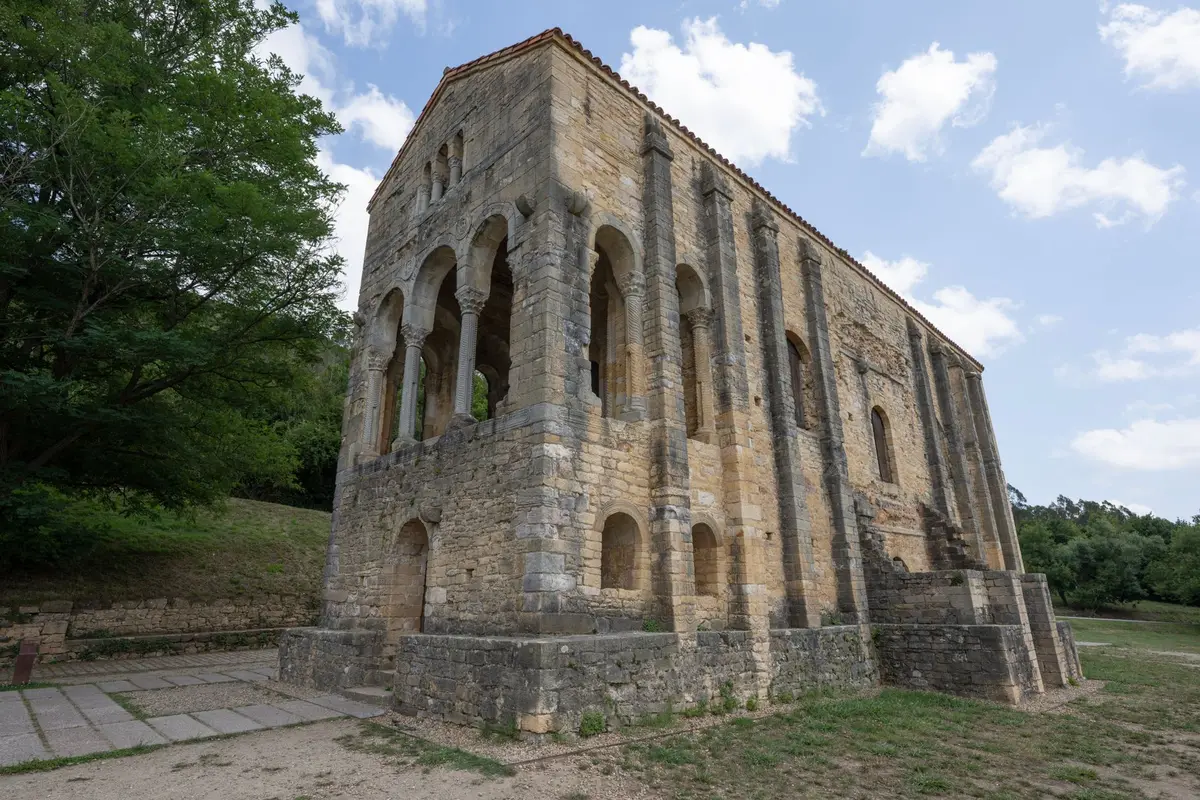
Heading up to Naranco is worth it even for those who don’t usually prioritize churches: Santa María del Naranco and San Miguel de Lillo visually explain Asturian pre-Romanesque art. Together with San Julián de los Prados, the Cámara Santa, and Foncalada, they’re part of the Monuments of Oviedo and the Kingdom of Asturias recognized by UNESCO, as summarized by the official Spain tourism portal. Plan your transport and opening hours before leaving the center, since the experience depends more on logistics than on a casual stroll.
Campo de San Francisco, Uría, and food
Campo de San Francisco is the green break between the old center and the Ensanche; from there, Uría street shows the more commercial side. For food, look for Asturian specialties like fabada, local cheeses, cachopo, sweets, and cider, but choose the restaurant based on where you are in the itinerary — near the Cathedral and the Fontán for a sightseeing lunch; near Uría if you’re shopping or heading to the station.
If you’d rather start with context than piece the route together yourself, a guided tour of the center can keep the Cathedral, the sculptures, and the squares from becoming just a string of facades.
 Partner · Civitatissee all activities in Oviedo ›
Covadonga, Cangas de Onís Lakes + Lastres Day Trip
Rating 8.8 · 4,230 reviews on Civitatis
- See ›Oviedo Free Walking TourRating 9.5 · 53 reviews on Civitatis
- Covadonga & Cangas de Onís Small Group Day TripRating 9.2 · 234 reviews on Civitatisfrom€67per personSee ›
- Nalón River Canoe DescentRating 9.5 · 26 reviews on Civitatisfrom€50per personSee ›
- Fernando Alonso Museum TicketRating 9.5 · 202 reviews on Civitatisfrom€15per personSee ›
Civitatis prices on 28/09/2026, from, per person. They may change.
1 or 2-day itinerary in Oviedo
With 1 day, focus on the Cathedral, Cámara Santa, historic center, Fontán, and Campo de San Francisco; add Naranco only if the hours and the trip fit. With 2 days, save the first for the urban core and use the second for Santa María del Naranco, San Miguel de Lillo, and a museum or a leisurely stroll. The Cathedral tower takes about an hour, but the rest of the time should account for lines and the visit to the complex.
This arrangement is more efficient than trying to crisscross the city several times. Those arriving as pilgrims can start at the Cathedral, where the Camino Primitivo signage is; those just on a city break should treat the route as context, not as an itinerary obligation.
How to get there and get around
Oviedo has high-speed rail connections and is less than 45 minutes from the airport, according to Turismo Asturias. To decide on the best route, compare train or flight schedules with your accommodation, especially if your trip continues along the coast or into the Picos de Europa. Within the center, walking is the best choice; a car becomes more useful for a rural route or infrequent schedules outside the urban area.
To follow the Camino de Santiago after your visit, it’s worth complementing your planning with this guide to Santiago de Compostela and how to choose your Camino. The connection makes sense because the Camino Primitivo starts in Oviedo, but it doesn’t replace organizing stages, luggage, and bookings.
Asturian cities and landscapes to combine with Oviedo
Oviedo is inland; so round out your itinerary with Gijón or Avilés if you want sea and urban atmosphere, or with Cudillero and Luarca if coastal villages are the priority. For mountains, Cangas de Onís and the Picos de Europa call for a more structured day. The capital’s advantage is sleeping in the same place, but the choice is only good when you accept that some travel will be part of the trip.
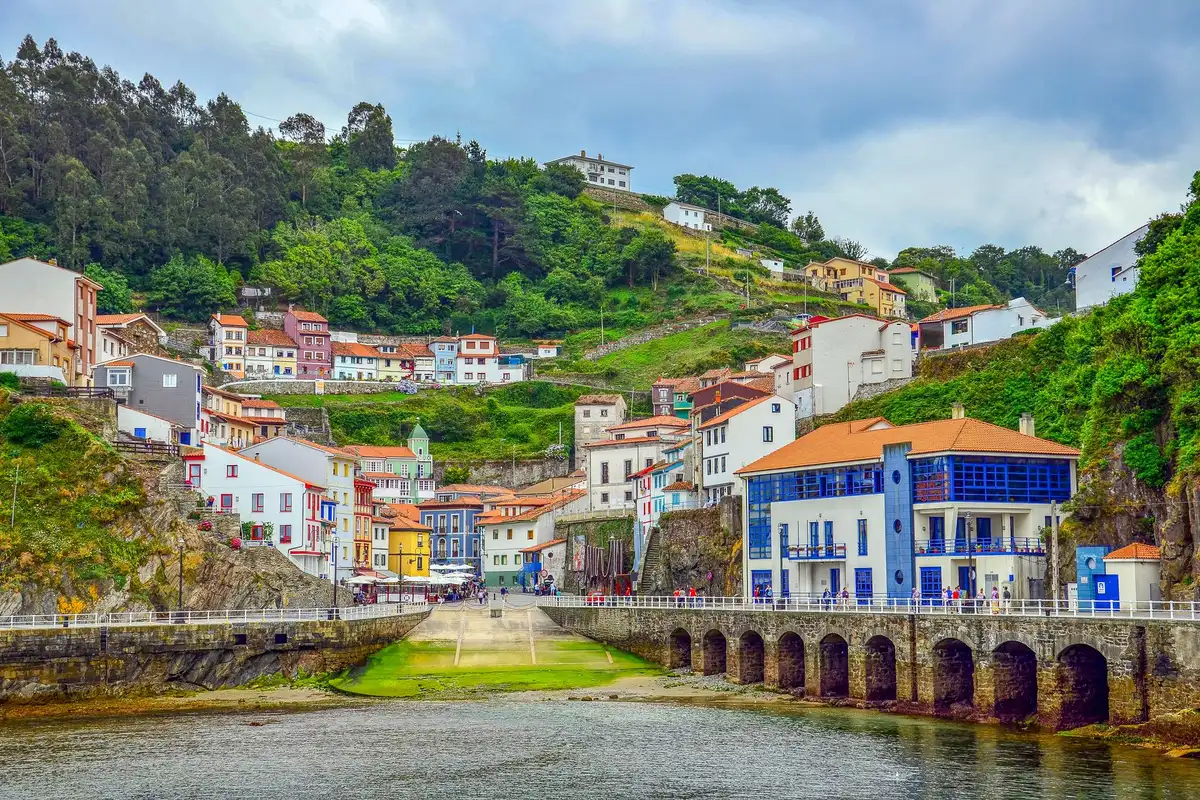
The Asturian coast has its own identity; don’t treat it as an appendage of the historic center. If your trip continues east, the guide to Santander, capital of Cantabria helps you sketch a route through northern Spain with more than one stop.
An organized excursion is especially useful for those who won’t rent a car and want to fit coastal villages into the same day. Before booking, check the duration, meeting point, and whether the format leaves enough time in each town.
What is it like to live in Oviedo, Spain?
Living in Oviedo tends to appeal to those looking for a regional capital on a human scale: the center is walkable, there’s a university, services, and cultural life, while nature and other Asturian cities are close by. In exchange, the job market is smaller and more sector-specific than in Madrid, Barcelona, or Valencia; the decision should be based on a job, studies, or income already lined up, not just on tourist appeal.
For housing, compare recent listings by neighborhood and property condition, since the idealista rent report is updated monthly and changed its methodology in July 2026. The center, Uría, and areas very close to the university favor walking, but may have a different relationship between price, size, and noise. Before signing, do the actual commute to work or campus, check heating and insulation for the wet winter, and ask which bills are not included in the rent.
Without a car, urban life is viable for those living near their daily activities. For beaches, trails, and smaller villages, a car or excursions greatly expand your options. Brazilians planning to move also need to separate travel planning from residency planning: confirm visa, work authorization, empadronamiento, health coverage, and tax residency directly with the competent Spanish authorities or with qualified advisors. The available municipal statistics from the Tax Agency are from the 2023 fiscal year and serve only as context, not as a migration guide.
In short: choose Oviedo if you want a cultural, compact base that’s well positioned for exploring northern Spain; set aside two days if pre-Romanesque art is a priority. As a place to live, the city makes more sense once you’ve validated income, neighborhood, and paperwork — and not just because the historic center is easy to love.
 HotelAs soon as you have datesCompare neighbourhoods and guest ratings.Booking ›
- ActivitiesBefore you travelBook ahead the ones with limited spots.Civitatis ›