Category: Culture & History

  • The Forbidden City in Beijing: The Complete Visitor’s Guide

    The Forbidden City in Beijing: The Complete Visitor’s Guide

    🇧🇷 POR | 🇫🇷 FR | 🇺🇸 EN | 🇪🇸 ES

    The Forbidden City is the largest wooden palace complex in the world, the historic heart of Beijing, and sits less than 500 meters from Tiananmen Square—the largest public square on the planet. You can visit both on foot in a single day, and together they form the most concentrated route of Chinese history you’ll find in one morning. There are no direct flights from the US; the trip requires a connection in Europe, Canada, or the Middle East, with a total travel time between 20 and 26 hours. The best times to go are spring (March to May) or fall (September to November), when the humid summer heat and dry winter cold take a break. A full day, with extra time for lines and Jingshan Park just behind the palace, is the minimum recommended. And before you buy any tickets, it’s worth understanding a detail that catches many people off guard: there is no physical ticket booth at the Forbidden City.

    How to get there

    There are no direct flights between the US and Beijing. Departing from major hubs like New York (JFK), Los Angeles (LAX), or San Francisco (SFO), options with one connection include Air Canada (via Toronto), Turkish Airlines (via Istanbul), Air France (via Paris), and Emirates (via Dubai). The total trip, including the layover, usually falls between 20 and 26 hours, depending on the airline and connection time. From other cities, Emirates also operates with a connection in Dubai. Search on more than one booking site before you buy, because the price variation between close dates is often significant.

    Beijing has two international airports: the traditional Beijing Capital (PEK), northeast of the city, and the newer Beijing Daxing (PKX), to the south. Check which airport your flight lands at before booking your hotel—the distance between the two is over 60 km, and going from one to the other takes more than an hour. From either one, the express metro (Airport Express from PEK, or the Daxing Airport Express line) takes you to the center in 20 to 40 minutes for less than 30 yuan. Taxis and ride-hailing apps (Didi) also work well, but rush hour traffic can double your travel time.

    Once in the city, the Beijing subway is the most predictable way to reach the Forbidden City. Tiananmen East station (Line 1) drops you a few minutes’ walk from the Meridian Gate, the palace’s main entrance. Buy a Yikatong card at the station machines or pay by tap with an international card—most lines already accept it.

    Best time to visit and how long to stay

    “Can you visit any time of year?” You can, but the experience changes a lot. Summer (June to August) is hot, humid, and the most crowded, with long lines even if you’ve booked your ticket online. Winter (December to February) is dry and cold—sometimes below freezing—but the courtyards are practically empty, which makes for photos without people in the way. Spring and fall balance mild temperatures with moderate visitor flow, making them the most recommended periods.

    Set aside the entire day just for the Forbidden City and Tiananmen. The palace alone requires three to four hours of walking—the built area covers over 720,000 square meters, with more than 90 interconnected courtyards. If you have energy left, Jingshan Park, just behind the north exit, has a viewpoint where you can see the golden roof of the entire complex, and the climb takes less than 20 minutes.

    What to see at the Forbidden City and Tiananmen Square

    The visit follows an almost straight axis: you enter through Tiananmen Square, cross the Tiananmen Gate (where Mao’s portrait is), proceed through the Meridian Gate, and from there walk south to north through the imperial courtyards until you exit through the Gate of Divine Might, facing Jingshan Park.
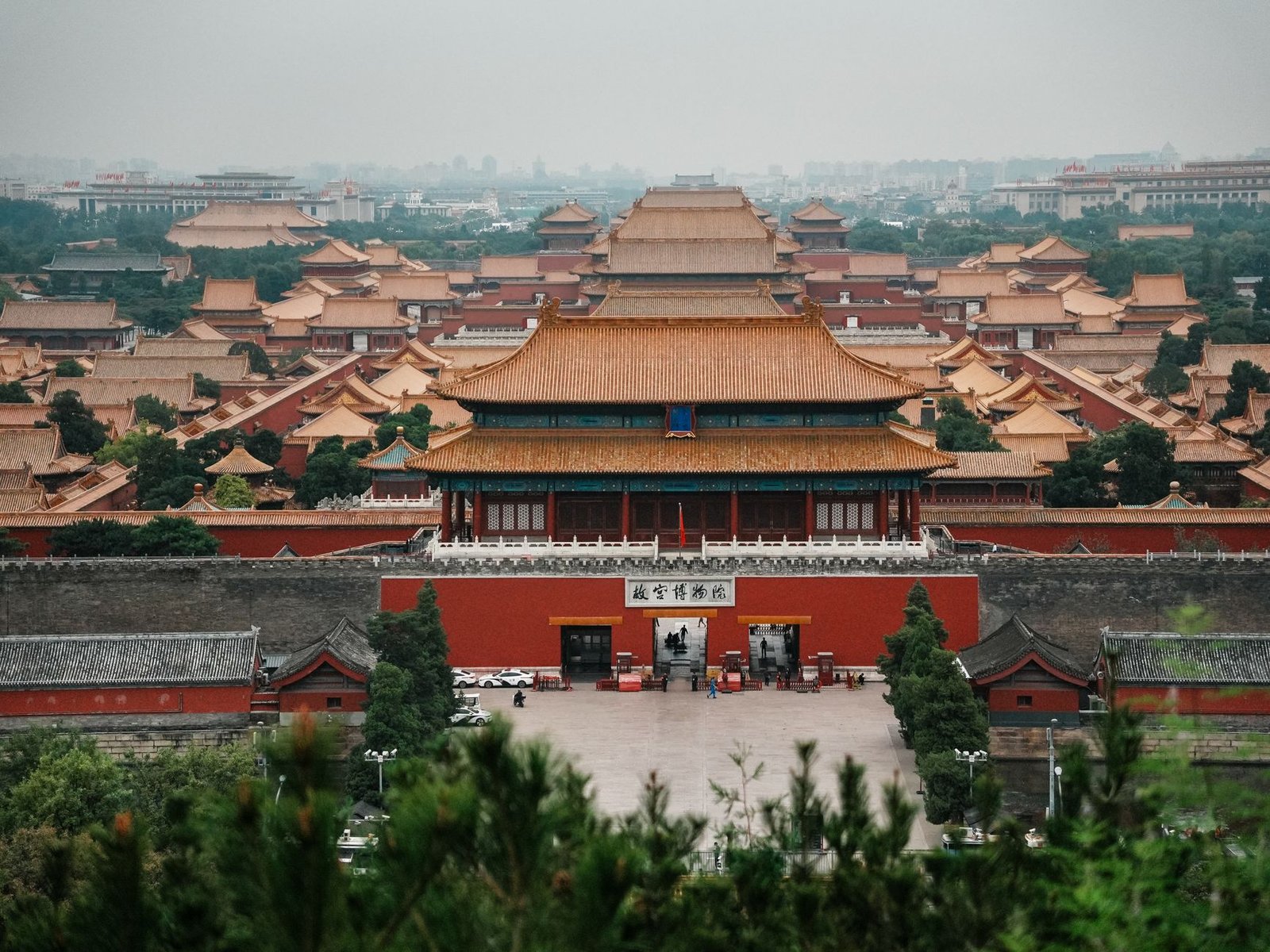
    Aerial view of the Forbidden City in Beijing, China
    Aerial view of the Forbidden City palace complex in Beijing. | Photo: Da Na / Pexels

    The Forbidden City

    The official name is the Palace Museum, and it was the residence of 24 emperors from the Ming and Qing dynasties, between 1420 and 1912. The central axis concentrates the three most photographed ceremonial halls: the Hall of Supreme Harmony, where the emperor was crowned; the Hall of Central Harmony, used for ritual preparation; and the Hall of Preserving Harmony, the stage for banquets and the imperial exam. Behind them, the northern half of the complex was the private residence of the imperial family, with smaller courtyards and the Imperial Garden, one of the quietest spots on the tour. The full history of the construction, which began in 1406, is detailed on the Wikipedia page for the Forbidden City.

    Tickets cost 60 yuan (about $8.50 USD, subject to exchange rate) in the high season, from April 1 to October 31, and 40 yuan in the low season, from November 1 to March 31. There is no ticket sales at the box office: everything is reserved online, with tickets released exactly 7 days before the visit date, usually at 8 PM Beijing time. This means planning your purchase in advance and being patient enough to try again if the batch sells out quickly—which happens often on Chinese holidays. Opening hours in the high season are from 8:30 AM to 5 PM, with last entry at 4 PM; in the low season, from 8:30 AM to 4:30 PM, with last entry at 3:30 PM. The museum is closed on Mondays, except for national holidays.

    Tiananmen Square

    On the other side of the Tiananmen Gate lies the square that gives the complex its name—the largest public square in the world, with space for over 400,000 people. It’s here that you’ll find the Mausoleum of Mao Zedong, the Monument to the People’s Heroes, and the Great Hall of the People, the seat of the Chinese parliament—historical data and curiosities about the square are gathered on the Wikipedia entry for Tiananmen Square. Security is strict: expect bag checks and metal detectors both to enter the square and to access the Forbidden City, so arrive with plenty of time to spare.
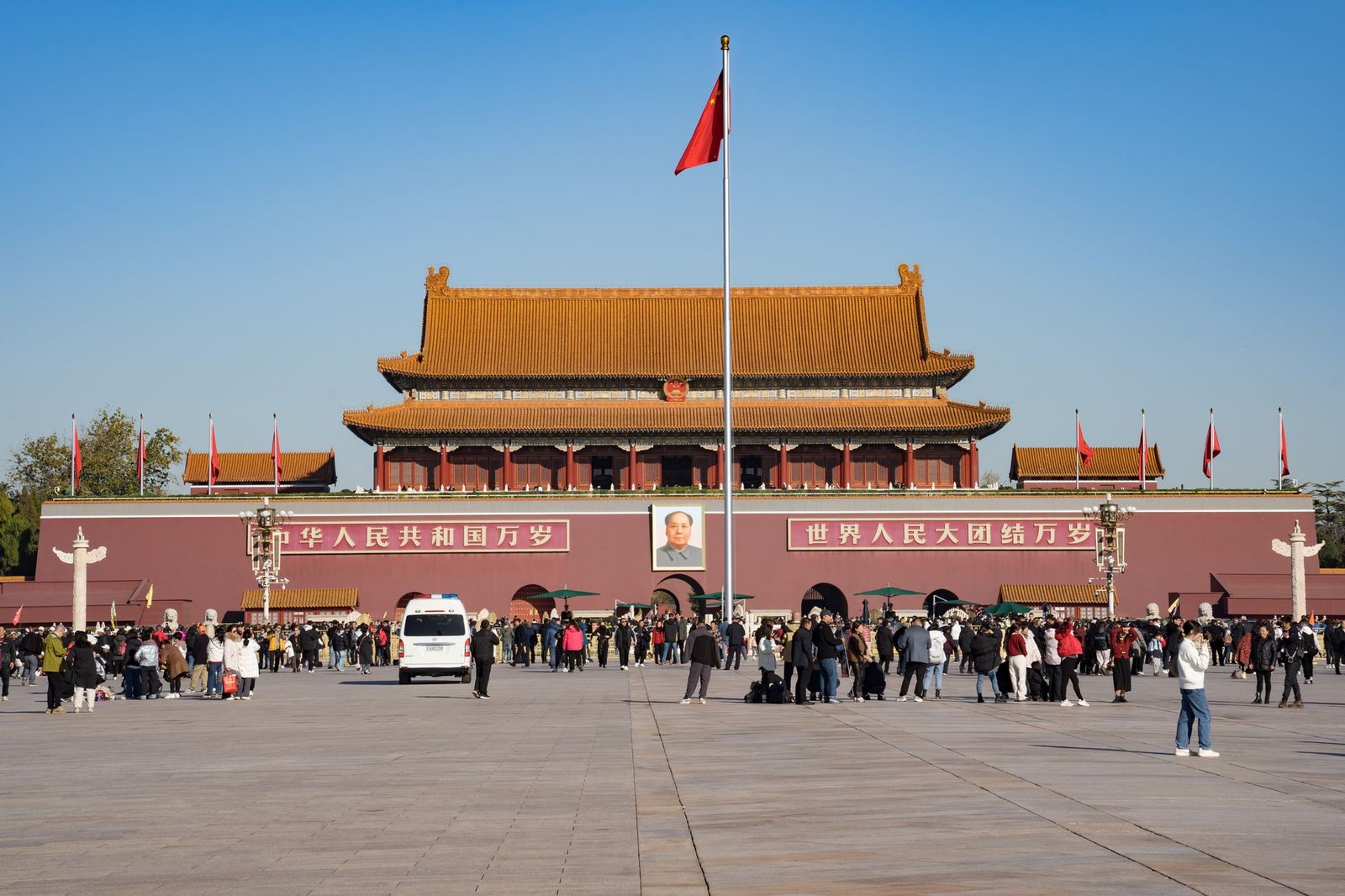
    Tiananmen Square with the Forbidden City gate in the background, Beijing
    Tiananmen Square, with the Gate of Heavenly Peace in the background. | Photo: YFS Visuals / Pexels

    Hall of Supreme Harmony and the Imperial Garden

    If you’re short on time, prioritize two spots: the courtyard in front of the Hall of Supreme Harmony, the largest in the complex and where the scale of the place truly hits you, and the Imperial Garden, at the north exit, with centuries-old pines and carved stones that contrast with the rigid architecture of the rest of the palace. Many visitors get tired before reaching it and miss this part—it’s worth saving energy for the end of the route.

    What to combine with your visit

    From Jingshan Park, at the north exit of the Forbidden City, the central viewpoint shows the golden roof of the entire palace in a single photo—it’s the most repeated angle on social media, but it only exists because the park was built on the earth excavated from the palace moat, gaining enough height for this view.
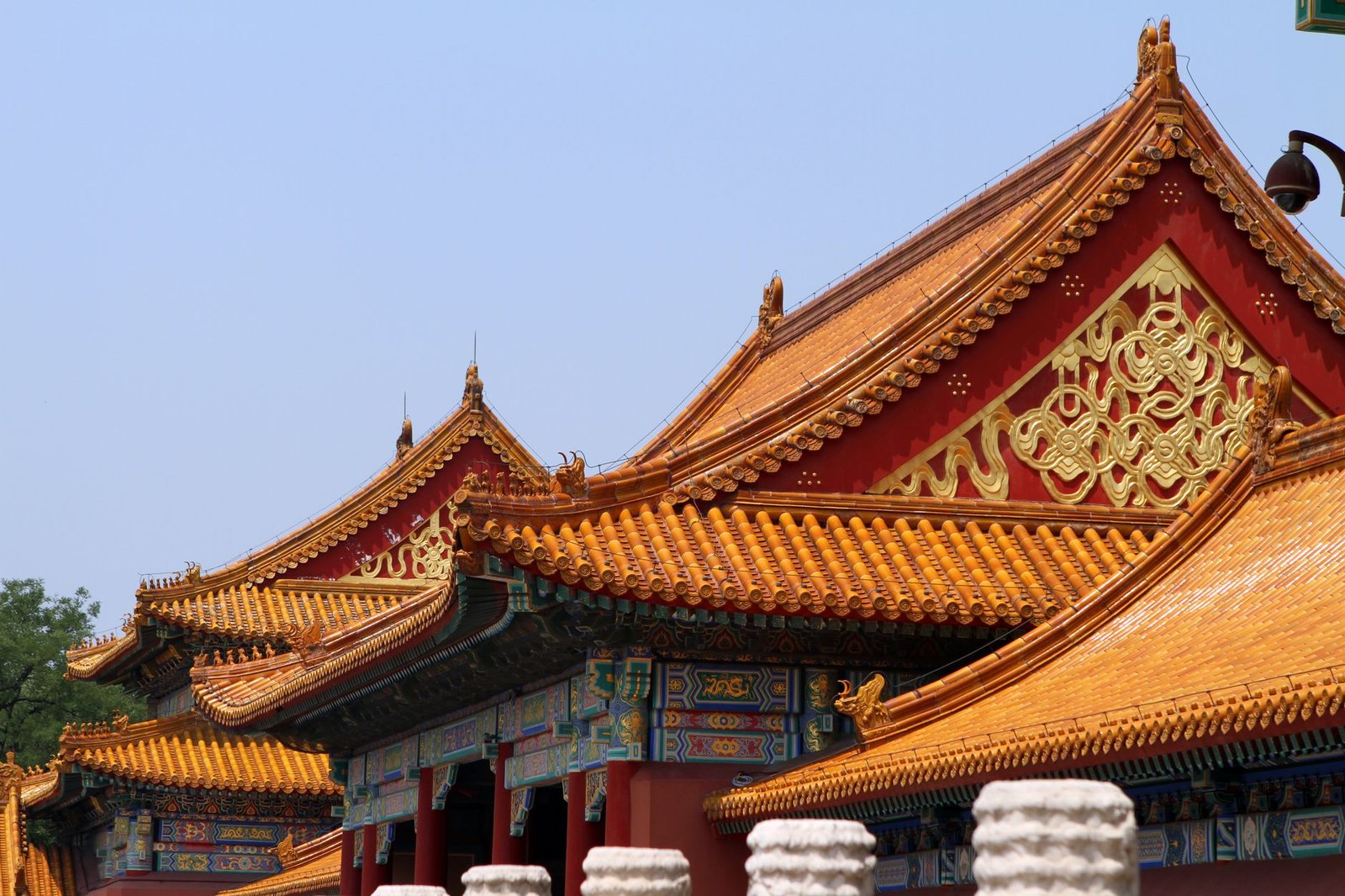
    Golden roofs and architectural details of the Forbidden City
    Detail of the glazed yellow tile roofs, reserved for royalty. | Photo: Ramaz Bluashvili / Pexels

    West of the square is Beihai Lake, another imperial park with a white Tibetan temple on top of an island—quieter than Jingshan and less visited by foreign tourists. And if you have an extra day on your trip, the Great Wall of China is less than two hours by car from the Badaling or Mutianyu sections; we’ve broken down how to organize this day trip in the complete guide to the Great Wall of China.

    The hutongs—traditional alleyways of low houses with inner courtyards—are just a few minutes’ walk from the Forbidden City, especially in the Nanluoguxiang and Shichahai areas. It’s the most direct contrast to the monumentality of the palace: narrow streets, small shops, and a much more informal Beijing.

    Where to eat

    Wangfujing Street, a few minutes’ walk from the east exit of the Forbidden City, has everything from traditional Peking duck restaurants to street stalls with exotic skewers—more of a visual attraction than a culinary recommendation, it’s worth noting. For the city’s most famous dish, Peking duck, two century-old restaurants often appear in local recommendations: Quanjude and Bianyifang, both with branches relatively close to the historic center. A whole duck portion to share runs around 200 to 300 yuan.
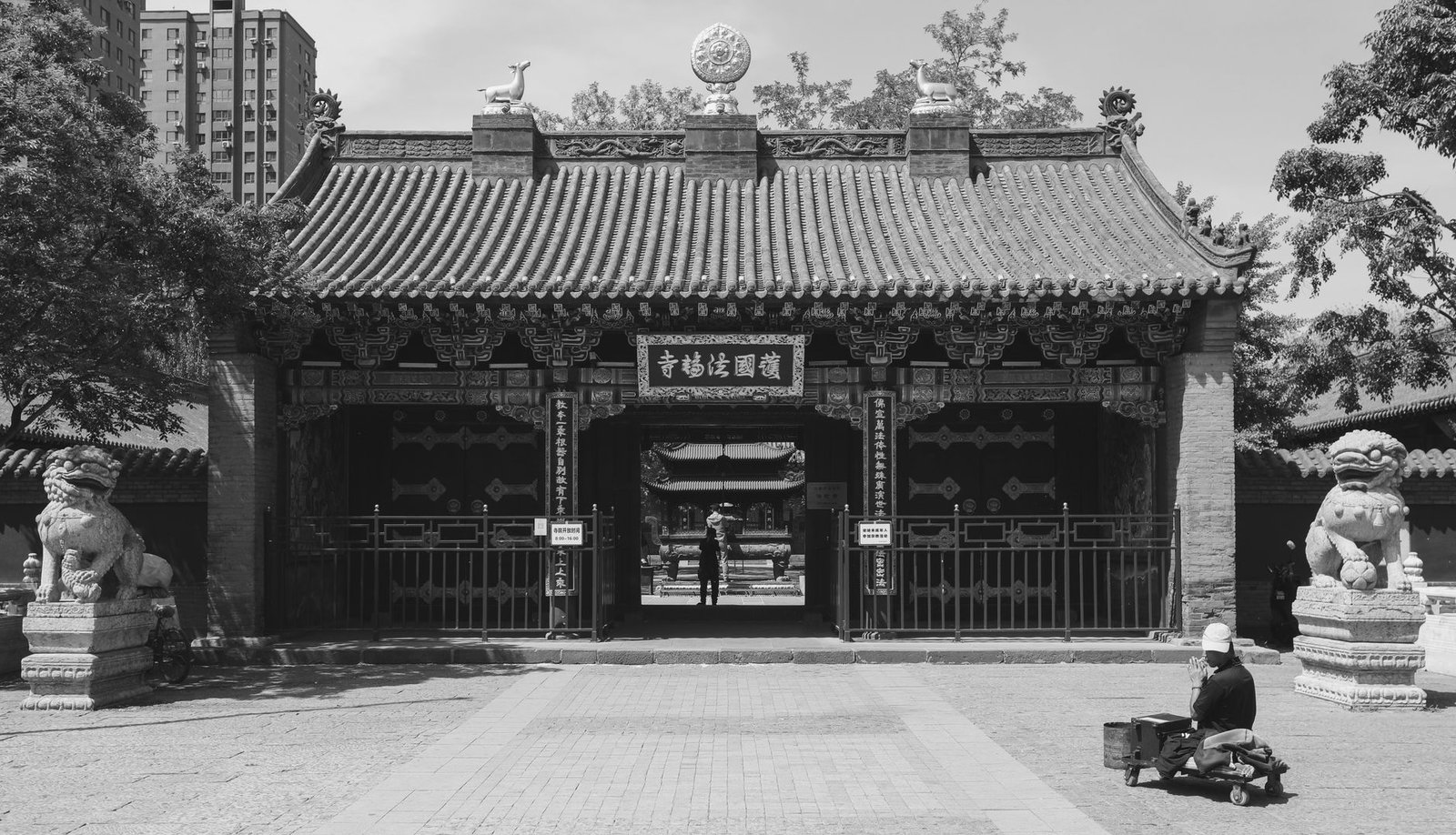
    Chinese temple gate with guardian lion statues in Beijing
    Traditional Chinese gate with guardian lions, common at the entrance of temples and hutongs in Beijing. | Photo: WEI WU / Pexels

    For a quicker meal between the Forbidden City and the Wall, or before catching the subway back, the hutongs near Nanluoguxiang have good options for jiaozi (steamed or fried dumplings) and hand-pulled noodles (la mian), with prices much more affordable than the tourist restaurants on the square.

    Where to stay

    For those who want to be within walking distance of everything, hotels around Wangfujing and Dongcheng put the Forbidden City, the square, and many hutongs a short walk away—it’s the most central and also the most expensive area. Those looking for a balance between location and price usually check out the area around Dongsi or Yonghegong metro stations, still within the second ring road, with direct subway access to the historic center. For those prioritizing savings, more affordable options can be found near metro lines 2 or 5, a bit further out, but still with a direct connection without transfers to the central area.

    Practical tips

    It’s worth setting aside the whole day for those who love history and don’t mind walking a lot—the route inside the Forbidden City is over 3 km from entrance to exit. For those in a hurry, you can do a shortened version in about two hours by following just the central axis, but the feeling of “rushing” against the size of the place is inevitable.

    The most common mistake is leaving the purchase of your Forbidden City ticket to the last minute. Since sales open only 7 days in advance and there is no physical ticket booth, anyone who doesn’t book ahead simply won’t get in on their planned day. Set an alarm for the release time and have your passport handy—registration is done with your document number.

    About currency: the yuan (CNY) is the local currency, and international cards aren’t always accepted outside of hotels and larger stores—local payment apps dominate daily life. It’s worth withdrawing cash or setting up Alipay/WeChat Pay with an international card before your trip. About internet: many Western services (Google, WhatsApp, Instagram) don’t work without a pre-configured VPN—sort this out before you board, because downloading a VPN once you’re inside China is usually more difficult.

    About visas: entry rules for US citizens change frequently, including temporary visa waiver policies. Confirm the visa requirements and the updated procedure directly on the official Chinese consulate website before buying your ticket—don’t buy based on outdated information.

    Frequently asked questions

    How much does a Forbidden City ticket cost?

    60 yuan in the high season (April to October) and 40 yuan in the low season (November to March). Extra tickets for the Treasure Gallery and the Clock Gallery cost 10 yuan each and are sold separately.

    Do I need to book the ticket in advance?

    Yes. There are no on-site sales—everything is done through the official website, with tickets released 7 days before the chosen date, usually at 8 PM Beijing time. Buying at the last minute is the most common mistake visitors make.

    Does Tiananmen Square have a separate ticket?

    The square itself is free to enter, but some monuments within it, like the Mausoleum of Mao, have their own hours and entry rules, including security checks.

    Can I visit the Forbidden City and the Great Wall of China on the same day?

    It’s not recommended. The Forbidden City already takes a full day, and the most visited sections of the Wall are almost two hours by car from the center—it’s worth setting aside separate days.

    What is the best time to visit Beijing?

    Spring (March to May) and fall (September to November), because of the mild weather and a more balanced visitor flow than in summer.


  • The Forbidden City in Beijing: Complete Visitor’s Guide

    The Forbidden City in Beijing: Complete Visitor’s Guide

    🇧🇷 POR | 🇫🇷 FR | 🇺🇸 EN | 🇪🇸 ES

    The Forbidden City is the largest wooden palace complex in the world, the historic heart of Beijing, and sits less than 500 meters from Tiananmen Square—the largest public square on the planet. You can visit both on foot in the same day, and together they form the most concentrated route of Chinese history you’ll find in a single morning. There are no direct flights from the US; the trip requires a connection in Europe, Canada, or the Middle East, with a total travel time between 20 and 26 hours. The best times to go are spring (March to May) or fall (September to November), when the humid summer heat and dry winter cold take a break. A full day, with extra time for lines and Jingshan Park just behind the palace, is the minimum recommended. And before you buy any tickets, it’s worth understanding a detail that catches many people off guard: there is no physical ticket booth at the Forbidden City.

    How to get there

    There are no direct flights between the US and Beijing. Departing from major hubs like New York (JFK), Los Angeles (LAX), or San Francisco (SFO), one-stop options include Air Canada (via Toronto), Turkish Airlines (via Istanbul), Air France (via Paris), and Emirates (via Dubai). The total travel time, including the layover, usually falls between 20 and 26 hours, depending on the airline and connection time. From other US cities, Emirates also operates with a connection in Dubai. Search on more than one booking site before you buy, because price variations between close dates can be significant.

    Beijing has two international airports: the traditional Beijing Capital (PEK), northeast of the city, and the newer Beijing Daxing (PKX), to the south. Check which airport your flight lands at before booking your hotel—the distance between the two is over 60 km, and going from one to the other takes more than an hour. From either one, the express metro (Airport Express from PEK, or the Daxing Airport Express line) takes you to the center in 20 to 40 minutes for less than 30 yuan. Taxis and ride-hailing apps (Didi) also work well, but rush hour traffic can double travel time.

    Once in the city, Beijing’s subway is the most predictable way to reach the Forbidden City. Tiananmen East station (Line 1) drops you a few minutes’ walk from the Meridian Gate, the palace’s main entrance. Buy a Yikatong card at station machines or pay by tap with an international card—most lines already accept it.

    Best time to visit and how long to stay

    “Can you visit any time of year?” You can, but the experience changes a lot. Summer (June to August) is hot, humid, and the most crowded, with long lines even if you’ve booked your ticket online. Winter (December to February) is dry and cold—sometimes below freezing—but the courtyards are practically empty, which makes for photos with no one in the way. Spring and fall balance mild temperatures with moderate visitor flow, making them the most recommended periods.

    Set aside the entire day just for the Forbidden City and Tiananmen. The palace alone requires three to four hours of walking—the built area covers over 720,000 square meters, with more than 90 interconnected courtyards. If you have energy left, Jingshan Park, right behind the north exit, has a viewpoint where you can see the golden roof of the entire complex, and the climb takes less than 20 minutes.

    What to see at the Forbidden City and Tiananmen Square

    The visit follows a nearly straight axis: you enter through Tiananmen Square, cross the Tiananmen Gate (where Mao’s portrait is), proceed through the Meridian Gate, and from there walk south to north through the imperial courtyards until you exit through the Gate of Divine Might, facing Jingshan Park.

    Aerial view of the Forbidden City in Beijing, China
    Aerial view of the Forbidden City palace complex in Beijing. | Photo: Da Na / Pexels

    Forbidden City

    The official name is the Palace Museum, and it was the residence of 24 emperors from the Ming and Qing dynasties, between 1420 and 1912. The central axis concentrates the three most photographed ceremonial halls: the Hall of Supreme Harmony, where the emperor was crowned; the Hall of Central Harmony, used for ritual preparation; and the Hall of Preserving Harmony, the stage for banquets and the imperial exam. Behind them, the northern half of the complex was the private residence of the imperial family, with smaller courtyards and the Imperial Garden, one of the quietest spots on the tour. The full history of its construction, which began in 1406, is detailed on the Wikipedia page for the Forbidden City.

    Tickets cost 60 yuan (about $8.50 USD, subject to exchange rate fluctuations) during the high season, from April 1 to October 31, and 40 yuan during the low season, from November 1 to March 31. There is no ticket sales at the gate: everything is reserved online, with tickets released exactly 7 days before the visit date, usually at 8 PM Beijing time. This means planning your purchase in advance and being patient enough to try again if the batch sells out quickly—which happens often on Chinese holidays. Opening hours during the high season are from 8:30 AM to 5 PM, with last entry at 4 PM; during the low season, from 8:30 AM to 4:30 PM, with last entry at 3:30 PM. The museum is closed on Mondays, except on national holidays.

    Tiananmen Square

    On the other side of the Tiananmen Gate lies the square that gives the complex its name—the largest public square in the world, with space for over 400,000 people. It’s home to the Mausoleum of Mao Zedong, the Monument to the People’s Heroes, and the Great Hall of the People, the seat of the Chinese parliament—historical data and curiosities about the square are gathered on the Wikipedia entry for Tiananmen Square. Security is strict: expect bag checks and metal detectors both to enter the square and to access the Forbidden City, so arrive with plenty of time to spare.

    Tiananmen Square with the Forbidden City gate in the background, Beijing
    Tiananmen Square, with the Gate of Heavenly Peace in the background. | Photo: YFS Visuals / Pexels

    Hall of Supreme Harmony and Imperial Garden

    If you’re short on time, prioritize two spots: the courtyard in front of the Hall of Supreme Harmony, the largest in the complex and where the scale of the place truly hits you, and the Imperial Garden, at the north exit, with centuries-old pines and carved stones that contrast with the rigid architecture of the rest of the palace. Many visitors tire out before reaching it and miss this part—it’s worth saving energy for the end of the route.

    What to combine with your visit

    From Jingshan Park, at the north exit of the Forbidden City, the central viewpoint shows the golden roof of the entire palace in a single photo—it’s the most repeated angle on social media, but it only exists because the park was built on the earth excavated from the palace moat, gaining enough height for this view.

    Golden roofs and architectural details of the Forbidden City
    Detail of the glazed yellow tile roofs, reserved for royalty. | Photo: Ramaz Bluashvili / Pexels

    West of the square is Beihai Lake, another imperial park with a white Tibetan temple on top of an island—quieter than Jingshan and less visited by foreign tourists. And if you have an extra day on your trip, the Great Wall of China is less than two hours by car from the Badaling or Mutianyu sections; we’ve broken down how to organize this day trip in our complete guide to the Great Wall of China.

    The hutongs—traditional alleyways of low houses with inner courtyards—are just a few minutes’ walk from the Forbidden City, especially in the Nanluoguxiang and Shichahai areas. It’s the most direct contrast to the monumentality of the palace: narrow streets, small shops, and a much more informal Beijing.

    Where to eat

    Wangfujing Street, a few minutes’ walk from the east exit of the Forbidden City, has everything from traditional Peking duck restaurants to street stalls with exotic skewers—more of a visual attraction than a culinary recommendation, it’s worth noting. For the city’s most famous dish, Peking duck, two century-old establishments often appear in local recommendations: Quanjude and Bianyifang, both with branches relatively close to the historic center. A whole duck portion to share runs around 200 to 300 yuan.

    Chinese temple gate with guardian lion statues in Beijing
    Traditional Chinese gate with guardian lions, common at the entrance of temples and hutongs in Beijing. | Photo: WEI WU / Pexels

    For a quicker meal between the Forbidden City and the Wall, or before catching the subway back, the hutongs near Nanluoguxiang have good options for jiaozi (steamed or fried dumplings) and hand-pulled noodles (la mian), with prices much more affordable than the tourist restaurants around the square.

    Where to stay

    For those who want to be within walking distance of everything, hotels around Wangfujing and Dongcheng put the Forbidden City, the square, and many hutongs a short walk away—it’s the most central and also the most expensive area. Those looking for a balance between location and price usually check out the area around Dongsi or Yonghegong metro stations, still within the second ring road, with direct subway access to the historic center. For budget-conscious travelers, more affordable options can be found near metro lines 2 or 5, a bit further out but still with a direct connection without transfers to the central area.

    Practical tips

    It’s worth setting aside the whole day for those who love history and don’t mind walking a lot—the route inside the Forbidden City is over 3 km from entrance to exit. For those in a hurry, you can do a condensed version in about two hours by following just the central axis, but the feeling of “rushing” against the size of the place is inevitable.

    The most common mistake is leaving the Forbidden City ticket purchase to the last minute. Since sales open only 7 days in advance and there’s no physical ticket booth, anyone who doesn’t book ahead simply won’t get in on their planned day. Set an alarm for the release time and have your passport handy—registration is done with your document number.

    About currency: the yuan (CNY) is the local currency, and international cards aren’t always accepted outside of hotels and larger stores—local payment apps dominate daily life. It’s worth withdrawing cash or setting up Alipay/WeChat Pay with an international card before your trip. About internet: many Western services (Google, WhatsApp, Instagram) don’t work without a pre-configured VPN—sort this out before you board, because downloading a VPN once you’re inside China is usually more difficult.

    About visas: entry rules for US citizens change frequently, including temporary visa waiver policies. Confirm the visa requirements and the updated procedure directly on the official Chinese consulate website before buying your ticket—don’t buy based on outdated information.

    Frequently asked questions

    How much does a Forbidden City ticket cost?

    60 yuan during the high season (April to October) and 40 yuan during the low season (November to March). Extra tickets for the Treasure Gallery and the Clock Gallery cost 10 yuan each and are sold separately.

    Do I need to book the ticket in advance?

    Yes. There are no on-site sales—everything is done through the official website, with tickets released 7 days before the chosen date, usually at 8 PM Beijing time. Buying at the last minute is the most common mistake visitors make.

    Does Tiananmen Square have a separate ticket?

    The square itself is free to enter, but some monuments within it, like the Mausoleum of Mao, have their own hours and entry rules, including security checks.

    Can I visit the Forbidden City and the Great Wall in the same day?

    It’s not recommended. The Forbidden City already takes a full day, and the most visited sections of the Wall are almost two hours by car from the center—it’s worth setting aside separate days.

    What’s the best time to visit Beijing?

    Spring (March to May) and fall (September to November), because of the mild weather and a more balanced visitor flow compared to summer.

  • Leaning Tower of Pisa: The Complete Visitor’s Guide

    Leaning Tower of Pisa: The Complete Visitor’s Guide

    🇧🇷 POR | 🇫🇷 FR | 🇺🇸 EN | 🇪🇸 ES

    The Leaning Tower of Pisa is the bell tower of the Cathedral of Pisa in Tuscany, and it’s been standing for over 800 years despite its nearly 4-degree tilt. Located in northern Italy, about 50 miles from Florence and 210 miles from Rome, it’s an easy day trip from either city. The best time to visit is between April and June or September and October, when the weather is milder and the crowds are a bit thinner. A full day in Pisa, including the train ride, can fit into a budget of €60 to €100 per person, covering tickets, transport, and food. One thing that catches many people off guard: the tower isn’t the only reason to stay in Pisa—the Piazza dei Miracoli is home to four monuments that deserve at least half a day of your time.

    How to get there

    “Can you get to Pisa without renting a car?” Yes, and it’s the easiest way to get there. Travelers from the US usually fly into Rome Fiumicino or Milan, take a connecting flight, and then hop on a train to Pisa Centrale or fly directly into Pisa Airport (Galileo Galilei), which is just over half a mile from the city center.

    From Florence, trains leave from Santa Maria Novella station to Pisa Centrale, with departures every 20 minutes to an hour. The trip costs around €8.40 and takes between 50 minutes and 1 hour 20 minutes, depending on how many stops the train makes along the way.

    From Rome, the most practical option is the Freccia Bianca, a direct train from Termini station that arrives in about 2 hours 50 minutes, with tickets ranging from €19.90 to €69.90 depending on how far in advance you book. There are also cheaper, slower options like the Intercity (around €38, 3 hours 10 minutes) and the Regionale Veloce (around €23, 4 hours 10 minutes).

    From Pisa Centrale station to the Tower, you can walk in about 20 minutes or take the LAM Rossa city bus, which stops near the Piazza dei Miracoli. If you’re arriving directly at the airport, you can take the PisaMover, an automated tram that connects the terminal to the train station in just a few minutes, and then walk or take a bus from there.

    If you’re planning a bigger road trip through Tuscany, you can also arrive by rental car, since Pisa is close to the A11 and A12 highways, the main routes connecting the region to Florence and the coast. However, the historic center has narrow streets and restricted traffic zones (ZTL), so the smartest move is to park in one of the paid lots on the edge of the center and walk to the Piazza dei Miracoli, avoiding fines for driving into a restricted zone without a permit.

    Best time to visit & how long to stay

    “How much time do I need to set aside for Pisa?” A full day is enough for most travelers—spend the morning at the Piazza dei Miracoli and the afternoon strolling through the historic center along the Arno River.

    July and August are the hottest and busiest months, with long lines even for those who already have reserved tickets for the Tower. April, May, September, and October offer more pleasant temperatures and fewer crowds. Winter (December to February) has lower hotel prices, but visiting hours are shorter and the cold can be a drag if you want to take your time enjoying the square.

    What to see at the Leaning Tower of Pisa

    The Piazza dei Miracoli (Square of Miracles) brings together the four monuments that make up Pisa’s historic complex: the Leaning Tower, the Cathedral (Duomo), the Baptistery, and the Monumental Cemetery (Camposanto). They’re all just steps from each other, surrounded by a well-kept lawn that contrasts with the white marble of the buildings.

    Leaning Tower of Pisa seen from below against a blue sky
    The tower’s lean is visible even from a distance. | Photo: Efrem Efre / Pexels

    Leaning Tower

    Built between 1173 and 1372, the tower began to lean during construction due to the region’s unstable, sandy soil. Today, it has a tilt of about 4 degrees and stands 183 feet tall on its lower side. Climbing the 251 steps to the top is the city’s most popular experience—tickets start at €25 per person, there are no half-price discounts, and they must be reserved up to 90 days in advance through the official website, as morning slots often sell out within 48 hours of being released.

    Cathedral and Baptistery

    Pisa Cathedral, with its white and gray marble facade, predates the tower and houses works of art ranging from Romanesque to Gothic. The Baptistery, the largest in Italy, is famous for its acoustics: guides give echo demonstrations every half hour, and the sound that reverberates through the marble dome surprises anyone who isn’t expecting it.

    According to the historical record compiled on the Wikipedia page for the Leaning Tower of Pisa, the complex was built in three phases over nearly two centuries, which helps explain why the tilt varies between floors—the builders tried to correct the imbalance mid-construction by curving the structure slightly in the opposite direction. The Monumental Cemetery, the fourth building in the square, completes the set with a cloister full of Roman sarcophagi and medieval frescoes, many of which were restored after damage from World War II.

    Pisa Cathedral and Leaning Tower in the Piazza dei Miracoli
    Cathedral and Tower seen from the lawn of the Piazza dei Miracoli. | Photo: Bruno Kraler / Pexels

    It’s worth getting a combined ticket (Tower + Cathedral + Baptistery + Camposanto), which is cheaper than buying each entry separately and even gives you a year to visit the monuments outside the tower, according to the rules of the Opera della Primaziale Pisana, the official administrator of the complex.

    What to combine with Pisa

    “Does the tower alone fill a day?” It fills the morning. In the afternoon, you can walk through Pisa’s historic center, cross the bridges over the Arno River, and sit down at a café in Piazza dei Cavalieri, which is much less touristy than the tower square. The official Pisa tourism portal lists walking itineraries through the historic center for those who want to go beyond the Piazza dei Miracoli.

    Aerial view of Pisa’s historic rooftops
    Rooftops of Pisa’s historic center seen from above. | Photo: Shlok Rana / Pexels

    Travelers with more days in the region often combine Pisa with Florence, about an hour away by train, or continue on to Rome to see the Colosseum and the historic center. If Rome is already on your itinerary, check out the complete Rome guide here on Voyage Voyage before finalizing your plans. Another closer option is Lucca, a walled city 30 minutes from Pisa by train, with a well-preserved historic center and fewer tourists than the Tower.

    Where to eat in Pisa

    Pisa’s cuisine follows the Tuscan line: simple dishes with saltless bread, quality olive oil, and grilled meats. Be sure to look for cecina, a thin chickpea pancake baked in a wood-fired oven, sold in slices as street food for €2 to €4. Another typical dish is pappa al pomodoro, a thick bread, tomato, and basil soup.

    For a full meal, a simple trattoria in the center will cost between €15 and €25 per person for an appetizer, main course, and house wine. Trendier restaurants near the Piazza dei Miracoli tend to be pricier and less authentic—it’s worth moving a few blocks away from the tower to eat better and pay less.

    The region’s wines also deserve attention: Tuscany produces some of Italy’s most famous labels, like Chianti and Vernaccia di San Gimignano, and most trattorias in central Pisa serve house wine by the glass for €4 to €6. For dessert, look for torta coi bischeri, a local sweet made with rice, chocolate, and dried fruit, which is rarely found outside the region.

    Where to stay

    Budget-conscious travelers will find hostels and simple guesthouses near Pisa Centrale station, with lower nightly rates and quick train access for those doing a day trip. For those who want to be just a few minutes’ walk from the Tower, the area around the Piazza dei Miracoli has mid-range hotels and vacation rentals with higher rates, especially in high season.

    For a quieter, more residential vibe, the neighborhoods along the Arno River, between the Ponte di Mezzo and the Ponte Solferino, are a short walk from both the station and the Piazza dei Miracoli, with neighborhood cafés and markets.

    Many people choose not to sleep in Pisa and do it all as a day trip from Florence, since that city has more accommodation options and nightlife. This works well if you just want to see the Tower, but if you plan to explore the historic center at a relaxed pace without rushing for the last train, you’ll appreciate spending at least one night in the city.

    Practical tips

    Pisa is worth it for anyone who loves medieval history, Romanesque architecture, and doesn’t mind sharing the square with a fair number of people—even outside of high season, the Tower attracts visitors year-round. If you’re looking for a quieter, crowd-free destination, you might be disappointed by the volume of tourists at the Piazza dei Miracoli, especially between 10 a.m. and 3 p.m.

    Tourists visiting the medieval Pisa Cathedral
    The Piazza dei Miracoli is usually bustling in the middle of the day. | Photo: Efrem Efre / Pexels

    The most common mistake is showing up without a reserved ticket for climbing the Tower—slots sell out fast, and without a prior reservation, your only option is to buy one on the spot if there’s a cancellation, or skip the climb altogether. Arrive at the Piazza dei Miracoli at least 30 minutes before your scheduled time, because access to the tower is timed and delays can cost you your spot.

    The currency is the euro, and international cards work at most places, but it’s a good idea to carry some cash for street snacks and public restrooms. A local SIM card or e-SIM makes it easier to navigate and buy tickets online on the go. About visas: US citizens don’t need a visa for tourism in Italy for short stays, but Schengen Area rules change frequently—check the latest requirements before you travel.

    Frequently asked questions

    How much does it cost to climb the Leaning Tower of Pisa?

    The ticket to climb costs from €25 per person, with no half-price discounts for students or children. Free entry is reserved for visitors with disabilities and one companion.

    Do I need to book my ticket in advance?

    Yes. Reservations can be made up to 90 days in advance through the official website, and morning slots tend to sell out quickly, especially during high season.

    Can you visit Pisa in a day from Florence or Rome?

    Yes. From Florence, the train takes about 1 hour; from Rome, between 2 hours 50 minutes and 4 hours 10 minutes, depending on the type of train you choose.

    What is the best time to visit the Leaning Tower of Pisa?

    April to June and September to October offer mild weather and fewer crowds than the peak of the European summer, between July and August.

    What else is there to see in Pisa besides the Tower?

    The Cathedral, the Baptistery, and the Monumental Cemetery, all in the Piazza dei Miracoli, plus the historic center along the Arno River.

    Conclusion

    The Leaning Tower of Pisa makes for a short visit, but it’s worth booking your ticket in advance and setting aside time for the other monuments in the Piazza dei Miracoli, which often take a back seat in the itinerary. Explore the other destination guides here on Voyage Voyage.

  • Corcovado Vans: Prices, Schedules, and How to Get to Christ the Redeemer

    Corcovado Vans: Prices, Schedules, and How to Get to Christ the Redeemer

    🇧🇷 POR | 🇫🇷 FR | 🇺🇸 EN | 🇪🇸 ES

    The Corcovado vans are the official transport that takes visitors from the city center up to Christ the Redeemer, high in the Tijuca National Park. Operated by the Paineiras Corcovado Consortium, they depart from three points in Rio — Copacabana, Largo do Machado, and the Paineiras Visitor Center itself — and the ticket already includes the round trip and access to the monument. Before deciding between the van, the train, or an Uber, it’s worth understanding how each option works in practice.

    Which vans go to Christ the Redeemer?

    “Which vans go to Christ the Redeemer?” It’s a common question because there are city tour vans that have nothing to do with the official tour. Only the vans from the Paineiras Corcovado Consortium are authorized to go up to the Visitor Center and the Christ lookout, inside the Tijuca National Park. Private vans, hotel transfers, or ride-sharing apps are not allowed on the road leading to the monument — motorized access is exclusive to this concessionaire.

    Christ the Redeemer seen from the top of Corcovado, Rio de Janeiro
    Christ the Redeemer seen from Corcovado. | Photo: Jonathan Borba / Pexels

    How much does the Corcovado van cost?

    The price changes depending on the boarding point. Leaving from Copacabana (Praça do Lido) or Largo do Machado, the adult ticket costs R$ 132, with a discount for children aged 7 to 11, students, seniors, and people with disabilities, who pay R$ 105. Those who board directly at the Paineiras Visitor Center pay much less: R$ 87 for adults and R$ 60 for discounted categories. Children up to 6 years old go free, as long as they prove their age and travel on their guardian’s lap.

    The price difference between boarding points exists because the Copacabana/Largo do Machado to Paineiras stretch is longer — those already near Paineiras (by taxi, Uber, or bus) save money by boarding there. The prices are fixed year-round, with no high or low season variation, and always check the official Paineiras Corcovado website before your trip, as adjustments can occur.

    How do the Corcovado vans work?

    “How do the Corcovado vans work?” In practice: you buy your ticket (preferably online, with a scheduled time), board at one of the three points, and the van goes up to the Paineiras Visitor Center, where there’s usually a stop, before continuing to the parking lot next to the monument. From the final stop, there are still a few steps or an escalator/elevator to get to Christ.

    The vans departing from Copacabana and Largo do Machado run daily from 7 am to 4 pm; the direct departure from Paineiras operates a bit later, from 7 am to 5 pm. On high-demand days, especially in summer and on holidays, the line to buy tickets on the spot can be long, which reinforces the advantage of buying your ticket in advance.

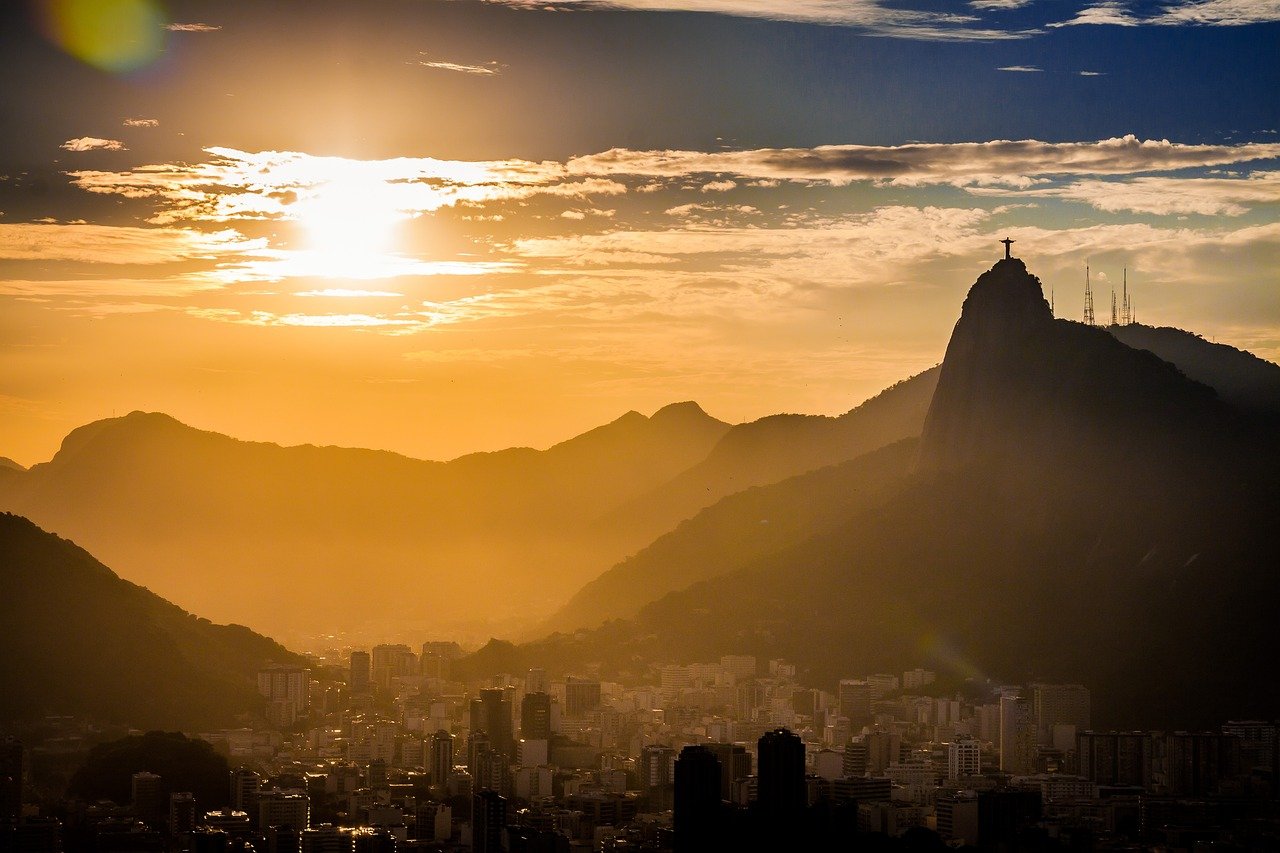
    View of Corcovado hill where the van boarding points are located
    Corcovado hill, where the Paineiras Visitor Center is located. | Photo: Poswiecie / Pixabay

    Van or train: which is better for Christ the Redeemer?

    “Is it better to go by van or train to Christ the Redeemer?” It depends on what you’re looking for. The Corcovado Train departs from Cosme Velho Station, crosses the Atlantic Forest in about twenty minutes, and is the most traditional option — and also the most expensive, with an adult ticket costing R$ 134 (R$ 107 for children, students, and people with disabilities, R$ 70 for seniors). The train runs daily, from 7:20 am to 6 pm, with departures every 20 minutes, but tickets have scheduled times and are not sold for the same day at the ticket office — you need to buy them in advance on the official Corcovado Train website or app.

    The van, on the other hand, is usually cheaper (from R$ 87 leaving from Paineiras) and more flexible, with more boarding times available throughout the day. For those prioritizing savings and convenience, the van wins; for those wanting the experience of the historic railway through the forest, it’s worth paying the difference for the train.

    Can you go to Christ the Redeemer by Uber or car?

    “Can I go to Christ the Redeemer by Uber?” You can, but only up to a certain point. There is no parking at the Paineiras Visitor Center or further up, so private cars and ride-sharing apps only go up to Paineiras — from there, the route to the monument is mandatory by official van (or on foot, for those who choose the trail). In other words, going by Uber can be a practical way to get to the Paineiras boarding point without relying on buses or the subway, but it doesn’t replace the van ticket.

    Tips to avoid wasting time in line

    Christ the Redeemer receives up to 10,000 visitors a day, so lines are part of the experience during peak hours. Buying your van (or train) ticket in advance on the official website avoids the wait at the physical ticket office. Arriving right at opening time or late in the afternoon also helps you avoid the midday crowds. Bring water: even with snack bars on site, the Rio summer heat hits hard on the way up.

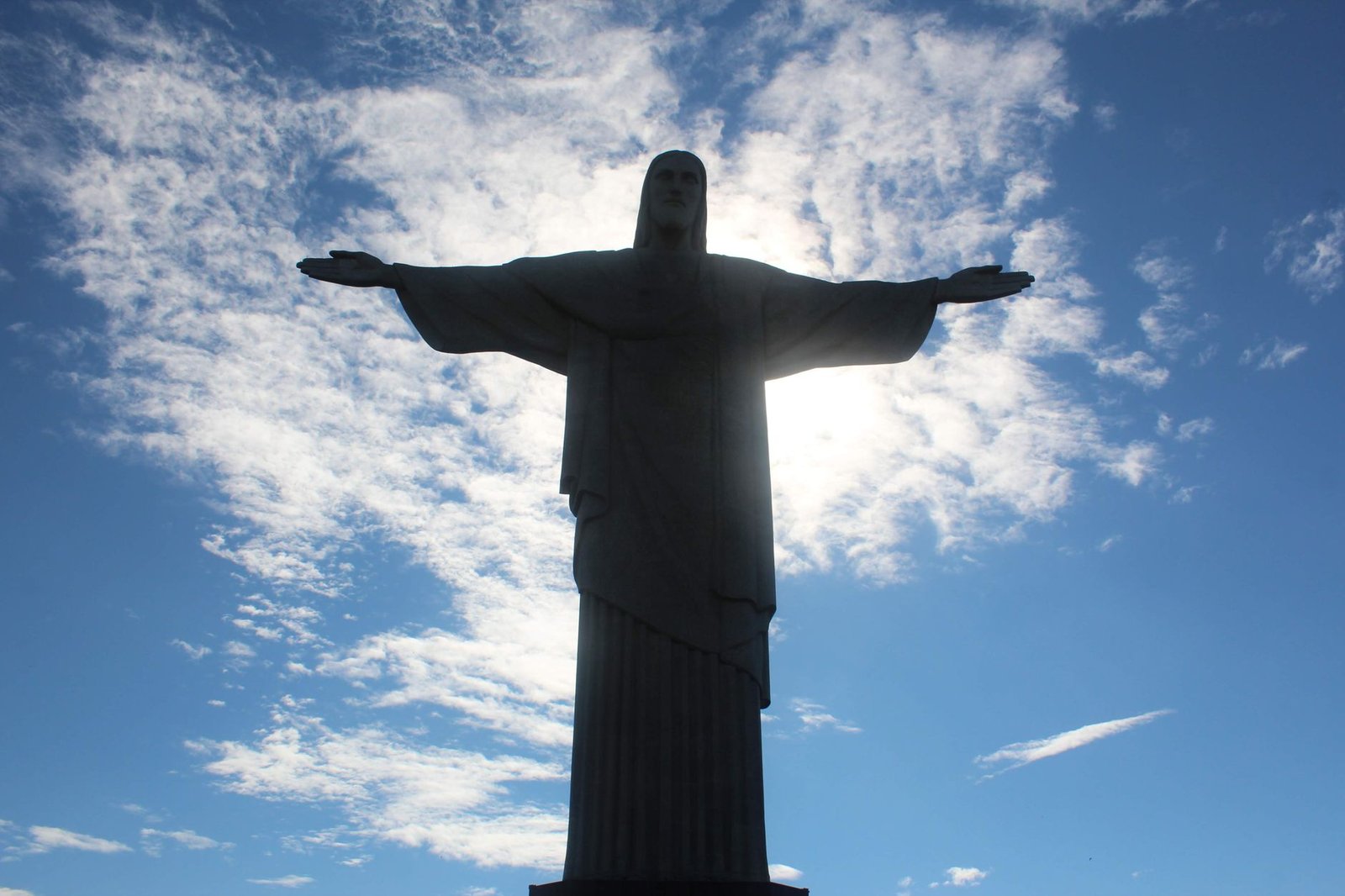
    Christ the Redeemer statue, accessible by van or train
    Access to the monument is only by official van, train, or on foot via the trail. | Photo: Eric Garcia / Pexels

    If you’re in the area, be sure to also check out Mirante Dona Marta, another high point with views of Christ the Redeemer and Guanabara Bay, or read the complete guide on the history and curiosities of Christ the Redeemer before your visit.

    Frequently asked questions

    What is the price per km for a Corcovado van?

    The van ticket is not charged per kilometer traveled, but by a fixed fare depending on the boarding point: R$ 132 leaving from Copacabana or Largo do Machado, and R$ 87 leaving directly from Paineiras (adult prices, 2026).

    How much is the van ticket to Christ the Redeemer?

    From R$ 87 (adult, departing from Paineiras) to R$ 132 (adult, departing from Copacabana or Largo do Machado), with discounts for children, students, seniors, and people with disabilities.

    What is the best time to go up to Christ the Redeemer?

    Right at opening time, between 8 am and 9 am, or late in the afternoon, when the crowds thin out. Midday usually has the longest lines, especially in high season.

    What is included in the Christ the Redeemer ticket?

    For both the van and the train, the ticket includes round-trip transportation from the chosen boarding point, as well as access to the monument and the lookout.

    What does the Corcovado Train include?

    The train ticket covers the round trip on the historic railway to the station next to the monument, plus entry to Christ the Redeemer. It does not include food or extra tours.

    Conclusion

    Explore the other destination guides here on Voyage Voyage.