 Marcelo Oliveira
The Forbidden City is the largest wooden palace complex in the world, the historic heart of Beijing, and sits less than 500 meters from Tiananmen Square—the largest public square on the planet. You can visit both on foot in the same day, and together they form the most concentrated route of Chinese history you’ll find in a single morning. There are no direct flights from the US; the trip requires a connection in Europe, Canada, or the Middle East, with a total travel time between 20 and 26 hours. The best times to go are spring (March to May) or fall (September to November), when the humid summer heat and dry winter cold take a break. A full day, with extra time for lines and Jingshan Park just behind the palace, is the minimum recommended. And before you buy any tickets, it’s worth understanding a detail that catches many people off guard: there is no physical ticket booth at the Forbidden City.
Hotels in Beijingfree cancellation options onlySee hotels ›Booking.com partner (advertising): we may earn a commission at no extra cost to you.
How to get there
There are no direct flights between the US and Beijing. Departing from major hubs like New York (JFK), Los Angeles (LAX), or San Francisco (SFO), one-stop options include Air Canada (via Toronto), Turkish Airlines (via Istanbul), Air France (via Paris), and Emirates (via Dubai). The total travel time, including the layover, usually falls between 20 and 26 hours, depending on the airline and connection time. From other US cities, Emirates also operates with a connection in Dubai. Search on more than one booking site before you buy, because price variations between close dates can be significant.
Beijing has two international airports: the traditional Beijing Capital (PEK), northeast of the city, and the newer Beijing Daxing (PKX), to the south. Check which airport your flight lands at before booking your hotel—the distance between the two is over 60 km, and going from one to the other takes more than an hour. From either one, the express metro (Airport Express from PEK, or the Daxing Airport Express line) takes you to the center in 20 to 40 minutes for less than 30 yuan. Taxis and ride-hailing apps (Didi) also work well, but rush hour traffic can double travel time.
Once in the city, Beijing’s subway is the most predictable way to reach the Forbidden City. Tiananmen East station (Line 1) drops you a few minutes’ walk from the Meridian Gate, the palace’s main entrance. Buy a Yikatong card at station machines or pay by tap with an international card—most lines already accept it.
Best time to visit and how long to stay
“Can you visit any time of year?” You can, but the experience changes a lot. Summer (June to August) is hot, humid, and the most crowded, with long lines even if you’ve booked your ticket online. Winter (December to February) is dry and cold—sometimes below freezing—but the courtyards are practically empty, which makes for photos with no one in the way. Spring and fall balance mild temperatures with moderate visitor flow, making them the most recommended periods.
Set aside the entire day just for the Forbidden City and Tiananmen. The palace alone requires three to four hours of walking—the built area covers over 720,000 square meters, with more than 90 interconnected courtyards. If you have energy left, Jingshan Park, right behind the north exit, has a viewpoint where you can see the golden roof of the entire complex, and the climb takes less than 20 minutes.
What to see at the Forbidden City and Tiananmen Square
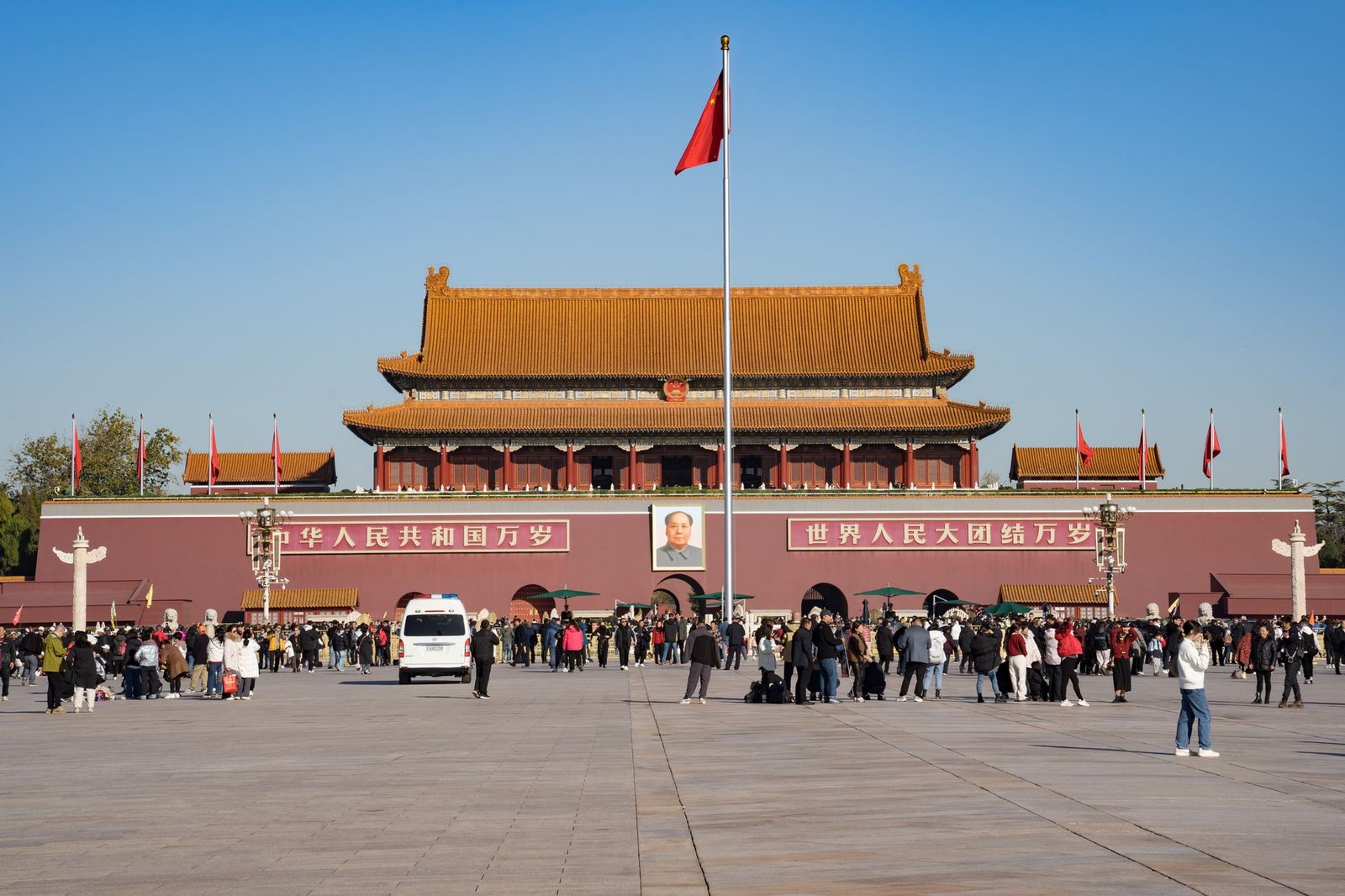
The visit follows a nearly straight axis: you enter through Tiananmen Square, cross the Tiananmen Gate (where Mao’s portrait is), proceed through the Meridian Gate, and from there walk south to north through the imperial courtyards until you exit through the Gate of Divine Might, facing Jingshan Park.
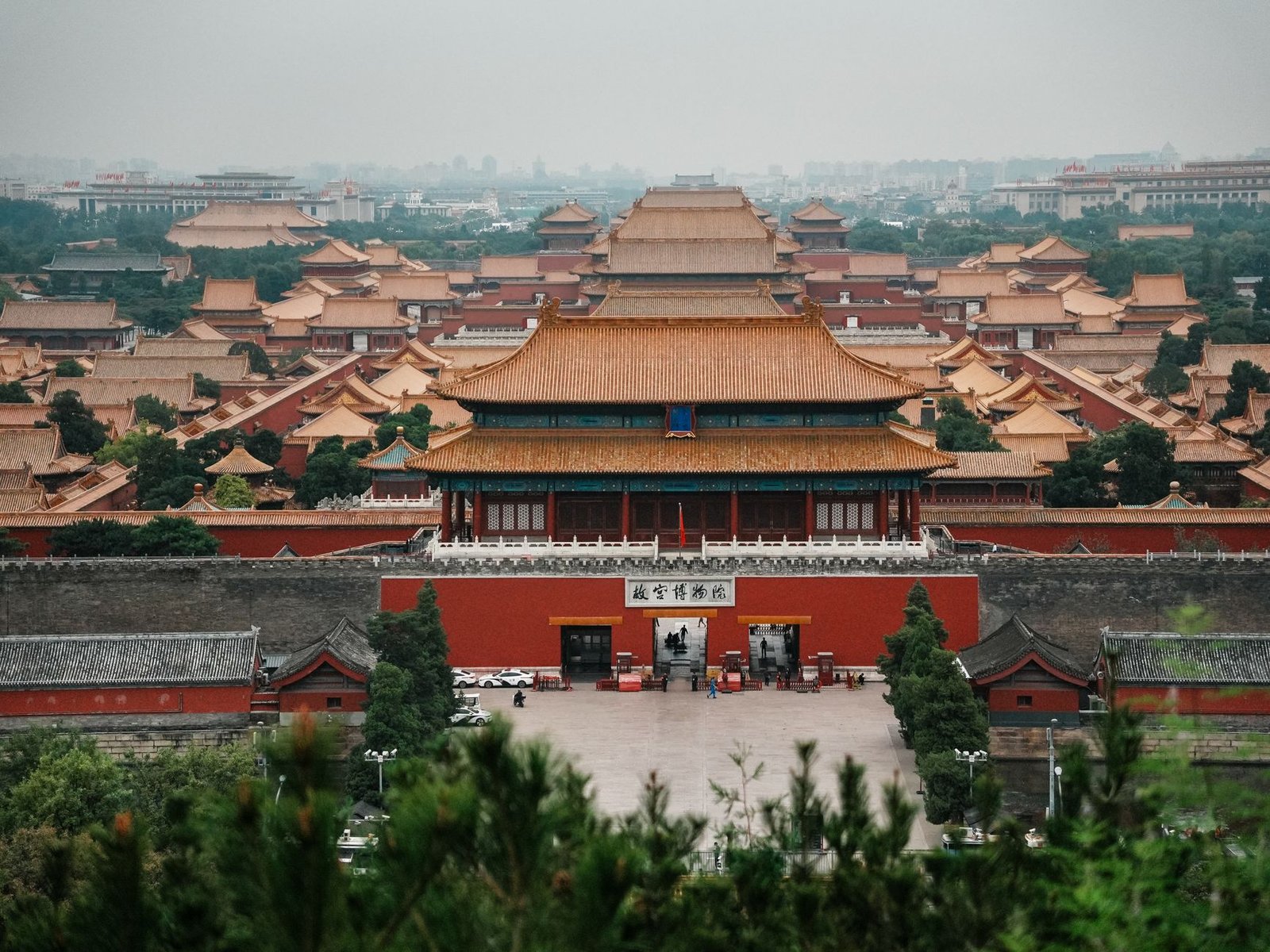
Forbidden City
The official name is the Palace Museum, and it was the residence of 24 emperors from the Ming and Qing dynasties, between 1420 and 1912. The central axis concentrates the three most photographed ceremonial halls: the Hall of Supreme Harmony, where the emperor was crowned; the Hall of Central Harmony, used for ritual preparation; and the Hall of Preserving Harmony, the stage for banquets and the imperial exam. Behind them, the northern half of the complex was the private residence of the imperial family, with smaller courtyards and the Imperial Garden, one of the quietest spots on the tour. The full history of its construction, which began in 1406, is detailed on the Wikipedia page for the Forbidden City.
Tickets cost 60 yuan (about $8.50 USD, subject to exchange rate fluctuations) during the high season, from April 1 to October 31, and 40 yuan during the low season, from November 1 to March 31. There is no ticket sales at the gate: everything is reserved online, with tickets released exactly 7 days before the visit date, usually at 8 PM Beijing time. This means planning your purchase in advance and being patient enough to try again if the batch sells out quickly—which happens often on Chinese holidays. Opening hours during the high season are from 8:30 AM to 5 PM, with last entry at 4 PM; during the low season, from 8:30 AM to 4:30 PM, with last entry at 3:30 PM. The museum is closed on Mondays, except on national holidays.
Tiananmen Square
On the other side of the Tiananmen Gate lies the square that gives the complex its name—the largest public square in the world, with space for over 400,000 people. It’s home to the Mausoleum of Mao Zedong, the Monument to the People’s Heroes, and the Great Hall of the People, the seat of the Chinese parliament—historical data and curiosities about the square are gathered on the Wikipedia entry for Tiananmen Square. Security is strict: expect bag checks and metal detectors both to enter the square and to access the Forbidden City, so arrive with plenty of time to spare.
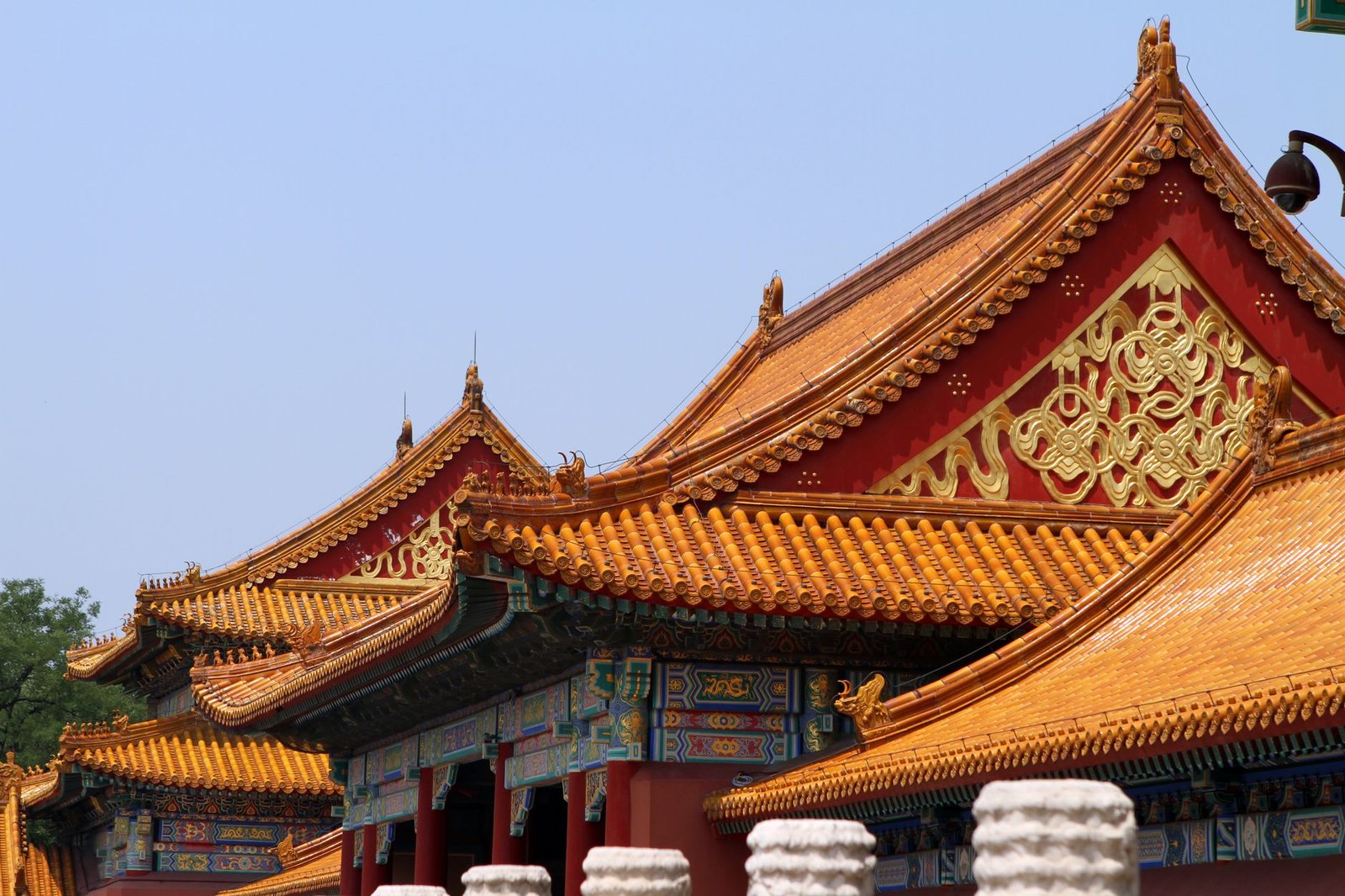
Hall of Supreme Harmony and Imperial Garden
If you’re short on time, prioritize two spots: the courtyard in front of the Hall of Supreme Harmony, the largest in the complex and where the scale of the place truly hits you, and the Imperial Garden, at the north exit, with centuries-old pines and carved stones that contrast with the rigid architecture of the rest of the palace. Many visitors tire out before reaching it and miss this part—it’s worth saving energy for the end of the route.
 See activities in Beijing on GetYourGuide ›
What to combine with your visit
From Jingshan Park, at the north exit of the Forbidden City, the central viewpoint shows the golden roof of the entire palace in a single photo—it’s the most repeated angle on social media, but it only exists because the park was built on the earth excavated from the palace moat, gaining enough height for this view.
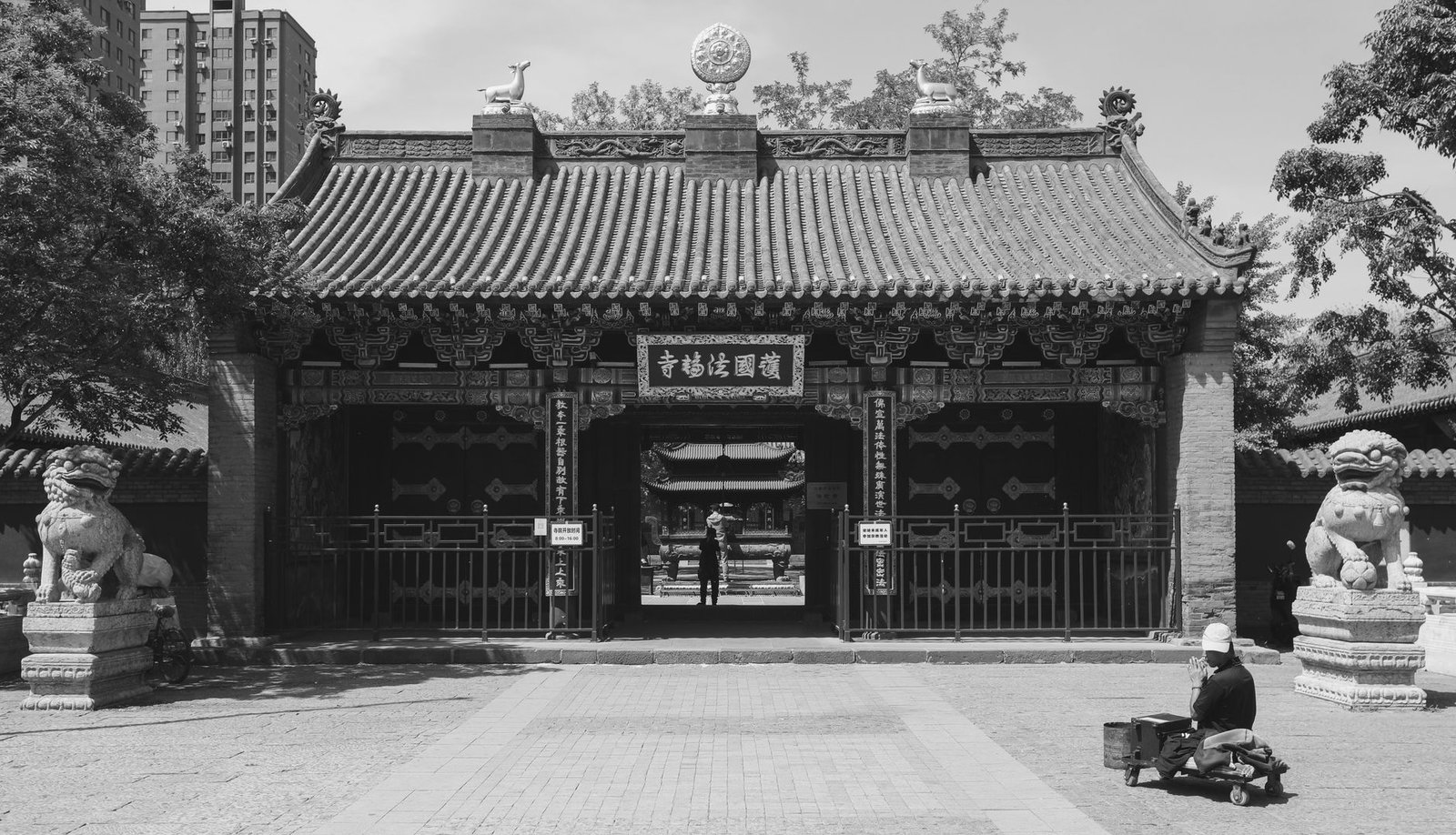
West of the square is Beihai Lake, another imperial park with a white Tibetan temple on top of an island—quieter than Jingshan and less visited by foreign tourists. And if you have an extra day on your trip, the Great Wall of China is less than two hours by car from the Badaling or Mutianyu sections; we’ve broken down how to organize this day trip in our complete guide to the Great Wall of China.
The hutongs—traditional alleyways of low houses with inner courtyards—are just a few minutes’ walk from the Forbidden City, especially in the Nanluoguxiang and Shichahai areas. It’s the most direct contrast to the monumentality of the palace: narrow streets, small shops, and a much more informal Beijing.
Where to eat
Wangfujing Street, a few minutes’ walk from the east exit of the Forbidden City, has everything from traditional Peking duck restaurants to street stalls with exotic skewers—more of a visual attraction than a culinary recommendation, it’s worth noting. For the city’s most famous dish, Peking duck, two century-old establishments often appear in local recommendations: Quanjude and Bianyifang, both with branches relatively close to the historic center. A whole duck portion to share runs around 200 to 300 yuan.
For a quicker meal between the Forbidden City and the Wall, or before catching the subway back, the hutongs near Nanluoguxiang have good options for jiaozi (steamed or fried dumplings) and hand-pulled noodles (la mian), with prices much more affordable than the tourist restaurants around the square.
Where to stay
For those who want to be within walking distance of everything, hotels around Wangfujing and Dongcheng put the Forbidden City, the square, and many hutongs a short walk away—it’s the most central and also the most expensive area. Those looking for a balance between location and price usually check out the area around Dongsi or Yonghegong metro stations, still within the second ring road, with direct subway access to the historic center. For budget-conscious travelers, more affordable options can be found near metro lines 2 or 5, a bit further out but still with a direct connection without transfers to the central area.
Where to stay in Beijing
| Hotel | Rating | |
|---|---|---|
| Prime Hotel Beijing WangfujingWangfujing / Dongcheng · On Wangfujing Avenue, 2, Dongcheng | 8,91.501 reviews | See prices |
| Sunworld Dynasty Hotel Beijing WangfujingWangfujing / Dongcheng · On Wang Fujing Avenue, 50, Dongcheng | 9,13.834 reviews | See prices |
| Jingmao Alley Hotel Beijing Wangfujing Dongsi Subway Station BranchDongsi / Yonghegong · On Dongsi North Street, 368, Dongcheng | 9,4309 reviews | See prices |
| SSAW Garden Hotel BeijingDongsi / Yonghegong · On Beixinqiao Sanjiao, 5, Dongcheng | 9,0461 reviews | See prices |
| Nostalgia S Hotel Beijing Qianmen TianqiaoXicheng · On Xijing Road, 13, Xicheng | 9,2117 reviews | See prices |
| Pan Pacific BeijingXicheng · On Huayuan Street, 2, Xicheng | 8,7506 reviews | See prices |
| The Orchid Hotel - Old Town & Drum TowerHouhai / hutongs · On Baochao Hutong, 65, Dongcheng | 9,4814 reviews | See prices |
| Beijing Tangfu Dynasty Wangfujing Nanluoguxiang Boutique HotelHouhai / hutongs · On Andingmen Nei Main Street, 291, Dongcheng | 8,9363 reviews | See prices |
Booking.com rating on 30/09/2026
Practical tips
It’s worth setting aside the whole day for those who love history and don’t mind walking a lot—the route inside the Forbidden City is over 3 km from entrance to exit. For those in a hurry, you can do a condensed version in about two hours by following just the central axis, but the feeling of “rushing” against the size of the place is inevitable.
The most common mistake is leaving the Forbidden City ticket purchase to the last minute. Since sales open only 7 days in advance and there’s no physical ticket booth, anyone who doesn’t book ahead simply won’t get in on their planned day. Set an alarm for the release time and have your passport handy—registration is done with your document number.
About currency: the yuan (CNY) is the local currency, and international cards aren’t always accepted outside of hotels and larger stores—local payment apps dominate daily life. It’s worth withdrawing cash or setting up Alipay/WeChat Pay with an international card before your trip. About internet: many Western services (Google, WhatsApp, Instagram) don’t work without a pre-configured VPN—sort this out before you board, because downloading a VPN once you’re inside China is usually more difficult.
About visas: entry rules for US citizens change frequently, including temporary visa waiver policies. Confirm the visa requirements and the updated procedure directly on the official Chinese consulate website before buying your ticket—don’t buy based on outdated information.
 HotelAs soon as you have datesCompare neighbourhoods and guest ratings.See hotels ↑
- More activitiesTo compareTickets, day trips and tours with flexible cancellation.GetYourGuide ›
Frequently asked questions
How much does a Forbidden City ticket cost?
60 yuan during the high season (April to October) and 40 yuan during the low season (November to March). Extra tickets for the Treasure Gallery and the Clock Gallery cost 10 yuan each and are sold separately.
Do I need to book the ticket in advance?
Yes. There are no on-site sales—everything is done through the official website, with tickets released 7 days before the chosen date, usually at 8 PM Beijing time. Buying at the last minute is the most common mistake visitors make.
Does Tiananmen Square have a separate ticket?
The square itself is free to enter, but some monuments within it, like the Mausoleum of Mao, have their own hours and entry rules, including security checks.
Can I visit the Forbidden City and the Great Wall in the same day?
It’s not recommended. The Forbidden City already takes a full day, and the most visited sections of the Wall are almost two hours by car from the center—it’s worth setting aside separate days.
What’s the best time to visit Beijing?
Spring (March to May) and fall (September to November), because of the mild weather and a more balanced visitor flow compared to summer.