 Marcelo Oliveira
Burgos is a smart pick for anyone who wants a compact historic city, an exceptional Gothic cathedral, and a day of sightseeing without complicated transfers. The provincial capital sits in Castile and León, in north-central Spain, and blends a medieval core, the Camino de Santiago, and the Museum of Human Evolution. For a first visit, set aside 8 to 10 hours; if you’re sizing up whether it’s worth living there, pay close attention to winter, neighborhood, heating, and your daily commute.
Hotels in Burgosfree cancellation options onlySee hotels ›Booking.com partner (advertising): we may earn a commission at no extra cost to you.
Burgos in a nutshell: where it is and who should visit
Burgos is in the autonomous community of Castile and León, in north-central Spain, between Madrid and the Basque Country. The municipality had 177,402 residents as of January 1, 2025, according to the official padrón of the Ayuntamiento de Burgos. It’s a mid-sized city: big enough to offer a university, hospitals, shopping, and cultural life, but compact enough to explore the historic center on foot.
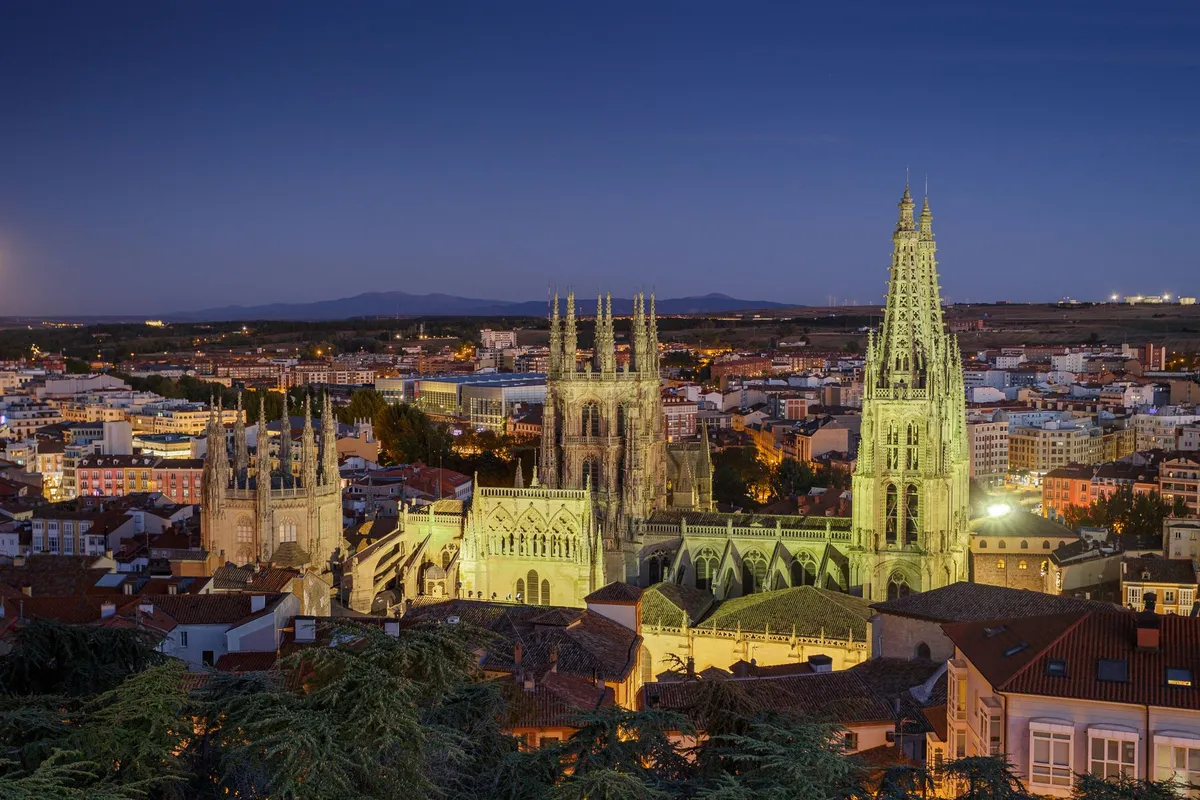
The visit is especially rewarding for anyone who loves architecture, urban history, and walkable cities. The Cathedral is the strongest reason to go, but the trip works best when you connect it to the Arco de Santa María, the Paseo del Espolón, the central squares, and the Museum of Human Evolution. If you’re expecting nothing but a “medieval backdrop,” you may be surprised: the heritage here coexists with residential neighborhoods, industry, a university, and the services of a provincial capital.
Why Burgos is a medieval city — but didn’t stop in the Middle Ages
Burgos has clear medieval origins, but labeling it only as a medieval city hides much of its story. According to the Diputación Provincial de Burgos, the settlement was established around 884 around a fortress linked to Count Diego Rodríguez Porcelos; in the 10th century, it became the capital of the County of Castile.
From fortress to the heart of Castile
The original settlement occupied the top of the castle hill, in a defensive position. As it grew, the city spread down toward the Arlanzón River. Its place on the Camino de Santiago increased the flow of pilgrims, hospitals, churches, and commercial activity. You can still read that logic on a walk: the lower town holds the liveliest streets and squares, while the castle hill shows the relationship between topography and defense.
The wool trade and artistic splendor
In the 15th and 16th centuries, Burgos prospered as a wool-trading hub. Merchant wealth helped finance religious and civic buildings, and explains why the city holds Gothic and Renaissance works on such an ambitious scale. The Camino de Santiago isn’t just tourist decoration, then: it played a part in the local economic and urban development.
El Cid, industry, and the modern city
Rodrigo Díaz de Vivar, El Cid, is tied to Burgos’s memory and was buried with Doña Jimena in the Cathedral. In the 20th century, industrialization expanded the city beyond its walls and its medieval image. The short answer is: yes, Burgos has a very visible medieval foundation, but the place where people live today is an administrative, industrial, and university capital.
What “burgo” means and where the word comes from
“Burgo” isn’t exclusive to Burgos. The Real Academia Española traces its origin to late Latin burgus, itself derived from a Germanic root, and defines the term as a medieval fortress around which merchants and artisans settled. In less common usage, it can also mean a small village or settlement dependent on a larger one.
Burgos sprang up in different parts of Europe as protected hubs that attracted production, trade, and people. Over time, some grew and gained urban autonomy. That helps explain words like “bourgeois,” originally tied to the inhabitant of a burgo. As for the question “what does burgue mean?” — it probably mixes up spellings: in Portuguese, the relevant term is burgo; “Burgos,” capitalized and plural, is the proper name of the Spanish city.
Burgos Cathedral: why it matters so much
Burgos Cathedral deserves to be the centerpiece of your itinerary because it packs four centuries of architecture and art into one exceptional Gothic complex. UNESCO notes that construction began in 1221, was completed in 1567, and was added to the World Heritage list in 1984. French influence shows in the floor plan and portals; later interventions added the lacy spires, the star-shaped dome, and richly decorated chapels.
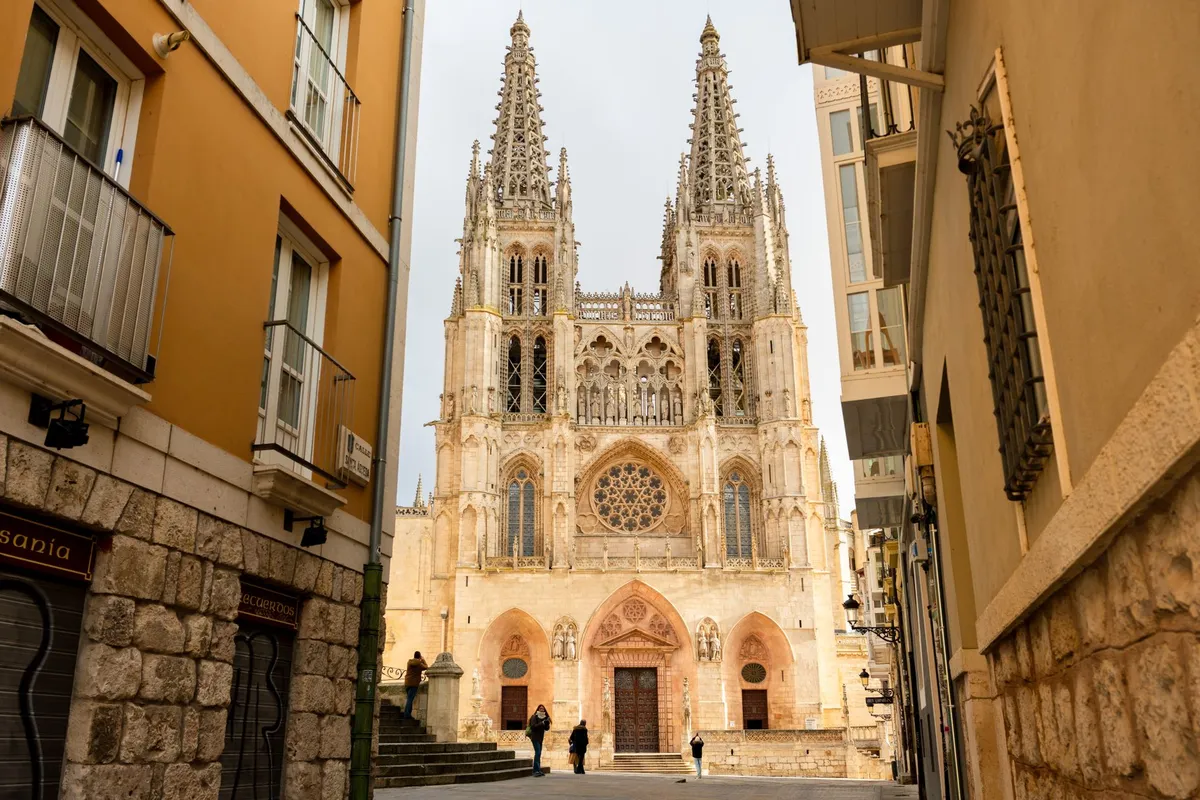
Inside, don’t rush past the dome over the crossing, the Capilla de los Condestables, the Escalera Dorada, or the tombs of El Cid and Doña Jimena. The whole thing makes more sense once you notice the successive building campaigns: it isn’t a building made all at once, but a synthesis of European Gothic with Renaissance and Baroque additions.
Tickets, hours, and rules
As of August 2026, the Cathedral’s official visitor page lists general admission at €11. Tourist visits run from 9:30 a.m. to 6 p.m. from November 1 to March 18 and from 9:30 a.m. to 6:30 p.m. from March 19 to October 31, with an extra hour allowed for your stay. Hours can change for liturgical celebrations. Flash-free, tripod-free photography is allowed, and animals aren’t permitted except guide dogs.
A self-guided visit works well if you like taking in architecture at your own pace. A guided tour pays off if you want to tell apart building phases, artists, and chapels without doing research on the go.
 Partner · Civitatissee all activities in Burgos ›
Burgos Private Guided Tour
Rating 9.8 · 80 reviews on Civitatis
Civitatis prices on 28/09/2026, from, per person. They may change.
What to do in Burgos in 1 day
In a day of 8 to 10 hours, focus on the historic center, the Cathedral, and one museum; squeezing Atapuerca into the same window makes the itinerary rushed. The order below works for anyone arriving in the morning who wants to finish with time to stroll the Espolón or have dinner downtown.
| Time | Stop | Practical call |
|---|---|---|
| 9–10 a.m. | Plaza Mayor, Paseo del Espolón, and Arco de Santa María | Use the first hour to get a feel for the axis between the river and the old town. |
| 10 a.m.–12 p.m. | Burgos Cathedral | Set aside about 2 hours for the interior, cloister, and chapels without rushing. |
| 12–2 p.m. | Downtown streets and lunch | Try morcilla de Burgos or pick a menu del día to keep your budget in check. |
| 2:30–5 p.m. | Museum of Human Evolution | Prioritize the MEH if you’re not visiting the Atapuerca sites on this trip. |
| 5–7 p.m. | Paseo del Espolón, San Pablo bridge, and viewpoint | Head up to the hill only if weather and energy allow; the city tourism office notes the Castle is closed for works. |
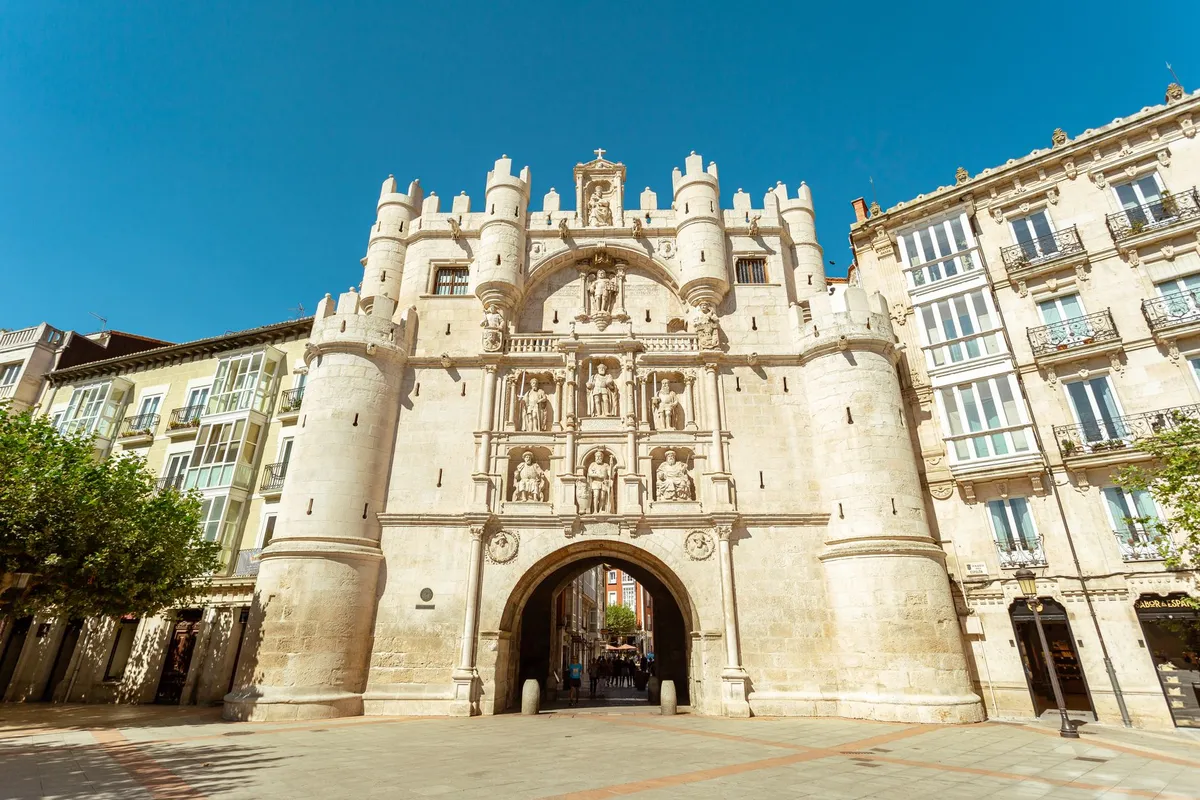
Morning: the monumental axis
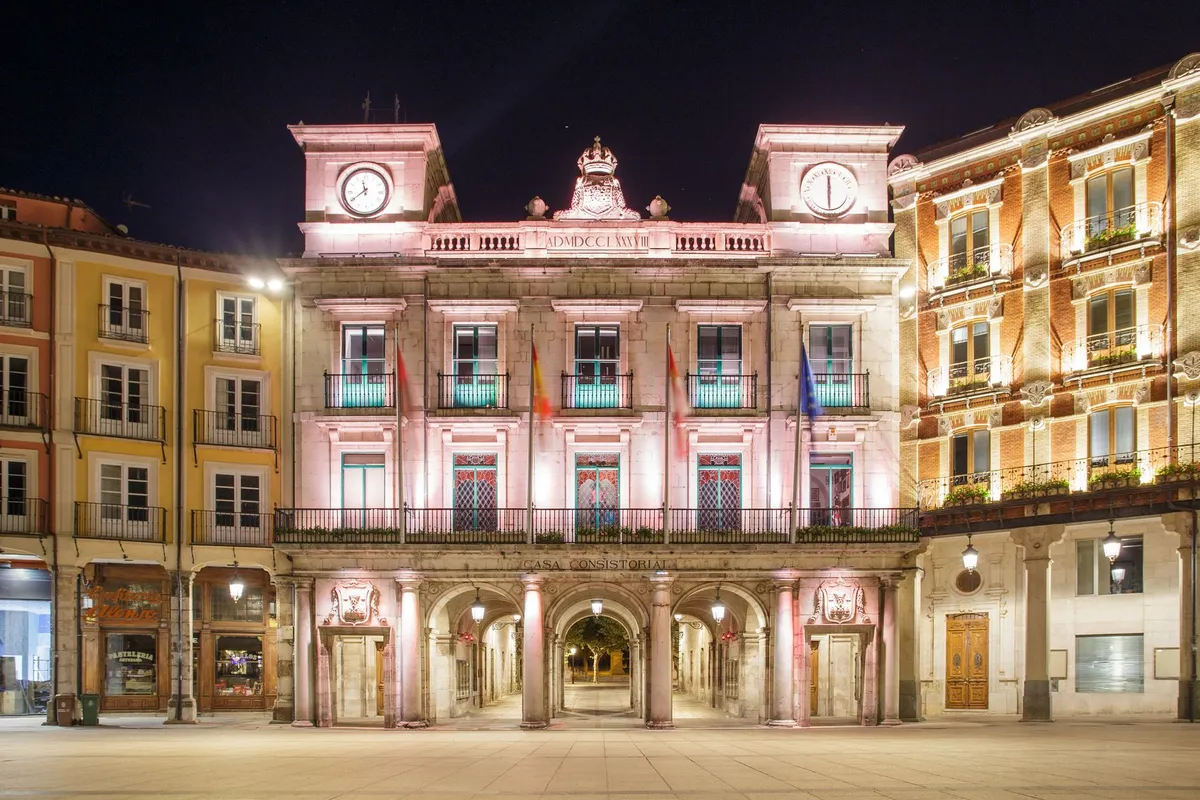
Start at the Plaza Mayor and head down to the Paseo del Espolón. Cross the Arco de Santa María and reach the Cathedral square from its most impressive side. Going in early lowers the odds of hitting the busiest part of the day, but check for celebrations and changes on the official calendar.
Afternoon: human evolution or regional art
After lunch, pick a museum. The Museum of Human Evolution is the top choice for most people because it presents the Atapuerca finds and connects science, archaeology, and human history. As of August 2026, the official MEH rate is €6 for general admission; entry is free on Wednesdays, as well as on Tuesday and Thursday evenings from 7 p.m. The Museo de Burgos is the alternative if you prefer regional archaeology and fine arts.
If you want context as you walk, a free tour covers the stretch between the squares, the Arch, the Cathedral, and El Cid’s legacy without requiring any transport.
For a second historic city in Castile and León, compare this plan with the one-day itinerary in Segovia. Segovia packs in the Aqueduct and the Alcázar; Burgos delivers a more dominant Cathedral and a science museum of international reach.
How to get to Burgos and get around without wasting time
Arriving by train is convenient, but the rail station isn’t downtown; arriving by bus leaves you closer to the sights. The city tourism office notes that Burgos Rosa Manzano station is 5 km from the historic center and served by city bus lines 2, 16, and 23. The bus station is on Calle Miranda, less than a 10-minute walk from the Cathedral and the MEH.
From Madrid, check high-speed train and long-distance services for your exact date; schedules and prices vary. By car, the A-1 links Madrid to the Basque Country corridor, while the A-62 connects Valladolid. Avoid driving into the monumental core unless you have to: walking is simpler, and access restrictions protect the historic center.
Within a one-day itinerary, almost everything is done on foot. The exceptions are outlying attractions like the Cartuja de Miraflores and Las Huelgas, which require a bus, taxi, or more time. If you’re continuing north, use the Santander guide to build a loop between Castile and Cantabria; if you’re starting from another urban base, you’ll find a useful comparison in the guide to Oviedo and its local life.
What it’s like to live in Burgos: neighborhoods, costs, and routine
Living in Burgos can work well for anyone who prefers a mid-sized city, short commutes, and provincial-capital services, but winter and your choice of housing weigh heavily on the experience. Don’t decide based on the beauty of the center alone: visit the property, test your daily route, and ask for the latest heating bills before signing.
Housing and neighborhoods
The Centro makes life walkable and puts shopping, heritage, and restaurants close by, but it can mean noise, older buildings, and harder parking. Gamonal is a major residential corridor with everyday shops and bus connections; it tends to offer a less touristy routine. Areas near the university appeal to students, while newer residential developments may suit families who prioritize newer properties. These names are starting points, not a ranking: walk the neighborhood in the morning and at night before choosing.
Costs: heating changes the math
There’s no single “cost of living in Burgos” that fits everyone. Build your budget in four blocks: rent, heating and utilities, transport, and food. Listings change fast, so get quotes in the month you’re moving and compare price per square meter, energy efficiency, type of heating, and included fees. A seemingly cheaper rent can lose its edge in a poorly insulated place during winter.
Getting around, healthcare, and paperwork
The compact center favors walking, and the bus network covers the farther neighborhoods and the station connection. For those moving for good, the first municipal step is the empadronamiento: the Ayuntamiento explains that the padrón registers residents and proves residence and habitual address. From there, check the requirements for your situation regarding healthcare, documentation, school, and other services; EU citizens and non-EU nationals follow different processes.
Does Burgos match your style of trip or move?
For a trip, Burgos pays off when your priority is heritage, architecture, and urban walking. One day covers the Cathedral, historic center, and MEH at a comfortable pace; two nights let you add Las Huelgas, the Cartuja de Miraflores, or an Atapuerca-related activity without turning the visit into a race.
For living, the city tends to please anyone who values mid-sized scale and simple commutes, as long as you accept a colder climate and do a careful analysis of the property. The most useful test isn’t spending an afternoon in the Plaza Mayor: stay a few days, ride the bus at rush hour, visit a market and a supermarket, walk two or three neighborhoods, and ask for a full simulation of monthly expenses.
The practical decision is simple: if you only have one day, protect the morning for the Cathedral and pick just one museum in the afternoon. If the question is moving, treat the visit as field research and leave Burgos with three numbers written down — total rent, estimated heating cost, and the real time of your daily commute.
 HotelAs soon as you have datesCompare neighbourhoods and guest ratings.Booking ›
- ActivitiesBefore you travelBook ahead the ones with limited spots.Civitatis ›